Key takeaways
- Search Atlas combines traditional SEO (keyword research, backlink analysis, technical audits) with AI content generation and LLM visibility tracking in one platform.
- Its standout feature is OTTO SEO, an agentic automation layer that recommends and deploys on-page fixes without requiring manual implementation.
- Real-world testers have flagged JavaScript rendering issues, a steep learning curve, and some hidden costs at higher usage levels.
- Pricing starts lower than most comparable platforms, making it attractive for agencies and growing teams watching their tool budget.
- For AI search visibility specifically, Search Atlas offers monitoring across major LLMs, but teams that need deep GEO optimization -- content gap analysis, crawler logs, traffic attribution -- may find dedicated platforms like Promptwatch more complete.
Search Atlas has been building quietly for a few years, and in 2026 it's hard to ignore. What started as a reasonably priced alternative to Semrush or Ahrefs has grown into something more ambitious: a platform that wants to handle your keyword research, content creation, technical SEO, and now AI search visibility, all from one dashboard.
Whether it actually delivers on that promise depends a lot on what you're trying to do. This review pulls together six months of testing data, community feedback, and a close look at the feature set to give you an honest picture.
What Search Atlas actually is
At its core, Search Atlas is an SEO platform. It covers the fundamentals: keyword research, rank tracking, backlink analysis, site audits, and competitor research. That's the foundation.
On top of that, it's added two layers that make it more interesting in 2026. The first is OTTO SEO, an agentic automation system that goes beyond surfacing recommendations and actually helps you implement fixes. The second is Content Genius, an AI-powered writing workflow designed to produce SEO-ready drafts faster than a traditional content brief process.
More recently, Search Atlas has pushed into LLM visibility tracking -- monitoring how your brand appears in AI search engines like ChatGPT, Perplexity, and Google AI Overviews. This is where it's trying to compete with a newer category of tools entirely.
OTTO SEO: the agentic angle
The most talked-about feature right now is OTTO SEO. The idea is that instead of just showing you a list of technical issues or on-page recommendations, the platform can deploy fixes directly -- schema markup, meta tags, internal linking adjustments -- without you having to touch the code manually.
Reviewers on Reddit's r/Agentic_SEO have described it as "not just showing you information, it's actively helping you decide what to do next." That's a fair characterization. The agentic framing isn't marketing fluff here; OTTO genuinely reduces the gap between insight and action for technical SEO tasks.
That said, it's not magic. OTTO works best on sites where Search Atlas has clean crawl access. Sites with heavy JavaScript rendering can cause problems -- more on that below.
Content Genius: AI writing that's grounded in SEO data
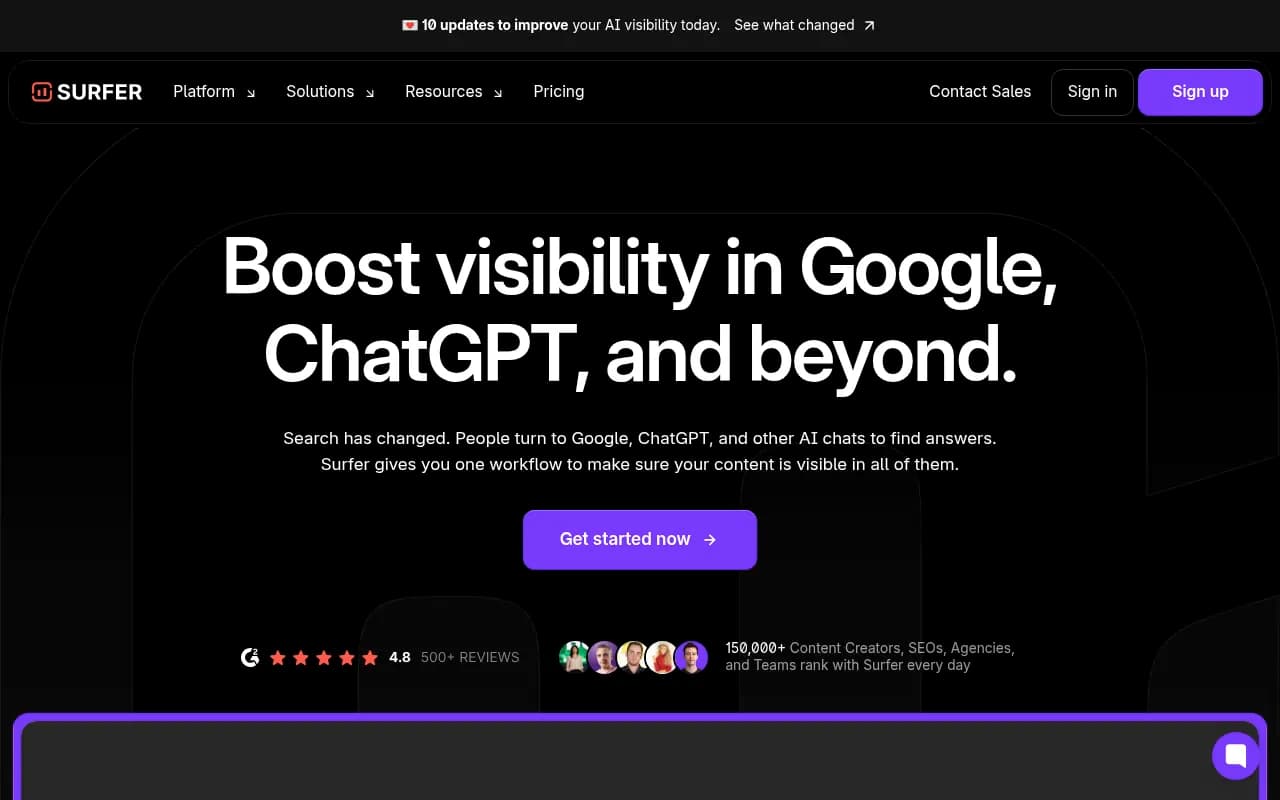
Content Genius is Search Atlas's answer to tools like Surfer SEO or Clearscope, but with a built-in writing layer. The workflow goes from keyword research to content brief to draft, all within the platform.
The quality of the output is generally solid for SEO-focused content. It uses real search data to inform the brief -- related terms, competitor content structure, heading suggestions -- rather than just prompting a generic LLM. Rankability's review of Content Genius noted it's "positioned as an AI-driven writing and optimization workflow that's meant to ship SEO-ready drafts faster," which is accurate.
Where it falls short is originality and depth. Like most AI writing tools, it produces competent first drafts that need human editing before they're genuinely useful. If you're expecting publication-ready content without review, you'll be disappointed. If you're expecting a strong starting point that cuts research time significantly, it delivers.
LLM visibility tracking
This is the newest part of Search Atlas and, honestly, the part that's most in development. The platform tracks brand mentions and citations across major AI models, giving you a visibility score and some competitor comparison data.
For teams that are just starting to think about AI search visibility, this is a reasonable entry point. You get a sense of where you appear (or don't) across ChatGPT, Perplexity, and others.
The limitation is that Search Atlas's LLM tracking is primarily a monitoring layer. It shows you data. What it doesn't do as well is help you act on that data -- identifying specific content gaps, generating content engineered to fill those gaps, or tracking the journey from page publish to AI crawler visit to citation. That full optimization loop is where more specialized GEO platforms pull ahead.

For teams that need to go deeper on AI visibility -- tracking which pages AI crawlers are actually reading, understanding why competitors get cited and you don't, and generating content specifically designed to close those gaps -- Promptwatch covers that ground more completely.
What the reviews actually say
The feedback across Trustpilot, Reddit, and independent blog reviews paints a consistent picture.
Positive themes:
- The all-in-one nature genuinely reduces tool sprawl. Teams that were juggling Ahrefs for backlinks, Surfer for content, and a separate rank tracker find that Search Atlas handles all three adequately.
- OTTO SEO saves real time on technical implementation, particularly for agencies managing multiple client sites.
- The pricing is competitive. You get a lot of feature surface area for the cost compared to category leaders.
Critical themes:
- JavaScript rendering is a recurring issue. Sites built on React, Vue, or similar frameworks sometimes produce incomplete crawl data, which undermines the accuracy of technical recommendations.
- The learning curve is steeper than the marketing suggests. There are a lot of features, and the UX doesn't always make it obvious where to start.
- Some users have flagged hidden costs at scale -- certain features consume credits faster than expected, and the pricing tiers can feel limiting once you're running multiple client campaigns.
- The AI crawler visibility piece is still maturing. One six-month test from The Marketing Agency noted "AI crawler invisibility" as a specific pain point -- meaning Search Atlas itself wasn't being properly tracked by AI crawlers in some configurations.
Feature comparison: Search Atlas vs. alternatives
| Feature | Search Atlas | Surfer SEO | Semrush | Promptwatch |
|---|---|---|---|---|
| Keyword research | Yes | Limited | Yes | No |
| Rank tracking | Yes | No | Yes | No |
| Technical SEO audit | Yes | No | Yes | No |
| AI content generation | Yes (Content Genius) | Yes | Yes (ContentShake) | Yes (Content Agents) |
| LLM visibility monitoring | Yes | No | Limited | Yes |
| Content gap vs. AI responses | Limited | No | No | Yes |
| AI crawler logs | No | No | No | Yes |
| Traffic attribution from AI | No | No | No | Yes |
| Pricing (entry) | ~$99/mo | ~$89/mo | ~$139/mo | $99/mo |
The table makes the positioning clear. Search Atlas is the broadest tool -- it covers traditional SEO plus some AI visibility. Promptwatch is narrower but goes much deeper on the AI search side. Semrush and Surfer SEO are the established alternatives in their respective niches.
Pricing breakdown
Search Atlas uses a tiered pricing model. The entry-level plan covers the core SEO features and a limited number of AI content credits. Agency plans scale up to handle multiple client sites and higher content volumes.
Compared to Semrush or Ahrefs, Search Atlas is meaningfully cheaper for teams that need the full feature set. The catch is that credit-based features (AI writing, certain reports) can add up faster than the base price implies. Worth running the numbers against your actual usage before committing.
There's a free trial available, which is the right way to test it -- the feature set is complex enough that you really need hands-on time to know if it fits your workflow.
Who should use Search Atlas
Search Atlas makes the most sense for:
- Agencies managing multiple client sites that want to consolidate tools and reduce per-seat costs
- In-house SEO teams that want agentic automation for technical fixes without hiring a developer
- Content teams that want keyword research and AI-assisted drafting in one place
- Teams starting to think about AI search visibility but not yet ready to invest in a dedicated GEO platform
It's probably not the right fit for:
- Enterprise brands with complex JavaScript-heavy sites (the rendering issues are a real problem)
- Teams that need deep AI search optimization -- content gap analysis tied to actual LLM responses, crawler log analysis, and traffic attribution from AI search
- Anyone who needs best-in-class depth in a single category (Ahrefs is still better for backlink analysis, Surfer is still sharper for content optimization scoring)
The honest verdict
Search Atlas in 2026 is a genuinely capable platform that's harder to dismiss than it was two years ago. OTTO SEO is a real differentiator. Content Genius is useful if you go in with realistic expectations. The LLM visibility tracking is a good starting point.
The "all-in-one" pitch is mostly true, with the caveat that "all-in-one" usually means "pretty good at many things" rather than "best at any one thing." For most mid-sized teams and agencies, that's actually the right trade-off.
Where it gets complicated is the AI search side. If your main concern is understanding and improving how your brand appears in ChatGPT, Perplexity, or Google AI Overviews -- and you want to go beyond monitoring into actual optimization -- Search Atlas's current LLM features are a starting point, not a complete solution. That's not a knock; it's just a different tool category.
The platform is worth a trial if you're currently paying for three or four separate SEO tools. The consolidation savings alone might justify it. Just go in knowing where its edges are.
Tools mentioned in this guide
If you're evaluating Search Atlas against alternatives, here are the other platforms worth considering depending on your specific needs:
For traditional SEO depth:
For AI content optimization:
For AI search visibility and GEO: