Key takeaways
- All three tools monitor how your brand appears in AI search engines like ChatGPT, Perplexity, and Claude -- but their depth and feature sets vary significantly.
- Scrunch AI has the most ambitious product vision (its Agent Experience Platform is genuinely interesting), but its pricing starts at $250/month, which is steep for what you get at the entry tier.
- AthenaHQ is the most enterprise-ready of the three, with strong citation analysis and multi-team support, but it's monitoring-heavy and lacks built-in content optimization.
- Peec AI is the most affordable and action-oriented of the three, with a starter plan around $95/month that converts tracking data into a prioritized action list.
- If you want to go beyond monitoring and actually fix your AI visibility gaps, none of the three fully closes that loop -- platforms like Promptwatch are worth considering alongside them.
The AI search tracking space has gotten crowded fast. Eighteen months ago, most marketing teams had never heard of Generative Engine Optimization. Now there are dozens of tools fighting for the same budget line. Scrunch AI, AthenaHQ, and Peec AI are three of the most frequently mentioned -- and they're genuinely different products despite occupying the same category.
This guide breaks down what each one actually does, where each one falls short, and which type of team is most likely to get value from it.
What these tools are trying to solve
When someone asks ChatGPT "what's the best project management software for remote teams?" your brand either shows up or it doesn't. Traditional SEO rank tracking doesn't capture this. Google Search Console doesn't log it. You're essentially flying blind unless you have a tool specifically querying AI models and recording the results.
That's the core problem all three tools address: making AI search visibility measurable. Where they diverge is in what they do with that data once they have it.
Scrunch AI
Scrunch AI positions itself as an "AI Customer Experience Platform" -- which is a broader framing than most competitors use. The idea is that AI assistants are becoming customer touchpoints, and you need to manage your presence across them the same way you'd manage your website or social profiles.
What it actually does
Scrunch monitors how your brand appears across AI models including ChatGPT, Claude, Perplexity, and Gemini. Its standout feature is the Agent Experience Platform (AXP), which lets you deliver structured, compressed content directly to AI crawlers in real-time. The theory is that if you can feed AI models better-formatted information about your brand, they'll cite you more accurately and more often.
That's a genuinely interesting idea, and it's one of the more technically differentiated features in this comparison. Most competitors focus purely on observation -- Scrunch is trying to influence the pipeline.
It also includes:
- Brand mention tracking across AI responses
- Competitor share-of-voice analysis
- Website performance analysis from an AI-readability perspective
- A 7-day free trial
Pricing
Scrunch's pricing starts at $250/month for the Explorer plan, which covers one AI model. The Growth plan (covering up to 8 models) runs higher. That entry price is on the expensive side given the single-model limitation.
Where it falls short
The AXP concept is compelling but still maturing. The monitoring side of the product is solid, but there's limited built-in tooling to help you create content that fills the gaps it identifies. You get the diagnosis; the treatment is largely up to you.
AthenaHQ
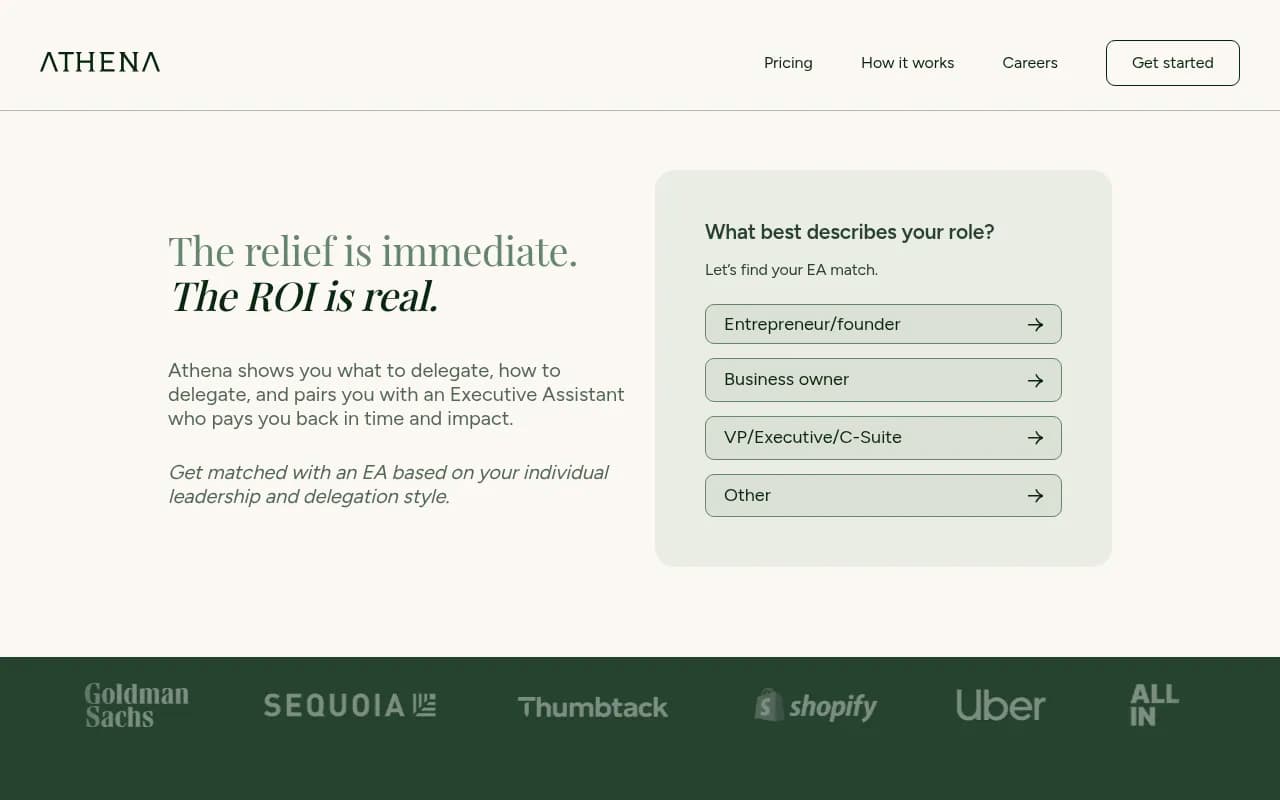
AthenaHQ is Y Combinator-backed and pitches itself at enterprises that want to "dominate AI search results." It's the most polished of the three from a product-design standpoint, and it's clearly built with larger teams in mind.
What it actually does
AthenaHQ's core technology is the Athena Citation Engine (ACE), which tracks citations across 8+ AI models and maps which sources those models are pulling from. This is genuinely useful -- knowing that ChatGPT is citing a competitor's blog post for a query you should be winning is the kind of insight that drives real decisions.
Key features include:
- Citation tracking across 8+ AI models
- Competitor visibility benchmarking
- Multi-team and multi-brand support
- Detailed source attribution (which pages, which domains are being cited)
The first month is offered at $95, then it moves to $295/month. That's a significant jump, and it's worth being clear-eyed about what you're paying for.
Where it falls short
AthenaHQ is fundamentally a monitoring and analysis platform. It tells you what's happening in AI search with impressive depth. What it doesn't do is help you act on that information. There's no built-in content generation, no writing tools, no optimization workflow. You get a clear picture of the problem; fixing it requires a separate process.
For a $295/month tool aimed at enterprises, the absence of any content optimization layer is a real gap. The data is good. The "now what?" is missing.
Peec AI

Peec AI takes a different approach to the same problem. Where Scrunch leans into technical AI delivery and AthenaHQ leans into citation depth, Peec AI focuses on turning tracking data into a prioritized action list.
What it actually does
Peec AI monitors your brand across AI search engines and then surfaces what it calls a "prioritized list of actions" -- specific things you can do to improve your visibility. This framing is more useful than a raw dashboard of numbers, because it forces the tool to make recommendations rather than just report.
The Starter plan at around $95/month gives you access to 3 AI models and covers the core monitoring and action-prioritization features. It's the most accessible price point of the three.
Features include:
- Brand mention and sentiment tracking
- Competitor comparison
- Action-prioritized recommendations
- Prompt-level visibility data
Where it falls short
Peec AI's action recommendations are a step in the right direction, but they stop short of actually helping you create content. The recommendations tell you what to do; execution is still on you. It also covers fewer AI models at the entry tier than AthenaHQ, and the depth of citation analysis is less granular.
Side-by-side comparison
| Feature | Scrunch AI | AthenaHQ | Peec AI |
|---|---|---|---|
| Starting price | $250/month | $295/month ($95 first month) | ~$95/month |
| AI models tracked (entry) | 1 | 8+ | 3 |
| Free trial | 7-day | No | Limited |
| Citation depth | Moderate | High (ACE engine) | Moderate |
| Competitor analysis | Yes | Yes | Yes |
| Content optimization | No | No | Partial (action list) |
| Content generation | No | No | No |
| AI crawler insights | Yes (AXP) | No | No |
| Best for | Startups, mid-market | Enterprise, multi-team | SMBs, agencies |
| Multi-team support | Limited | Yes | Limited |
The actionability problem all three share
Here's the honest assessment: all three tools are primarily monitoring platforms. They're good at telling you where you stand in AI search. None of them fully solve the harder problem of helping you improve that standing.
Scrunch's AXP is the closest thing to an optimization feature -- it's trying to influence how AI crawlers read your site. But it doesn't help you identify which content gaps are costing you citations, and it doesn't help you write content to fill those gaps.
AthenaHQ's citation engine is impressive, but it's diagnostic. Peec AI's action list is a useful nudge, but it's not a workflow.
This is the core tension in the category right now. Most AI visibility tools were built to answer "how visible am I?" The more valuable question -- "what do I do about it?" -- is harder to answer, and most tools haven't built that layer yet.
If closing that loop matters to you, it's worth looking at platforms that combine tracking with content gap analysis and content generation. Promptwatch, for example, is built around exactly that cycle: find the prompts where competitors are visible and you're not, generate content engineered to get cited, then track whether it works.

Which tool fits which team
Choose Scrunch AI if...
You're a startup or mid-market company that wants a monitoring platform with a technically interesting angle on AI content delivery. The AXP feature is worth exploring if you're thinking about how AI crawlers read your site. The 7-day trial makes it easy to test without commitment.
Choose AthenaHQ if...
You're at an enterprise with multiple brands or teams, and you need deep citation analysis with multi-team support. The ACE engine is genuinely strong for understanding exactly which sources AI models are pulling from. Just go in knowing you'll need a separate workflow for content creation.
Choose Peec AI if...
You're working with a tighter budget and want a tool that at least tries to translate data into action. The $95/month entry point is the most accessible of the three, and the action-prioritization framing is more useful than a raw metrics dashboard.
A note on the broader market
These three tools exist in a market that's moving fast. The comparison above reflects where each product stands in mid-2026, but the category is evolving quickly -- features that are missing today may ship in the next quarter.
What's worth watching is whether any of these platforms moves from monitoring toward a full optimization loop. Right now, the tools that are pulling ahead are the ones that don't just show you the data but help you act on it: content gap analysis, AI-native content generation, and traffic attribution that connects AI citations to actual revenue.
For teams that want that full picture today, the comparison gets broader than just these three. Tools like Promptwatch (with its answer gap analysis and built-in AI writing agent) or platforms like Profound and Scrunch are all worth evaluating depending on your budget and team size.
The right question to ask any vendor in this space: "After you show me where I'm invisible, what happens next?" The answer tells you a lot about whether you're buying a dashboard or an optimization platform.
Bottom line
Scrunch AI, AthenaHQ, and Peec AI are all legitimate tools for tracking AI search visibility. None of them is obviously the wrong choice -- it depends on your budget, team size, and how much you need the data to translate into action.
Scrunch is the most technically ambitious. AthenaHQ is the most enterprise-ready. Peec AI is the most accessible. All three leave the content optimization work to you.
If that's fine -- if you have a content team that can take a visibility report and run with it -- any of the three will give you the data you need. If you want a platform that helps you close the loop from "invisible" to "cited," you'll need to look further.