Key takeaways
- All three platforms (Scrunch AI, AthenaHQ, and Peec AI) track brand visibility across AI search engines like ChatGPT, Perplexity, and Gemini -- but they differ significantly in depth and what you can do with the data.
- Peec AI is the most limited of the three: solid for basic monitoring, but it covers only three core AI platforms and has no built-in path to optimization.
- Scrunch AI adds content generation tools and a proprietary Agent Experience Protocol (AXP), making it more action-oriented than Peec.
- AthenaHQ covers 8+ LLMs and includes revenue attribution via Shopify and Google Analytics integrations, but comes at a higher price point.
- If you want to move beyond monitoring entirely -- tracking crawler activity, generating content from real prompt data, and connecting AI visibility to actual traffic -- platforms like Promptwatch close the loop in ways these three don't fully address.
The AI visibility tool market has gotten crowded fast. In early 2025, there were maybe a handful of platforms worth considering. By mid-2026, there are dozens. Scrunch AI, AthenaHQ, and Peec AI are three names that come up constantly in comparison threads, agency Slack groups, and marketing team shortlists.
So which one is actually worth your money?
The honest answer: it depends on what you need. These three tools share a category but serve different use cases. Peec is lean and simple. Scrunch adds optimization features. AthenaHQ goes deeper on enterprise reporting and LLM coverage. None of them are identical, and none of them are perfect.
This guide breaks down exactly where each platform excels, where it falls short, and which type of team should use it.
What these tools actually do
Before getting into the comparison, it's worth being precise about the category. All three tools are "AI visibility" platforms -- meaning they run prompts across AI search engines on a schedule, parse the responses, and track metrics like citation share, brand mention rate, and competitive position over time.
That's the baseline. Where they diverge is in:
- How many AI models they cover
- Whether they help you act on the data or just show it to you
- How they handle content optimization
- Pricing and target audience
Peec AI: clean monitoring, limited scope
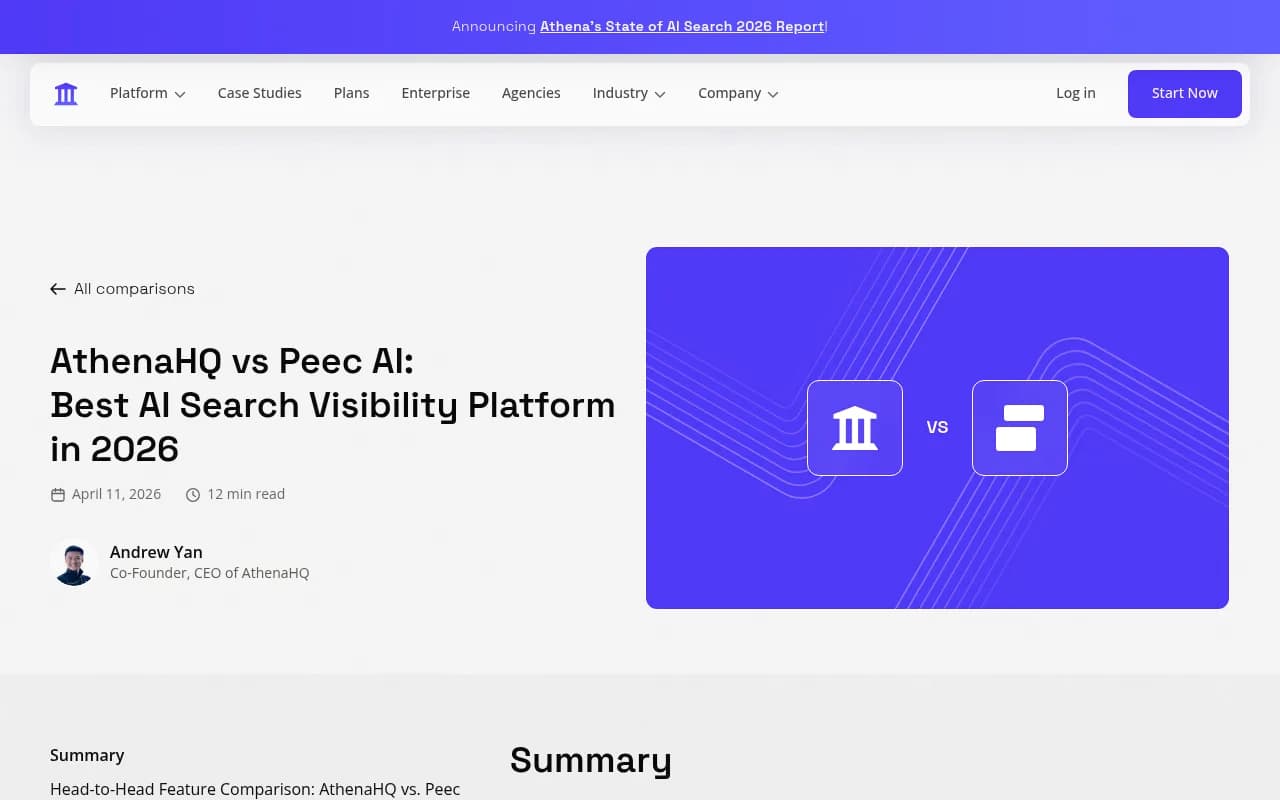
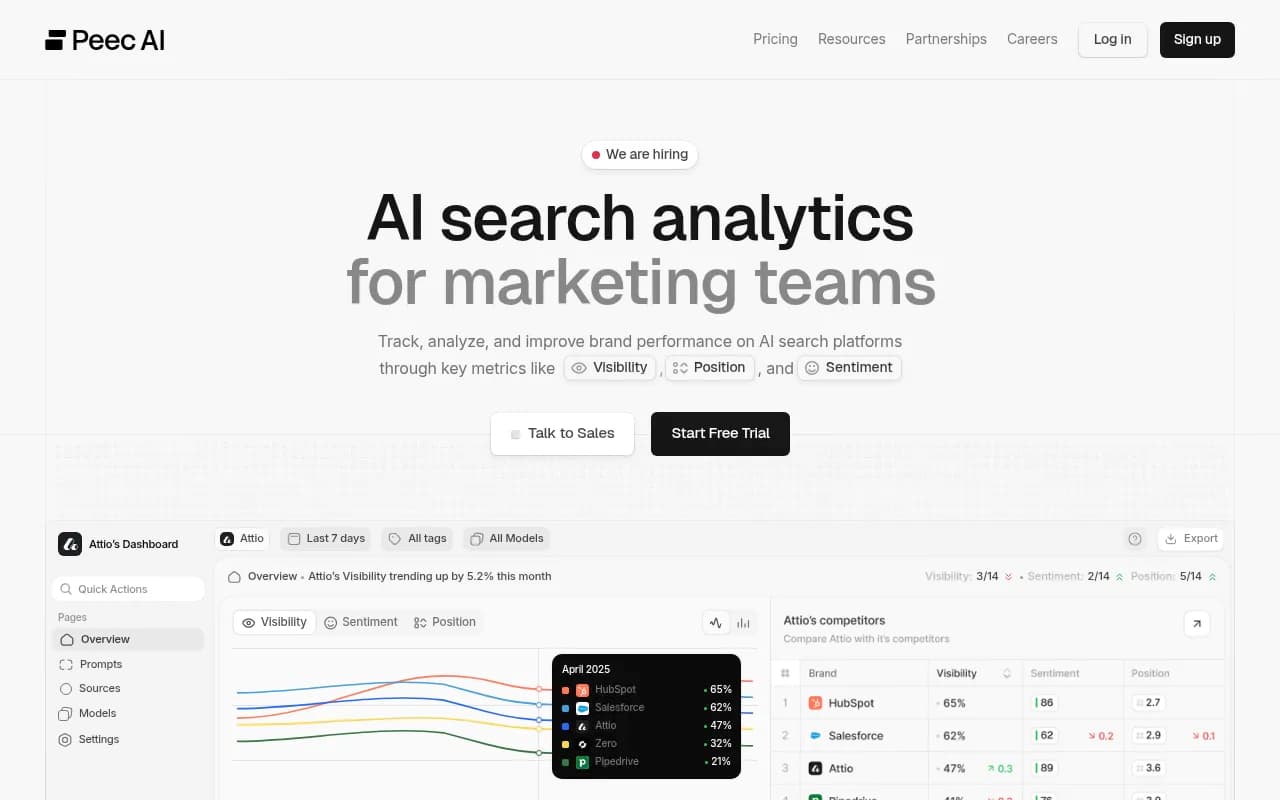
Peec AI is the most straightforward of the three. You set up your brand, define your prompts, and it tracks how often you appear in AI responses across a small set of platforms. The interface is clean. Onboarding is fast. For a team that just wants to know "are we showing up in ChatGPT?" without a steep learning curve, Peec gets the job done.
The problems show up when you want to go deeper.
Peec covers three core AI platforms. That was fine in 2024. In 2026, with Grok, DeepSeek, Meta AI, and Google AI Mode all carving out real user bases, three platforms creates meaningful blind spots. You might be invisible on Gemini and not know it.
The bigger issue is what Peec doesn't do after showing you the data. There's no content gap analysis, no optimization suggestions, no crawler log visibility, no way to understand why you're not being cited. It's a passive dashboard. You see the numbers, then you're on your own to figure out what to do about them.
One blog post from a Peec AI alternatives roundup put it plainly: "Peec is monitoring-only -- no audits, no content tools, no optimization engine." That's accurate. For some teams, that's fine. For teams that want to actually improve their AI visibility, it's a ceiling.
Best for: Small teams or individuals who want a quick, low-friction way to check brand presence in AI search. Not suited for teams that need to act on the data.
Scrunch AI: monitoring plus some optimization muscle
Scrunch sits a step above Peec in terms of capability. It tracks brand visibility across AI engines, but it also includes content generation tools and something called the Agent Experience Protocol (AXP) -- a framework for optimizing how AI agents interact with your content.
The content tools are genuinely useful. You can generate articles and content briefs from within the platform, which means you don't have to export data and switch to a separate tool to act on what you find. That's a real workflow improvement over Peec.
Scrunch also has a cleaner competitive intelligence layer. You can see how your brand compares to competitors across AI responses, which prompts they're winning, and where you're losing ground.
Where Scrunch gets more complicated is pricing and depth. It's positioned at a higher price point than Peec, and some teams find the feature set doesn't quite justify the jump -- especially if they're not using the content generation tools heavily. The AXP framework is interesting but still relatively new, and the documentation around it is thin compared to more established platforms.
Coverage is better than Peec but still not exhaustive. Depending on your plan, you may not have visibility into all the AI models that matter for your industry.
Best for: Marketing teams that want monitoring plus some content optimization capability, and are comfortable paying more for a more integrated workflow.
AthenaHQ: the most feature-complete of the three
AthenaHQ is the most ambitious of the three platforms. It covers 8+ LLMs including ChatGPT, Gemini, Claude, and Copilot. It includes a proprietary system called the Athena Citation Engine (ACE) that autonomously identifies content gaps, drafts optimizations, and executes multi-step workflows. And it has native integrations with Shopify and Google Analytics for revenue attribution -- meaning you can track the path from AI mention to actual sale.
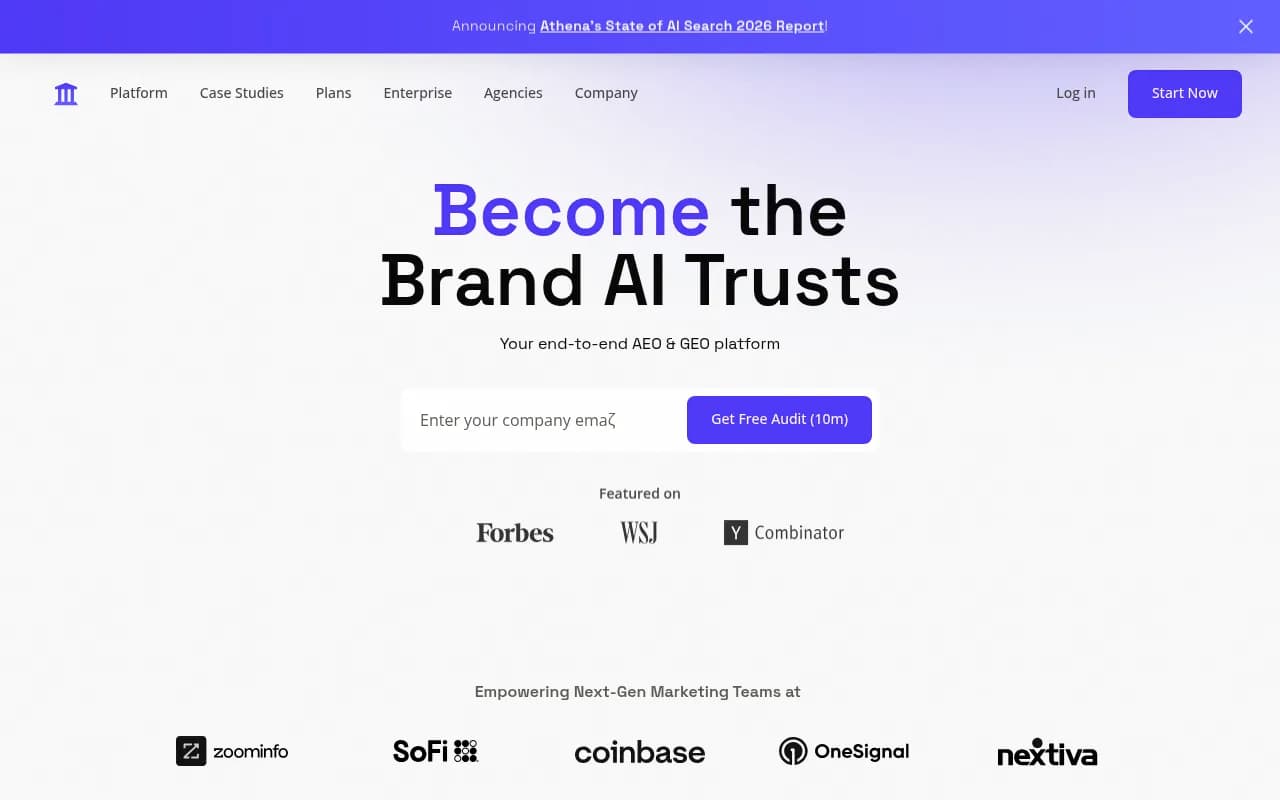
That last point is significant. Most AI visibility tools stop at "you were cited X times." AthenaHQ tries to answer "and that citation drove Y in revenue." For e-commerce brands and teams with direct attribution requirements, that's a meaningful differentiator.
AthenaHQ also published a comparison claiming a +45% increase in AI answer share over a 30-day test period versus Peec AI's 8% improvement. That's a self-reported number from their own comparison page, so take it with appropriate skepticism -- but the directional gap between an optimization-focused platform and a monitoring-only one is plausible.
The trade-off is price and complexity. AthenaHQ is priced for enterprise and mid-market teams. Smaller teams or solo marketers will find it expensive relative to what they actually need. The platform also has a steeper learning curve than either Peec or Scrunch.
Best for: Mid-market and enterprise teams that need comprehensive LLM coverage, revenue attribution, and are willing to invest in a more complex platform.
Feature comparison table
| Feature | Peec AI | Scrunch AI | AthenaHQ |
|---|---|---|---|
| AI models covered | ~3 | Multiple (varies by plan) | 8+ |
| Content generation | No | Yes | Yes (via ACE) |
| Content gap analysis | No | Partial | Yes |
| Revenue attribution | No | No | Yes (Shopify + GA) |
| Crawler log visibility | No | No | No |
| Competitor heatmaps | Basic | Yes | Yes |
| Prompt volume/difficulty | No | Limited | Limited |
| Reddit/YouTube insights | No | No | No |
| Pricing (entry) | Low | Mid | High |
| Best for | Small teams | Growing teams | Enterprise |
The gap none of them fully close
Here's the honest assessment: all three platforms are primarily monitoring tools. Even AthenaHQ, which goes furthest toward optimization, still leaves teams doing a lot of manual work to translate data into content that actually gets cited.
The category-level limitation is this: knowing you're not being cited is only useful if you know what to create to fix it, can create it efficiently, and can track whether it worked. That full loop -- find the gap, generate the content, measure the result -- is where most platforms, including these three, still leave teams to stitch things together themselves.
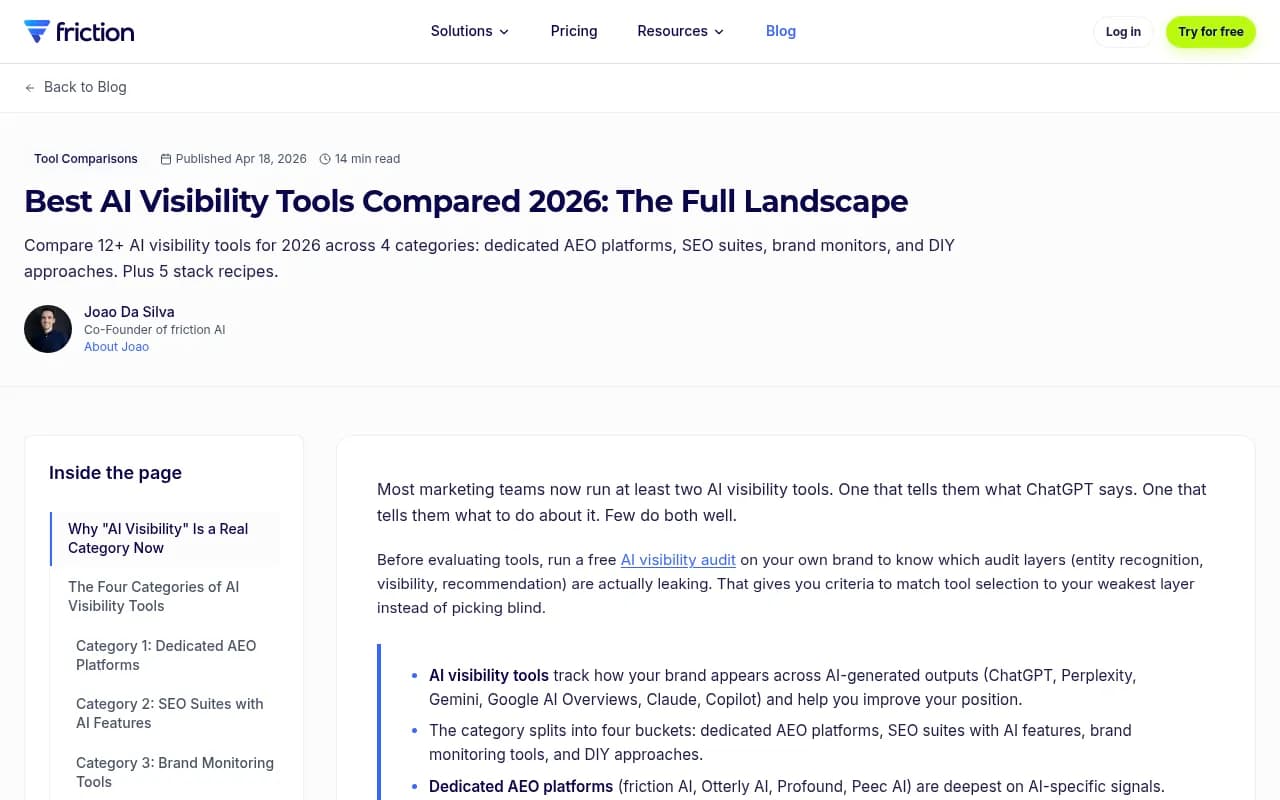
Platforms that are explicitly built around that action loop are worth looking at alongside these three. Promptwatch is one that closes the loop more completely -- it combines Answer Gap Analysis (showing exactly which prompts competitors rank for that you don't), Content Agents that generate articles grounded in real prompt data, and page-level tracking that connects published content to citation outcomes. It also includes AI crawler logs, which none of the three tools above offer.

That's not to say Scrunch, AthenaHQ, or Peec are bad tools. They're not. But if your goal is to actually improve your AI visibility rather than just measure it, the monitoring-to-optimization gap is worth thinking about before you commit to a platform.
How to choose between the three
The right choice depends less on which tool has the most features and more on where your team is right now.
Choose Peec AI if: You're just getting started with AI visibility tracking, you want something fast to set up, and you don't need to act on the data immediately. It's a good way to establish a baseline without a big investment.
Choose Scrunch AI if: You want monitoring plus content tools in one place, you're a growing marketing team that needs to show progress, and you're comfortable with a mid-tier price point. The content generation features mean you can move from insight to action without switching tools.
Choose AthenaHQ if: You're at a mid-market or enterprise company, you need comprehensive LLM coverage, and revenue attribution is a requirement for your reporting. The higher price is justified if you're using the full platform.
Look beyond all three if: You need crawler log visibility, real prompt volume data, Reddit and YouTube citation tracking, or a tighter connection between content creation and citation outcomes. At that point, you're looking at a different class of platform.
A note on the broader market
It's worth zooming out for a moment. The AI visibility tool market in 2026 looks a lot like the SEO tool market in 2012 -- lots of players, overlapping features, and genuine confusion about what actually moves the needle.
The tools that will matter in two years are the ones that connect monitoring to outcomes. Right now, most platforms (including the three reviewed here) are better at telling you what's happening than helping you change it. That gap is closing, but it's not closed yet.
When evaluating any AI visibility platform, ask three questions: Does it show me which specific content gaps are costing me citations? Does it help me create content to fill those gaps? Does it track whether that content actually got cited? If the answer to any of those is no, you're getting part of the picture.
Bottom line
Peec AI, Scrunch AI, and AthenaHQ are all legitimate tools for tracking brand visibility in AI search. Peec is the simplest and cheapest. Scrunch adds content tools. AthenaHQ goes deepest on LLM coverage and attribution.
None of them are monitoring-only in the strictest sense -- Scrunch and AthenaHQ both include optimization features. But all three still leave meaningful gaps between data and action, particularly around crawler visibility, prompt intelligence, and the full content-to-citation workflow.
If you're choosing between the three, AthenaHQ is the most capable for teams that can afford it. Scrunch is the best middle-ground option. Peec is fine for getting started.
If you're evaluating the broader market, the question to ask is whether you want a tool that shows you the problem or one that helps you fix it.