Key takeaways
- Otterly.AI is a solid AI search monitoring tool with a clean interface, good multi-engine coverage, and a reasonable price point -- but it's built to show you data, not help you act on it.
- The platform has no content generation, no answer gap analysis, no crawler logs, and no traffic attribution. You see the problem; you're on your own to fix it.
- For teams that just want a dashboard to track brand mentions across ChatGPT, Perplexity, and Google AI Overviews, Otterly.AI is fine.
- For teams that want to actually improve their AI visibility -- close content gaps, generate optimized articles, and connect citations to revenue -- you need a platform that goes further.
- Promptwatch is the most complete option in 2026, covering the full loop from gap discovery to content creation to citation tracking.
What Otterly.AI actually does
Otterly.AI has grown quickly. It claims 30,000+ marketing professionals using the platform, landed on G2's 2026 Rookies of the Year list, and has built a genuinely decent monitoring product. The interface is clean. Setup is fast. You pick your prompts, connect your brand, and within hours you're looking at brand coverage charts, competitor comparisons, and mention counts across multiple AI engines.
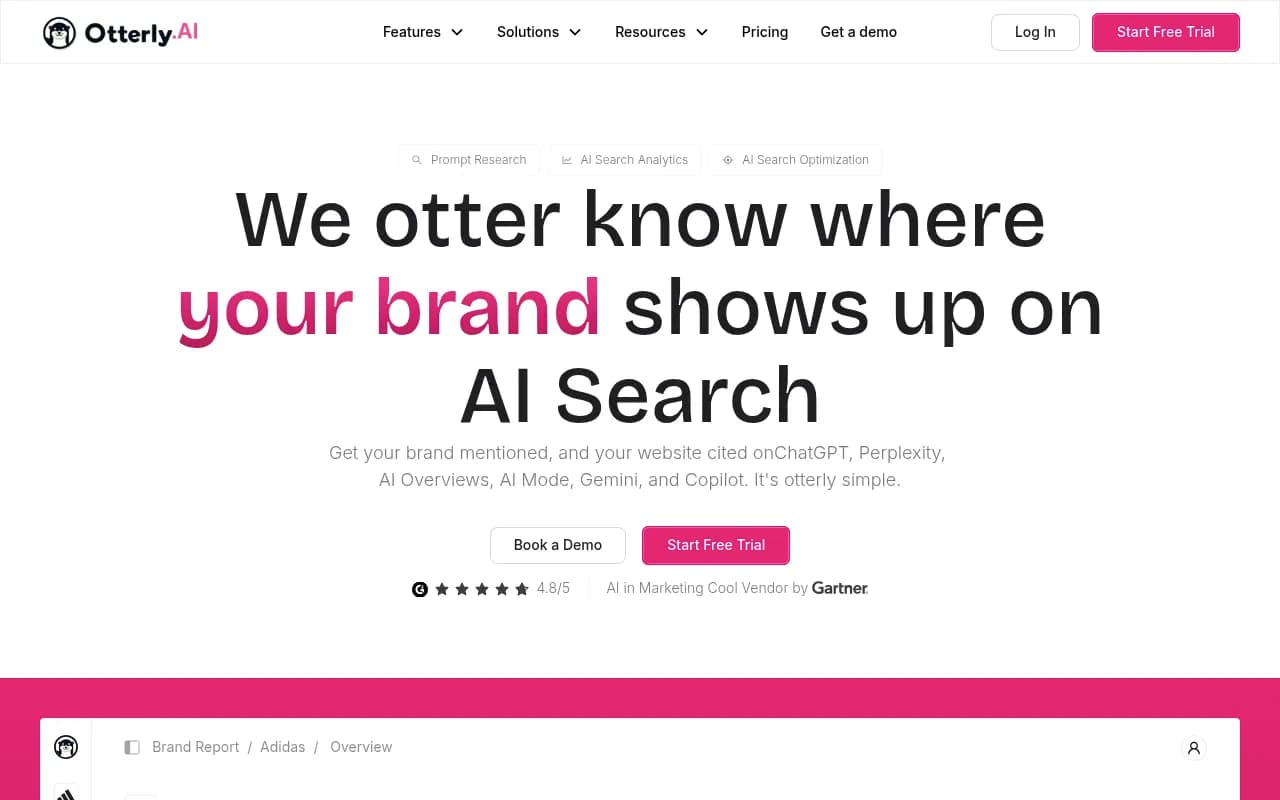
That's the core of what it does: it monitors. You can track how often your brand appears when someone asks ChatGPT or Perplexity a relevant question. You can see how you stack up against competitors. You can get alerts when your visibility drops.
That's genuinely useful -- especially if you're a marketer who just needs to prove to leadership that AI search is worth paying attention to, or if you're an agency that wants a quick snapshot for a client.

But here's where things get honest: monitoring is step one of a three-step process. Most teams using Otterly.AI are stuck at step one.
The gap that monitoring alone can't close
When you open Otterly.AI and see that a competitor is getting cited in 68% of AI responses to your target prompts while you're at 12%, the natural question is: why, and what do I do about it?
Otterly.AI doesn't answer either of those questions.
It can't tell you which specific content gaps are causing the problem. It can't show you which pages on your site AI models are reading (or failing to read). It won't generate a content brief, write an article, or suggest what topics you need to cover to close the gap. And it has no way to connect any of this to actual traffic or revenue.
This isn't a knock on the team -- it's just a product positioning choice. Otterly.AI is built to be a monitoring dashboard. It's priced like one too, which makes it attractive for smaller teams or agencies that want something lightweight.
The problem is that most teams buying AI visibility tools in 2026 don't just want to watch. They want to win. And watching without acting is expensive in a different way -- you're paying for data that sits in a dashboard while competitors keep getting cited.
A Reddit thread comparing AI visibility tools in 2026 put it plainly: "Whether the tool helps you take action, not just look at charts" is the key differentiator. Otterly.AI consistently comes up in that thread as the go-to for fast monitoring and alerts -- but not for optimization.
What's missing from Otterly.AI
To be specific about the gaps:
No answer gap analysis. You can see that you're not being cited for a prompt. You can't see why -- which topics, angles, or questions your content is failing to address that competitors' content handles well.
No content generation. There's no way to go from "I'm missing visibility here" to "here's a draft article that targets this gap." You have to leave the platform entirely and figure out the content strategy yourself.
No AI crawler logs. You can't see which pages on your site AI crawlers are actually visiting, how often they return, or whether they're hitting errors. This matters because a page can exist and still be invisible to AI models if it's not being crawled correctly.
No traffic attribution. If your AI visibility improves, Otterly.AI can't tell you whether that translated into actual website visits or revenue. The data lives in a silo.
No prompt volume or difficulty scoring. Not all prompts are worth chasing. Some have high query volume, some are easier to win than others. Otterly.AI doesn't help you prioritize.
No Reddit or YouTube tracking. A significant portion of AI citations come from Reddit threads and YouTube content. Otterly.AI doesn't surface these as sources to target.
These aren't minor features. They're the difference between a monitoring tool and an optimization platform.
Who Otterly.AI is actually right for
To be fair: there are teams for whom Otterly.AI is the right call.
If you're just starting to pay attention to AI search and need a simple, affordable way to track brand mentions across ChatGPT, Perplexity, and Google AI Overviews -- Otterly.AI gets you there without much friction.
If you're an agency that needs to show clients a visibility score and a competitor comparison chart, it's a reasonable choice for that deliverable.
If your content team is already strong and you just need the monitoring layer to know where to focus, Otterly.AI can serve as the signal while your team does the work elsewhere.
But if you're a marketing or SEO team that wants to actually move the needle -- close gaps, generate content, track what's working -- you'll outgrow it fast.
What to use instead in 2026
Here's an honest comparison of the main alternatives, including what each one actually does beyond monitoring.
| Tool | Monitoring | Content gap analysis | Content generation | Crawler logs | Traffic attribution | Prompt volume data |
|---|---|---|---|---|---|---|
| Otterly.AI | Yes | No | No | No | No | No |
| Promptwatch | Yes | Yes | Yes (AI agents) | Yes | Yes | Yes |
| Profound | Yes | Partial | No | No | No | No |
| AthenaHQ | Yes | No | No | No | No | No |
| Peec AI | Yes | No | No | No | No | No |
| Scrunch | Yes | Partial | No | No | No | No |
| ZipTie | Yes | Yes | No | No | No | Partial |
Promptwatch -- the full optimization loop
Promptwatch is the most complete platform in this space right now. The core difference is that it's built around what happens after you see the data.
The workflow goes: find the gaps (Answer Gap Analysis shows you exactly which prompts competitors rank for that you don't), create content to close them (Content Agents generate articles, comparisons, and briefs grounded in real prompt data and citation analysis), then track whether it worked (page-level citation tracking, crawler logs, and traffic attribution connect visibility to revenue).
That loop -- find gaps, create content, track results -- is what separates an optimization platform from a monitoring dashboard. Promptwatch also covers 10 AI models, tracks Reddit and YouTube as citation sources, monitors ChatGPT Shopping appearances, and gives you prompt volume and difficulty scores so you can prioritize the gaps worth chasing.

ZipTie -- good for deep analysis
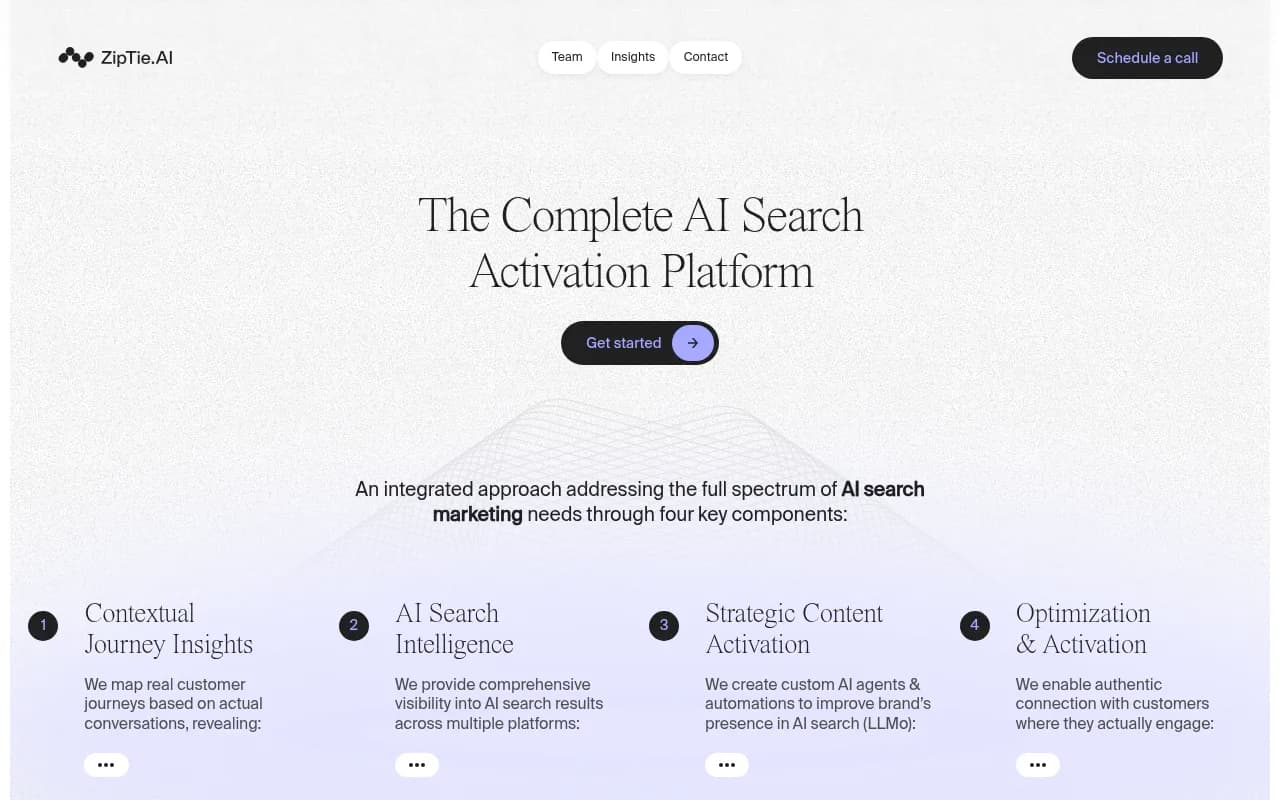
ZipTie sits somewhere between pure monitoring and optimization. It does answer gap analysis reasonably well and gives you more strategic depth than Otterly.AI. It doesn't have content generation built in, so you still need to take the insights elsewhere to act on them -- but it's a step up if you want richer data without committing to a full platform.
Profound -- enterprise monitoring with more depth
Profound is a solid choice for enterprise teams that need detailed monitoring across multiple brands and regions. It goes deeper than Otterly.AI on the data side, but it's still primarily a monitoring and reporting tool. No content generation, no crawler logs. The price point reflects its enterprise positioning.
Peec AI -- simple and affordable monitoring
If Otterly.AI's price is still too high and you just want basic monitoring, Peec AI is worth looking at. It's lightweight, focused, and honest about what it is. Don't expect optimization features -- it's a tracker, nothing more.

Scrunch -- monitoring with some optimization signals
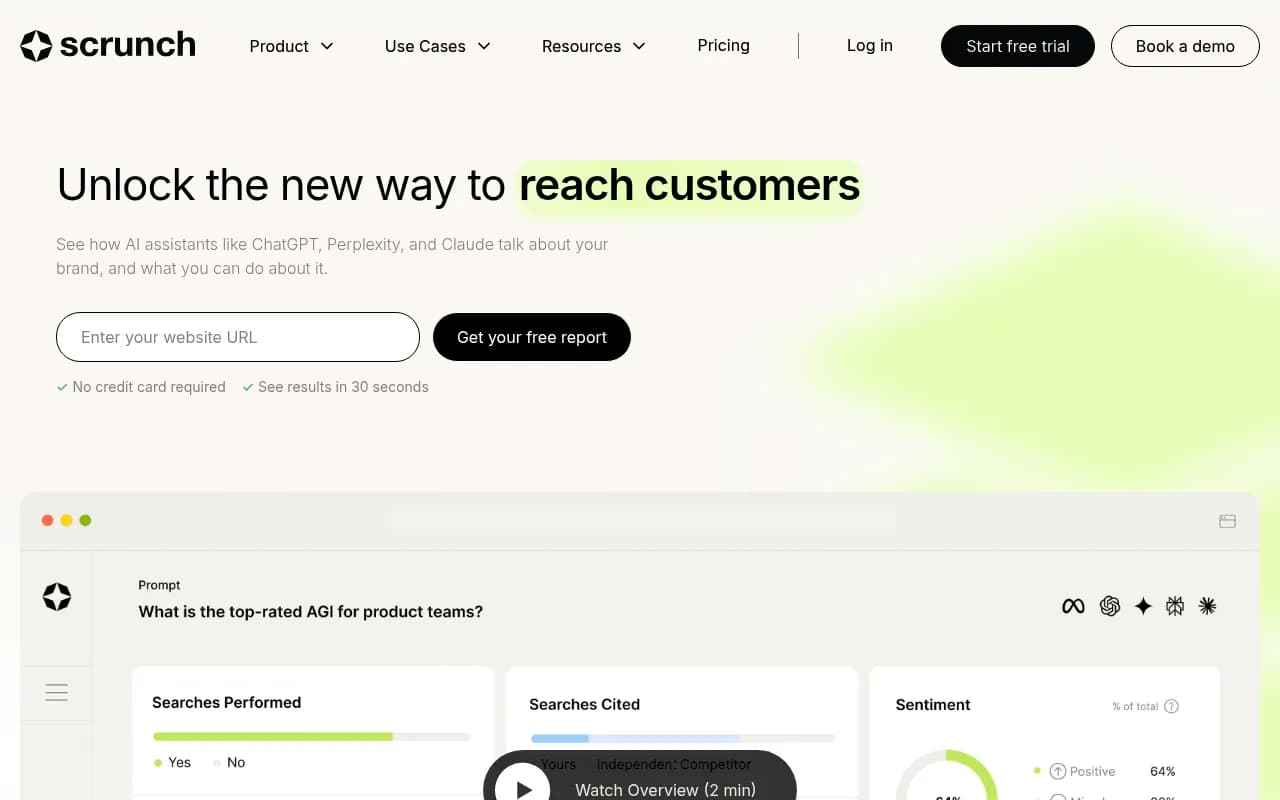
Scrunch has been building out its feature set and now offers some content optimization signals alongside its monitoring. It's not a full content generation platform, but it gives you more directional guidance than Otterly.AI on what to fix.
The real question to ask before you buy
Before choosing any AI visibility tool, ask: "What happens after I see the data?"
If the answer is "I take it to my content team and we figure it out," then a monitoring tool like Otterly.AI might be enough. The data is real, the interface is clean, and the price is reasonable.
If the answer is "I need the tool to help me close the gaps," then you need something that goes further. The monitoring layer is table stakes in 2026 -- every serious platform has it. What separates the useful tools from the expensive dashboards is whether they help you do something about what you find.
Otterly.AI is a good monitoring tool. It's just not an optimization platform, and it doesn't claim to be one. The problem is that a lot of teams buy it expecting the latter and end up with the former.
If you're in that situation, the path forward is clear: use a platform that closes the loop. The data is only valuable if it leads somewhere.