Key takeaways
- Otterly.AI is a solid entry-level monitoring tool, but it stops at showing you data -- there's no content generation, no crawler logs, and no gap analysis to act on what you find.
- Profound is the best-funded platform in this category ($58.5M raised) and has strong enterprise credentials, but it comes at a steep price and lacks Reddit/YouTube tracking and ChatGPT Shopping visibility.
- Relixir combines monitoring with content generation, making it a reasonable mid-market option, though it's newer and less proven at enterprise scale.
- Promptwatch is the only platform in this comparison rated as a "Leader" across all evaluation categories -- monitoring, analytics, optimization, and content generation -- and it's the only one that closes the full loop from gap discovery to content creation to result tracking.
- For most enterprise brands, the question isn't just "what does ChatGPT say about us?" It's "what do we do about it?" Only one of these platforms answers both.
If you've been evaluating AI visibility tools in 2026, you've probably noticed that the category has exploded. There are now dozens of platforms claiming to track your brand across ChatGPT, Perplexity, Gemini, and the rest. Most of them are dashboards. They show you a number. They don't tell you what to do next.
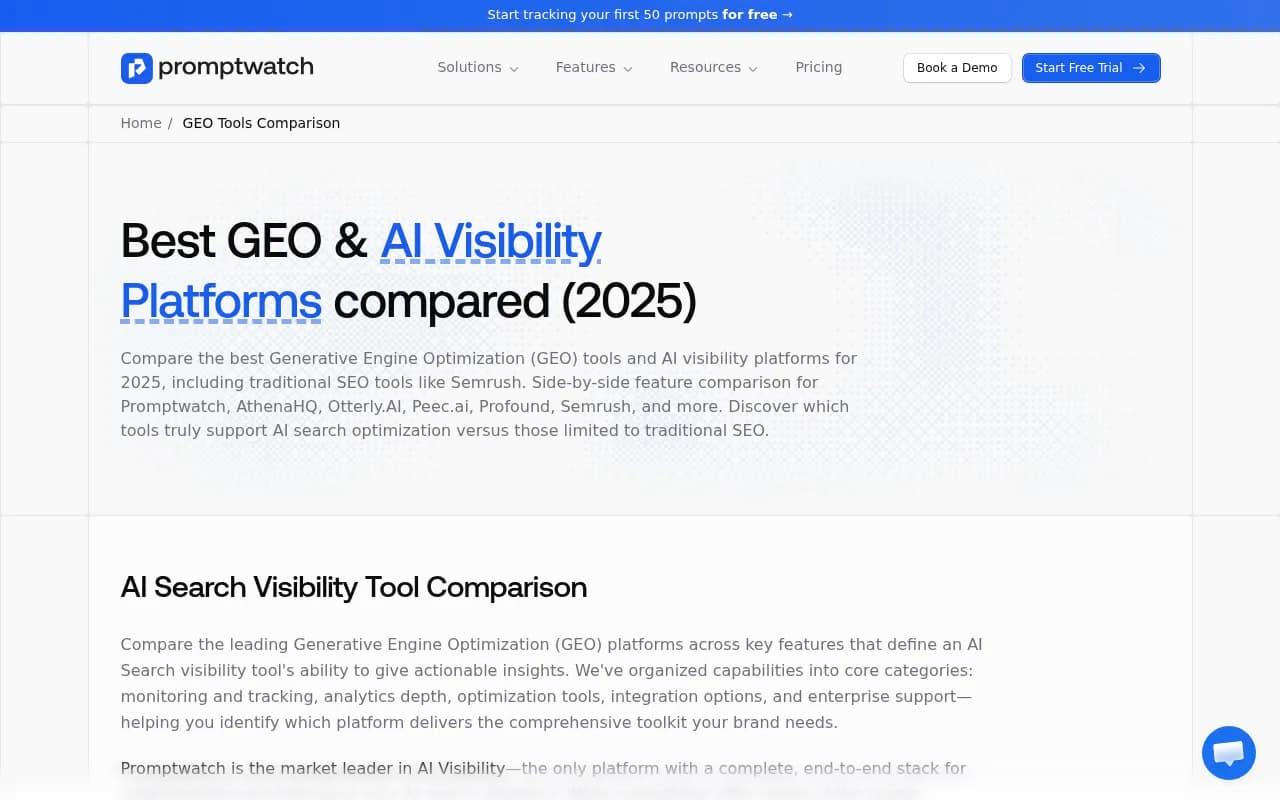
This guide focuses on four platforms that come up most often in enterprise evaluations: Otterly.AI, Promptwatch, Profound, and Relixir. They're meaningfully different from each other -- in philosophy, pricing, and what they actually help you accomplish. Here's how they stack up.
Why this comparison matters in 2026
ChatGPT crossed 900 million weekly active users in early 2026. Google AI Overviews now appear across a significant share of high-intent queries. Perplexity has carved out a real foothold in the research and analyst segment. These aren't fringe surfaces anymore -- they're where buying decisions are being shaped.
The problem for enterprise brands is that traditional SEO tools weren't built for this. Ahrefs tracks Google rankings. Brand24 tracks social mentions. Neither tells you what ChatGPT says when a prospect asks "what's the best [your category] platform for a 500-person company?"
That's the gap AI visibility tools are filling. But not all of them fill it equally.
The four platforms at a glance
Otterly.AI
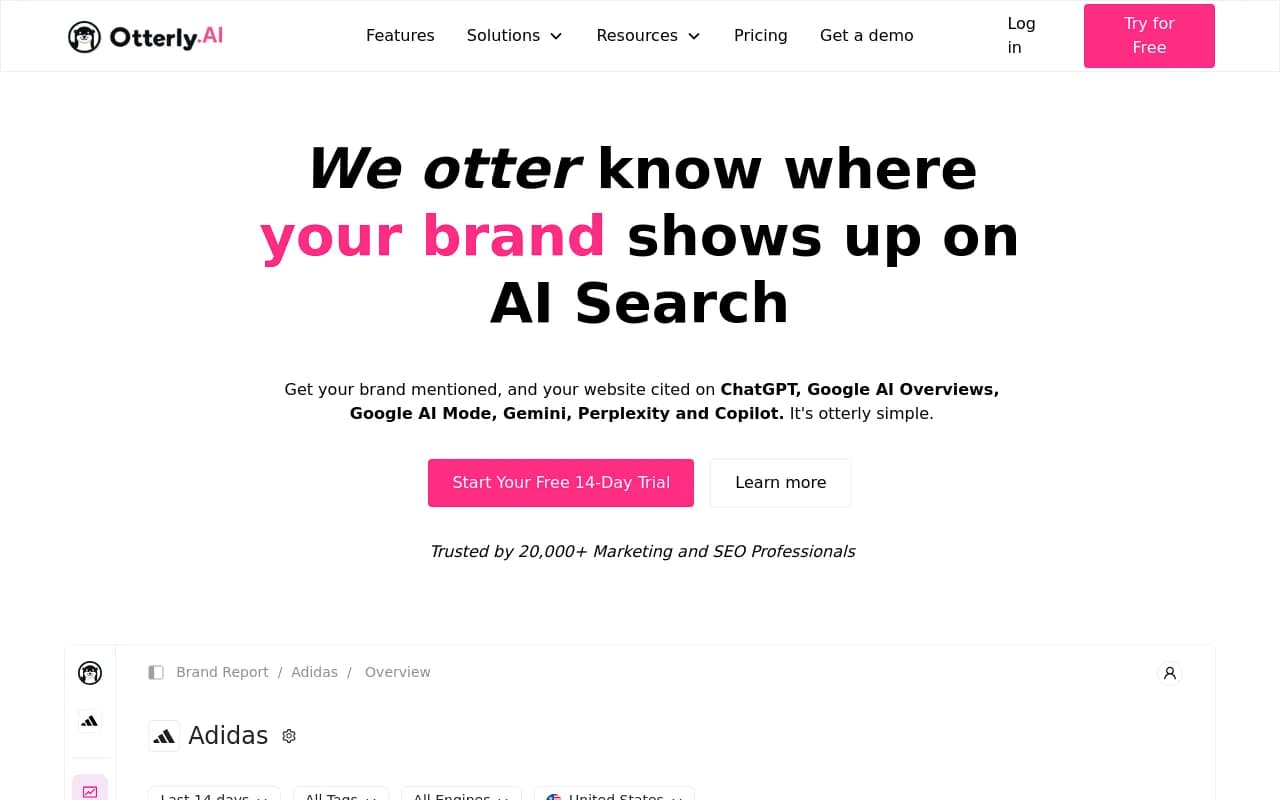
Otterly.AI is one of the more established names in AI visibility monitoring. It tracks brand mentions and citations across major AI engines, gives you sentiment analysis, and lets you run competitive comparisons. The UI is clean and the onboarding is fast.
What it doesn't do is help you act on what you find. There's no content generation, no crawler log analysis, no gap analysis that shows you which prompts competitors are winning and you're not. It's a monitoring dashboard -- useful for awareness, but it leaves the "now what?" question entirely to you.
Promptwatch
Promptwatch is built around a different premise: monitoring is only useful if it leads somewhere. The platform tracks your visibility across 10 AI models (ChatGPT, Perplexity, Claude, Gemini, Grok, DeepSeek, Copilot, Meta AI, Mistral, and Google AI Overviews), but the differentiating layer is what happens after you see the data.
Answer Gap Analysis shows you exactly which prompts competitors rank for that you don't -- and what content is missing from your site. Content Agents then generate articles, listicles, and comparisons grounded in real prompt data, citation patterns, and competitor analysis. AI Crawler Logs show you which pages AI engines are actually reading, how often, and whether they're converting from crawl to citation. It's the only platform in this comparison that closes the full loop.
Promptwatch is used by 1,480+ brands and agencies including Booking.com and Center Parcs, and its data has been cited in the Wall Street Journal and Axios.

Profound
Profound is the most-funded platform in the AEO category -- $58.5M raised from Khosla Ventures, Kleiner Perkins, and Sequoia. It's genuinely enterprise-grade: strong data infrastructure, solid reporting, and a feature set built for large teams managing multiple brands across regions.
The tradeoffs are real though. Profound is expensive (pricing isn't public but enterprise contracts are typically five figures annually). It doesn't track Reddit or YouTube, which are increasingly important sources that influence what AI models recommend. And it doesn't track ChatGPT Shopping, which matters if you're in e-commerce or have products that appear in AI-generated buying guides.
Relixir
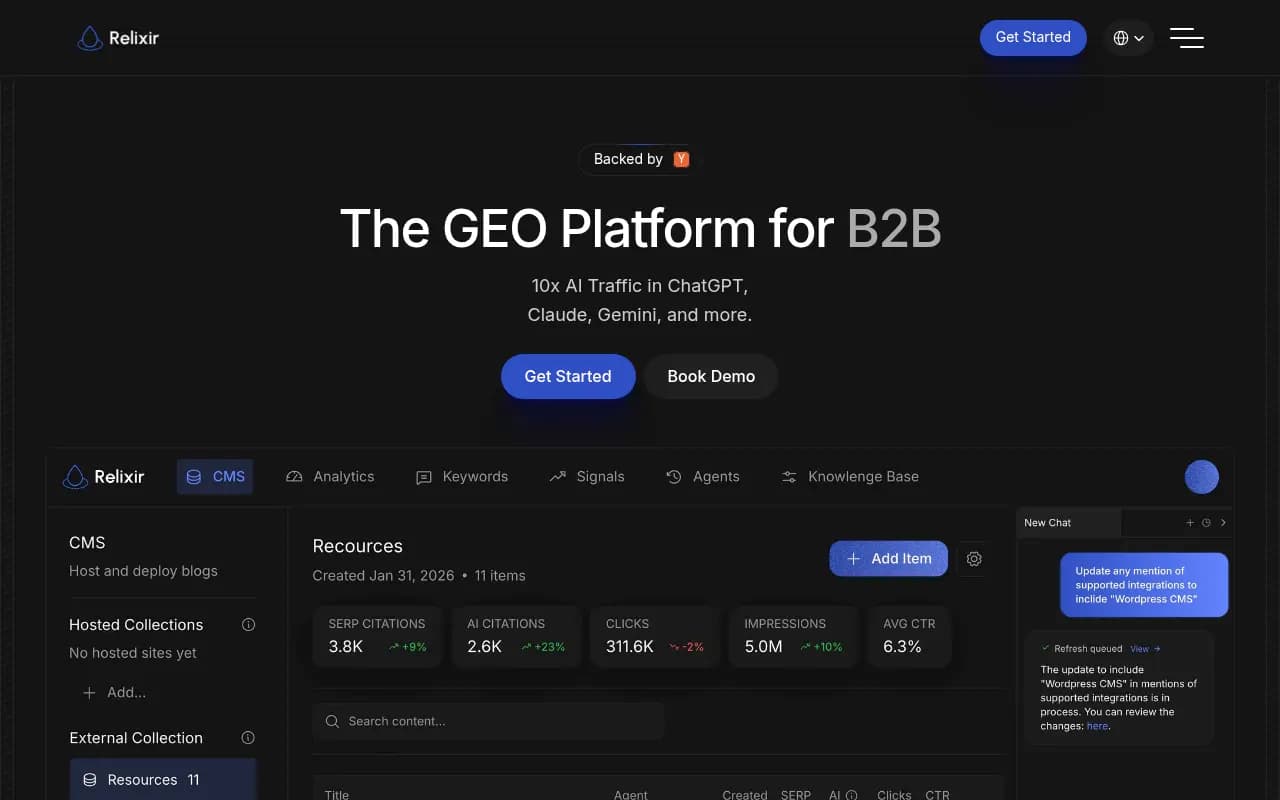
Relixir is a newer entrant that combines AI visibility monitoring with content generation capabilities. It's positioned as an all-in-one GEO platform and has gained traction with mid-market teams that want more than a monitoring dashboard but aren't ready for enterprise-level pricing.
The platform is less mature than the others in this comparison. Enterprise teams with complex multi-brand, multi-region requirements may find it limiting. But for a growing company that wants monitoring and content creation in one tool, it's worth evaluating.
Feature-by-feature comparison
| Feature | Otterly.AI | Promptwatch | Profound | Relixir |
|---|---|---|---|---|
| AI model coverage | 5+ | 10 | 6+ | 5+ |
| Prompt tracking | Yes | Yes | Yes | Yes |
| Citation analysis | Basic | Deep (4.5B+ processed) | Yes | Basic |
| Competitor visibility | Yes | Yes (heatmaps) | Yes | Yes |
| Answer gap analysis | No | Yes | Partial | Partial |
| Content generation | No | Yes (Content Agents) | No | Yes |
| AI crawler logs | No | Yes | No | No |
| Reddit/YouTube tracking | No | Yes | No | No |
| ChatGPT Shopping tracking | No | Yes | No | No |
| Prompt volume/difficulty scores | No | Yes | No | No |
| Query fan-outs | No | Yes | No | No |
| Multi-language/region | Limited | Yes | Yes | Limited |
| Traffic attribution | No | Yes | Partial | No |
| Pricing transparency | Yes | Yes | No (enterprise) | Partial |
| Starting price | ~$99/mo | $99/mo | Enterprise only | ~$99/mo |
Where each platform wins
Otterly.AI is best for: teams that just need a monitoring baseline
If your team is early in the AI visibility journey and you need a clean, affordable way to start tracking brand mentions across AI engines, Otterly.AI gets the job done. It's fast to set up and the reporting is easy to share with stakeholders who are new to the concept.
The ceiling is low, though. Once you've been tracking for a few months and you want to actually improve your visibility, you'll hit a wall. There's no path from "here's what we found" to "here's what to do about it."
Profound is best for: large enterprises with dedicated data teams
Profound's infrastructure is genuinely impressive. If you're a Fortune 500 brand with a dedicated analytics team, a large budget, and a need for deep data exports and custom reporting, Profound is worth the investment. The Kleiner Perkins and Sequoia backing means the product roadmap is well-resourced.
But if you're expecting the platform to help you create content or act on the gaps it surfaces, you'll be disappointed. It's a sophisticated monitoring and analytics tool, not an optimization platform.
Relixir is best for: mid-market teams wanting monitoring + content in one tool
Relixir's combination of tracking and content generation makes it a reasonable choice for teams that don't want to manage two separate platforms. It's newer, so the feature depth isn't as developed as Promptwatch, but the direction is right.
If you're a 50-200 person company with a lean marketing team, Relixir is worth a trial. If you're managing multiple brands across multiple regions with complex reporting requirements, it'll probably feel limiting within a few months.
Promptwatch is best for: brands that want to actually improve their AI visibility
This is where the comparison gets lopsided. Promptwatch is the only platform here that treats AI visibility as an optimization problem, not just a reporting problem.
The Answer Gap Analysis shows you the specific prompts where competitors are visible and you're not -- not in aggregate, but prompt by prompt, with the actual content gaps identified. The Content Agents generate articles and briefs grounded in real citation data, not generic SEO templates. The AI Crawler Logs show you exactly which pages ChatGPT and Perplexity are reading, how often they return, and whether those crawls are converting to citations.
That last capability is particularly rare. Most competitors don't have it at all. Knowing that Perplexity crawled your pricing page three times last month but never cited it is actionable information. Knowing your citation rate went up 40% after publishing a new comparison article is how you connect content investment to business outcomes.
Pricing reality check
| Platform | Entry price | Mid-tier | Enterprise |
|---|---|---|---|
| Otterly.AI | ~$99/mo | ~$299/mo | Custom |
| Promptwatch | $99/mo (Essential) | $249/mo (Professional) | $579/mo (Business) + custom |
| Profound | Not public | Not public | ~$2,000+/mo |
| Relixir | ~$99/mo | ~$299/mo | Custom |
Profound's pricing is the biggest wildcard here. Enterprise contracts are typically negotiated and can run well into five figures annually. That's not inherently wrong -- if the platform delivers the value, the price is justified. But it does mean you're committing significant budget before you've fully validated the ROI.
Promptwatch's pricing is transparent and scales predictably: $99/mo for one site and 50 prompts, $249/mo for two sites and 150 prompts with crawler logs and city-level tracking, $579/mo for five sites and 350 prompts. There's a free trial, which matters when you're evaluating whether the gap analysis actually surfaces useful insights for your specific category.
The question enterprise teams should actually be asking
Most platform evaluations focus on features. That's useful, but it misses the real question: what changes after you buy this?
With Otterly.AI or Profound's monitoring-only approach, the answer is: you know more. You can see your citation share, track trends, and report to leadership that your AI visibility is improving or declining. That's valuable, but it's passive.
With Promptwatch, the answer is different. You know more, and you have a systematic way to act on it. The gap analysis tells you what to create. The Content Agents create it. The crawler logs and citation tracking tell you whether it worked. That's a closed loop -- and it's the difference between a dashboard and a platform that actually moves numbers.
What about the broader landscape?
These four platforms aren't the only options. A few others worth knowing about:
- SE Ranking has added AI visibility tracking as an add-on to its core SEO platform -- reasonable if you're already a customer, but the AI features are secondary.
- Scrunch is a solid monitoring tool with good enterprise support, though it lacks content generation and Reddit tracking.
- AthenaHQ focuses on monitoring and is well-regarded, but like Profound, it stops short of helping you create content to close the gaps it identifies.
For a broader view of the category, there are now 40+ tools claiming some form of AI visibility tracking. Most are monitoring dashboards. A handful are trying to build the full optimization stack. The distinction matters more than any individual feature comparison.
How to choose
Here's a simple decision framework:
- If you need a quick, affordable way to start tracking AI mentions and you're not ready to invest in optimization: start with Otterly.AI.
- If you're a large enterprise with a dedicated analytics team and budget isn't a constraint: Profound is worth evaluating, but go in with clear expectations about what it does and doesn't do.
- If you want monitoring and basic content generation in one tool at a mid-market price: Relixir is a reasonable option, especially if you're earlier in your AI visibility journey.
- If you want to actually improve your AI search visibility -- not just measure it -- and you need a platform that can scale with a serious marketing operation: Promptwatch is the strongest choice in this comparison.
The AI search landscape has shifted fast enough that most brands are still in "let's understand what's happening" mode. That's fine for now. But the brands that move from monitoring to optimization in the next 12 months will have a meaningful head start on the ones that don't.
The tools that help you make that move are the ones worth investing in.