Key takeaways
- Otterly.AI is a solid entry-level AI visibility tracker, but its monitoring-only approach leaves small businesses without a clear path to actually improving their rankings in ChatGPT, Perplexity, and Google AI Overviews.
- The best alternatives in 2026 combine monitoring with some form of content optimization, gap analysis, or actionable recommendations -- not just dashboards.
- Budget matters for small businesses: most of the tools below have plans under $100/month or offer meaningful free tiers.
- If you want a platform that closes the full loop (find gaps, create content, track results), Promptwatch is the only tool in this category rated as a Leader across all GEO platform dimensions.
- The right tool depends on your workflow: some businesses need simple tracking, others need content generation, and a few need both.
There's a specific frustration that comes with monitoring-only tools. You open the dashboard, you see your brand appeared in 4 out of 12 ChatGPT responses this week, and then... nothing. No explanation for the 8 you missed. No suggestion for what to change. Just a number that makes you feel like you should be doing something, without telling you what.
That's the core complaint about Otterly.AI from small business users in 2026. It's not a bad tool -- it genuinely tracks AI visibility across ChatGPT, Perplexity, Google AI Overviews, and Gemini at a price point that doesn't require a marketing budget approval chain. But as one Reddit user put it bluntly: "It tracks the source, but gives zero actionable strategy on how to restructure content to get cited."
For small businesses, that gap matters more than it does for enterprises with dedicated GEO teams who can interpret raw data and act on it independently. If you're a team of two or three people trying to figure out why your competitor keeps showing up in AI answers and you don't, you need a tool that at least points you in the right direction.
This guide covers five alternatives that do more -- whether that's content optimization, better prompt intelligence, crawler logs, or a tighter feedback loop between what AI models want and what your site currently offers.
What Otterly.AI does well (and where it falls short)
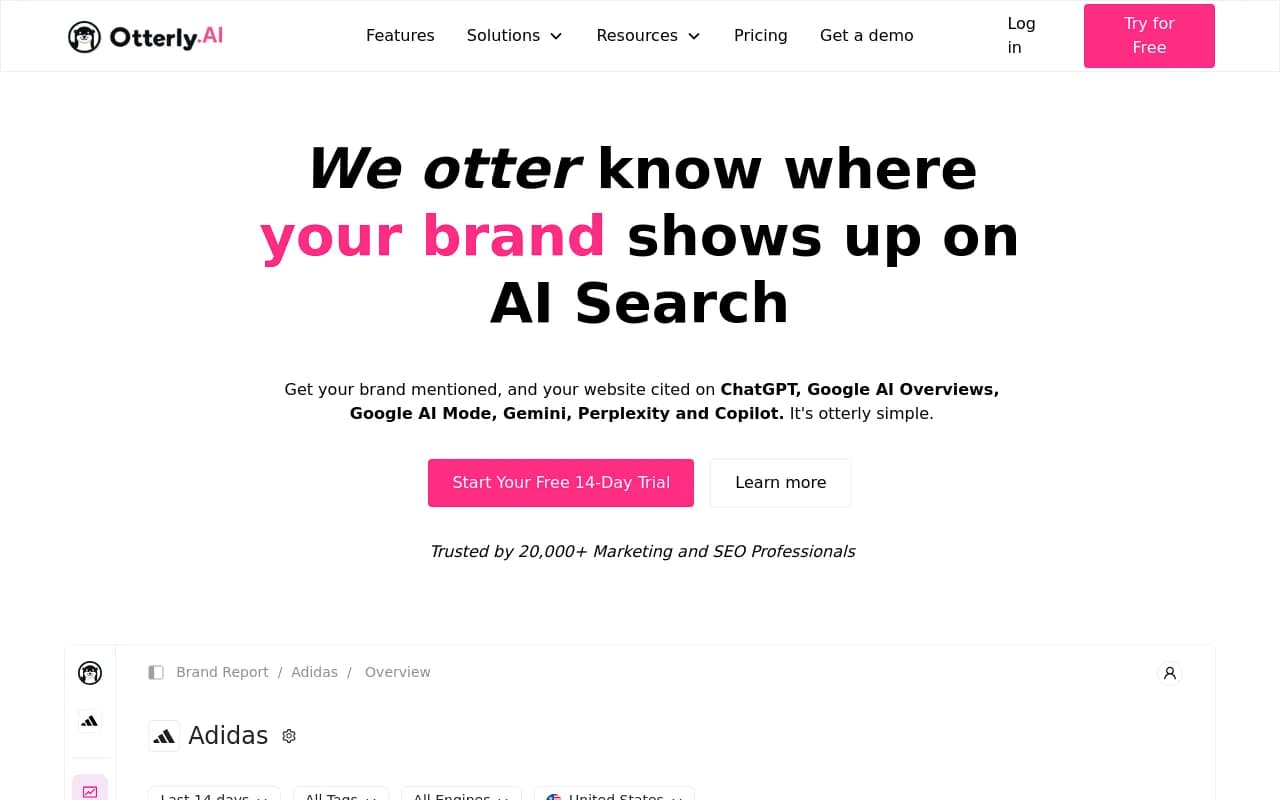
Otterly.AI deserves credit for being one of the first tools to make AI search monitoring accessible to small businesses. Its interface is clean, setup is fast, and the pricing is reasonable compared to enterprise platforms like Profound or Scrunch.
What it monitors: brand mentions and citations across ChatGPT, Perplexity, Google AI Overviews, Gemini, and Copilot. You can track competitors, set up keyword-based prompts, and get a weekly snapshot of your visibility.
Where it falls short:
- Updates are weekly, which is slow when AI search results shift constantly
- No content recommendations -- you see the gap but get no guidance on closing it
- No crawler log visibility, so you can't tell if AI agents are even reaching your pages
- Reporting is basic, which makes it hard to justify the spend to stakeholders
- No prompt volume or difficulty data, so you're guessing which queries are worth targeting
For a solo founder just wanting to know if their brand shows up in ChatGPT, Otterly.AI works fine. For a small business that wants to actually grow its AI visibility, it hits a ceiling quickly.
The 5 best Otterly.AI alternatives for small businesses in 2026
1. Promptwatch -- best for closing the full optimization loop
Promptwatch is the most complete option on this list, and the only platform in a recent 12-tool comparison rated as a Leader across every GEO category. The difference from Otterly.AI is structural: Promptwatch isn't just a tracker, it's an optimization platform built around a three-step cycle.

First, it finds the gaps. The Answer Gap Analysis shows you exactly which prompts your competitors are visible for that you're not -- not as a vague "you're missing coverage here" warning, but as specific questions and topics that AI models are already answering using competitor content. Second, Content Agents generate articles, listicles, and briefs grounded in that real prompt data, so the content you publish is engineered to fill the specific gaps AI models have exposed. Third, page-level tracking shows you when that content gets crawled, cited, and how it moves your visibility scores.
For small businesses, the Essential plan at $99/month covers one site, 50 prompts, and 5 articles per month -- enough to run a real optimization workflow without enterprise pricing. The Professional plan ($249/month) adds crawler logs, which show you exactly which pages AI agents like ChatGPT and Perplexity are reading, how often they return, and whether they're hitting errors.
It monitors 10 AI models (ChatGPT, Perplexity, Google AI Overviews, Claude, Gemini, Grok, DeepSeek, Copilot, Meta AI, and Mistral), tracks Reddit and YouTube as citation sources, and includes prompt volume and difficulty scoring so you can prioritize the queries worth winning.
The honest caveat: it's more complex than Otterly.AI. There's more to set up, more data to interpret. But for a small business that's serious about AI visibility rather than just curious about it, that depth is the point.
2. SE Ranking AI visibility -- best for teams already using SE Ranking
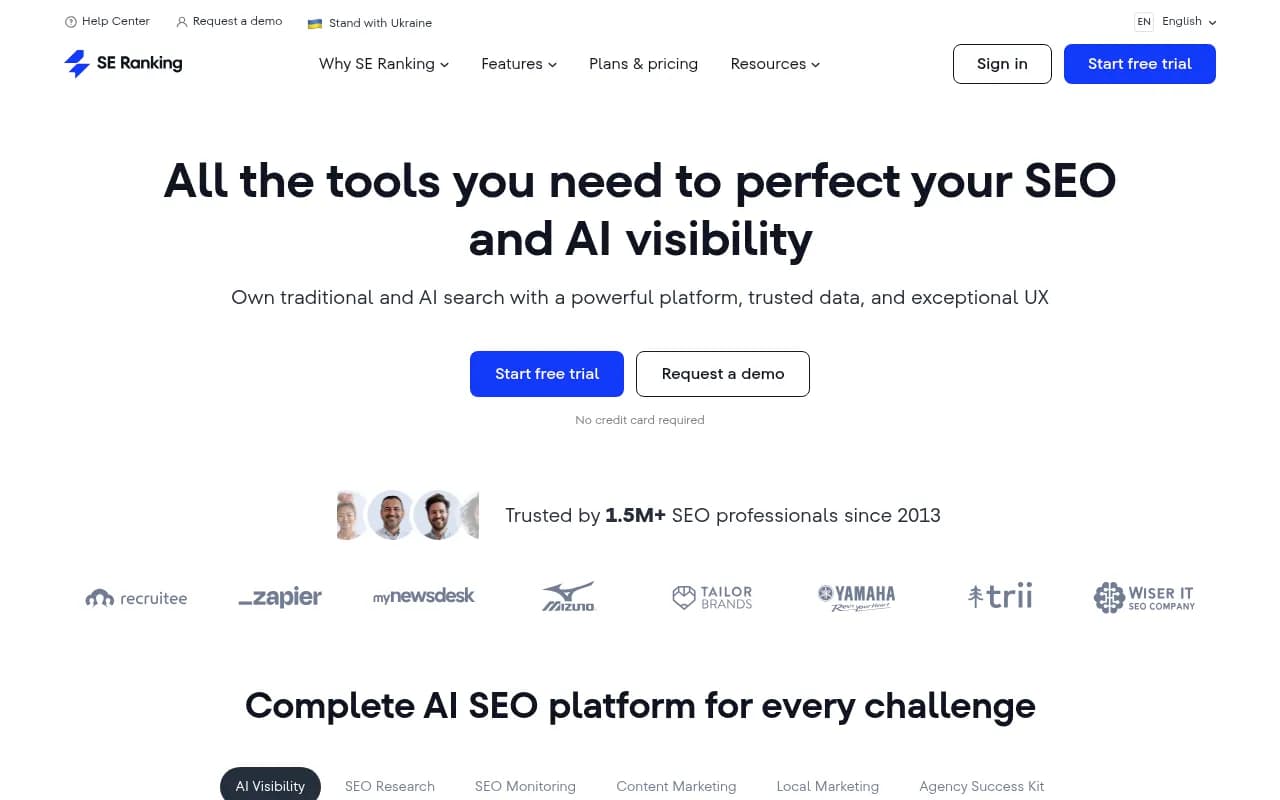
SE Ranking has been a reliable mid-market SEO platform for years, and its AI visibility module slots naturally into that existing workflow. If your team already tracks keyword rankings, backlinks, and on-page SEO through SE Ranking, adding AI search monitoring doesn't require a new tool, a new login, or a new budget line.
The AI visibility features track brand mentions and citations across major AI engines, surface competitor comparisons, and flag where your content is losing ground. It's not as deep as Promptwatch on the optimization side -- there's no content generation or crawler log access -- but the integration with traditional SEO data is genuinely useful. You can see, for example, that a page ranking well in Google is getting zero citations in AI Overviews, which tells you something specific about its structure or authority.
Pricing is bundled into SE Ranking's existing plans, which start around $65/month. For small businesses that don't want to pay separately for SEO and AI visibility tools, that's a meaningful advantage.
3. Peec AI -- best for clean reporting and multi-engine exports
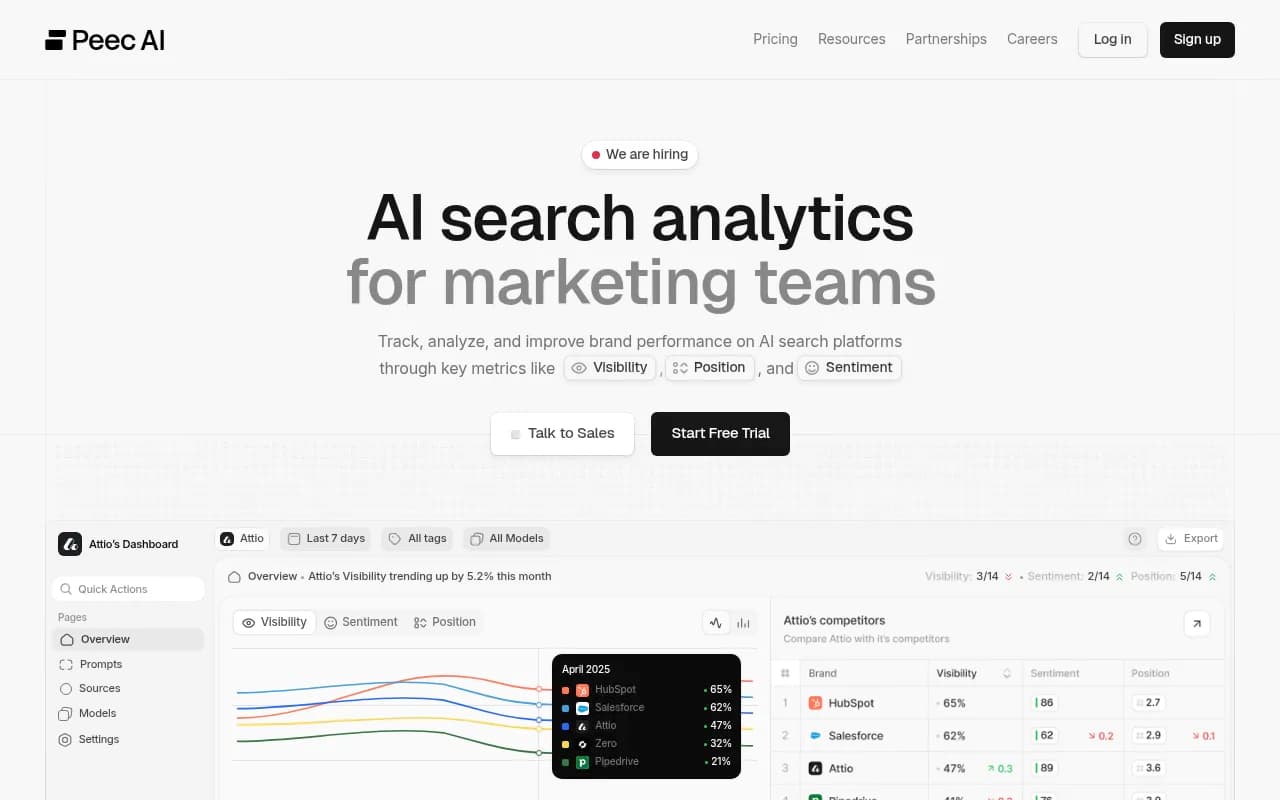
Peec AI sits in a similar monitoring-focused category to Otterly.AI, but with better cross-engine reporting and cleaner data exports. If your main frustration with Otterly.AI is the quality of its reports rather than the absence of content optimization, Peec AI is worth a look.
It tracks visibility across ChatGPT, Perplexity, Gemini, and Claude, with prompt-level data showing which specific queries your brand appears in and where competitors outrank you. The export functionality is more flexible than Otterly.AI's, which matters if you're reporting to clients or presenting to a board that wants to see the data in a specific format.
Like Otterly.AI, Peec AI doesn't generate content or provide optimization recommendations. It's a monitoring tool, and a good one. But it's worth being clear-eyed about that: if the problem is that you need to know what to do with the data, Peec AI won't solve it.
4. Nightwatch -- best for combining traditional rank tracking with AI monitoring
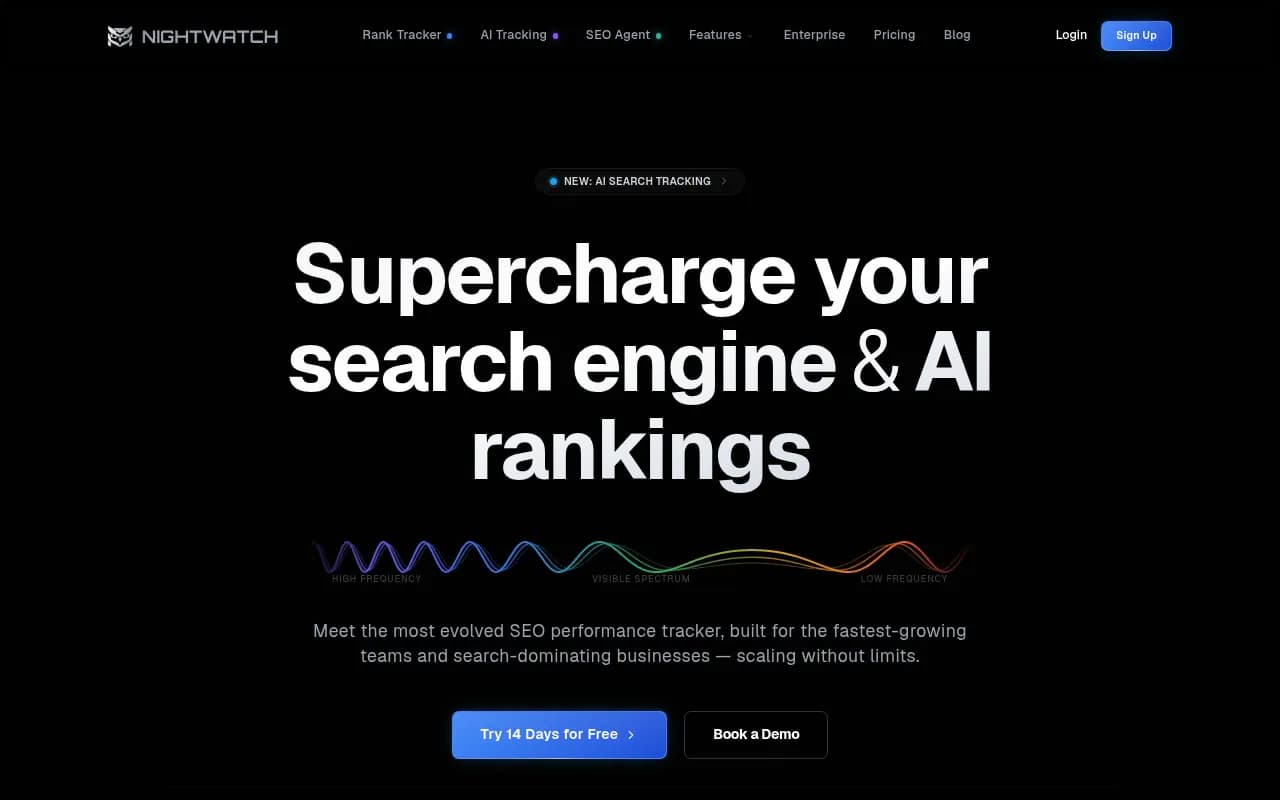
Nightwatch built its reputation as a precise, affordable rank tracker for SEO teams who found tools like Ahrefs and Semrush overkill for their needs. Its AI search monitoring layer, added in 2025, follows the same philosophy: straightforward, accurate, and priced for real businesses rather than enterprise contracts.
The AI monitoring covers ChatGPT, Perplexity, and Google AI Overviews, with daily (rather than weekly) updates -- a meaningful improvement over Otterly.AI's refresh cycle. For small businesses that want to catch shifts in AI search results quickly rather than discovering them a week later, that cadence matters.
Nightwatch doesn't do content optimization either, but its combination of traditional SEO tracking and AI visibility in one tool at a reasonable price point makes it a practical choice for teams that don't want to manage multiple platforms.
5. Rankscale -- best budget-friendly starter for AI visibility
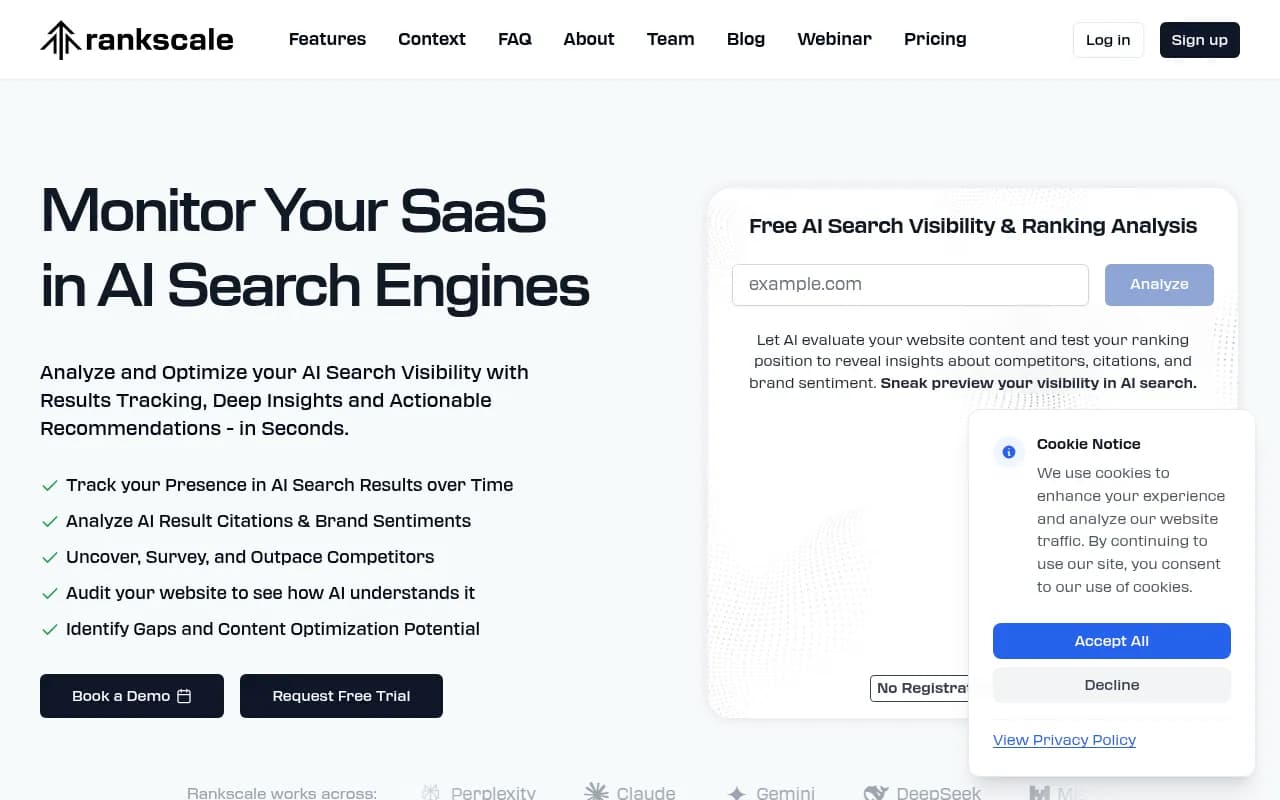
Rankscale is the most affordable option on this list and a reasonable starting point for small businesses that are new to AI search monitoring and not ready to commit to a full optimization platform.
It tracks brand mentions and citations across the major AI engines, surfaces basic competitor comparisons, and provides enough data to understand whether your brand is visible in AI search at all. The interface is simple, setup takes minutes, and the pricing is accessible for businesses that are still figuring out whether AI visibility is worth investing in.
The limitations are real: no content generation, no crawler logs, no prompt volume data, and less depth than any other tool on this list. But for a business at the "I just want to know if ChatGPT mentions us" stage, Rankscale does that job without overcomplicating it.
How these tools compare
| Tool | Monitoring | Content optimization | Crawler logs | Prompt volume data | Starting price | Best for |
|---|---|---|---|---|---|---|
| Promptwatch | 10 AI models | Yes (Content Agents) | Yes (Pro+) | Yes | $99/mo | Full optimization loop |
| SE Ranking | Major engines | No | No | No | ~$65/mo | Teams using SE Ranking for SEO |
| Peec AI | 4+ AI models | No | No | No | ~$49/mo | Clean reporting and exports |
| Nightwatch | ChatGPT, Perplexity, AIO | No | No | No | ~$39/mo | Daily tracking + traditional SEO |
| Rankscale | Major engines | No | No | No | Free tier available | Budget starter |
| Otterly.AI | 5 AI models | No | No | No | ~$29/mo | Basic brand monitoring |
How to choose the right tool for your situation
The honest answer is that it depends on what stage you're at and what you actually need the tool to do.
If you're just starting to think about AI search visibility and want to understand the landscape before committing to a workflow, Rankscale or Nightwatch give you enough data to get oriented without a significant investment. Nightwatch has the edge if you're also tracking traditional SEO rankings.
If reporting quality is the issue -- you need to show stakeholders or clients something more polished than Otterly.AI produces -- Peec AI is worth testing. Its exports are cleaner and the multi-engine view is easier to present.
If you're already using SE Ranking for SEO and want AI visibility without adding another tool to your stack, the built-in AI module is the path of least resistance.
If you've moved past the "what's happening" question and need to answer "what do I do about it," Promptwatch is the only tool on this list that actually helps you close the gap. The Answer Gap Analysis tells you which specific prompts you're losing, the Content Agents help you create content that targets those gaps, and the tracking shows you when it's working. That full loop -- find, fix, track -- is what separates an optimization platform from a monitoring dashboard.
The broader point is this: monitoring your AI visibility is table stakes in 2026. According to Otterly.AI's own research, 15% of website traffic now originates from AI agents and bots, with ChatGPT alone accounting for 56% of AI search referral traffic. Knowing you're invisible in that channel is useful. Knowing what to do about it is what actually moves the needle.
A note on what "affordable" actually means
Small business budgets vary enormously, so it's worth being specific. The tools on this list range from free (Rankscale's starter tier) to $99/month (Promptwatch Essential). For context, Otterly.AI's paid plans start around $29/month.
The question isn't just which tool costs less -- it's which tool delivers more value per dollar spent. A $29/month monitoring tool that tells you nothing actionable is more expensive in practice than a $99/month platform that helps you create content that earns citations. The ROI math changes when you factor in what you actually do with the data.
That said, if budget is genuinely tight and you're choosing between a monitoring-only tool and nothing, monitoring-only is still better than flying blind. Start where you can, and upgrade when the data gives you enough to justify it.
Bottom line
Otterly.AI is a reasonable starting point, but it's not a finishing point. For small businesses that want to do more than watch their AI visibility numbers stay flat, the tools above offer meaningful upgrades -- whether that's better reporting, daily tracking, traditional SEO integration, or a full optimization workflow.
The gap between knowing you're invisible in AI search and knowing how to fix it is where most monitoring tools leave you stranded. The best alternatives in 2026 are the ones that at least point you toward the exit.