Key takeaways
- AI answer engines like ChatGPT, Perplexity, and Google AI Overviews cite sources differently than traditional search ranks them -- publishers need to optimize for citation, not just ranking.
- News and editorial brands have structural advantages (authority, freshness, structured content) but also specific weaknesses (paywalls, JavaScript-heavy pages, thin evergreen content) that AEO tools can help diagnose.
- The most useful AEO platforms for publishers go beyond monitoring -- they show which content gaps exist, which competitors are getting cited instead, and help create content that fills those gaps.
- Tools like Promptwatch track citations across 10+ AI models, surface answer gaps, and generate content grounded in real prompt data -- which matters a lot when editorial teams need to justify investment in AI visibility.
- Freshness and E-E-A-T signals are the two biggest levers for news brands in AI search. Quarterly content updates are the minimum; monthly is better.
The shift is real and it's accelerating. When someone asks ChatGPT "what's the best budget airline in Europe" or "what happened with the SVB collapse," they get an answer -- not a list of links. And that answer cites maybe three or four sources. If your publication isn't one of them, you effectively don't exist for that query.
For news organizations and editorial brands, this creates a problem that's different from what most AEO guides describe. The typical AEO playbook is written for SaaS companies and e-commerce brands trying to get their product mentioned in AI responses. Publishers have a different challenge: you're already producing authoritative, high-frequency content. The question is why AI engines aren't citing you more -- and what tools can actually help you figure that out and fix it.
This guide focuses specifically on that problem.
Why publishers face a distinct AEO challenge
Most AEO advice treats "getting cited in AI" as a content creation problem. For publishers, it's more often a content structure and discoverability problem. You're already writing about the right topics. The issue is usually one of these:
Paywalls block AI crawlers. If your best investigative pieces are behind a subscription wall, AI models can't read them. They'll cite the free summary instead -- or worse, cite a competitor who covered the same story openly.
JavaScript-heavy CMS setups. Many modern publishing platforms render content client-side. AI crawlers, like traditional crawlers, often struggle with JavaScript-rendered pages. Your article exists, but the crawler sees a blank page.
Thin evergreen content. Breaking news gets covered well. But the "explainer" articles -- the ones AI engines love to cite when answering background questions -- are often thin, outdated, or missing entirely. A news site might have 40 articles about a company's quarterly earnings but no solid "what does this company actually do" explainer.
Authority signals that don't translate. A publication might have enormous domain authority in traditional SEO terms but still get overlooked by AI engines that weight different signals -- like structured data, clear authorship, and explicit E-E-A-T markers.
Understanding which of these problems you have requires actual data, not guesswork. That's where AEO tools come in.
What to look for in an AEO tool as a publisher
Before getting into specific platforms, it's worth being clear about what actually matters for a news or editorial brand.
Citation tracking across multiple AI models. You need to know which AI engines are citing you, for which queries, and how often. A tool that only tracks one or two models gives you an incomplete picture. ChatGPT, Perplexity, and Google AI Overviews behave differently and cite different sources.
Competitor citation analysis. Who is getting cited instead of you? This is the most actionable question in AEO. If The Guardian is getting cited for climate queries that your environmental desk covers just as well, you need to know that -- and understand why.
Content gap identification. Which questions are users asking AI engines that your content doesn't answer? For publishers, this often reveals entire topic areas where you have no evergreen coverage.
Crawler and indexing diagnostics. Can AI crawlers actually read your pages? Tools that log AI crawler activity (what pages they hit, what errors they encounter, how often they return) are genuinely useful for publishers dealing with technical issues.
Freshness and update tracking. AI engines heavily favor recently updated content. Tools that track when your pages were last crawled and cited can help editorial teams prioritize which articles to refresh.
The main AEO platforms and how they fit publisher needs
Promptwatch
For publishers who want to go beyond monitoring and actually act on what they find, Promptwatch is the most complete option available right now.
Promptwatch tracks citations across 10 AI models -- ChatGPT, Perplexity, Google AI Overviews, Claude, Gemini, Grok, DeepSeek, Copilot, Meta AI, and Mistral. That breadth matters for publishers because different AI engines pull from different source pools. A news brand might be well-cited in Perplexity (which is very news-friendly) but nearly invisible in ChatGPT's responses.
The feature that's most useful for editorial teams is the Answer Gap Analysis. It shows exactly which prompts competitors are being cited for that you're not. For a news organization, this is essentially a content brief generator: here are the questions your audience is asking AI engines, here are the sources being cited, and here's what you're missing. That's directly actionable for an editorial team.
The AI Crawler Logs are also worth calling out specifically for publishers. These show real-time logs of AI crawlers hitting your site -- which pages they read, what errors they encounter, and how often they return. If your CMS is serving JavaScript-rendered pages that crawlers can't parse, this is where you'll see it.

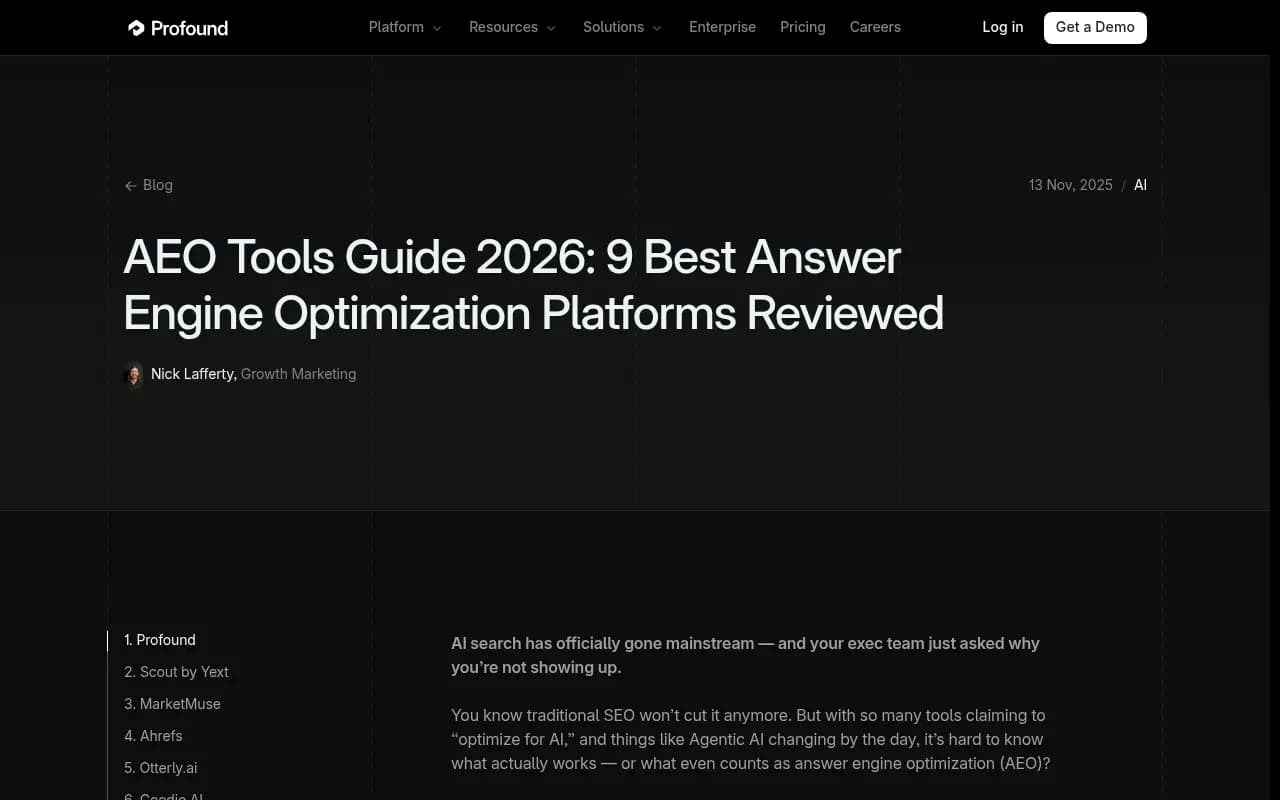
Profound AI
Profound is a strong enterprise option, particularly for larger media organizations with dedicated analytics teams. It covers answer engine insights, agent analytics, and prompt volume data, and its content agents can generate briefs grounded in citation data.
The platform is well-suited for news brands that need to present AI visibility data to executive stakeholders -- its reporting is polished and the data is solid. The main consideration is price: Profound is positioned at the enterprise end of the market, which may be a stretch for mid-size publishers.
Otterly.AI
Otterly is a more affordable monitoring tool that works well for smaller editorial teams or regional publishers who want to start tracking AI citations without a large budget commitment. It covers the major AI models and gives you a reasonable view of where your brand appears.
The limitation is that it's primarily a monitoring dashboard. It shows you data but doesn't help you act on it -- no content gap analysis, no crawler logs, no content generation. For a publisher just starting to understand their AI visibility, it's a reasonable entry point. For a team that wants to actually improve their citation rate, you'll hit the ceiling quickly.

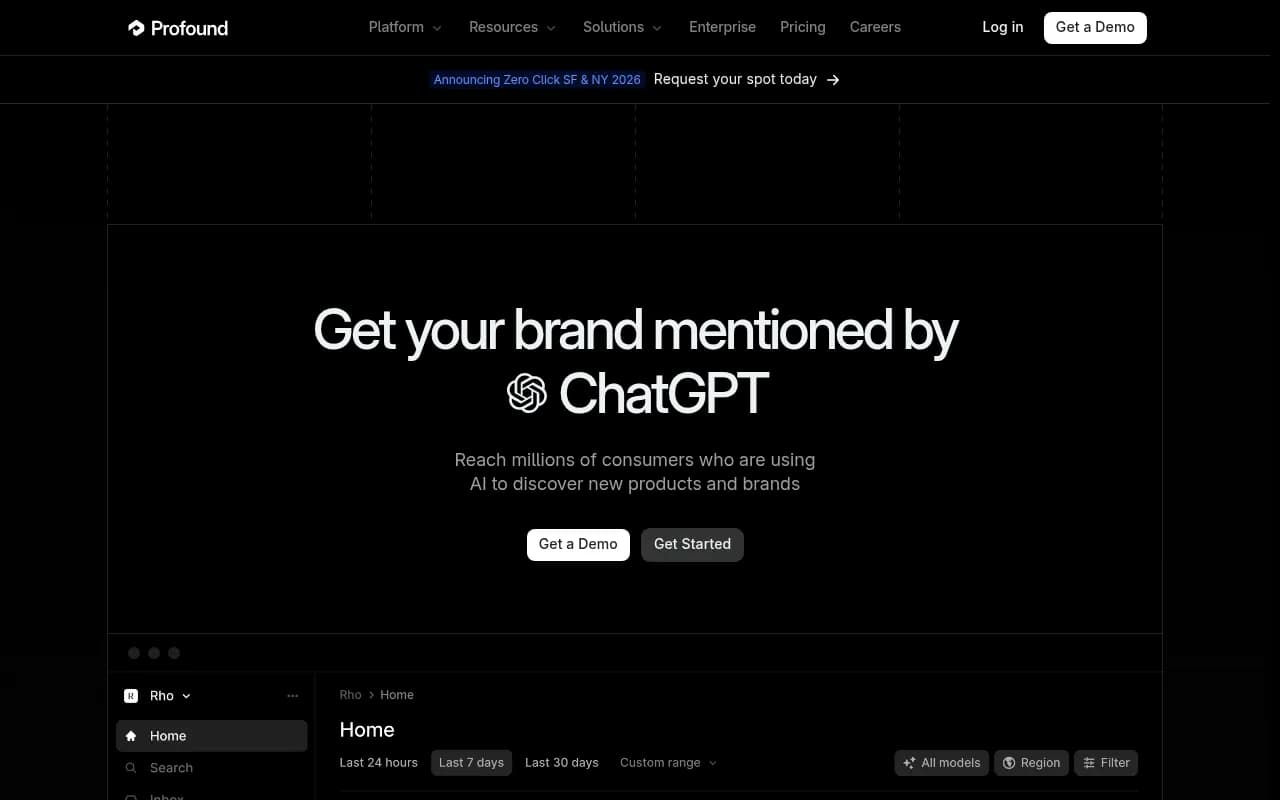
SE Visible
SE Ranking's AI visibility tool (SE Visible) takes a more SEO-integrated approach, which can be useful for publishers whose editorial and SEO teams work closely together. It tracks brand visibility and sentiment across AI search engines and connects that data to traditional SEO metrics.
For news brands that are already heavy SE Ranking users, this is a natural extension. For publishers who want a standalone AEO solution, it's less compelling.
Scrunch AI
Scrunch focuses on monitoring how AI assistants like ChatGPT and Claude represent your brand. It's useful for editorial brands that are concerned about accuracy -- whether AI engines are describing your publication correctly, citing the right articles, and not hallucinating facts about your coverage.
That's a real concern for news organizations. If ChatGPT describes your publication as "a conservative outlet" when you're explicitly nonpartisan, that affects how users perceive AI-generated summaries that cite you. Scrunch gives you visibility into that.
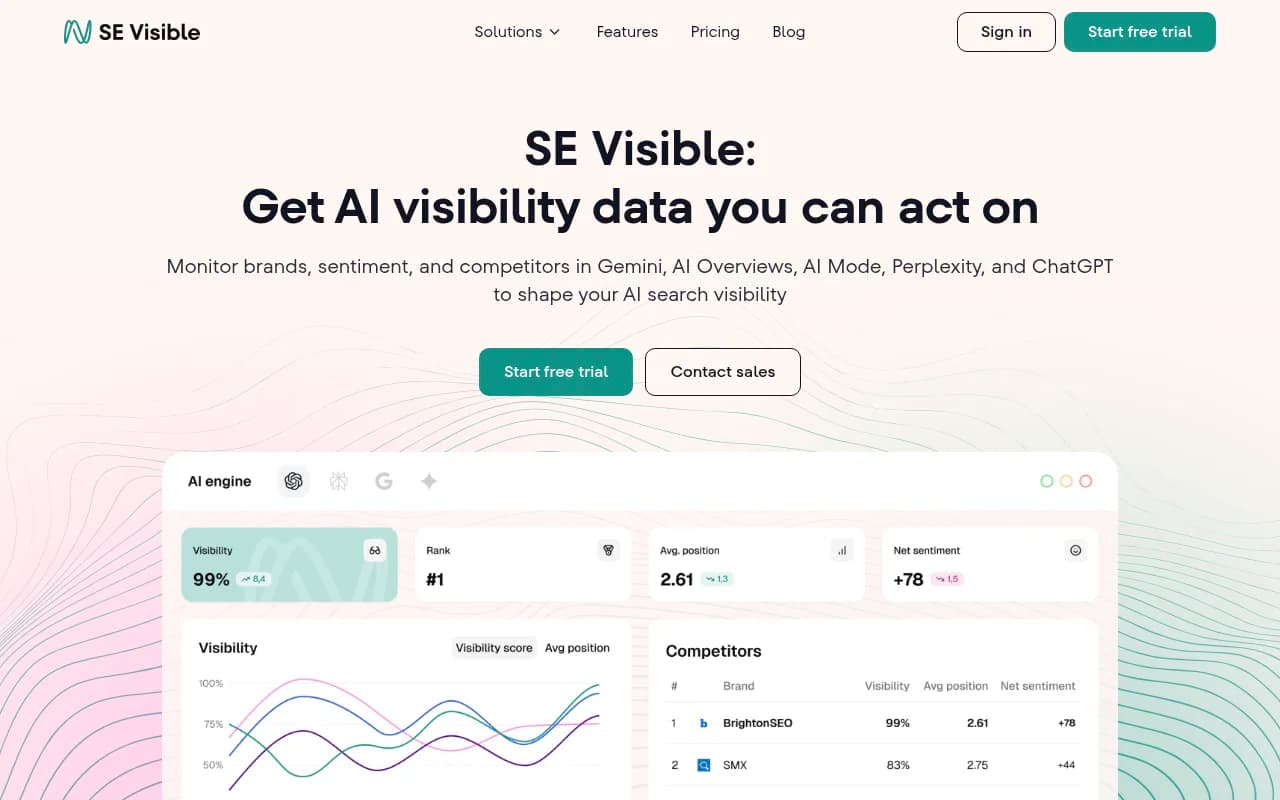
Athena HQ
AthenaHQ covers 8+ AI search engines and gives solid brand visibility tracking. It's a monitoring-focused platform, which means it's better at telling you where you stand than helping you improve. For publishers who want a clean dashboard to report on AI visibility metrics, it works well.
BuzzSumo
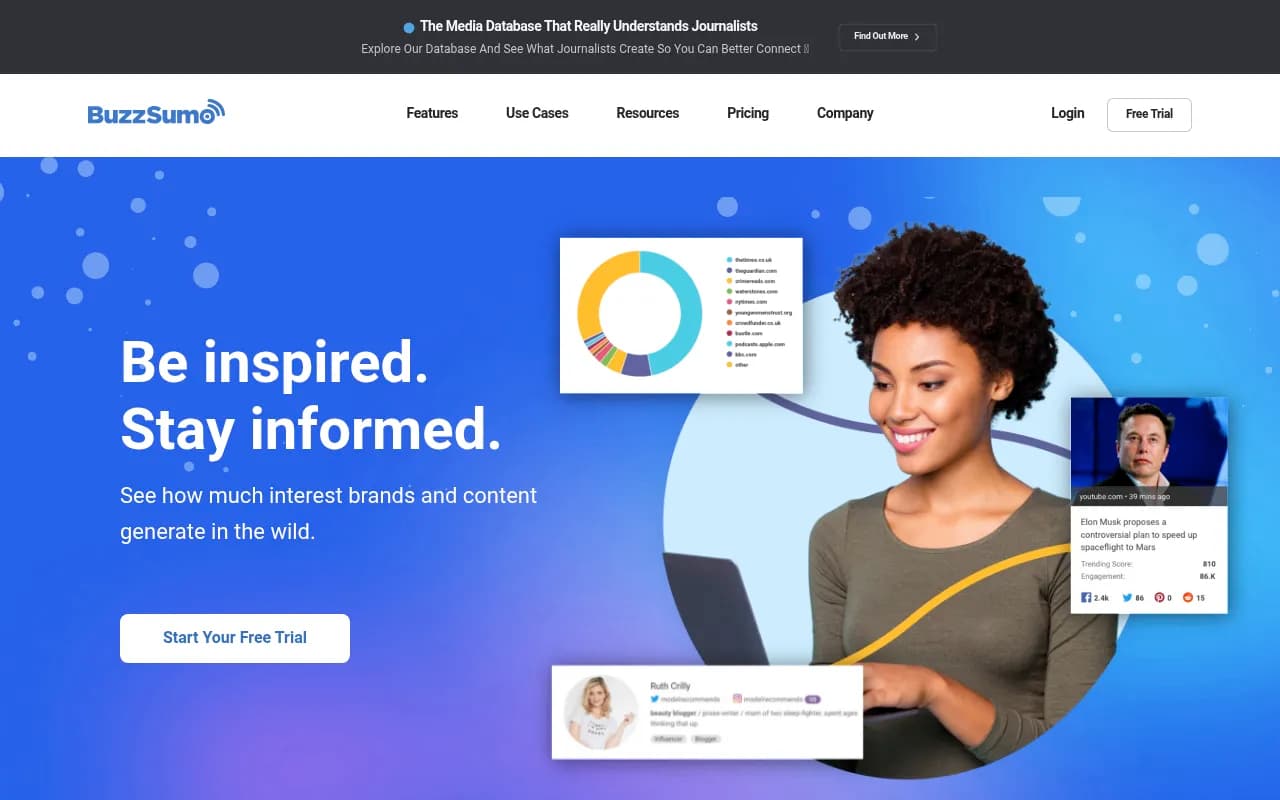
BuzzSumo isn't an AEO tool in the traditional sense, but it's worth mentioning for publishers because it helps identify what content is being shared and discussed -- which correlates with what AI engines eventually cite. If a topic is generating significant engagement across social and editorial channels, it's likely to show up in AI responses. BuzzSumo helps you spot those topics early.
Botify
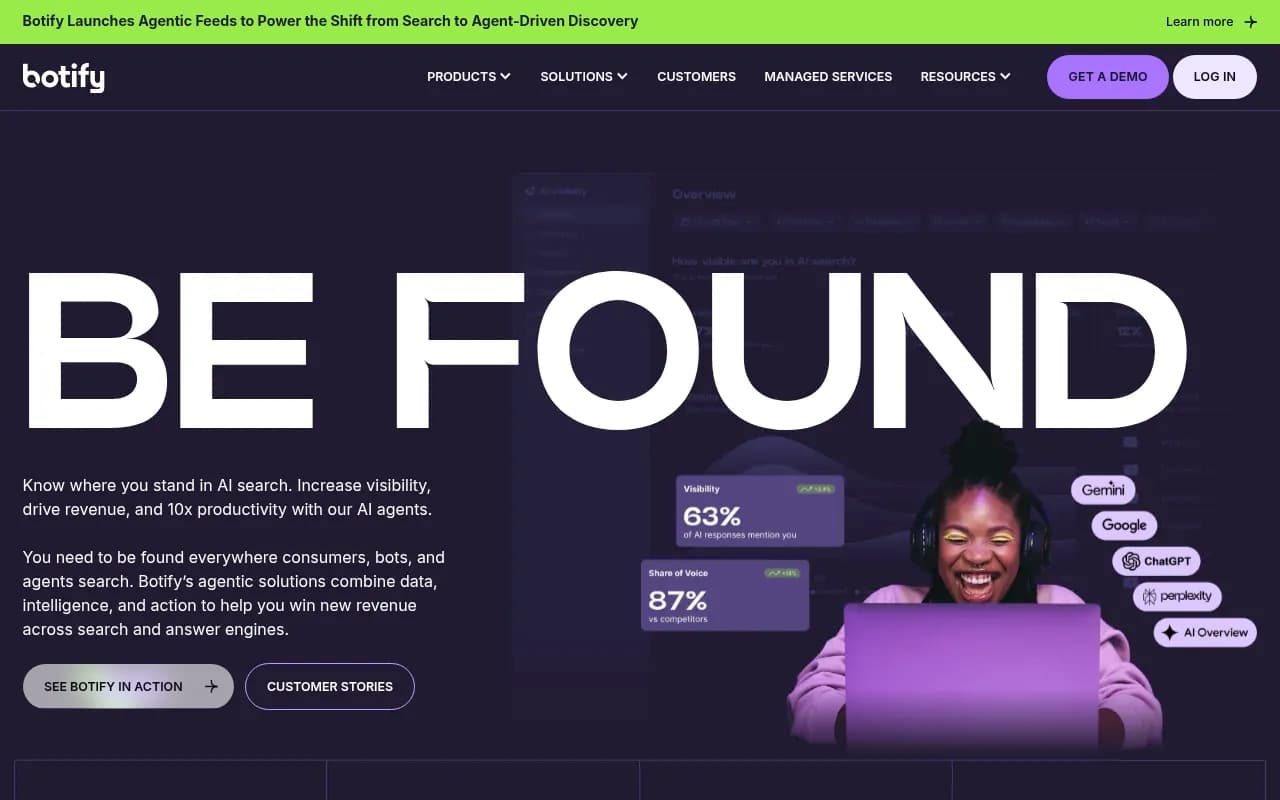
For publishers dealing with technical crawlability issues, Botify is worth looking at. It's primarily an enterprise SEO and technical crawl platform, but it has added AI search visibility features. If your publication has a large archive (millions of pages) and you're trying to understand which pages AI crawlers can actually access, Botify's crawl data is useful.
Comparison table: AEO tools for publishers
| Tool | Citation tracking | Content gap analysis | Crawler logs | Content generation | Best for |
|---|---|---|---|---|---|
| Promptwatch | 10 AI models | Yes (Answer Gap Analysis) | Yes | Yes (Content Agents) | Full-stack AEO: monitoring + optimization + content |
| Profound AI | Yes (enterprise) | Yes | Yes | Yes | Large media orgs with dedicated analytics teams |
| Otterly.AI | Yes (major models) | No | No | No | Small publishers starting with AI monitoring |
| SE Visible | Yes | Limited | No | No | Publishers already using SE Ranking |
| Scrunch AI | Yes | No | No | No | Brand accuracy and sentiment monitoring |
| AthenaHQ | 8+ models | No | No | No | Clean dashboard reporting |
| Botify | Limited | No | Partial | No | Technical crawl issues at scale |
The content types AI engines actually cite from publishers
This is something most AEO guides skip, but it matters a lot for editorial teams deciding where to focus.
Explainer articles and backgrounders. When someone asks "what is quantitative easing" or "how does the electoral college work," AI engines reach for authoritative, clearly structured explainers. News organizations often have these buried in archives, outdated, or written in a way that's hard for AI to extract key points from. Refreshing and restructuring these articles is one of the highest-ROI moves a publisher can make.
Data-driven pieces with clear conclusions. AI engines love citing content that has a specific, quotable finding. "According to a Reuters analysis, X% of..." is exactly the kind of sentence that gets pulled into AI responses. If your data journalism is structured to surface clear findings, it gets cited more.
Timely, well-sourced news articles. Perplexity in particular is aggressive about citing recent news. If your publication covers breaking news well and your pages are crawlable, you should be getting cited. If you're not, it's usually a technical issue.
FAQ-style content. Content structured as questions and answers is easier for AI engines to extract and cite. Some publishers have started adding FAQ sections to major articles -- not as a gimmick, but because it genuinely helps AI engines find the specific answer within a longer piece.
Practical steps for publishers starting with AEO
1. Audit your crawlability first
Before worrying about content, make sure AI crawlers can actually read your pages. Check your robots.txt to ensure you haven't accidentally blocked AI crawlers (GPTBot, ClaudeBot, PerplexityBot are the main ones). If you're on a JavaScript-heavy CMS, test whether your content is visible to crawlers by using the "view source" method -- if your article text doesn't appear in the raw HTML, crawlers probably can't read it.
2. Map your citation gaps against your coverage areas
Use an AEO tool to find out which queries in your coverage areas are being answered by AI engines, and which sources are being cited. Compare that against your own content. You're looking for two things: topics you cover but aren't being cited for (a content quality or structure problem) and topics you don't cover at all (a content gap).
3. Prioritize evergreen explainers over breaking news
Breaking news is important, but AI engines cite it less because it goes stale quickly. The bigger opportunity for most publishers is in evergreen explainers and backgrounders. Identify the 20-30 most common background questions in your coverage areas and make sure you have solid, well-structured articles answering each one.
4. Add structured authorship and E-E-A-T signals
AI engines weight author expertise. Make sure your bylines link to author pages with clear credentials. Add schema markup for articles (Article or NewsArticle schema). Include publication dates and update dates prominently. These signals help AI engines trust your content enough to cite it.
5. Track and iterate
AEO is not a one-time fix. Set up ongoing monitoring so you can see when your citation rate improves after content updates, and when new gaps appear. Tools like Promptwatch show the timeline from publish to crawl to citation, which helps editorial teams understand how long it takes for new content to start getting cited.
A note on paywalls
This is the hardest problem for subscription publishers, and there's no perfect answer. A few approaches that work:
Some publishers use a "metered" approach where AI crawlers can access full content (since they're not human readers consuming the subscription). This requires explicitly allowing specific AI crawler user agents in your server configuration.
Others create free "summary" or "explainer" versions of paywalled content specifically for AI discoverability -- essentially a public-facing version that AI can cite, with a clear link to the full paywalled piece.
The worst approach is blocking AI crawlers entirely and then wondering why you're not getting cited. If your content isn't accessible, it can't be cited. It's that simple.
What the data says about publisher AI visibility
Research from Evergreen Media's 2026 AEO guide found that brands leading in AI citation visibility update their content at least quarterly, with monthly updates being the norm for top performers. For news organizations, this should be easy -- but the challenge is that "updates" in this context means substantive updates to evergreen content, not just publishing new articles. An explainer article from 2022 that hasn't been touched since is a liability, not an asset.
The same research found that platform behavior varies significantly: Perplexity tends to favor recent, news-style sources; Google AI Overviews leans heavily on established authority signals; ChatGPT's citations are harder to predict but respond well to structured, comprehensive content. A publisher optimizing only for one of these is leaving significant visibility on the table.
The bottom line for editorial teams
AEO for publishers isn't a separate strategy from good editorial work -- it's mostly about making sure your existing good work is actually accessible and structured in a way that AI engines can use. The technical issues (crawlability, JavaScript rendering, paywall blocking) are often the biggest barriers, and they're fixable.
Beyond the technical layer, the content gap analysis is where the real opportunity sits. Most publishers have significant blind spots in their evergreen coverage -- topics their audience asks about constantly that AI engines are currently answering by citing competitors. Finding those gaps and filling them is the highest-leverage AEO move available to editorial teams right now.
The tools that help you do both -- diagnose technical issues and find content gaps -- are the ones worth investing in. Monitoring dashboards that just show you a visibility score without helping you improve it are less useful than they look.