Key takeaways
- Tracking every possible prompt at scale is expensive and counterproductive -- you need a scoring system to focus on high-value, winnable prompts first.
- The most effective frameworks combine prompt volume, commercial intent, and competitive difficulty to rank your monitoring priorities.
- Segmenting prompts by funnel stage, topic cluster, and AI model behavior lets you allocate budget where it actually drives visibility gains.
- Monitoring alone won't move the needle -- the teams seeing real results are closing the loop between gap identification and content creation.
- Tools with built-in prompt intelligence (volume estimates, difficulty scores, query fan-outs) save significant time compared to manually curating prompt lists.
There's a specific kind of paralysis that hits marketing teams around month two of their AI visibility program. You've identified 300 prompts your customers might use. You're trying to track them across ChatGPT, Perplexity, Google AI Overviews, Claude, and Gemini. The spreadsheet is a disaster. The tool costs are climbing. And you're not sure which numbers actually matter.
This is the large-scale monitoring problem, and it's more common than people admit. Most guides on AI visibility tracking assume you're working with 20-50 prompts. That's fine for getting started. But if you're in a competitive category, running an agency with multiple clients, or operating across multiple product lines, you're dealing with a fundamentally different challenge.
This guide is about that challenge -- how to build a prioritization system that keeps your monitoring program manageable, focused, and tied to outcomes.
Why prompt sprawl happens (and why it matters)
The instinct when you first start tracking AI visibility is to be comprehensive. You want to know about every prompt where a competitor might appear. So you brainstorm. You pull keyword data. You ask your sales team what customers ask. You look at competitor content. Before long, you have 400 prompts and no clear sense of which 40 actually matter.
Prompt sprawl creates three real problems:
- Cost scales linearly. Most AI visibility platforms charge per prompt or per prompt-run. Running 400 prompts across 5 models, weekly, adds up fast.
- Signal gets buried in noise. When everything is tracked, nothing stands out. You end up spending analysis time on prompts that will never drive meaningful traffic or revenue.
- Action becomes impossible. If your gap analysis surfaces 200 content opportunities, you can't act on all of them. Prioritization collapses, and the program stalls.
The fix isn't to track fewer things blindly -- it's to build a scoring system that tells you which prompts deserve attention.
The four dimensions of prompt prioritization
Before you can build a scoring framework, you need to understand the four variables that determine whether a prompt is worth tracking.
1. Prompt volume
How often are real users actually asking this? This is the hardest number to get, but it's the most important. A prompt that gets asked 50,000 times a month is worth far more attention than one asked 200 times, even if your visibility on the latter is zero.
Some platforms now provide volume estimates for AI prompts. These aren't perfect -- AI search query data is still less transparent than traditional search -- but even rough estimates are better than guessing. Promptwatch includes volume estimates and difficulty scores for each prompt it tracks, which makes this step much faster than trying to infer volume from traditional keyword tools.

2. Commercial intent
Not all prompts lead to buying decisions. "What is machine learning?" is a very different prompt from "What's the best machine learning platform for enterprise teams?" The second one is worth 10x the monitoring budget of the first, because the person asking it is closer to a purchase.
Score prompts on a simple intent scale:
- Informational (low commercial value)
- Comparative ("best X for Y")
- Decision-stage ("X vs Y", "should I use X")
- Brand-specific ("X pricing", "X reviews")
Comparative and decision-stage prompts are where AI visibility has the most direct revenue impact. These are the prompts where AI models are actively shaping purchase decisions.
3. Your current visibility
There's a difference between prompts where you're invisible and prompts where you're already winning. Both matter, but for different reasons.
Prompts where you're already cited are worth monitoring to protect your position. Prompts where competitors are cited but you're not are your highest-priority growth opportunities. Prompts where nobody is consistently cited are often the easiest wins -- the content gap is real, but the competition hasn't filled it yet.
4. Competitive difficulty
Some prompts are dominated by Wikipedia, Reddit, and major publications. Others are genuinely open. Before investing heavily in a prompt, look at who's currently being cited. If the top citations are all from sources you can realistically compete with (or outpublish), the prompt is worth prioritizing. If every citation is from a domain with 10 years of authority you can't replicate quickly, deprioritize it.
Building your scoring matrix
Once you have these four dimensions, you can score each prompt and sort your list. Here's a simple scoring approach that works in practice:
| Dimension | Weight | Score (1-5) |
|---|---|---|
| Estimated prompt volume | 30% | 1 = very low, 5 = very high |
| Commercial intent | 35% | 1 = informational, 5 = decision-stage |
| Gap size (you're invisible, competitor is cited) | 20% | 1 = already winning, 5 = completely absent |
| Competitive difficulty | 15% | 1 = very hard to win, 5 = open opportunity |
Multiply each score by its weight, sum the results, and you get a priority score between 1 and 5. Sort your 300 prompts by this score and track the top 50-100 actively. Review the rest quarterly.
This isn't a perfect system -- the weights should be adjusted based on your goals. If you're primarily focused on brand protection, weight current visibility higher. If you're in growth mode, weight gap size and intent higher.
Segmenting prompts for smarter monitoring
Beyond scoring individual prompts, segmenting your prompt library into logical groups makes the monitoring program much easier to manage and report on.
By funnel stage
Group prompts into awareness, consideration, and decision tiers. This lets you report on AI visibility by funnel stage, which is far more useful to stakeholders than a raw list of citations. It also helps you allocate content creation resources -- decision-stage gaps should get content first.
By topic cluster
If you have 50 prompts about "email marketing automation" and 50 about "CRM integrations," track them as clusters. A cluster-level visibility score (what percentage of prompts in this cluster are you cited for?) is much easier to act on than individual prompt data. When a cluster score drops, you know there's a content or freshness problem in that topic area.
By AI model
Different AI models cite different sources. ChatGPT's behavior differs from Perplexity's, which differs from Google AI Overviews. Some prompts you might win consistently on Perplexity but be invisible on Google AI Mode. Segmenting by model helps you understand where your content strategy is working and where it isn't.
This is also why multi-model coverage matters. Tracking on a single model gives you an incomplete picture. Your customers use multiple AI tools, often for the same research task.
By geography and language
If you operate in multiple markets, the same prompt can have completely different competitive dynamics in different countries. "Best project management software" might return your brand consistently in the UK but not at all in Germany. Treat these as separate tracking priorities.
How many prompts should you actually track?
SE Ranking's research suggests starting with 20-40 prompts, running across 2-3 AI models, and tracking for at least 30 days before drawing conclusions. That's good advice for getting started. But for established programs, the right number depends on your goals and budget.
A rough guide:
| Program stage | Recommended active prompts | Models to cover |
|---|---|---|
| Getting started | 20-50 | 2-3 (ChatGPT, Perplexity, Google AIO) |
| Growing program | 100-200 | 4-5 |
| Mature/enterprise | 300+ | 6-10 |
| Agency (per client) | 50-150 | 3-5 |
The key word is "active." You can have 500 prompts in your library, but only actively monitor the top 100 by priority score. Review the rest monthly or quarterly, and promote prompts up to active status when they become more relevant.
The monitoring cadence problem
One thing that catches teams off guard: AI model behavior isn't static. A prompt that cited you consistently last month might stop citing you this week because a competitor published better content, because the model was updated, or because the underlying training data shifted.
This means monitoring cadence matters. Weekly monitoring is the minimum for high-priority prompts. Daily monitoring is worth it for brand-critical prompts (your brand name, key product comparisons, "best [your category]" queries).
For lower-priority prompts, monthly snapshots are usually sufficient. The goal is to catch drops early enough to respond, not to generate data for its own sake.
Tools that handle large-scale prompt tracking
Manual monitoring at scale is essentially impossible. For 10-20 prompts you can open incognito Chrome, run each prompt on each platform, and log the results. For 300 prompts across 5 models, you need automation.
Here's how some of the main tools handle large-scale monitoring:
Promptwatch is built specifically for this use case. Its prompt intelligence layer gives you volume estimates and difficulty scores out of the box, so you're not guessing at prioritization. The Answer Gap Analysis shows exactly which prompts competitors are cited for that you're not -- which is the most actionable input for prioritization decisions. It also tracks query fan-outs, showing how one prompt branches into sub-queries, which helps you understand the full scope of a topic cluster without manually brainstorming every variation.
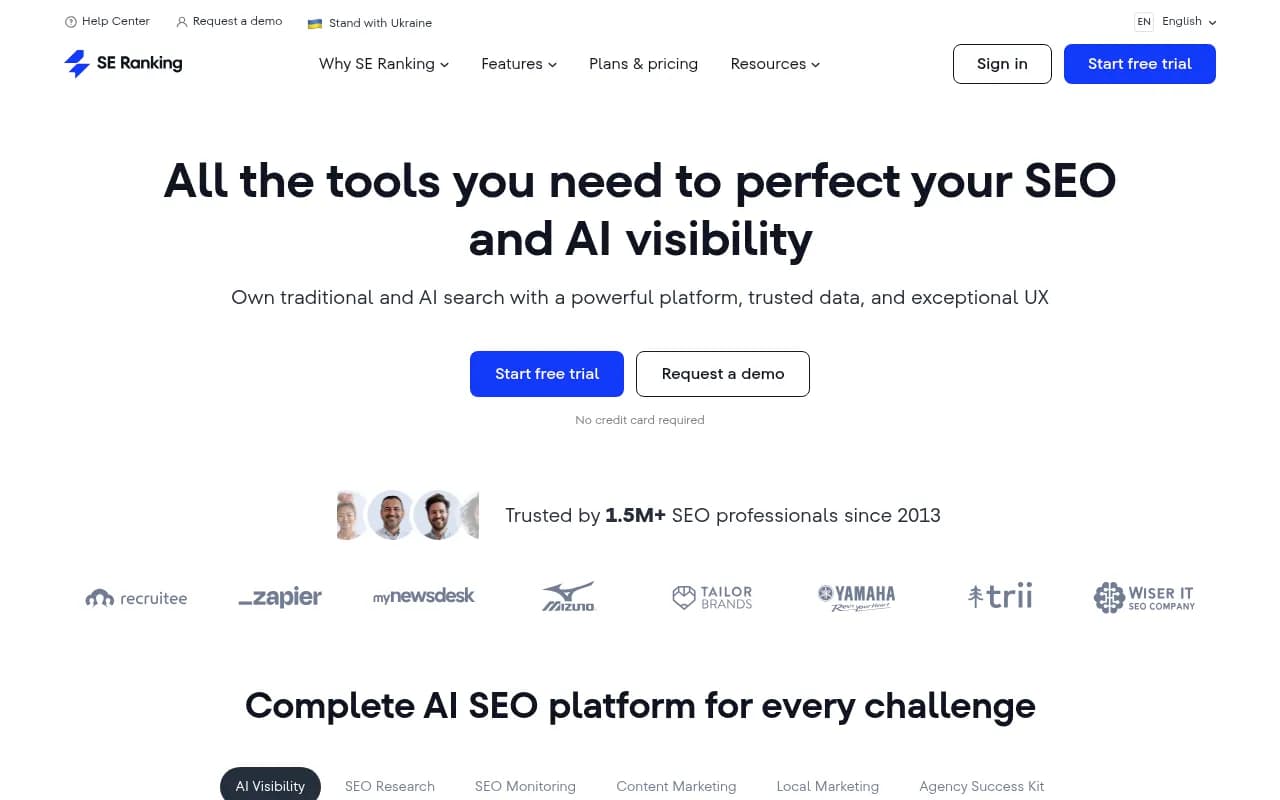
SE Ranking's AI visibility module takes a more traditional SEO-tool approach. It's useful if you're already in the SE Ranking ecosystem and want AI visibility data alongside your standard rank tracking. Their guidance on prompt selection (start small, validate before scaling) is solid.
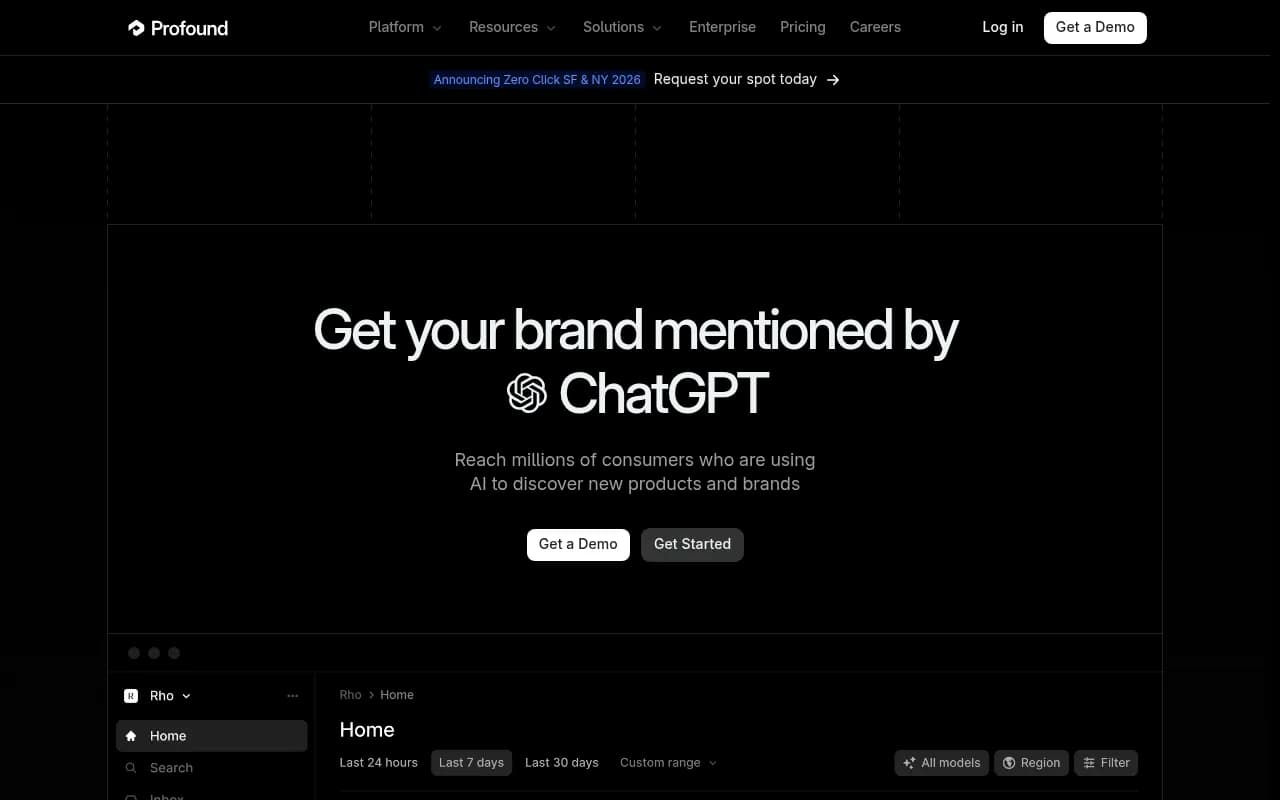
Profound AI is strong for enterprise-scale monitoring with a focus on share of voice metrics. It handles large prompt sets well and has good reporting for stakeholder communication. The limitation is that it's primarily a monitoring tool -- it shows you the data but doesn't help you act on it.

Otterly.AI is a budget-friendly option for smaller programs. It works well for 50-100 prompts but starts to feel limited when you're trying to manage a large, segmented prompt library with sophisticated prioritization needs.
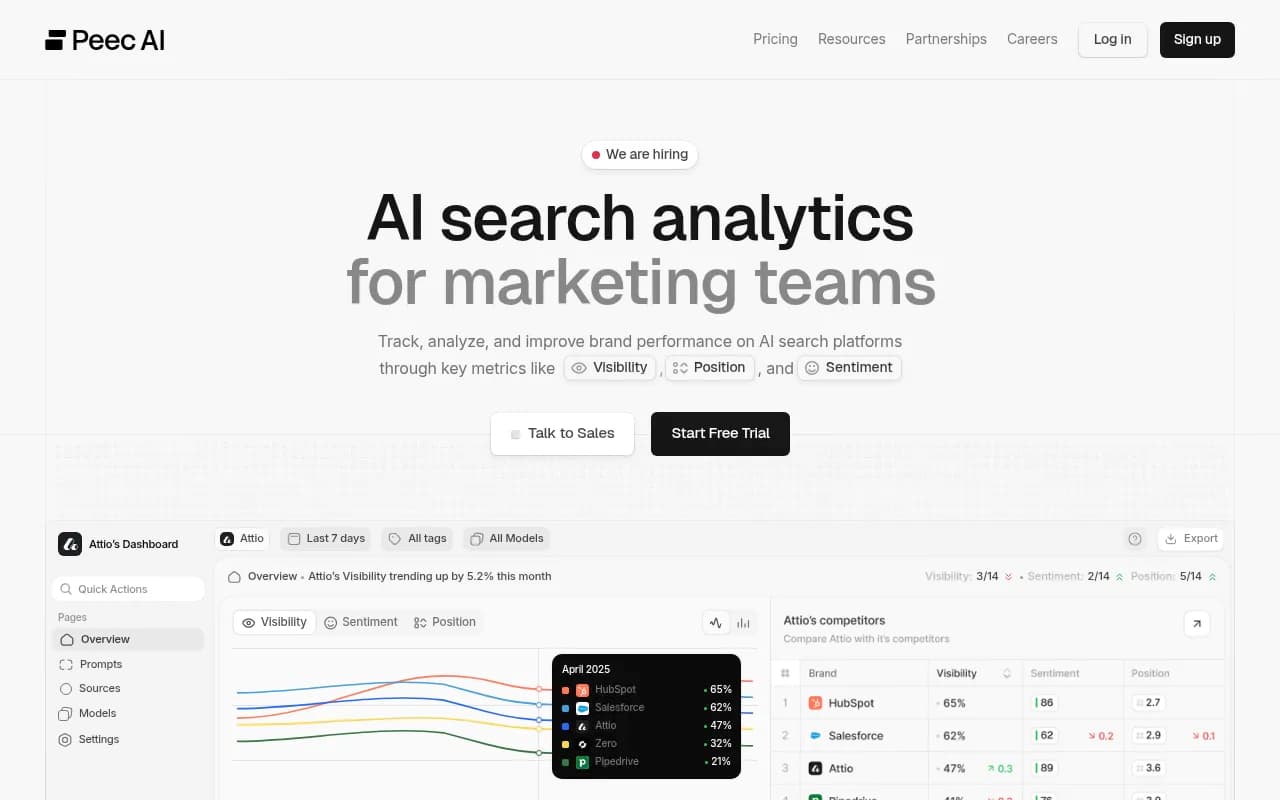
Peec AI is similar -- good for competitive benchmarking and share of voice comparisons, but it's a monitoring-only tool. You'll still need a separate workflow for acting on what you find.
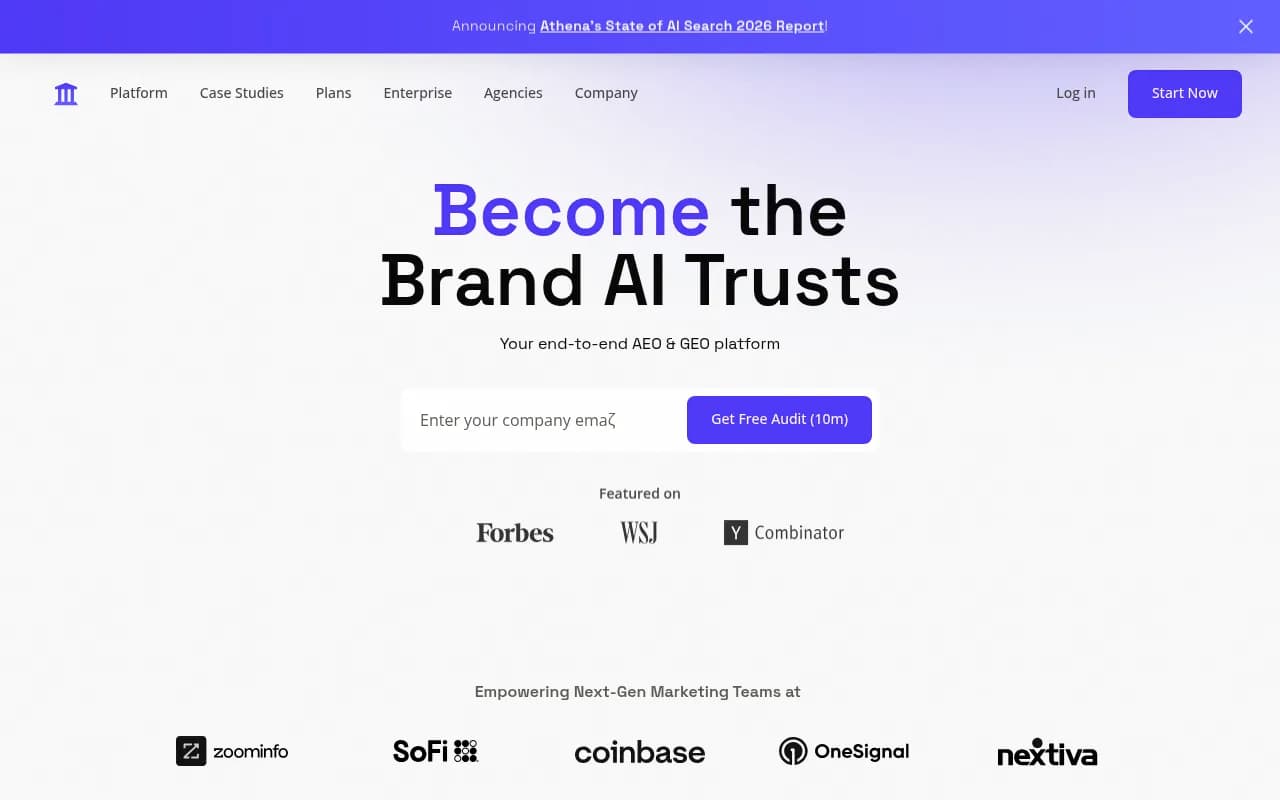
AthenaHQ covers monitoring across 8+ AI search engines and is solid for teams that need broad model coverage. Like most monitoring-focused platforms, it doesn't close the loop into content creation.
| Tool | Prompt scale | Prompt intelligence | Content generation | Best for |
|---|---|---|---|---|
| Promptwatch | 50-350+ (by plan) | Volume + difficulty scores | Yes (Content Agents) | Full-cycle optimization |
| Profound AI | Enterprise | Share of voice focus | No | Enterprise monitoring |
| SE Ranking | Medium | Basic | No | SEO teams already on SE Ranking |
| Otterly.AI | Small-medium | Minimal | No | Budget monitoring |
| Peec AI | Medium | Competitive benchmarking | No | Agency benchmarking |
| AthenaHQ | Medium-large | Basic | No | Multi-model coverage |
The gap between monitoring and action
Here's the thing most monitoring programs miss: tracking AI visibility is only useful if it leads to action. And the action is almost always the same -- you need to create or update content that gives AI models a better source to cite.
This is where a lot of teams get stuck. They have a beautiful dashboard showing them exactly where they're invisible. They can see that a competitor is cited for 40 prompts they're not. But translating that into a content brief, writing the piece, publishing it, and then watching whether it gets crawled and cited -- that's a whole separate workflow that most monitoring tools don't support.
The teams seeing the best results have closed this loop. They use their prompt prioritization framework to identify the highest-value gaps, generate content specifically targeting those gaps, and then track whether the new content starts getting cited. Promptwatch's Content Agents are built around this workflow -- they generate articles grounded in real prompt data and citation patterns, not generic SEO briefs.
The AI Crawler Logs feature is also worth mentioning here. Knowing that a piece of content was published is different from knowing that AI crawlers have actually read it and started citing it. Crawler logs show you exactly when ChatGPT, Perplexity, and other AI agents visit your pages, which errors they encounter, and when a page moves from "crawled" to "cited." That timeline data is what lets you close the loop properly.
A practical workflow for large-scale programs
Putting this all together, here's a workflow that works for teams managing 200+ prompts:
Monthly: Run your full prompt library through the scoring matrix. Promote or demote prompts based on updated scores. Review cluster-level visibility scores and flag any clusters that have dropped more than 10 percentage points.
Weekly: Run active prompts (top 100 by priority score) across your target AI models. Log citation changes. Flag any new competitor citations on high-priority prompts for immediate content response.
Daily: Monitor brand-critical prompts (your brand name, key comparison queries, decision-stage prompts with high commercial intent). Set up alerts for citation drops.
Quarterly: Audit your prompt library. Add new prompts based on new products, competitor moves, or emerging topics. Archive prompts that have been consistently low-priority for two quarters.
This cadence keeps the program manageable without letting important changes slip through.
What good looks like
A mature AI visibility program at scale isn't a dashboard with 300 green checkmarks. It's a system where:
- You know which 50 prompts drive the most commercial value and you're monitoring them daily
- You have a clear view of which topic clusters have coverage gaps and a content calendar addressing them
- When a competitor starts getting cited for a high-priority prompt, you find out within a week and have a content response in progress within two weeks
- Your visibility scores are trending up quarter over quarter, and you can connect specific content investments to specific citation gains
That last point is the real measure. AI visibility tracking at scale is only worth the investment if you can show that the monitoring led to action, and the action led to results. Everything else is just data collection.
The teams that get there fastest are the ones who treat prioritization as a first-class discipline -- not something they'll figure out later, but the foundation the whole program is built on.