Key takeaways
- Qwairy covers the basics of AI search visibility monitoring, but B2B SaaS teams targeting niche verticals often outgrow it quickly -- particularly when prompt volumes are low and every citation counts
- The best alternatives go beyond monitoring: they help you find content gaps, generate content that fills them, and track which pages AI models actually cite
- For most B2B SaaS teams, the choice comes down to how much action you need the platform to take vs. how much you want to do yourself
- Platforms like Promptwatch and Relixir are built around the full optimization loop; others like Otterly.AI and Peec AI are better if you just want clean monitoring data
- Prompt volume and difficulty scoring matters a lot in niche B2B -- most tools skip this; a few do it well
If you're running marketing for a B2B SaaS product in a niche vertical -- think compliance software, fleet management, or clinical trial management -- you already know the frustration. Your buyers are asking very specific questions in ChatGPT and Perplexity. The prompts are low-volume, but they're high-intent. And when a competitor shows up in those answers and you don't, it stings more than losing a generic keyword.
Qwairy is a reasonable starting point for AI search visibility. It tracks brand mentions across AI models and gives you a view of where you're showing up. But for B2B SaaS teams dealing with niche audiences, it tends to hit a ceiling fast. There's no content generation, limited prompt intelligence for low-volume queries, and not much help figuring out why you're missing from certain answers -- let alone what to do about it.
This guide covers the best alternatives in 2026, with a focus on what actually matters for niche B2B SaaS: prompt intelligence, content gap analysis, and the ability to act on what you find.
What B2B SaaS teams actually need from a GEO platform
Before jumping into the list, it's worth being specific about what "niche, low-volume prompts" actually demands from a tool.
In B2B SaaS, your buyers aren't typing "best CRM software." They're typing things like "how does [specific regulation] affect data retention in SaaS platforms" or "what's the best tool for managing multi-entity revenue recognition." These prompts might get asked hundreds of times a month, not millions. But the person asking is probably a VP of Finance or a compliance officer with budget authority.
A good GEO platform for this context needs to:
- Track AI responses for very specific, long-tail prompts -- not just broad category queries
- Tell you which competitors are getting cited for those prompts and why
- Help you identify what content is missing from your site that AI models want to reference
- Give you some signal on prompt difficulty and volume so you can prioritize
- Ideally, help you create the content that fills those gaps
Most monitoring-only tools fail on the last two points. They show you a dashboard of where you're invisible, then leave you to figure out the rest.
The best Qwairy alternatives in 2026
Promptwatch -- best overall for the full optimization loop
Promptwatch is the most complete option on this list for B2B SaaS teams that want to move from "we know we're invisible" to "we fixed it."
The core difference is the action loop. Answer Gap Analysis shows you exactly which prompts competitors rank for that you don't -- including the specific content your site is missing. Content Agents then generate articles, comparisons, and briefs grounded in real prompt data and citation analysis. Page-level tracking shows which pages AI models are actually citing, how often, and across which models. And AI Crawler Logs let you see when ChatGPT, Claude, or Perplexity crawled your site, which pages they read, and whether those pages moved from crawl to citation.
For niche B2B SaaS, the prompt intelligence features are particularly useful. Promptwatch provides volume estimates and difficulty scores for individual prompts, plus query fan-outs that show how one question branches into related sub-queries. When you're working with low-volume prompts, this kind of prioritization data is the difference between spending three months writing content that moves the needle and spending three months writing content nobody -- human or AI -- ever asks about.
It monitors 10 AI models including ChatGPT, Perplexity, Claude, Gemini, Grok, and Google AI Overviews. Pricing starts at $99/month for the Essential plan (1 site, 50 prompts, 5 articles) and $249/month for Professional (2 sites, 150 prompts, crawler logs, city/state tracking).

Relixir -- best for teams that want AI content generation baked in
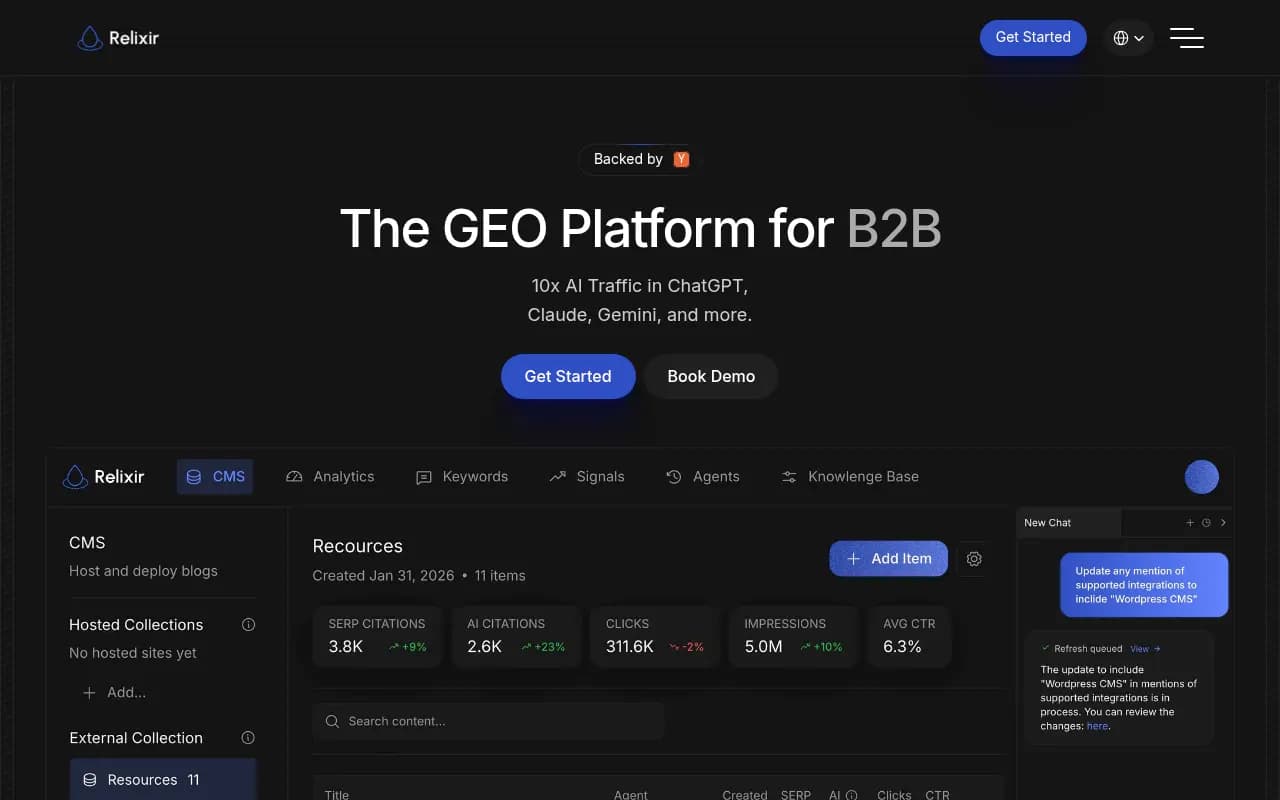
Relixir takes a similar approach to the optimization loop and is worth serious consideration if content generation is your primary bottleneck. It combines GEO monitoring with AI-assisted content creation, which means you're not bouncing between a tracking tool and a separate writing tool.
For B2B SaaS teams that are resource-constrained -- a two-person marketing team trying to cover a niche vertical -- having content generation inside the same platform as your gap analysis is genuinely useful. The workflow stays tighter.
Otterly.AI -- best for clean monitoring without the complexity
If your team just needs reliable tracking data and you're comfortable handling content strategy separately, Otterly.AI is a clean, affordable option. It monitors AI responses across the major models and surfaces brand mention data without a lot of overhead.
The honest limitation: it's monitoring-only. There's no content generation, no crawler logs, no prompt difficulty scoring. For a B2B SaaS team that already has a content team and just needs visibility data to inform their strategy, that's fine. For a team that needs the platform to help them act on what they find, it's not enough.

Peec AI -- best for straightforward brand tracking
Peec AI is another monitoring-focused option that does one thing well: showing you where your brand appears (or doesn't) in AI search responses. The interface is clean and the setup is fast.
Like Otterly.AI, it stops at the monitoring layer. No content optimization, no gap analysis, no crawler data. But if you're evaluating Qwairy specifically because you want something simple and affordable to start with, Peec AI is a reasonable comparison.
Profound AI -- best for enterprise B2B teams with bigger budgets
Profound is built for enterprise teams and shows in both the feature set and the price point. It has strong AI visibility tracking, competitive benchmarking, and reporting capabilities that work well for larger organizations with multiple stakeholders.
For a mid-market B2B SaaS company, Profound can feel like overkill -- and the cost reflects that. But if you're at a company where the CMO needs board-level reporting on AI search visibility and you have the budget to match, it's a serious option.
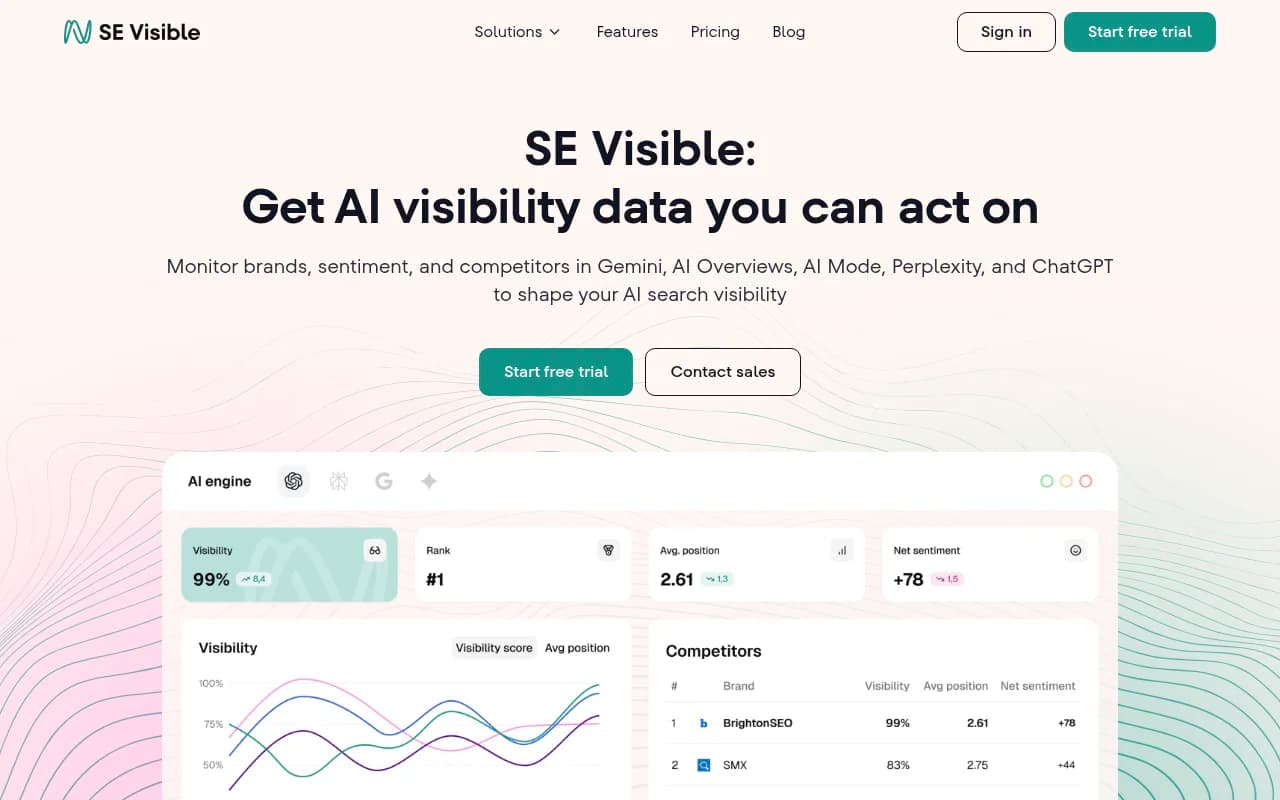
SE Visible -- best for teams already using SE Ranking
SE Visible is SE Ranking's AI visibility layer, which means it integrates naturally if your team already lives in SE Ranking for traditional SEO. The combination gives you a unified view of both traditional keyword rankings and AI search visibility, which is useful for B2B SaaS teams that haven't fully separated their SEO and GEO workflows yet.
The AI visibility features are solid but not as deep as dedicated GEO platforms. Think of it as a good "first step into GEO" for teams that are already SE Ranking customers.
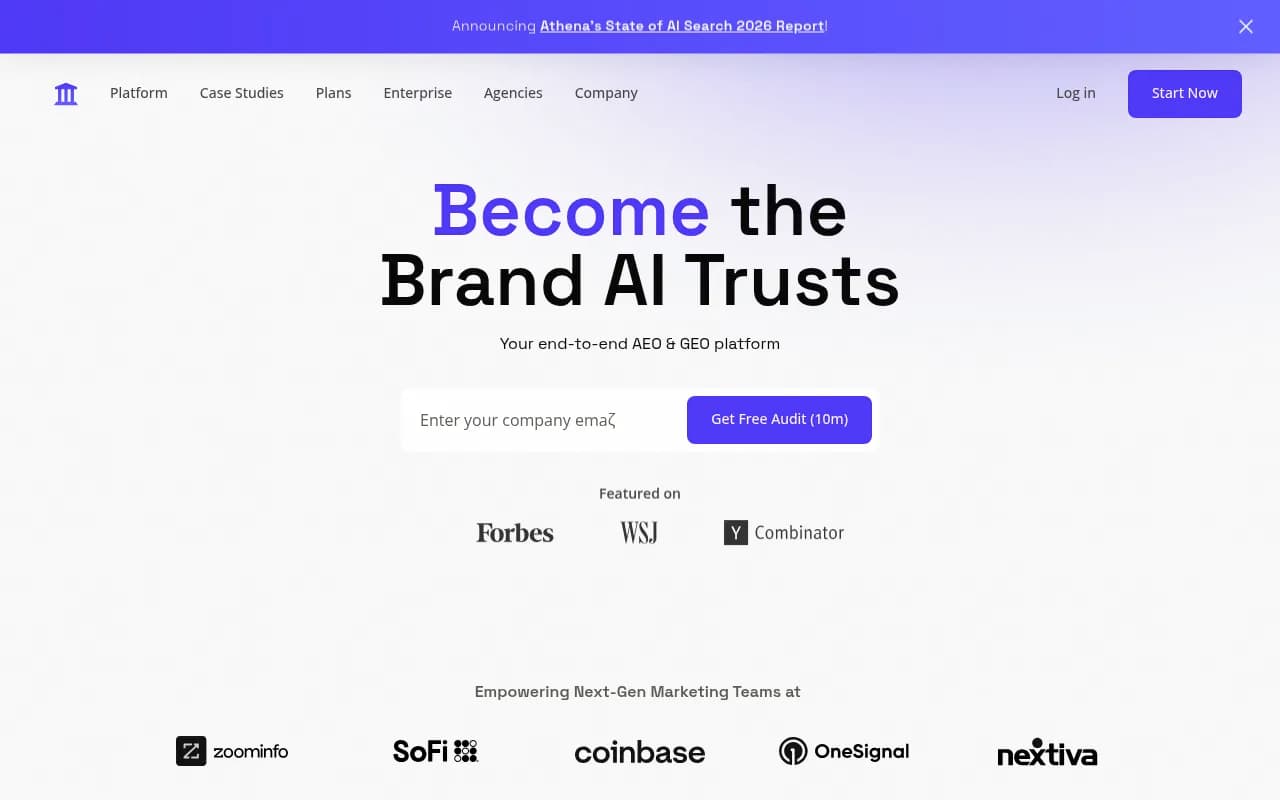
Athena HQ -- best for monitoring across a wide range of AI models
Athena HQ tracks brand visibility across 8+ AI search engines, which is more breadth than most tools offer. For B2B SaaS teams selling to buyers who use a variety of AI tools (and in niche verticals, your buyers might skew toward Perplexity or Claude more than the general population), that coverage matters.
The platform is monitoring-focused. Content optimization and gap analysis aren't core strengths. But the breadth of model coverage and the quality of the tracking data make it worth considering if comprehensive monitoring is your priority.
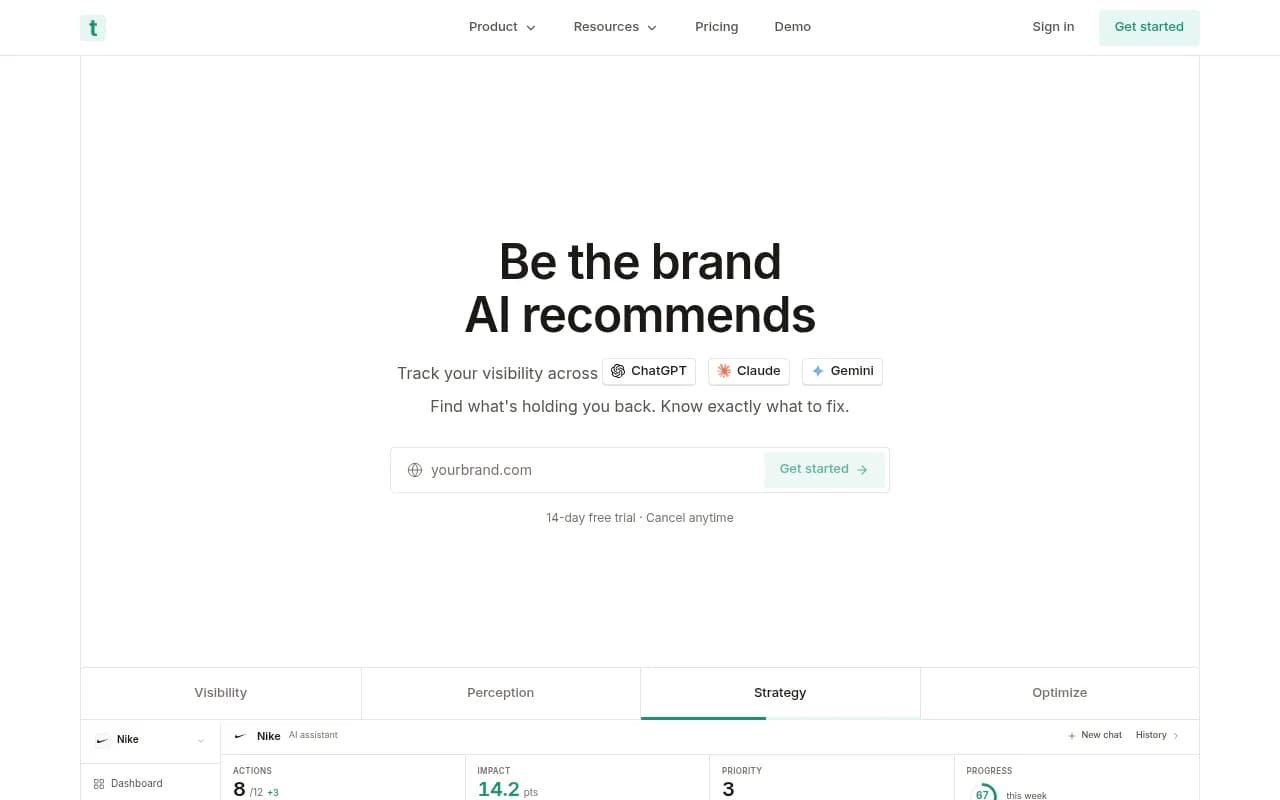
Trakkr.ai -- best lightweight option for small teams
Trakkr.ai is a lighter-weight option that covers the core tracking use case without a lot of complexity. For a solo marketer or a very small team that just needs to know when their brand shows up in ChatGPT, Claude, or Perplexity responses, it's a practical starting point.
It won't scale into a full GEO program, but it's a reasonable way to get visibility data without committing to a more complex platform.
Feature comparison
| Platform | Prompt intelligence | Content generation | Crawler logs | Gap analysis | Best for |
|---|---|---|---|---|---|
| Promptwatch | Yes (volume + difficulty) | Yes (Content Agents) | Yes | Yes | Full optimization loop |
| Relixir | Partial | Yes | No | Yes | Content-first teams |
| Otterly.AI | No | No | No | No | Clean monitoring |
| Peec AI | No | No | No | No | Simple brand tracking |
| Profound AI | Yes | No | No | Partial | Enterprise reporting |
| SE Visible | Partial | No | No | No | SE Ranking users |
| Athena HQ | No | No | No | No | Multi-model coverage |
| Trakkr.ai | No | No | No | No | Small teams, lightweight |
How to choose the right one for your team
The honest answer is that it depends on where your team is in the GEO maturity curve.
If you're just starting to think about AI search visibility and want to understand where you stand before committing to a bigger platform, Otterly.AI or Peec AI will get you oriented quickly. They're affordable, easy to set up, and give you a baseline.
If you've already done that baseline work and you know you're invisible for prompts that matter to your buyers, you need something that helps you act. That's where Promptwatch and Relixir pull ahead. The gap analysis and content generation features mean you're not just staring at a dashboard of problems -- you're building a pipeline of content that fixes them.
For niche B2B SaaS specifically, I'd argue the prompt intelligence features matter more than most teams realize. When you're working with low-volume prompts, you can't afford to guess at which ones to prioritize. Difficulty scoring and volume estimates let you focus on prompts that are both winnable and worth winning. Most monitoring tools skip this entirely.
One more thing worth mentioning: AI crawler logs are underrated for B2B SaaS teams. If ChatGPT is crawling your pricing page but never citing it, that tells you something specific about what's missing. If it's crawling a blog post and citing it three weeks later, you can see that timeline and replicate it. That kind of feedback loop doesn't exist in monitoring-only tools -- and for niche verticals where every citation counts, it's genuinely useful data.
The bottom line
Qwairy works fine as a starting point, but B2B SaaS teams with niche audiences tend to need more. The monitoring-only approach leaves too much of the work on your plate -- you see the gaps but get no help filling them.
For most teams reading this, Promptwatch is the strongest all-around option: it covers monitoring, gap analysis, content generation, and crawler logs in one platform, with prompt intelligence features that actually help you prioritize in low-volume environments. If budget is tighter and you just need clean tracking data to inform your own content strategy, Otterly.AI or Peec AI are solid, honest tools that do what they say.
The niche B2B SaaS context is specific enough that generic SEO tools -- even good ones like Semrush or Ahrefs -- don't really cut it here. AI search visibility in specialized verticals requires prompt-level data, and that's a different problem than keyword ranking.