Key takeaways
- Promptwatch is rated the top AI visibility platform out of 15+ tools tested by multiple independent reviewers in 2026, with a 4.0/5 overall score from GenerateMore.ai's six-month evaluation.
- Unlike most competitors that stop at monitoring, Promptwatch closes the loop: find content gaps, generate content to fill them, then track whether AI models start citing you.
- It monitors 10+ AI models including ChatGPT, Claude, Perplexity, Gemini, Grok, DeepSeek, Copilot, Mistral, Meta AI, and Google AI Overviews.
- Pricing starts at $99/month with a free trial available. The platform is used by 6,700+ brands including Booking.com and Center Parcs.
- The biggest differentiator is what it does after showing you the data -- Answer Gap Analysis, AI content generation, crawler logs, and traffic attribution in one place.
There are now dozens of tools claiming to track your brand's visibility in AI search. Most of them do roughly the same thing: run your prompts through ChatGPT or Perplexity, check if your brand shows up, and hand you a dashboard. Then they leave you alone with the data.
Promptwatch takes a different approach. The core idea is that visibility tracking is only useful if it leads somewhere -- so the platform is built around an action loop rather than a reporting loop. You find the gaps, fix them with content, and track whether the fix worked.
That's a meaningful distinction in a market full of monitoring-only tools. Let me walk through what that actually looks like in practice.

What Promptwatch is (and what it isn't)
Promptwatch is an AI search visibility and optimization platform. It tracks how your brand appears across AI engines -- when you're cited, when you're mentioned without a citation, when competitors show up instead of you, and when you're missing entirely.
It's used by 6,700+ brands and agencies, including Booking.com, Center Parcs, Wortell, and Elaboratum. The platform has processed over 1.1 billion citations, clicks, and prompts, which gives its data a level of depth that newer entrants simply don't have yet.
What it isn't: a traditional SEO rank tracker. It doesn't replace tools like Semrush or Ahrefs for keyword research or backlink analysis. It's purpose-built for the AI search layer -- the answers that ChatGPT, Claude, Perplexity, and Google's AI Mode generate in response to user queries.
The core problem it solves
Here's the situation most marketing teams are in right now: they know AI search is becoming important, they've noticed competitors showing up in ChatGPT responses, and they have no idea why or how to change it.
The typical monitoring tool answers the first question ("are we showing up?") but not the second ("why not, and what do we do about it?"). Promptwatch is built around answering both.
Brandon Leuangpaseuth, an independent SEO consultant who has scaled multiple SaaS companies, described it this way in his review: "The data is actually actionable. Standout features include the Answer Gap report, crawler log analysis, built-in visitor analytics, and content optimization suggestions -- all under one roof."
That's the pitch, and it mostly holds up. Let me go through the specific features that make it work.
Feature breakdown
Answer Gap Analysis
This is the feature that separates Promptwatch from most of the field. The Answer Gap report shows you which prompts your competitors are visible for that you're not -- and more importantly, it tells you why you're missing. Usually it comes down to content: AI models can't cite you because you don't have a page that answers the question.
The report surfaces specific topics, angles, and questions where your site is absent. You're not guessing what to write next. You're looking at a list of prompts where a competitor is getting cited and you're not, with enough context to understand what content would close the gap.
For SEO teams used to keyword gap analysis, this feels familiar but more direct. You're not inferring what content might rank -- you're seeing exactly what AI models are looking for and not finding on your site.
Built-in AI content generation
Once you've identified the gaps, Promptwatch has a built-in writing agent that generates content to fill them. This isn't generic AI writing -- it's grounded in the platform's citation data (880M+ citations analyzed), prompt volumes, and competitor analysis.
The output is articles, listicles, and comparisons engineered to get cited by AI models, not just to rank in Google. The distinction matters: content that gets cited in ChatGPT tends to be direct, authoritative, and structured in ways that make it easy for a language model to extract and reference. Generic SEO content often isn't.
The Essential plan includes 5 articles per month. Professional gets 15, Business gets 30. For teams producing content at scale, this is a meaningful part of the workflow rather than a bolt-on.
AI crawler logs
This is a feature most competitors don't offer at all. Promptwatch shows you real-time logs of AI crawlers -- ChatGPT's GPTBot, Claude's ClaudeBot, Perplexity's crawler -- hitting your website. You can see which pages they read, how often they return, and any errors they encounter.
This matters because AI visibility isn't just about what you publish -- it's about whether AI systems can actually access and process your content. If GPTBot is hitting your site and getting 404s or blocked by your robots.txt, you have a technical problem that no amount of content will fix. The crawler logs let you catch and fix those issues.
Prompt Intelligence
Each prompt in your monitoring setup comes with volume estimates and difficulty scores. You can see how often a particular query is being asked across AI engines, and how competitive it is. There's also a query fan-out feature that shows how one prompt branches into sub-queries -- useful for understanding the full surface area of a topic.
This is the difference between tracking prompts and prioritizing them. Not all prompts are worth the same effort. Prompt Intelligence helps you focus on high-volume, winnable queries rather than spreading attention evenly.
Citation and source analysis
Promptwatch shows you exactly which pages, Reddit threads, YouTube videos, and domains AI models are citing in their responses. This tells you where to publish and what to optimize -- not just on your own site, but across the broader web.
The Reddit and YouTube tracking is worth calling out specifically. These platforms have an outsized influence on what AI models recommend, and most competitors ignore them entirely. If a Reddit thread is consistently getting cited when someone asks about your category, that's something you need to know.
Traffic attribution
There are three ways to connect AI visibility to actual traffic and revenue: a code snippet, Google Search Console integration, or server log analysis. This closes the loop between "we're being cited more" and "that's driving measurable results."
Lari Numminen at GenerateMore.ai gave this a 5/5 in his review, noting that "both referral traffic, Google Search Console and event log tracking available" -- a combination that most competitors don't offer.
Competitor heatmaps
The heatmap view compares your AI visibility against competitors across different LLMs. You can see at a glance who's winning for each prompt and on which model. It's a useful way to prioritize -- if you're losing to a specific competitor on Perplexity but winning on ChatGPT, that tells you where to focus.
Multi-language and multi-region monitoring
Promptwatch monitors AI responses in any language, from any country, with customizable personas that match how your actual customers prompt. For international brands or agencies managing clients across markets, this is table stakes -- and not every competitor handles it well.
Pricing
| Plan | Price | Sites | Prompts | Articles | Key features |
|---|---|---|---|---|---|
| Essential | $99/mo | 1 | 50 | 5 | Core monitoring, gap analysis |
| Professional | $249/mo | 2 | 150 | 15 | Crawler logs, state/city tracking |
| Business | $579/mo | 5 | 350 | 30 | Multi-site, full feature set |
| Agency/Enterprise | Custom | Custom | Custom | Custom | White-label, API, custom workflows |
Annual billing discounts are available, and there's a free trial to start. For agencies, custom pricing includes white-label options and Looker Studio integration.
The Professional plan at $249/month is where most serious marketing teams will land -- it adds crawler logs and granular geographic tracking, which are genuinely useful rather than just nice-to-have.
How it compares to the alternatives
The AI visibility space has gotten crowded fast. Here's an honest look at how Promptwatch stacks up against the main categories of competitors.
vs. monitoring-only tools (Otterly.AI, Peec AI, AthenaHQ)
These tools track your brand mentions across AI engines and show you dashboards. They're useful for awareness but stop short of telling you what to do about gaps. No content generation, no crawler logs, no traffic attribution.



Promptwatch's Answer Gap Analysis and content generation are the key differentiators here. If you want to actually improve your visibility rather than just measure it, monitoring-only tools leave you to figure out the "so what" on your own.
vs. enterprise platforms (Profound, Scrunch)
Profound and Scrunch have strong feature sets and are genuinely competitive at the enterprise level. The differences: higher price points, no Reddit tracking, and no ChatGPT Shopping monitoring. For large enterprises with dedicated teams, these are worth evaluating. For most marketing teams, the price-to-value ratio favors Promptwatch.
vs. traditional SEO tools (Semrush, Ahrefs Brand Radar)
Semrush and Ahrefs are excellent for traditional SEO but weren't built for AI search monitoring. Semrush uses fixed prompts, Ahrefs Brand Radar has fixed prompts and no AI traffic attribution. Neither has crawler logs or content generation for AI visibility.
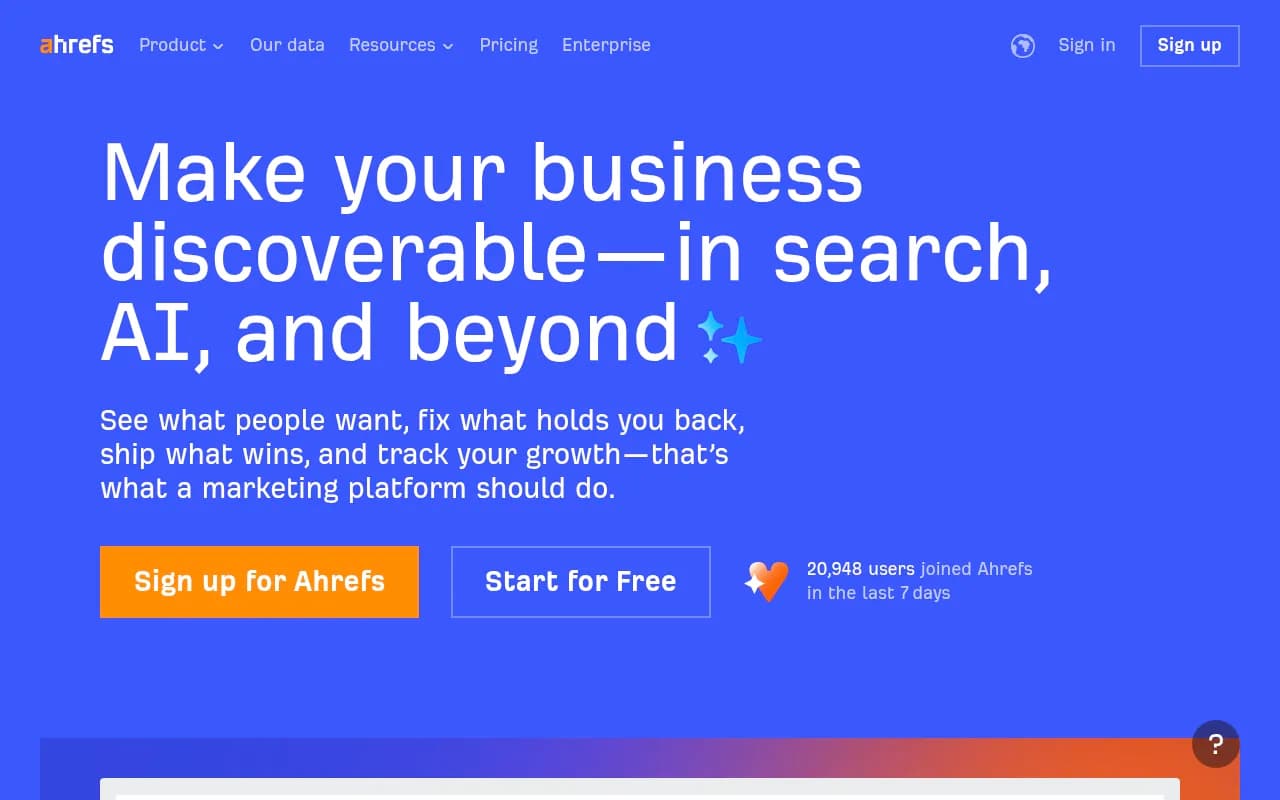
If you're already using one of these for keyword research and backlinks, Promptwatch is a complement rather than a replacement.
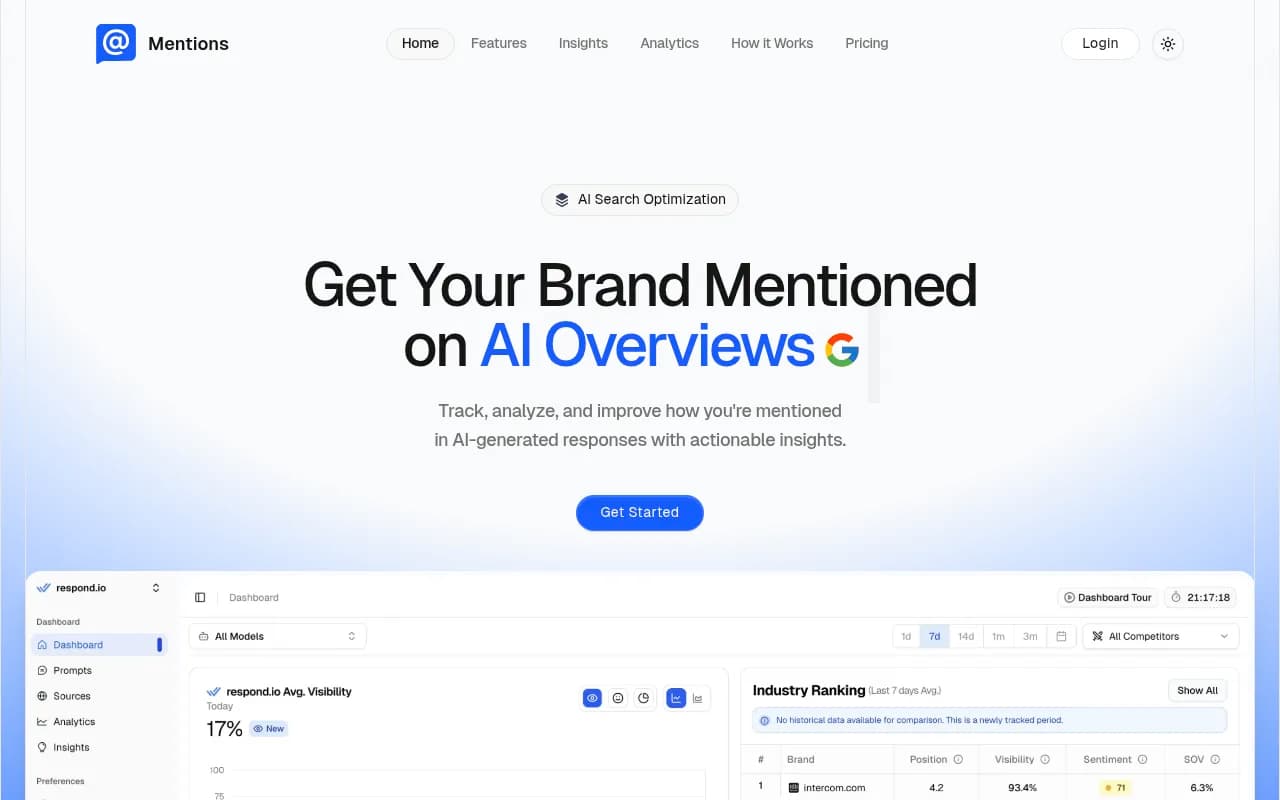
vs. newer entrants (Wellows, Otterly.AI, Mentions.so)
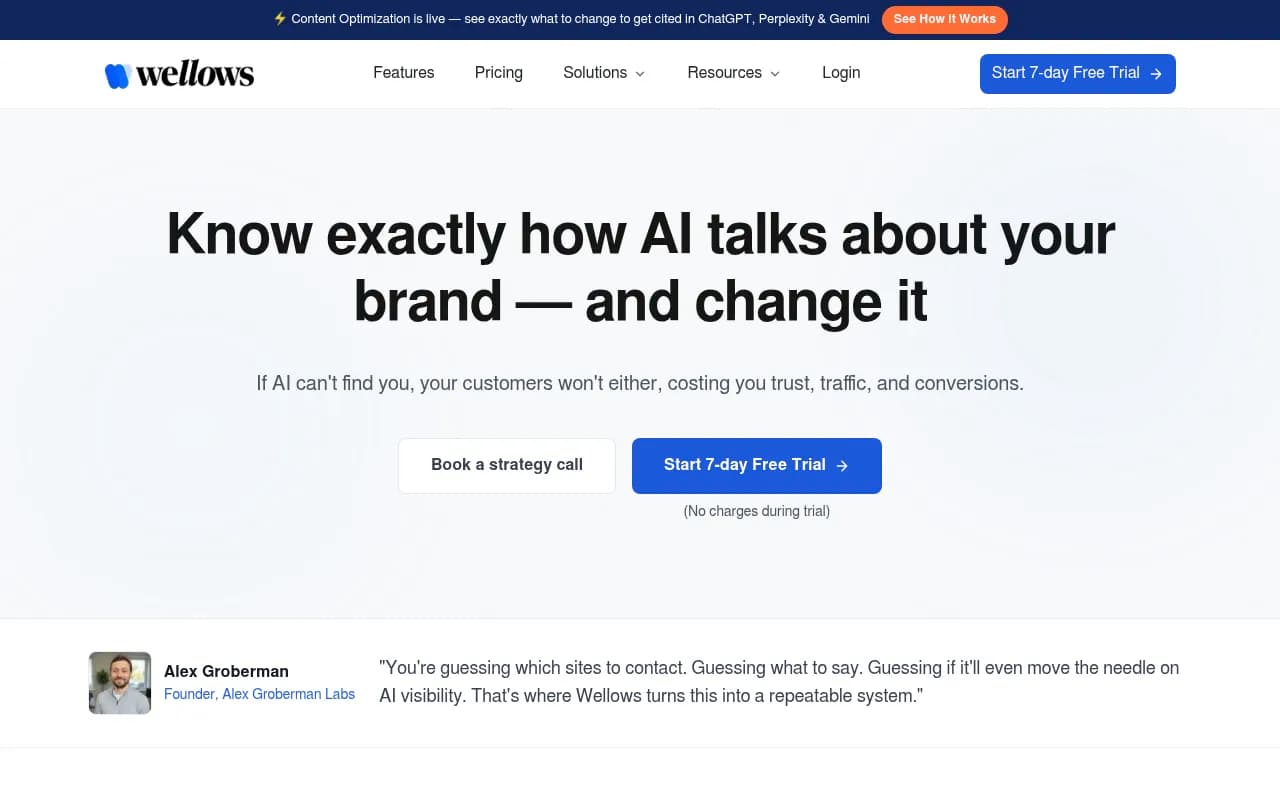
The newer tools in this space are often cheaper and easier to get started with, but they're still building out their feature sets. Wellows, for example, focuses more on citation building and outreach than on technical monitoring. Depending on your priorities, that might be exactly what you need -- or it might not be enough.
What independent reviewers actually say
The GenerateMore.ai review, based on six months of hands-on testing across 15+ AI visibility tools, rated Promptwatch as the top pick overall with a 4.0/5 score. The breakdown:
High marks (4-5/5) went to multi-AI engine coverage, user experience, AI traffic attribution, brand presence overview, and pricing value. Lower marks (3/5) went to data accuracy (no issues found, but rated conservatively), competitor analysis depth, and data freshness.
The cons noted: UX bugs that are hard to escalate, and the platform moves fast enough that it's sometimes hard to keep track of new features. These are real limitations, not invented ones.
The Reddit thread from r/webmarketing echoed a similar sentiment: "The prompt-level tracking actually lets you see which specific content is getting cited versus just mentioned, so you're not guessing why you're visible." That's the practical value in a sentence.
Brandon Leuangpaseuth's review on his SEO blog was direct: "Promptwatch is one of the better AI visibility tracking tools I've tested. It's easy to use, the onboarding is genuinely helpful, and the data is actually actionable." He recommends it.
Who it's for (and who it isn't)
Promptwatch works best for:
- Marketing and SEO teams at companies where AI search visibility is becoming a real priority
- Digital agencies managing multiple clients who need to track and improve AI presence across brands
- Brands in competitive categories where competitors are already showing up in ChatGPT and Perplexity answers
- Teams that want to produce content specifically engineered for AI citation, not just traditional SEO
It's probably overkill for:
- Solo bloggers or very small businesses with limited content budgets
- Teams that just want a quick snapshot of brand mentions without a workflow around it
- Companies in categories where AI search isn't yet a meaningful traffic driver
The honest verdict
Promptwatch does what it says. The monitoring is solid across 10+ AI models, the data is updated daily, and the platform is genuinely easier to use than most enterprise-grade tools.
But the real value is the action loop. Most AI visibility tools are dashboards. Promptwatch is a workflow. You find the prompts where you're invisible, understand why (usually missing content), generate content to fix it, and track whether the fix worked. That cycle is what makes it an optimization platform rather than a reporting tool.
The UX bugs and fast-moving feature set are real downsides -- the platform is clearly iterating quickly, which means things occasionally break or move around. That's a fair trade-off for most teams, but it's worth knowing going in.
At $99/month for the Essential plan, it's accessible enough to test seriously. The Professional plan at $249/month is where the full value becomes clear, with crawler logs and geographic tracking added in.
If your competitors are showing up in AI-generated answers and you're not, Promptwatch is the most direct path to understanding why and doing something about it.