Key takeaways
- Peec AI scores 7.3/10 in independent reviews -- solid analytics and prompt-level tracking, but limited built-in guidance on what to actually do with the data.
- LLM Pulse includes more AI models on base plans and costs significantly less for equivalent prompt volumes (roughly 52% cheaper at 150 prompts).
- Peec AI runs daily monitoring; LLM Pulse defaults to weekly (daily available on request). For most brand visibility use cases, weekly is enough.
- Neither tool helps you fix visibility gaps -- they both stop at monitoring. If content optimization and gap analysis matter to your team, you'll outgrow both quickly.
- Growing teams with tighter budgets tend to prefer LLM Pulse. Teams that need daily cadence and deeper analytics lean toward Peec AI.
If you're a marketing or SEO team trying to get a handle on AI search visibility, you've probably landed on two names pretty quickly: Peec AI and LLM Pulse. Both are positioned as accessible, no-enterprise-contract tools for teams that want to track how their brand shows up in ChatGPT, Perplexity, Google AI Overviews, and similar AI surfaces.
They're not the same tool, though. The differences are real and they matter depending on what your team actually needs. This guide breaks down both platforms honestly -- what they do well, where they fall short, and which one makes more sense for a growing team in 2026.
What each tool is trying to do
Peec AI
Peec AI is an AI search analytics platform built specifically for marketing and SEO teams. The core idea is to treat prompts as the primary tracking unit -- you set up prompts that mirror real user questions, and the platform monitors how your brand appears in AI-generated answers across those prompts.
It tracks three things at the prompt level: visibility (how often you're mentioned), position (where you appear in the answer), and sentiment (whether the tone is positive, neutral, or negative). That's a reasonably complete picture of brand presence in AI search.
Peec AI is VC-backed -- it raised $21M in a Series A in November 2025 -- so it's growing fast and adding features. The flip side is that pricing reflects that investment trajectory.

LLM Pulse
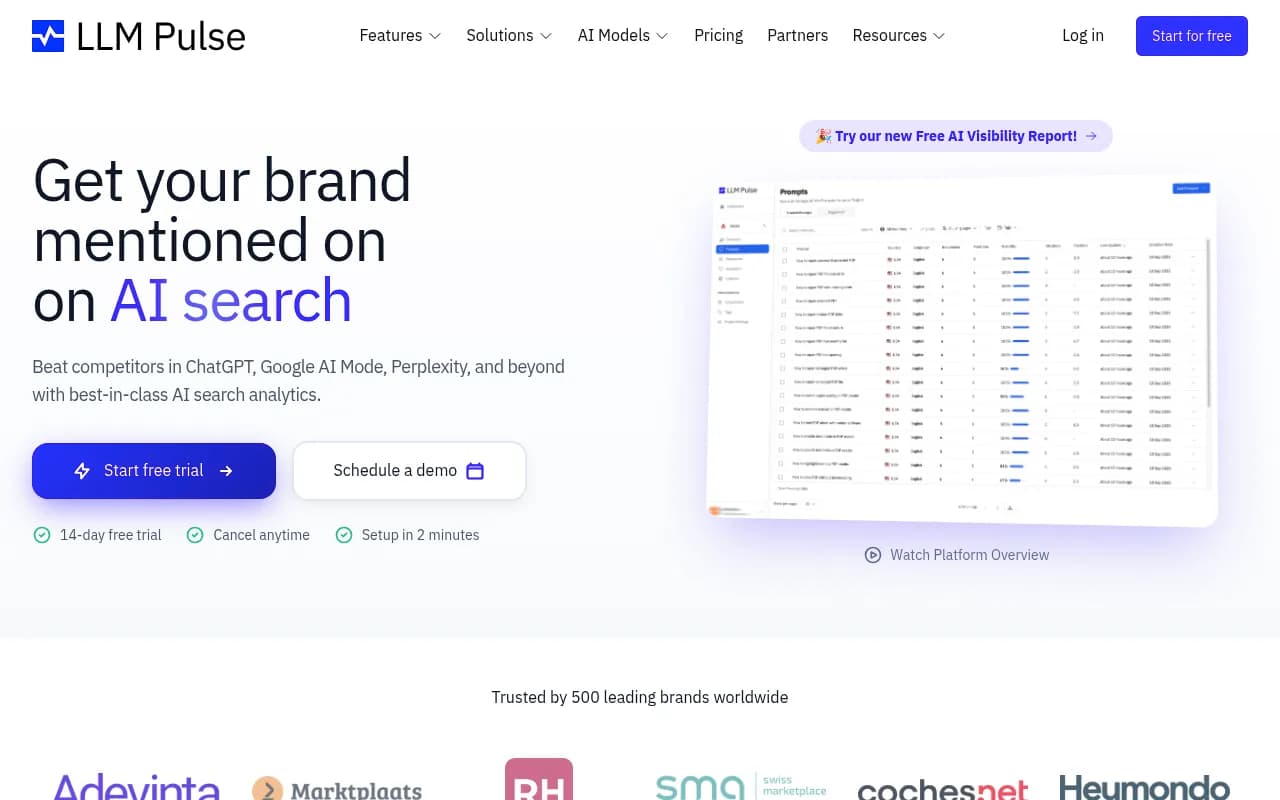
LLM Pulse is a bootstrapped platform covering tracking, analysis, and some optimization features. It includes ChatGPT, Perplexity, Google AI Overviews, Google AI Mode, and Gemini on all plans -- not as paid add-ons. It also offers API access, a GA4 integration, a Chrome extension, and a Looker Studio connector.
The bootstrapped model means pricing is more conservative and the feature roadmap moves at a different pace. But for teams that want broad model coverage without paying extra for each engine, that's actually an advantage.
Head-to-head comparison
Here's how the two platforms stack up across the dimensions that matter most to growing teams:
| Feature | Peec AI | LLM Pulse |
|---|---|---|
| Starting price | €85/mo | €49/mo |
| AI models (base plan) | ChatGPT, Perplexity, AI Overviews | ChatGPT, Perplexity, AI Overviews, AI Mode, Gemini |
| Google AI Mode | Paid add-on | Included on all plans |
| Claude / DeepSeek | Paid add-ons | Available (plan-dependent) |
| Monitoring cadence | Daily | Weekly default (daily on request) |
| Sentiment analysis | Yes | Yes (with explainability focus) |
| Competitor benchmarking | Yes | Yes |
| Content optimization | Limited | Limited |
| Looker Studio connector | Yes | Yes |
| API access | Yes (higher tiers) | Yes |
| GA4 integration | No | Yes |
| Chrome extension | No | Yes |
| Funding model | VC-backed ($29M raised) | Bootstrapped |
| Best for | In-house SEO/marketing teams | Budget-conscious teams, PR, agencies |
The pricing gap is significant. At 150 prompts, LLM Pulse comes in around €99/mo versus €205/mo for Peec AI -- roughly 52% cheaper for equivalent coverage, according to LLM Pulse's own comparison (which they note was reviewed for factual accuracy).
That said, Peec AI's daily monitoring cadence is a real differentiator for teams that need fresh data. Whether daily vs. weekly actually changes decisions for most brand visibility use cases is debatable -- but if you're running a PR campaign or responding to a brand crisis, daily matters.
Where Peec AI is stronger
Peec AI's analytics depth is genuinely good. The LinkedIn review from 2026 gave it 9/10 for both AI visibility capabilities and prompt-level insights -- that's not nothing. If your team has experienced SEOs who know what to do with data, the platform gives you a lot to work with.
The daily monitoring cadence is the other clear advantage. For teams managing active campaigns or tracking competitor movements in near real-time, weekly snapshots can feel stale.
Competitor benchmarking is also well-developed. You can see how your brand stacks up against specific competitors across prompts, which is useful for reporting to stakeholders who want to know "are we winning or losing in AI search?"
Where it gets frustrating is the pricing structure. Lower-tier plans have prompt and answer limits that growing teams hit quickly, and adding more AI engines (Google AI Mode, Gemini, Claude, DeepSeek) costs extra. A team that starts at €85/mo can find themselves at €200+ once they add the engines they actually care about.
The platform also scores only 6/10 for built-in actionable recommendations. It shows you the data but doesn't tell you what to do with it. That's fine if you have the expertise in-house -- but for smaller or less experienced teams, it means you're on your own to figure out the "so what."
Where LLM Pulse is stronger
The value proposition is straightforward: more AI model coverage for less money. Getting Google AI Mode and Gemini included on the base plan is a meaningful difference in 2026, when AI Mode is increasingly where brand visibility battles are being fought. According to a 2025 Search Engine Land study, brands appear in roughly 90% of Google AI Mode responses compared to 43% in AI Overviews -- so tracking AI Mode isn't optional anymore.
The GA4 integration and Chrome extension are also genuinely useful additions that Peec AI doesn't offer. If your team already lives in GA4 for attribution, having LLM visibility data flow into the same environment saves a lot of context-switching.
LLM Pulse's sentiment analysis is designed with explainability in mind -- it's built to be consistent across prompts and models, which matters when you're trying to report sentiment trends over time rather than just point-in-time snapshots.
The weekly default cadence is a trade-off, not a flaw. For most brand visibility monitoring, weekly data is sufficient and the cost savings are real.

The shared limitation both tools have
Here's the honest part: both Peec AI and LLM Pulse are monitoring tools. They show you where you're visible and where you're not. Neither one helps you close the gap.
If you discover that a competitor is getting cited for 40 prompts you're invisible for, both tools will show you that data. Neither will tell you what content to create, generate a brief, or help you publish something that might actually get picked up by AI models.
That's not a knock on either tool -- it's just what they are. For teams that are just getting started with AI visibility tracking, that's probably fine. You need to understand the landscape before you can optimize it.
But if your team is past the "we need to understand this" phase and into "we need to actually improve our AI search presence," monitoring-only tools become a ceiling pretty quickly. Platforms like Promptwatch are built around the full loop -- tracking visibility gaps, generating content to fill them, and measuring whether that content actually starts getting cited. It's a different category of tool.

Which teams should pick which tool
Go with LLM Pulse if:
- Budget is a real constraint and you need broad model coverage without add-on fees
- Your team is in PR or agency work where weekly reporting cadence is fine
- You want GA4 integration or a Chrome extension as part of your workflow
- You're just starting out with AI visibility tracking and want a low-risk entry point
Go with Peec AI if:
- You need daily monitoring for active campaigns or brand crisis management
- Your team has experienced SEOs who can interpret analytics data independently
- Competitor benchmarking and prompt-level analytics are central to your reporting
- You're willing to pay more for a more polished, VC-backed product with faster feature development
Consider a more capable platform if:
- You need to actually improve your AI visibility, not just measure it
- Your team wants content gap analysis, AI-generated content briefs, or optimization recommendations
- You're tracking more than a couple of sites or need crawler log data to understand how AI engines are indexing your content
How they fit into the broader AI visibility landscape
It's worth putting both tools in context. The AI visibility tracking space has expanded significantly in 2026, and the tools range from basic monitors to full optimization platforms.

Peec AI and LLM Pulse sit in the "accessible monitoring" tier -- they're not enterprise tools, and they're not optimization platforms. They're designed to give marketing teams visibility into AI search without requiring a large budget or a dedicated analyst.
Other tools in this tier worth knowing about:

Otterly.AI is another option at the accessible end of the market, often recommended alongside Peec AI for small teams.
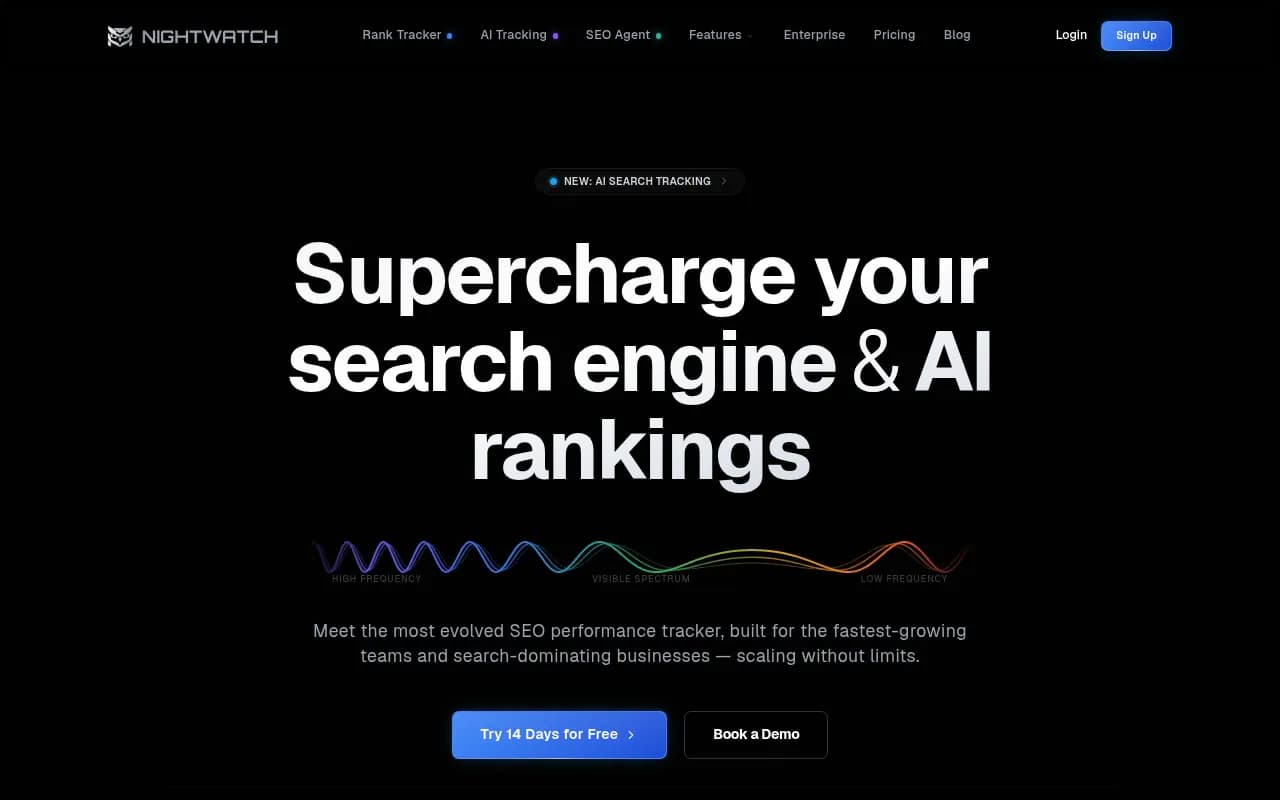
Nightwatch covers both traditional rank tracking and AI visibility, which is useful if you want both in one place.
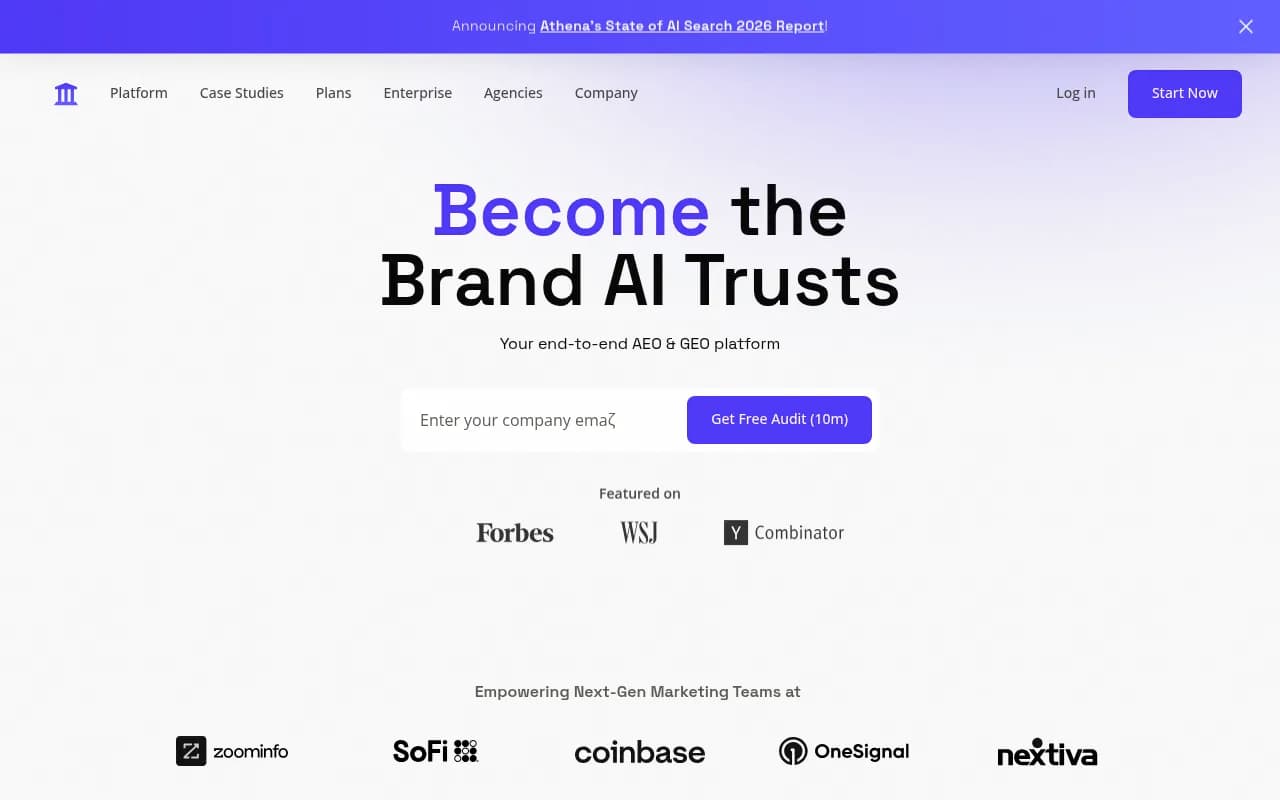
Athena HQ sits a step above in terms of analytics depth, though it's still primarily a monitoring tool.
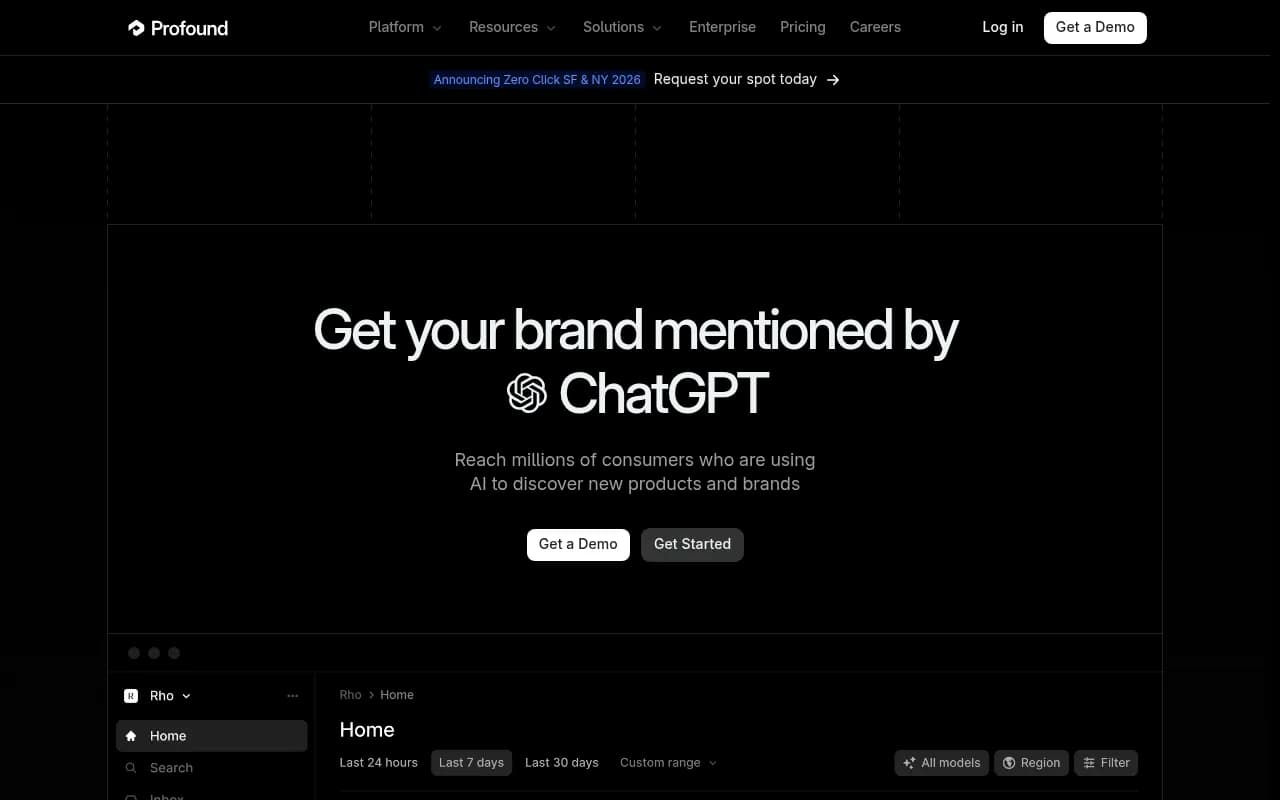
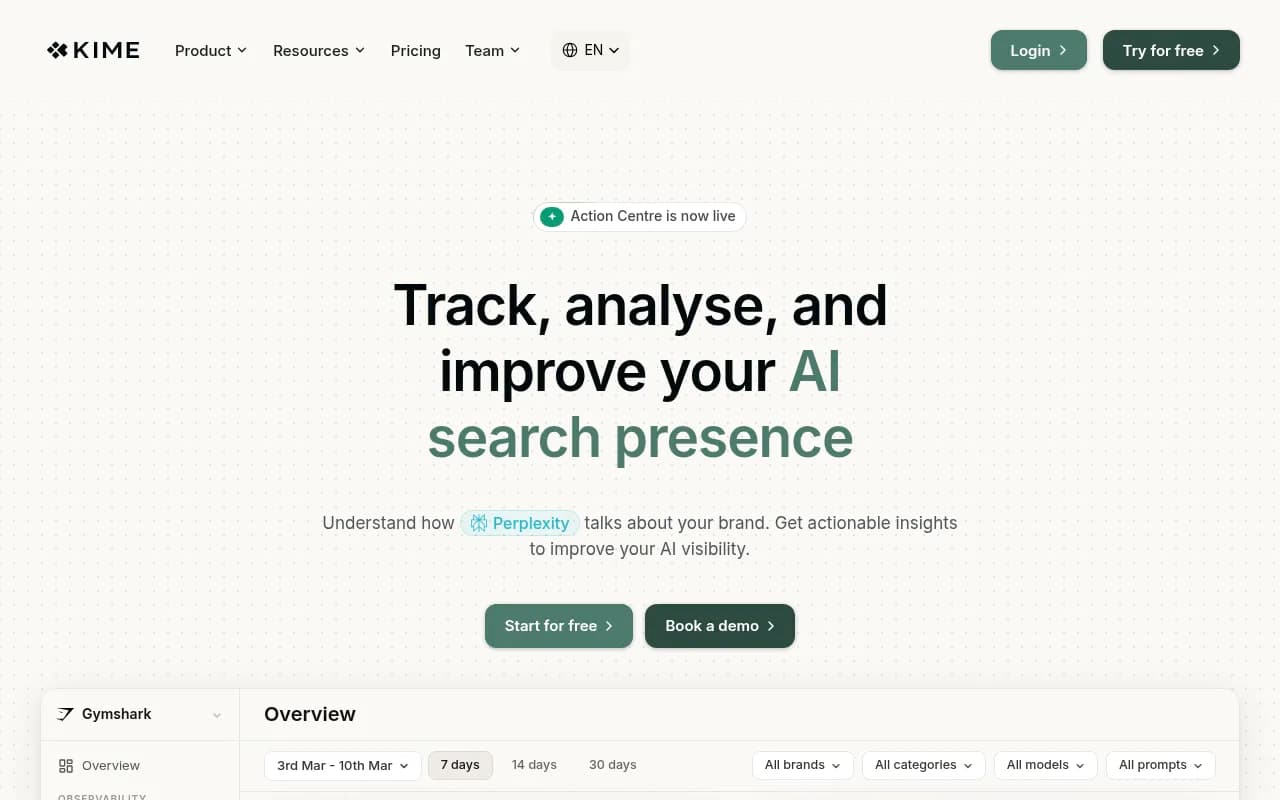
For teams that want to go beyond tracking, the comparison shifts. Platforms like Promptwatch, Profound, and KIME offer different combinations of optimization features, content generation, and deeper analytics.
Pricing summary
| Tool | Entry price | Prompts at entry | Models included | Daily monitoring |
|---|---|---|---|---|
| LLM Pulse | €49/mo | Varies by plan | 5 (incl. AI Mode, Gemini) | On request |
| Peec AI | €85/mo | Varies by plan | 3 base (others add-on) | Yes |
| Otterly.AI | $29/mo | Limited | Varies | No |
| Promptwatch | $99/mo | 50 | 10+ models | Yes |
The bottom line
Peec AI and LLM Pulse are both reasonable tools for teams that want to start tracking AI search visibility without committing to an enterprise contract. The choice between them mostly comes down to budget vs. cadence.
LLM Pulse gives you more model coverage for less money. Peec AI gives you daily data and deeper analytics. Neither gives you a path to actually improving your visibility -- they show you the problem but leave the solution to you.
If your team is at the stage where you need to move from "understanding AI visibility" to "improving it," that's when it's worth looking at platforms built around the full optimization loop rather than monitoring alone.