Key takeaways
- Otterly.AI is a solid, low-cost way to find out whether ChatGPT, Perplexity, AI Overviews and others mention your brand. Most teams that leave don't leave because it's bad. Their question changes.
- The question that matters later is "why aren't we cited, and what do we change?" That needs citation data, crawler data and some way to produce the fix.
- Monitoring-only tools (Peec AI, Otterly, many newer trackers) answer "were we mentioned?". Platforms with content gaps, an action list and publishing answer "what do we do next?".
- Price the real bill before switching. One vendor-authored comparison claims Otterly with add-ons for Gemini, AI Mode and Claude can reach $400+ a month. Verify that on Otterly's pricing page, because it comes from a competitor.
- Promptwatch is the option on this list that closes the whole loop: monitor, trace, act and measure in one product.
Why people look past Otterly.AI
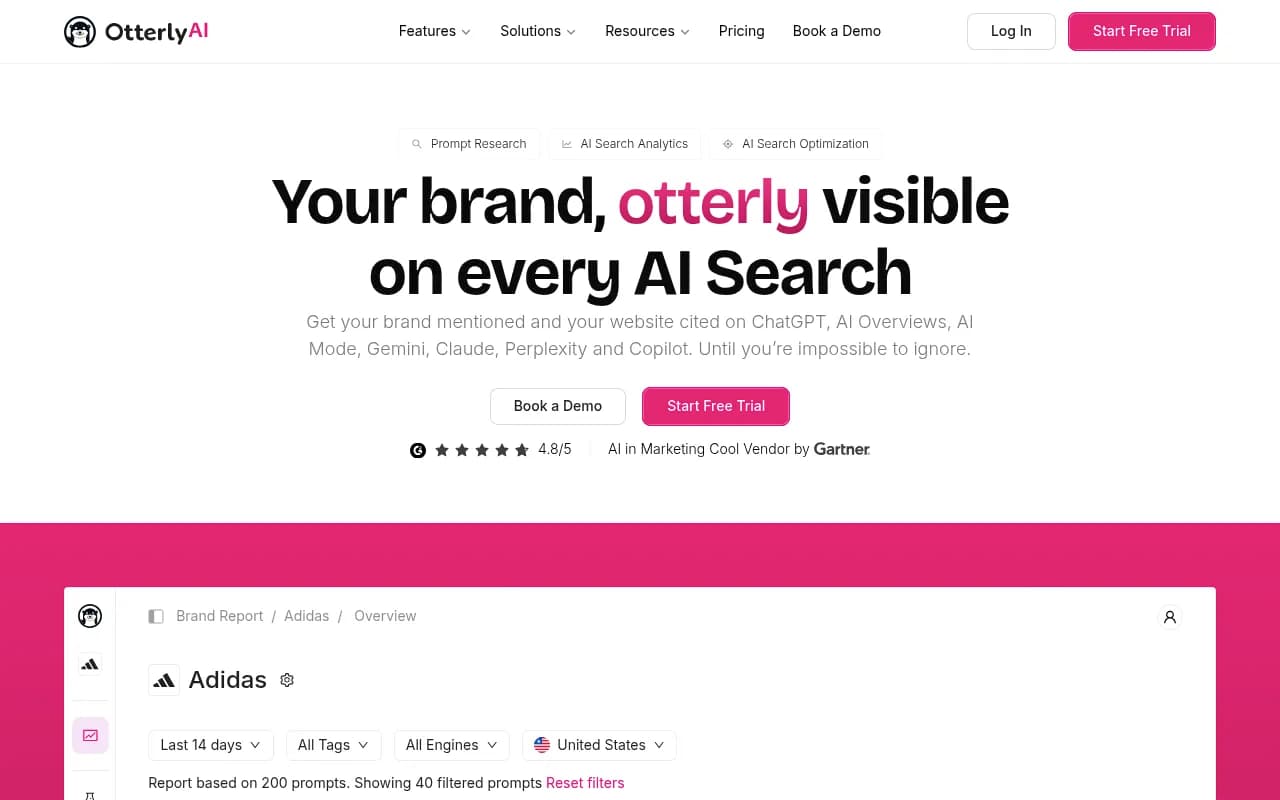
I want to be fair to Otterly first. Otterly.AI is one of the easiest ways to start tracking AI visibility. It covers ChatGPT, AI Overviews, AI Mode, Gemini, Claude, Perplexity and Copilot, lists a 4.8/5 rating on G2, and carries a Gartner "AI in Marketing Cool Vendor" mention on its homepage. If all you need is a recurring answer to "does AI mention us at all?", it does that well.

The friction shows up later. A few patterns I see repeatedly in the comparison posts and reviews:
- You have a mention rate and a chart, but no explanation of why a competitor shows up instead of you.
- Nobody on the team has time to turn the data into pages, so the dashboard just sits there.
- You need more engines or more countries, and the plan you priced at the start is no longer the plan you need.
- Stakeholders want a simpler story than a 200-prompt table.
Otterly's own marketing says it tells users "exactly what to do next", and it does include GEO audits and content recommendations. The question is how deep that goes. Test it on your own data during a trial rather than taking anyone's word for it, including mine.
What "tells you what to fix" actually requires
A mention count can't tell you what to fix. To get from a number to an action, a tool has to connect at least four things.
Citations, not just mentions
Cited URLs show why a competitor appears instead of you. If AI answers keep pulling from a comparison page on someone else's site, the fix is probably a better comparison page or a presence on that one. Mentions alone hide this.
The type of page matters a lot. Promptwatch Data's ChatGPT citation share by content type report (Sep 28 to Oct 4, 2026) found product pages are the most cited type at 22.4% of classified citations, with landing pages next at 16.8%. Listicles took 13.6%, how-tos 8.7% and documentation 7.5%. For commercial prompts, product pages, landing pages, listicles and comparisons made up almost 70% of citations. For branded prompts, reviews earned 5.6%, more than three times their share across all prompts.
Read that as a to-do list: complete product and landing pages, a presence in listicles and comparisons, reviews on trusted sites, and public docs. A tool that only counts mentions misses all four.
Crawler access
Sometimes the answer is boring. AI bots can't read the page. Without server-side crawler data you can't tell an access problem from a content problem, and you'll rewrite pages that were never fetched. Very few monitoring tools show this.
Freshness and decay
Content doesn't stay cited forever. In Promptwatch Data's content half-life report, pages ChatGPT cited on July 6, 2026 were tracked for 90 days. Landing pages and docs stayed cited longest, while news lost half its pages within 36 days. A useful tool flags pages that are fading so you can refresh them.
Something that produces the work
A prioritized list is better than a chart. A list plus drafted, publishable content is better still. This is where most of the market splits.
Otterly.AI alternatives at a glance
| Tool | Strength | Where it stops | Best for |
|---|---|---|---|
| Promptwatch | Monitoring, citation tracing, crawler logs, content agent, publishing, traffic measurement | Higher plans needed for the Content Agent | Teams that want the fixing done and verified |
| Peec AI | Strong analytics at a similar entry price | Monitoring without optimization | Teams with an analyst who will act on the data |
| AthenaHQ | Recommendations on what to fix | Monitoring-focused, no crawler logs | Teams wanting suggestions alongside tracking |
| Profound | Deep enterprise monitoring | Higher price, no agentic execution | Large brands with dedicated staff |
| Scrunch | Monitoring plus some optimization of AI-facing content | Higher price point | Enterprise brand teams |
| 3RD | Diagnosis, plan, drafted work | Vendor-authored comparison, verify claims | Teams short on time |
| KIME | Unlimited countries | Narrower feature set | Multi-country brands on a budget |
| AIclicks | Keyword-based tracking instead of prompts | Smaller ecosystem | Teams that find prompt-based setups limiting |
The table compresses a lot, so here is how I'd think about each group.
Alternatives that go beyond monitoring
Promptwatch
Promptwatch is the one I'd start with when the goal is fixing rather than reporting. It is built as a loop. It monitors prompts across ChatGPT, Gemini, Claude, Perplexity, Google AI Overviews, AI Mode, Copilot and more, using the real interfaces rather than just APIs. It traces which pages and which Reddit threads, YouTube videos and LinkedIn posts AI cites. It then acts on the gaps through an Action Board, content gap analysis and a Content Agent that writes and publishes to WordPress, Webflow or Framer. Finally, it measures the result.

Three things matter most for someone coming from Otterly:
- AI crawler logs are IP-verified, so you can see whether GPTBot, ClaudeBot, PerplexityBot and others actually read a page, where they hit errors, and which pages convert crawls into citations. That separates access problems from content problems.
- The Action Board gives a prioritized to-do list rather than a score, and the Content Agent can draft pages against visibility gaps with a review inbox.
- Visitor analytics close the loop by showing whether AI-referred visits actually convert. Crisp reported 2x higher conversion rates from AI traffic than traditional channels, and TreeHouse (Pararius) grew AI search to roughly 25% of organic conversions after fixing crawler access and publishing proprietary data. See the Crisp case study.
Pricing, as listed on promptwatch.com/pricing: Essential $95/month (50 prompts), Professional $245/month (150 prompts, 5 AEO articles, 25M crawler logs) and Business $579/month (350 prompts, the automated Content Agent, faster-than-daily tracking, Fact Check, Shopping and Ads Radar). Note that Essential has no crawler logs or articles, so if the diagnosis and writing parts are why you're switching, Professional or Business is the realistic starting point. All plans include every supported AI model, unlimited seats and Agent Chat. Annual billing gives 12 months for the price of 10.
It is more expensive than Otterly's $29 entry point, and that's worth being honest about. You are paying for execution and measurement, not just tracking. There is a 7-day free trial on monthly billing, and a free AI visibility report if you want a first look before committing. For head-to-head detail, see Promptwatch vs Otterly.
AthenaHQ
AthenaHQ positions itself around recommendations on what to fix, which makes it a natural comparison for Otterly users. It tracks visibility across many AI search engines. I'd treat it as monitoring plus advice, and check whether it gives you crawler data and publishing, because that is where the gap tends to be. Compare directly at Promptwatch vs AthenaHQ.

Profound and Scrunch
Both have strong monitoring and enterprise polish. Both also sit at higher price points, and neither gives you the full chain from tracking through agentic publishing. If you already have a team that will interpret the data and write the content, they're reasonable. If you don't, you will pay more for the same dashboard-first experience. See Promptwatch vs Profound and Promptwatch vs Scrunch.


3RD
3RD's own comparison page, which I used as a source, argues that Otterly is the cheapest way to start and that you should switch for diagnosis, planning and drafted work. They're a competitor and the page is vendor-authored, so treat the pricing claims as a lead to verify rather than a fact. The framing is still useful: stay if you need cheap and simple, switch when the work is the bottleneck.
Alternatives that stay in the monitoring lane
Not everyone needs an execution layer. If you have an analyst and a content team and simply want better data, these are fair options.
Peec AI
Peec AI is the one most often mentioned for analytics depth at a similar entry price. It's a monitoring tool, so you'll bring your own process for acting on it. See Promptwatch vs Peec.

AIclicks
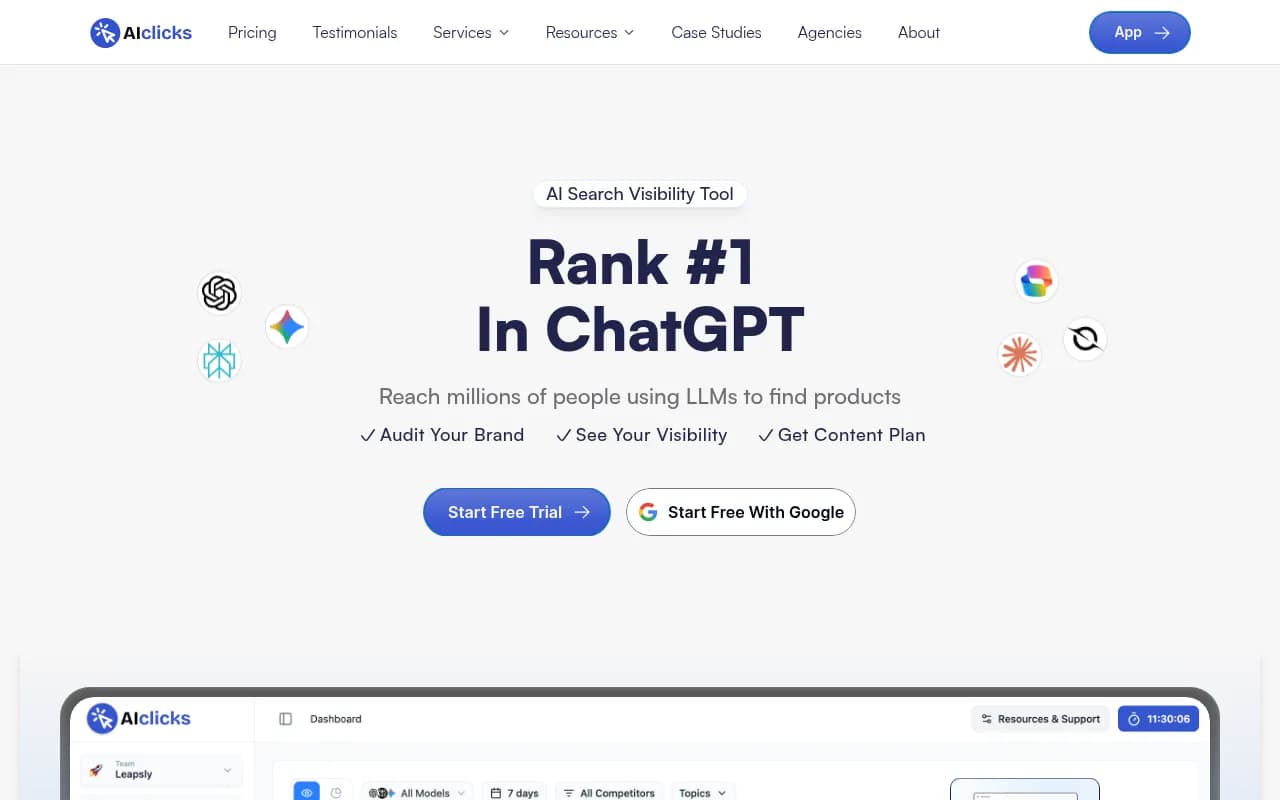
A reviewer roundup on Reddit points to AIclicks for people who find Otterly's prompt-based system too limiting, since it tracks by keyword instead. Worth a look if building and maintaining a prompt list is the part you dislike.
KIME
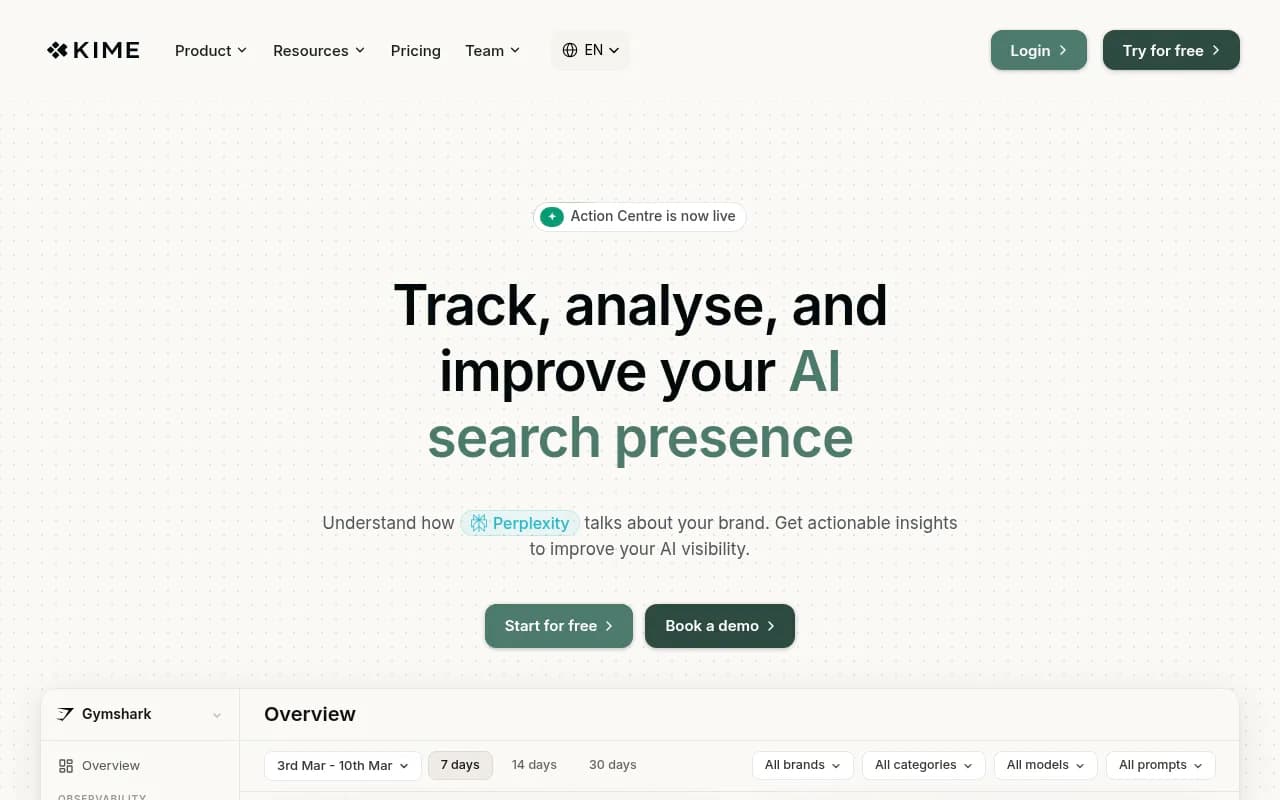
KIME is pitched on unlimited countries, which matters if you sell in many markets on a small budget. Check that the rest of the feature set covers your needs.
For more options by category, the GEO software directory at bestgeosoftware.com and the rank tracker list at ai-rank-tools.com cover many more tools than I can here.
How to decide
| If this is true | Consider | Why |
|---|---|---|
| You want cheap tracking and will act on it yourself | Stay on Otterly | Lowest barrier, easy to run |
| You need Gemini, AI Mode and Claude on top | Price Otterly with add-ons, then compare | The real bill may be well above the entry price |
| You lack time, not data | Promptwatch or 3RD | Both aim to produce the work, not just the report |
| You have an analyst and want depth | Peec AI | Strong analytics, no optimization layer |
| You need to know if AI bots can read your site | Promptwatch | IP-verified crawler logs |
| You sell in many countries on a small budget | KIME, or Promptwatch with country tracking on every plan | Compare per-market cost |
| You need enterprise monitoring and have staff | Profound or Scrunch | Polished dashboards, higher price |
A practical switching checklist
Before you move, spend a week doing this. It beats reading any comparison, including this one.
- Export your current Otterly prompts and note the five where a competitor beats you most.
- Run the same prompts in the candidate tool and see whether it explains the gap, not just shows it. Which URLs are cited? Which source types?
- Ask for the fix. Does the tool list specific pages to create or refresh, and can it draft them?
- Check crawler visibility. Can you see whether AI bots fetched your key pages?
- Price the full configuration: engines, countries, prompts and seats you will need in six months, not today.
- Plan how you'll measure results. Citations rising is good. AI-referred visits converting is better. Note that ChatGPT stopped sending a referrer on October 8, 2026, so make sure the tool can count visits tagged with utm_source=chatgpt.com.
If you're running this for clients or don't have the capacity to run it yourself, an agency can take it over. 1001 SEO Media runs GEO programs and uses Promptwatch for its own AI visibility work.
Bottom line
Otterly.AI is a good first tool and a perfectly reasonable long-term one if you only need tracking. The moment your question becomes "what do we change, and who writes it?", you need citation tracing, crawler data and a way to produce pages. Promptwatch covers that whole chain, AthenaHQ and 3RD lean toward recommendations, and Peec AI is the pick if you just want sharper analytics. Run the same five hard prompts through two candidates on a free trial and pick the one that gives you a to-do list you would actually do.