Key takeaways
- Meteoria.ai outages and reliability issues are a real frustration for teams tracking AI search visibility in 2026
- Most common issues (login failures, missing data, slow dashboards) have simple fixes worth trying first
- If the tool keeps failing you, there are 8 strong alternatives ranging from free-tier trackers to enterprise-grade platforms
- The biggest gap to watch for in any alternative: does it just monitor, or does it actually help you fix your visibility?
- Promptwatch is the only platform in this roundup rated as a "Leader" across all GEO categories, with built-in content generation and gap analysis on top of tracking
Is Meteoria.ai actually down, or is it just you?
Before switching tools entirely, it's worth spending five minutes ruling out the obvious. AI visibility platforms are complex pieces of infrastructure -- they're hitting multiple LLM APIs, processing large volumes of prompt data, and rendering dashboards that pull live data. Any one of those layers can fail without the whole product going dark.
Here's a quick checklist to run through before you do anything drastic:
Check your connection and browser first
- Try a hard refresh (Ctrl+Shift+R on Windows, Cmd+Shift+R on Mac)
- Clear your browser cache and cookies, then reload
- Try a different browser entirely -- Chrome, Firefox, Edge
- Disable browser extensions, especially ad blockers, which sometimes interfere with dashboard scripts
- Try an incognito/private window
Check if it's a platform-wide issue
- Visit Meteoria.ai's status page if they have one (look for status.meteoria.ai)
- Search Twitter/X for "Meteoria.ai down" or "Meteoria.ai not working" -- users are usually faster than official status pages
- Check their community Slack or Discord if they have one
Account and billing issues
- Confirm your subscription is active -- a lapsed payment can silently disable features
- Check if you've hit your prompt or query limits for the month
- Try logging out completely and back in, or reset your password
Data-specific issues
- If the dashboard loads but data looks wrong or missing, check whether you've recently changed your tracked prompts or competitors -- it can take 24-48 hours for fresh data to populate
- API rate limits from underlying LLM providers (OpenAI, Perplexity, etc.) can cause gaps in monitoring data that look like tool failures
If you've worked through all of that and Meteoria.ai is still broken, or if this is a recurring pattern, that's a different problem. A tool that's unreliable on a weekly basis isn't a tool you can build a reporting workflow around. Time to look at alternatives.
Why people are switching away from Meteoria.ai in 2026
The AI visibility space has matured fast. In 2024, just having a dashboard that showed whether your brand appeared in ChatGPT responses felt like magic. In 2026, that bar is much higher.
The core complaint with many early-generation GEO tools -- and Meteoria.ai falls into this category for some users -- is that they're monitoring-only. You get a score. You see your competitors are outranking you. And then... nothing. The tool doesn't tell you why, doesn't show you which content is missing, and doesn't help you fix it.
That gap between "here's your data" and "here's what to do about it" is where a lot of teams get stuck. If you're paying for a platform that just shows you a problem without helping you solve it, you're essentially paying for anxiety.
The other common issues driving switches:
- Inconsistent data across LLMs (showing visibility for ChatGPT but not Perplexity or Gemini)
- Slow refresh rates -- some tools only update weekly, which is too slow for competitive markets
- No crawler log access, so you can't see whether AI bots are even reading your pages
- Limited prompt customization -- you're stuck with generic queries rather than the specific questions your customers actually ask
8 platforms to switch to in 2026
These alternatives cover a range of use cases, from simple brand mention tracking to full-stack GEO optimization. Pick based on what you actually need.
1. Promptwatch
Promptwatch is the most complete option on this list. The core difference from most alternatives is that it's built around an action loop, not just a dashboard. It shows you which prompts your competitors rank for that you don't, generates content designed to close those gaps, and then tracks whether that content actually gets cited by AI models.

It monitors 10 AI models including ChatGPT, Claude, Perplexity, Gemini, Grok, DeepSeek, and Google AI Overviews. The crawler log feature is genuinely useful -- you can see in real time which AI bots are crawling your pages, which pages they're skipping, and what errors they're hitting. Most tools in this space don't offer anything close to that.
Pricing starts at $99/month for the Essential plan (1 site, 50 prompts, 5 articles). Professional is $249/month and adds crawler logs, city/state tracking, and 15 articles per month. There's a free trial available.
Best for: Marketing teams and SEO leads who want to track AI visibility and actually do something about it.
2. Otterly.AI
Otterly.AI is a solid lightweight option if your main need is monitoring without the complexity of a full optimization platform. It tracks brand mentions across several major LLMs and gives you a clean, readable dashboard.
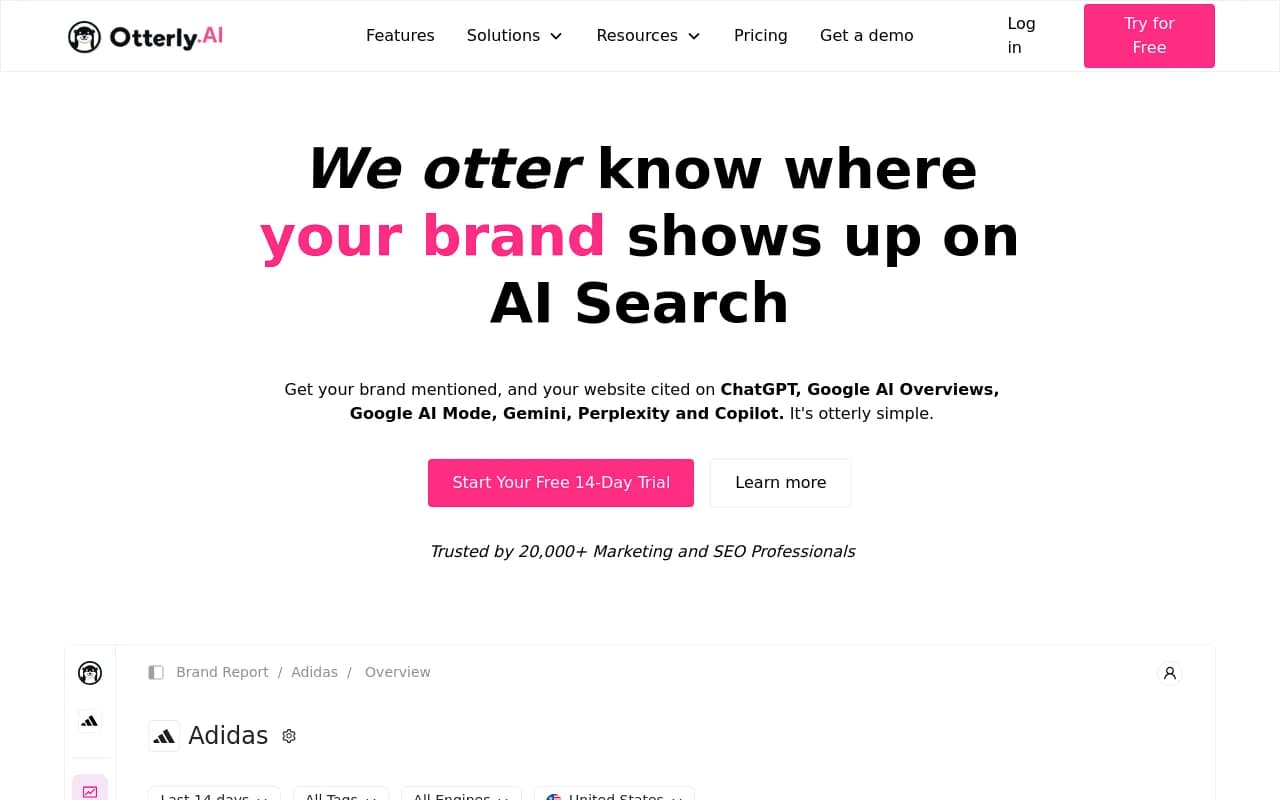
It's more affordable than enterprise options and easier to get started with. The trade-off is that it stops at monitoring -- there's no content gap analysis, no AI writing tools, and no crawler logs. If you just need to know whether your brand is appearing in AI responses and don't need to act on that data immediately, it works fine.
3. Peec AI
Peec AI focuses on AI search monitoring with a clean interface and reasonable pricing. It covers the major LLMs and gives you brand visibility scores over time.
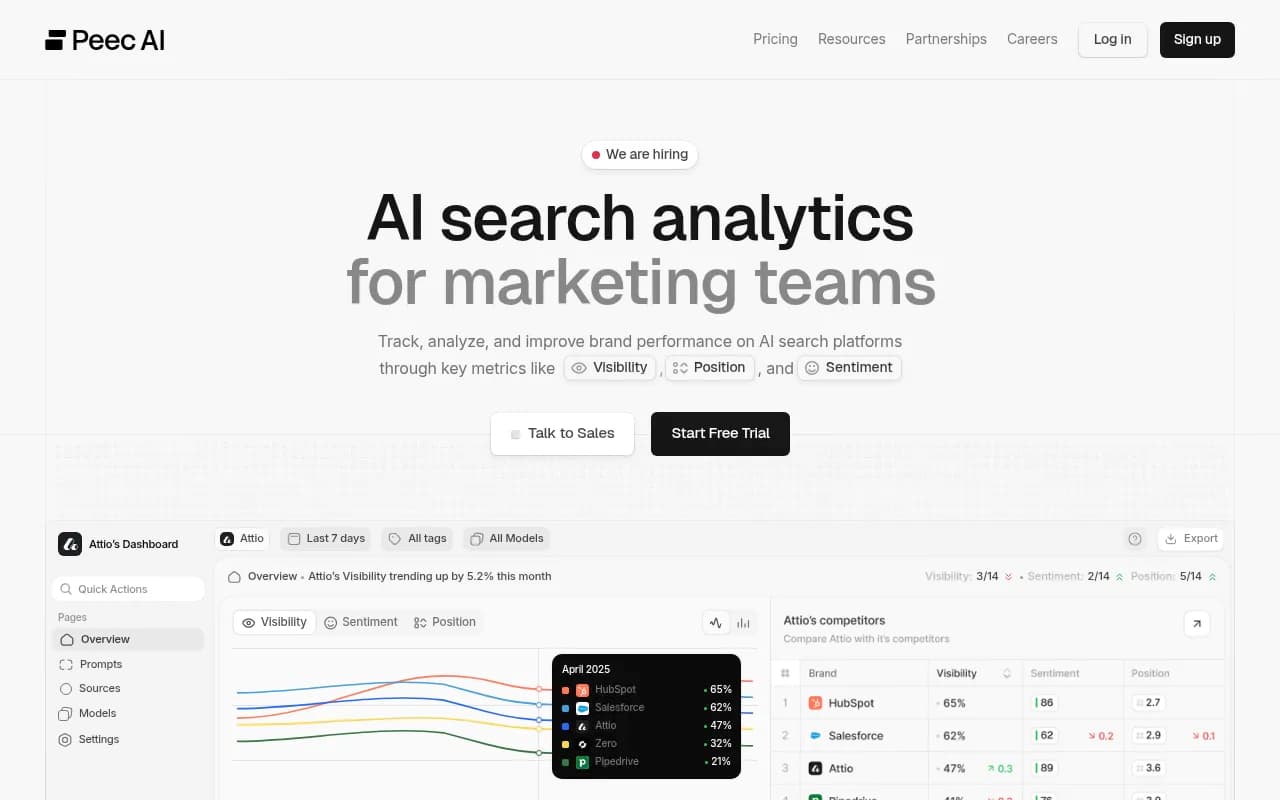
Similar to Otterly.AI, it's a monitoring tool rather than an optimization platform. Good for teams that are just getting started with GEO and want to understand their baseline before investing in a more complex solution.
4. Profound
Profound targets enterprise teams with a more robust feature set. It has strong prompt tracking and competitor analysis capabilities, and it's built for organizations that need to report AI visibility to senior stakeholders.
The price point is higher than most alternatives here, and it doesn't have Reddit/YouTube tracking or ChatGPT Shopping monitoring. But for large brands that need reliable data and clean reporting, it's a credible option.
5. Scrunch AI
Scrunch AI monitors how AI assistants like ChatGPT and Claude represent your brand, with a focus on sentiment alongside visibility. It's useful if you care not just about whether you're being cited but how you're being described.
The sentiment angle is genuinely differentiated -- most tools just count mentions. Scrunch gives you a sense of whether the AI is saying positive or negative things about your brand, which matters for reputation-sensitive industries.
6. Athena HQ
Athena HQ covers 8+ AI search engines and has a clean interface for tracking brand visibility trends over time. It's positioned as a monitoring-first platform.
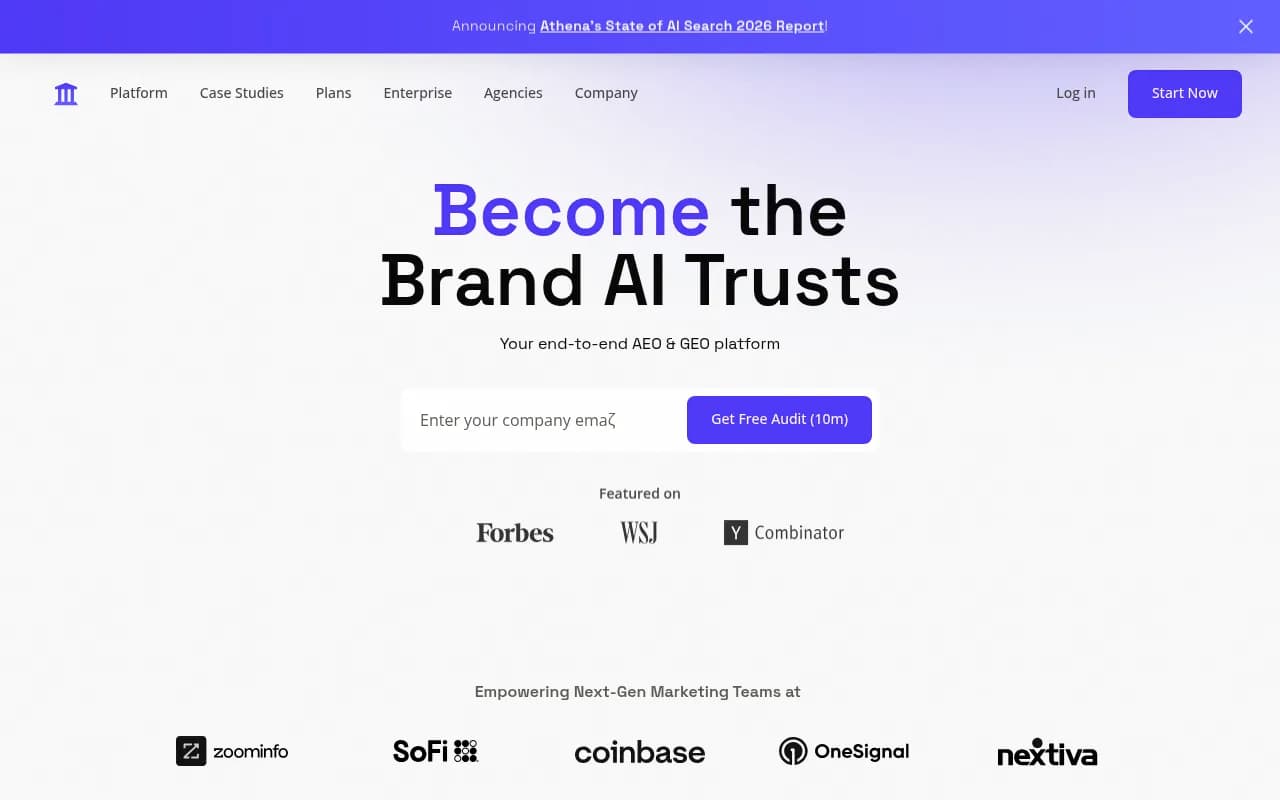
The limitation is similar to others in this tier: it shows you the data but doesn't have built-in tools to help you improve your scores. If you have a separate content team that can act on the insights, that's fine. If you need the tool to help you execute, look elsewhere.
7. Writesonic
Writesonic has expanded beyond AI writing into AI search visibility tracking. It's an interesting hybrid -- you get content generation tools alongside some visibility monitoring, which makes it more actionable than pure monitoring tools.
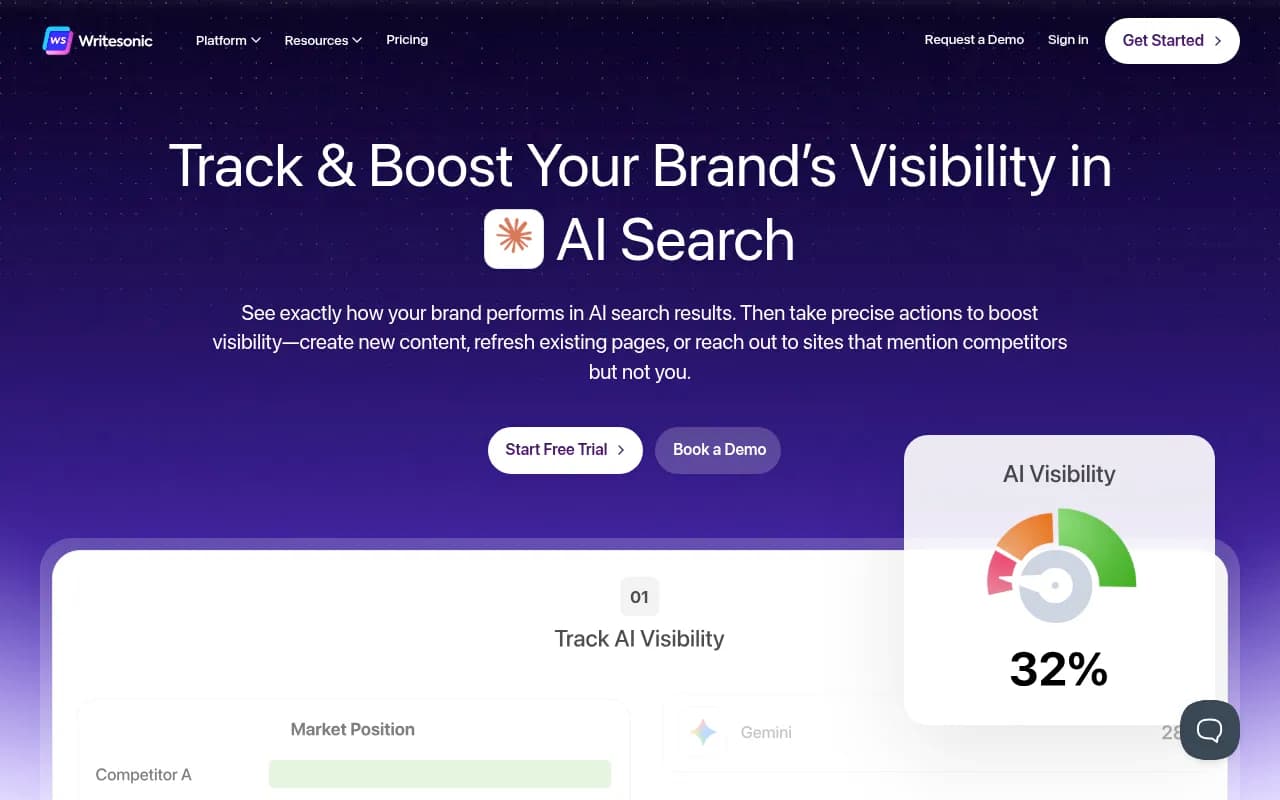
The visibility tracking isn't as deep as dedicated GEO platforms, but if you're already using Writesonic for content and want to add some AI search monitoring without switching tools, it's a reasonable option.
8. SE Ranking
SE Ranking is primarily an SEO platform that has added AI visibility tracking. If you're already using it for traditional SEO, the AI visibility features are a useful addition without needing to pay for a separate tool.
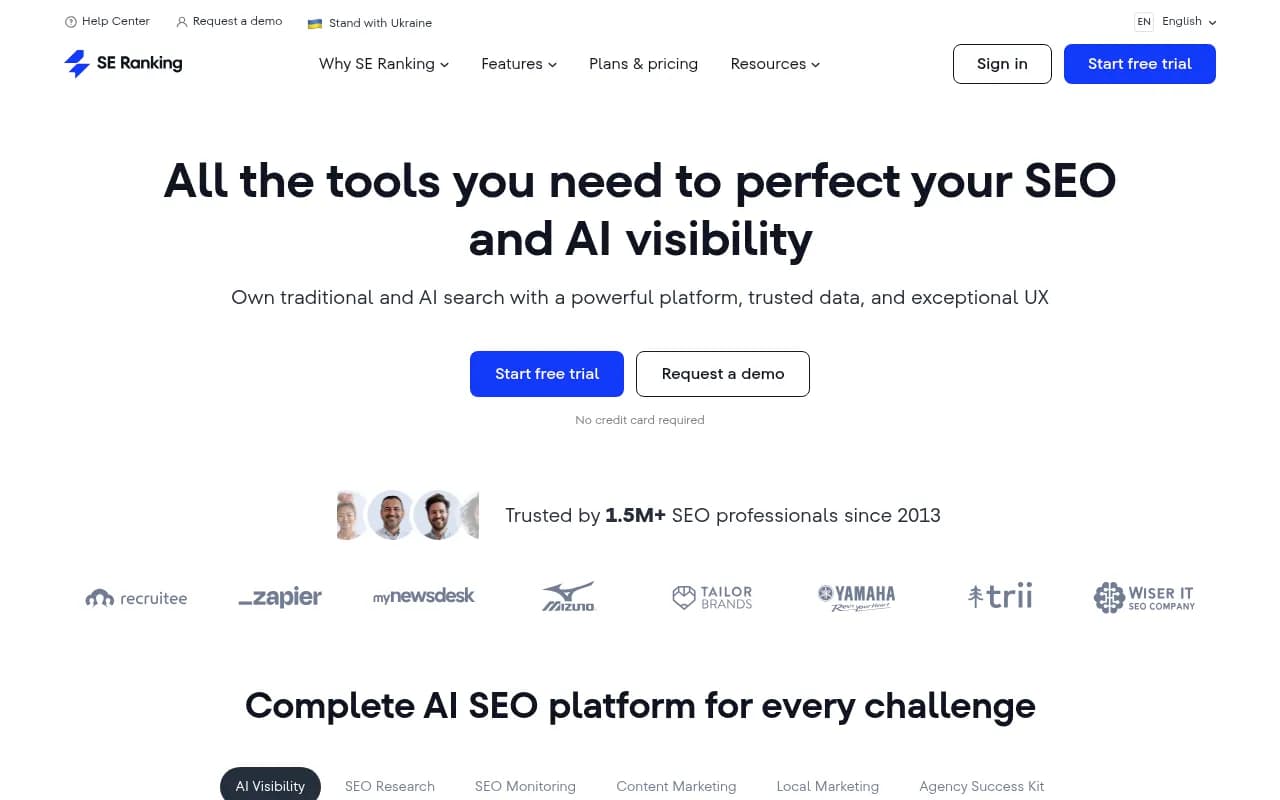
The AI visibility features are less comprehensive than dedicated GEO platforms, but the integration with traditional SEO data (keyword rankings, backlinks, site audits) is genuinely useful for teams that want to see both traditional and AI search performance in one place.
Comparison table
| Platform | AI models tracked | Content generation | Crawler logs | Reddit/YouTube tracking | Starting price |
|---|---|---|---|---|---|
| Promptwatch | 10 | Yes (built-in AI writer) | Yes | Yes | $99/mo |
| Otterly.AI | Several | No | No | No | Lower tier |
| Peec AI | Several | No | No | No | Lower tier |
| Profound | Several | No | No | No | Higher tier |
| Scrunch AI | Several | No | No | No | Mid tier |
| Athena HQ | 8+ | No | No | No | Mid tier |
| Writesonic | Several | Yes (content focus) | No | No | Mid tier |
| SE Ranking | Several | Limited | No | No | Mid tier |
The pattern is pretty clear: most alternatives in this space are monitoring tools. Promptwatch is the outlier that includes content generation, crawler logs, and Reddit/YouTube tracking in the same platform.
What to look for when evaluating any alternative
Before you sign up for a trial, ask these questions:
Which LLMs does it actually monitor? Some tools claim broad coverage but only reliably track ChatGPT and Perplexity. If Google AI Overviews or Gemini matter to your business, verify that coverage is real and not just listed on a pricing page.
How often does it refresh data? Daily is the minimum for competitive markets. Weekly refresh rates mean you're always looking at stale data.
Does it show you why you're invisible, not just that you are? A visibility score is a lagging indicator. What you need is the specific content gaps -- the questions AI models want to answer that your site doesn't address.
Can it help you fix the problem? Monitoring tells you where you stand. Optimization helps you move. The best platforms do both.
Does it track traffic from AI search? Visibility without traffic attribution is incomplete. You want to know whether AI citations are actually sending people to your site, not just that your brand appeared in a response.
The bottom line
If Meteoria.ai is having a bad day, the checklist above will usually sort it out. But if it's a recurring problem -- or if you've realized the tool just isn't giving you enough to act on -- 2026 is a good time to reassess.
The AI search visibility space has matured enough that "we track your brand mentions" is no longer a differentiator. The tools worth paying for now are the ones that close the loop between finding a gap and filling it. That's a much shorter list.
Start with a free trial of whichever platform fits your budget and team size. Most of them offer 7-14 days to see whether the data quality and workflow actually match what you need.