Key takeaways
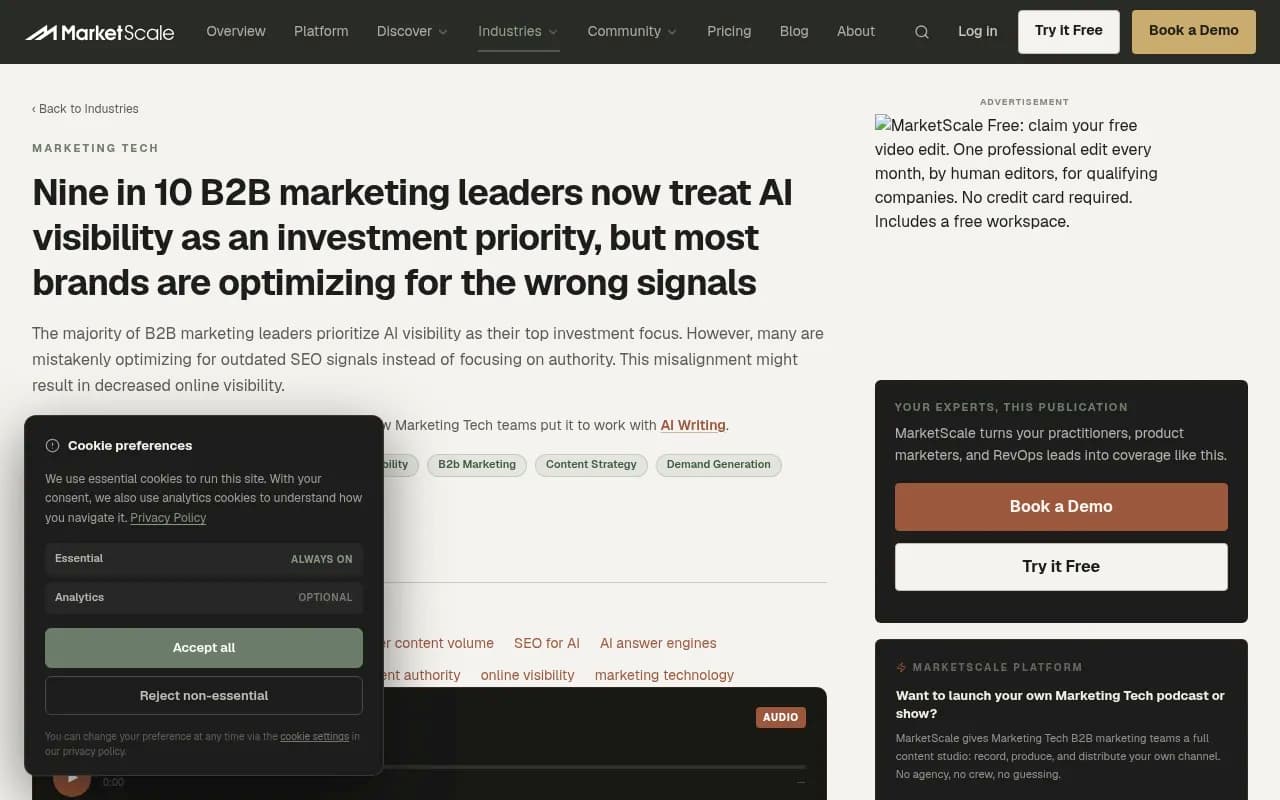
- Nine in 10 B2B marketing leaders call AI visibility an investment priority (Forrester, via MarketScale), but many are spending the first quarter on signals that don't move citations.
- ChatGPT cites product pages and landing pages for about 39% of classified citations. Teams that pour budget into blog volume and Reddit are aiming at the wrong surface.
- Different prompt intents and different AI models reward different content. One strategy for all of them wastes effort.
- Screenshots of a single good answer are not a report. Track prompts daily, across models, and tie them to traffic.
- The fix is a sequence: measure, read crawler logs, repair product and landing pages, then publish and re-measure.
Why the first quarter matters so much
The first 90 days of a GEO program set the pattern for the next year. Budget gets approved on the promise of a visible result, and if the first report is a screenshot of one nice ChatGPT answer, nobody can defend the second quarter's budget.
I've watched teams do the same things in roughly the same order. They publish a pile of articles, set up a Reddit plan, buy a tracker, and then have no idea whether any of it worked. The ten mistakes below are the ones that show up again and again, and most of them are fixable in a week once you spot them.
The data in this guide comes mostly from Promptwatch Data, the first-party research built on citations, prompts, and responses across the major AI models. Those numbers change month to month, so I've included the periods.
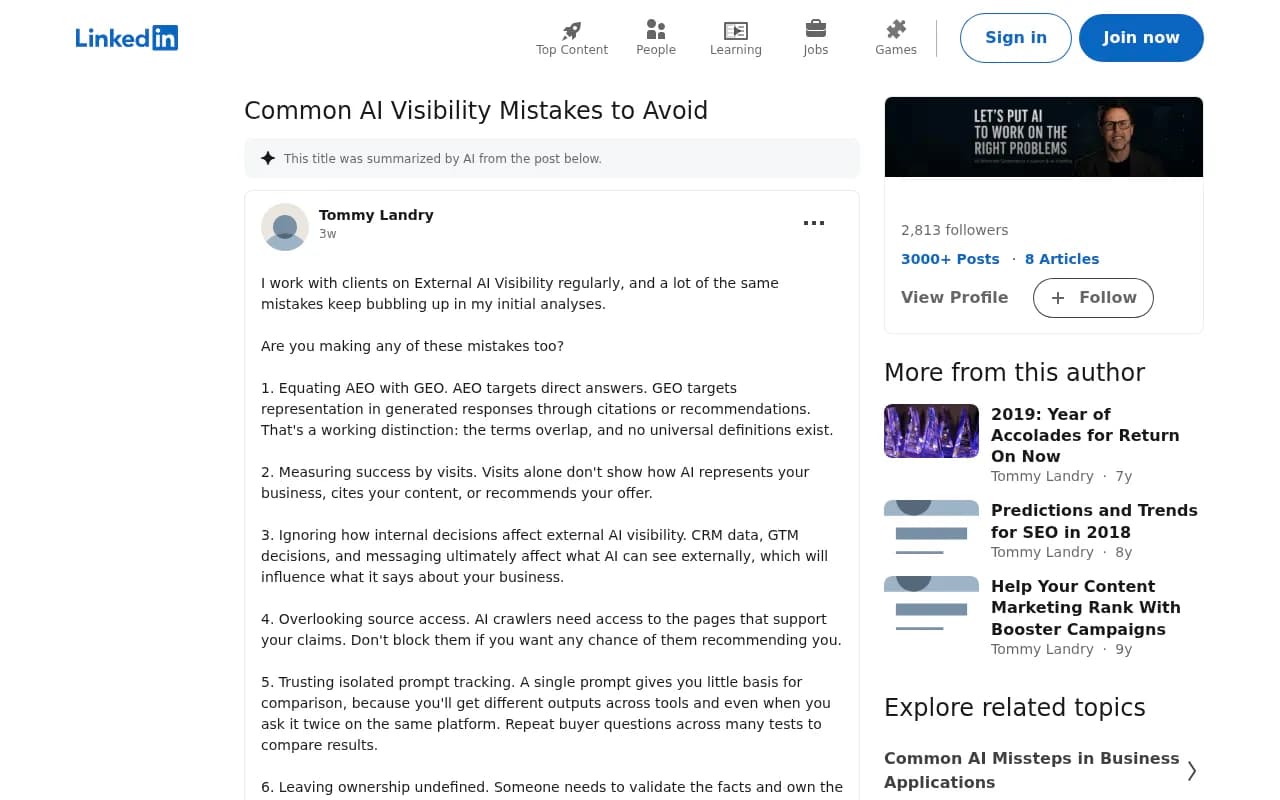
The list above, from a practitioner who works with clients on external AI visibility, overlaps a lot with what follows. Mixed-up terminology and visit-only measurement are the two that come up most.
Mistake 1: Publishing volume instead of fixing what AI actually cites
The reflex is to publish more. More posts, more topics, more of everything. It feels productive and it is easy to report on.
But look at what ChatGPT cites. In Promptwatch's content type report (Sep 28 to Oct 4, 2026), product pages were 22.4% of classified citations and landing pages 16.8%. That is 39% of citations going to pages that describe what a company sells. Editorial formats combined made up 43%.
So your pricing page, product pages, and category landing pages are the main citation surface, and most teams haven't touched them in months. Skyword CEO Andrew Wheeler made a similar argument in Demand Gen Report, and MarketScale covered it: authority beats volume, and tuning pages for crawlers while flooding the site with content can leave a brand less visible.
Do instead: audit your product, pricing, and landing pages first. Make them specific, current, and easy to quote. Then add articles to fill gaps, not to hit a quota.
Mistake 2: Treating every prompt intent the same
Commercial, informational, and branded prompts pull different content. In the same Promptwatch report:
- Commercial prompts: product pages 26.0%, landing pages 20.6%, listicles 15.0%, comparisons 7.9%. Those four are almost 70% of commercial citations.
- Informational prompts: how-tos jump to 10.7% and docs to 8.5%.
- Branded prompts: reviews reach 5.6%, more than three times their overall share, and FAQ pages hit 4.8%.
If your plan is "write 20 blog posts," you are serving one intent and ignoring two. A team that cares about branded prompts needs review profiles and FAQs. A team chasing commercial prompts needs comparison pages and listicles that include them fairly.
Do instead: tag your monitored prompts by intent (organic, brand-specific, competitor comparison) and map one content type to each group.
Mistake 3: Betting the quarter on Reddit for ChatGPT
This one hurts because it worked for a while. Then on August 14, 2026, reddit.com's share of ChatGPT citations fell from about 4% to 0.5% (Promptwatch Data). By the Sep 28 to Oct 4 window, all seven social platforms together were just 0.46% of ChatGPT citations, and Reddit was at 0.09% (social citations report).
But it's not dead everywhere. In that same week, Google AI Overviews drew 12.2% of its citations from social platforms, about 26 times ChatGPT's share. YouTube was 4.28%, Facebook 2.38%, Reddit 2.15%, Instagram 1.61%, LinkedIn 1.55%. Perplexity sat at 2.7%, with LinkedIn and Reddit tied at 0.86%.
| AI model | Social share of citations | Where to focus |
|---|---|---|
| ChatGPT | 0.46% | Your own pages, not social threads |
| Google AI Overviews | 12.2% | YouTube, Facebook, Instagram |
| Perplexity | 2.7% | LinkedIn and Reddit |
Do instead: choose social channels per model. Keep X out of the AI search plan entirely, since it peaks around 0.1%.
Mistake 4: Leaning on news and PR as a long-term play
PR feels like authority, and it is useful for a short burst. But it decays fastest. In Promptwatch's content half-life study (pages cited on Jul 6, 2026, tracked for 90 days), almost a quarter of news pages were never cited again, half were gone after 36 days, and 41% were still cited at day 60.
Compare that with landing pages (78% still cited after 30 days) and docs (76%). Comparisons held at 72% after 30 days.
Do instead: use news and press releases for launches and short windows. Put your long-term effort into landing pages, docs, comparisons, and listicles.
Mistake 5: Letting product pages go stale
Product pages are the most cited type, which makes their decay rate matter. In the half-life data, product pages, reviews, and how-tos all sat near 55% still cited after 60 days, with half-lives of 74 to 77 days. Pricing pages are classified as landing or product pages, so an out-of-date price table is a live liability.
When the page says $49 and the AI answer says $39 from a cached source, someone on your team eventually gets an angry email.
Do instead: put product and pricing pages on a refresh calendar. Update specs and prices on a set schedule, and use a content refresh workflow so changes are tracked rather than silent.
Mistake 6: Reporting single answers as rankings
A screenshot of one good ChatGPT answer proves very little. AI answers vary by run, by country, and by model, and as one practitioner post on Reddit's r/DigitalMarketing noted, the feedback loops for AI Overviews and LLM citations are opaque, which makes prioritizing hard.
The fix is to track a panel of prompts daily and report distributions, not anecdotes: visibility score, share of voice, average position, and sentiment, trended over weeks.
A few things to check when picking a tracker:
- Does it query the real user interface of each model, or only the API? User-facing answers and citations can differ from API outputs.
- Can it separate countries and languages?
- Does it show which pages get cited, not only whether you were mentioned?
Promptwatch tracks the actual interfaces of ChatGPT, Google AI Overviews, AI Mode, Gemini, Perplexity, and others, with daily runs and citation-level detail.

Other options with different depth include Otterly.AI, Peec AI, and Profound for enterprise monitoring.



Mistake 7: Measuring success by visits alone
AI answers often satisfy the question without a click. If your only KPI is sessions from ChatGPT, you will undercount influence and probably declare failure by week eight.
Better to measure across a chain:
- Are AI crawlers reading your pages (and getting 200s, not errors)?
- Are those pages being cited?
- Do citations produce clicks and conversions?
- Does share of voice rise on the prompts that matter?
Step one is the one nobody checks. IP-verified crawler logs show whether GPTBot, OAI-SearchBot, ClaudeBot, or PerplexityBot are hitting your site, or hitting a wall. Promptwatch Data tracked weekly verified AI crawler requests from June to September 2026, and the mix shifts fast. Meta-WebIndexer, for example, went from about 2% to nearly 38% of tracked crawler requests between mid-July and August 9.
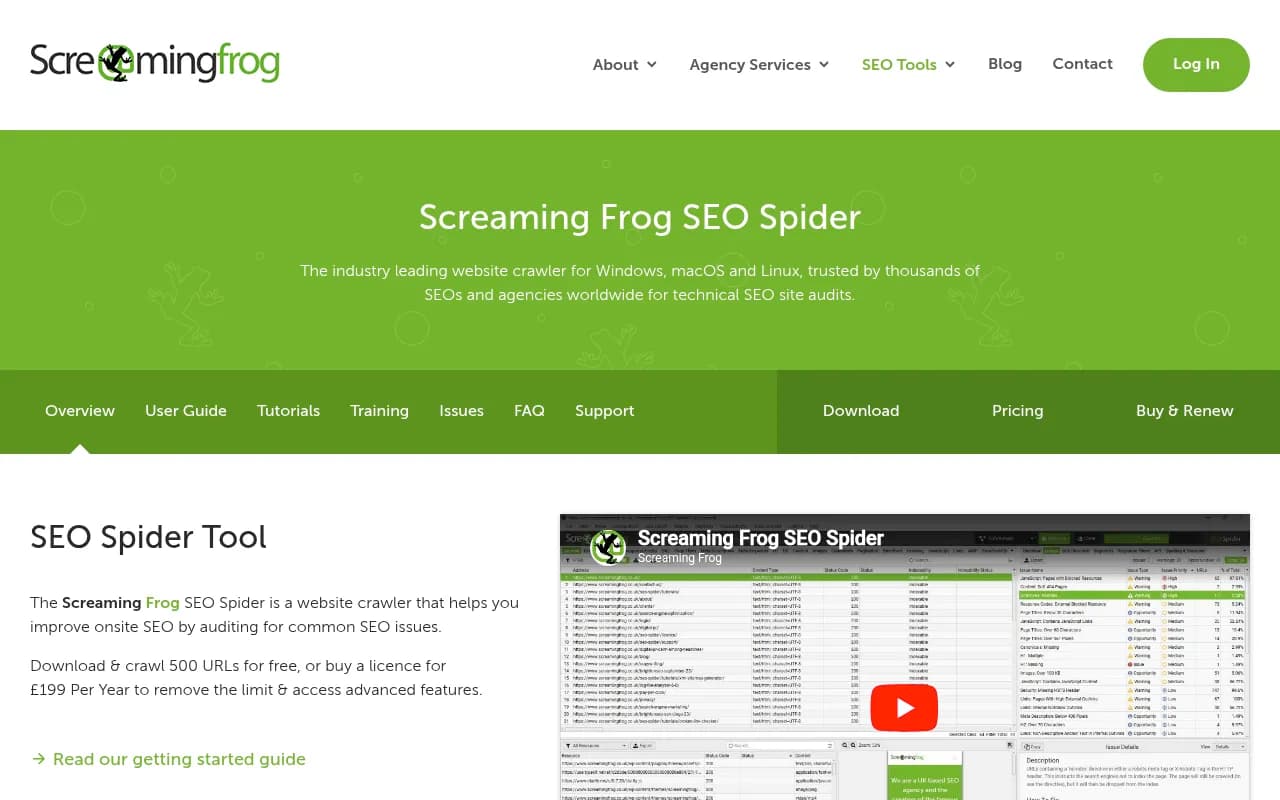
If you're not sure whether crawlers can read your site, a free check like the Agentic Readiness Check at promptwatch.com, or a crawler like Screaming Frog, will tell you in minutes.
Mistake 8: Confusing AEO, GEO, and plain SEO
The vocabulary fight eats real meeting time. AEO, GEO, AI SEO, LLMO. Teams argue about the acronym and skip the work.
The practical split is simple. Traditional SEO gets you into Google's index and rankings. AI visibility work gets your pages retrieved, cited, and recommended inside generated answers. They overlap heavily (fast pages, clear structure, strong authority), but the reporting is different. You can rank third on Google and never be cited. Pages that rank in Google and Bing but never get cited by AI are the first place to look for quick wins, and combining Google Search Console data with AI citation data is how you find them.
Do instead: agree on one internal definition in week one, write it down, and move on.
Mistake 9: Chasing domain authority and ignoring where citations actually land
Teams assume they need a huge domain to get cited. The data says otherwise. In August 2026, sites with domain rank 46 to 75 earned almost half of ChatGPT citations, while DR 91 to 100 fell to about 3% (Promptwatch Data).
That doesn't mean links are irrelevant. It means a mid-sized site with a focused, specific page can beat a giant. Also, almost half of ChatGPT responses cite 10 or more unique domains (Promptwatch Data, Sep 28 to Oct 4, 2026), so there is room on the source list for you, but only if you are one of the pages that fits the query.
It also pays to know the vertical. For software prompts, GitHub, Microsoft's docs, and G2 lead, and documentation and help centers earn the largest share (software report). For travel, booking and search sites take more than half (travel report). For healthcare, government and public health sites earn almost half (healthcare report).
Do instead: look at who is cited in your vertical, and build the page type that earns the citations there, whether that's docs, a comparison page, or a listing.
Mistake 10: Buying a tracker and stopping there
This is the most common one. A dashboard tells you that you're invisible. It does not make you visible. A quarter later the team has beautiful charts of the same problem.
Monitoring-only tools are fine as a starting point. But whichever platform you choose, check whether it closes the loop: finding content gaps against the prompts AI answers, helping produce the content, publishing it, and then checking whether the new page was crawled and cited. Promptwatch's Action Board and Content Agent are built around that loop, and the Agent Chat lets you query your own data in plain language.
Here is how the main categories compare:
| Approach | What you get | What is missing |
|---|---|---|
| Prompt tracker only (Otterly.AI, Peec AI) | Mentions and basic visibility trends | Crawler logs, traffic attribution, content creation |
| Enterprise monitoring (Profound, Scrunch) | Deep monitoring and reporting | Usually higher price, limited execution |
| SEO suite add-on (Semrush, Ahrefs Brand Radar) | Familiar interface, AI data bolted on | Shallow AI-specific data, fixed prompt sets |
| End-to-end platform (Promptwatch) | Tracking, crawler logs, traffic, gap analysis, content, publishing | Smaller free tier (ChatGPT only, 10 prompts) |
For a wider scan of options, the GEO software directory at bestgeosoftware.com lists dozens of platforms by category.
A realistic 90-day plan
Here is a sequence that avoids most of the mistakes above.
Weeks 1 to 2: baseline
Build a panel of 50 to 150 prompts split by intent. Run them daily across models and countries. Check crawler access and fix any blocked bots or error pages. Agree on definitions and a small set of KPIs.
Weeks 3 to 6: repair the high-value pages
Rewrite product, pricing, and landing pages so facts are specific and current. Add comparison pages where commercial prompts demand them. Add or update docs and FAQs for informational and branded prompts.
Weeks 7 to 10: fill gaps and pick channels
Use the gap analysis to find prompts where competitors are cited and you are not. Publish targeted content. Choose social channels by model, per the table above: YouTube and Facebook for AI Overviews, LinkedIn for ChatGPT and Perplexity, and no Reddit dependency for ChatGPT.
Weeks 11 to 13: report and refresh
Tie citations to crawled pages and to clicks. Report share of voice and visibility trends, not screenshots. Refresh anything decaying. News and PR items get measured on a 30-day window, not a 90-day one.
Quick self-check
If you answer yes to three or more, your first quarter is probably leaking:
- You have published more than 20 articles and touched fewer than five product or landing pages.
- Your plan lists Reddit as the main channel for ChatGPT.
- Your report contains screenshots but no daily trend.
- Nobody has looked at AI crawler logs.
- Your pricing page has not changed since last year.
Bringing in outside help can also shorten this. Agencies like 1001 SEO Media run GEO programs for brands that want senior specialists and monthly reporting without building the function in-house. Either way, the order of operations stays the same: measure, fix the pages AI actually cites, then publish.
Final word
Most wasted GEO quarters share one trait: lots of activity pointed at the wrong surface. Start with the pages ChatGPT already prefers to cite (product, landing, docs), match content to intent, pick channels per model, and report on trends instead of screenshots. Do that in the first 90 days and the second quarter budget conversation gets a lot easier.