Key takeaways
- Peec AI is a good monitoring layer: daily prompt runs, share of voice, competitor benchmarking, an MCP server, and since October 2026 an Agent and Actions feature that suggests what to do.
- It is still enough if three engines cover your market, your prompt list fits within 50 to 350 prompts, and you have people who can act on the data.
- You have likely outgrown it when you need crawler logs, AI traffic attribution to revenue, content creation, or broader engine coverage on your plan.
- Run the 10-question checklist below. Three or more "yes" answers means monitoring alone is holding you back.
- Moving up does not mean throwing Peec away. Some teams keep it for reporting and add an optimization layer next to it.
Why this question comes up now
Peec AI had a very good year. It launched in February 2025, and by mid-2026 it says it serves 3,000+ marketing teams, with brands like Zalando, Squarespace, Hugo Boss, and Wix on the customer list. It holds a 4.8/5 on G2 across 18 reviews, per SE Visible's review. Those are real numbers.
But a tool can be good and still be the wrong size for where you are. Most teams buy a prompt tracker in month one of their AI search program, when the only question is "are we mentioned at all?" Six months later the questions are different: why aren't we cited, which pages should we rewrite, is any of this producing revenue.
A prompt tracker answers the first question well. It was never built to answer the rest, and Peec says as much by positioning itself around analytics rather than execution.

What Peec AI does well
Be fair to the tool first. Here is what it covers, based on Peec's own documentation and third-party reviews.
- Prompts rerun every 24 hours, so you watch a trend line instead of a snapshot.
- Tracked metrics include visibility, position, sentiment, mention frequency, and which sources get cited.
- A shopping feature tracks products from an uploaded catalog inside ChatGPT's product carousel.
- The MCP server connects to Claude, Cursor, and VS Code, and one G2 reviewer called it the reason he picked Peec.
- Unlimited users on the standard plans, so non-specialists can open the dashboard without training.
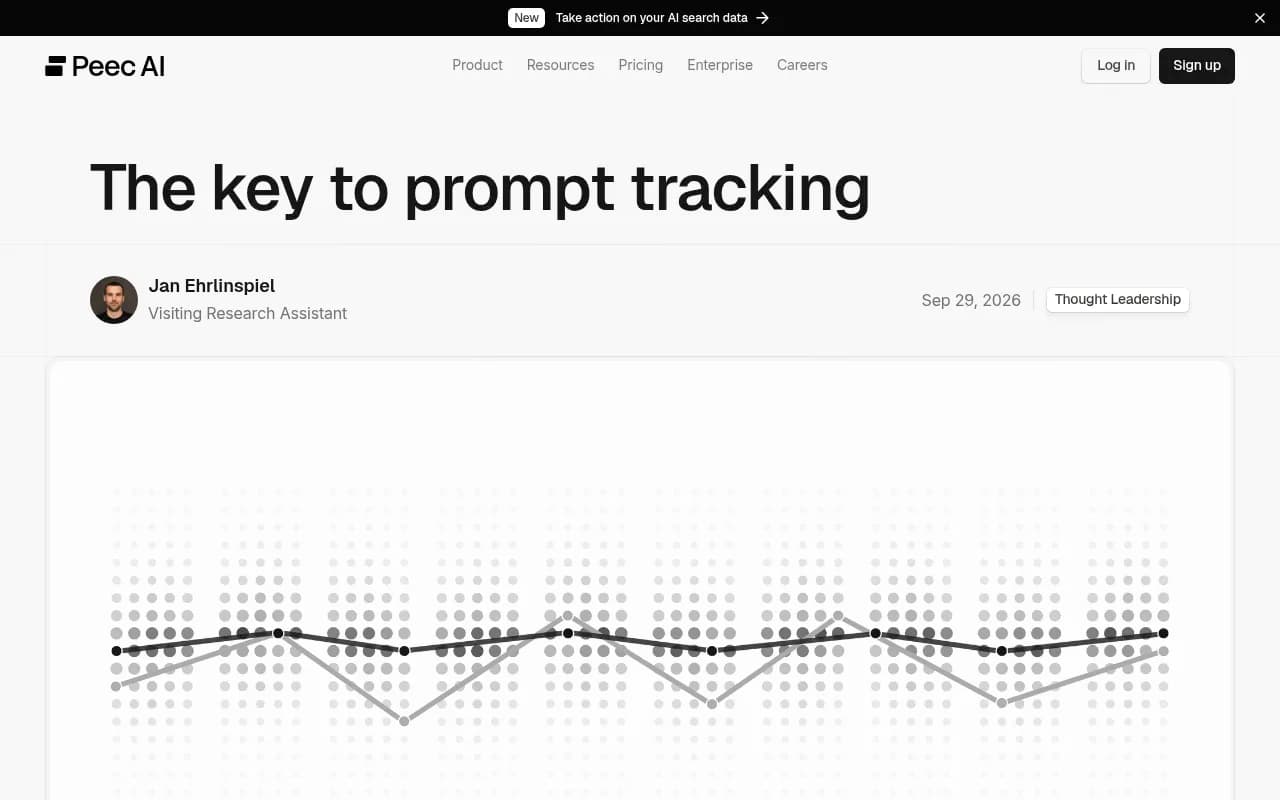
- Peec's own research is unusually honest about noise. Its September 2026 post on prompt tracking analyzed seven months of data across 120 million chats and concluded that day-to-day swings in a visibility score are often just sampling noise, so adding more prompts beats adding more runs.
I like that last point a lot. A vendor telling you your daily number is partly a coin flip is rarer than it should be.
The October 2026 change
One older criticism no longer holds. Earlier reviews said Peec gave you data but no playbook. Peec has since shipped an Actions engine, and on October 21, 2026 it announced Peec Agent and actions, pitched as a way to find opportunities, see the evidence, and act on them. A reviewer at generatemore.ai updated their verdict to say Peec now tells you what to do, but your team still executes it, and it still does not prove any of it turned into revenue. I haven't hands-on tested the new Agent, so treat the details as vendor-stated until you try it.
Where the ceiling is
The limits below come from Peec's published plans and from third-party reviews. Verify against peec.ai before buying, because pricing and engine access have shifted more than once.
| Area | What Peec covers | Where it stops |
|---|---|---|
| Prompt capacity | 50 / 150 / 350 prompts on Starter / Pro / Advanced ($95 / $245 / $495 per month) | Prompt count tends to run out first, per Activepieces' plan-caps comparison |
| Engine coverage | ChatGPT, Gemini, AI Overviews, Copilot, AI Mode | Cognizo's review says lower plans track 3 engines at once and exclude Perplexity, Grok, Claude, and DeepSeek. Third party, possibly stale |
| Content creation | Not offered, by design | You need a separate writing workflow |
| Page-level readiness | Not in the product | A G2 reviewer flagged the missing page-level AEO readiness check |
| Crawler visibility | Not mentioned in Peec's own scope | You can't see which AI bots hit your site or what errors they hit |
| Revenue attribution | Visibility and sentiment metrics | Not traffic or conversions from AI platforms |
| Onboarding | Suggested starter prompts | One reviewer got 50 heavily overlapping prompts needing manual cleanup |
None of these is a flaw if your needs are narrow. They are just the edges of the product.
The 10-question checklist
Answer each honestly. A "yes" means you are bumping into the limit of a prompt tracker.
1. Do you know you are not being cited, but not why?
Tracking tells you that a competitor appears and you don't. It doesn't tell you whether AI crawlers can even reach your pages. IP-verified crawler logs answer that, and a prompt tracker has none.
2. Is your prompt list bigger than your plan?
If you are cutting prompts to stay under 50, 150, or 350, you are sampling your market too thinly. Peec's own research says the prompts you track are only a sample of what customers ask, so a small cap directly weakens the accuracy of the score.
3. Does your market live in engines your plan doesn't track?
Perplexity cites almost exactly 10 sources per answer every day, Google AI Overviews about 10, and ChatGPT about 5, according to Promptwatch's average sources per response data. Citation slots differ a lot by engine. If your buyers use an engine you can't see, you are guessing.
4. Does your CFO ask what AI search is worth?
"Our visibility score went up" stops working as an answer. You need AI-referred visits and conversions per page. That is a different data source from prompt tracking.
5. Are you writing content to close gaps by hand?
If every gap Peec surfaces becomes a ticket for a writer, the bottleneck is now production, not insight. Tools that generate and publish content grounded in citation data remove that step.
6. Do you need to match ChatGPT's fan-out queries?
A single ChatGPT prompt can trigger several separate web searches, and Promptwatch's ChatGPT query fanout data shows the average moved from 2.15 per response in early December to exactly 1.0 when data returned in April. Your content has to match what ChatGPT actually searches, not the prompt you typed. Seeing fan-outs per response matters once you are optimizing pages.
7. Are Reddit, YouTube, and LinkedIn part of your strategy?
Social citations vary enormously by engine. From Sep 28 to Oct 4, 2026, ChatGPT drew 0.46% of citations from social platforms while Google AI Overviews drew 12.2%. If you need to know which threads and videos AI cites, you want dedicated reports, not just a source list.
8. Do you serve many countries, cities, or locations?
Multi-country support sits on Peec's top standard tier, and exact-location tracking for local queries is a separate capability. Multi-location brands hit this wall quickly.
9. Do you need an audit trail or SSO?
Security reviews at larger companies ask about certifications, audit logs, and SSO. Check what your vendor can document before procurement does it for you.
10. Is anyone actually acting on the data?
This one cuts the other way. If nobody owns AI search work, a more powerful tool won't help. The Reddit thread reviewing Peec in 2026 makes the point that it pays off for teams that already know how to act on the data.
Scoring
- 0 to 2 yes answers: Peec is probably still enough. Keep it.
- 3 to 5: You have a gap. Add crawler logs and traffic attribution, or move to a fuller platform.
- 6 or more: You are running an optimization program on a monitoring tool. Switch.
When Peec AI is still the right call
Don't upgrade because the category told you to. Stay put if these all hold:
- Three mainstream engines cover where your buyers search.
- Your topics fit comfortably in 50 to 350 prompts.
- You already have writers and a CMS workflow, and need visibility numbers for stakeholders.
- You want a dashboard people outside SEO will open.
- Revenue attribution isn't something leadership demands yet.
If you're starting from zero visibility, expect a mostly empty dashboard for the first several weeks. That's true of any tracker and isn't a mark against Peec.
What to move to, by need
The right next step depends on which checklist items you answered yes to.
| If your main gap is | Look at | Why |
|---|---|---|
| Crawler logs, traffic attribution, and content execution in one place | Promptwatch | End-to-end platform, not just tracking |
| Enterprise reporting and large brand programs | Profound | Strong monitoring at a higher price |
| Cheaper, simpler tracking | Otterly.AI | Basic monitoring with a lower entry cost |
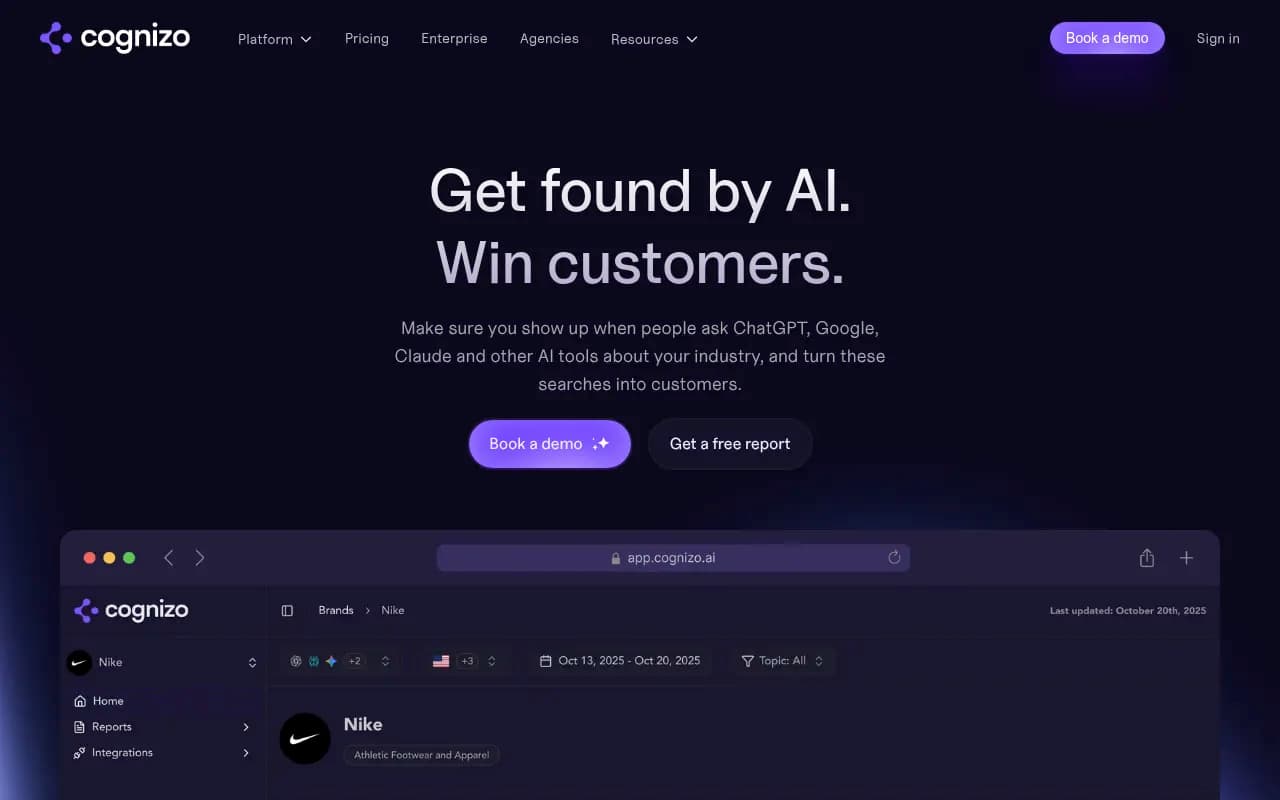
| Content from tracked gaps | Cognizo | Positions itself around turning insights into content |
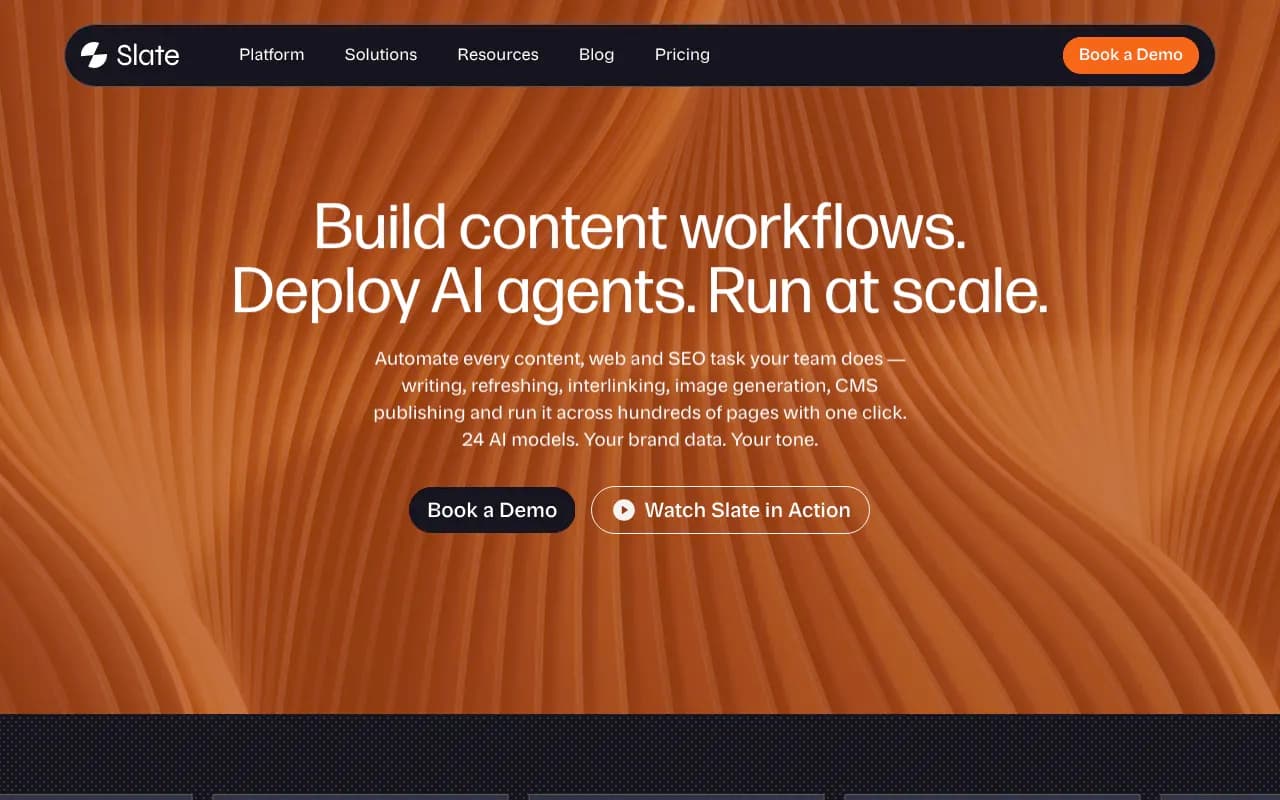
| Agency client reporting | Slate | Built for agencies |
Promptwatch for the full stack
Promptwatch is the option I'd point to if you answered yes to the crawler, attribution, and content-production questions. It tracks the real interfaces of ChatGPT, AI Overviews, AI Mode, Gemini, Perplexity, Copilot, and others, and adds IP-verified AI crawler logs, visitor analytics for AI-referred traffic, and a Content Agent that plans, writes, and publishes to Webflow, Framer, or WordPress. An Action Board turns gaps into a prioritized to-do list, and published pages are tracked through crawls, citations, and clicks so you see whether the fix worked.

Pricing starts at $95/month for Essential (50 prompts, all models, site audit, 360 Insights), the same entry price as Peec Starter, with the automated Content Agent on Business at $579/month. Confirm at promptwatch.com/pricing. Agencies have separate Kick-off, Growth, and Scale plans with unlimited projects.
Other trackers worth a look


One caution on third-party comparisons. At least one "best Peec alternatives" article I read ranks the vendor's own product first and dismisses others in a sentence. Look for tests that say how they verified pricing and engine access, and check the vendor's own pricing page.
If you want to browse the full category before choosing, the GEO software directory at bestgeosoftware.com lists dozens of options.
How to switch without losing your history
Switching trackers is mostly a data-continuity problem. A few habits help.
- Export your prompts, tags, and competitor lists from Peec before you cancel. Peec's MCP server can pull this through an assistant if the dashboard export is limited.
- Run both tools in parallel for two to four weeks. Visibility scores differ by method, so you need an overlap to compare baselines.
- Clean the prompt list while you move. Overlapping prompts add noise and burn your cap. Peec's own research says more distinct prompts beat repeated runs.
- Add one layer you didn't have before: crawler logs or visitor analytics. That is the whole reason to move.
- Re-baseline your KPIs. Don't compare Peec's visibility score to the new tool's number as if they were the same measurement.
You can also skip the full switch. Plenty of teams keep a simple tracker for stakeholder dashboards and add a second platform for the optimization work. It costs more, but it avoids a messy migration.
A short decision rule
If your question is "are we mentioned?", Peec AI answers it well and the new Agent and Actions feature makes it better. If your question is "why aren't we cited, what do we publish, and did it make money?", you need crawler data, content execution, and traffic attribution, and that means a different class of tool. Run the checklist, count your yes answers, and decide based on that rather than on whichever vendor blog you read last.
If you want a second opinion on your AI search program before spending on tools, 1001 SEO Media runs audits and GEO consulting for teams in exactly this spot.