Key takeaways
- The 2026 benchmarks from Buffer and Sprout Social's data: Instagram 3–5 posts/week, TikTok 2–5 posts/week, LinkedIn 2–5 posts/week, X 3–5 posts/day, Facebook 1–2 posts/day, YouTube 1 video/week, Pinterest 1–5 fresh pins/day.
- Consistency matters more than volume. Buffer's study of 100,000+ users found that consistent posters get 5x more engagement per post than inconsistent ones.
- More posting does not hurt per-post reach on Instagram or TikTok, according to Buffer's 2026 regression studies. The old "flooding the feed" fear is mostly a myth.
- Pinterest is the one platform where the old advice (15–25 pins/day) is now considered risky by most practitioners. Fresh pins, 1–5 per day, is the safer 2026 play.
- Midweek, midday (Tuesday–Thursday, roughly 9 a.m. to 6 p.m. local time) is the safest default posting window across most platforms. TikTok and YouTube are the weekend exceptions.
The short answer, platform by platform
Every year, Buffer and Sprout Social publish studies built on millions of posts, and their 2026 numbers are the best baseline available. Buffer's posting-frequency guide draws on analyses of 2.1 million Instagram posts, 11.4 million TikTok posts, 2 million LinkedIn posts, and more. Sprout Social's timing data comes from nearly 2 billion engagements across roughly 307,000 business profiles.
Here's the frequency those datasets support:
| Platform | Recommended frequency | Source basis | Notes |
|---|---|---|---|
| 3–5 feed posts/week | Buffer, 2.1M posts | More than doubles follower growth vs. 1–2/week | |
| Instagram Stories | 2–4/day | Dash Social, Hootsuite | Stories tolerate far higher cadence than feed posts |
| TikTok | 2–5 posts/week | Buffer, 11.4M posts | 17% more views per post vs. posting once weekly |
| 2–5 posts/week | Buffer, 2M+ posts | 11+/week performs best but is rarely sustainable | |
| X (Twitter) | 3–5 posts/day | Buffer | Recency-driven feed rewards cadence |
| 1–2 posts/day | Buffer, Adobe | Quality over volume | |
| YouTube | 1 video/week | Buffer, 2M+ videos | 3x/week showed no significant engagement gain |
| YouTube Shorts | 1–3/week | Buffer | Different audience rhythm than long-form |
| 1–5 fresh pins/day | Practitioner consensus | Old 15–25/day advice is now contested (more below) |
Treat these as starting points, not commandments. Your audience, industry, and content capacity matter more than any global average. But if you're currently posting sporadically, hitting these baselines will move the needle.
Why consistency beats volume
Before we get into per-platform detail, one stat deserves its own section because it reframes everything else.
Buffer studied more than 100,000 of its users and found that people who posted consistently (in at least 20 of 25 weeks) got 5x more engagement per post than inconsistent posters. Five times. Not 50% more. Not "somewhat better." Five times the likes, comments, and shares on the same content, just delivered on a reliable schedule.
This is why scheduling tools matter so much. The gap between a team that posts when inspiration strikes and a team that batch-creates content and lets a scheduler publish it isn't talent. It's infrastructure. A Forrester-commissioned study on social media AI tools found teams save roughly 60% of the time they'd otherwise spend on scheduling and publishing, and 80% on reporting. That saved time is what makes consistency possible for a two-person marketing team.
Platform-by-platform: what the 2026 data says
Instagram: 3–5 feed posts per week, and don't fear posting more
Buffer's 2026 Instagram study analyzed 2.1 million posts from 102,000 accounts. The headline finding is encouraging: posting 3–5 times per week more than doubles follower growth rate compared to 1–2 times per week, and boosts reach per post by about 12%.
The more interesting finding is what happens beyond that. Accounts posting 6–9 times per week saw roughly 3.7x the follower growth. Accounts posting 10+ times per week saw 5.5x. And here's the part that contradicts conventional wisdom: reach per post went up with frequency, not down. Instagram's algorithm is not punishing you for showing up often, at least not in this dataset.
The caveat is Stories. Dash Social's analysis of about 1.5 million feed posts and 1.1 million Stories from 3,000 brands suggests 2–3 feed posts per week is the engagement sweet spot, with Stories running at 30+ per week (about 4 per day) to lift completion rates. So the realistic picture for most brands: 3–5 feed posts weekly, daily Stories, and Reels prioritized for reach since Instagram now recommends Reels up to 3 minutes to non-followers.
TikTok: 2–5 posts per week, where frequency buys you lottery tickets
Buffer's TikTok study is the most statistically rigorous of the bunch: 11.4 million posts from 150,000+ accounts, analyzed with fixed-effects regression by their data scientist. The sweet spot is 2–5 posts per week, which delivers 17% more views per post than posting once weekly. Push to 6–10 per week and you get 29% more views per post. At 11+ per week, 34%.
But the mechanism matters. Median views per post stay basically flat regardless of frequency (506 at 2–5/week vs. 487 at 6–10/week). What actually increases is your odds of a breakout. The viral potential ratio (90th percentile views divided by median) jumps from 13.8x to 20.7x as you post more. In plain terms: posting more on TikTok doesn't make each video better, it buys you more lottery tickets, and one winner changes your whole quarter.
TikTok's own creator guidance suggests 1–4 posts daily for maximum reach, and new accounts under 10K followers often benefit from posting 1–2 times daily to build momentum. That's a big commitment. If you can only manage 2–5 per week, you're still in the statistically validated sweet spot.
LinkedIn: 2–5 posts per week, with real upside if you can go daily
Buffer analyzed 2 million LinkedIn posts for 2026. Posting 2–5 times per week adds a modest +1,182 impressions per post and +0.23 percentage points of engagement rate versus posting once weekly. Posting once a week is, in Buffer's words, not enough.
The upside curve is steeper than most platforms. At 6–10 posts per week: +5,001 impressions per post and +0.76 points of engagement rate. At 11+ per week (essentially daily plus): +16,946 impressions per post, 3x more engagements, and +1.40 points of engagement rate. For founders and personal brands who can sustain daily posting, LinkedIn rewards it more than any other platform in the dataset.
Timing on LinkedIn has also shifted. Buffer's best-times analysis found LinkedIn engagement has moved into the afternoon, with morning posts underperforming and Mondays and Tuesdays now doing worse than the weekend. That's a meaningful change from the old "post at 8 a.m. Tuesday" playbook.
X: 3–5 posts per day, the one platform where volume is the strategy
X remains the most recency-driven feed in the bunch. Posts have a lifespan of 15–30 minutes, so Buffer's 2026 recommendation is 3–5 posts per day. Sprout Social's engagement data backs the pattern: X sees its strongest engagement Mondays through Thursdays, roughly 12–6 p.m., with weekends the weakest days.
Not everyone agrees on the number. Adobe's guidance is far more conservative at 1–2 posts per day, warning that more can reduce engagement. The honest answer is that it depends on what you're posting. Three thoughtful posts spread across the day will outperform one good post and two pieces of filler. If your team can only produce one quality post daily, do that. X's algorithm heavily weights early retweets, so the first 30 minutes matter more than the hour count.
Facebook: 1–2 posts per day, quality over everything
Facebook's algorithm rewards "meaningful interactions," and its post lifespan is short, around 5–6 hours. Buffer recommends 1–2 posts per day; Adobe suggests 3–7 per week with a warning that over-posting can cost you followers.
The 2026 timing data has a wrinkle: Emplifi's benchmarks found Facebook engagement peaking Friday through Sunday around 10 p.m., which is very different from the midday-midweek pattern everywhere else. Facebook has become a leisure-time platform. If your Facebook content is lifestyle or entertainment oriented, test weekend evenings. If it's B2B, weekday midday still works.
YouTube: 1 video per week is a legitimate strategy
Buffer's analysis of 2 million videos found that posting 3 times per week, or even 5 times per day, did not significantly increase engagement compared to one weekly video. That's a refreshing finding for anyone burning out trying to feed the algorithm. One well-made video per week is a complete YouTube strategy.
There is a counterpoint worth knowing. Some third-party analyses claim channels posting 2 long-form videos per week grow subscribers roughly 3x faster at equal quality, but the same analyses stress that quality at lower frequency beats quantity at lower quality. If you have the production capacity for two good videos weekly, do it. If not, one is fine.
Timing-wise, Buffer's study of 1.8 million videos found Sunday is the best day for long-form, followed by Tuesday. For Shorts, it's Friday, then Saturday. YouTube is a weekend platform with a completely different rhythm than the rest of your calendar.
Pinterest: where the old advice is now genuinely contested
Here's a head-to-head contradiction worth flagging. Buffer's guide, drawing on Pinterest's own content guide and Tailwind's user data, recommends 15–25 pins per day, noting that pinning more than 50 times daily hurts distribution. Meanwhile, current Pinterest practitioners and coaches recommend 1 fresh pin per day minimum, scaling to 2–5 for established accounts, and explicitly warn that the 15–25 pins/day advice is outdated and risky, potentially getting accounts flagged as spam or shadow-banned.
My read: the platform's official guidance reflects what Pinterest wants from high-volume content businesses. The practitioner guidance reflects what keeps a normal brand account safe in 2026. Unless you're a dedicated Pinterest publisher with a large fresh-content pipeline, 1–5 fresh pins per day is the sane range. And "fresh" is the operative word. Repinning old content no longer works the way it did.
When to post: the timing data in one table
Frequency is half the equation. Timing is the other half, and the 2026 data is unusually consistent across sources.
| Platform | Best window (2026 data) | Best days | Worst |
|---|---|---|---|
| Overall (Sprout, 2B engagements) | 11 a.m.–6 p.m. | Tuesday, Wednesday | Sunday |
| Instagram (Buffer, 9.6M posts) | ~9 a.m. | Wednesday | Sunday morning |
| Facebook (Buffer, 14M posts) | ~9 a.m. | Wednesday | Weekday daytime (Emplifi) |
| LinkedIn (Buffer, 4.8M posts) | Afternoon | Wednesday | Monday, Tuesday |
| X (Sprout) | 12–6 p.m. | Monday–Thursday | Weekends |
| TikTok (Buffer, 7.1M posts) | Evenings | Saturday, Sunday | Wednesday |
| YouTube (Buffer, 1.8M videos) | Evenings | Sunday (long-form), Friday (Shorts) | Friday/Saturday evenings |
Two patterns save you from memorizing seven schedules. First, 9 a.m. is a cross-platform magic hour: it's the single best slot on Facebook, Instagram, Threads, and X. Second, Wednesday wins almost everywhere except TikTok, where it's the worst day. Sprout Social's data is recorded in local time across a global user base, so a 9 a.m. peak means 9 a.m. wherever your audience lives, which matters if you're running multi-region accounts.
One honest caveat: a 2026 comparison of AI scheduling tools estimated that "optimal time" features realistically improve engagement by around 5–10%, not the 40%+ some vendors imply. Timing helps. It doesn't rescue bad content.
How to find your actual best frequency
Global benchmarks are an average of millions of accounts, and your account is not an average. Here's a practical process:
- Start with the benchmark. Set your baseline schedule using the table above. Give it four weeks without changing anything.
- Isolate one variable at a time. In month two, add one post per week to a single platform. Watch reach per post, not just total reach. If per-post reach holds or climbs, the frequency is fine.
- Check your own analytics, not the studies. Instagram Insights, LinkedIn Analytics, and YouTube Studio show when your specific followers are active. A B2B software brand and a fitness creator will have completely different curves.
- Let your scheduling tool do the math. Buffer generates a posting schedule from its latest engagement data automatically, Sprout Social's Optimal Send Times uses machine learning on your account's patterns, and Later suggests times from your audience activity. These features are worth using precisely because they replace the global average with your data.
The scheduling tools that make this achievable
The frequency numbers above are only realistic if you're batching content and scheduling it. Posting 3–5 times a day on X manually is a recipe for burnout. Here's how the main tools compare in 2026:
| Tool | Starting price | Best for | Standout feature |
|---|---|---|---|
| Buffer | Free plan; $6/channel/mo | Solo creators, small teams | Auto-generated schedules from its own engagement studies |
| Hootsuite | $99/mo | Mid-market, enterprise | Bulk scheduling, best-time-to-publish recommendations |
| Sprout Social | $199/seat/mo | Enterprise, agencies | Optimal Send Times AI, deepest analytics |
| Later | ~$25/mo | Instagram-first brands | Visual grid planner, AI-suggested times |
| SocialPilot | Budget-friendly tiers | Small agencies | High channel count at low cost |
| Metricool | Free tier available | Analytics-heavy teams | Strong cross-platform reporting for the price |
Buffer is the natural starting point for most people reading this guide, for one specific reason: the frequency and timing data in this article largely comes from Buffer's own studies, and Buffer builds those findings directly into its scheduler. The free plan covers 3 channels with 10 scheduled posts each, which is enough to test the waters on a baseline schedule.
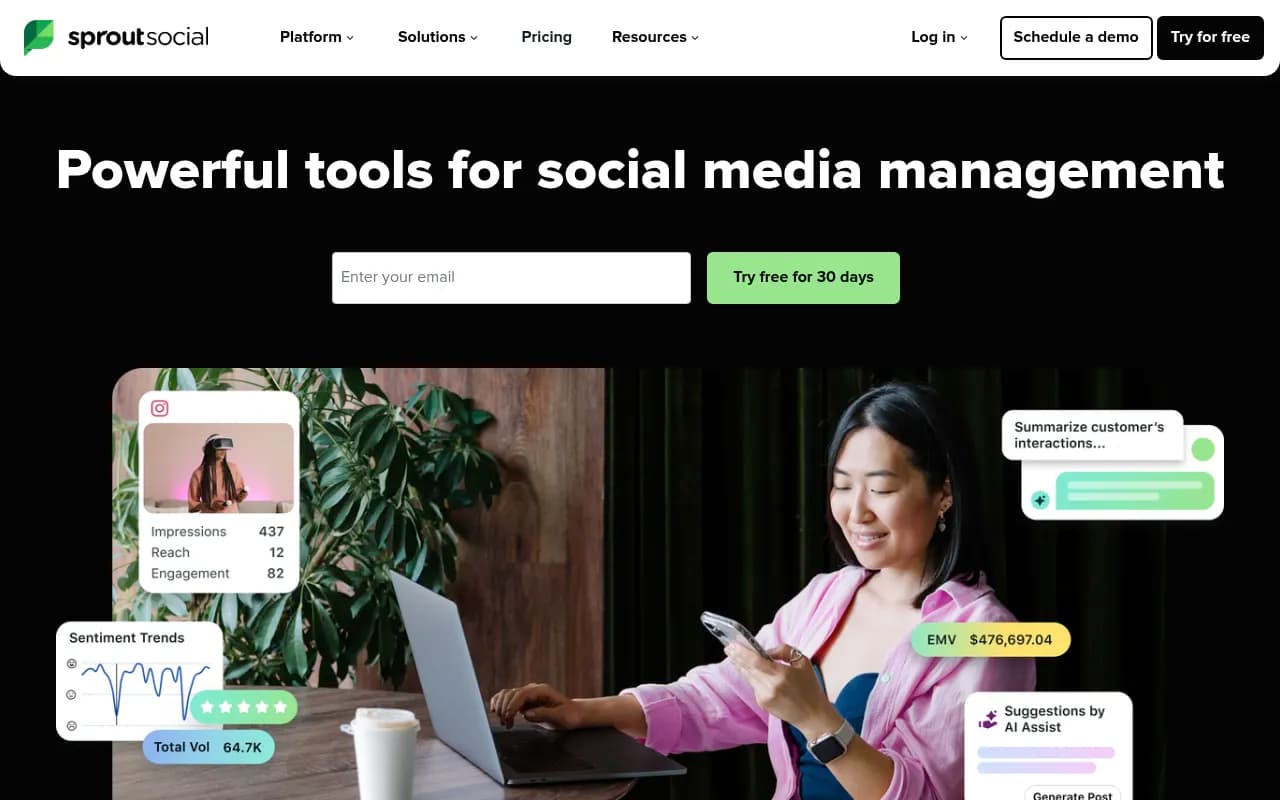
Sprout Social is the enterprise option, and its Optimal Send Times feature is the most mature implementation of AI-driven timing in the market. At $199/seat/month it's a serious investment, but for teams managing many brands, the per-account automation pays for itself.

Hootsuite sits in the middle, with bulk scheduling and best-time recommendations across every major platform. Watch the per-seat pricing though: two people on the Professional plan runs about $398/month, which surprises a lot of buyers who saw the $199 headline.
Later is the pick if Instagram is your primary channel. The visual grid planner is genuinely useful for planning how your feed looks, and its AI-suggested posting times are based on your actual audience activity rather than global averages.
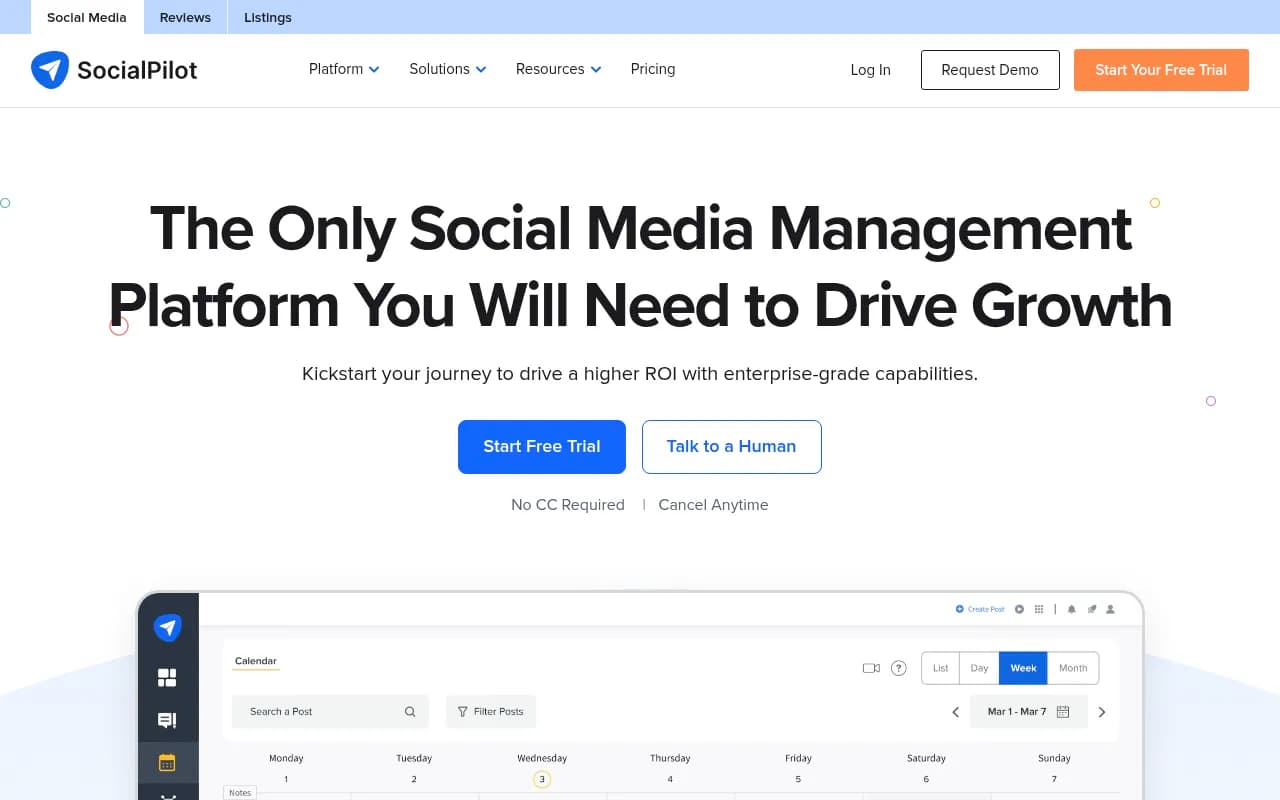
SocialPilot is the value play for small agencies managing many client accounts. You get a high channel count for a fraction of what Hootsuite or Sprout charge.
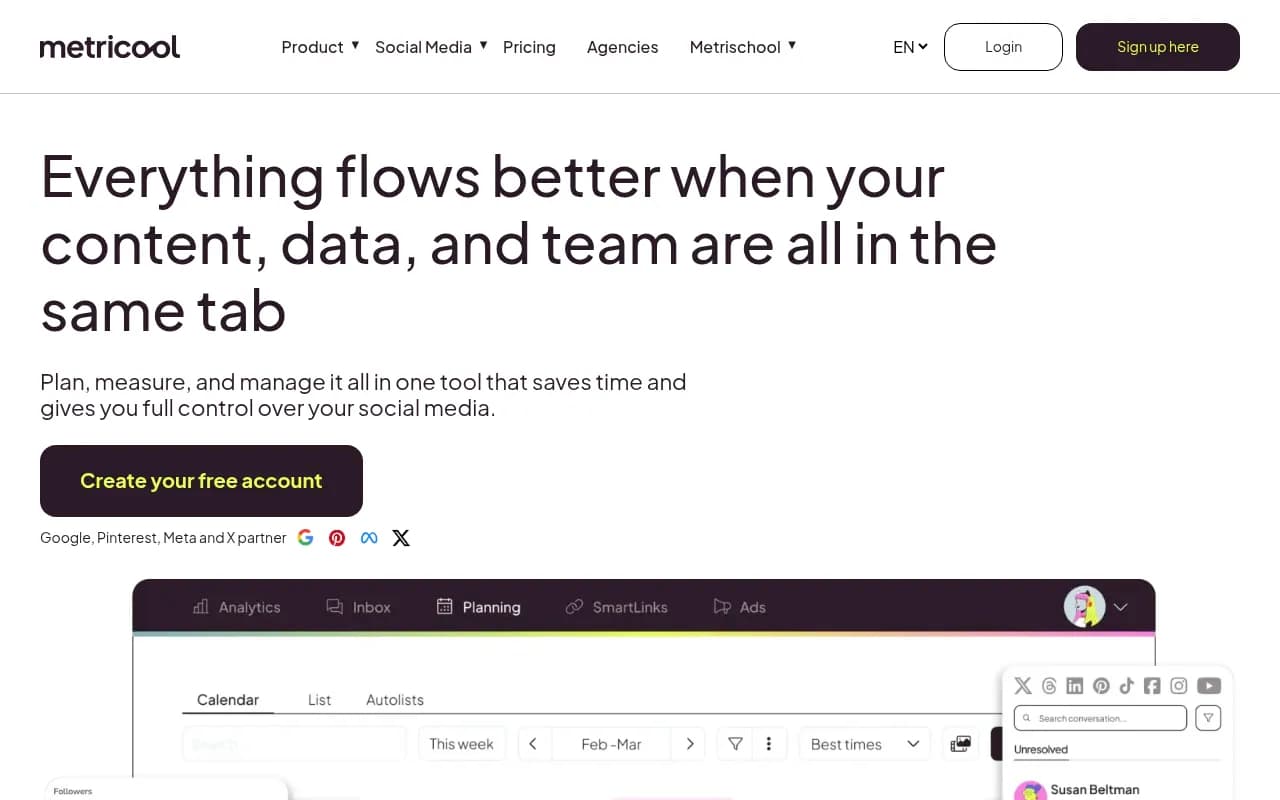
Metricool deserves more attention than it gets. The free tier is usable, the analytics are strong for the price, and it handles the reporting side that most cheap schedulers neglect.
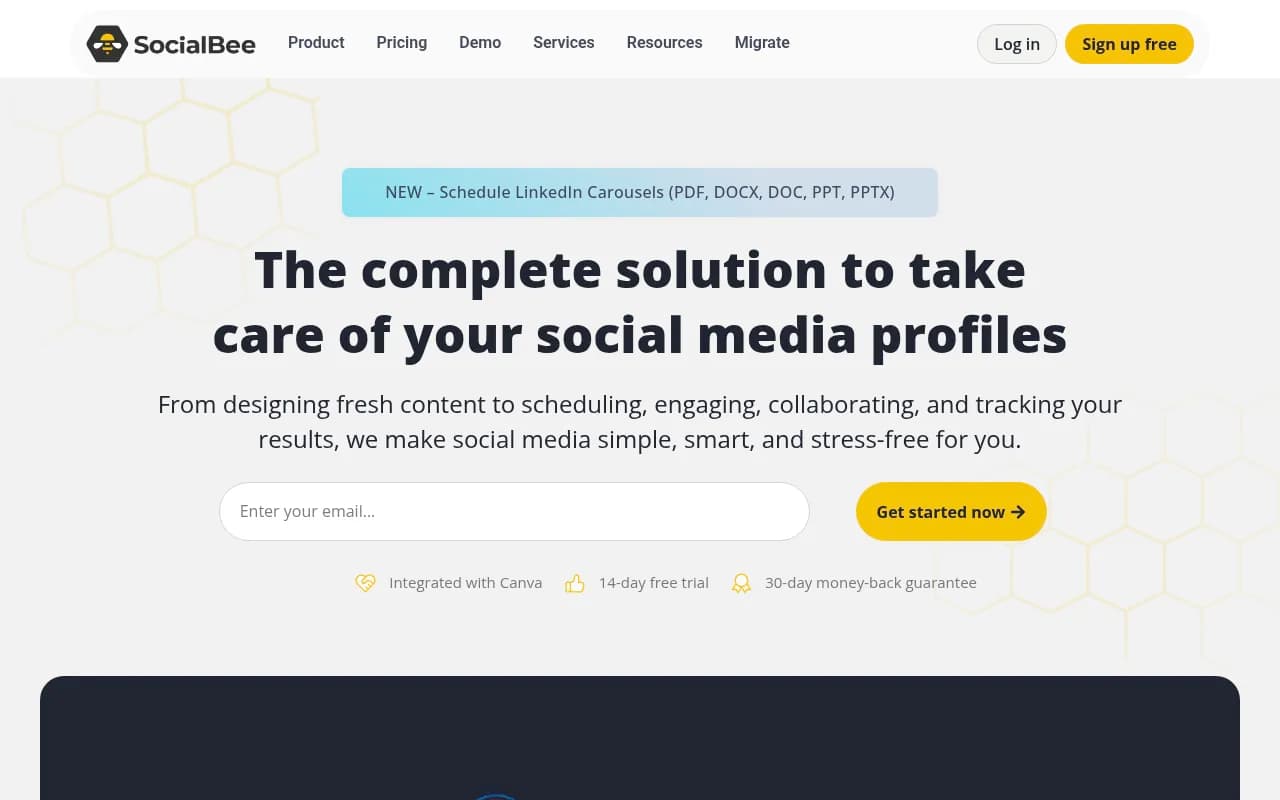
SocialBee takes a different approach with content categories and evergreen recycling, which is handy if you want your best posts to recirculate on a schedule rather than disappearing forever.
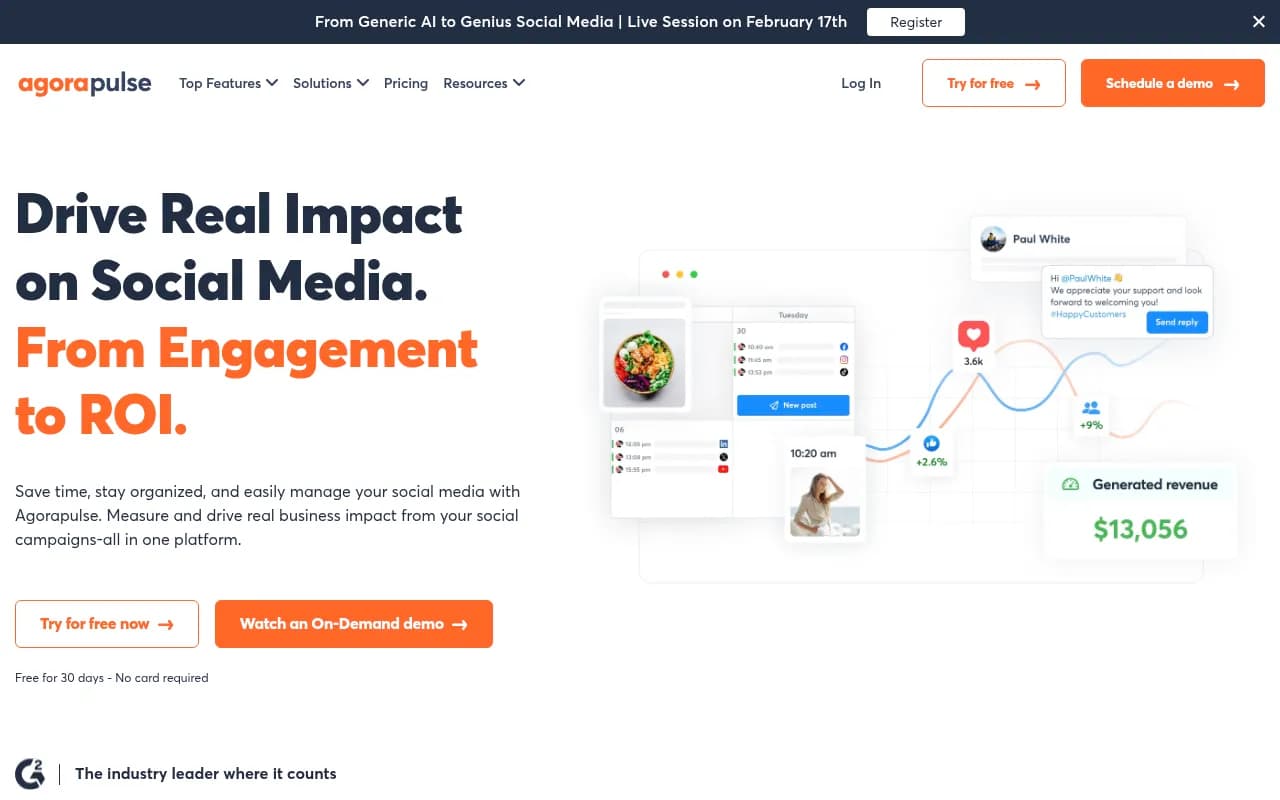
Agorapulse is worth a look if your bottleneck is community management as much as scheduling, since its unified inbox pairs with solid publishing features.
Common mistakes the data exposes
Posting below the minimum viable frequency. On Instagram, Buffer found that posting less than 1–2 times per week risks account stagnation or follower loss. Being too quiet is worse than being imperfectly consistent.
Confusing posting more with performing worse. The 2026 data contradicts the old fear that frequent posting cannibalizes reach. On Instagram and TikTok, per-post reach held or improved at higher frequencies. The real risk is quality collapse, not algorithm punishment.
Ignoring the Pinterest spam line. This is the one platform where over-posting carries a real penalty in 2026: spam flags, shadow-bans, and in extreme cases account deletion. Stay under the fresh-content ceiling.
Applying one timing rule everywhere. TikTok and YouTube peak on weekends and evenings. LinkedIn has moved to afternoons. Facebook's engagement is drifting to weekend nights. A single "post at 9 a.m. Tuesday" rule across all platforms leaves real engagement on the table.
Chasing perfect timing over consistent presence. The 5x consistency premium dwarfs the 5–10% gain from optimal timing. If you only have the energy to fix one thing, fix consistency.
Putting it together
Start with the benchmark frequencies, schedule everything through a tool so the schedule survives your busy weeks, and give any change four weeks before judging it. Then let your own analytics override the studies, because the studies are averages and your audience isn't. The teams that win at social in 2026 aren't the ones posting the most. They're the ones that never stop posting.