Key takeaways
- Otterly.AI is a solid entry point for AI search monitoring, but it stops at the dashboard — it doesn't tell you what content to create or help you create it
- The gap between "monitoring" and "optimization" is where most teams get stuck in 2026: you can see you're invisible, but you don't know how to fix it
- Migrating off Otterly.AI means exporting your prompt lists, mapping your tracked engines, and choosing a platform that covers the full loop: gap analysis, content creation, and result tracking
- Platforms like Promptwatch go beyond monitoring with content gap analysis, AI-native content generation, and crawler log data that shows exactly when AI engines discover your pages
- If budget is the constraint, a hybrid stack (monitoring tool + separate content tool) can work, but it adds friction
Otterly.AI has done something genuinely useful: it made AI search monitoring accessible. At $29/month, teams that couldn't justify a five-figure enterprise contract could at least see whether ChatGPT or Perplexity was mentioning their brand. That matters. A lot of companies went from "we have no idea what AI says about us" to "okay, we're being cited here but not there" — and that's real progress.
But 2026 is a different environment than 2024 was. AI search isn't a novelty channel anymore. For many B2B and e-commerce brands, Perplexity, ChatGPT, and Google AI Overviews are now meaningful traffic sources. The question has shifted from "are we showing up?" to "why aren't we showing up for these specific prompts, and what do we do about it?" That's where monitoring-only tools run out of road.
This guide is for teams who've been using Otterly.AI (or something similar) and are starting to feel that ceiling. We'll cover what Otterly.AI actually does well, where it falls short, how to migrate your setup, and which platforms are worth considering if you need a full optimization workflow.
What Otterly.AI does well
It's worth being honest here rather than just building a case for switching. Otterly.AI has real strengths.
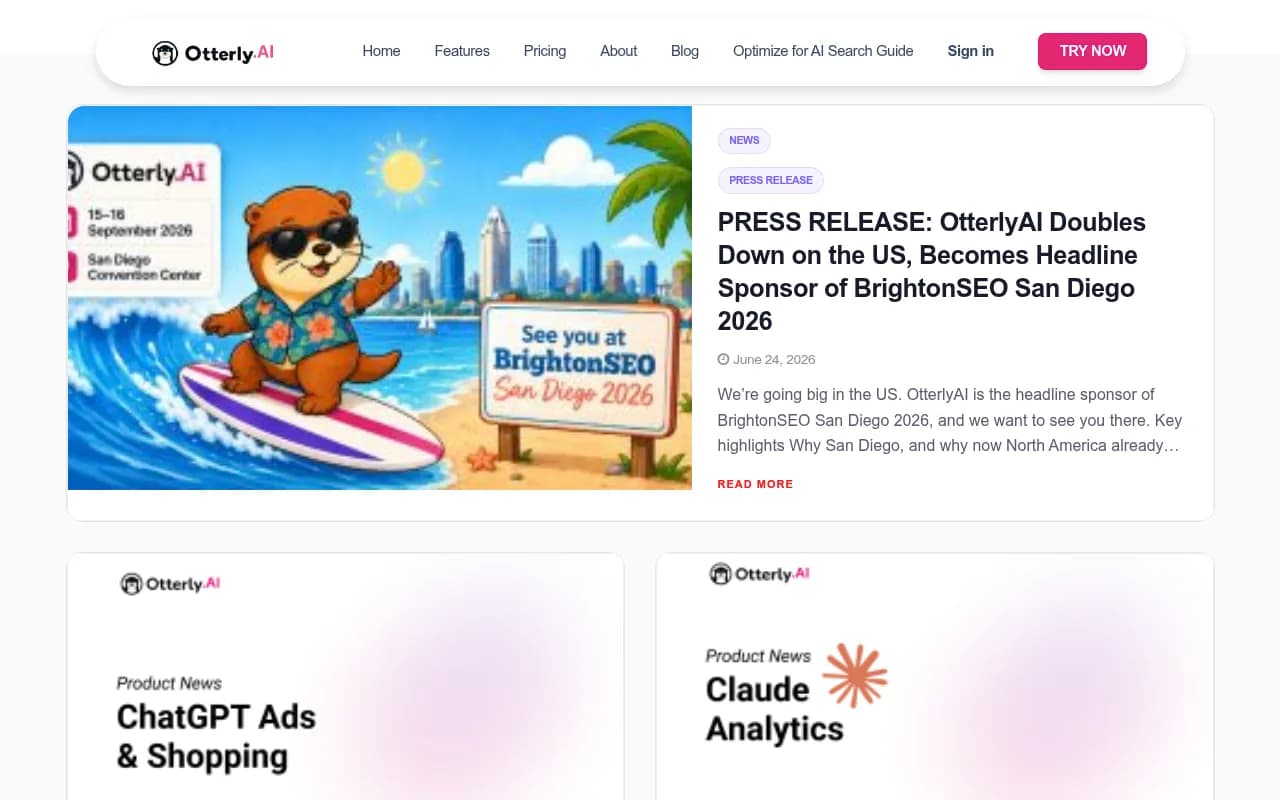
The interface is clean and marketer-friendly. You don't need an SEO background to set up prompt tracking and understand the results. Pricing is transparent — the $29/month entry tier is one of the lowest in the category. And the team ships fast: they added Claude tracking in June 2026, launched ChatGPT Ads tracking the same week, and recently announced a "Recommendations" feature that tries to bridge the gap between data and action.
That last point is worth noting. Otterly.AI is clearly aware of the monitoring-only criticism and is building toward it. Their Recommendations feature attempts to surface next steps based on visibility data. It's a step in the right direction.
Still, community feedback from practitioners is consistent: Otterly.AI is effective for basic "are we showing up" monitoring, but lacks the optimization guidance that teams need once they've identified gaps. Knowing you're invisible for a prompt is step one. Knowing which content to create, how to structure it, and whether it worked after publishing — that's the workflow most teams are missing.
The monitoring-to-optimization gap
Here's the problem in concrete terms. Say you're tracking 50 prompts in Otterly.AI. You can see that for "best project management software for remote teams," your competitor is cited in ChatGPT and you're not. What do you do with that?
Otterly.AI will tell you the gap exists. It won't tell you:
- Which specific page on your site (if any) is closest to answering that prompt
- What content the AI is actually pulling from your competitor's site
- Whether you have a content gap, a structure gap, or a crawlability gap
- What a brief for a new article targeting that prompt should look like
- Whether, after you publish something, the AI crawler actually found it
That's not a knock on Otterly.AI specifically — it's a category-wide problem. Most AI visibility tools were built as monitoring layers. They're dashboards that show you a score. The optimization layer is a separate problem, and most tools haven't solved it yet.
The teams that are actually improving their AI visibility in 2026 are running a three-step loop: find the gaps, create content that addresses them, and track whether it worked. That loop requires more than a monitoring dashboard.
Before you migrate: what to export from Otterly.AI
If you're moving to a different platform, don't start from scratch. Here's what to pull out of Otterly.AI before you switch.
Your prompt list
This is the most valuable asset you've built. Export every prompt you're tracking, along with any notes about which ones are highest priority. Most platforms will let you import a CSV of prompts, so format it cleanly: one prompt per row, with columns for topic, intent, and competitor context if you have it.
Baseline visibility scores
Screenshot or export your current visibility scores by prompt and by AI engine. You'll want this as a before/after reference once you're on the new platform. Scores aren't directly comparable across tools (different methodologies), but directional trends are useful.
Competitor tracking setup
Note which competitors you're benchmarking against and for which prompts. Rebuilding this in a new tool takes time, so having it documented saves you a setup session.
Engine coverage notes
Otterly.AI tracks a specific set of engines. Note which ones matter most to your audience — this should inform which platform you move to, since engine coverage varies significantly across tools.
Platform comparison: Otterly.AI vs. the alternatives
The market has matured enough that there are now clear tiers. Here's an honest comparison of the main options.
| Platform | Starting price | AI engines covered | Content generation | Crawler logs | Best for |
|---|---|---|---|---|---|
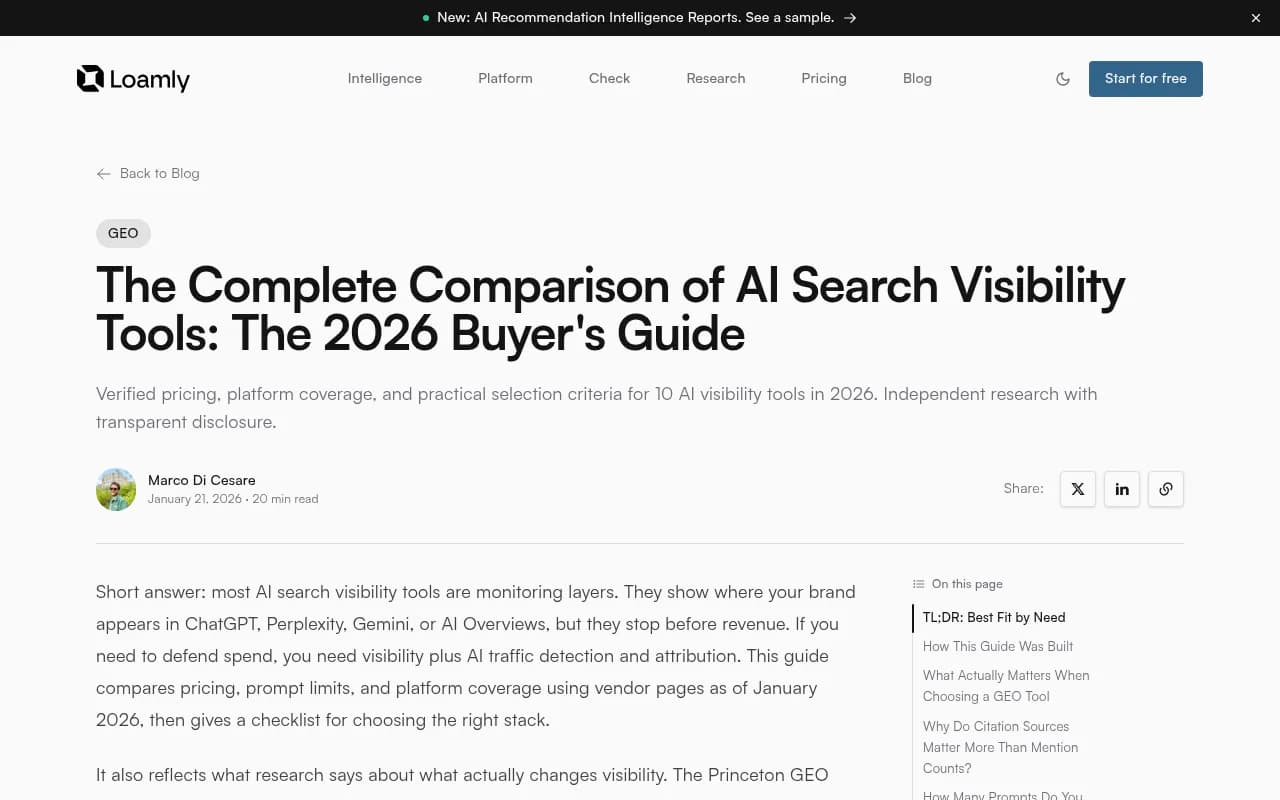
| Otterly.AI | $29/mo | 6 (incl. Copilot) | No (Recommendations only) | No | Budget monitoring, small teams |
| Promptwatch | $99/mo | 10+ | Yes (Content Agents) | Yes | Full optimization workflow |
| Profound | $99/mo | 10+ | No | No | Enterprise visibility coverage |
| Peec AI | ~$49/mo | 5-6 | No | No | Team-friendly monitoring |
| AthenaHQ | Custom | 8+ | No | No | Monitoring-focused enterprise |
| SE Visible | Freemium | 5+ | No | No | Budget multi-engine coverage |
| Scrunch | Custom | 6+ | Limited | No | GEO audits + monitoring |
A few things stand out from this table. First, content generation is rare. Most platforms are still monitoring layers. Second, crawler logs — which tell you whether AI engines are actually reading your pages — are almost nonexistent outside of Promptwatch. Third, the price gap between entry-level monitoring and full optimization is real but not enormous: $29/mo vs. $99/mo is a meaningful difference for a freelancer, but not for a marketing team.



What a full optimization workflow actually looks like
The teams getting the best results from AI search in 2026 aren't just monitoring — they're running a repeatable process. Here's what that looks like in practice.
Step 1: Identify the gaps
This means going beyond "we're not cited for this prompt" to understanding why. Answer gap analysis compares your content against what AI models are actually pulling for a given prompt. You can see which topics competitors are covering that you're not, which questions your site doesn't answer, and which prompts have high volume but low difficulty — the ones worth targeting first.
Prompt volume and difficulty scoring matters here. Not all gaps are worth filling. A prompt that gets asked 50 times a month is a different priority than one that gets asked 50,000 times.
Step 2: Create content that AI models want to cite
This is the hard part, and it's where most teams stall. Kevin Indig's analysis of 1.2 million citations found that content with question-and-answer headings gets cited 2x more often, and content with 15+ named entities gets 4.8x more citations. That's not generic SEO advice — it's specific to how AI models select sources.
Content Agents in platforms like Promptwatch generate articles and briefs grounded in real prompt data, citation patterns, and competitor analysis. The output isn't generic filler; it's structured around the specific gaps the AI is exposing. That's a different thing from asking ChatGPT to "write an article about X."
Step 3: Track from publish to citation
This is the step almost everyone skips. You publish a new article, and then... you wait and hope? A proper optimization workflow includes crawler log monitoring that shows when AI engines (ChatGPT, Perplexity, Claude, etc.) actually crawl your new page, and then tracks when that crawl converts to a citation. If a page gets crawled but never cited, that's a signal about content quality or structure. If it never gets crawled, that's a technical issue.
Migration path: from Otterly.AI to a full workflow
Here's a practical sequence for teams making this transition.
Week 1: parallel tracking
Don't cancel Otterly.AI immediately. Set up your new platform with the same prompt list and run both in parallel for 2-4 weeks. This lets you validate that the new platform is picking up the same signals (or explaining why it differs) before you lose your baseline data.
Week 2: gap analysis
Once your new platform is tracking, run a full answer gap analysis. This is the first thing you can do in a full optimization platform that you couldn't do in Otterly.AI. You're looking for prompts where competitors are consistently cited and you're not — especially prompts with meaningful volume.
Prioritize gaps by: (1) prompt volume, (2) your existing content proximity (gaps where you have a relevant page that just needs improvement are faster wins than gaps requiring new content), and (3) competitive difficulty.
Week 3: first content push
Take your top 3-5 gaps and create content for them. Use whatever content generation tools fit your workflow — whether that's a platform's built-in agents or your own process. The key is that the content is structured to answer the specific prompt, not just to rank for a keyword.
Structure matters: use question-and-answer headings, include specific named entities (brands, people, places, studies), and make sure the page answers the prompt directly in the first 200 words. AI models scan for direct answers.
Week 4 and beyond: track and iterate
Monitor your crawler logs to see when AI engines find the new pages. Track citation rates by page. Most platforms show you a timeline from publish to first crawl to first citation — that feedback loop is what turns a one-time content push into a repeatable process.
When Otterly.AI is still the right choice
This guide isn't arguing everyone should leave Otterly.AI. There are real cases where it's the right tool.
If you're just starting out with AI visibility tracking and want to understand the basics before committing to a larger platform, Otterly.AI's $29/month entry point is genuinely good value. You'll learn which engines matter for your audience, which prompts are worth tracking, and what your baseline looks like — all useful inputs for a later migration.
If your team's primary need is a simple "are we showing up" check across a handful of prompts, and you don't have the bandwidth to act on optimization recommendations anyway, a monitoring-only tool is appropriate. There's no point paying for optimization features you won't use.
If you're an agency that needs to show clients basic AI visibility data without a complex workflow, Otterly.AI's clean interface and transparent pricing make it easy to demo and explain.
The decision to migrate is really a question of whether your team is ready to act on what the data shows. If you're at the stage where you're identifying gaps but don't know what to do with them, that's the signal to look at platforms with a full optimization loop.
Other tools worth knowing about
A few other platforms are worth mentioning depending on your specific needs.
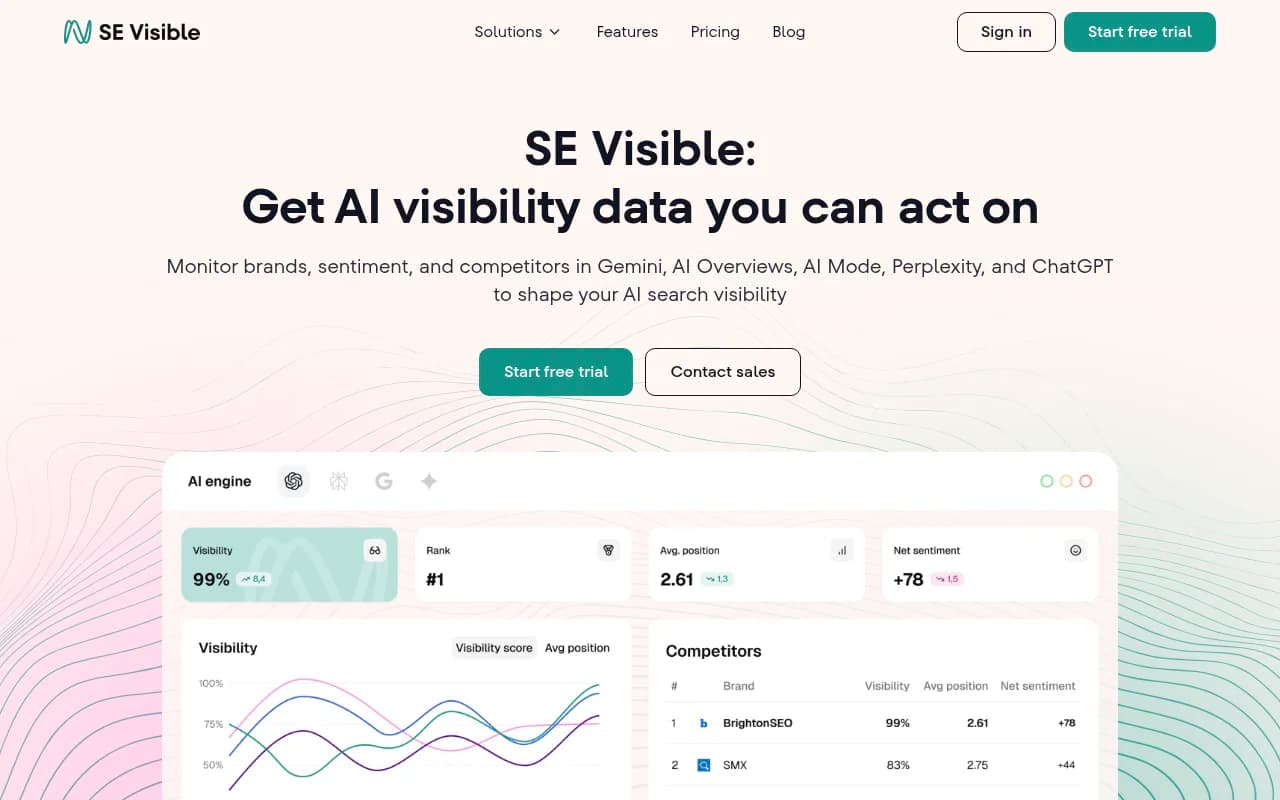
SE Visible (from SE Ranking) is a good option for teams that want multi-engine coverage at a lower price point and don't need content generation. It covers 5+ engines and has a freemium tier.
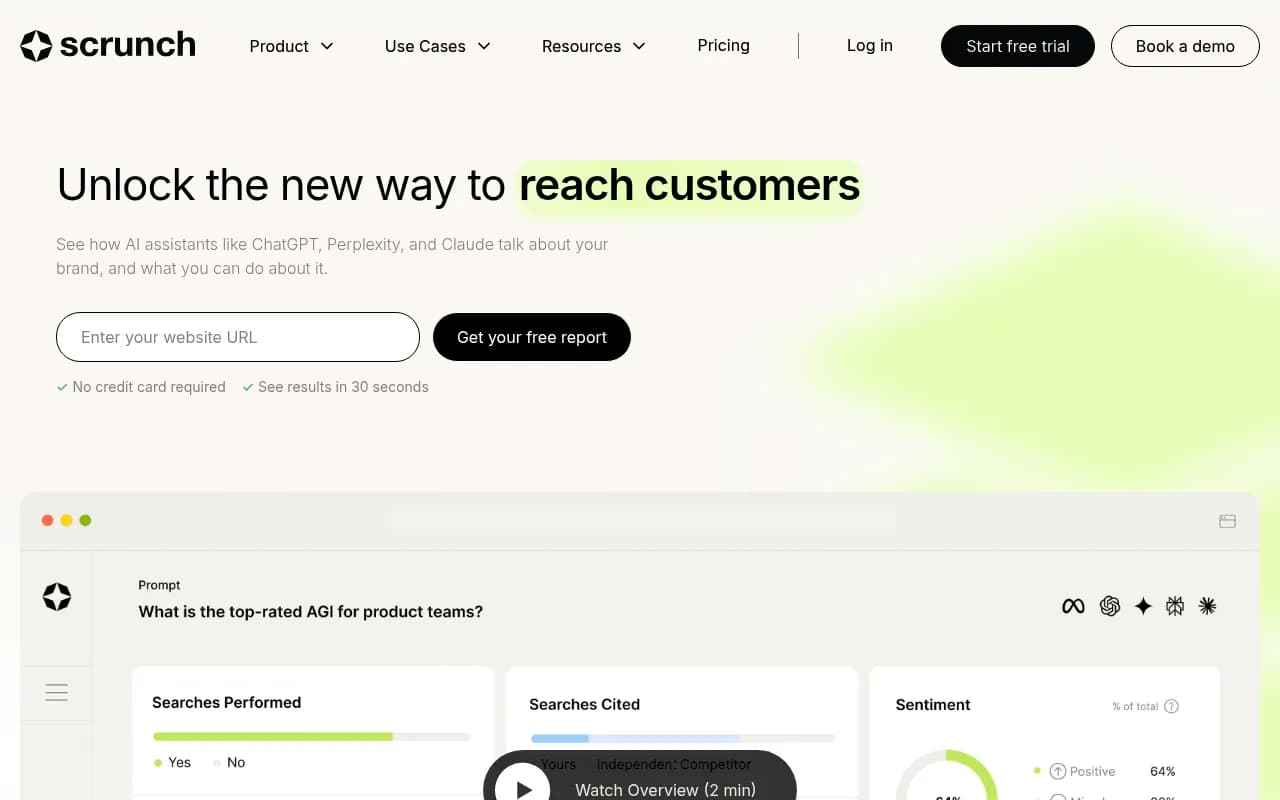
Scrunch is worth considering for teams that need GEO audits alongside monitoring. It's more audit-oriented than Otterly.AI but still doesn't offer content generation.
Peec AI is a reasonable choice for teams that want unlimited users and don't need optimization features. Good for larger teams where access is the main constraint.
Ahrefs Brand Radar and Semrush's AI Visibility Toolkit are worth knowing about if you're already paying for those platforms — but both use fixed prompt sets and lack AI traffic attribution, which limits their usefulness for active optimization.
The honest bottom line
Otterly.AI built a genuinely useful tool for a real problem. In 2024, just knowing whether you existed in AI search was valuable. In 2026, that's table stakes.
The teams pulling ahead are the ones who've closed the loop: they find gaps, create content specifically designed to fill those gaps, and track whether AI engines actually pick it up. That workflow requires more than a monitoring dashboard.
If you're ready to move from "we can see the problem" to "we're fixing the problem," the migration is straightforward — export your prompts, run parallel tracking for a few weeks, and use the gap analysis to prioritize your first content push. The data you've already built in Otterly.AI is a useful starting point, not something you're throwing away.
The platforms that support the full loop are still a minority in this market. Promptwatch is the most complete option available in 2026, with content generation, crawler logs, and prompt intelligence built into a single workflow. But the right choice depends on your team's capacity to act on what the data shows — the best platform is the one you'll actually use.