Key takeaways
- Non-branded query tracking requires prompt volume data, answer gap analysis, and competitor benchmarking -- not just brand mention counts.
- Promptwatch is the only platform in this comparison that closes the loop: it finds the non-branded gaps, generates content to fill them, and tracks the results.
- Profound is the strongest option for enterprise teams that need deep analytics and crawler logs but don't need content generation.
- Otterly.AI and Peec AI are solid monitoring tools for teams with simpler needs, but neither helps you act on what you find.
- AthenaHQ is technically capable but leans toward monitoring; content optimization is limited.
- Pricing ranges from ~$95/month (Peec AI Starter) to $499+/month (Profound), with Promptwatch sitting at $99-$579/month depending on plan.
Why non-branded queries are the harder problem
Most teams set up AI visibility tracking and immediately search for their own brand name. That's understandable -- you want to know if ChatGPT recommends you when someone asks "what's the best [your brand category]?" But branded queries are the easy part. If someone already knows your name and types it into Perplexity, you're probably going to appear.
The harder, more valuable question is: what happens when someone asks "what's the best project management tool for remote teams" or "which CRM works best for B2B SaaS companies under 50 people"? These are non-branded queries -- the prompts where people are still forming opinions, comparing options, and deciding who to trust. Winning here means getting cited before someone has even heard of you.
That's a fundamentally different challenge. It requires knowing which prompts exist, which ones your competitors are winning, what content AI models are pulling from to answer those prompts, and what's missing from your own site. Most AI visibility tools were built to answer "are we mentioned?" -- not "what are we missing?"
This comparison focuses specifically on that harder question.
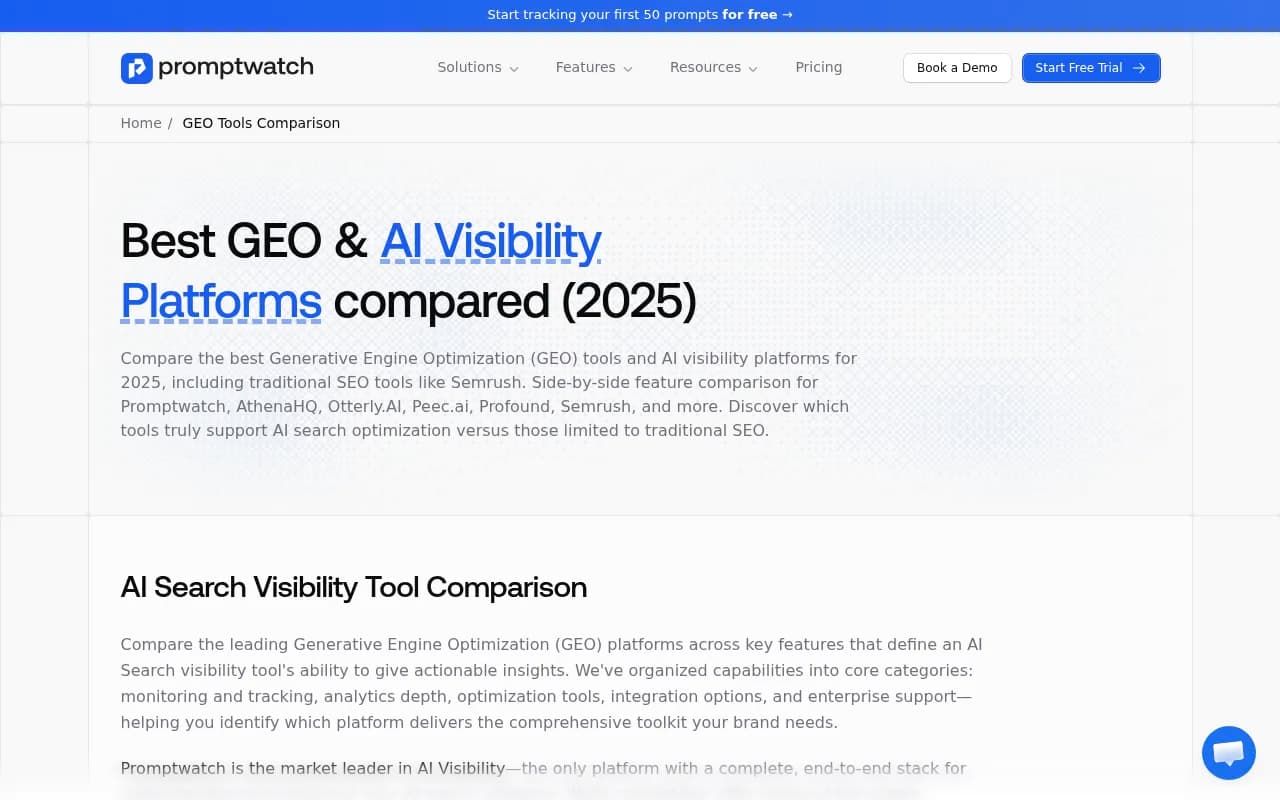
The five platforms compared
Before diving into specifics, here's a quick orientation on each platform's positioning:
- Promptwatch -- end-to-end GEO platform with prompt tracking, answer gap analysis, content generation, and crawler logs
- Peec AI -- mid-market monitoring tool with solid multi-model coverage and content suggestions
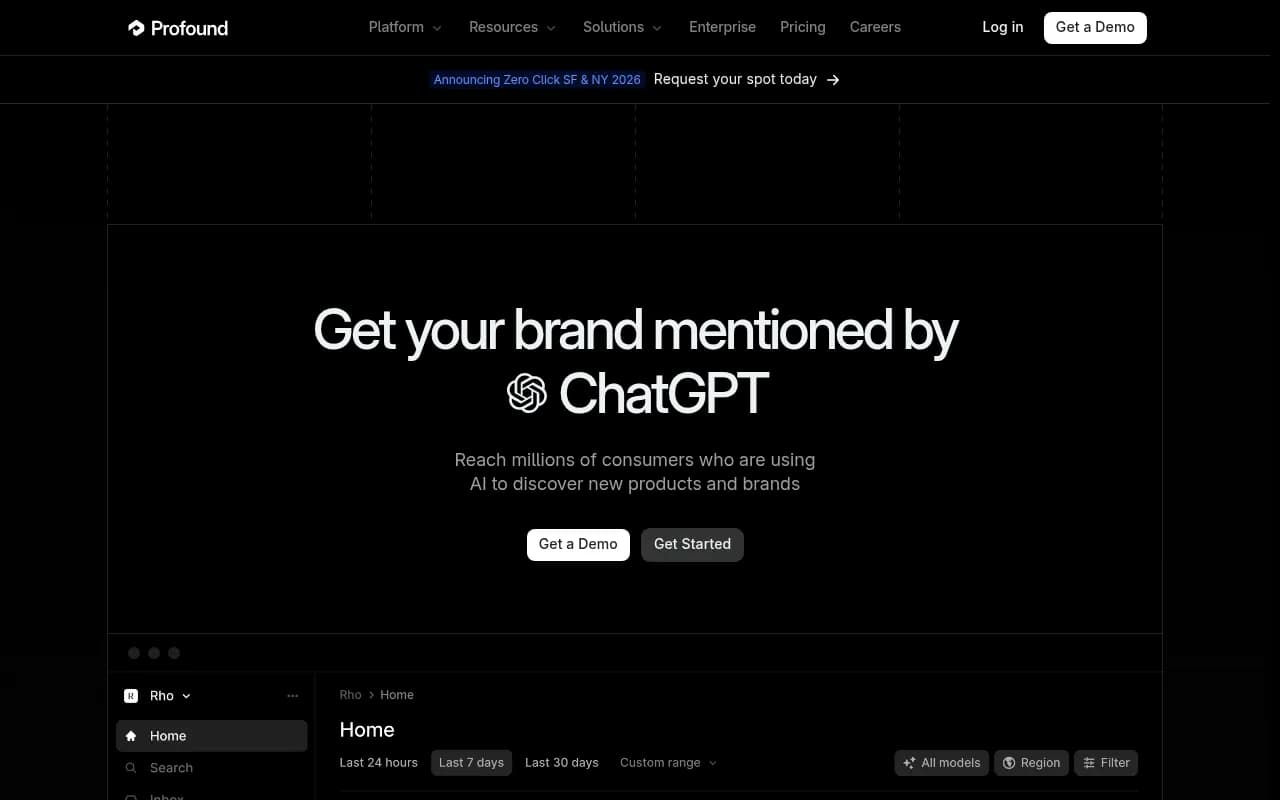
- Profound -- enterprise-grade analytics platform with deep reporting and crawler logs
- Otterly.AI -- accessible monitoring tool with strong citation analysis and multi-engine coverage
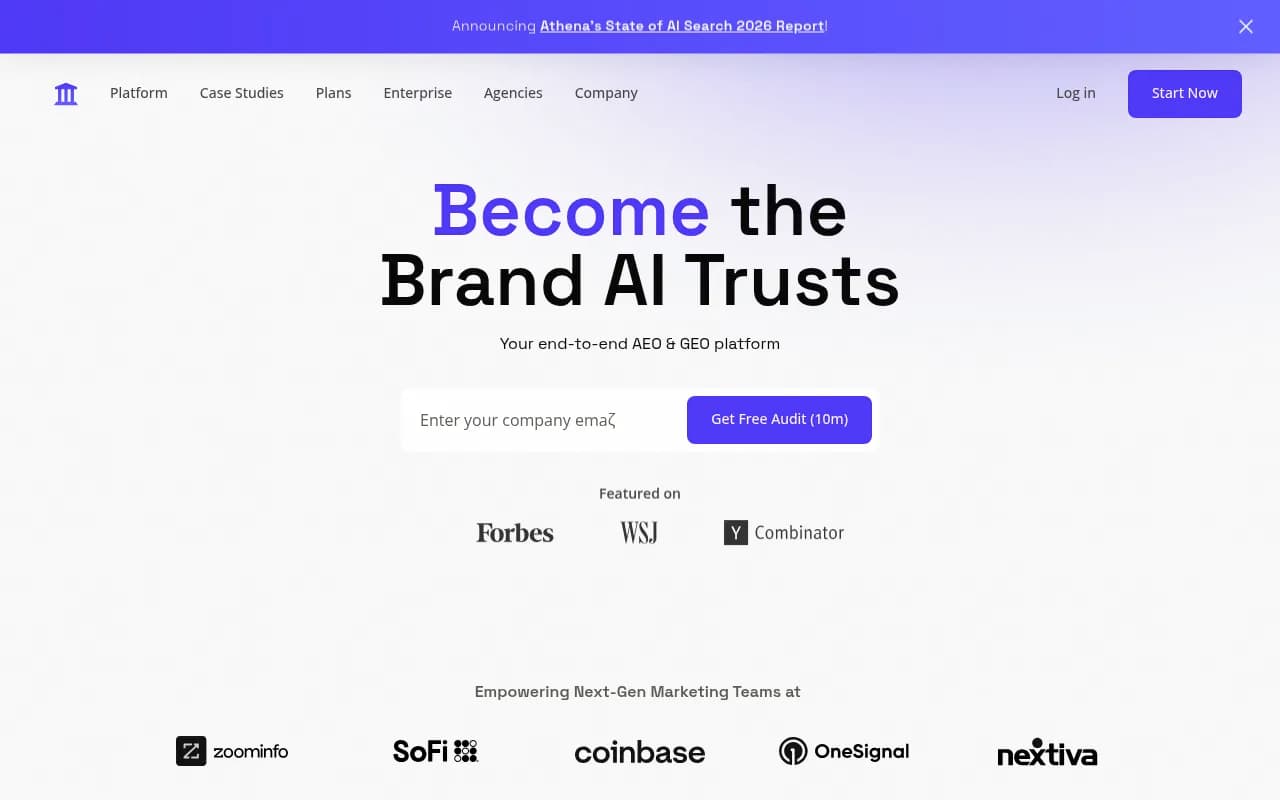
- AthenaHQ -- monitoring-focused platform with technical SEO leanings



Feature comparison table
| Feature | Promptwatch | Peec AI | Profound | Otterly.AI | AthenaHQ |
|---|---|---|---|---|---|
| Non-branded prompt tracking | Yes | Yes | Yes | Yes | Yes |
| Prompt volume estimates | Yes | No | Partial | No | No |
| Answer gap analysis | Yes | No | Partial | No | No |
| Competitor visibility benchmarking | Yes | Yes | Yes | Yes | Yes |
| AI content generation | Yes | No | No | No | No |
| Content briefs | Yes | No | No | No | No |
| Crawler logs / agent analytics | Higher plans | No | Yes | Beta | No |
| Reddit & YouTube insights | Yes | No | No | No | No |
| ChatGPT Shopping tracking | Yes | No | No | No | No |
| Multi-model coverage | 10 models | 3-all (by plan) | Multiple | Multiple | 8+ models |
| Multi-language / multi-region | Yes | Advanced plans | Yes | Yes | Yes |
| Traffic attribution | Yes | No | Yes | Limited | No |
| API access | Yes | Enterprise only | Yes | Yes | Yes |
| Starting price | $99/mo | $95/mo | $499/mo | ~$99/mo | Custom |
Promptwatch: built around the gap, not just the mention
Promptwatch's core differentiator for non-branded tracking is its Answer Gap Analysis. Instead of just showing you where you appear, it shows you the specific prompts where your competitors are being cited and you're not. That's a fundamentally different output -- it's a prioritized list of content opportunities, not a dashboard of brand mentions.
For non-branded queries specifically, this matters a lot. You can't optimize for prompts you don't know exist. Promptwatch tracks prompt volumes and difficulty scores, which means you can see not just "we're missing this topic" but "this topic gets asked frequently and we have a realistic shot at winning it."
The content generation piece (Content Agents) is what makes this actionable. Once you've identified the gaps, you can generate articles, comparisons, and listicles grounded in the actual prompt data -- not generic SEO filler. The content is built to answer the specific questions AI models are already asking.
Crawler logs (available on Professional and Business plans) add another layer: you can see when AI crawlers visit your pages, which pages they read, and when a crawl turns into a citation. For non-branded queries, this helps you understand whether newly published content is actually being picked up.
Reddit and YouTube tracking is a feature most competitors skip entirely. For non-branded queries, these channels matter because AI models frequently cite Reddit discussions and YouTube content in their answers -- especially for comparison and recommendation prompts.
Pricing: Essential at $99/month (50 prompts, 1 site), Professional at $249/month (150 prompts, 2 sites, crawler logs), Business at $579/month (350 prompts, 5 sites).
Peec AI: reliable tracking, limited action
Peec AI does the monitoring part well. Its Starter plan at $95/month covers three AI models and 50 prompts, which is competitive with Promptwatch's entry tier. The Advanced plan at $495/month adds multi-country tracking and Google Search Console/Analytics/Looker integrations -- useful for teams that want to connect AI visibility data to their existing reporting stack.
For non-branded query tracking, Peec AI can track whatever prompts you configure. The gap is that it won't tell you which prompts to track. There's no prompt discovery, no volume data, and no answer gap analysis. You're essentially bringing your own list of non-branded queries and monitoring them -- which is fine if you already know what to track, but leaves a lot of opportunity on the table.
Content suggestions exist in some form, but they're not grounded in the same depth of prompt data that Promptwatch's Content Agents use. There's no content generation, no briefs, and no crawler logs on any plan. For a team that just wants to monitor a defined set of non-branded prompts and report on them, Peec AI is a reasonable choice. For a team trying to discover and win new non-branded territory, it falls short.
Profound: enterprise depth, no content generation
Profound is the most analytically capable platform in this comparison for teams that need stakeholder-ready reporting. Its crawler logs are available across plans (not gated to higher tiers like Promptwatch), and its competitor benchmarking is thorough.
For non-branded queries, Profound's strength is in understanding the competitive landscape at depth. You can see which competitors are winning which prompts, how that's changed over time, and get detailed breakdowns by AI model. The traffic attribution features connect AI visibility to actual site traffic, which is valuable for proving ROI on non-branded content investments.
The limitation is that Profound stops at analysis. There's no content generation, no content briefs, and no direct path from "here's the gap" to "here's the content that fills it." For enterprise teams with dedicated content teams who can act on the data, that's fine -- they'll use Profound for intelligence and their own writers for execution. For leaner teams that need the full loop, it's a gap.
Pricing starts at $499/month, which puts it out of reach for smaller teams. It's genuinely an enterprise product.
Otterly.AI: accessible monitoring with strong citation analysis
Otterly.AI has positioned itself as a well-rounded monitoring tool with particular strength in citation analysis. Its multi-engine coverage is solid, and its engine-comparison analytics let you see how your visibility differs across ChatGPT, Perplexity, Gemini, and others -- which is useful for non-branded queries because different models tend to favor different sources.
The MCP server integration is a genuinely interesting differentiator: AI-native teams can query their brand visibility data directly without leaving their workflow. That's a niche capability but a real one.
For non-branded tracking specifically, Otterly.AI covers the basics well. Crawler logs are in beta, which means they're not yet reliable enough to build workflows around. There's no content generation, no answer gap analysis, and no prompt volume data. Like Peec AI, you're monitoring prompts you've already identified rather than discovering new ones.
Otterly.AI is probably the strongest pure-monitoring option for teams that want something more accessible than Profound but more analytically capable than a basic tracker.
AthenaHQ: monitoring-focused with technical leanings
AthenaHQ covers the standard monitoring features -- prompt tracking, citation tracking, competitor benchmarking, multi-engine coverage -- and has a technical SEO angle that some teams find useful. It tracks 8+ AI models and supports multi-language monitoring.
The honest assessment for non-branded query tracking: AthenaHQ is a capable monitor but not an optimizer. There are no crawler logs, no content generation, no answer gap analysis, and no prompt volume data. It's a step above basic brand mention tracking, but it doesn't help you discover what you're missing or fix it.
Pricing is custom, which makes it harder to evaluate for smaller teams. It's positioned more toward enterprise and agency use cases.
How each platform handles the non-branded query workflow
The workflow for non-branded query optimization has three stages: discover which prompts matter, understand where you're losing, and create content to win. Here's how each platform handles each stage:
Stage 1: prompt discovery
This is where the gap between platforms is widest. Promptwatch actively surfaces prompts you're not tracking yet -- through prompt intelligence, query fan-outs (showing how one prompt branches into sub-queries), and competitor visibility data. You can find non-branded prompts you didn't know existed.
Profound offers some discovery through its competitive analysis, but it's less systematic. Peec AI, Otterly.AI, and AthenaHQ are all bring-your-own-prompts platforms -- you configure what to track, and they track it. That's not a fatal flaw, but it means your non-branded coverage is limited by your own knowledge of the space.
Stage 2: gap analysis
Promptwatch's Answer Gap Analysis is the most direct tool for this: it shows you the exact prompts where competitors appear and you don't, ranked by opportunity. Profound's competitive benchmarking gets close to this for enterprise users. The others show you your own visibility but don't systematically surface where you're losing relative to competitors on non-branded prompts.
Stage 3: content creation
Only Promptwatch and (to a lesser extent) Scrunch offer content generation as part of the platform. Promptwatch's Content Agents generate articles grounded in prompt data, citation analysis, and competitor content -- specifically designed to fill the gaps identified in stage 2. The other platforms in this comparison leave content creation entirely to you.
Which platform should you choose?
The right choice depends on what you actually need to do with non-branded query data.
If you need the full loop -- discover gaps, create content, track results -- Promptwatch is the only platform here that does all three. The combination of Answer Gap Analysis, Content Agents, and crawler logs creates a workflow that doesn't exist anywhere else at this price point. It's not just a monitoring tool; it's an optimization platform.
If you're an enterprise team with dedicated analysts and content writers, Profound's depth is hard to match. The analytics are thorough, the crawler logs are strong, and the reporting is built for stakeholders. You'll need to bring your own content execution, but the intelligence layer is excellent.
If you want solid monitoring at an accessible price and don't need content generation, Otterly.AI is the most capable pure-monitoring option. Its citation analysis and engine-comparison features are genuinely useful for understanding non-branded performance across models.
If you have a defined list of non-branded prompts and just need reliable tracking with good integrations (especially GSC/GA), Peec AI's Advanced plan is worth considering. The Looker Studio integration is a practical advantage for teams that already live in those tools.
AthenaHQ is a reasonable choice for technical SEO teams that want AI visibility data alongside their existing SEO workflow, but it's not the strongest option specifically for non-branded query optimization.
A note on what "tracking" actually means
One thing worth clarifying: all five platforms track non-branded queries in the sense that you can configure non-branded prompts and see how you appear in AI responses. The differences are in what happens around that tracking.
Do you get volume data so you know which non-branded prompts are worth prioritizing? Only Promptwatch.
Do you get systematic gap analysis showing where competitors are winning prompts you're not? Promptwatch most directly, Profound partially.
Do you get content tools to act on what you find? Only Promptwatch.
Do you get crawler logs to understand why AI models are or aren't citing your content? Promptwatch (higher plans) and Profound.
The monitoring itself is table stakes. What separates these platforms is the intelligence and action layer built on top of it.
Final take
For most marketing and SEO teams trying to grow non-branded AI visibility in 2026, Promptwatch is the most complete option. The gap analysis and content generation features mean you're not just watching a dashboard -- you're actually moving the needle.
For enterprise teams with bigger budgets and dedicated content resources, Profound's analytics depth is compelling. For leaner teams that just need reliable monitoring, Otterly.AI is a solid, honest choice.
The platforms that struggle to justify their position for non-branded query work specifically are the ones that offer monitoring without discovery or action. Knowing you're not being cited for a non-branded prompt is only useful if you know which prompts to target and what to do about it.