Key takeaways
- Finseo is a bootstrapped, EU-hosted AI visibility tool from Germany that leans hard into Google AI Mode tracking, which matters because Google-owned properties (google.com, YouTube, Maps) now take over 10% of AI Mode's citation mix, per Promptwatch's June 2026 data.
- Its pricing has changed three times in roughly a year (currently Starter €84, Business €210, Growth €479), which is worth flagging to anyone comparing older reviews against current numbers.
- A single G2 rating of 5/5 is based on only 3 reviews, too small a sample to lean on heavily, though the reviewers were small-business users who liked the AI visibility tracking specifically.
- Finseo's monitoring-only model means it tells you where you stand but doesn't publish content or fix technical issues for you; you'll still need a content or execution workflow on top of it.
- For small businesses with tight budgets and a strong local angle, Finseo's AI Mode and local tracking is a reasonable entry point, but it's worth comparing against lower-cost or more execution-focused alternatives before committing to annual billing.
Why small businesses are even asking this question
A year or two ago, nobody running a five-person landscaping company or a boutique skincare brand was thinking about "AI visibility tools." Now they are, because customers have quietly started asking ChatGPT and Google's AI Mode things like "best dentist near me" or "which plumber in Austin does same-day repairs" instead of typing it into a search box and scrolling ten blue links.
That shift is real but it's also messy. Search Engine Land's analysis of local queries found AI Overviews show up for only 15% of simple "near me" searches, but 92% of informational local queries and 97% of hybrid-intent ones like "average cost of dental implants in Phoenix." So if your business answers "how much" and "how long" questions, you're facing a lot more AI competition than a business that just wants to rank for "taco shop San Francisco."
Finseo built its pitch specifically around this moment: a focused, not-too-expensive tool that tracks how your brand shows up in Google's AI Mode and AI Overviews, plus the usual suspects like ChatGPT, Claude, Gemini, and Perplexity. The question for a small business owner isn't whether AI visibility matters. It's whether Finseo, specifically, is the right first tool to buy.
What Finseo actually does
Finseo GmbH is a German company founded in 2025, bootstrapped and profitable, with no venture funding, which is unusual in a category full of VC-backed platforms. Customer data sits on servers in Frankfurt under EU data residency, a detail that matters more than it sounds if you're a European small business worried about GDPR and don't want US-hosted data.
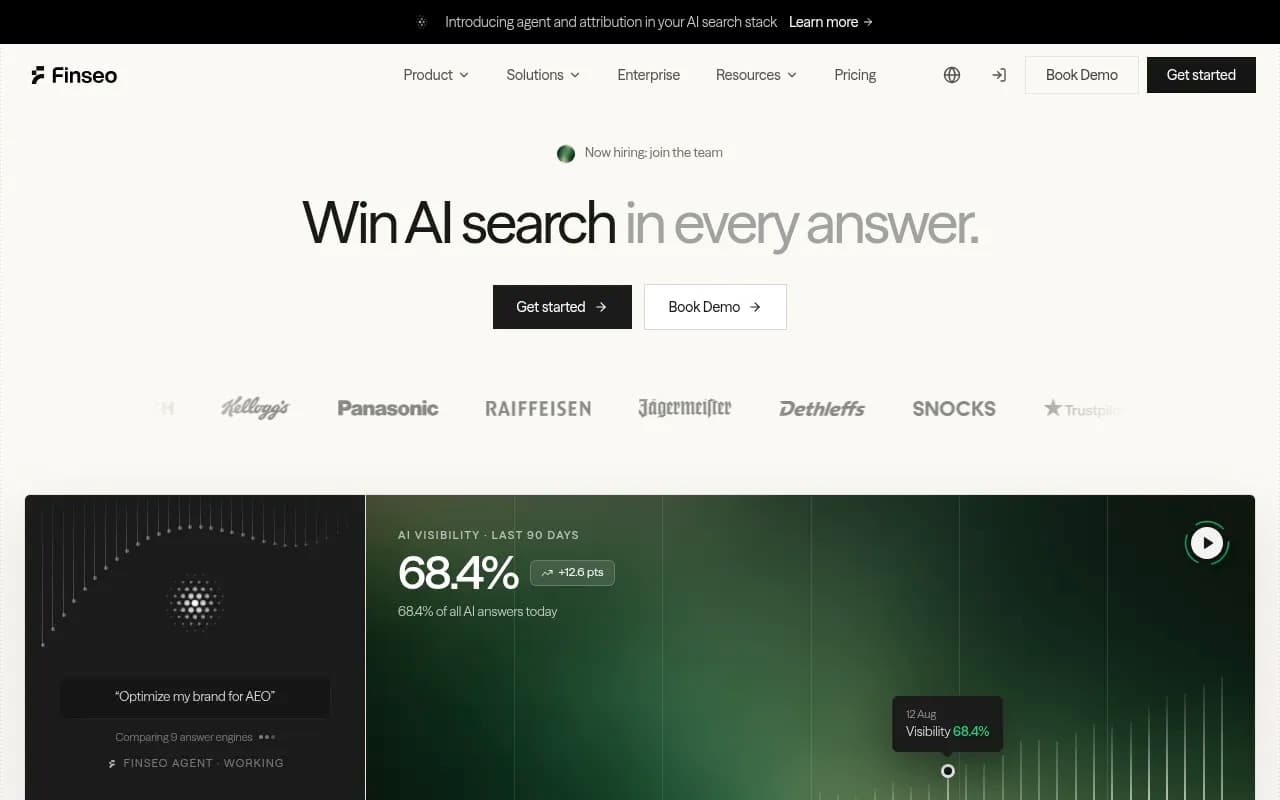
The core product tracks brand mentions, citations, and share of voice across ChatGPT, Perplexity, Gemini, Claude, Google AI, and DeepSeek. On top of that sits an AI SEO audit that spits out a step-by-step action plan, a technical crawl looking for AI-specific issues, AEO prompt and query identification, competitor tracking, and a structured data generator that auto-creates AI-friendly schema. None of this is revolutionary on its own, most of the category offers some version of it, but Finseo packages it at a price point aimed at smaller teams rather than enterprise budgets.
The Google AI Mode angle
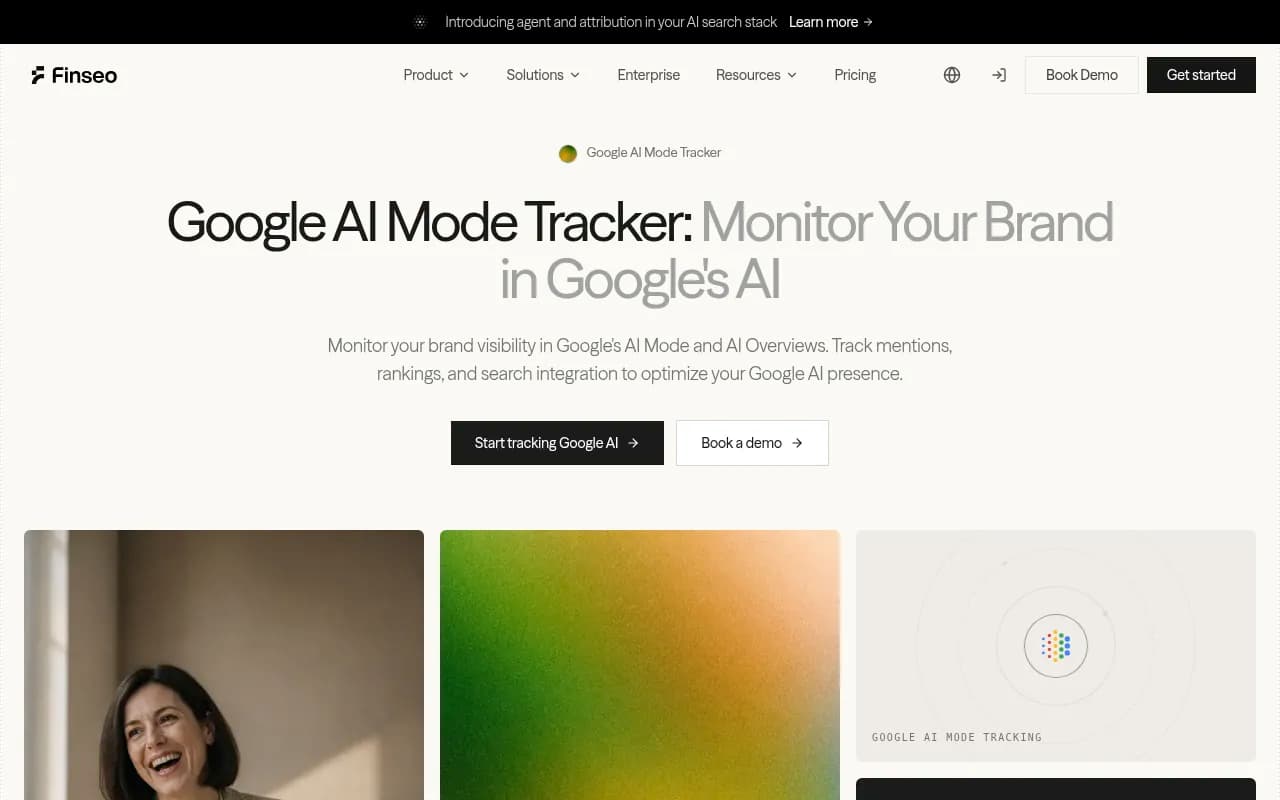
This is where Finseo tries to differentiate. Its dedicated Google AI Mode tracker monitors daily brand mentions across regions and models, shows which linked URLs show up per query, tracks share of voice against competitors, and runs sentiment analysis on the recurring phrases AI uses to describe your brand. It also maps query fan-out coverage, meaning it shows which of AI Mode's sub-queries actually surface your brand and which ones don't.
This matters more than it might look like at first glance. Promptwatch's June 2026 data on Google AI Mode citations found that google.com alone captured 7.31% of all AI Mode citations that month, more than YouTube and Reddit combined, and that Google-owned properties overall take more than 10% of the citation mix once you count YouTube. That share climbed from 4.24% in May, a 72% jump in a single month. No independent website in the June top-17 cleared even 1% share. In plain terms: Google AI Mode leans on itself, hard, pulling from Maps listings, Business Profiles, and its own support content before reaching into the open web. For a local business, that means your Google Business Profile and Maps presence are doing more work than your website copy, and a tool that tracks AI Mode specifically, rather than treating it as an afterthought next to ChatGPT, has a legitimate reason to exist.
Worth noting: that self-preference is unique to AI Mode. In ChatGPT's June 2026 citation data, Reddit leads the pack and google.com barely registers. So a tool optimized around AI Mode behavior won't automatically translate its logic to ChatGPT, and vice versa. If a small business cares about both engines, it needs a tool (or a strategy) that treats them as genuinely different animals.
Pricing: the part that's actually confusing
Here's where I'd slow down before buying. Finseo's pricing has changed three separate times within about a year. It reportedly started around $19/$49 tiers, moved to Creator €99 / Business €189 / Enterprise €499 in summer 2026, and now sits at:
| Plan | Price/mo | Tracked prompts | Models | Notable inclusions |
|---|---|---|---|---|
| Starter | €84 (€70 annual) | 50 | 3 of choice | 1 project, MCP access, 300 agent credits, 7-day trial |
| Business | €210 (€175 annual) | 150 | 3 of choice | Attribution, Tasks, bot traffic analytics, Agent |
| Growth | €479 (€399 annual) | 350 | 3 of choice | 5 projects, API access, priority support |
| Enterprise | Custom | Unlimited projects | Up to 11 models | SSO/SAML, dedicated onboarding, managed service |
If you're reading an older review that quotes different numbers, that's not the reviewer's fault, it's a moving target. For a small business trying to budget a year out, that instability is worth factoring in, not as a dealbreaker, but as a reason to check current pricing right before you sign up rather than trusting a screenshot from six months ago.
How Finseo stacks up against the alternatives
Small businesses shopping in this category tend to compare Finseo against a handful of names. Here's a rough sense of where things land on cost and scope:
| Tool | Entry price | Prompts at entry | Notable limitation |
|---|---|---|---|
| Finseo Starter | €84/mo | 50 | AI Mode & Gemini tracking included, API gated to Growth+ |
| Otterly.ai Lite | $29/mo | 15 | AI Mode and Gemini are paid add-ons ($9-$59/mo extra) |
| Peec AI Starter | €89/mo | Varies | No public API below €499/mo Enterprise, no SSO |
| LLM Pulse Starter | €49/mo | 50 | Cheaper per-prompt, smaller feature set overall |
| Rankability Starter | $99/mo | Varies | Unlimited seats + API on every tier, unlike Finseo |
[tool:finseo] isn't in our catalog by that slug, but you can see where it fits against tools like [tool:otterly-ai] and [tool:llm-pulse] for budget-conscious tracking, or [tool:peec-ai] for a mid-market option with fast onboarding.
Otterly's headline price looks cheaper, but once you add Google AI Mode and Claude tracking as paid add-ons, a comparable "Standard" setup runs closer to $357/mo, more expensive than Finseo's Business tier for similar coverage. LLM Pulse undercuts almost everyone on a per-prompt basis if you're purely optimizing for cost. Rankability includes API access and unlimited seats on every plan, something Finseo only unlocks at Growth (€479/mo) and above, which stings if you're a two-person marketing team that wants to pull data programmatically early on.
Where a focused tracker like Finseo falls short
I want to be straight about this: a visibility dashboard, no matter how good, doesn't write content, fix your schema, or publish anything for you. Finseo's structured data generator and AI SEO audit nudge you toward DIY fixes, but someone on your team (or an agency) still has to execute. A comparison of competing platforms notes that 40-60% of cited domains change monthly across answer engines even for the exact same question, which means a one-time snapshot, free or paid, tells you almost nothing without ongoing tracking and someone acting on what it finds.
That's the gap between monitoring tools and what's sometimes called agentic optimization. Promptwatch takes a different approach: instead of stopping at "here's your visibility score," its Content Agents and Unified Actions actually plan, write, and publish GEO-optimized content to your CMS, and its crawler logs show exactly when AI bots like ChatGPTBot or PerplexityBot visit your pages and whether they hit errors, explaining the why behind a visibility number rather than just reporting it. It also tracks Reddit and YouTube citations and ChatGPT Shopping placements, channels most focused trackers, including Finseo, don't cover.

For a small business with no in-house content team, that execution layer can matter more than another dashboard. But it's also a bigger commitment (Promptwatch's Essential plan starts at $95/mo) than Finseo's entry tier, so the right call depends on whether you have someone who can actually act on what a monitoring tool tells you.
The G2 rating caveat worth knowing
Finseo shows a 5/5 average on G2, which looks great until you notice it's based on exactly 3 reviews. That's not enough data to draw conclusions from, good or bad. The reviewers were reportedly small-business users (under 50 employees) who specifically praised the AI visibility search feature for making their site more discoverable on ChatGPT. That's a useful anecdote, not proof of broad reliability. If you're evaluating Finseo, treat the rating as a mild positive signal, not a verdict.
So, does a focused AI Mode tracker make sense?
For a specific kind of small business, yes, with conditions attached. If you're a local service business (dentist, dealership, home services, multi-location retailer) where Google AI Mode and your Google Business Profile carry real weight, Finseo's AI Mode-specific features, query fan-out mapping, sentiment tracking, multi-market comparisons, address a real and narrow need that broader platforms sometimes treat as an afterthought.
But go in with your eyes open about three things. First, the pricing has moved three times in a year, so check the current numbers rather than trusting an old review. Second, the G2 rating is based on a sample too small to lean on. Third, and most important, a tracker only tells you where you stand; someone still has to fix the content, schema, and technical issues it surfaces. If that execution capacity doesn't exist on your team, it might be worth looking at a platform built around closing that loop automatically, or budgeting separately for the work Finseo's audit will inevitably generate.
For local-specific listing management on top of AI visibility, tools like [tool:synup] or [tool:uberall] handle the Google Business Profile and multi-location side that Finseo's data shows is increasingly the real battleground in AI Mode. And if you want to browse the wider field of AI visibility and GEO platforms before committing to any one tool, the directory at bestgeosoftware.com is a reasonable place to compare options side by side.