Key takeaways
- Brandlight.ai and Evertune are both enterprise-tier AI visibility platforms with pricing to match -- expect $4K to $15K/month at the high end for Brandlight, with Evertune similarly positioned for large-brand contracts.
- Brandlight leans into brand narrative, sentiment, and multi-brand command centers; Evertune focuses more on influencing AI model outputs and tracking how brand positioning holds up across base models.
- Neither platform publishes self-serve pricing or offers a quick trial -- both require sales conversations, which slows evaluation.
- For teams that want monitoring plus content optimization and a clearer path to actually improving AI visibility, there are more actionable alternatives worth considering.
Two platforms keep coming up when enterprise marketing teams start seriously evaluating AI visibility: Brandlight.ai and Evertune. Both are real products with real customers (Fortune 500 logos, serious funding), and both cost serious money. The question isn't whether they're legitimate -- it's whether the price is justified for what you actually get, and which one fits how your team works.
This guide breaks down both platforms honestly, compares them on the dimensions that matter, and flags where each one falls short.
What Brandlight.ai actually is
Brandlight positions itself as the enterprise platform for AI brand visibility. It tracks how your brand appears across ChatGPT, Gemini, Perplexity, Copilot, and Grok, then layers in sentiment analysis, citation tracking, and a technical health audit of your content.
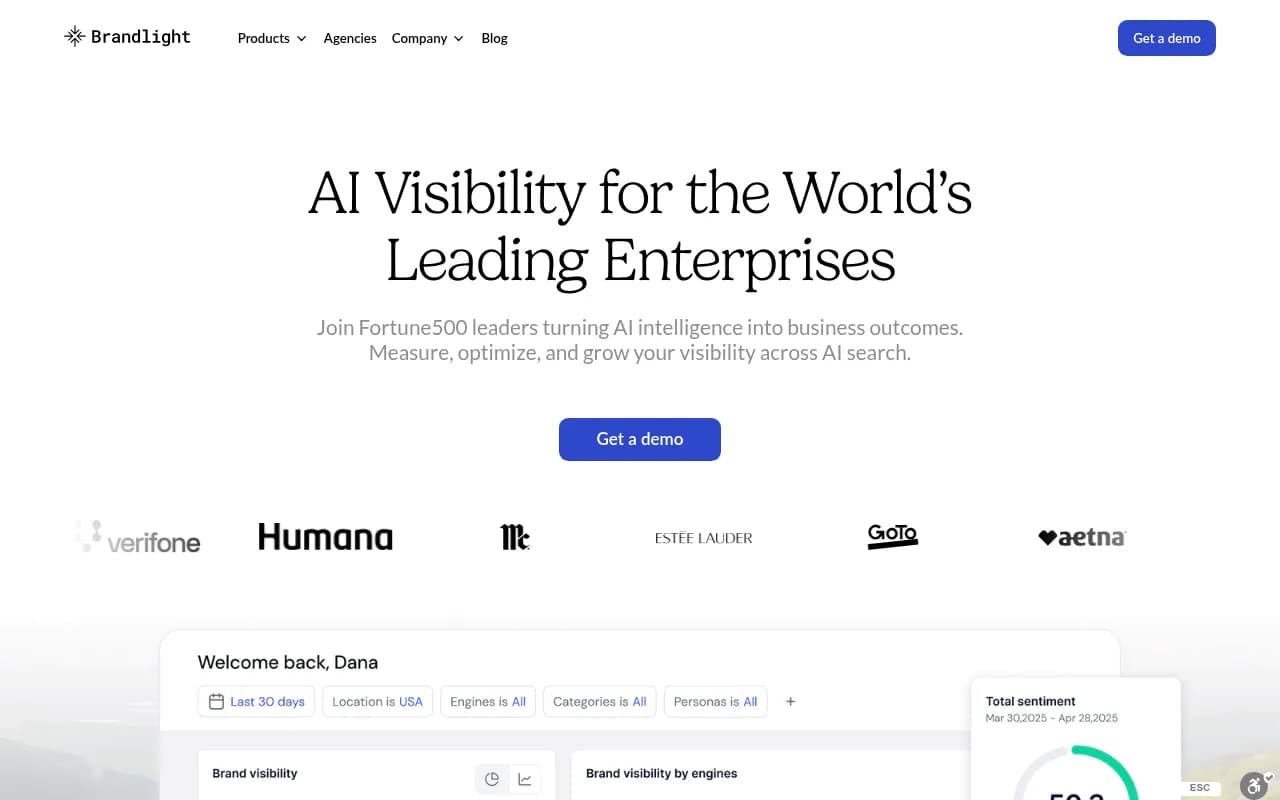
The customer list is genuinely impressive: Volkswagen, LG, TD Bank, Humana, Estée Lauder, and others show up on the homepage. Brandlight raised a $30M Series A, so this isn't a side project.
What makes Brandlight distinctive is its focus on brand narrative. It doesn't just tell you whether you're being mentioned -- it analyzes how you're being described, what sentiment surrounds those mentions, and how your brand story compares to competitors in AI-generated answers. For a global CMO managing brand perception across markets, that's genuinely useful.
The multi-brand command center is another standout feature for large organizations managing multiple product lines or regional brands. You get a unified view across all of them rather than logging into separate dashboards.
Where Brandlight gets complicated
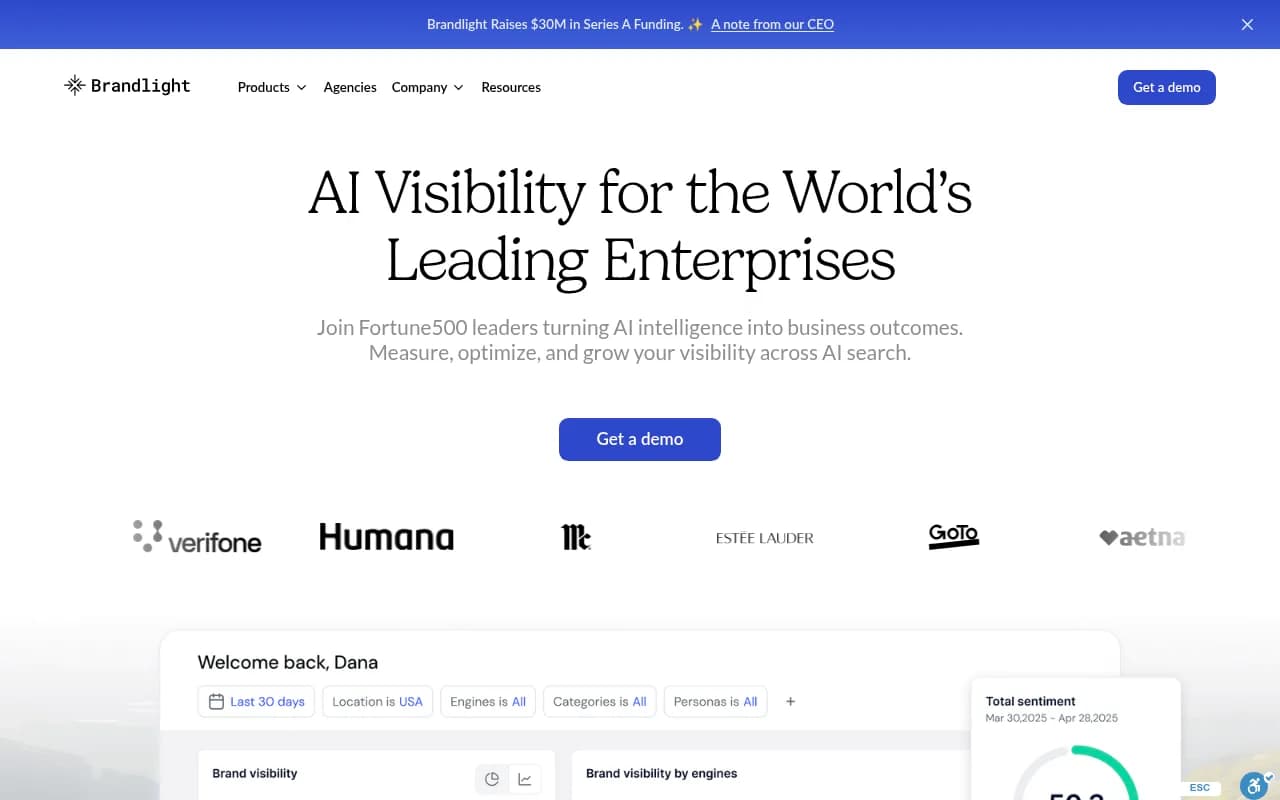
The pricing model is the main friction point. Brandlight doesn't publish self-serve pricing. Entry-level access reportedly starts around $199/month, but enterprise contracts run $4K to $15K/month. To get a real number, you need a sales call -- and then another call, and probably a procurement process.
That's fine if you're a Fortune 500 with a dedicated AI strategy team and a budget already allocated. It's a real problem if you're a mid-market brand trying to evaluate whether AI visibility tooling is worth the investment before committing to a contract.
The other concern: Brandlight is primarily a monitoring and measurement platform. It shows you where you stand and how your brand is perceived. What it doesn't do particularly well is tell you what to change or help you change it. You get the data; the strategy is on you.
What Evertune actually is
Evertune takes a different angle. Where Brandlight focuses on brand narrative and sentiment, Evertune focuses on influencing AI outputs -- specifically, how to get AI models to recommend your brand more consistently and favorably.
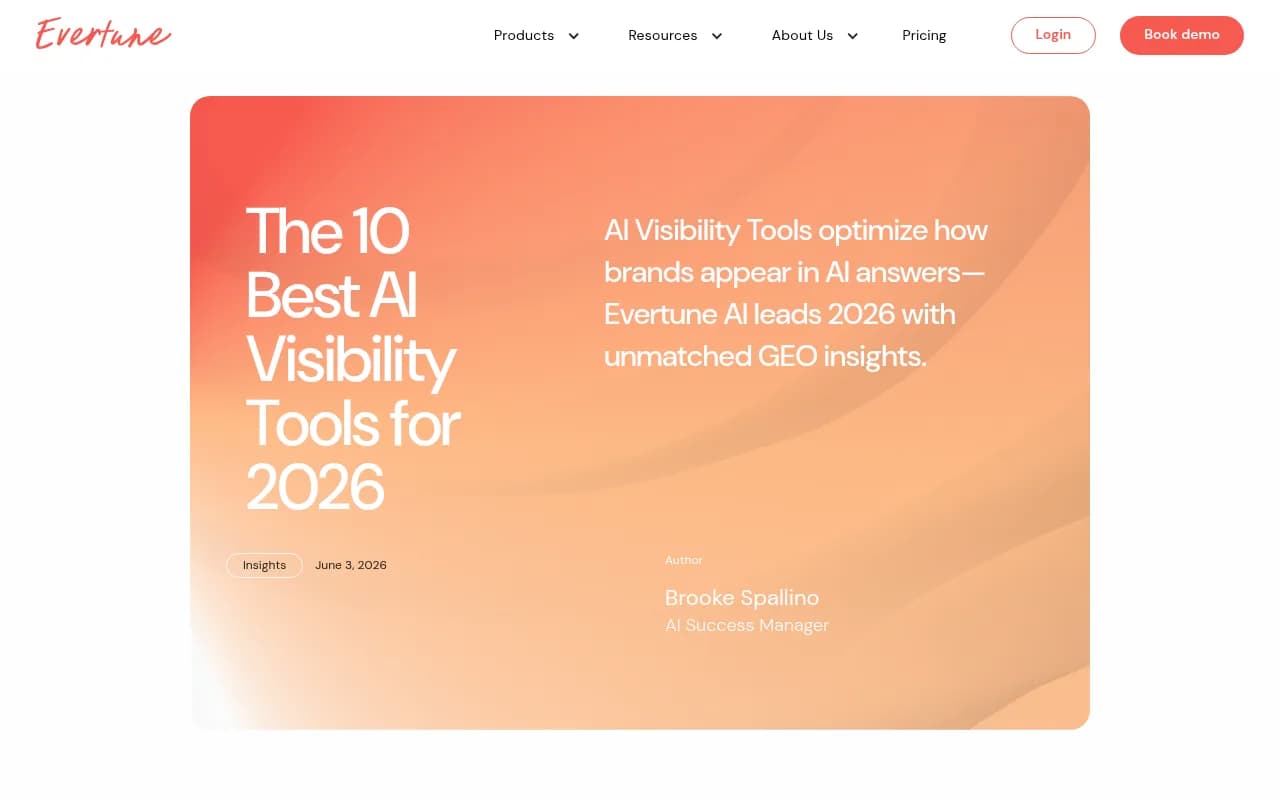
The platform claims to be the only tool with base model access, which matters because it lets Evertune test how AI models respond to your brand at the model level, not just through user-facing interfaces. That's a meaningful technical distinction -- user-facing answers can differ from API outputs, and knowing both gives you a more complete picture.
Evertune is particularly well-suited for e-commerce and product-focused brands. If you're a retailer and you want to understand why ChatGPT recommends a competitor's product over yours, Evertune is designed to answer that question and help you address it.
Where Evertune gets complicated
Similar to Brandlight, Evertune is enterprise-only with opaque pricing and a sales-led buying process. There's no quick trial, no self-serve tier, and no published pricing page.
The platform's strength -- deep model-level analysis -- is also a complexity risk. The insights can be sophisticated to the point where you need a dedicated analyst to act on them. For teams without that capacity, you end up with a very expensive dashboard you're not fully using.
Head-to-head comparison
| Feature | Brandlight.ai | Evertune |
|---|---|---|
| Primary focus | Brand narrative & sentiment | AI model influence & product visibility |
| AI models tracked | ChatGPT, Gemini, Perplexity, Copilot, Grok | Multiple LLMs + base model access |
| Sentiment analysis | Yes, detailed | Limited |
| Multi-brand management | Yes (command center) | Limited |
| E-commerce / product tracking | Basic | Strong |
| Content optimization | Minimal | Moderate |
| Content generation | No | No |
| Self-serve pricing | No | No |
| Entry price (published) | ~$199/mo (enterprise $4K-$15K/mo) | Not published |
| Sales call required | Yes | Yes |
| Best for | Global CMOs, brand teams | Retailers, product-focused brands |
The honest summary: both platforms are monitoring tools. They're very good monitoring tools, but monitoring is where they stop. Neither one helps you create content that fills the gaps they identify, and neither gives you a clear workflow for turning insights into improved AI visibility.
The monitoring-only problem
This is worth dwelling on because it affects both platforms. AI visibility monitoring tells you where you're invisible. That's valuable. But knowing you're invisible doesn't make you visible.
The platforms that are actually moving the needle for brands in 2026 are the ones that close the loop -- they find the gaps, help you create content to fill them, and then track whether that content is getting cited. Brandlight and Evertune do the first part. The second and third parts are largely left to you.
If your team has dedicated AI strategists, content writers, and the bandwidth to act on monitoring data, that's workable. If you're a lean marketing team, you'll end up paying enterprise prices for data you can't fully act on.
For teams that want the full loop -- gap analysis, content generation, and citation tracking -- Promptwatch is worth a look. It's built specifically around that cycle: find what prompts your competitors are visible for that you're not, generate content engineered to fill those gaps, and track which pages are getting cited by which AI models.

Who should actually choose Brandlight
Brandlight makes sense if:
- You're at a Fortune 500 with a dedicated AI brand team and budget already approved for enterprise tooling.
- Brand narrative and sentiment are your primary concerns -- you want to know not just whether you're mentioned, but how you're described.
- You're managing multiple brands or regional variations and need a unified command center.
- You have internal strategists who can take monitoring data and build an action plan from it.
If you're evaluating Brandlight and you're not in that situation, the pricing and sales process will frustrate you before you even get to the product.
Who should actually choose Evertune
Evertune makes sense if:
- You're a retailer or product-focused brand trying to understand and influence AI product recommendations.
- You want model-level access to test how AI systems respond to your brand at a technical level.
- You have a team that can work with sophisticated data and translate it into content or PR strategy.
- You're specifically competing in categories where ChatGPT Shopping or similar AI product surfaces are driving purchase decisions.
Alternatives worth considering
Neither Brandlight nor Evertune is the right fit for every enterprise team. A few other platforms are worth evaluating depending on your specific needs.
Profound is a strong enterprise option with a reputation for depth in prompt tracking and competitive analysis. It's in a similar price tier but has a different approach to data collection.
Scrunch AI offers enterprise-grade AI visibility with a focus on optimization recommendations, not just monitoring.
Bluefish AI is positioned as an enterprise GEO platform and is worth evaluating if you want a more action-oriented approach than pure monitoring.
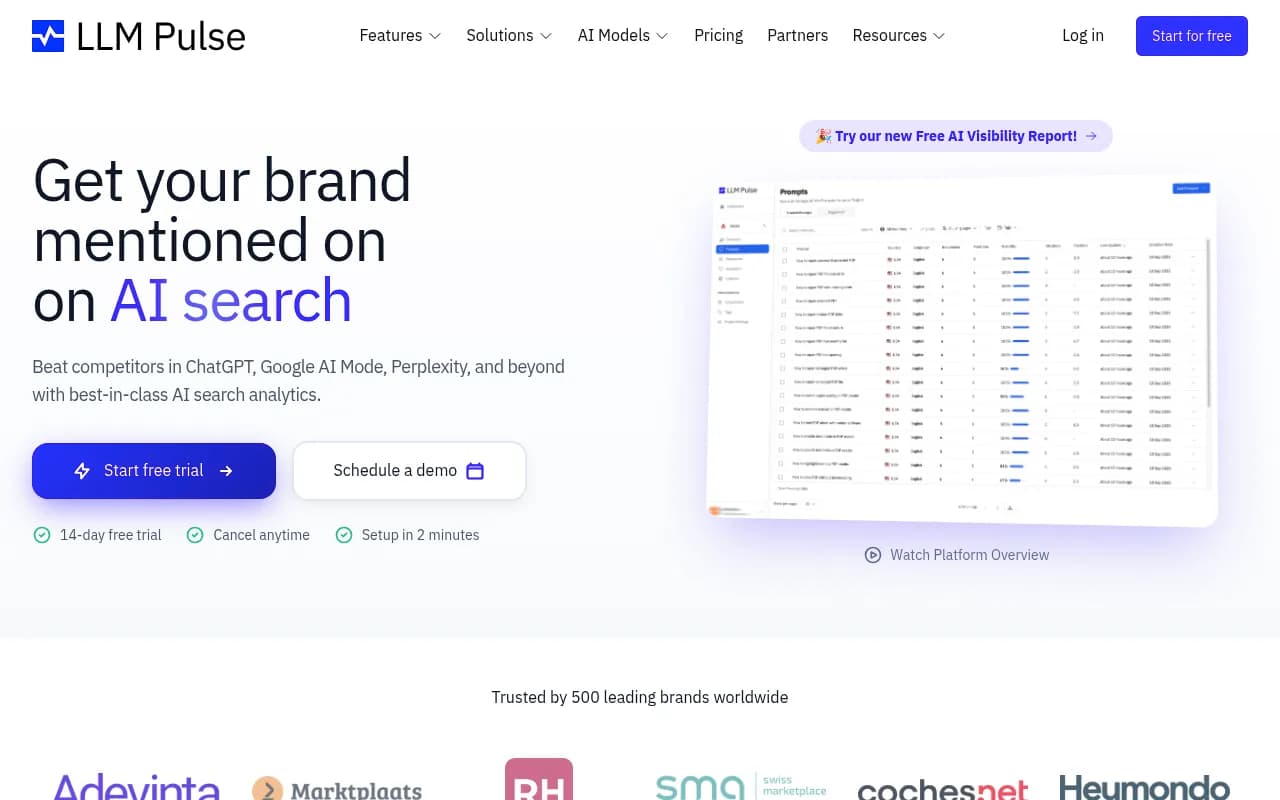
For teams that are mid-market rather than Fortune 500, the enterprise pricing of both Brandlight and Evertune is hard to justify. Platforms like Otterly.AI or LLM Pulse offer meaningful AI visibility tracking at a fraction of the cost.

The pricing reality check
Let's be direct about what enterprise pricing means here. At $4K to $15K/month for Brandlight's enterprise tier, you're looking at $48K to $180K annually. Evertune is in a similar range based on available signals.
That's a real budget commitment. Before signing anything, it's worth asking:
- What specific business outcome are we trying to move? (Not "improve AI visibility" -- something measurable like "increase brand mentions in ChatGPT responses for [category] by X%".)
- Do we have the internal capacity to act on what these platforms surface?
- Are we paying for monitoring we could get elsewhere at lower cost, or for something genuinely differentiated?
The differentiated value in Brandlight is the sentiment depth and multi-brand management. The differentiated value in Evertune is the base model access and product recommendation tracking. If those specific capabilities match your specific problem, the price may be justified. If you're buying "AI visibility" as a category without a clear use case, you're likely overpaying.
A note on the broader market
The AI visibility space is moving fast. A comparison of 12 GEO platforms published earlier this year found that most tools -- including several enterprise-priced ones -- are monitoring-only dashboards that show you data without helping you act on it. The platforms pulling ahead are the ones building optimization workflows on top of monitoring infrastructure.
Both Brandlight and Evertune are strong at the monitoring layer. The question for 2026 is whether monitoring alone is enough, or whether you need a platform that also helps you close the gap between "we know we're invisible" and "we're now getting cited."
For most enterprise teams, the answer is the latter. That's what should drive your evaluation -- not just which platform has the most impressive customer logos, but which one actually helps your team improve the metric you're trying to move.
Bottom line
Brandlight.ai is the better choice if brand sentiment, narrative control, and multi-brand management are your priorities. Evertune is the better choice if you're product-focused and want to understand and influence AI model recommendations at a technical level.
Both require enterprise budgets and sales conversations. Neither will help you create the content needed to improve your visibility -- that work stays on your team.
If you want a platform that goes beyond monitoring to actually help you optimize, the market has moved. Tools like Promptwatch are built around the full cycle: find gaps, generate content, track citations. That's a different product category, and for many teams, it's a more useful one.
The right call depends on what problem you're actually trying to solve. Start there, not with the logos on the homepage.