Key takeaways
- Ahrefs Brand Radar is a monitoring add-on for existing Ahrefs enterprise users, priced at $199/month per AI index or $699/month for the full 6-platform bundle -- on top of your existing Ahrefs subscription.
- Brandlight.ai is a standalone AI visibility monitoring tool aimed at smaller teams who don't need the full Ahrefs ecosystem.
- Both tools are primarily monitoring dashboards. Neither helps you act on what you find -- no content generation, no gap analysis, no optimization workflow.
- If you're already paying for Ahrefs and want directional AI visibility data, Brand Radar is a reasonable add-on. If you're not, the cost is hard to justify.
- For teams that want to actually improve their AI visibility (not just measure it), purpose-built GEO platforms with content optimization capabilities are worth evaluating alongside both tools.
The AI search visibility category is getting crowded fast. Every week there's a new tool promising to show you how ChatGPT, Perplexity, and Google AI Overviews talk about your brand. Brandlight.ai and Ahrefs Brand Radar are two of the more frequently compared options -- one is a standalone newcomer, the other is a bolt-on from one of SEO's most established names.
The question isn't just which one tracks better. It's whether either of them is actually worth paying for, given what they can and can't do.
Let me break it down.
What Ahrefs Brand Radar actually is
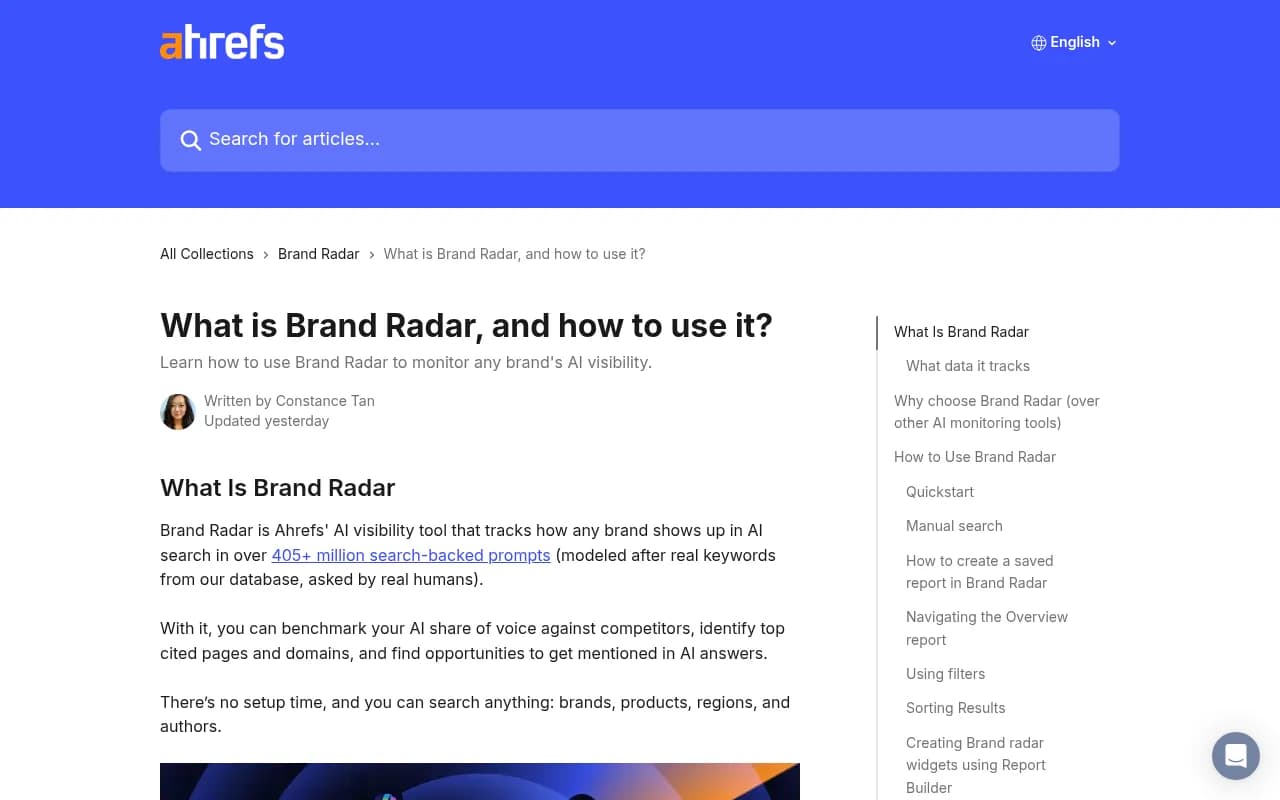
Brand Radar is Ahrefs' AI visibility product, launched as an add-on to their existing SEO platform. According to Ahrefs' own documentation, it tracks brand mentions across 405+ million search-backed prompts and monitors six AI platforms: Google AI Overviews, Google AI Mode, ChatGPT, Perplexity, Claude, and a couple of others.
The scale is genuinely impressive. Ahrefs built Brand Radar on top of its existing keyword and search data infrastructure, which means the prompt database is enormous compared to most standalone GEO tools. You can search for any brand (not just your own), filter by AI platform, and see where mentions are appearing.
What you get:
- Brand mention tracking across 6 AI platforms
- A large prompt database (239M+ prompts according to some reviews, 405M+ per Ahrefs' own docs -- the discrepancy likely reflects different counting methodologies)
- Competitive brand comparisons
- Looker Studio connector and API/MCP access
- Integration with the broader Ahrefs SEO data
What you don't get:
- Prompt volume or difficulty scoring
- Content gap analysis
- AI crawler logs (which pages are being read by AI bots)
- Content generation or optimization tools
- Traffic attribution from AI search
- Reddit or YouTube citation tracking
- ChatGPT Shopping monitoring
The pricing is the thing that stops most people. Brand Radar is an add-on, not a standalone product. You need an existing Ahrefs subscription (starting at $129/month), then pay an additional $199/month per AI platform index, or $699/month for all six platforms. That's potentially $800+ per month before you've done anything with the data.
What Brandlight.ai actually is
Brandlight.ai is a purpose-built AI visibility monitoring tool. It's not tied to an existing SEO platform, which makes it more accessible for teams who don't use Ahrefs -- but it also means it lacks the deep search data context that makes Brand Radar interesting.
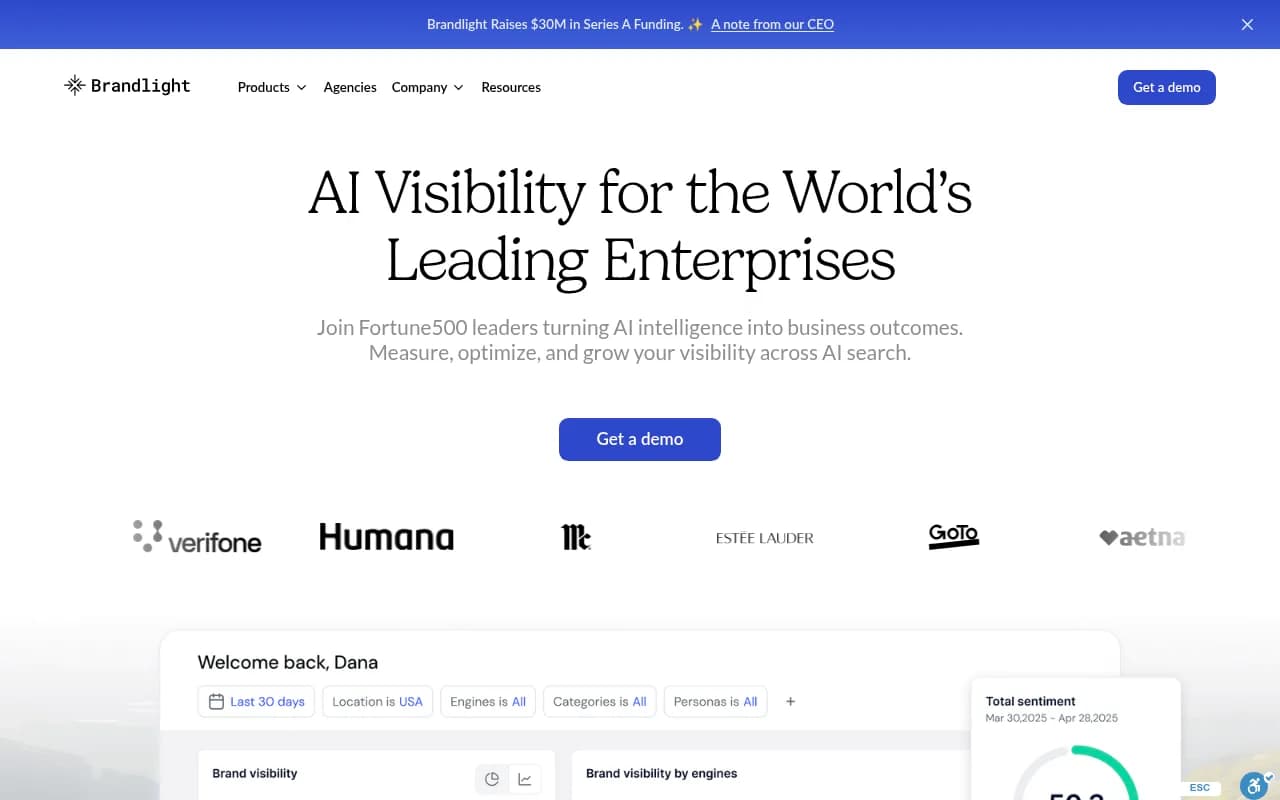
Brandlight focuses on tracking brand mentions across AI search engines, showing you sentiment, share of voice against competitors, and how your brand appears in AI-generated responses. It's designed to be simpler and more affordable than enterprise-grade tools.
What you typically get with Brandlight.ai:
- Brand mention monitoring across major AI platforms
- Competitor comparison and share-of-voice metrics
- Sentiment tracking (positive/neutral/negative mentions)
- Alerts when your brand is mentioned or misrepresented
What's missing:
- Deep prompt database at Ahrefs' scale
- Content gap analysis or optimization recommendations
- AI crawler log access
- Traffic attribution
- Content generation capabilities
- Prompt volume data
Brandlight sits in the "monitoring-only" category. It can tell you what's happening, but it doesn't help you change it.
Head-to-head comparison
| Feature | Brandlight.ai | Ahrefs Brand Radar |
|---|---|---|
| AI platforms monitored | Multiple (ChatGPT, Perplexity, etc.) | 6 (incl. Google AI Overviews, AI Mode) |
| Prompt database size | Smaller | 239M-405M+ prompts |
| Competitor tracking | Yes | Yes |
| Sentiment analysis | Yes | Limited |
| Prompt volume/difficulty | No | No |
| Content gap analysis | No | No |
| AI crawler logs | No | No |
| Content generation | No | No |
| Traffic attribution | No | No |
| Reddit/YouTube tracking | No | No |
| ChatGPT Shopping | No | No |
| Looker Studio integration | Limited | Yes |
| API access | Limited | Yes (MCP + API) |
| Standalone product | Yes | No (requires Ahrefs plan) |
| Starting price | Lower | $199/mo add-on + base plan |
| Best for | Small teams, standalone monitoring | Existing Ahrefs enterprise users |
Where Ahrefs Brand Radar wins
The honest answer is: if you're already an Ahrefs enterprise customer, Brand Radar is probably worth adding. The prompt database is massive, the integration with existing SEO data is genuinely useful for context, and the Looker Studio connector means you can pull it into dashboards you're already using.
The scale also matters for competitive research. Being able to search any brand (not just your own) across hundreds of millions of prompts gives you a research capability that most standalone tools can't match.
The API and MCP access is another real advantage for technical teams who want to build custom workflows on top of the data.
Where it falls down: the fixed prompt approach. Brand Radar uses a pre-built prompt database rather than letting you define the specific questions your customers are actually asking. That's a meaningful limitation if you're in a niche industry or want to track very specific use cases.
Where Brandlight.ai wins
Brandlight is simpler and cheaper. For a small marketing team that just wants to know "are we showing up in AI search, and what are people saying about us?" -- it's a reasonable starting point.
It's also not locked into the Ahrefs ecosystem. If you use a different SEO tool (or no dedicated SEO tool at all), Brandlight gives you AI visibility monitoring without forcing you to pay for a platform you don't need.
The sentiment tracking is also worth noting. Understanding whether AI models are saying positive or negative things about your brand is genuinely useful for PR and brand teams, and Brandlight tends to surface this more clearly than Brand Radar.
The limitation both tools share
Here's the thing neither tool's marketing will tell you upfront: monitoring is only half the job.
Knowing that your brand appears in 12% of relevant AI responses, while your competitor appears in 34%, is useful information. But what do you do with it? Both Brandlight.ai and Ahrefs Brand Radar show you the gap. Neither helps you close it.
There's no content gap analysis showing which specific topics or questions you're missing. No content generation tools to create pages that address those gaps. No AI crawler logs to understand why certain pages are being cited and others aren't. No traffic attribution to connect AI visibility to actual revenue.
This is the core limitation of monitoring-only tools in 2026. The category has matured enough that "we show you data" isn't sufficient for teams that need to actually improve their AI search presence.
Teams that are serious about GEO (Generative Engine Optimization) are increasingly looking at platforms that close this loop -- tools that can identify gaps, generate content to fill them, and then track whether that content is actually getting cited. Promptwatch is one example of a platform built around this full cycle: find gaps, create content, track results.

Who should use Ahrefs Brand Radar
- You're already on an Ahrefs enterprise plan and want to add AI visibility data to your existing workflow
- You need a large prompt database for competitive research across many brands
- Your team is comfortable with Ahrefs' interface and reporting tools
- You want API/MCP access to build custom data pipelines
- You can absorb the additional $699/month cost without it being a major budget decision
If you're not already an Ahrefs customer, the math gets difficult fast. You'd be paying $800+ per month for monitoring data alone, with no optimization capabilities included.
Who should use Brandlight.ai
- You're a small-to-mid-size team that wants basic AI visibility monitoring without enterprise pricing
- You don't use Ahrefs and don't want to start just to access Brand Radar
- Sentiment tracking and share-of-voice are your primary use cases
- You're in an early stage of AI search monitoring and want to start simple
Brandlight is a reasonable entry point. Just go in knowing it's a monitoring tool, not an optimization platform.
Other tools worth considering
If you're evaluating this space more broadly, a few other tools are worth looking at depending on your needs:
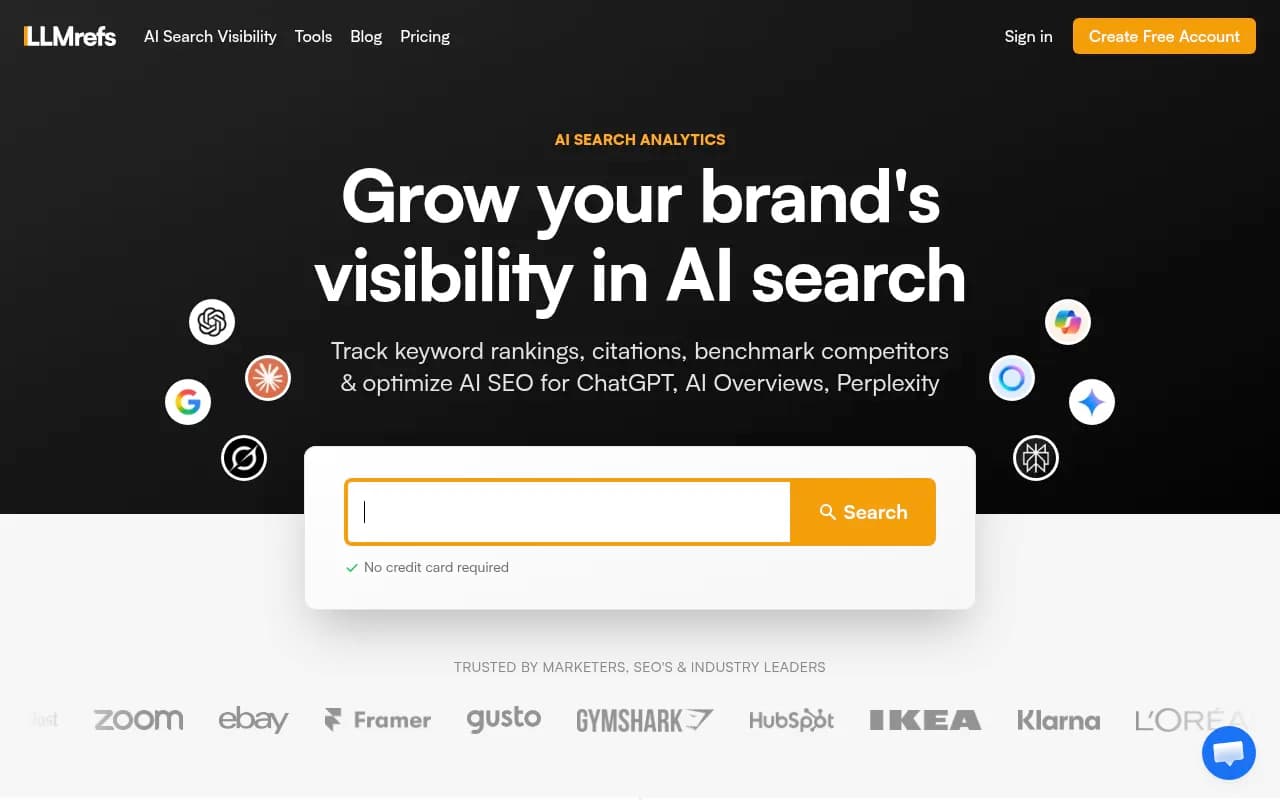
For monitoring-focused teams on a budget:

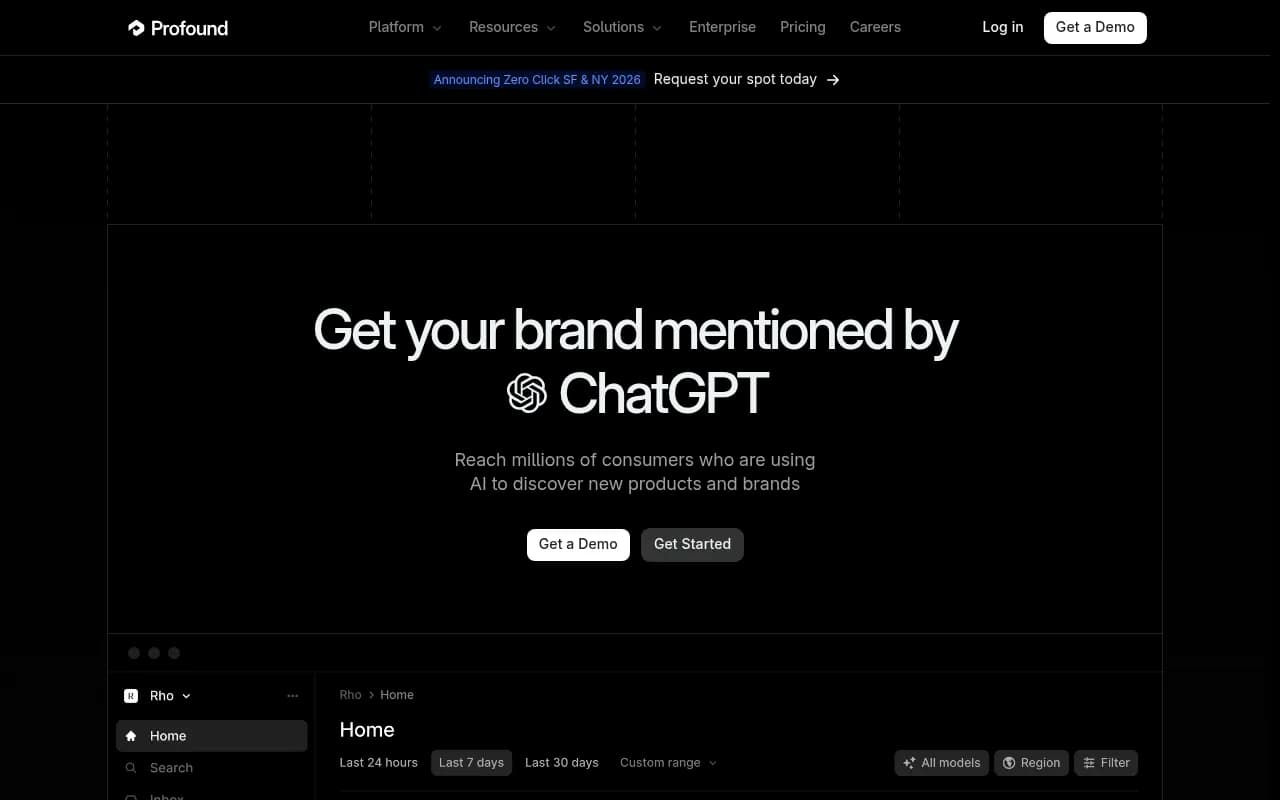
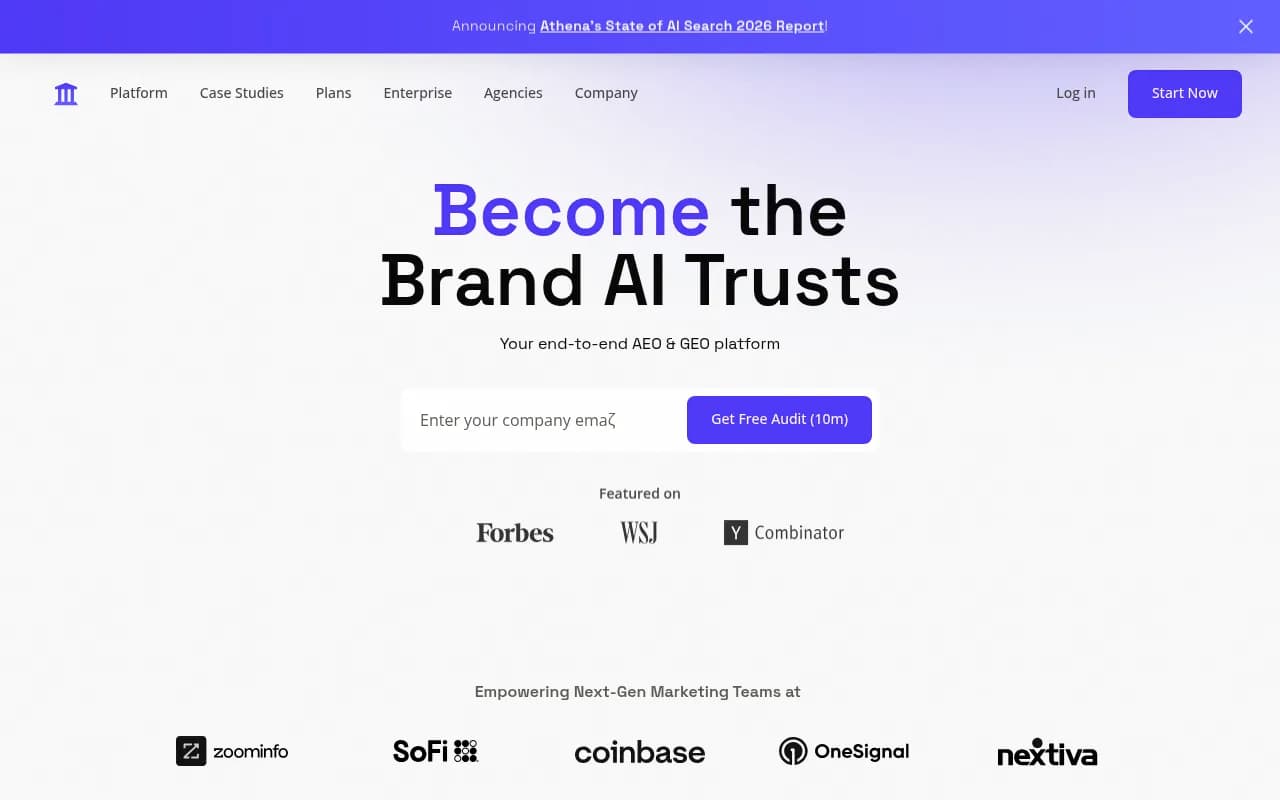
For teams that want more depth on the monitoring side:
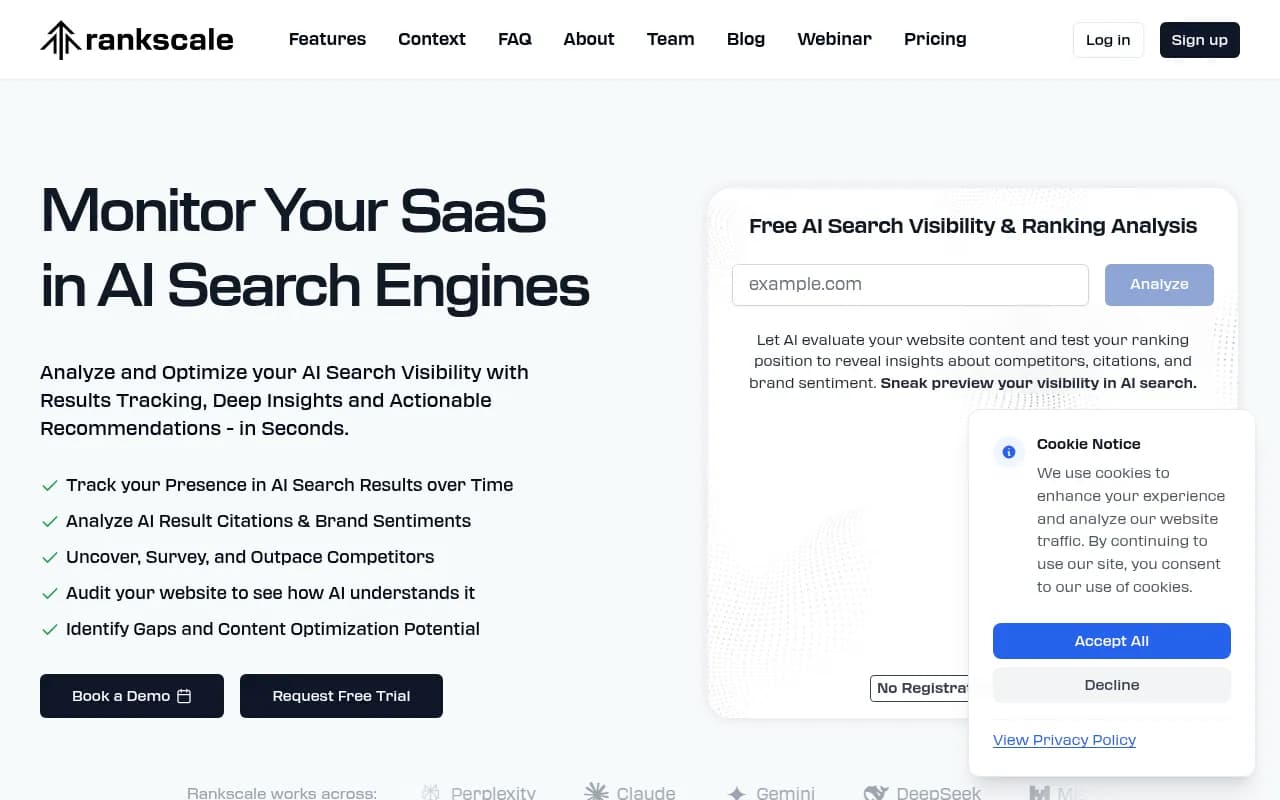
For teams that want to move from monitoring to optimization:
The bottom line
Ahrefs Brand Radar is the better tool on raw data scale and ecosystem integration -- but only if you're already in the Ahrefs world. For everyone else, the cost-to-value ratio is hard to justify when you're getting monitoring without any optimization capability.
Brandlight.ai is simpler and more accessible, but it's operating in the same monitoring-only category. You'll know more about your AI visibility after using it. You won't necessarily know what to do about it.
The more important question to ask in 2026 isn't "which of these two tools tracks better?" It's "do I just want to track, or do I want to actually improve?" If it's the latter, both tools will leave you wanting more.