Key takeaways
- Trakkr.ai is a solid AI visibility tracker, but like most competitors, it's primarily a monitoring dashboard — it shows you data without helping you act on it.
- The most important differentiator in 2026 isn't which models a tool monitors, it's whether the platform helps you close the gaps it finds.
- Platforms like Promptwatch combine monitoring with content gap analysis, AI content generation, and crawler logs — the full loop from "you're invisible here" to "here's the content that fixes it."
- Budget-friendly options like Otterly.AI and Peec AI work well for teams that just need basic tracking across a handful of prompts.
- Enterprise teams with competitive pressure should prioritize platforms with prompt volume data, citation analysis, and content optimization built in.
Trakkr.ai does a decent job of what it promises: tracking how AI models like ChatGPT, Claude, Gemini, and Perplexity mention your brand. The dashboard is clean, the citation tracking is useful, and the competitor monitoring gives you a basic sense of where you stand.
But here's the problem most teams run into after a few weeks: you can see that competitors are getting cited more than you, and you can see which prompts you're invisible for, but the tool doesn't tell you what to do about it. You're left exporting data and figuring out the content strategy yourself.
That gap — between "here's your visibility score" and "here's how to improve it" — is where most AI visibility tools fall short. This guide focuses on alternatives that actually help you close it.
What to look for in a Trakkr.ai alternative
Before getting into specific tools, it's worth being clear about what separates a monitoring tool from an optimization platform. Most tools in this space do the first thing. Very few do the second.
A monitoring tool tells you:
- Which prompts mention your brand
- How often you appear vs. competitors
- Which sources AI models cite
An optimization platform does all of that, plus:
- Identifies specific content gaps (prompts where competitors rank but you don't)
- Tells you what content to create to fill those gaps
- Has built-in tools to actually create that content
- Tracks whether the new content improves your visibility over time
- Shows you how AI crawlers are interacting with your site
If you're evaluating alternatives, the key question is: does this tool help me take action, or does it just give me more data to stare at?
The 8 best Trakkr.ai alternatives in 2026
1. Promptwatch — best for teams that want to actually improve their AI visibility
Promptwatch is the most complete option on this list if your goal is optimization rather than just monitoring. The core difference is what happens after you see your visibility data.

The Answer Gap Analysis feature shows you exactly which prompts competitors are visible for that you're not — and more importantly, what content your site is missing that would make AI models want to cite you. From there, a built-in AI writing agent generates articles, listicles, and comparison pages grounded in real citation data (880M+ citations analyzed) rather than generic SEO logic.
The tracking side is thorough too: 10 AI models covered (ChatGPT, Perplexity, Claude, Gemini, Grok, DeepSeek, Copilot, Meta AI, Google AI Overviews, and Google AI Mode), page-level citation tracking, prompt volume and difficulty scores, and query fan-outs that show how one search prompt branches into sub-queries. There's also an AI Crawler Logs feature that shows you in real time which pages ChatGPT, Claude, and Perplexity are actually reading on your site — something most competitors don't offer at all.
Traffic attribution closes the loop: connect a code snippet, Google Search Console, or server logs to see which AI visibility gains are actually driving revenue.
Pricing starts at $99/month for the Essential plan (1 site, 50 prompts, 5 articles). The Professional plan at $249/month adds crawler logs, 150 prompts, and 15 articles per month.
Best for: Marketing and SEO teams that need to move from "we know we're invisible" to "we're publishing content that fixes it."
2. Otterly.AI — best budget option for basic tracking
Otterly.AI is one of the most affordable ways to get started with AI visibility monitoring. It tracks six platforms (ChatGPT, Google AI Overviews, Perplexity, Google AI Mode, Gemini, and Copilot) and gives you brand mention tracking and share of voice data without a steep learning curve.
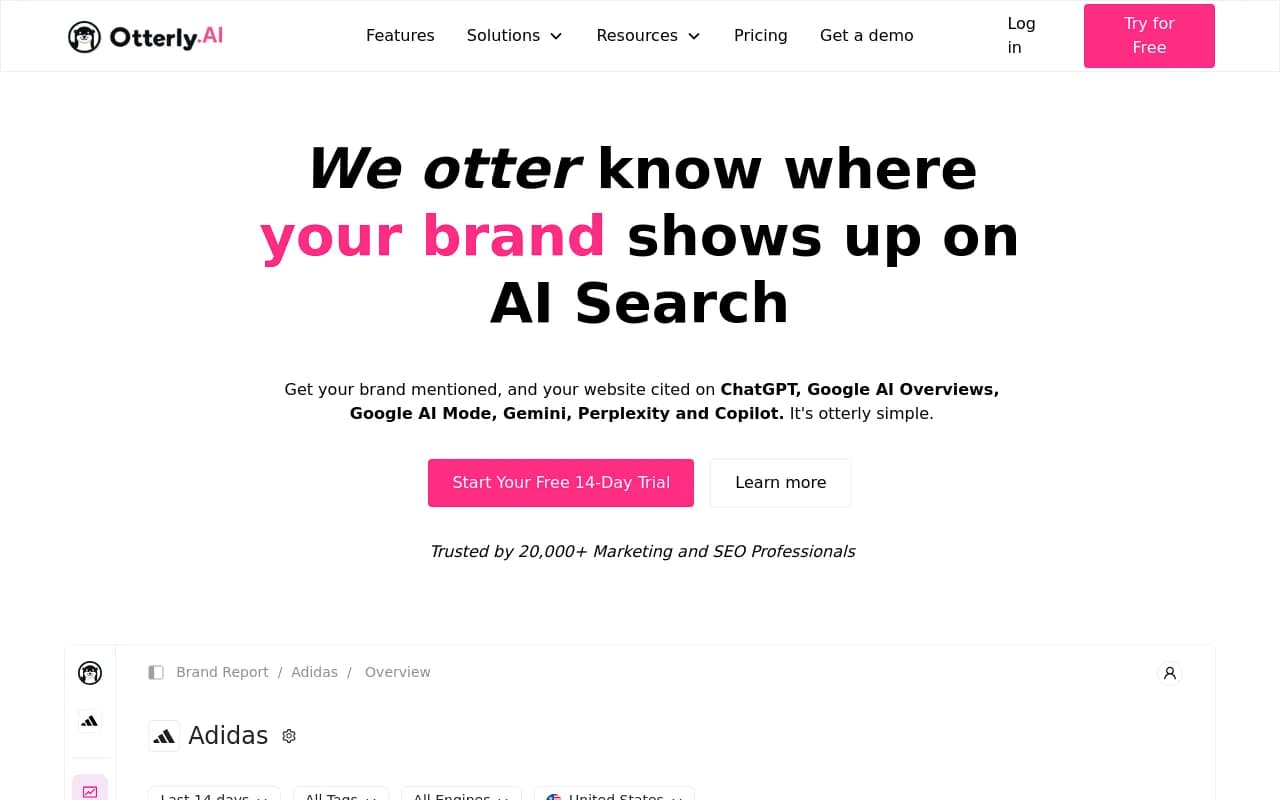
The tradeoff is that it's squarely a monitoring tool. There's no content gap analysis, no AI writing features, and no crawler log access. If you're a small team that just wants to know whether your brand is showing up in AI responses and how that compares to a few competitors, Otterly.AI gets the job done at a price that won't raise eyebrows in a budget review.
Best for: Small businesses and solo marketers who need a simple, affordable starting point.
3. Profound — best for enterprise teams with deep research needs
Profound is a well-regarded platform in the enterprise segment, with strong citation tracking and brand perception analysis across major AI models.
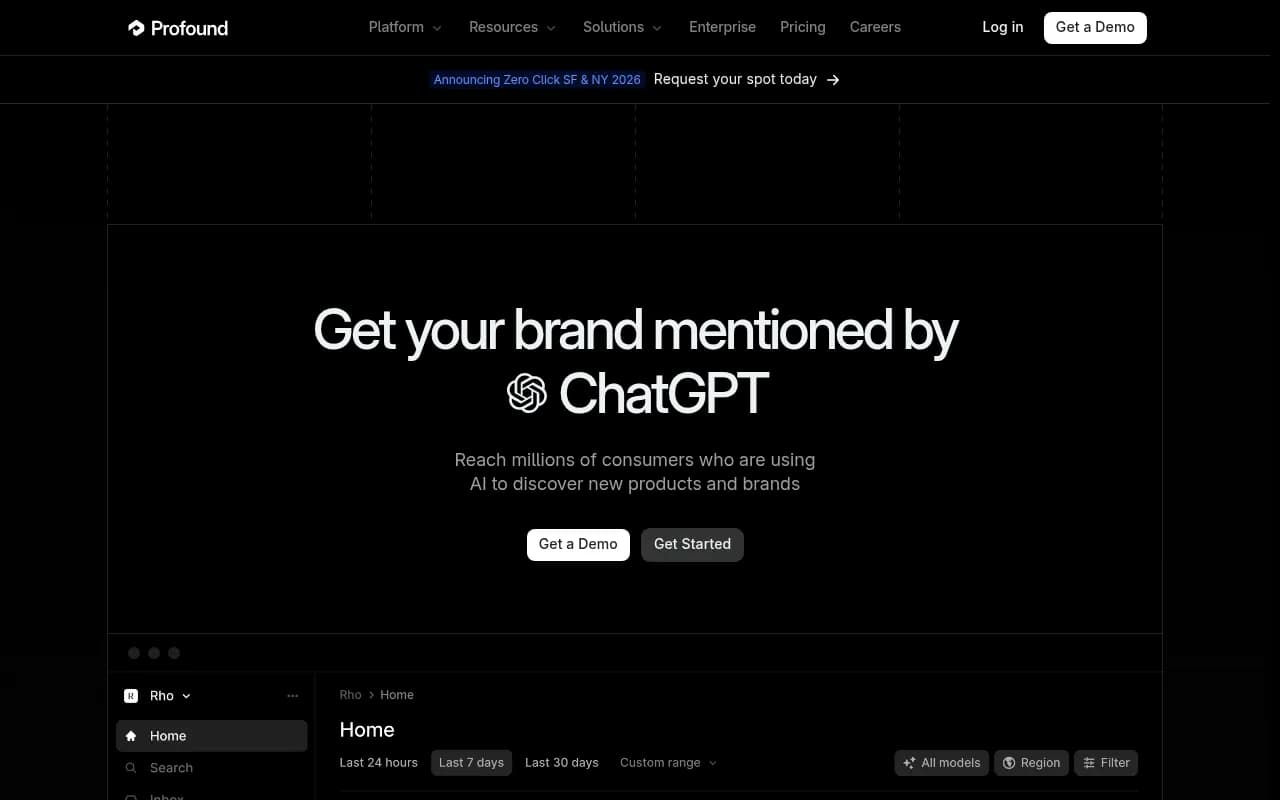
Where Profound stands out is the depth of its research capabilities — it's built for teams that need to understand not just whether they're mentioned, but how they're characterized and why. The prompt coverage is broad and the data quality is solid.
The limitation is similar to Trakkr.ai: Profound is primarily a monitoring and research platform. Content optimization and generation aren't core to the product, so teams still need to take insights elsewhere to act on them. Pricing also sits at the higher end of the market, which makes it harder to justify for mid-market teams.
Best for: Enterprise brands with dedicated research budgets that need deep perception analysis.
4. Peec AI — best for multilingual and multi-region monitoring
Peec AI is a good fit for brands operating across multiple markets. It supports monitoring in multiple languages and regions, which is a real differentiator for international teams who need to understand AI visibility in non-English markets.
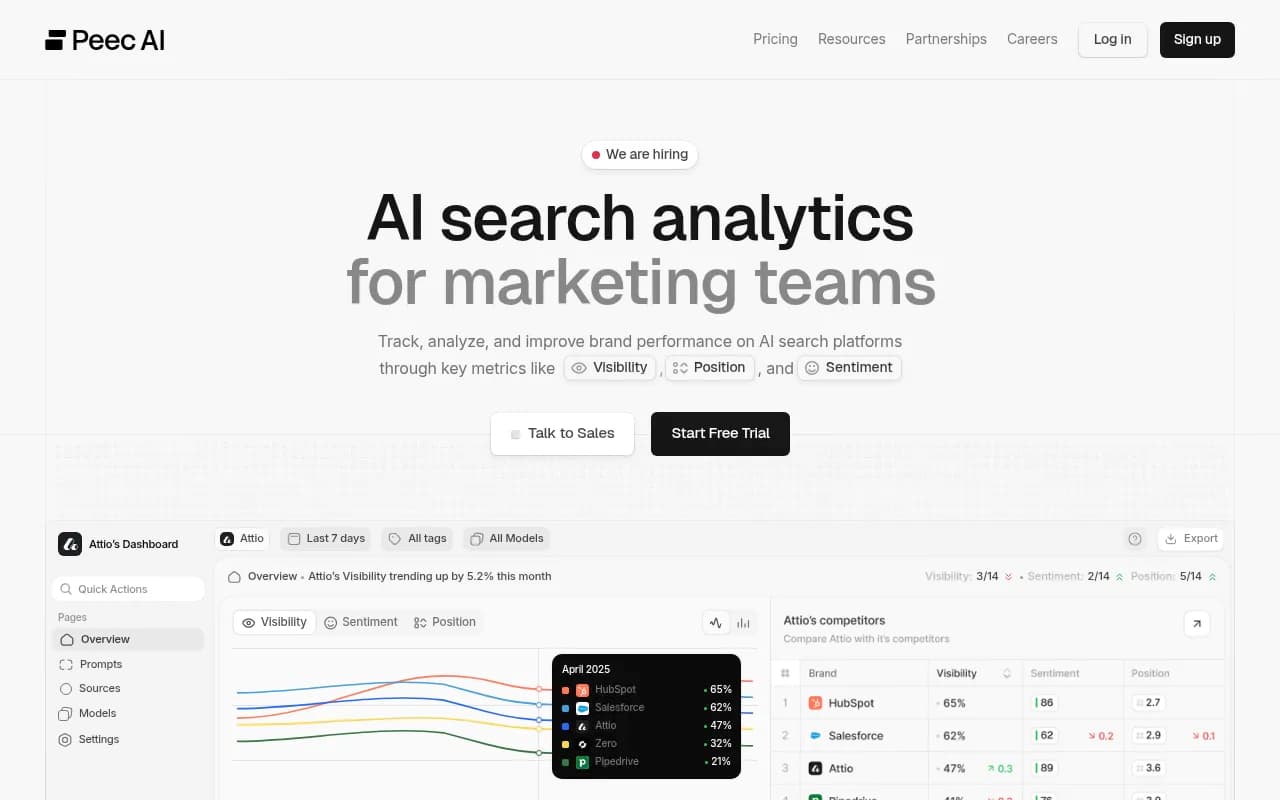
The feature set is monitoring-focused — brand mentions, share of voice, citation tracking — without the content optimization layer. But for teams whose primary challenge is understanding visibility across languages, Peec AI fills a gap that many competitors ignore.
Best for: International brands and agencies managing visibility across multiple languages and regions.
5. Scrunch AI — best for agencies managing multiple clients
Scrunch AI is built with agency workflows in mind. It handles multi-brand monitoring reasonably well and gives account managers a consolidated view across clients without requiring separate logins for each.
The platform covers the major AI models and provides citation and sentiment tracking. Like most tools in this space, it's stronger on monitoring than on optimization — there's no built-in content generation or gap analysis. But for agencies that primarily need to report on AI visibility rather than actively improve it, Scrunch AI is a practical choice.
Best for: Digital agencies that need to monitor and report on AI visibility for multiple clients.
6. Athena HQ — best for tracking brand sentiment across AI models
AthenaHQ focuses on how AI models characterize your brand, not just whether they mention you. The sentiment and perception tracking is more granular than most tools, which matters if your concern is brand safety or reputation management in AI responses.
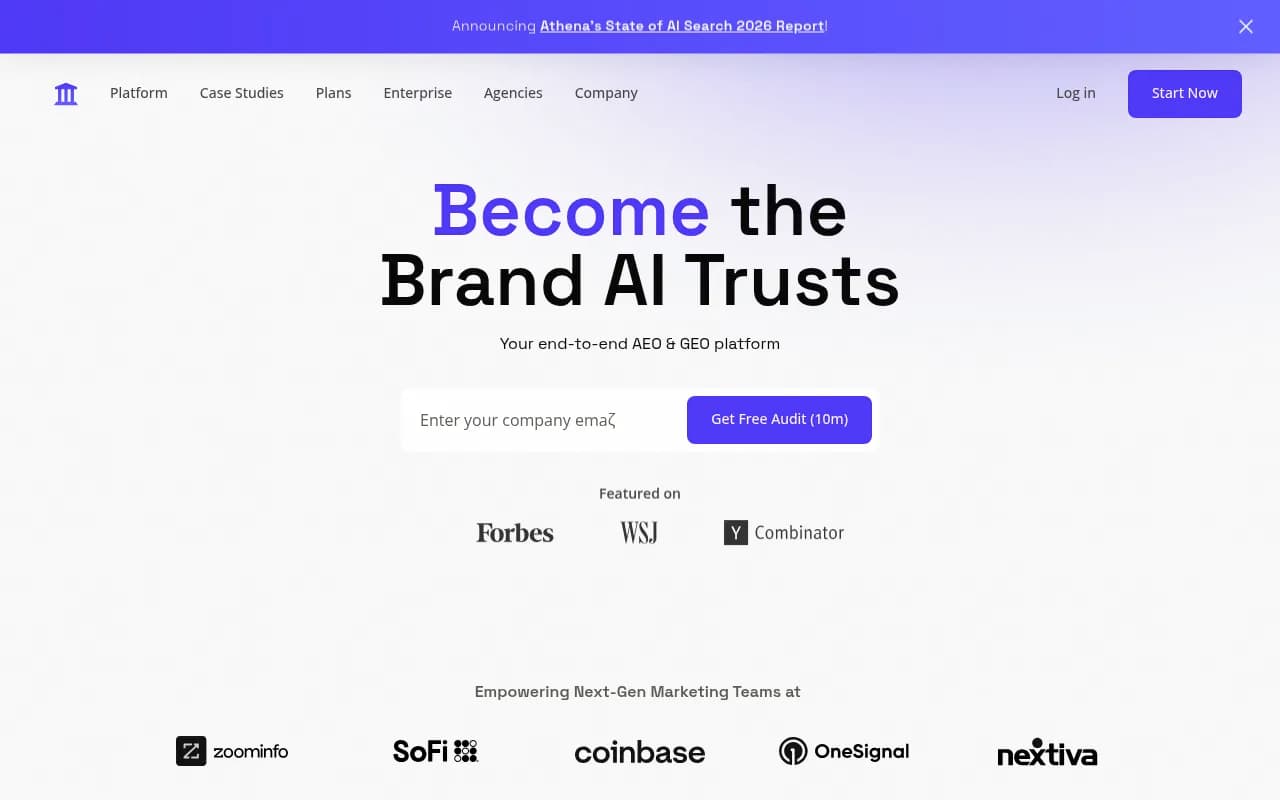
It monitors 8+ AI search engines and gives you a clear picture of whether AI models are describing your brand positively, negatively, or inaccurately. The gap is on the optimization side — AthenaHQ is monitoring-focused and doesn't have tools to help you create content that would shift AI perception.
Best for: Brand and communications teams focused on how AI models describe them, not just whether they appear.
7. SE Ranking — best for teams that want AI visibility alongside traditional SEO
SE Ranking has been a solid traditional SEO platform for years, and its AI visibility features are a reasonable addition for teams that don't want to manage two separate tools.
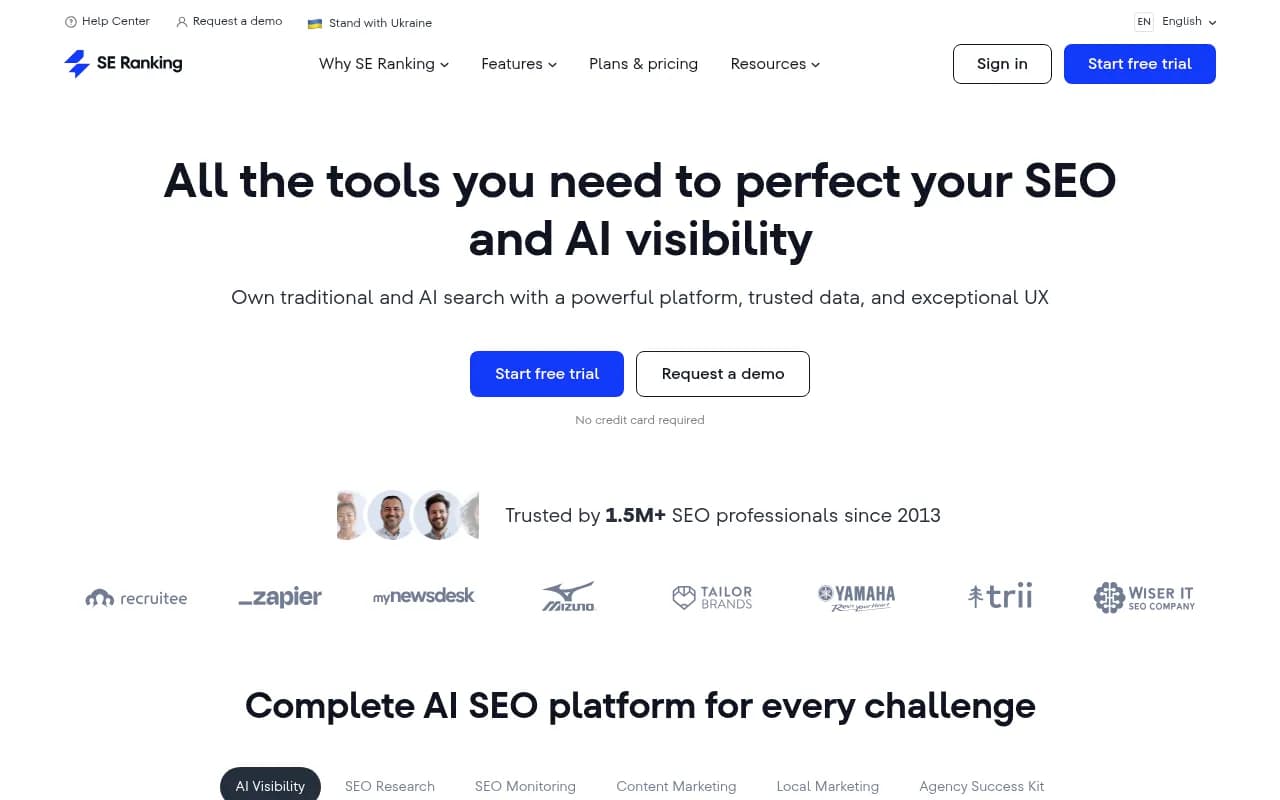
The AI visibility tracking covers the major models and integrates with SE Ranking's existing keyword and rank tracking data. If you're already using SE Ranking for SEO and want to add AI monitoring without switching platforms, this is the path of least resistance.
The AI visibility features aren't as deep as dedicated GEO platforms — prompt volume data, crawler logs, and content gap analysis are limited or absent. But for teams where AI visibility is one of several priorities rather than the main focus, the consolidated view has real value.
Best for: SEO teams already using SE Ranking who want to add AI visibility monitoring without adopting a new platform.
8. Writesonic — best for teams that want AI visibility with content creation
Writesonic has expanded beyond its AI writing roots to include AI search visibility tracking, making it an interesting option for teams that want monitoring and content creation in one place.
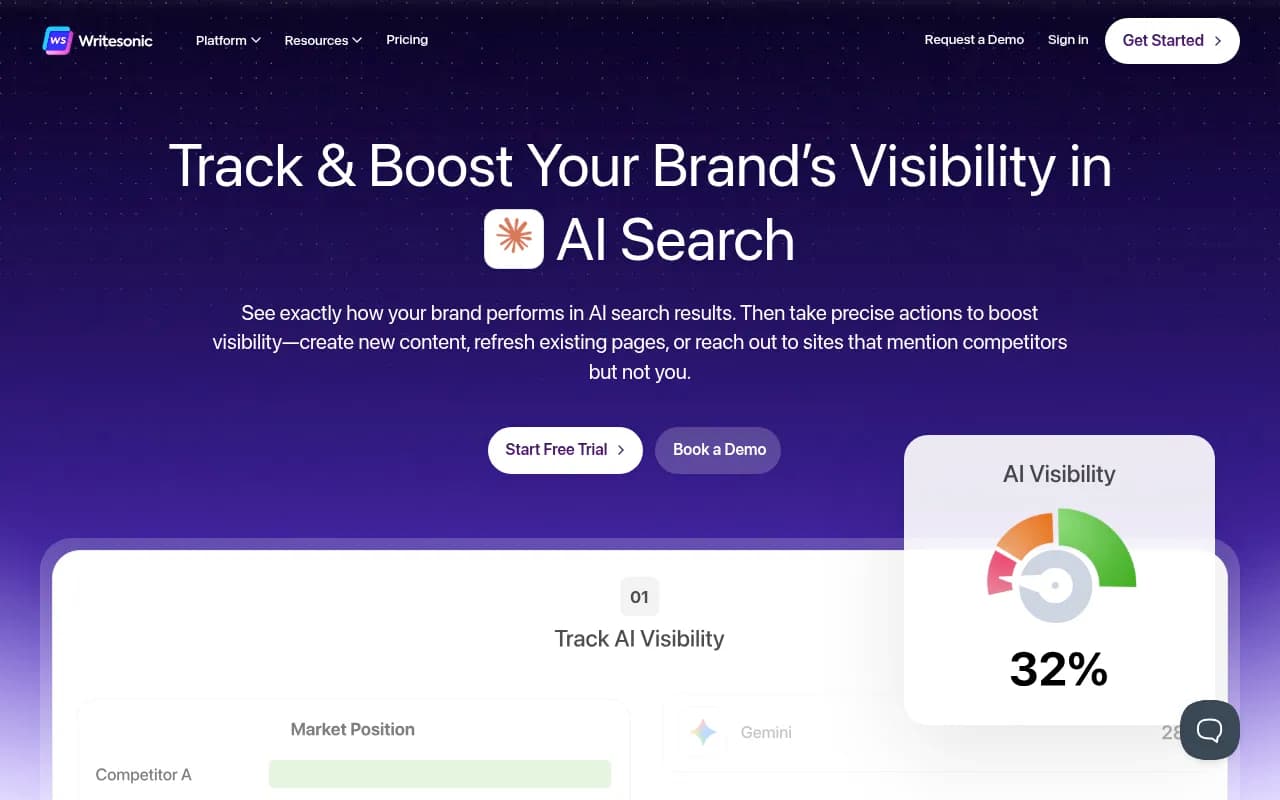
The visibility tracking covers the main AI models and the content creation tools are mature. The gap compared to a purpose-built GEO platform is that the tracking and content features aren't as tightly integrated — the content generation isn't specifically engineered around citation data or prompt gap analysis the way Promptwatch's is.
Best for: Content teams that want a combined writing and visibility tool without investing in a dedicated GEO platform.
Side-by-side comparison
| Tool | AI models covered | Content gap analysis | AI content generation | Crawler logs | Best for |
|---|---|---|---|---|---|
| Promptwatch | 10 | Yes | Yes (citation-grounded) | Yes | Full optimization loop |
| Trakkr.ai | 4+ | No | No | No | Basic monitoring |
| Otterly.AI | 6 | No | No | No | Budget tracking |
| Profound | Multiple | No | No | No | Enterprise research |
| Peec AI | Multiple | No | No | No | Multilingual monitoring |
| Scrunch AI | Multiple | No | No | No | Agency reporting |
| AthenaHQ | 8+ | No | No | No | Sentiment/perception |
| SE Ranking | Multiple | Limited | No | No | SEO + AI combined |
| Writesonic | Multiple | No | Yes (general) | No | Writing + monitoring |
The pattern is clear: most tools in this category are monitoring dashboards. The content gap analysis and content generation columns are almost entirely empty. That's the gap Promptwatch was built to fill.
The monitoring-only problem
It's worth being direct about why this matters. AI visibility monitoring is genuinely useful — you need to know where you stand before you can improve. But most teams that invest in these tools hit the same wall: they have dashboards full of data showing they're invisible for important prompts, and no clear path to fixing it.
The reason is structural. Most AI visibility platforms were built as trackers. The product roadmap started with "show brands their visibility scores" and stopped there. Adding content gap analysis and AI content generation is a fundamentally different product — it requires a different data model, different integrations, and a different understanding of what the customer actually needs.
Promptwatch built around the optimization loop from the start: find the gaps, generate content that fills them, track whether it worked. That's why it's the only platform in a 2026 comparison of 12 GEO tools rated as a "Leader" across all categories.
Which tool should you choose?
The right answer depends on where you are and what you need to do next.
If you're just starting out and need to understand your current AI visibility before committing to a bigger investment, Otterly.AI is a low-risk starting point. It's affordable, covers the main platforms, and gets you basic data quickly.
If you're an international brand or agency with multilingual needs, Peec AI or Scrunch AI are worth evaluating specifically for those use cases.
If you're already on SE Ranking and want to add AI visibility without switching tools, the built-in features are good enough to start.
If your goal is to actually improve your AI visibility — not just measure it — Promptwatch is the clearest choice. The combination of Answer Gap Analysis, citation-grounded content generation, crawler logs, and traffic attribution gives you a complete workflow from diagnosis to results. Most alternatives stop at diagnosis.
The brands that will win in AI search over the next few years aren't the ones with the best dashboards. They're the ones that figure out the content gap and fill it faster than their competitors. The tool you choose should help you do that.