Key takeaways
- Scrunch is a capable AI visibility platform, but its pricing (which escalates quickly with team seats) and lack of content creation tools make it a poor fit for lean marketing teams
- Most "alternatives" are monitoring-only dashboards -- the same problem in a different wrapper. Look for platforms that include content gap analysis, writing tools, or actionable optimization guidance
- The best options for small teams in 2026 sit in the $99-$249/month range and cover tracking, gap analysis, and content output without requiring a developer to act on the results
- Promptwatch is the strongest all-in-one option if you want to track, find gaps, and generate content that gets cited by AI models -- all in one place
- If your budget is tight and you only need basic monitoring, tools like Otterly.AI or Peec AI are reasonable starting points, but expect to hit a ceiling quickly
Scrunch has a real use case. If your site has technical crawlability problems -- messy structure, no llms.txt, JavaScript-heavy pages that AI crawlers can't parse -- it helps you identify and fix those issues. That's legitimate work.
But for most small marketing teams, the technical layer isn't the bottleneck. You're not invisible in ChatGPT because your site structure is wrong. You're invisible because you don't have the content, the topical authority, or the brand mentions that make AI models want to cite you. Scrunch doesn't help with any of that.
Then there's the pricing. Scrunch doesn't publish rates publicly, which is always a warning sign for budget-conscious teams. Reports from users suggest it starts around $300/month and climbs fast once you add team members at $25/seat. For a three-person marketing team, you're looking at $375/month minimum for a tool that shows you problems but doesn't help you fix them.
This guide focuses on alternatives that actually move the needle -- platforms where you can go from "we're invisible for this prompt" to "we published content that changed that" without switching tools three times.
What to look for in a Scrunch alternative
Before jumping into specific tools, it's worth being clear about what "better" actually means for a small team.
Monitoring is table stakes. Every tool on this list tracks your brand mentions across ChatGPT, Perplexity, Claude, and other AI engines. That's not a differentiator anymore -- it's the floor.
What separates useful tools from expensive dashboards:
- Gap analysis: Can it show you which prompts competitors rank for that you don't? Not just "you're missing," but specifically which topics and questions.
- Content output: Does it help you create content that addresses those gaps, or do you need to export a CSV and figure it out yourself?
- Actionability without engineers: Can a marketer act on the recommendations, or do you need a developer to implement anything?
- Transparent pricing: Can you know what you'll pay before you book a demo?
With those criteria in mind, here's how the main options stack up.
The best Scrunch alternatives in 2026
Promptwatch -- best overall for teams that want to track and fix
Promptwatch is the option I'd recommend first for most small marketing teams, and the reason is simple: it's the only platform in this price range that completes the full loop from visibility data to published content.

Most tools show you where you're invisible. Promptwatch shows you where you're invisible, tells you exactly which prompts competitors are winning that you're not, generates content designed to close those gaps, and then tracks whether that content actually improved your citations. That's a fundamentally different workflow.
The Answer Gap Analysis is the standout feature. You can see the specific prompts where competitors appear in AI responses but you don't -- not just categories, but the actual questions. The built-in AI writing agent then generates articles, listicles, and comparisons grounded in real citation data from over 880 million citations analyzed. This isn't generic content -- it's built around what AI models actually cite.
For small teams, the crawler logs are also genuinely useful. You can see which pages ChatGPT, Claude, and Perplexity are actually reading on your site, how often they return, and where they hit errors. Most competitors don't offer this at all.
Pricing is transparent: $99/month for the Essential plan (1 site, 50 prompts, 5 articles), $249/month for Professional (2 sites, 150 prompts, 15 articles, plus crawler logs). For a small team that wants real optimization capability, not just a dashboard, that's a reasonable price.
It monitors 10 AI models including ChatGPT, Claude, Perplexity, Gemini, Grok, DeepSeek, and Google AI Overviews. The Reddit and YouTube tracking is a nice bonus -- it surfaces discussions that influence AI recommendations, which most competitors ignore entirely.
Otterly.AI -- best for teams that just need basic monitoring
If your only goal is tracking brand mentions across AI engines and your budget is tight, Otterly.AI is a reasonable starting point. It's affordable, easy to set up, and covers the main AI models.
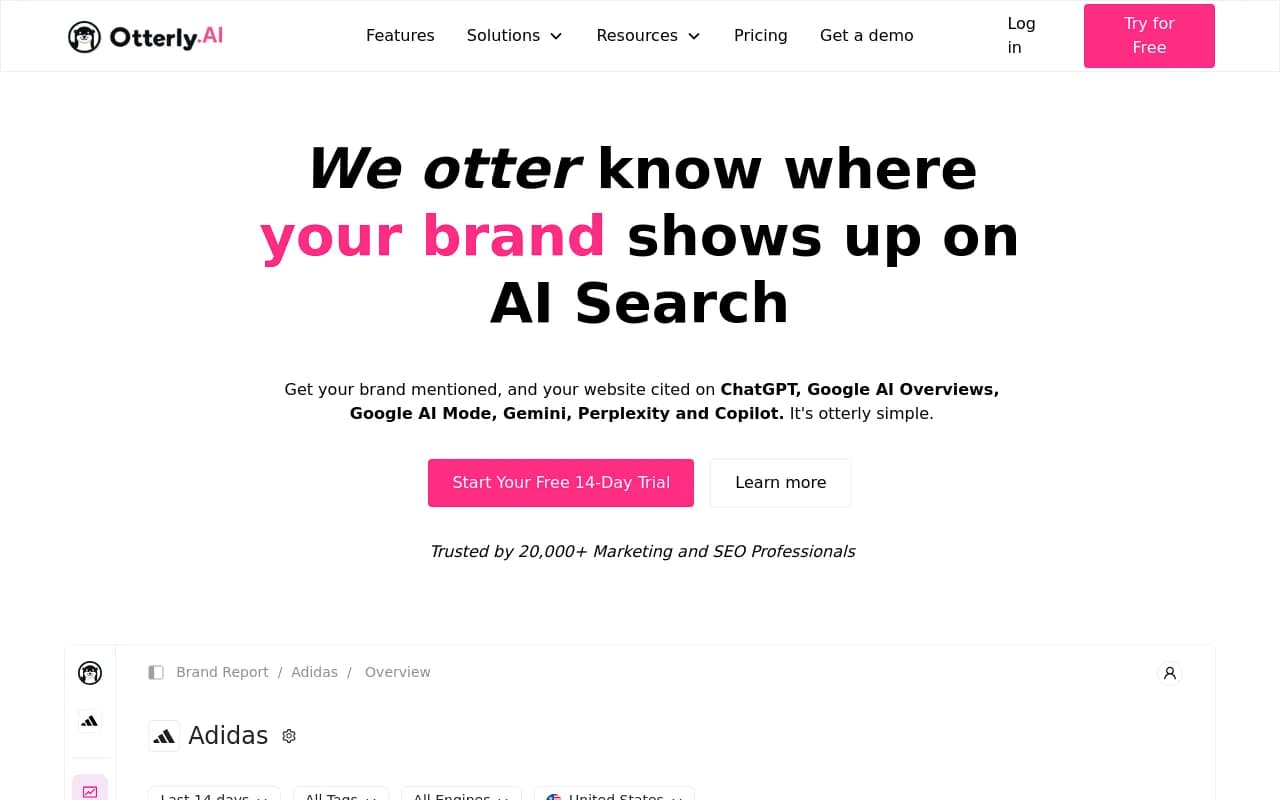
The honest limitation: it's monitoring-only. There's no content gap analysis, no writing tools, no crawler logs. You'll see where you're invisible, but you won't get much help figuring out what to do about it. For teams that already have a content process and just want visibility data piped in, that's fine. For teams looking to actually improve their AI search presence, you'll outgrow it quickly.
Peec AI -- best for client reporting at mid-market agencies
Peec AI has a cleaner interface than most monitoring tools and produces decent client-facing reports. If you're an agency managing AI visibility for multiple clients and need something that looks professional in a deck, it's worth a look.
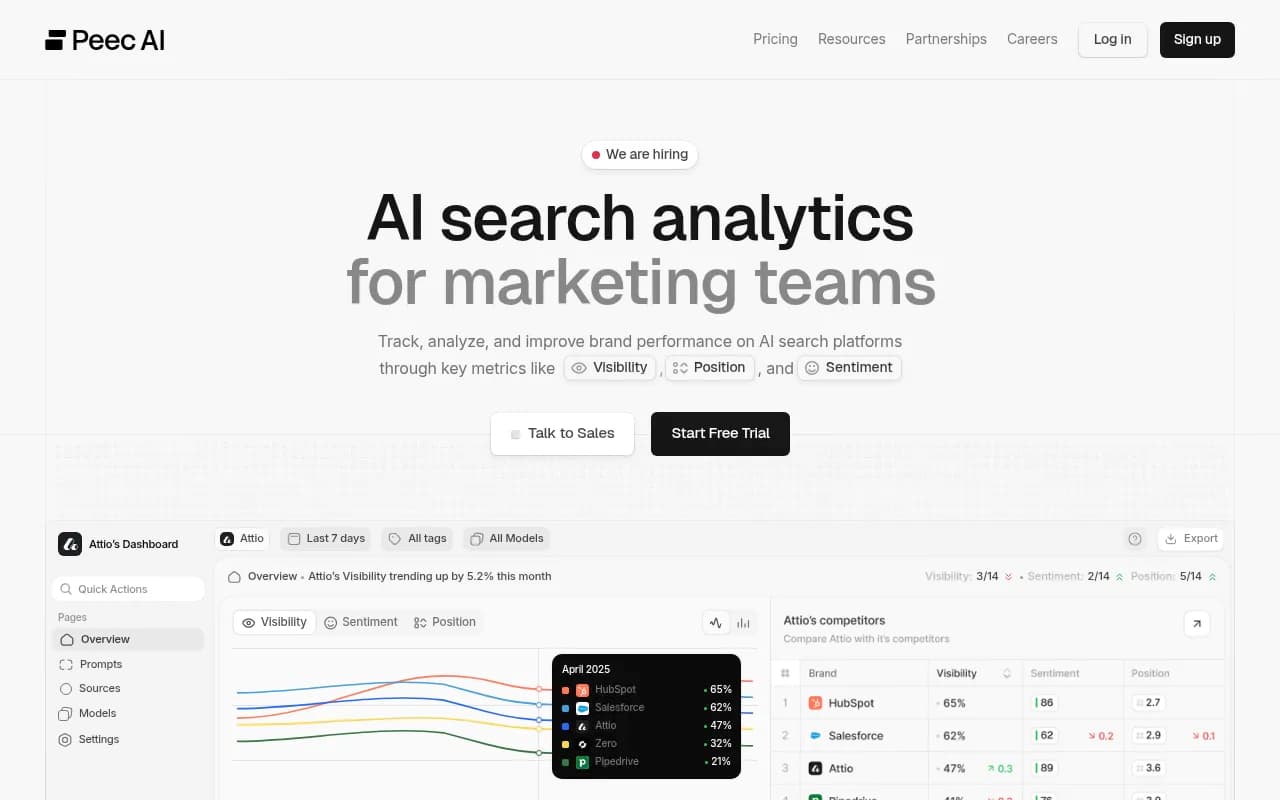
Like Otterly, it's primarily a monitoring platform. The reporting layer is its main differentiator. It doesn't generate content or provide deep gap analysis, so it works best as a reporting tool layered on top of a broader GEO strategy rather than as a standalone optimization platform.
Profound -- best for larger teams with enterprise budgets
Profound has a strong feature set and is one of the more mature platforms in the GEO space. It covers prompt tracking, citation analysis, and competitor monitoring at a depth that's hard to match.
The catch for small teams: pricing. Profound targets enterprise customers, and its price point reflects that. If you're managing a $1M+ marketing budget and need deep competitive intelligence, it's worth evaluating. If you're a five-person marketing team, the ROI math gets difficult.
It also doesn't include content generation, so you're still doing the "find the gap, then figure out how to fill it" dance across multiple tools.
SE Ranking -- best for teams already using traditional SEO tools
SE Ranking has been a solid traditional SEO platform for years, and its AI visibility module is a reasonable addition if you're already paying for the platform.
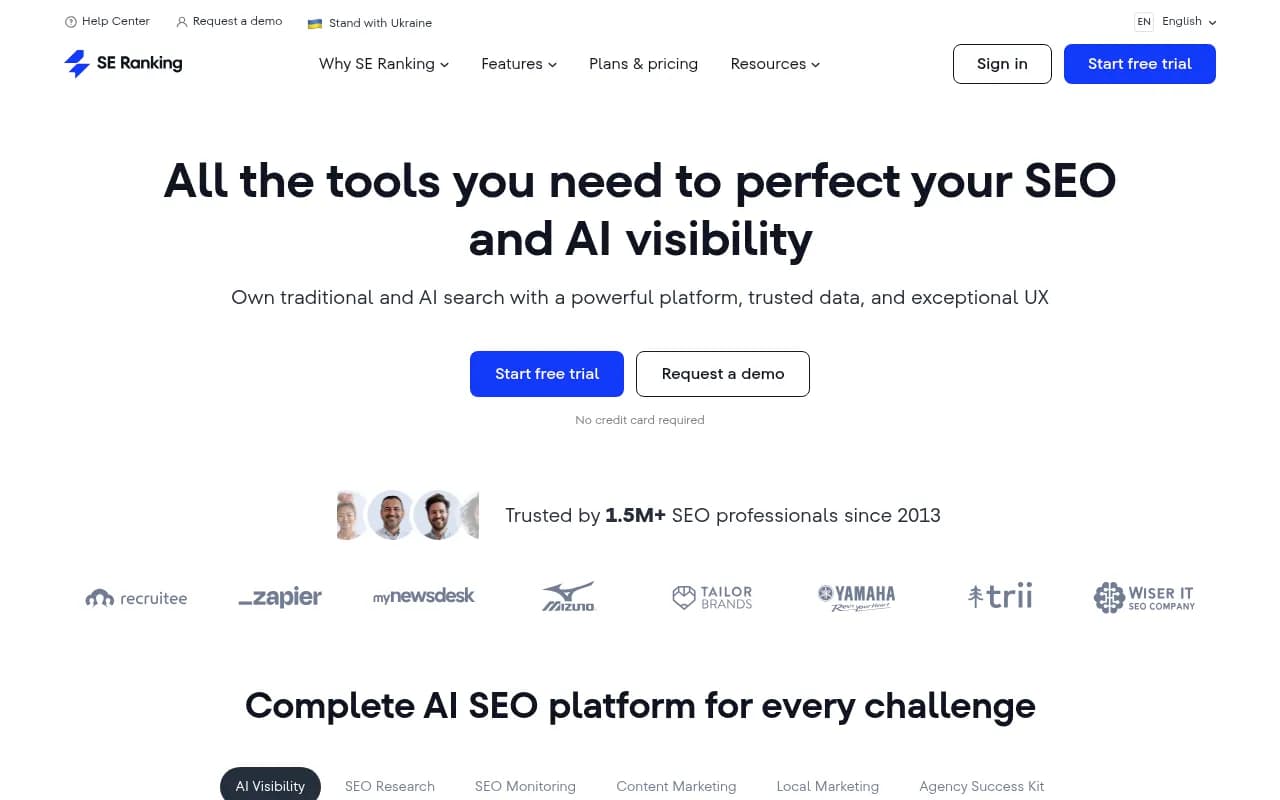
The AI tracking features are less deep than dedicated GEO platforms -- it's more of a bolt-on than a core capability. But if you're already using SE Ranking for keyword tracking and rank monitoring, having AI visibility data in the same dashboard has real workflow value. You're not paying for a separate tool.
For teams starting fresh and prioritizing AI search, a dedicated GEO platform will serve you better. For teams that want to consolidate, SE Ranking is worth considering.
Writesonic -- best for content-first teams
Writesonic has evolved from a general AI writing tool into something closer to an AI search visibility platform. It tracks where your brand appears in AI responses and helps you create content to improve that visibility.
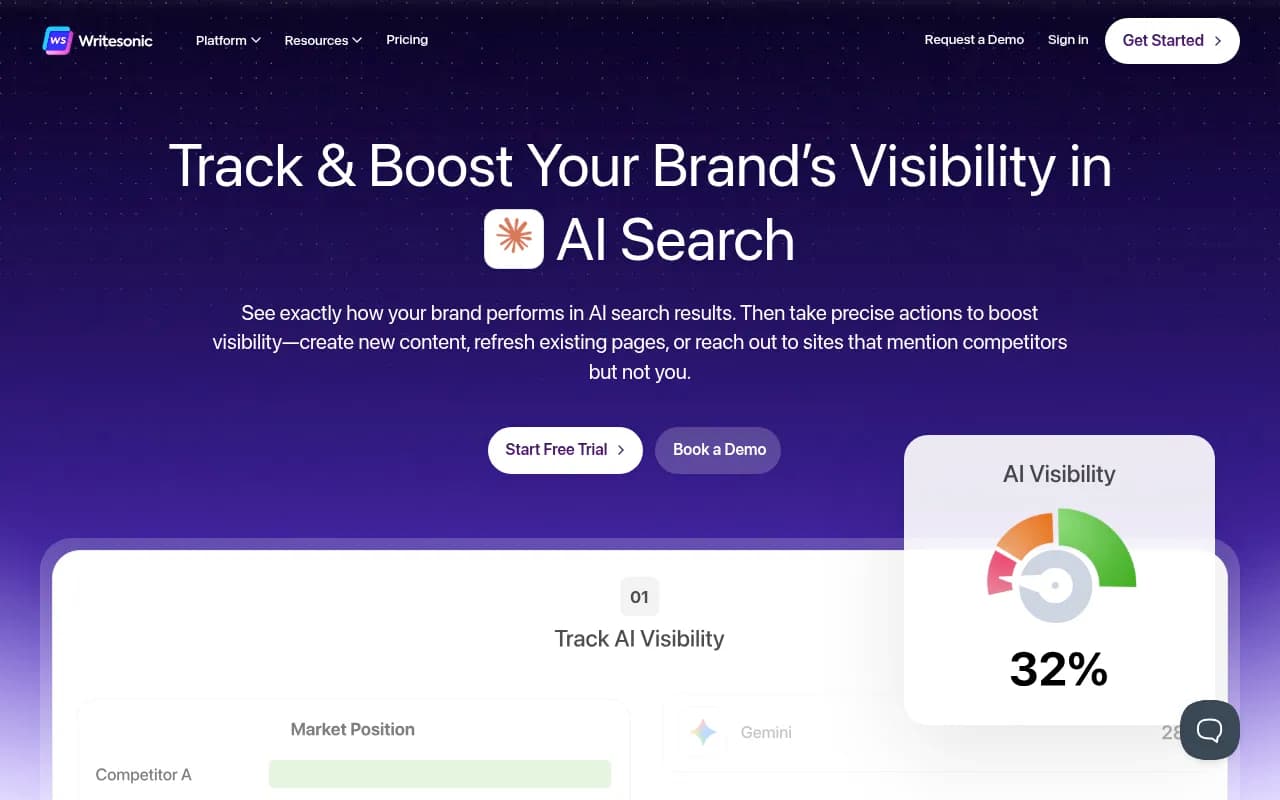
The content generation side is strong -- it's been doing AI writing longer than most GEO platforms. The tracking and analytics layer is less mature. If your primary bottleneck is content production and you want some AI visibility data alongside it, Writesonic is worth evaluating. If you need deep prompt analytics and competitor intelligence, it's not the right fit.
Radarkit -- best for teams that want a clean, focused experience
Radarkit is a newer entrant that focuses on making AI search visibility data actually readable. The interface is clean, the onboarding is fast, and it doesn't overwhelm you with metrics you don't know how to act on.
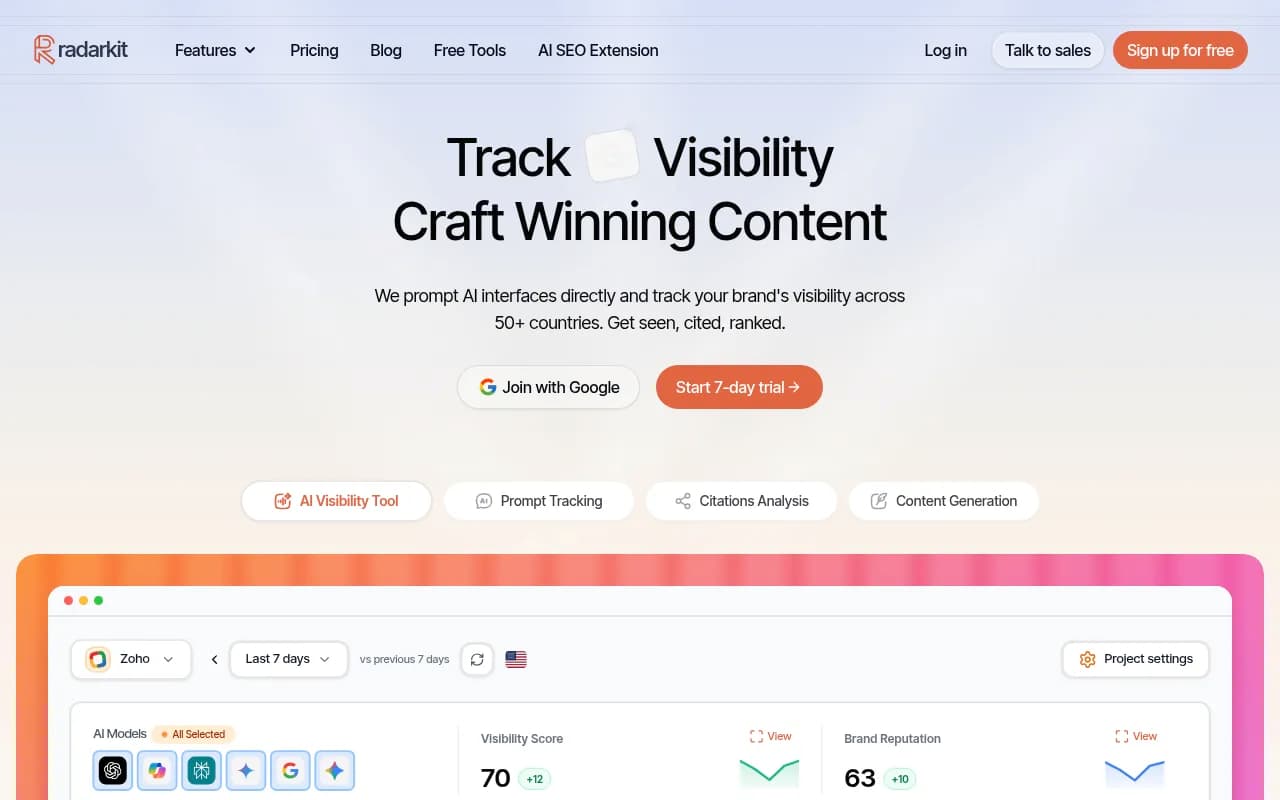
It's a monitoring-focused tool, so the same limitations apply as Otterly and Peec -- you'll see the data but won't get much optimization guidance. The UX advantage is real though. If your team has struggled to get buy-in on GEO tools because the dashboards are confusing, Radarkit is easier to demo to stakeholders.
GetMint -- best for teams that want a simple starting point
GetMint sits in the "simple monitoring with some optimization hints" category. It's not the deepest platform, but it's accessible and doesn't require a long onboarding process.
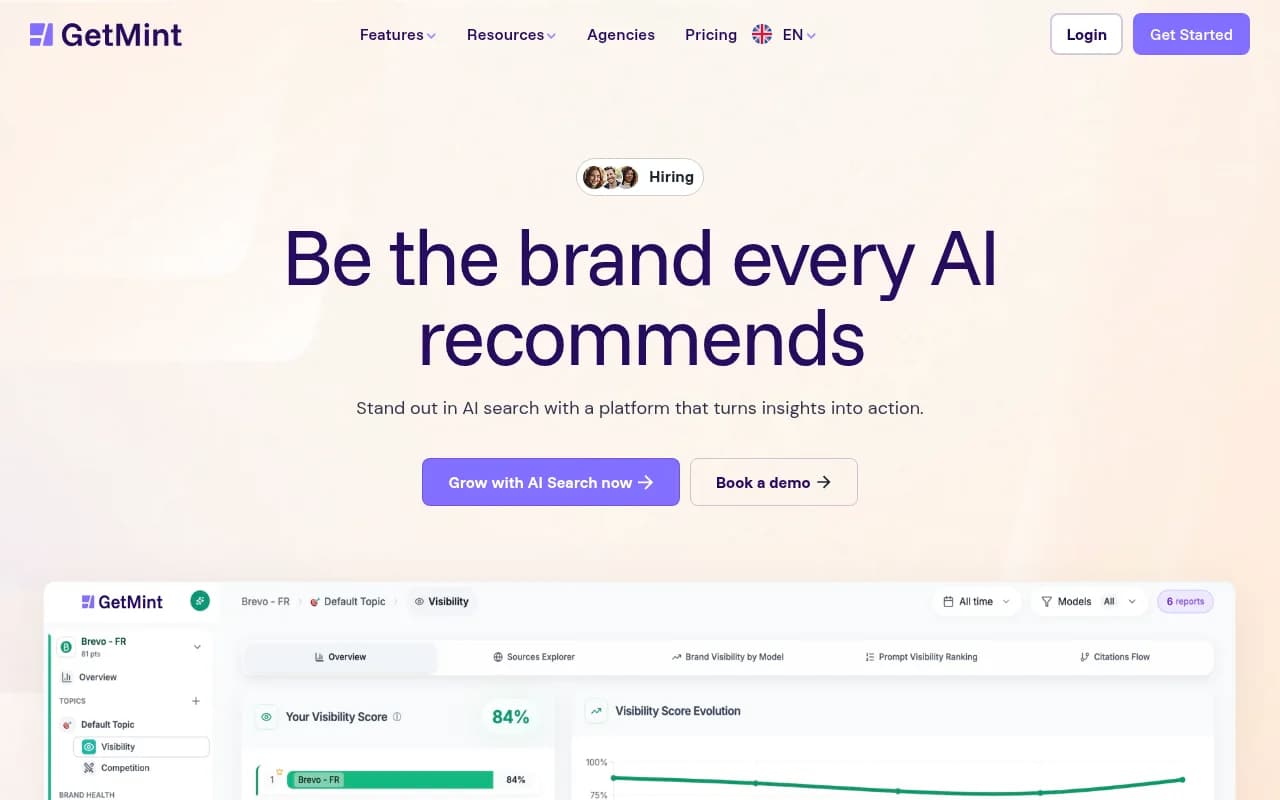
The optimization guidance is light compared to Promptwatch, but it's more actionable than pure monitoring tools. Worth considering if you want something between "just tracking" and "full optimization platform" and you're not ready to commit to a higher price point.
Feature comparison
Here's how the main options stack up across the criteria that matter most for small teams:
| Platform | Pricing (starting) | AI models tracked | Content gap analysis | Content generation | Crawler logs | Best for |
|---|---|---|---|---|---|---|
| Promptwatch | $99/mo | 10+ | Yes | Yes (built-in) | Yes (Professional+) | Full optimization loop |
| Otterly.AI | Low | 5-6 | No | No | No | Basic monitoring |
| Peec AI | Mid | 5-6 | Limited | No | No | Agency reporting |
| Profound | Enterprise | 8+ | Yes | No | No | Enterprise teams |
| SE Ranking | ~$65/mo | 5+ | Limited | No | No | SEO consolidation |
| Writesonic | ~$99/mo | 4-5 | Limited | Yes | No | Content-first teams |
| Radarkit | Low-mid | 6+ | No | No | No | Clean UX, stakeholder demos |
| GetMint | Low | 5+ | Limited | No | No | Simple starting point |
The pattern is clear: most alternatives solve the monitoring problem but leave the optimization gap wide open. If you're switching from Scrunch because it doesn't help you act on the data, switching to Otterly or Peec won't fix that -- you'll have the same frustration at a lower price point.
Why "monitoring-only" isn't enough in 2026
There's a version of this decision that made sense in 2023: pick any tool that tracks AI citations, get the data, and figure out the optimization strategy separately. The GEO space was new, the tools were immature, and any visibility was better than none.
That's not where we are now. AI search is a real traffic channel. ChatGPT, Perplexity, and Google AI Overviews are sending measurable clicks. The brands that are winning in AI search have figured out that it's a content and authority game -- you need to publish content that answers the specific questions AI models are fielding, and you need to do it consistently.
A monitoring tool tells you you're losing. An optimization platform helps you win.
The research from multiple sources is consistent on this point: Scrunch's technical optimization layer (crawlability, llms.txt, site structure) is necessary but not sufficient. The brands getting cited most are the ones with deep topical content, strong brand mentions across the web, and consistent publishing. Technical compliance gets you in the game; content and authority win it.
How to choose
A few honest questions to guide the decision:
Do you have a content team or process already? If yes, a monitoring tool might be enough -- you can take the gap data and feed it into your existing workflow. If no, you need a platform that helps you create content, not just identify what's missing.
What's your budget ceiling? If it's under $100/month, Otterly.AI or a similar basic tracker is your realistic option. If you can stretch to $99-$249/month, Promptwatch gives you the full optimization loop. If budget isn't the constraint, Profound is worth evaluating for its depth.
Do you need to show results to stakeholders? If you're reporting AI visibility to a CMO or client, you need a platform that produces clean, understandable output -- not just raw data. Peec AI and Promptwatch both produce decent reports. Radarkit is easy to demo.
Are you starting from scratch or switching? If you've never tracked AI visibility before, start with something simple and upgrade once you understand what you actually need. If you're switching from Scrunch specifically because it doesn't help you act on data, go straight to Promptwatch -- you'll just repeat the same frustration with a monitoring-only alternative.
The bottom line
Scrunch is a real tool with a real use case, but it's priced for enterprise and optimized for technical teams. Small marketing teams need something that fits a tighter budget, requires less engineering support, and actually helps them create content that improves AI visibility -- not just measure it.
The market has matured enough that you don't have to compromise. Promptwatch at $99/month does more than Scrunch at $300+/month for most small team use cases. The gap analysis, content generation, and crawler logs are features that directly address the frustrations driving people away from Scrunch in the first place.
If you're not ready to commit to a full optimization platform, start with a free trial of something simple. But go in knowing that monitoring without optimization is a temporary solution -- you'll eventually need a tool that helps you close the loop.