Key takeaways
- Promptmonitor is a solid entry-level AI visibility tracker, but it lacks content generation, crawler log analysis, and deep prompt intelligence that growing brands need.
- The best alternatives in 2026 range from full optimization platforms (Promptwatch, Writesonic) to enterprise-grade analytics tools (Profound, seoClarity) and budget-friendly monitors (Otterly.AI, Peec AI).
- The biggest gap in most tools — including Promptmonitor — is the jump from "here's your data" to "here's what to do about it." Only a handful of platforms close that loop.
- If you're serious about AI search visibility, look for tools that combine monitoring, content gap analysis, and some form of optimization workflow.
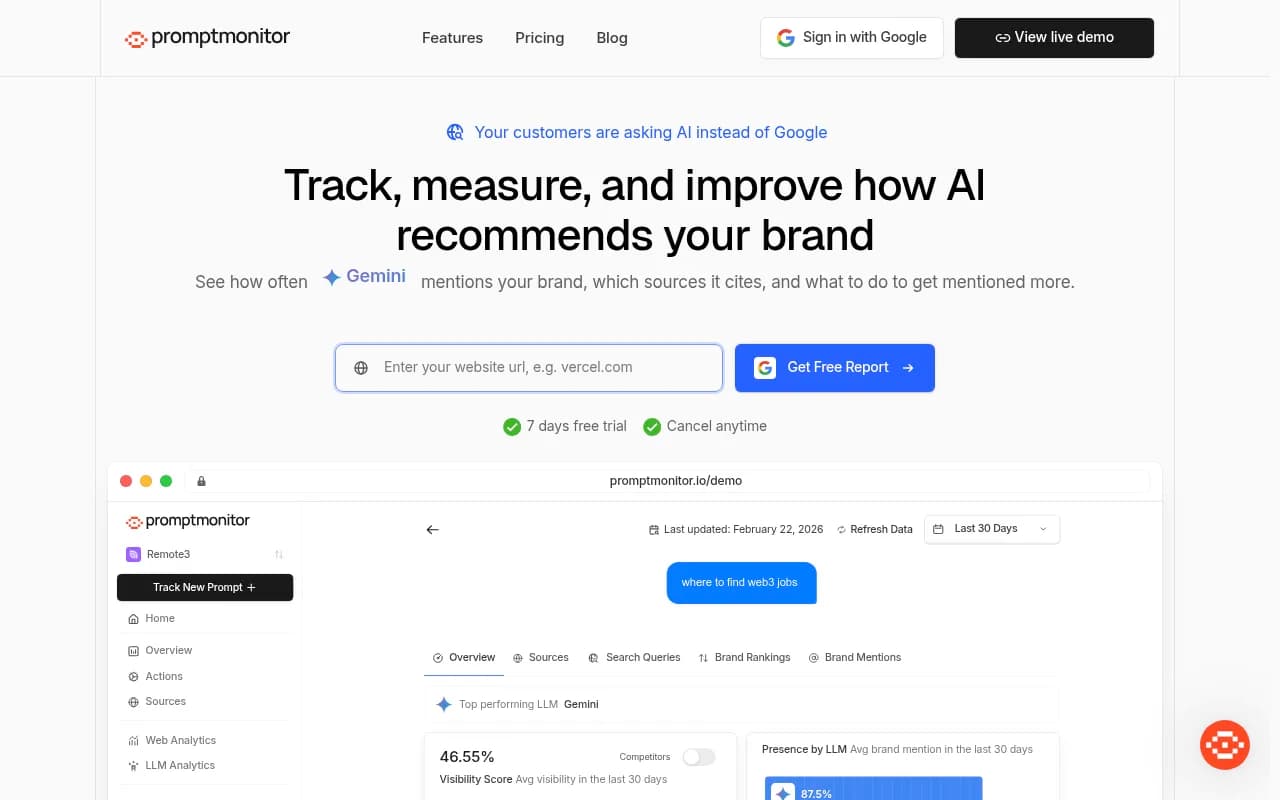
Promptmonitor does what it says on the tin: it monitors how your brand appears in AI-generated answers across ChatGPT, Perplexity, and a handful of other models. For teams just getting started with GEO (Generative Engine Optimization), that's genuinely useful.
But once you've been tracking for a few weeks, the next question is obvious: now what? You can see you're not being cited for certain prompts. You can see competitors showing up where you don't. What you can't do, inside Promptmonitor, is easily figure out why — or fix it.
That's the gap this guide addresses. Below are the best Promptmonitor alternatives in 2026, organized by what they actually do well, with honest notes on where each one falls short.
Why teams look for Promptmonitor alternatives
Promptmonitor's core value is visibility monitoring: tracking brand mentions, share of voice, and sentiment across LLMs. It's clean, relatively affordable, and easy to get running.
The limitations show up when teams want to go deeper:
- No built-in content gap analysis to show which prompts competitors rank for but you don't
- No AI crawler logs to understand how models are actually reading your site
- Limited prompt intelligence (volume estimates, difficulty scoring, query fan-outs)
- No content generation tools to act on what you find
- Weaker multi-model coverage compared to platforms built specifically for the GEO use case
If your team's mandate is "track and report," Promptmonitor may be enough. If it's "track, understand, and improve," you'll hit a ceiling quickly.
The best Promptmonitor alternatives in 2026
Promptwatch — best overall for teams that want to act, not just monitor
Promptwatch is the most complete platform in this space right now. It monitors AI visibility across 10 models (ChatGPT, Claude, Perplexity, Gemini, Grok, DeepSeek, Copilot, Meta AI, Google AI Overviews, and Google AI Mode), but the real difference is what happens after the monitoring.
The Answer Gap Analysis shows you exactly which prompts competitors appear for that you don't — not as a vague suggestion, but as a specific list of topics and questions your site isn't answering. From there, a built-in AI writing agent generates articles, listicles, and comparisons grounded in citation data from over 880 million analyzed citations. You're not just publishing content and hoping; you're publishing content engineered to get cited.
On top of that, Promptwatch logs AI crawler activity in real time — which pages ChatGPT, Claude, and Perplexity are reading, how often they return, and any errors they hit. Most competitors don't offer this at all. It also tracks Reddit and YouTube discussions that influence AI recommendations, ChatGPT Shopping appearances, and prompt volumes with difficulty scoring.
Pricing starts at $99/month (Essential: 1 site, 50 prompts, 5 articles), with Professional at $249/month and Business at $579/month. A free trial is available.

Profound — best for enterprise analytics teams
Profound is a strong choice if your team runs analyst-driven workflows and wants raw data, API access, and near real-time monitoring across major LLMs. It's built for large brands with dedicated data teams who want to slice visibility data their own way.
The trade-off: Profound is heavy on analytics and light on guidance. It won't tell you what content to create or generate it for you. If you have the internal resources to act on the data, that's fine. If you need the platform to help you close the loop, you'll need to supplement it.
Pricing starts around $99/month for smaller plans, scaling significantly for enterprise tiers.
Writesonic — best for content-forward teams
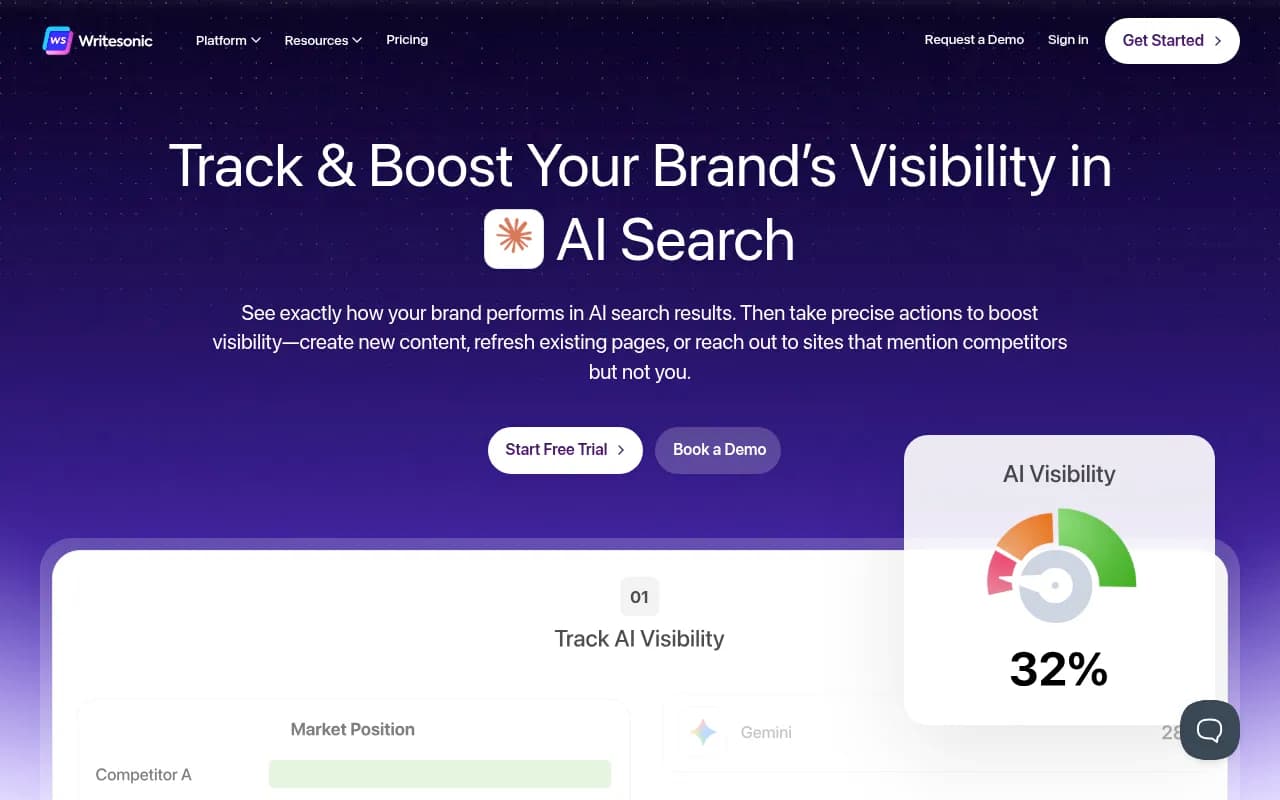
Writesonic has evolved from an AI writing tool into a GEO platform that combines visibility tracking with content optimization workflows. It's particularly strong for teams that want to spot AI search gaps and publish optimized content quickly, without switching between multiple tools.
It covers major LLMs and surfaces actionable recommendations tied directly to content creation. The monitoring depth isn't quite at Promptwatch or Profound's level, but for small-to-mid-size content teams, the integrated workflow is a real advantage.
Pricing starts around $199/month for the GEO-focused plans.
Otterly.AI — best budget option for agencies
Otterly.AI is one of the most affordable options in the space, starting at $29/month. It handles automated prompt testing and GEO audits reasonably well, and it's popular with agencies managing multiple clients who need basic visibility tracking without a large per-seat cost.
The honest limitation: Otterly is a monitoring tool. There's no crawler log analysis, no content generation, and no deep prompt intelligence. It's a solid starting point, but teams that outgrow Promptmonitor will likely outgrow Otterly at roughly the same pace.

Peec AI — best for multi-language tracking
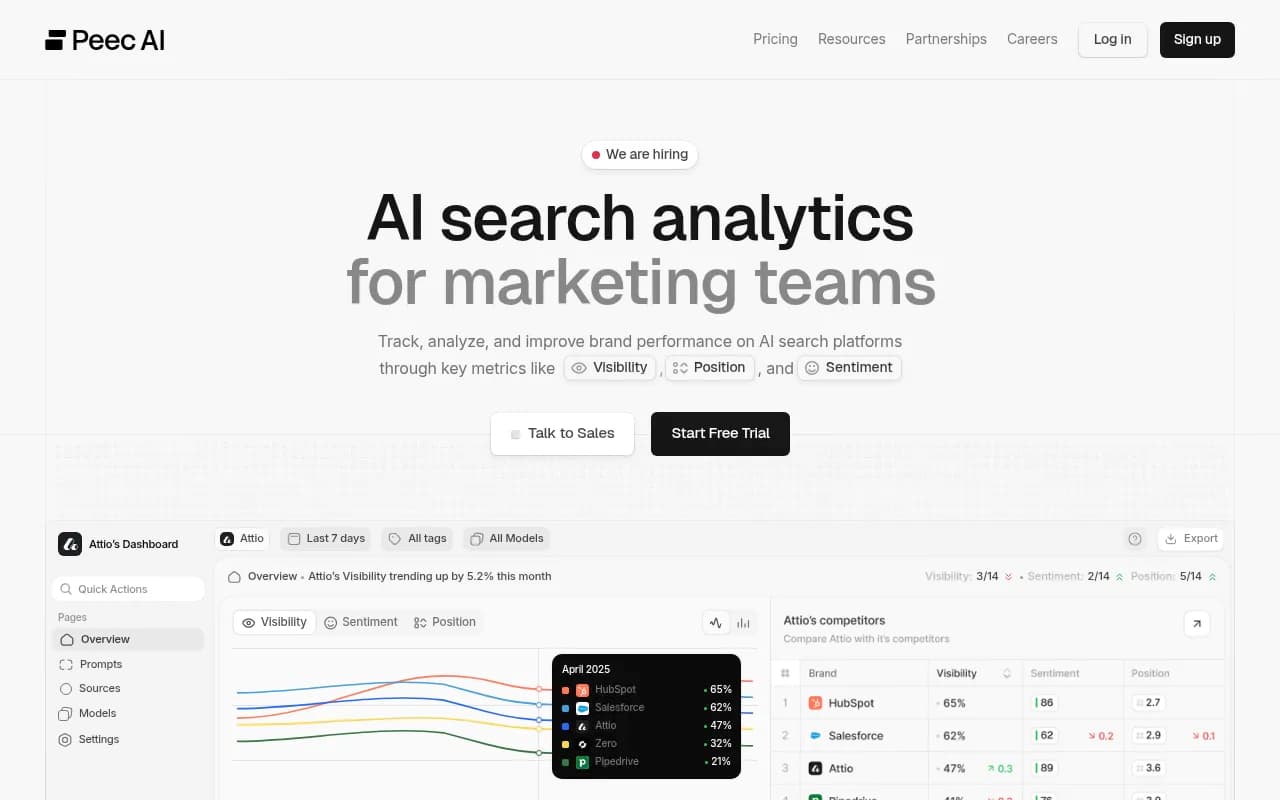
Peec AI focuses on conversational AI visibility with a clean dashboard and solid competitor benchmarking. Its multi-language support is genuinely good, which makes it a better fit than most alternatives for brands operating across multiple markets.
Like Otterly, it's primarily a monitoring tool — you get the data, but the platform doesn't help you act on it. Pricing starts around €89/month.
SE Visible — best for agencies already using SE Ranking
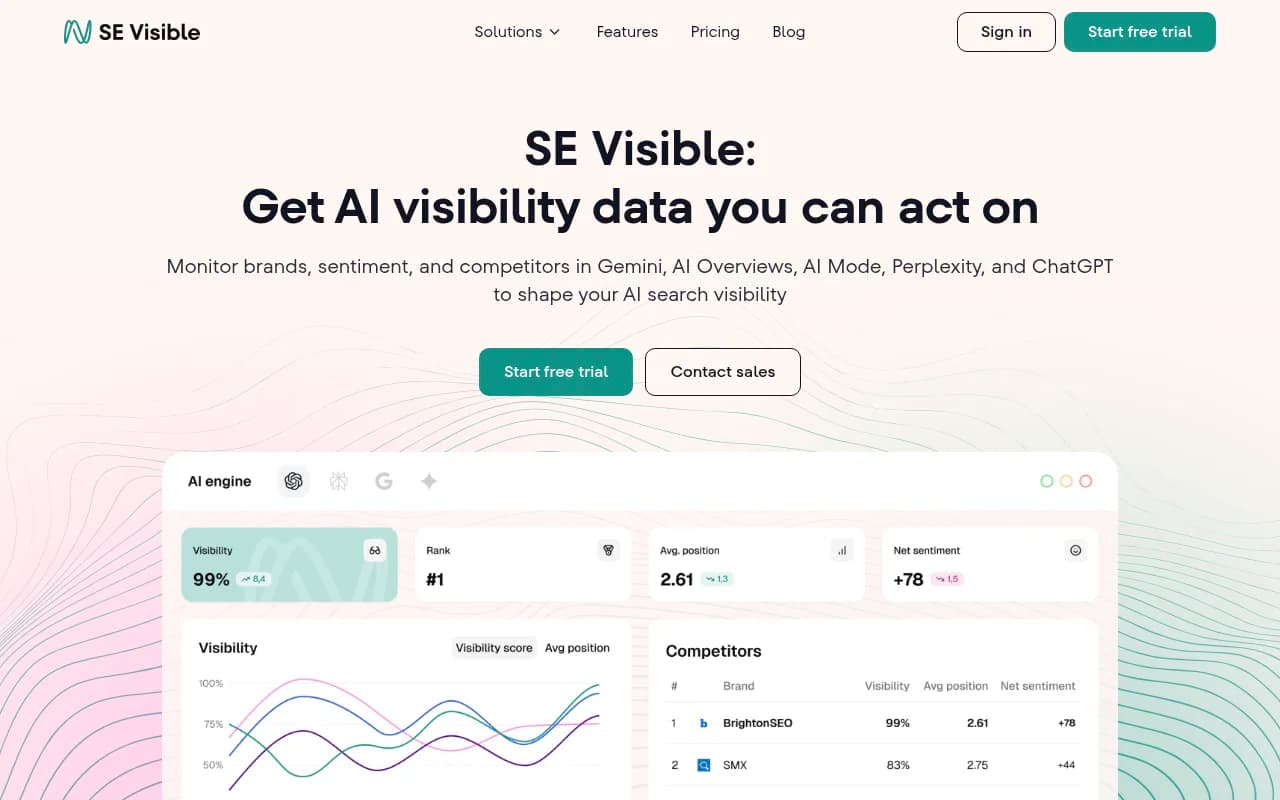
SE Visible is SE Ranking's dedicated AI visibility product. If your team is already in the SE Ranking ecosystem, the integration is seamless and the learning curve is minimal. It covers AI Mode monitoring well and gives CMOs and agency owners a clean view of brand appearances in AI results.
It's less useful as a standalone GEO platform — the depth of prompt intelligence and content optimization features doesn't match dedicated GEO tools. But as an add-on to an existing SEO workflow, it makes sense.
Scrunch AI — best for brand sentiment and narrative tracking
Scrunch AI focuses on how AI models describe and position your brand, not just whether they mention you. If your concern is brand narrative — are AI models saying accurate, positive things about you? — Scrunch's sentiment and perception tracking is more detailed than most alternatives.
It's a narrower use case than full GEO optimization, but for brands in competitive or reputation-sensitive categories, that focus is valuable.
seoClarity — best for enterprise teams with existing SEO infrastructure
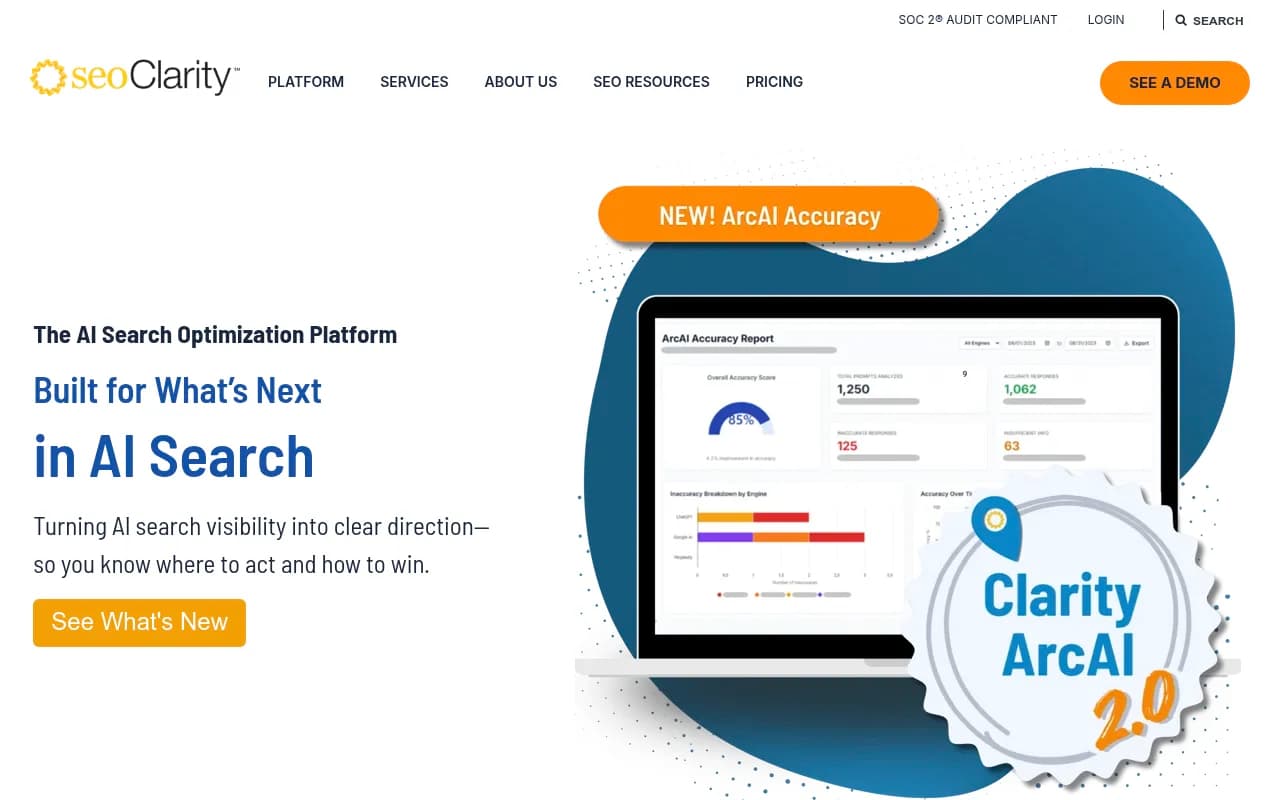
seoClarity is a full-stack enterprise SEO platform that added AI visibility tracking as part of its broader suite. The AI visibility features are solid, and the integration with traditional SEO data (technical audits, rank tracking, content analysis) is genuinely useful for large teams.
The catch is price: seoClarity starts at $2,500+/month, which puts it out of reach for most teams evaluating Promptmonitor alternatives. It's worth knowing about if you're at enterprise scale and want everything in one platform.
Athena HQ — best for tracking across 8+ AI search engines
Athena HQ covers a wide range of AI models and gives teams a clear view of brand visibility across the AI search landscape. It's a monitoring-focused platform with good breadth, though like several others on this list, it doesn't offer content generation or optimization workflows.

LLMrefs — best for citation and source tracking
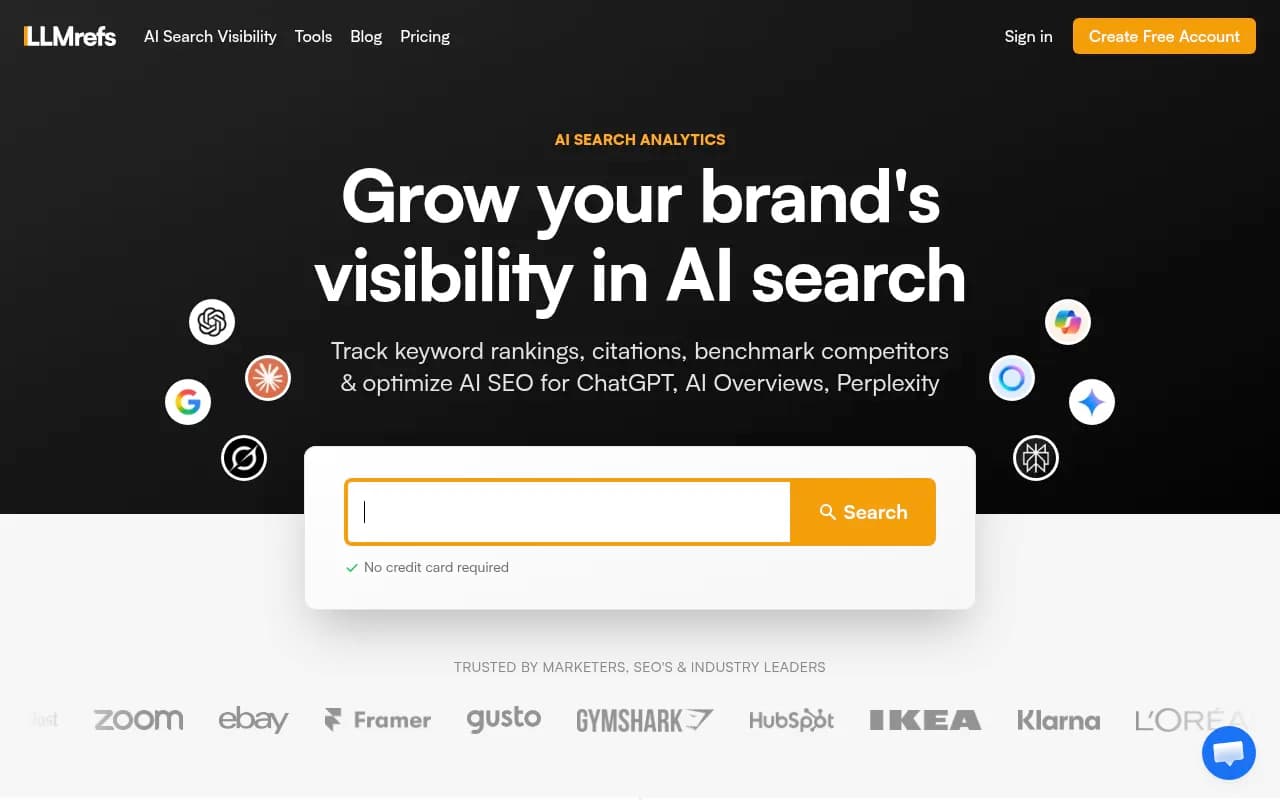
LLMrefs focuses specifically on tracking brand visibility and rankings across ChatGPT, Perplexity, and other LLMs, with particular attention to citation patterns. If you want to understand which sources AI models are pulling from in your category, it's worth a look.
Feature comparison
| Tool | AI models covered | Content generation | Crawler logs | Prompt intelligence | Reddit/YouTube tracking | Starting price |
|---|---|---|---|---|---|---|
| Promptmonitor | Several | No | No | Basic | No | Varies |
| Promptwatch | 10 | Yes | Yes | Advanced | Yes | $99/mo |
| Profound | Major LLMs | No | No | Advanced | No | ~$99/mo |
| Writesonic | Major LLMs | Yes | No | Moderate | No | ~$199/mo |
| Otterly.AI | Several | No | No | Basic | No | $29/mo |
| Peec AI | Several | No | No | Basic | No | €89/mo |
| SE Visible | Google AI Mode + others | No | No | Moderate | No | $189/mo |
| Scrunch AI | Several | No | No | Moderate | No | Varies |
| seoClarity | Several | No | No | Advanced | No | $2,500+/mo |
| Athena HQ | 8+ | No | No | Moderate | No | Varies |
| LLMrefs | Several | No | No | Basic | No | Varies |
How to choose the right alternative
The right tool depends on where your team is in the GEO journey.
If you're just starting out and need basic brand monitoring without a big budget, Otterly.AI or Peec AI are reasonable starting points. They're cheaper than Promptmonitor and cover similar ground.
If you're past the monitoring phase and need to understand why you're invisible for certain prompts — and then do something about it — the jump to a platform like Promptwatch is worth it. The content gap analysis and built-in writing tools mean you're not just collecting data; you're using it.
If you're at enterprise scale with dedicated analysts, Profound or seoClarity give you the raw data access and API depth that large teams need.
One thing worth being honest about: most platforms in this space are still primarily monitoring tools. They show you a dashboard. They tell you your share of voice went up or down. What they don't do is tell you which specific piece of content to write next, generate it for you, and then track whether it got cited. That full loop is rare, and it's the main reason teams end up switching tools after a few months.
The bottom line
Promptmonitor is a reasonable entry point into AI visibility tracking. But the category has moved fast, and there are now platforms that do considerably more — not just showing you where you're invisible, but helping you fix it.
For most marketing teams in 2026, the monitoring problem is largely solved. The harder problem is optimization: figuring out what content to create, creating it efficiently, and confirming it actually improved your AI visibility. That's where the real differentiation between these tools shows up, and it's the right lens to use when evaluating any Promptmonitor alternative.