Key takeaways
- Most AI visibility tools track your brand as a whole. For a restaurant, that is the wrong unit, because AI answers change with where the guest is standing.
- Of the tools I could verify, Local Falcon is the closest to true neighborhood-level monitoring, with a geo-grid from 3x3 up to 21x21 points. BrightLocal tracks per business location, not per neighborhood.
- Promptwatch is the pick if you also want the fix: pin monitors to exact coordinates, see which pages AI cites, and publish content. It starts at Business ($579/mo) for that.
- Track a small, deliberate set of prompts (near me, cuisine plus area, branded) rather than hundreds of generic ones.
- Vendor roundups in this space, including the ones cited below, are written by vendors. Treat their rankings accordingly.
Why restaurants need location-aware prompt tracking
A guest typing "best brunch near me" into ChatGPT or Google AI Mode does not get a national answer. They get a few places close to wherever they are. Two cafes three blocks apart can see completely different results for the same question.
That breaks the usual approach to AI visibility. A brand-level score tells you "your cafe is mentioned in 18% of answers" and hides the fact that you may be invisible in the neighborhood where your second location sits. SE Ranking makes a related point in its prompt selection guide: there is no reliable volume data and no static positions, and the same question can return different recommendations depending on session context, location or history.
So for restaurants, the question that matters is not "are we visible?" but "are we visible in these streets, for these prompts, on these platforms?"
What neighborhood-level monitoring actually means
The phrase gets used loosely. In practice there are three levels, and tools differ a lot:
- Brand level. One score for the whole company. Fine for a SaaS product, close to useless for a restaurant group.
- Location level. One score per business address. You can compare your downtown cafe with your airport kiosk.
- Neighborhood or grid level. The tool simulates searches from several points around your location, so you see where visibility fades as you move away.
I would add a fourth, which is coordinate-pinned monitoring: you set the exact spot the question is asked from. It is not a grid, but for a cafe next to a station or a stadium it is often what you need.
BrightLocal, in its October 2026 comparison, uses location-level vs. brand-level tracking as its first criterion and files Semrush, Ahrefs, Profound, Peec AI and Scrunch AI under tools it would not recommend for local tracking. BrightLocal sells its own tracker, so weigh that, but the underlying point about brand-level tools holds.
Comparison at a glance
| Tool | Tracking level | AI platforms | Starting price | Best for |
|---|---|---|---|---|
| Local Falcon | Geo-grid, 9 to 441 points | ChatGPT, AI Overviews, AI Mode, Gemini, Grok | From $24.99/mo (per BrightLocal), credit-based | True neighborhood-level views |
| BrightLocal | Per business location | ChatGPT, AI Overviews, AI Mode | $31/mo | Multi-location owners who already use local SEO tools |
| Promptwatch | Country, state, city, or exact coordinates (Business and up) | ChatGPT, AI Overviews, AI Mode, Gemini, Perplexity, Copilot, Meta AI, Alexa and more | Business $579/mo | Teams that want tracking plus content and crawler data |
| RadarKit | Local tracking, details unverified | Six AI engines via real chat apps (per its own listicle) | Not verified | Restaurant-specific workflow, if it holds up in a trial |
| Semrush / Ahrefs / Peec AI / Scrunch | Brand level | Varies | $95 to $250+/mo | Not recommended for local, per BrightLocal |
Local Falcon: the closest thing to a neighborhood grid
Local Falcon made its name on Google Maps geo-grids and now runs the same idea for AI. You pick a keyword, choose a grid from 3x3 (9 points) up to 21x21 (441 points), and it checks ChatGPT, Google AI Overviews, AI Mode, Gemini and Grok from each point. Its Share of AI Voice (SAIV) sits next to Share of Local Voice for the map pack, so you can compare the two for the same keyword.
Why this matters for a cafe: you can see that you show up when the guest is on your block and vanish two kilometers east, where a competitor owns the answer. That is a map you can act on, for example by building local mentions and reviews in the weak zone.
Things to know:
- Pricing is credit-based, and a big grid costs more credits than a small one. There is a free account with 100 credits and no card. Check the pricing page before committing, since I could not verify current credit costs per scan.
- It offers an API and an MCP integration for use inside Claude and ChatGPT.
- It is a measurement tool. It will tell you where you are weak, not write the page that fixes it.
- The site says the map pack captures roughly 70 percent of local clicks. That is a vendor claim with no source, so do not build a budget around it.
BrightLocal Local AI Visibility Tracker
BrightLocal is the easy on-ramp if you already manage listings and reviews. The Local AI Visibility Tracker covers ChatGPT, Google AI Overviews and AI Mode, gives each location a 0-100 score broken down by platform and prompt, and tracks up to 20 prompts per location. Metrics include visibility score, mention rate, share of voice and average position, with sentiment and recommendation strength at prompt level.
Setup is quick (BrightLocal says 5 to 10 minutes) and it comes at no extra cost on Track, Manage and Grow plans, which start at $31/mo. Prompt suggestions are based on your business category, which helps owners who do not know where to start.
The limit is granularity. Tracking is per business location. I found no evidence of sub-city or neighborhood grids, so a single cafe gets one score, not a map. For a five-location group, that is often enough. For a restaurant trying to understand its trade area, it is not.
Promptwatch: tracking plus the fix
Promptwatch approaches this differently. It is an AI visibility platform, so the monitoring is only the first step. For restaurants the relevant piece is local GEO/SEO targeting: you pin a monitor to exact coordinates (search a place or drop a pin, accuracy radius from 20 m to 5 km) and ChatGPT, Google AI Overviews and Google AI Mode answer as if asked from that spot. Other models use the monitor's country, state and city. It is built for near-me queries from stores, offices and franchises.

That is not a grid, so it will not draw you a heatmap of a whole district the way Local Falcon does. What it does is let you create one monitor per neighborhood or per location and compare them, with Visibility Score, Share of Voice, Position and Sentiment per monitor. A heatmap view can then put locations or topics on either axis.
Where it pulls ahead is what comes after the measurement:
- Citation data shows which pages and third-party sources AI draws from, so you can tell whether your menu page, a review site or a Reddit thread is doing the work. Promptwatch Data shows that for branded prompts, product pages and landing pages dominate ChatGPT citations while reviews and social posts rise (Sep 28 to Oct 4, 2026). That data is general, not restaurant-specific, but it points the same way: keep your own location and menu pages complete and factual, and collect reviews on trusted sites.
- IP-verified AI crawler logs tell you whether bots can actually read your menu and location pages. Plenty of restaurant sites hide menus in PDFs or images.
- Brand Narrative pulls out the claims AI makes about you ("cozy but slow service") so you spot reputation problems early.
- The Content Agent can write and publish location and neighborhood pages to WordPress, Webflow or Framer.
The catch is price and plan. Local targeting, state/city tracking and the Content Agent start on Business at $579/mo (5 projects, 350 prompts), which is more than a single independent cafe will pay. Agencies serving several restaurants can look at the Scale plan at $799/mo, which includes local targeting. Confirm everything at promptwatch.com/pricing. You can start with the 7-day free trial or the free AI visibility report to see how ChatGPT, Gemini and Perplexity talk about you today.
RadarKit and other restaurant-focused options
RadarKit publishes a listicle called "8 Best AI Visibility Tools for Restaurants" in which it ranks itself first. It says it types prompts into six AI engines through their real chat apps and keeps the full replies, then adds a local layer. That is a sensible method, since real interfaces can differ from API output, but I could not verify its features or pricing, so run a trial before trusting the claims.
A few other catalog entries are worth a look if you want local-leaning options without a big budget:
- Tibly positions itself around AI visibility for local businesses.
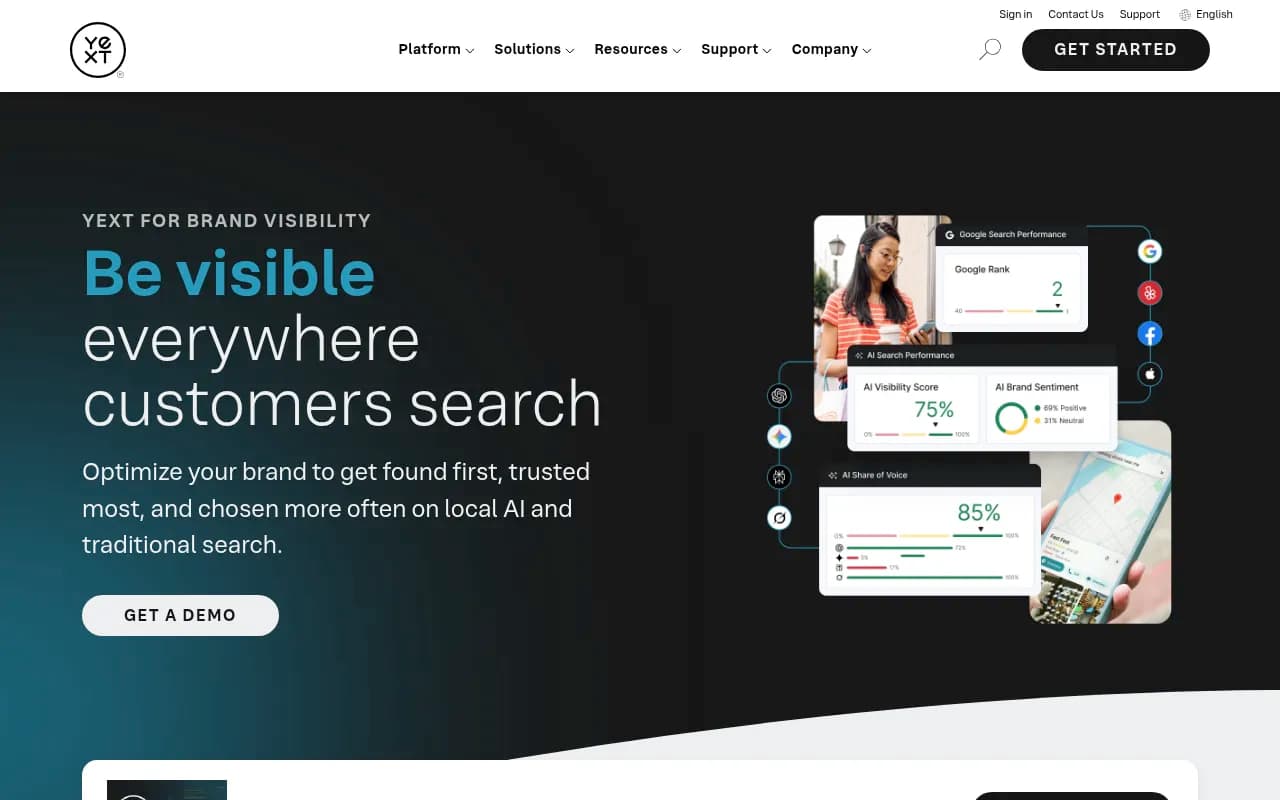
- Yext and Uberall handle listings for multi-location brands, with Yext offering location-level AI tracking per BrightLocal.
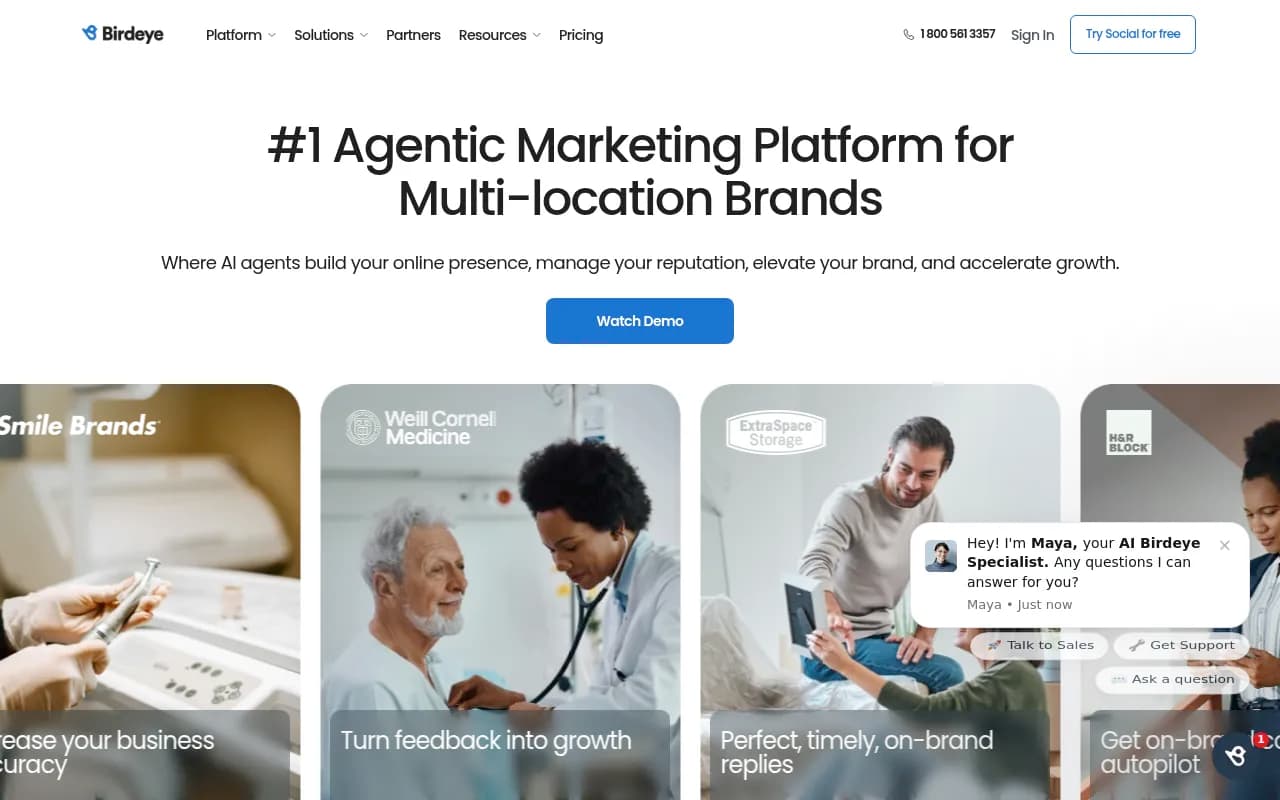
- Chatmeter and Birdeye combine reviews and listings management for multi-location operators.

For a wider look, the directory at bestgeosoftware.com lists GEO tools by category.
Tools to skip for local restaurant tracking
BrightLocal's comparison lists these as brand-level trackers: Semrush ($99/mo, 50 to 200 prompts), Ahrefs (from $199/mo per platform), Peec AI (from $95/mo), Scrunch AI (from $250/mo) and Profound (pricing not public). They are fine products for what they do. If you run one restaurant and want to know your overall AI mention rate, they work. If you need to know how you fare in a particular neighborhood, they will not tell you.

One caveat on that list: it comes from a competitor. Some of these tools may support location settings that BrightLocal did not credit. Check each vendor's current docs before ruling anything out.
Choosing the prompts to track
The tool matters less than the prompt list. Tracking 200 generic prompts wastes credits. A tight list of 20 to 40 that mirror how guests actually ask will tell you more.
Prompts that tend to matter for restaurants
- Discovery with place: "best coffee shop in [neighborhood]", "brunch spots near [landmark]"
- Near me: "cafes open now near me", "dog-friendly patio restaurant near me"
- Occasion and need: "quiet cafe to work from", "birthday dinner for 10 people in [area]"
- Dietary: "vegan restaurants in [neighborhood]", "gluten-free bakery near me"
- Branded: "is [your cafe] good?", "[your cafe] menu", "[your cafe] vs [competitor]"
SE Ranking recommends tracking branded comparison prompts separately because they skew category metrics if mixed in. That applies here: do not blend "is [cafe] good?" with your discovery prompts, or your numbers will look better than reality.
Fan-outs are short
When ChatGPT answers a local question, it runs its own web searches behind the scenes. Promptwatch's query fanout data shows average fan-out length falling from about 117 characters in early December to the high 80s by February and March, and about 53 characters in April. These are short, keyword-like searches. That suggests writing page headings the way people search: cuisine, category and area up front. The report does not test neighborhood names specifically, so treat that as a reasonable hypothesis, not a proven tactic. Also note that ChatGPT began using the site: operator at scale on August 8, 2026, so being easy to find by site-specific search is now part of the picture.
A simple setup for a cafe or small group
- Pick your unit. One location? Use a location-level tool. Trade-area problem or several nearby sites? Use a grid tool.
- Write 20 to 40 prompts using the categories above, split into discovery and branded.
- Run a baseline scan across ChatGPT and Google's AI surfaces. Note which neighborhoods are weak.
- Check the sources. If AI keeps citing a review site or directory, fix your profile there before touching your website.
- Fix the basics: menu as readable HTML text, hours, address, and location pages with the same facts everywhere.
- Rescan weekly or monthly and compare, since answers drift.
Which one should you pick?
| Your situation | Start with |
|---|---|
| One cafe, tight budget, want a quick score | BrightLocal Local AI Visibility Tracker |
| Want a map of where you win and lose by area | Local Falcon |
| Multi-location group or agency that needs content and crawler data too | Promptwatch |
| Want a restaurant-specific workflow | Trial RadarKit and compare against the above |
My honest take: most independents should start with BrightLocal or Local Falcon's free credits, learn what the answers look like, and only move to a fuller platform once there is a clear gap to close. If an agency is running this for restaurant clients, getting local GEO right is part of the job, and an agency like 1001 SEO Media can help set up the tracking and the content work that follows. For more rank-tracking options, see the directory at ai-rank-tools.com.