Key takeaways
- Profound is a strong enterprise platform, but its price point and complexity put it out of reach for most mid-market teams and agencies
- Most alternatives fall into two camps: monitoring-only dashboards (useful for awareness, not optimization) and full-cycle platforms that help you find gaps, create content, and track results
- The biggest differentiator in 2026 isn't how many AI models a tool monitors -- it's whether it tells you what to do next
- Promptwatch is the only platform in this comparison rated as a "Leader" across all evaluation categories, combining visibility tracking, content gap analysis, and a built-in AI writing agent
- Price ranges vary wildly: from ~$89/month for basic monitoring to $1,000+/month for enterprise tiers
Why people are looking for Profound alternatives
Profound raised a $35 million Series B led by Sequoia Capital, which tells you something about how seriously the market is taking AI search visibility. The platform covers a lot of ground: server log analysis for AI crawlers, brand tracking across LLMs, competitive benchmarking. For a Fortune 500 team with a dedicated analyst and a large budget, it makes sense.
But for everyone else? The friction shows up fast.
The most common complaints: pricing that scales aggressively, onboarding complexity that assumes enterprise resources, and a platform that's better at showing you data than helping you act on it. If you're a 10-person marketing team or an agency managing 15 clients, you need something that moves faster and costs less.
The good news is that the GEO tool market has matured significantly. There are now real alternatives across every price point and use case. The challenge is figuring out which ones are actually useful versus which ones are just dashboards dressed up as strategy tools.
How to evaluate a Profound alternative
Before getting into the list, here's the framework worth using. Not all "AI visibility" tools are solving the same problem.
The questions that matter:
- Does it monitor the AI models your audience actually uses (ChatGPT, Perplexity, Claude, Gemini, Google AI Overviews)?
- Does it tell you why competitors are getting cited and you're not?
- Does it help you create content that fixes those gaps, or just show you the gap exists?
- Can you track whether your new content actually improved your visibility?
- Does the pricing make sense for your team size?
Tools that only answer the first question are monitoring tools. Tools that answer all five are optimization platforms. That distinction matters more than any feature list.
The 11 best Profound alternatives in 2026
1. Promptwatch -- best overall for end-to-end AI visibility
Promptwatch is the most complete alternative to Profound for teams that want to do more than monitor. Where most tools stop at showing you a visibility score, Promptwatch runs a full cycle: find the gaps, generate content to fill them, track whether it worked.

The Answer Gap Analysis is the standout feature. It shows you exactly which prompts your competitors appear in that you don't -- not as a vague "you're missing topics" summary, but as specific questions and angles that AI models are answering without citing you. From there, the built-in AI writing agent generates articles grounded in real citation data (880M+ citations analyzed) rather than generic SEO templates.
Other things worth knowing: Promptwatch logs AI crawler activity in real time (which pages ChatGPT, Claude, and Perplexity are reading, how often, what errors they hit), tracks prompt volumes and difficulty scores so you can prioritize, and monitors Reddit and YouTube as citation sources -- two channels most competitors ignore entirely.
It covers 10 AI models including ChatGPT, Perplexity, Claude, Gemini, Google AI Overviews, DeepSeek, Grok, and Copilot. Pricing starts at $99/month for the Essential plan (1 site, 50 prompts, 5 articles), $249/month for Professional (2 sites, 150 prompts, crawler logs), and $579/month for Business (5 sites, 350 prompts). Free trial available.
Used by 6,700+ brands and agencies including Booking.com and Center Parcs.
2. Semrush -- best for teams already in the Semrush ecosystem
Semrush has added AI visibility tracking to its existing suite, which makes it a convenient option if you're already paying for the platform. You get brand mention monitoring across AI responses alongside the keyword research, site audit, and backlink tools you're used to.
The limitation is that the AI tracking is more of an add-on than a core product. Prompt sets are fixed rather than customizable, and there's no AI traffic attribution to connect visibility to actual revenue. If AI search is a secondary concern and you mainly want traditional SEO with some LLM monitoring bolted on, Semrush works. If AI visibility is your primary focus, you'll hit the ceiling quickly.
Pricing starts at $99/month for the Pro plan.
3. AthenaHQ -- best for prompt analytics depth
AthenaHQ focuses on prompt-level analytics and competitive benchmarking across AI engines. The GEO scoring dashboard is clean, and the citation tracking gives you a reasonable picture of where you stand versus competitors.
What it lacks is the action layer. AthenaHQ will tell you which prompts you're losing, but it doesn't generate content to help you win them. It's a monitoring and analysis tool, not an optimization platform. For teams that have a content team ready to act on the data, that's fine. For teams that need the whole workflow in one place, it's a gap.
Starts at $295/month.
4. Otterly.AI -- best for simple, affordable monitoring
Otterly.AI is the easiest tool on this list to get started with. You set up your prompts, connect your brand, and get visibility scores across a handful of AI models. The interface is clean and the learning curve is minimal.

The trade-off is depth. No crawler logs, no content generation, no traffic attribution, no Reddit or YouTube tracking. It's a monitoring dashboard, and a good one for what it is. If you're a startup or small brand that just wants to know whether ChatGPT is mentioning you, Otterly.AI is a reasonable starting point. If you want to improve your visibility rather than just measure it, you'll need something else.
5. Peec AI -- best for multi-language and international brands
Peec AI's main strength is its multi-language and multi-region support. If you're tracking AI visibility across markets in different languages, most tools make that painful. Peec handles it more gracefully.
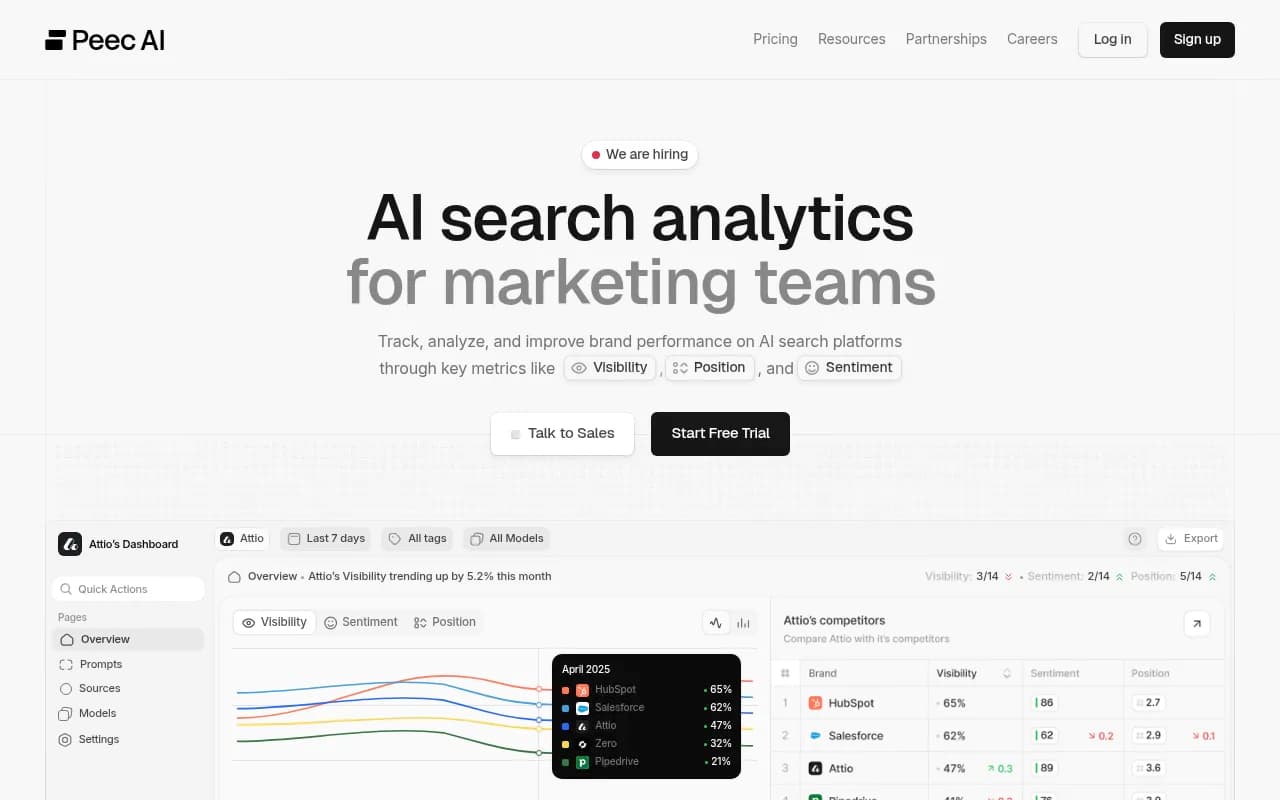
The platform covers the main AI models and provides competitive benchmarking, but like Otterly.AI, it's primarily a monitoring tool. No content generation, no crawler logs. Pricing starts at €89/month, which makes it one of the more accessible options on this list.
6. Scrunch AI -- best for technically-minded teams
Scrunch AI takes a more technical approach to AI visibility, with features aimed at understanding how AI crawlers interact with your site. Their AXP technology creates what they call a "shadow site" optimized for AI consumption.
It's an interesting approach and appeals to CTOs and technical SEO teams who want to go deeper than surface-level monitoring. The content optimization angle is more technical than editorial, which is either a strength or a limitation depending on your team's makeup.
7. Gauge -- best for competitive intelligence focus
Gauge positions itself around strategic competitive intelligence -- understanding not just where you rank in AI responses, but what the competitive dynamics look like across different AI engines.
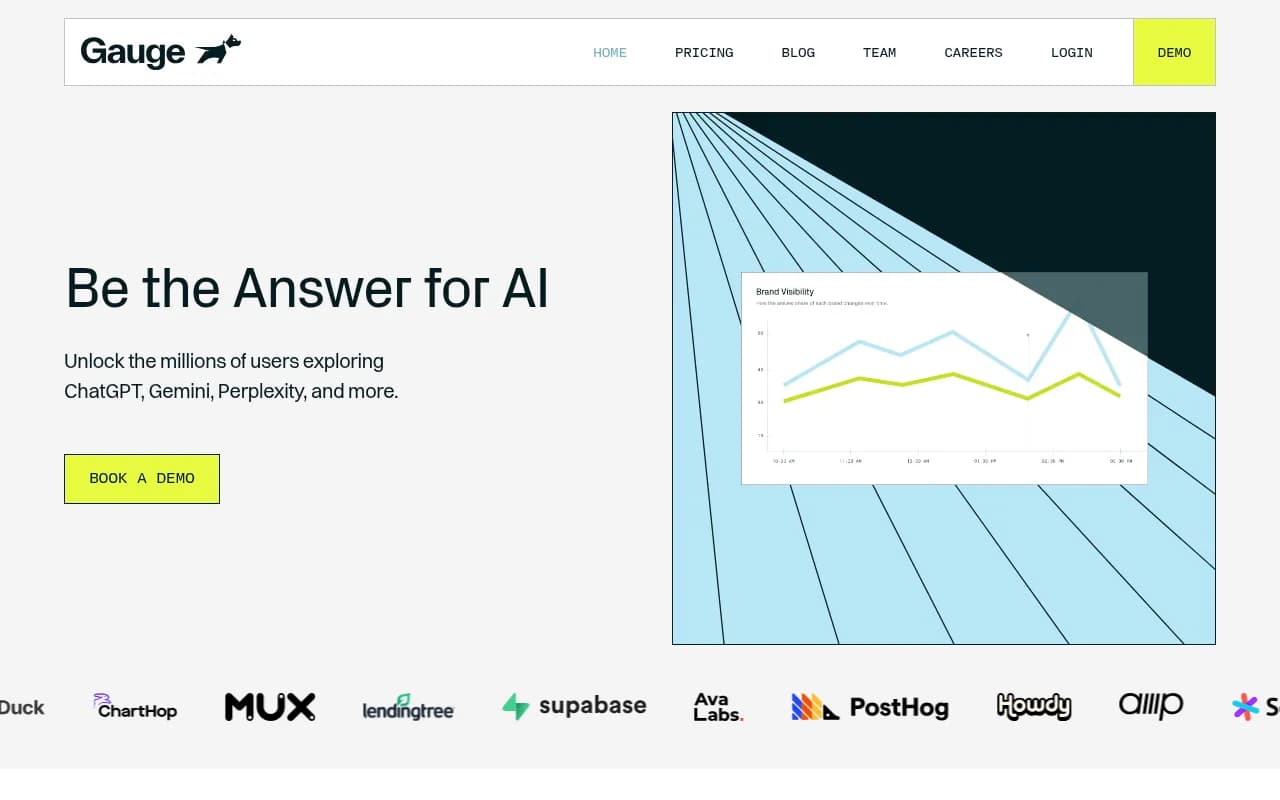
The platform provides roadmaps based on competitive gaps, which is a step beyond pure monitoring. It's particularly useful for teams doing quarterly strategy work rather than day-to-day optimization. The free ProductRank AI tool is a nice addition for quick research.
8. Ahrefs Brand Radar -- best for existing Ahrefs users
Ahrefs added Brand Radar to its suite as a way to track brand mentions in AI search results. If you're an Ahrefs power user, having this data alongside your backlink and keyword data in one interface is convenient.
The constraints are similar to Semrush's AI tracking: fixed prompts, no AI traffic attribution, limited customization. It's a useful addition to an existing Ahrefs subscription rather than a standalone AI visibility solution.
9. Brandlight -- best for brand safety and reputation management
Brandlight approaches AI visibility from a brand governance angle. The focus is on controlling how your brand is represented in AI responses -- correcting inaccuracies, managing entity data, and monitoring for reputational risks.
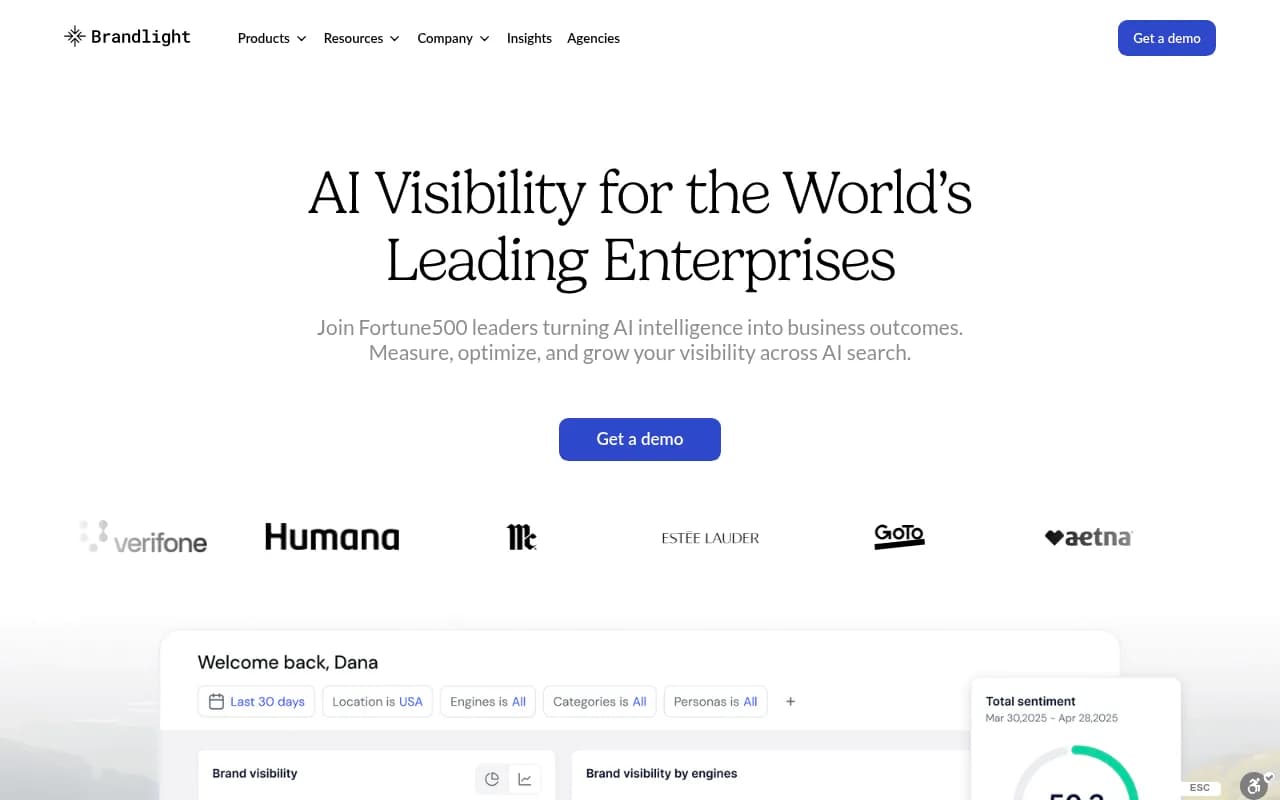
This is a different use case than pure visibility optimization. If your primary concern is what AI models are saying about your brand (accuracy, sentiment, potential misinformation) rather than whether they're citing you in purchase-intent queries, Brandlight is worth looking at. Corporate communications and brand safety teams are the natural audience.
10. SE Visible -- best for SEO agencies transitioning to GEO
SE Visible (from SE Ranking) combines traditional SEO data with AI visibility tracking, which makes it a natural fit for SEO agencies that need to show clients both traditional rankings and AI presence in one report.
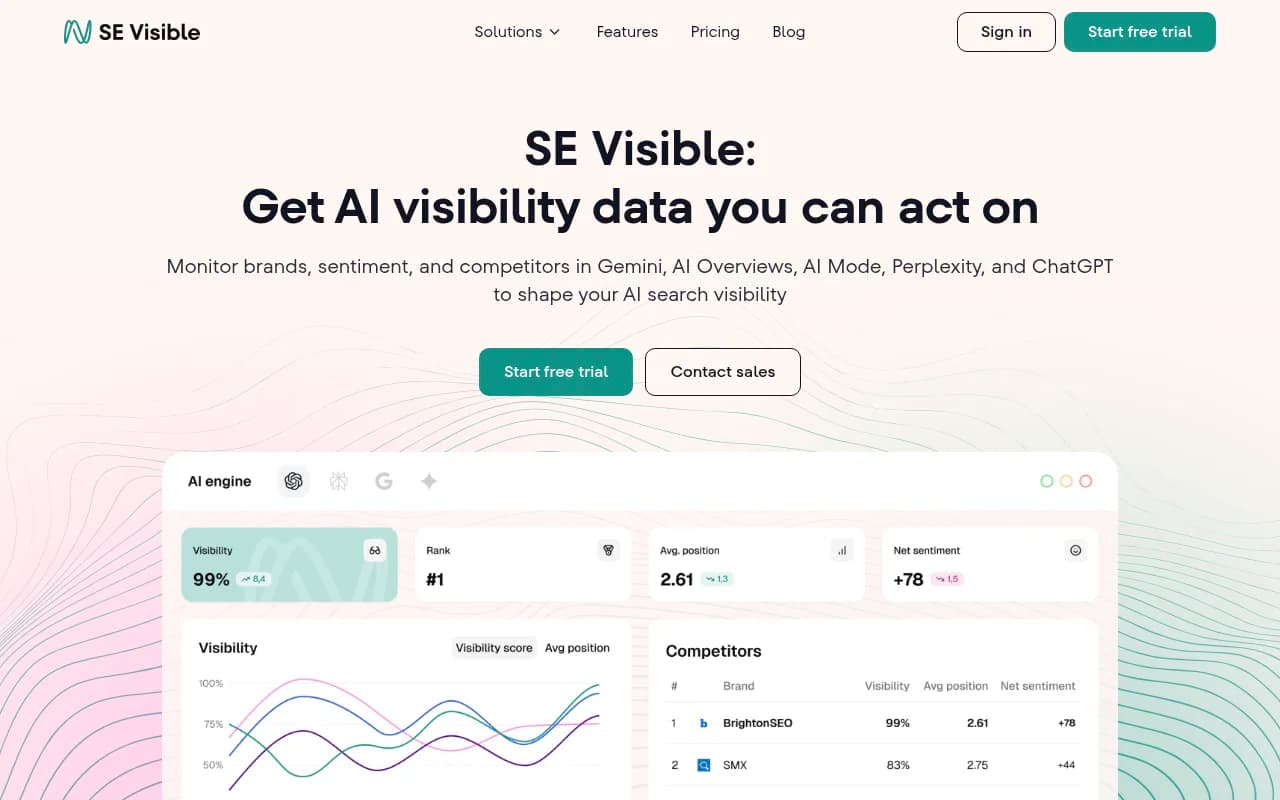
The source detection features help identify which pages are being cited in AI responses, and the integration with SE Ranking's broader SEO data gives context that pure GEO tools lack. White-label reporting options make it practical for agencies.
11. Writesonic -- best for content-heavy teams
Writesonic has expanded from an AI writing tool into a GEO platform with citation gap analysis, AI crawler tracking, and prompt research. The content creation side is naturally strong given the company's background.
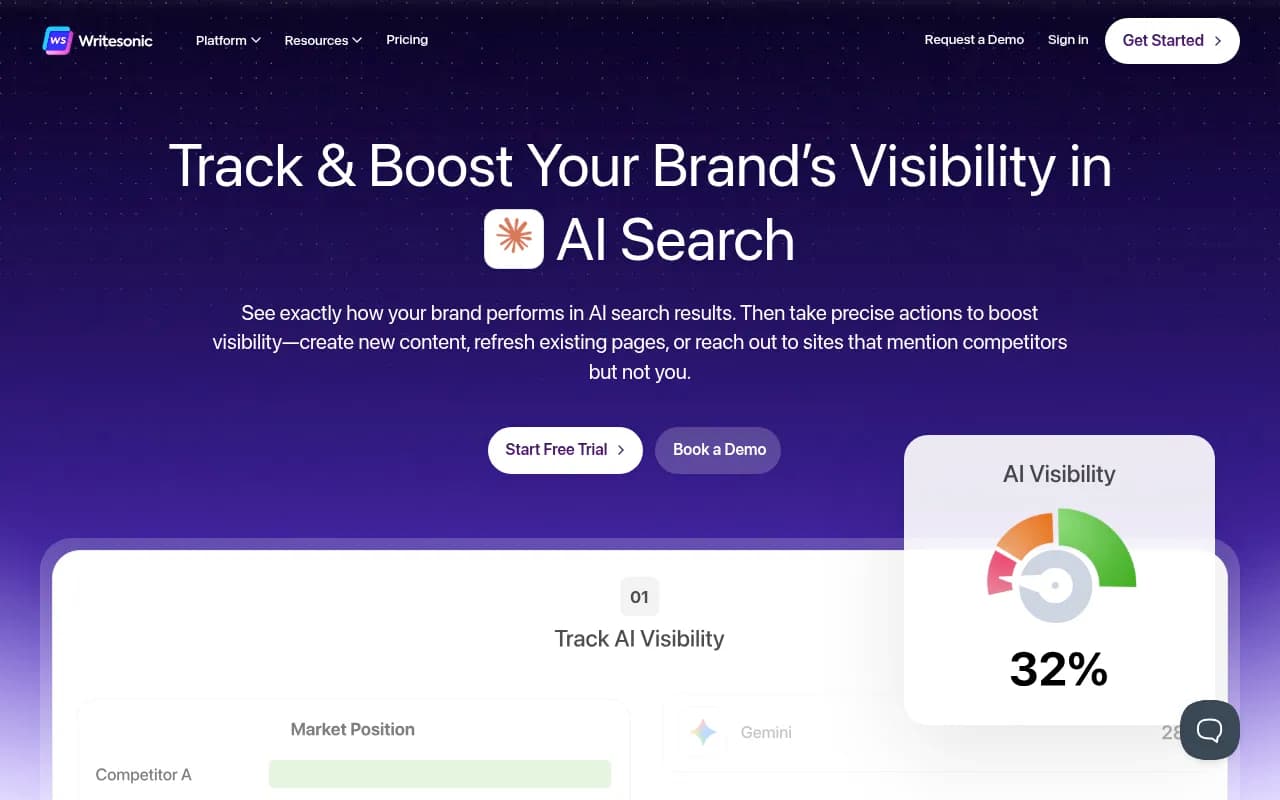
The monitoring features are less mature than dedicated GEO platforms, but if content production is your primary bottleneck and you want visibility tracking alongside it, Writesonic bundles both reasonably well. Starts at $199/month for the GEO features.
Side-by-side comparison
| Platform | AI models covered | Content generation | Crawler logs | Traffic attribution | Reddit/YouTube tracking | Starting price |
|---|---|---|---|---|---|---|
| Promptwatch | 10 | Yes (AI writing agent) | Yes | Yes | Yes | $99/mo |
| Profound | 8+ | No | Yes | Limited | No | ~$500+/mo |
| Semrush | 5 | No | No | No | No | $99/mo |
| AthenaHQ | 8 | No | No | No | No | $295/mo |
| Otterly.AI | 5 | No | No | No | No | ~$49/mo |
| Peec AI | 6 | No | No | No | No | €89/mo |
| Scrunch AI | 6 | No | Yes | No | No | Custom |
| Gauge | 5 | No | No | No | No | Custom |
| Ahrefs Brand Radar | 4 | No | No | No | No | Bundled |
| Brandlight | 5 | No | No | No | No | Custom |
| SE Visible | 5 | No | No | No | No | Add-on |
| Writesonic | 6 | Yes | Limited | No | No | $199/mo |
The monitoring-only problem
One thing worth being direct about: the majority of tools in this space are monitoring dashboards. They show you a visibility score, maybe a competitive benchmark, and leave you to figure out what to do next.
That's not nothing. Knowing you're invisible in Perplexity for high-intent queries is useful information. But it's the starting point, not the solution.
The platforms that actually move the needle are the ones that close the loop -- they show you the gap, help you create content to fill it, and then track whether the content worked. That's a much shorter list. Promptwatch does this. Writesonic gets partway there on the content side. Most others don't.
If you're evaluating tools, ask the vendor directly: "After you show me a gap, what does your platform do to help me fix it?" The answer will tell you a lot.
Which tool is right for your situation
The honest answer depends on what you actually need:
If you're a startup or small brand just getting started with AI visibility tracking, Otterly.AI or Peec AI give you the basics without overcomplicating things. You'll outgrow them, but they're a reasonable first step.
If you're an SEO agency that needs to add AI visibility to client reporting without rebuilding your workflow, SE Visible or Ahrefs Brand Radar (if you're already an Ahrefs customer) are the path of least resistance.
If you're a mid-market brand or agency that wants to actually improve AI visibility rather than just measure it, Promptwatch is the most complete option at a price point that makes sense. The combination of gap analysis, content generation, crawler logs, and traffic attribution in one platform is hard to replicate by stitching together cheaper tools.
If you're a large enterprise with a dedicated team and a big budget, Profound is a legitimate option. But so is Promptwatch at the Business or Enterprise tier -- and you get the content optimization capabilities that Profound lacks.
If brand safety and reputation management are your primary concern, Brandlight is built for that specific problem in a way that general GEO platforms aren't.
The category is moving fast. Tools that were monitoring-only six months ago are adding content features. Pricing is compressing. But the fundamental question -- does this tool help you act, or just observe -- remains the most important one to answer before signing up.