Key takeaways
- Omnia has notable gaps for B2B teams: sentiment analysis is still "coming soon," data exports require the €279/month Pro plan, and the cost per prompt is nearly 3x higher than comparable tools.
- Most AI visibility tools fall into two camps: monitoring-only dashboards (you see the data, you figure out what to do) and full-cycle platforms that help you find gaps, create content, and track results.
- B2B companies specifically need prompt intelligence, competitor gap analysis, and content optimization -- not just a dashboard showing where your brand appeared.
- Promptwatch is the only platform in this comparison rated as a "Leader" across all evaluation categories, and the only one with a built-in AI writing agent tied to real citation data.
- Free trials are available for most tools on this list. Test at least two before committing.
Omnia has had a good run of press. The Dutch startup raised €3.5 million in pre-seed funding in late 2025, which generated a lot of attention in the AI visibility space. But funding announcements and product maturity are different things, and for B2B marketing teams evaluating tools right now, the gap between the two matters.
The honest picture: Omnia's pricing page still lists sentiment analysis as "coming soon" months after launch. Data exports are locked to the €279/month Pro plan. At €79/month for 25 prompts, you're paying €3.16 per prompt -- roughly three times what some alternatives charge. And there's no Looker Studio connector, no web analytics integration, and no content generation capability.
For a B2B team that needs to understand AI search visibility, close content gaps, and actually improve where they show up in ChatGPT or Perplexity -- that's a lot of missing functionality.
This guide covers the best Omnia alternatives in 2026, with a focus on what B2B companies actually need: prompt intelligence, competitive gap analysis, content optimization, and traffic attribution.
What B2B companies actually need from an AI visibility tool
Before getting into specific tools, it's worth being clear about what "brand tracking" alone doesn't cover -- because most B2B teams need more than a visibility score.
A monitoring-only tool tells you that your brand appeared in 12% of responses for a given prompt. That's useful context. But it doesn't tell you which prompts your competitors are winning that you're not, why AI models are citing them instead of you, what content you need to create to close that gap, or whether your new content is actually working.
B2B buying cycles are long, involve multiple stakeholders, and increasingly start with an AI search query. A prospect asking ChatGPT "what's the best [category] platform for enterprise teams" is a high-intent moment. If your brand isn't in that answer, you've lost a lead before they ever reached your website.
The tools that matter for B2B are the ones that help you:
- Track visibility across the AI models your buyers actually use
- Identify specific prompts where competitors appear and you don't
- Create content that AI models will cite
- Measure whether that content is driving real traffic and pipeline
With that in mind, here's how the main alternatives stack up.
The best Omnia alternatives in 2026
Promptwatch -- best overall for B2B teams that want to close gaps, not just measure them
Promptwatch is the most complete platform in this space. Where most tools stop at monitoring, Promptwatch runs a full cycle: find the gaps, create content to fill them, track the results.
The Answer Gap Analysis feature shows you exactly which prompts your competitors rank for that you don't -- with specific content recommendations, not vague suggestions. The built-in AI writing agent then generates articles, listicles, and comparisons grounded in 880M+ citations analyzed, so the output is engineered to get cited by ChatGPT, Claude, Perplexity, and other models rather than just being generic SEO content.
For B2B teams specifically, a few things stand out. The AI Crawler Logs show which pages AI engines are actually reading on your site, how often they return, and what errors they're hitting. Prompt Intelligence gives you volume estimates and difficulty scores for each prompt, so you can prioritize high-value queries instead of guessing. And the traffic attribution layer (GSC integration, code snippet, or server log analysis) connects AI visibility to actual pipeline -- which is the number that matters to a B2B marketing director.
Pricing starts at $99/month for the Essential plan (1 site, 50 prompts, 5 articles), with the Professional plan at $249/month adding crawler logs, city-level tracking, and 15 articles per month. A free trial is available.

Profound -- best for enterprise B2B with complex reporting needs
Profound is a strong choice for larger B2B organizations that need depth over breadth. The platform has solid AI visibility tracking across major models and good reporting capabilities. It's more expensive than most alternatives, which makes it a harder sell for mid-market teams, but enterprise buyers with complex multi-brand setups tend to find the investment justified.
One limitation worth noting: Profound doesn't have Reddit or YouTube tracking, and there's no ChatGPT Shopping monitoring. For B2B teams where those channels matter less, it's less of an issue.
Otterly.AI -- best for teams that just need affordable monitoring to start
Otterly.AI is a monitoring-focused tool that covers the basics well. It tracks brand mentions across ChatGPT, Perplexity, and a handful of other models, and the pricing is accessible for smaller teams. If you're at the stage where you just want to understand your current AI visibility before investing in optimization, Otterly is a reasonable starting point.
The honest limitation: it's monitoring only. There's no content gap analysis, no AI writing agent, no crawler logs, and no traffic attribution. You'll see the data, but you'll need to figure out what to do with it yourself.

SE Ranking -- best for teams that want AI visibility alongside traditional SEO
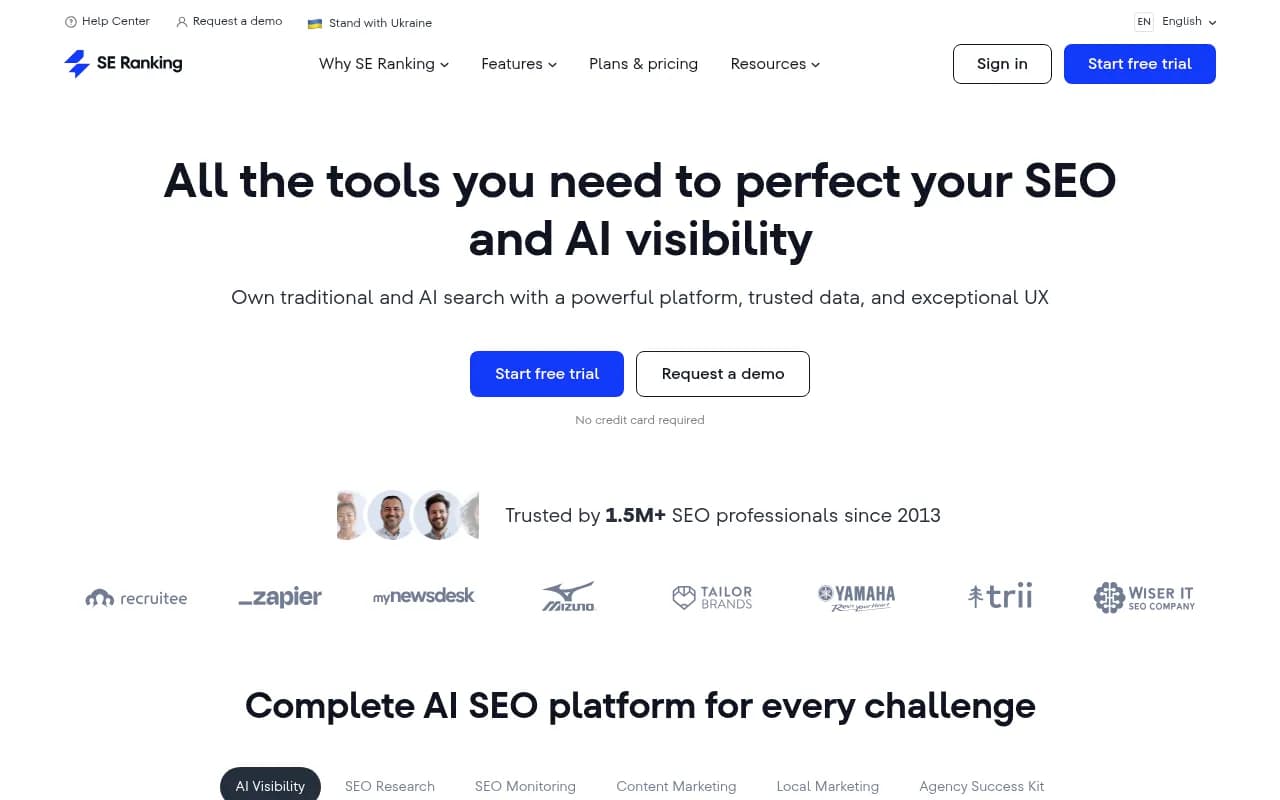
SE Ranking has expanded its platform to include AI search visibility tracking alongside its established keyword ranking and SEO tools. For B2B teams that are managing both traditional SEO and AI search visibility in the same workflow, having them in one place has real practical value.
The AI visibility features aren't as deep as dedicated platforms -- you won't get the same level of prompt intelligence or content gap analysis -- but the integration with keyword data and on-page SEO tools makes it a sensible choice for teams that don't want to manage multiple subscriptions.
Scrunch AI -- best for B2B teams focused on content optimization
Scrunch AI has built a solid reputation for helping brands understand how AI models perceive and cite their content. The platform is particularly strong on the analysis side: it surfaces which pages are getting cited, what topics are driving citations, and where your content has gaps relative to competitors.
It's a better fit for content-heavy B2B companies (think SaaS, professional services, or consulting firms) than for brands that need heavy prompt monitoring across many models.
Writesonic -- best for B2B teams prioritizing content creation over tracking
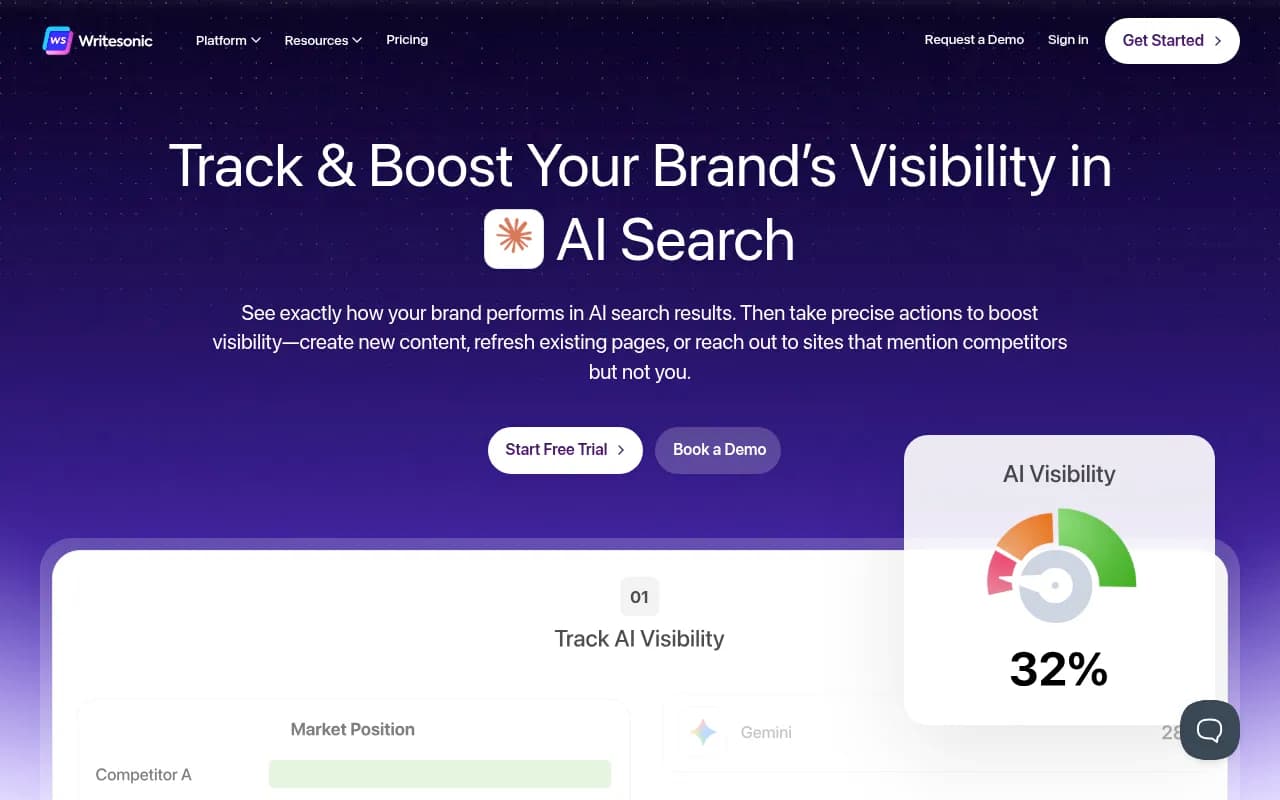
Writesonic has evolved from an AI writing tool into a broader AI search visibility platform. G2 lists it as the top overall Omnia alternative, which reflects its strong content generation capabilities. For B2B teams that have already done the analysis work and know what content they need to create, Writesonic's writing tools are genuinely good.
The gap is on the tracking and intelligence side. If you need deep prompt monitoring, competitor gap analysis, or crawler logs, you'll want to pair it with a dedicated visibility tool.
Peec AI -- best for straightforward multi-model monitoring
Peec AI is a clean, focused monitoring tool that tracks brand visibility across multiple AI engines including Google AI Mode. The interface is straightforward, the data is reliable, and the pricing is reasonable. For B2B teams that want a simple dashboard showing AI visibility trends without a lot of complexity, Peec AI delivers.
Like Otterly, it's monitoring-only. No content generation, no gap analysis, no traffic attribution.

Athena HQ -- best for teams that need structured brand monitoring at scale
Athena HQ covers 8+ AI search engines and has a clean interface for tracking brand visibility and sentiment. It's a solid monitoring platform, particularly for teams that need to track multiple brands or product lines simultaneously.
The limitation for B2B teams is the same as most monitoring tools: it shows you where you stand but doesn't help you improve. There's no content optimization workflow built in.
Feature comparison
Here's how the main alternatives compare across the capabilities that matter most for B2B teams:
| Tool | AI models tracked | Content gap analysis | AI content generation | Crawler logs | Traffic attribution | Reddit/YouTube tracking | Starting price |
|---|---|---|---|---|---|---|---|
| Promptwatch | 10+ | Yes | Yes (built-in agent) | Yes | Yes | Yes | $99/mo |
| Profound | 6+ | Limited | No | No | No | No | Custom |
| Otterly.AI | 5+ | No | No | No | No | No | ~$49/mo |
| SE Ranking | 5+ | Limited | No | No | No | No | ~$65/mo |
| Scrunch AI | 5+ | Yes | No | No | No | No | Custom |
| Writesonic | 4+ | No | Yes | No | No | No | ~$79/mo |
| Peec AI | 6+ | No | No | No | No | No | ~$49/mo |
| Athena HQ | 8+ | No | No | No | No | No | Custom |
| Omnia | 4+ | No | No | No | No | No | €79/mo |
What to look for when evaluating these tools
Prompt intelligence, not just brand mentions
Most monitoring tools tell you how often your brand appeared in AI responses. That's a vanity metric if you don't also know which prompts are driving that visibility, how competitive those prompts are, and which ones you're losing to competitors.
Look for tools that give you volume estimates and difficulty scores per prompt, and that show you query fan-outs -- how one prompt branches into related sub-queries. That's the data you need to prioritize your content investment.
Content gap analysis that's actually actionable
"You're not visible for these prompts" is useful. "Here's the specific content your site is missing that would make AI models cite you for those prompts" is much more useful.
The difference between a monitoring tool and an optimization tool is whether it bridges that gap. Most tools in this space don't.
Traffic attribution that connects to revenue
For B2B teams, AI visibility only matters if it's driving pipeline. A tool that shows you visibility scores but can't connect them to actual website visits or conversions is hard to justify to a CFO.
Look for server log analysis, GSC integration, or a tracking snippet that shows you which AI-driven visits are converting. This is still a relatively rare capability -- most tools don't have it.
Crawler logs for technical optimization
AI models crawl your website before they can cite it. If they're hitting errors, missing pages, or returning infrequently, your content won't get cited regardless of how good it is. Crawler logs that show you exactly what AI engines are reading on your site (and what they're not) are a meaningful differentiator.
The monitoring-only trap
One pattern worth calling out explicitly: a lot of B2B teams buy a monitoring tool, spend a few months looking at dashboards, and then struggle to show ROI because they haven't changed anything on their website.
The tools that generate real results are the ones that close the loop -- find the gaps, create the content, track whether it worked. That cycle is harder to build than a monitoring dashboard, which is why most tools haven't done it.
If you're evaluating Omnia alternatives specifically because you want to improve your AI search visibility (not just measure it), make sure the tool you choose has a clear answer to "what do I do with this data?"
Which tool is right for your B2B team?
A few quick heuristics:
If you're just starting out and want to understand your current AI visibility before investing heavily, Otterly.AI or Peec AI give you a low-cost entry point.
If you're managing traditional SEO and AI visibility in the same team and want one tool for both, SE Ranking is the most practical option.
If you're a content-heavy B2B company and you want to understand how AI models perceive your existing content, Scrunch AI is worth a look.
If you need the full cycle -- gap analysis, content generation, crawler logs, traffic attribution -- and you want a platform that's been tested across 6,700+ brands, Promptwatch is the strongest option in the market right now.
The gap between "monitoring" and "optimization" is where most B2B teams leave results on the table. The tools that help you close that gap are the ones worth paying for.