Key takeaways
- GetMint is a capable AI visibility tool with a content creation focus, but several alternatives offer deeper optimization, better prompt intelligence, and stronger tracking across more AI models.
- The biggest gap in most AI visibility tools (including GetMint) is the jump from "here's your data" to "here's what to do about it" -- look for platforms that close that loop.
- Promptwatch is the only platform in 2026 rated as a "Leader" across all evaluation categories, combining gap analysis, AI content generation, and citation tracking in one place.
- Platforms like Profound, Otterly.AI, and Scrunch AI each have distinct strengths -- but most are monitoring-only dashboards without built-in content optimization.
- If you're evaluating alternatives, prioritize: crawler log access, prompt volume data, content generation, and traffic attribution -- not just brand mention counts.
Why people look for GetMint alternatives
GetMint has carved out a real niche. It's particularly strong for teams that want to move fast on content -- the platform is built around agility, and if your main goal is publishing AI-optimized articles quickly, it does that reasonably well.
But there are a few situations where people start looking elsewhere.
Some teams outgrow the monitoring side of GetMint and want deeper prompt intelligence -- volume estimates, difficulty scores, query fan-outs that show how one search branches into sub-queries. Others want to track more AI models (GetMint's coverage varies), or need crawler log data to understand why AI engines aren't indexing certain pages. And for agencies managing multiple clients, the workflow and reporting tools matter a lot.
The broader issue is that the AI visibility space has matured fast. In early 2025, most platforms were basically dashboards that told you whether your brand got mentioned. By 2026, the better ones have evolved into full optimization platforms that help you find gaps, create content to fill them, and measure whether that content actually gets cited. If GetMint isn't meeting you at that level, there are alternatives that will.
What to actually look for in a GetMint alternative
Before jumping to the list, it's worth being specific about what separates a good AI visibility platform from a great one.
Monitoring is table stakes. Every tool on this list will tell you whether your brand appears in AI responses. What matters more:
- Content gap analysis: Can the platform show you which prompts competitors rank for that you don't? This is where the real optimization opportunity lives.
- Built-in content generation: Can you go from "gap identified" to "article drafted" without switching tools? This saves hours and keeps the optimization loop tight.
- Crawler logs: Does the platform show you which pages AI crawlers (ChatGPT, Claude, Perplexity) are actually visiting, how often, and what errors they hit? Most tools don't have this.
- Prompt intelligence: Volume estimates and difficulty scores let you prioritize. Without them, you're optimizing blind.
- Traffic attribution: Can you connect AI visibility to actual website visits and revenue? This is what makes the case to leadership.
- Model coverage: Are you tracking 5 AI models or 10? The gap matters as AI search fragments across platforms.
With that in mind, here's how the main alternatives stack up.
The best GetMint alternatives in 2026
Promptwatch -- best overall for content optimization
Promptwatch is the most complete platform in this space right now. The core difference from GetMint (and most other tools) is that it's built around an action loop rather than a monitoring dashboard.
The sequence works like this: Answer Gap Analysis shows you exactly which prompts competitors are visible for that you're not. The built-in AI writing agent then generates articles, listicles, and comparisons grounded in real citation data -- not generic SEO content, but pieces engineered to get cited by ChatGPT, Claude, Perplexity, and others. Then page-level tracking shows whether those articles actually get picked up, with traffic attribution (via code snippet, GSC integration, or server log analysis) connecting visibility to revenue.
On top of that, Promptwatch has AI crawler logs -- real-time data on which pages AI engines visit, how often, and what errors they encounter. This is something most competitors simply don't offer. It also tracks Reddit and YouTube discussions that influence AI recommendations, monitors ChatGPT Shopping carousels, and covers 10 AI models including DeepSeek, Grok, and Mistral alongside the obvious ones.
Pricing starts at $99/month for the Essential plan (1 site, 50 prompts, 5 articles). Professional is $249/month and adds crawler logs, city/state tracking, and 15 articles per month. Business is $579/month for 5 sites and 30 articles.

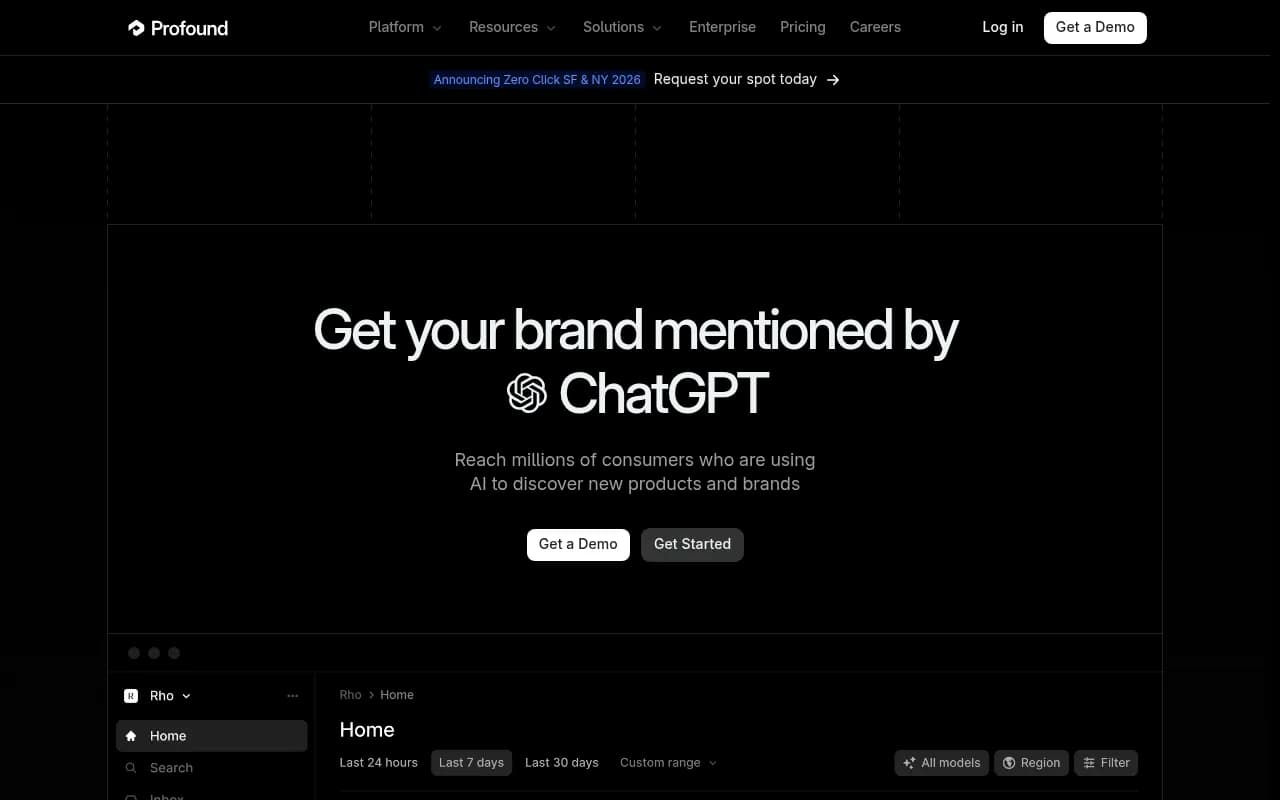
Profound -- best for enterprise reputation management
Profound is a serious platform aimed at larger brands and agencies. It's particularly strong on share-of-voice analysis and brand sentiment across AI responses -- if you need to understand not just whether you're mentioned but how you're being described, Profound does this well.
The agency mode includes dedicated brand configurations and pitch environments, which makes it useful for client-facing work. That said, Profound is more monitoring-heavy than optimization-heavy. It doesn't have the same content generation depth as Promptwatch, and it sits at a higher price point.
Otterly.AI -- best budget option for basic tracking
Otterly.AI is the go-to for teams that just need affordable, clean monitoring without a lot of complexity. It tracks brand mentions across the main AI models, gives you share-of-voice data, and doesn't require a long setup process.
The honest limitation: it's a monitoring tool. There's no content generation, no crawler logs, no prompt volume data. If you're early in your GEO journey and just want to know whether you're showing up, Otterly.AI is fine. If you want to actually improve your visibility, you'll hit a ceiling quickly.

Scrunch AI -- best for teams that want structured AI analysis
Scrunch AI takes a more analytical approach to AI visibility. It's good at breaking down how AI models structure their responses and which sources they draw from -- useful if you want to understand the "why" behind your visibility scores.
Like Otterly, though, Scrunch is primarily a monitoring and analysis platform. GetMint actually positions itself as a Scrunch alternative specifically because of content creation capabilities, so if content generation is your priority, Scrunch isn't the answer.
Writesonic -- best for teams that want AI writing plus visibility in one tool
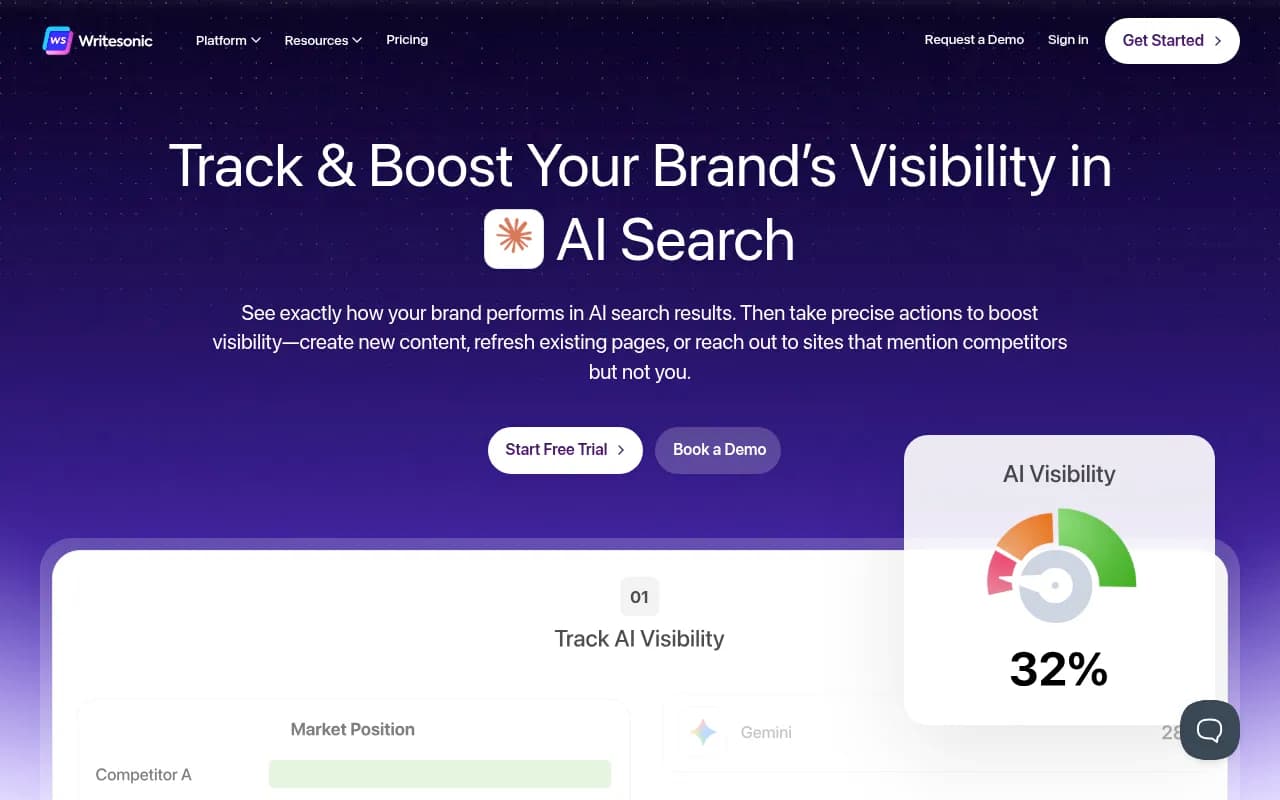
Writesonic has expanded significantly beyond its origins as an AI writing tool. The platform now includes AI search visibility tracking alongside its content generation features, which makes it an interesting option if you want both in one subscription.
The visibility tracking isn't as deep as dedicated GEO platforms -- prompt intelligence and crawler logs aren't there -- but if you're already using Writesonic for content and want to layer in some AI search monitoring, it's a reasonable combination.
Peec AI -- best for multi-language and multi-region tracking
Peec AI stands out for international teams. If you're monitoring AI visibility across multiple languages and regions, Peec handles this better than most. The interface is clean and the setup is straightforward.
The trade-off is depth -- Peec is solid on monitoring but light on optimization features. No content generation, limited prompt intelligence. Good for global brands that need geographic coverage; less useful if optimization is the priority.

SE Ranking -- best for teams that want traditional SEO plus AI visibility
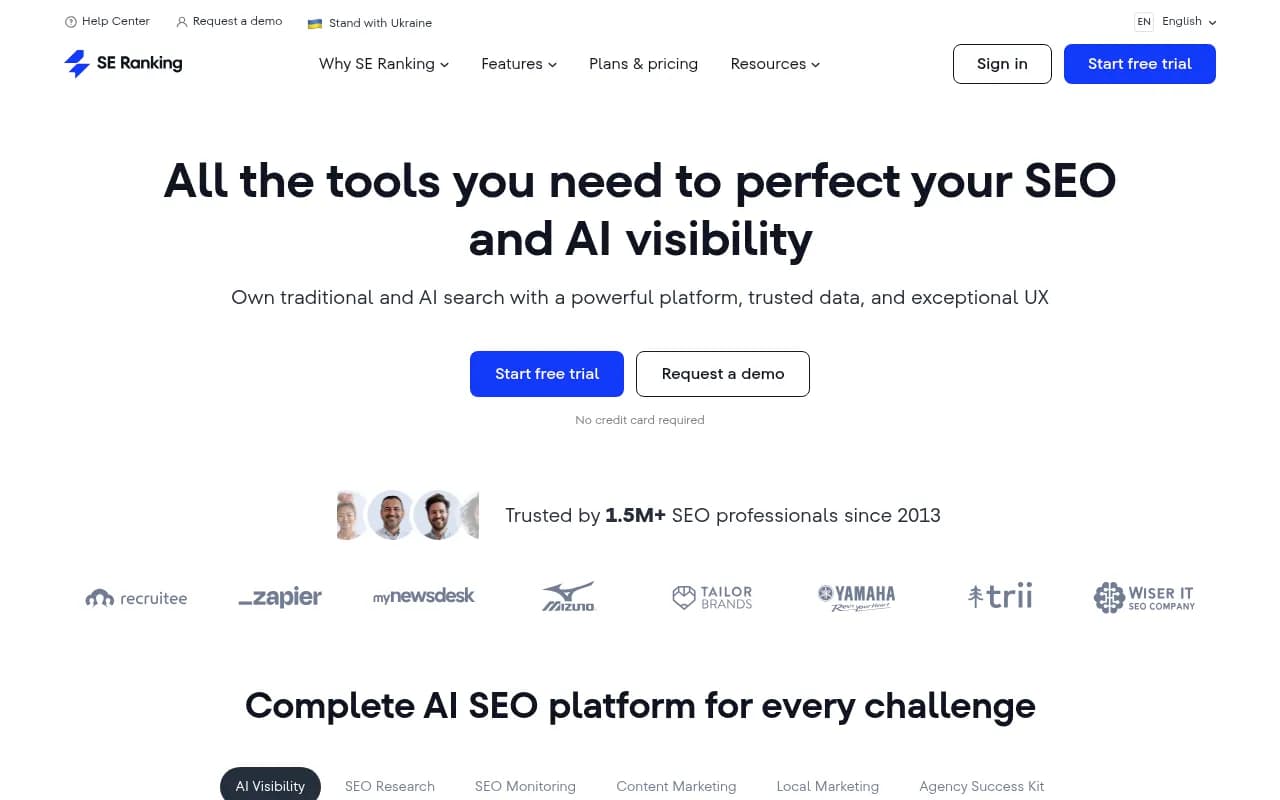
SE Ranking has been a reliable SEO platform for years, and its AI visibility tracker adds LLM monitoring on top of the existing keyword and ranking tools. If your team already uses SE Ranking for SEO, the AI visibility layer is a natural extension.
The AI-specific features aren't as advanced as dedicated GEO platforms, but the combination of traditional SEO data and AI visibility in one tool has real value for teams that don't want to manage multiple subscriptions.
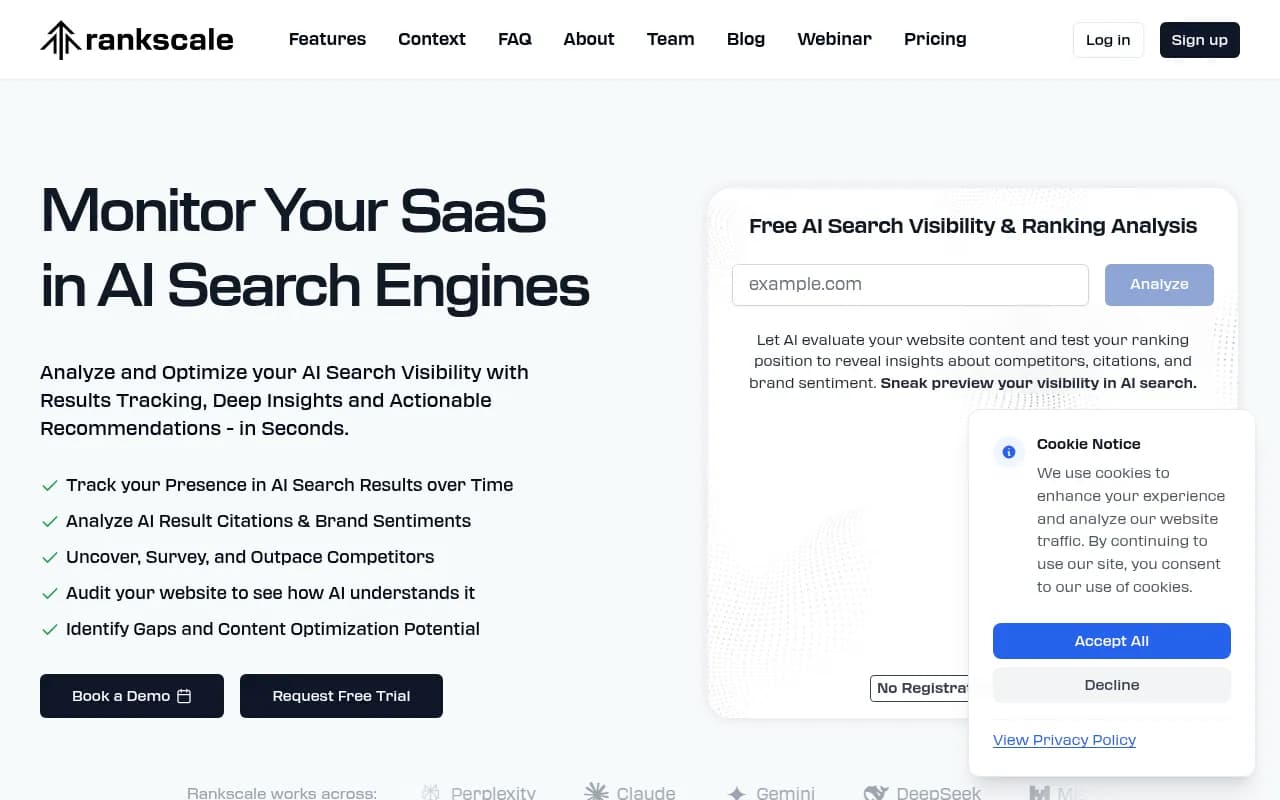
Rankscale -- best for scaling visibility across many prompts
Rankscale is built for teams that need to track visibility at scale -- large prompt sets, multiple competitors, frequent refresh cycles. It's a solid technical platform with good data infrastructure.
Content optimization isn't the focus here. Rankscale is more about measurement at volume than about helping you figure out what to create. Worth considering if you have a large, established content operation and need robust tracking rather than content guidance.
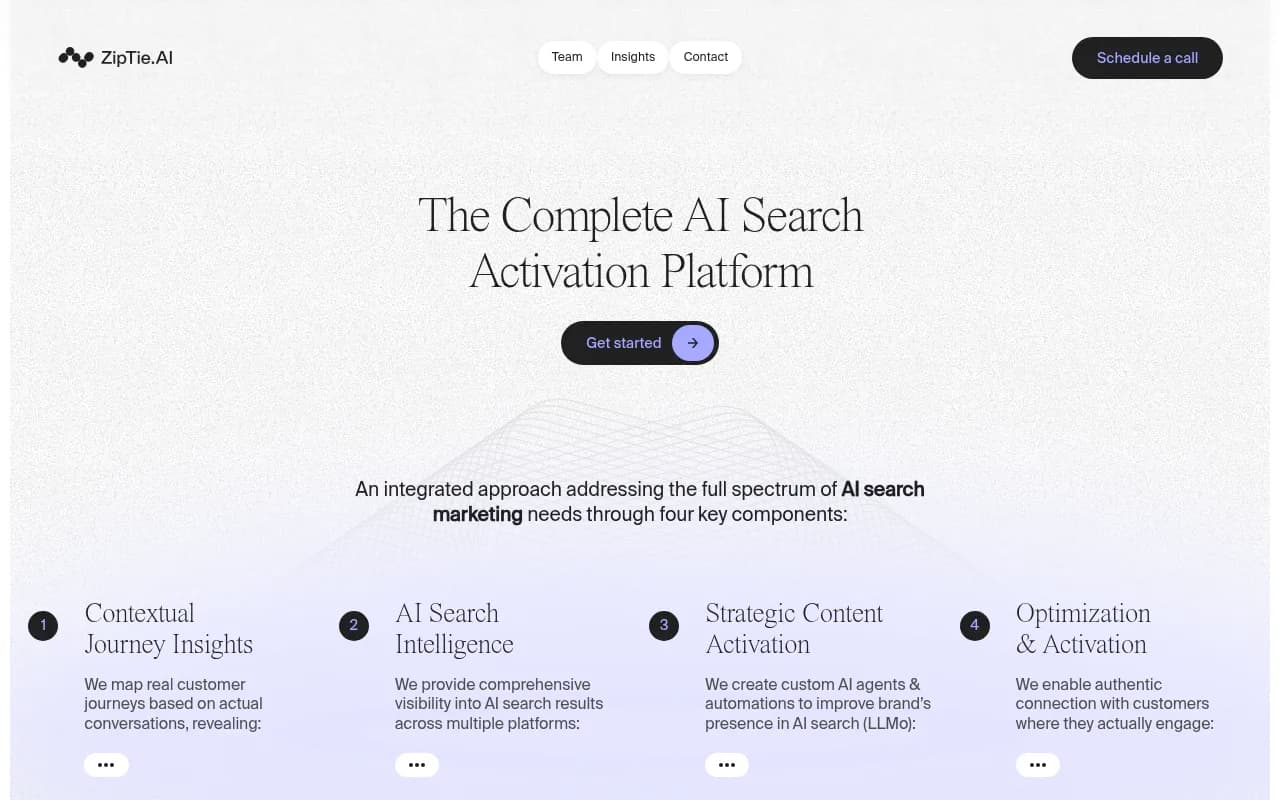
ZipTie -- best for deep diagnostic analysis
ZipTie takes a diagnostic approach -- it's particularly good at understanding why your brand is or isn't appearing in AI responses, breaking down the factors that influence citation likelihood. Useful for technical teams that want to go deep on a specific visibility problem.
Side-by-side comparison
| Platform | Content generation | Crawler logs | Prompt intelligence | AI models tracked | Traffic attribution | Starting price |
|---|---|---|---|---|---|---|
| Promptwatch | Yes (built-in AI writer) | Yes | Volume + difficulty scores | 10 | Yes (GSC, snippet, logs) | $99/mo |
| GetMint | Yes (content-focused) | Limited | Basic | ~5 | Limited | Varies |
| Profound | No | No | Limited | 6+ | No | Higher |
| Otterly.AI | No | No | No | 5+ | No | ~$49/mo |
| Scrunch AI | No | No | Basic | 5+ | No | Varies |
| Writesonic | Partial (writing tool) | No | No | 4+ | No | $99/mo |
| Peec AI | No | No | No | 5+ | No | Varies |
| SE Ranking | No | No | Basic | 4+ | No | $55/mo |
| Rankscale | No | No | Basic | 5+ | No | Varies |
| ZipTie | No | No | Limited | 4+ | No | Varies |
How to choose the right one
The honest answer depends on where you are in your GEO journey.
If you're just starting out and want to know whether your brand shows up in AI responses, Otterly.AI or Peec AI will get you there cheaply. They're monitoring tools, nothing more, but that's fine for a first look.
If you're at the stage where you know you have an AI visibility problem and you want to fix it -- meaning you want to identify content gaps, create content that gets cited, and measure the results -- you need a platform that goes beyond monitoring. Promptwatch is the most complete option here. The combination of Answer Gap Analysis, built-in content generation grounded in citation data, and crawler logs is genuinely difficult to replicate by stitching together separate tools.
If you're an enterprise brand with complex reputation management needs, Profound is worth a look. If you're an agency that already uses SE Ranking for SEO, the AI visibility add-on makes sense. If you're running a global brand across multiple languages, Peec AI handles that better than most.
What I'd avoid: choosing a platform based purely on price or interface. The real cost of a monitoring-only tool is the time you spend trying to figure out what to do with the data it gives you. A platform that shows you the gap and helps you fill it is worth more than one that just shows you the gap.
The bottom line
GetMint is a reasonable choice for content-forward teams that want to move fast. But if you're looking for something with deeper prompt intelligence, better crawler visibility, or a tighter loop between finding gaps and creating content to fill them, there are better options in 2026.
The space has moved fast. The tools that were "good enough" in 2024 are now being outpaced by platforms that treat AI visibility as an optimization problem, not just a monitoring one. That shift -- from dashboard to action loop -- is the most important thing to evaluate when choosing a GetMint alternative.