Key takeaways
- Evertune is a premium enterprise GEO platform priced from $3,000/month, making it out of reach for most mid-market teams
- Several strong alternatives exist across different price points and capability levels -- from full-stack optimization platforms to lightweight monitoring tools
- The biggest distinction in this market is between platforms that only monitor AI visibility and those that help you actually improve it
- For teams that want monitoring plus content gap analysis plus AI content generation in one place, Promptwatch is the most complete option at a fraction of Evertune's price
- Fortune 500 teams with complex enterprise requirements may also want to evaluate Profound AI, Conductor, and BrightEdge
Evertune has carved out a specific niche: enterprise GEO for large brands that want to dominate AI search results across ChatGPT, Perplexity, Google AI Overviews, and the rest. It's a serious product. But at $3,000/month as a starting price, it's also a serious commitment -- and not the right fit for every team.
Maybe your budget doesn't stretch that far. Maybe you need more content optimization features, or better Reddit/YouTube tracking, or a platform that doesn't just show you problems but helps you fix them. Whatever the reason, there are real alternatives worth evaluating.
This guide covers the best Evertune alternatives in 2026, with honest assessments of what each one does well and where it falls short.
What Evertune actually does (and why people look for alternatives)
Before comparing alternatives, it's worth being clear about what Evertune is. It's an enterprise AI visibility platform that tracks how Fortune 500 brands appear in AI-generated responses. It monitors brand mentions, sentiment, and citation patterns across major LLMs, and it's built for large organizations with dedicated digital strategy teams.
The reasons people look elsewhere:
- The price. $3,000/month is a lot for a monitoring tool, especially when mid-market alternatives offer comparable tracking at a fraction of the cost.
- Monitoring-heavy focus. Like several enterprise GEO tools, Evertune is strong on visibility data but lighter on the "now what?" side -- content gap analysis, AI content generation, and optimization workflows.
- Overkill for smaller teams. If you're running a 3-person marketing team, you don't need enterprise-grade dashboards designed for Fortune 500 reporting structures.
With that context, here are the platforms worth considering.
The best Evertune alternatives in 2026
Promptwatch -- best overall alternative
Promptwatch is the most direct functional alternative to Evertune for teams that want more than a monitoring dashboard. It tracks AI visibility across 10 models (ChatGPT, Claude, Perplexity, Gemini, Google AI Overviews, Grok, DeepSeek, Copilot, Meta AI, and Mistral), but the real differentiator is what happens after you see the data.
The platform's Answer Gap Analysis shows you exactly which prompts competitors are getting cited for that you're not. Then the built-in AI writing agent generates articles, listicles, and comparisons grounded in 880M+ citations analyzed -- content specifically engineered to get picked up by AI models, not generic SEO filler. You track the results as your visibility scores improve. That full loop -- find gaps, create content, measure impact -- is what separates Promptwatch from most of the field.
A few features that enterprise teams specifically appreciate: AI crawler logs that show which pages ChatGPT and Perplexity are actually reading (and which errors they're hitting), Reddit and YouTube tracking that surfaces the discussions shaping AI recommendations, ChatGPT Shopping monitoring, and multi-language/multi-region support with customizable personas.
Pricing starts at $99/month for the Essential plan, going up to $579/month for Business (5 sites, 350 prompts, 30 articles). Agency and enterprise pricing is available on request. That's a very different conversation than Evertune's $3,000/month floor.

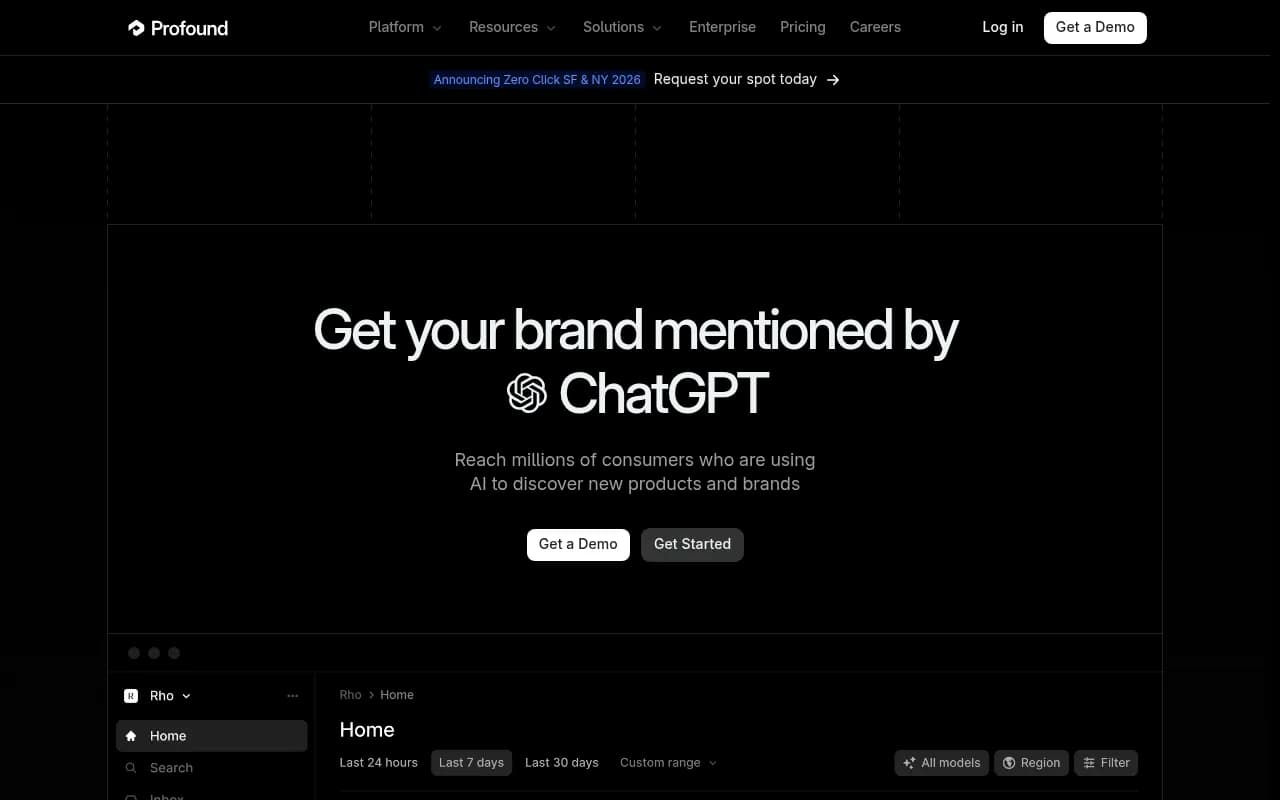
Profound AI -- best for large enterprise teams
Profound AI is Evertune's closest direct competitor in terms of positioning. It's built for enterprise brands competing in zero-click AI search environments, with strong tracking capabilities and a focus on brand narrative control across LLMs.
Where it falls short relative to Promptwatch: it's primarily a monitoring platform. The content optimization and generation capabilities are more limited, and it doesn't have Reddit/YouTube tracking or ChatGPT Shopping monitoring. It's also priced at the enterprise tier, which means it shares Evertune's accessibility problem for mid-market teams.
That said, if you're a large enterprise with a dedicated GEO team and you need the deepest possible visibility data, Profound AI is worth evaluating alongside Evertune.
Conductor -- best for teams bridging SEO and GEO
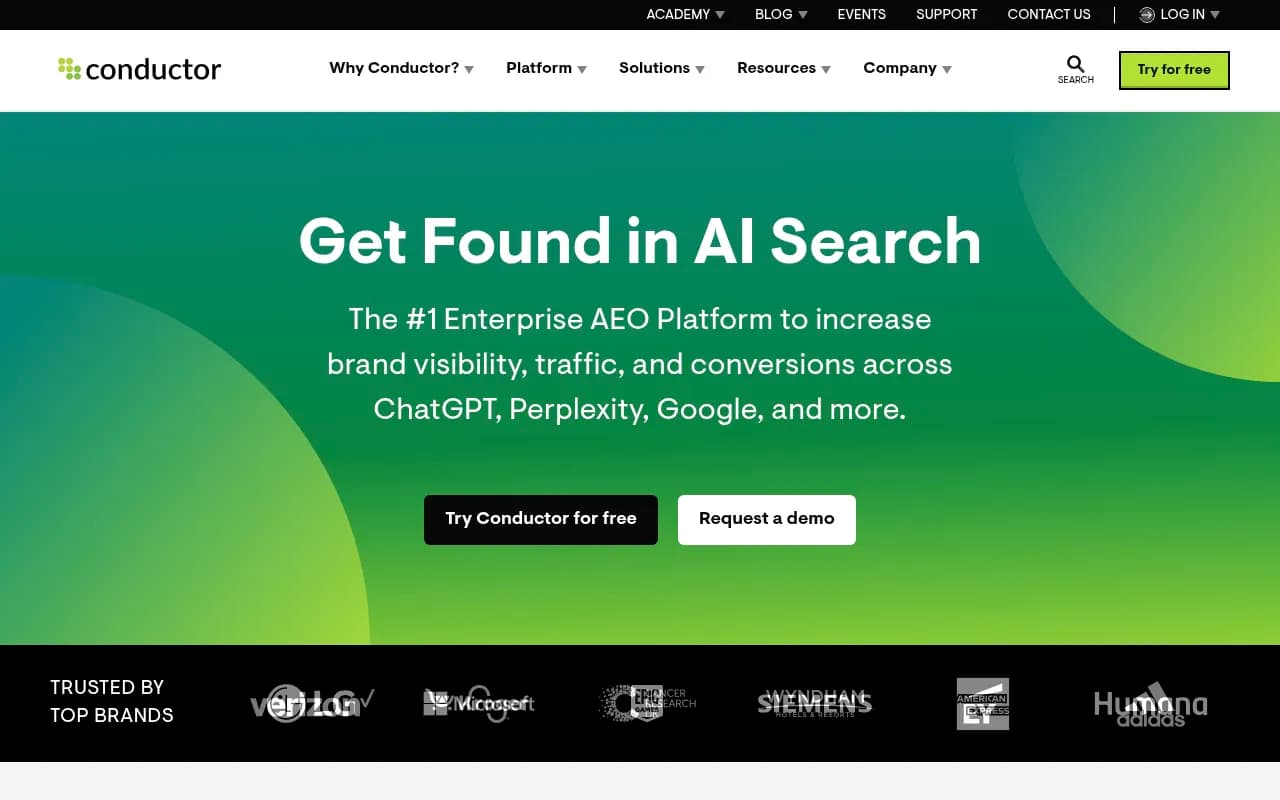
Conductor has been an enterprise SEO platform for years, and it's made a serious push into AI search visibility. For teams that already have an SEO workflow and want to extend it into GEO without switching platforms entirely, Conductor is a natural fit.
It handles traditional SEO metrics alongside AI visibility tracking, which is genuinely useful for teams that still care about organic rankings alongside their AI search presence. The tradeoff is that it's not a pure-play GEO tool -- if AI visibility is your primary focus, you'll be paying for a lot of SEO infrastructure you may not need.
BrightEdge -- best for enterprise content intelligence
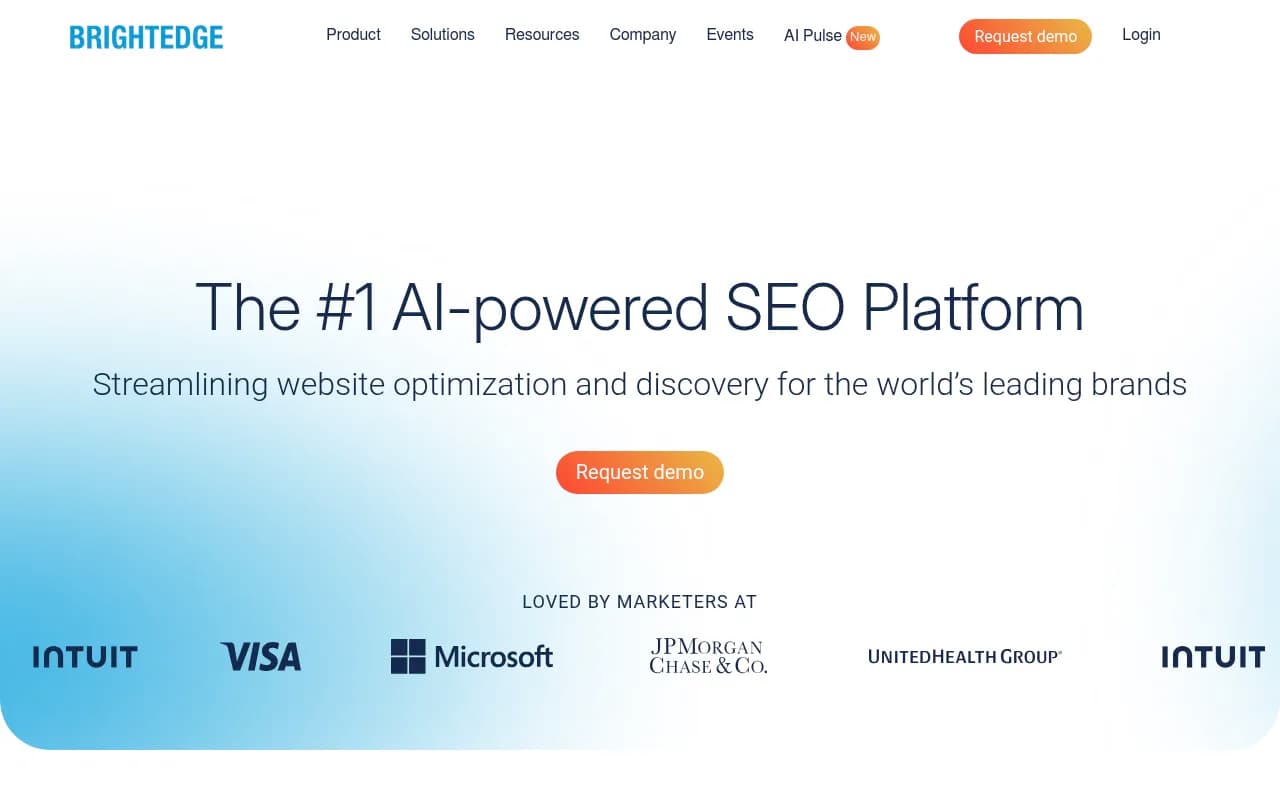
BrightEdge is another legacy enterprise SEO platform that has built out AI search visibility capabilities. It's particularly strong on content intelligence -- understanding what content is performing across both traditional and AI search, and why.
Like Conductor, it's best suited for large organizations that want a unified view of their search presence rather than a dedicated GEO tool. The AI-specific features are solid but not as deep as purpose-built GEO platforms.
AthenaHQ -- best for narrative and tone monitoring
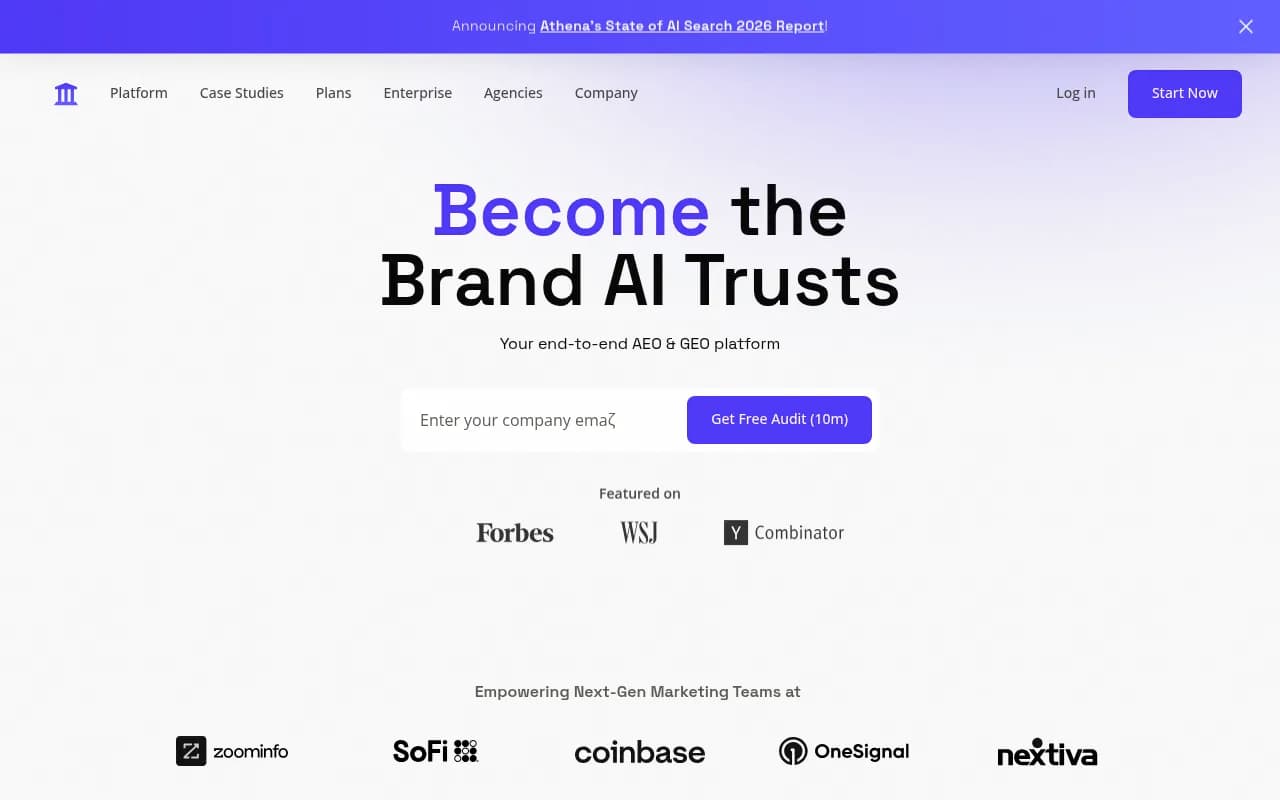
AthenaHQ focuses specifically on how AI models describe and position your brand -- the narrative layer rather than just citation frequency. If you're concerned about brand safety in AI responses (whether models are saying accurate, positive things about you), AthenaHQ is one of the more specialized tools for that use case.
It's monitoring-focused, which means it's better at telling you what's happening than helping you change it. But for brand teams at large organizations where narrative accuracy is a compliance or reputation concern, that monitoring depth has real value.
Scrunch AI -- best for mid-market teams
Scrunch AI tracks and monitors how brands appear across ChatGPT, Claude, and other AI assistants. It's a cleaner, more accessible product than the enterprise-tier tools -- easier to set up, faster to get value from, and priced for teams that aren't running Fortune 500 budgets.
The limitations are real: it's primarily a monitoring tool without the content generation and gap analysis capabilities of Promptwatch. But for teams that just need solid visibility tracking without the complexity of a full optimization platform, Scrunch is a reasonable choice.
Semrush -- best for teams already in the Semrush ecosystem
Semrush has added AI visibility features to its existing SEO platform, including some GEO-oriented tracking. If your team already lives in Semrush for keyword research, competitive analysis, and content optimization, the AI add-ons are a low-friction way to start monitoring your AI search presence.
The honest caveat: Semrush's AI visibility features use fixed prompts, which limits how well they reflect your actual customer journey. It's a starting point, not a comprehensive GEO solution. But for teams not ready to invest in a dedicated platform, it's better than nothing.
Otterly.AI -- best for lightweight monitoring on a budget
Otterly.AI is one of the more affordable options in the GEO space. It does basic AI visibility tracking across a handful of models and is genuinely easy to use. For small teams or individuals who want a quick pulse check on their AI search presence, it works.
The ceiling is low, though. No crawler logs, no content generation, no gap analysis, no Reddit tracking. It's a monitoring tool in the simplest sense of the word. Fine as a starting point, not a long-term solution for any brand that takes AI search seriously.

Feature comparison
| Platform | AI models tracked | Content generation | Answer gap analysis | Crawler logs | Reddit/YouTube tracking | Starting price |
|---|---|---|---|---|---|---|
| Promptwatch | 10 | Yes | Yes | Yes (Professional+) | Yes | $99/mo |
| Evertune | Multiple | Limited | Limited | Unknown | No | $3,000/mo |
| Profound AI | Multiple | No | Limited | No | No | Enterprise |
| Conductor | Multiple | No | No | No | No | Enterprise |
| BrightEdge | Multiple | No | No | No | No | Enterprise |
| AthenaHQ | 8+ | No | No | No | No | Mid-market |
| Scrunch AI | Multiple | No | No | No | No | Mid-market |
| Semrush | Limited (fixed prompts) | ContentShake add-on | No | No | No | $139/mo |
| Otterly.AI | Several | No | No | No | No | Low |
How to choose the right platform
The right choice depends heavily on what you actually need from a GEO platform.
If your primary need is understanding where you're invisible and fixing it -- creating content that AI models will actually cite -- Promptwatch is the strongest option. The combination of gap analysis, AI content generation grounded in real citation data, and page-level tracking gives you a complete workflow rather than just a dashboard to stare at.
If you're a large enterprise with a dedicated GEO team and you need the deepest possible brand narrative monitoring, Profound AI or Evertune itself may justify the price. These tools are built for organizations where brand accuracy in AI responses is a compliance-level concern, not just a marketing metric.
If you're already invested in an enterprise SEO platform and want to extend it into AI search, Conductor or BrightEdge make sense as incremental additions to your existing stack.
If you're budget-constrained and just want to start tracking, Scrunch AI or Otterly.AI get you visibility data without a major commitment.
The one thing I'd push back on: don't treat "monitoring" as the end goal. Knowing that you're invisible in AI search results is only useful if you're doing something about it. The platforms that help you close that loop -- identify gaps, create content, track improvement -- are where the real value is.
Why the GEO market looks the way it does in 2026
A few data points that explain why this category has gotten so competitive so fast:
ChatGPT reached 900 million weekly users by February 2026. Google AI Overviews now appear on roughly 13% of all searches, up from 6.5% in January 2025. Semrush's research suggests LLM traffic will overtake traditional Google search by late 2028. Companies running comprehensive GEO strategies are already attributing around 32% of sales-qualified leads to generative search channels.
That trajectory explains why every major SEO platform is bolting on AI visibility features, and why purpose-built GEO tools like Evertune, Promptwatch, and Profound AI exist at all. The question isn't whether AI search matters -- it clearly does. The question is which platform helps you compete in it most effectively.
For most teams, that answer is a platform that goes beyond monitoring to actually help you create content that gets cited. Promptwatch is the strongest option in that category right now, and at $99-$579/month, it's accessible to teams that can't justify Evertune's enterprise pricing.
Bottom line
Evertune is a legitimate enterprise GEO platform, but it's not the only option -- and for many teams, it's not the best one. The $3,000/month starting price is a real barrier, and the monitoring-heavy approach means you're still doing a lot of the optimization work yourself.
The alternatives above cover a wide range of needs and budgets. If you want the most complete platform for finding gaps, creating content, and tracking results, start with Promptwatch. If you need deep enterprise brand narrative monitoring, look at Profound AI. If you're extending an existing SEO stack, Conductor or BrightEdge are natural fits.
Whatever you choose, pick a platform that helps you act on the data -- not just collect it.