Key takeaways
- Rankability is built for agencies: unlimited client workspaces and team members on every plan, from $97/mo. Its allowances are shared across clients, so a small agency can burn through them quickly.
- Surfer SEO, Frase, Clearscope and NeuronWriter are the closest competitors. They differ mostly on price per document, seat limits and how much client reporting you get.
- Most comparison posts, including Rankability's own, are written by vendors. Treat their verdicts as marketing and test two tools on real client pages.
- ChatGPT cites product and landing pages more than blog posts, so optimizing only your articles leaves the biggest citation surface untouched.
- Prices below come from third-party roundups from around October 2026 for everyone except Rankability. Check vendor pages before you buy.
What a small agency actually needs from a content optimizer
A solo freelancer and a ten-person agency want different things from the same category of software. Freelancers care about cost per document. Agencies care about seats, client separation, reporting and whether the tool survives being used on 12 accounts at once.
Four questions sort most of the decision:
- How many client sites and writers will touch the tool? Seat and site caps hit agencies first.
- Do you need white-label or shareable client reporting, or just an editor?
- Do clients now ask about AI search visibility, and do you want it in the same tool?
- Does the credit model match your production rhythm? Unused monthly credits are the most common hidden cost, and some tools simply stop when you hit the cap.
A disclosure on sources: a lot of what ranks for this topic is written by the vendors themselves. Rankability's own roundups, for example, rank Rankability first for agency reporting and describe competitors' client reporting as limited. Profound's guide, on the other hand, criticizes Rankability's AI data. Both are competitors with something to sell. I've tried to separate the verifiable facts (pricing pages, plan limits) from the verdicts.
Rankability: the agency-first option
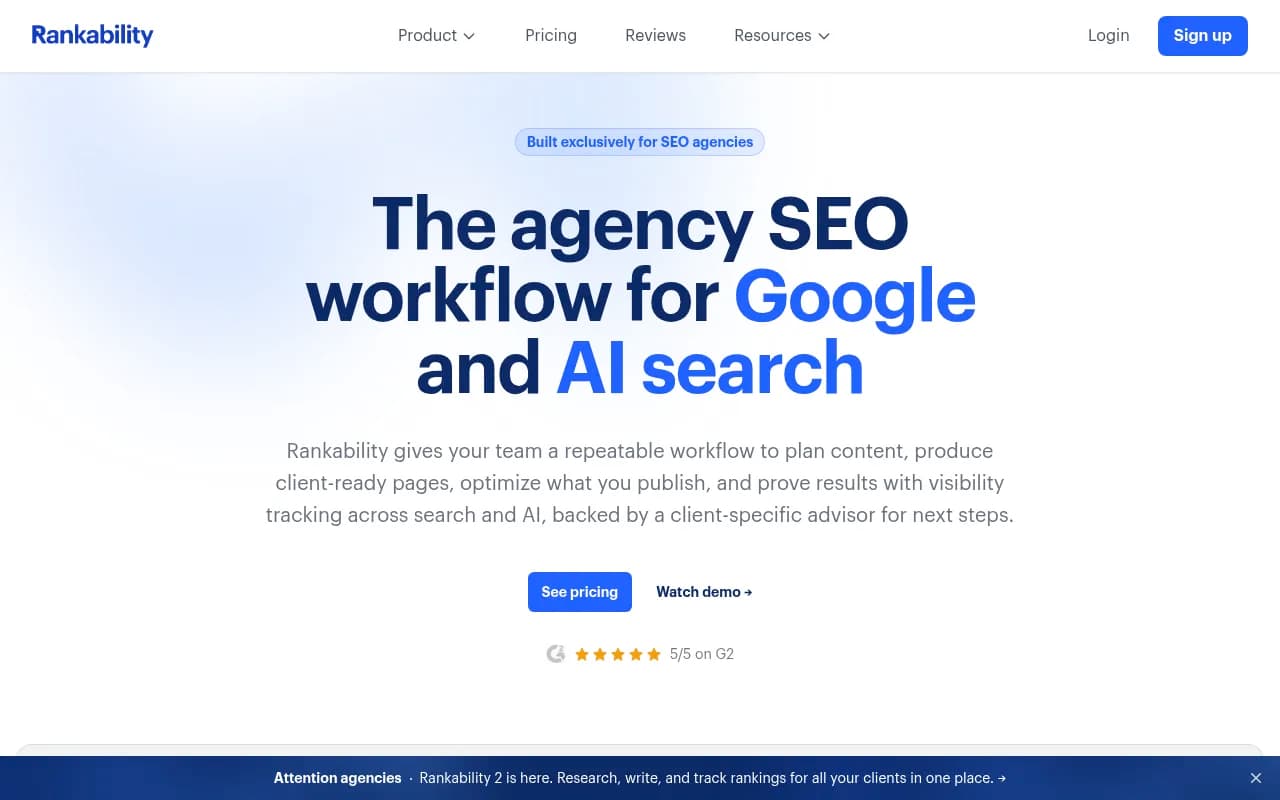
Rankability pitches a loop of brief, optimize, monitor. You build a SERP-informed brief, write or edit in a real-time scoring editor, then track performance to decide what to refresh. It combines two NLP sources (Watson and Google NLP) for semantic coverage, and it bundles Google keyword tracking, local pack scans, page and site audits, and AI visibility tracking into the same account.
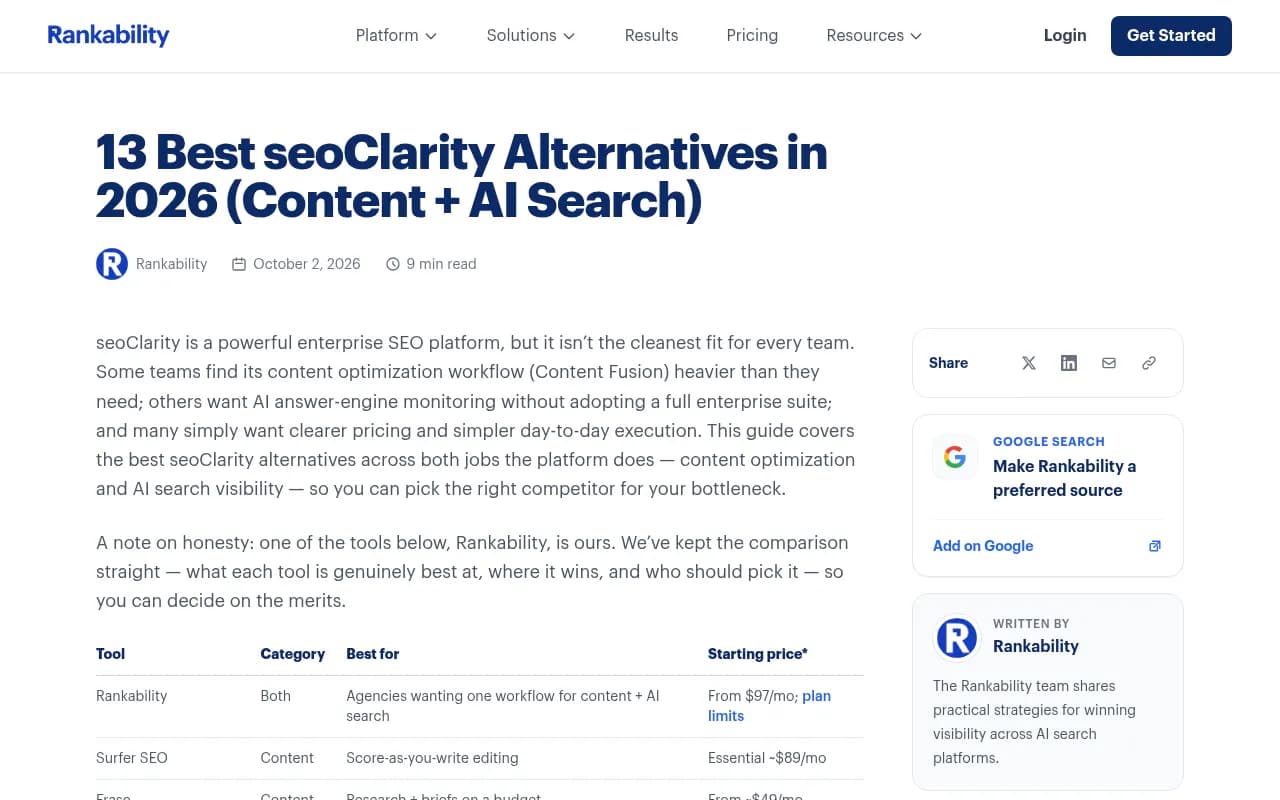
Pricing and limits
From the official pricing page:
| Plan | Price | Content projects/mo | AI queries tracked | Google keywords | Page audits | Site audits |
|---|---|---|---|---|---|---|
| Starter | $97/mo | 20 | 100 | 50 | 20 | 2 |
| Agency | $297/mo | 80 | 300 | 150 | 80 | 10 |
| Agency Pro | $497/mo | 160 | 500 | 250 | 160 | 25 |
Every plan includes unlimited client workspaces, unlimited team members, API and MCP access, brand voice and keyword research. AI tracking covers 11 platforms (ChatGPT, AI Mode, AI Overviews, Claude, Perplexity, Gemini, Grok, Copilot, Brave AI, DeepSeek and Meta AI) with daily updates, while Google rank updates are weekly. The trial runs 7 days, needs a card and converts automatically.
Where it fits, and where it doesn't
The unlimited seats and workspaces are the real agency feature. Most competitors charge you per seat or per site. The catch is that allowances are shared across all clients. On Starter, 50 keywords and 100 AI queries across, say, eight clients means about six keywords and a dozen AI queries each. Realistically, a small agency with several retainers lands on the Agency tier.
The critique worth knowing: Profound says Rankability's AI visibility is based on keywords you configure rather than real prompt demand, and that it has no crawler-level attribution. Profound is a competitor, but the point is fair. Another roundup says it won't catch a Perplexity mention that doesn't cite your URL. If AI search reporting is a core deliverable, check whether that limitation matters for your clients. Note too that older Profound material says nine platforms on the top tier, while the current pricing page lists 11 on every plan.
The closest competitors
Surfer SEO
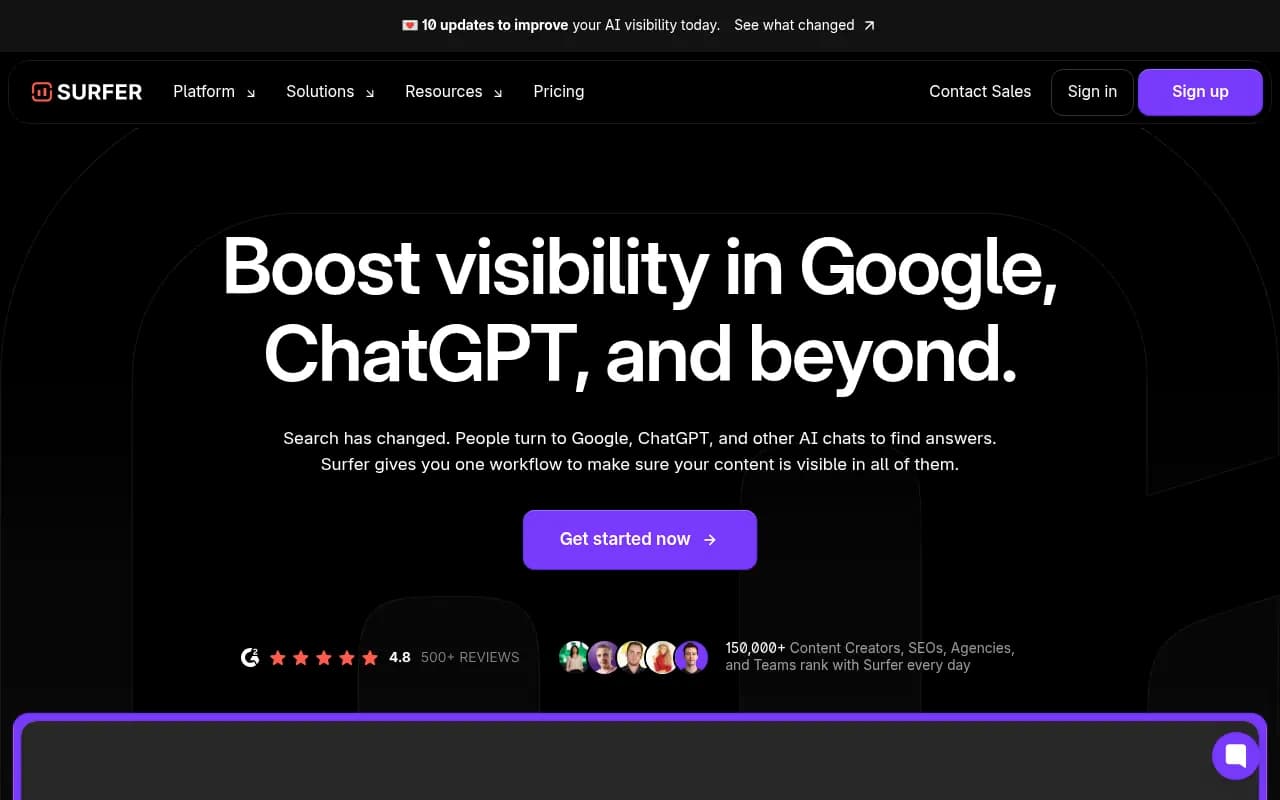
Surfer is the default answer for score-as-you-write editing, and its editor is the one most writers pick up fastest. Third-party roundups list Discovery at $49/mo billed yearly (120 documents, 10 tracked pages), Standard at $99, Pro at $182 and a $299 tier with unlimited documents under fair use. Entry price varies between sources ($49 versus $99), so check the pricing page. Higher tiers add internal linking, cannibalization reports and daily AI tracking.
Best for agencies that care most about writer experience and have a steady, predictable document volume.
Clearscope
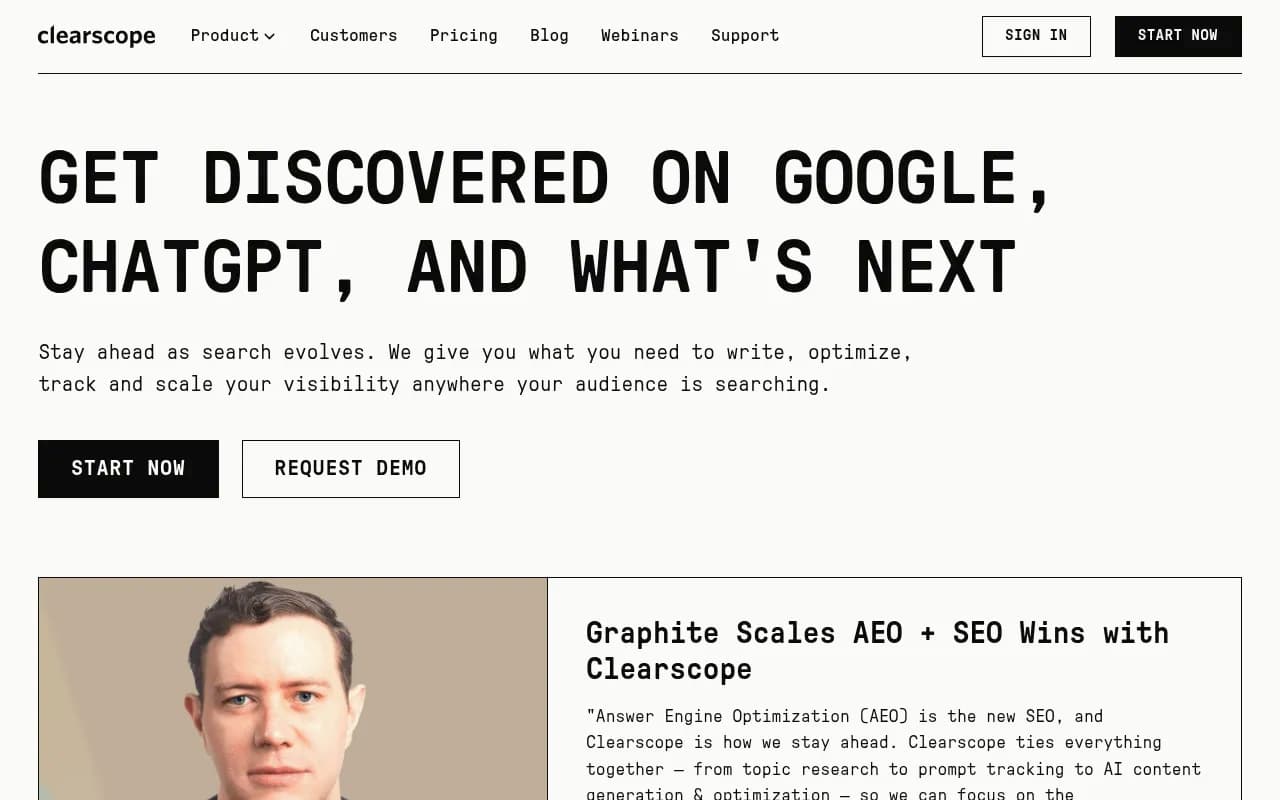
Clearscope is the editorial-precision pick, with A to F grading and a reputation for clean, trustworthy term suggestions. Essentials is listed at $129/mo with 50 tracked queries, 50 pages and 20 drafts a month. Business is $399. Users and projects are unlimited on every plan, with no contracts and a 14-day trial. That unlimited-seat model suits agencies with many writers.
The drawback is the 20-draft cap and the higher entry price, which gets expensive if you produce a lot of content.
Frase
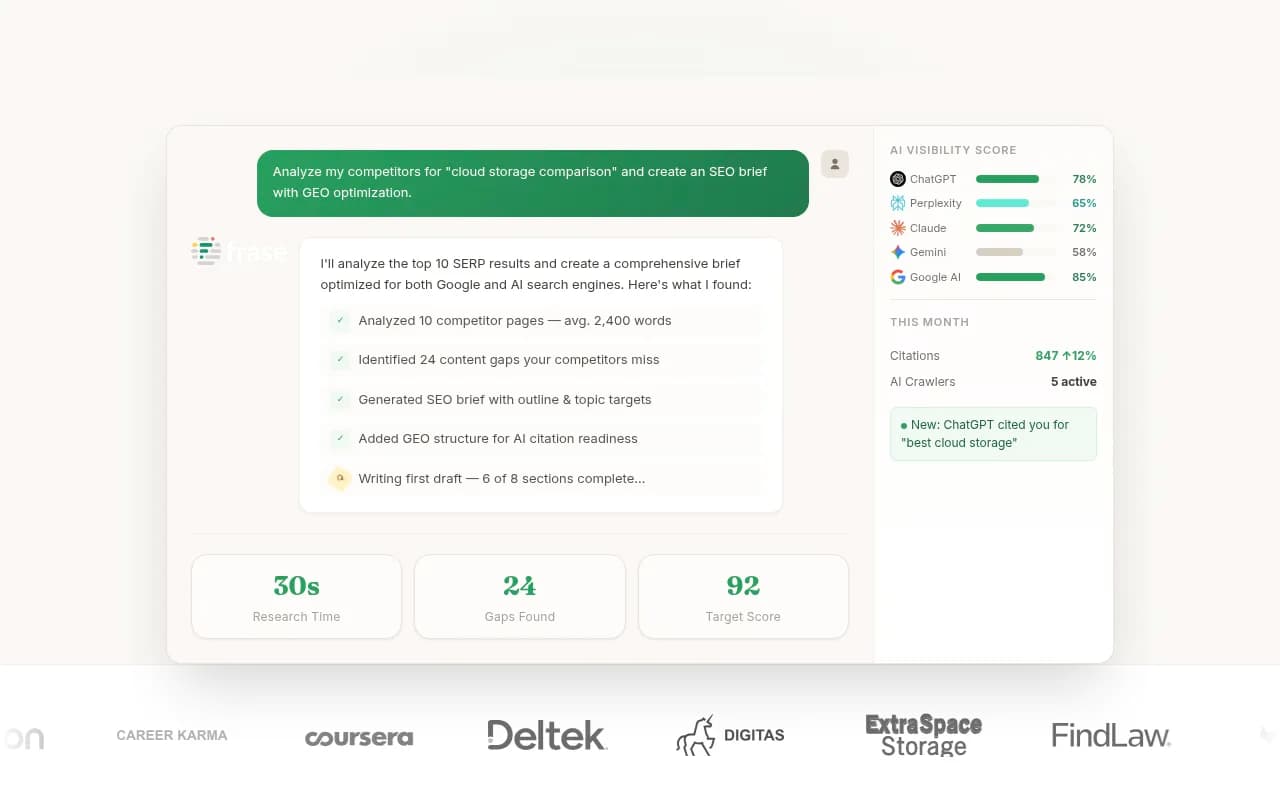
Frase is strong on research and briefs at a low entry price: Starter at $39/mo billed yearly ($49 monthly), with 10 articles and 50 audit pages a month. The catch for agencies is that Starter means one seat and one site. Professional ($103 yearly) gives 3 seats and 5 sites, which is more realistic for agency work. Content Guard watches published pages for ranking decay, which is useful for retainer work. There is a 7-day trial with no card.
NeuronWriter
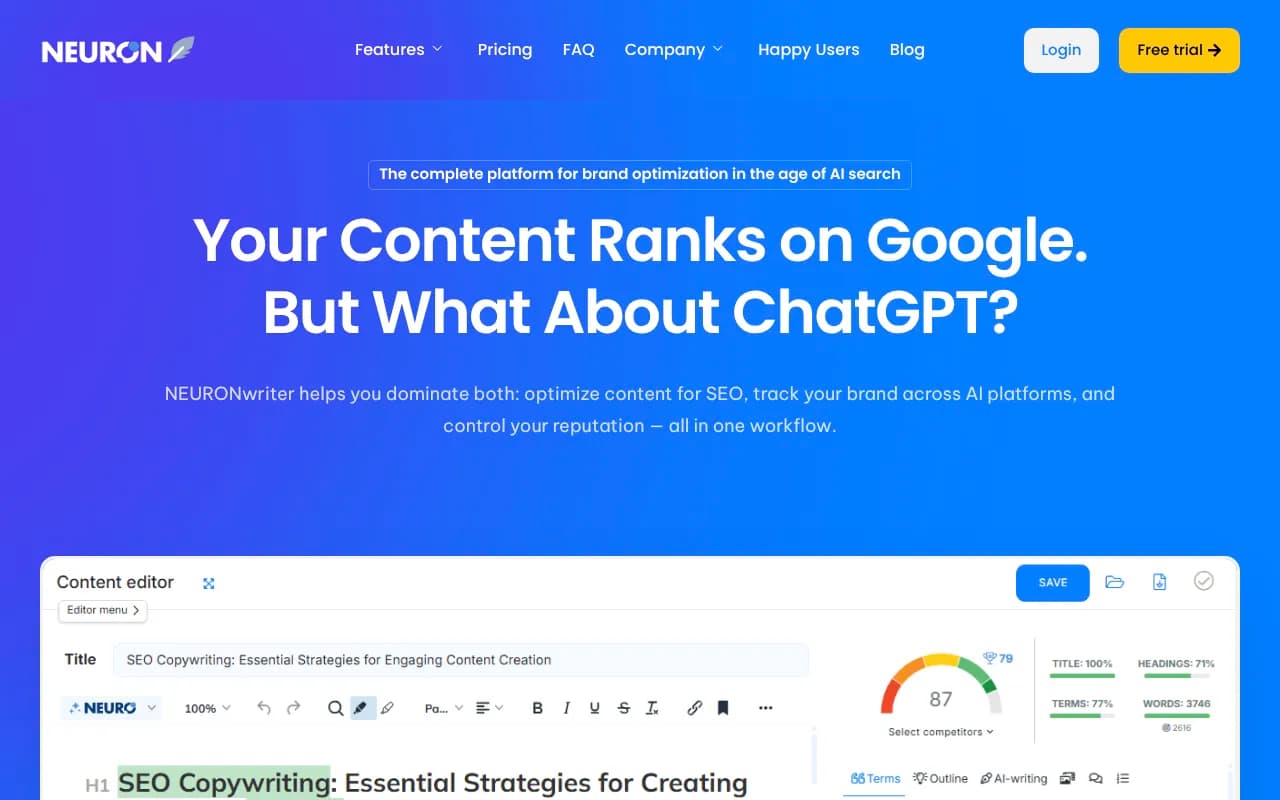
NeuronWriter is the budget option. Bronze is listed at $19/mo billed yearly, Gold at $57, with 25 and 75 analyses respectively. Gold adds Search Console, WordPress and Shopify integrations, team sharing and plagiarism checks. Cost per analysis is under $1 by one roundup's math, far below the others. AI search monitoring is thin on Bronze (5 questions), and integrations only start on Gold.
Others worth a look
- MarketMuse for topical authority and strategy; there is a free plan with 10 queries a month, paid tiers are not publicly priced.
- Scalenut for drafting and optimization in one suite (roughly $59 to $89 on third-party lists).

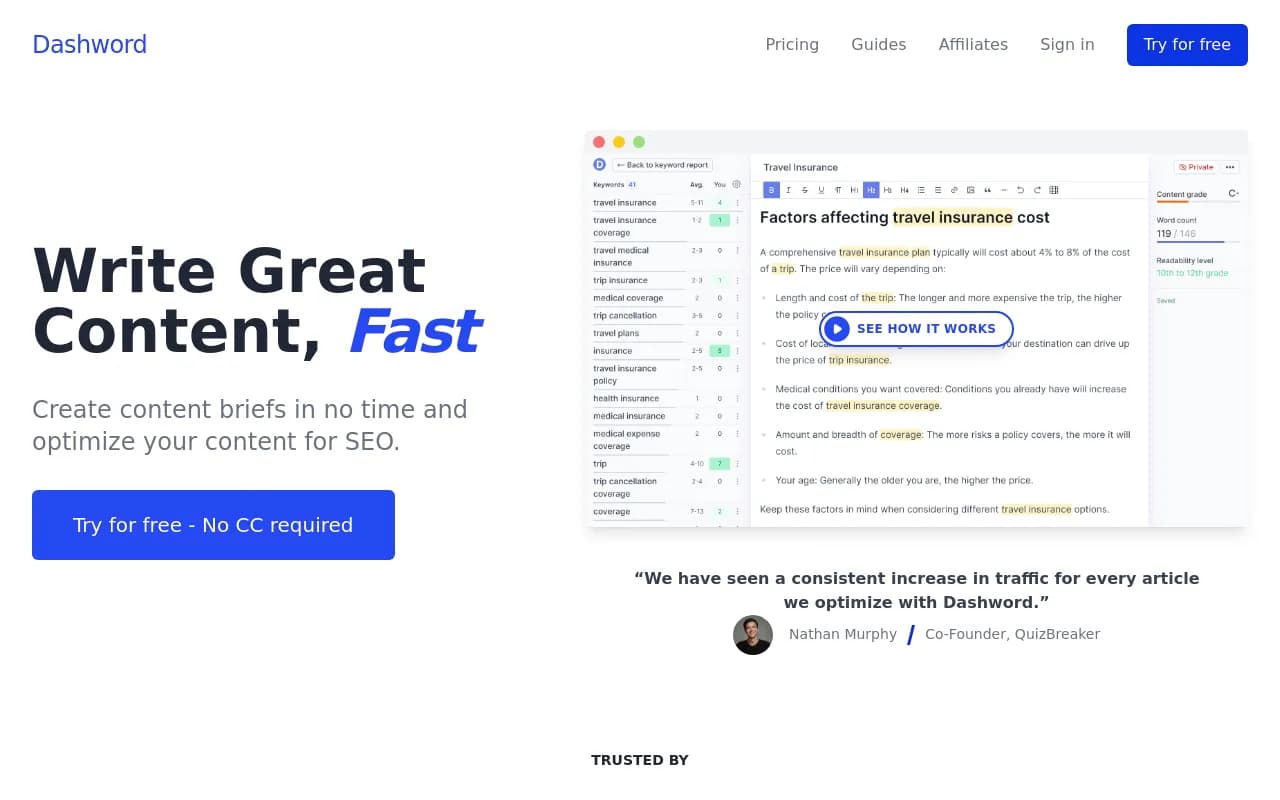
- Dashword for refreshes and content upkeep, from around $99.
- Page Optimizer Pro for experiment-backed on-page work.
- Outranking for SERP-driven briefs.
- Content Harmony for brief workflows; Standard is about $50/mo with unlimited users.
Side-by-side comparison
| Tool | Entry price (approx.) | Seats/clients | AI search tracking | Standout | Watch out for |
|---|---|---|---|---|---|
| Rankability | $97/mo | Unlimited workspaces and users | 11 platforms, daily | Agency workflow, reporting, rank tracking in one | Shared allowances; keyword-configured AI data |
| Surfer SEO | $49 to $99/mo | Team collaboration from Standard | Weekly prompts on Standard, daily on Pro | Fast writer UX | Inconsistent entry price across sources |
| Clearscope | $129/mo | Unlimited users and projects | ChatGPT and Gemini queries | Editorial precision | 20 drafts a month |
| Frase | $39 to $49/mo | 1 seat, 1 site on Starter | Limited | Research and briefs, Content Guard | Hard monthly caps |
| NeuronWriter | $19/mo yearly | Projects capped by tier | 5 questions on Bronze | Lowest cost per analysis | Integrations start on Gold |
| MarketMuse | Free to custom | Varies | No | Topical strategy | Opaque paid pricing |
The pricing for everything except Rankability comes from third-party roundups around October 2026, not the vendor pages. Verify before committing. I also found no independent, hands-on test of how well each tool's content score predicts rankings, so the scores are best treated as a writing aid, not a guarantee.
Match the tool to the agency
Solo consultant or two-person shop
NeuronWriter or Frase Starter keeps cost down. If you only work on one or two sites, Frase's single-site limit won't hurt. Test the credit model against a typical month before paying annually, since annual plans are billed upfront.
Three to eight people, multiple retainers
This is where Rankability and Surfer compete directly. Rankability wins if you want briefs, optimization, rank tracking and client reports under one login with no per-seat charges. Surfer wins if writer speed matters most and you already have separate reporting. Clearscope is worth a trial if your team is mostly writers and editors who value clean recommendations over volume.
You already pay for an SEO suite
Semrush's Content Toolkit (Base about $60/mo annual) or SE Ranking may cover enough. They're less specialized, but you avoid another subscription and another login.
Optimize the pages AI actually cites
Most content optimizers score blog posts. That's useful, but it misses where AI answers draw from. Promptwatch Data's study of ChatGPT citations by content type (Sep 28 to Oct 4, 2026) found product pages took 22.4% of citations and landing pages 16.8%, so pages that describe what a company sells made up 39% of all citations. Listicles had 13.6%, how-to guides 8.7%, documentation 7.5%, comparisons 5.9% and news 5.7%. For commercial prompts like "best CRM for small businesses," product pages, landing pages, listicles and comparisons added up to almost 70% of citations. You can see the full breakdown in Promptwatch's ChatGPT content type report.
Freshness matters too. In Promptwatch's content half-life report, landing pages and docs stayed cited the longest, while news lost half its cited pages within 36 days.
For a small agency, that means a few practical changes:
- Run your optimizer on client product and service pages, not only on the blog.
- Build listicles and comparison pages for commercial queries, since those formats show up in citations.
- Schedule refreshes by content type. News-style posts decay fast; landing pages hold up.
- Map each page to the prompt intent it should answer before you chase a score.
Do you need a separate AI visibility tool?
It depends on what you promise clients. Rankability, Surfer, Clearscope and NeuronWriter all include some AI tracking, but it's generally prompt or keyword based. If a client wants to know which AI crawlers visit their site, what traffic AI platforms send, or which pages get cited and why, you'll want a dedicated platform. Tools like Promptwatch cover that layer, including IP-verified crawler logs and AI traffic attribution, and can sit alongside whichever content editor you choose.

If you're shopping specifically for AI visibility software, the GEO software directory at bestgeosoftware.com lists far more options than fit in one article.
How to run a fair trial
Vendor comparisons won't settle this. A week of testing will.
- Pick three real pages from two different clients: one blog post, one service page, one older page that needs a refresh.
- Run the same pages through two tools, using trial periods (7 to 14 days for most; NeuronWriter offers a 30-day refund on a first plan).
- Time the full loop: brief, draft or edit, score, export. Note where writers get stuck.
- Check how each tool handles client separation and whether you can produce a report a client would actually read.
- Count credits used. Multiply by your real monthly volume and compare the result to the plan cap.
- Revisit the same pages after four to six weeks and see whether rankings or citations moved. A score going up isn't the same as a result.
Common pitfalls
- Writing to the score. Chasing 90+ can produce stiff copy full of awkward terms. Use the score as a checklist for coverage.
- Buying annual too early. Annual plans save roughly 17% to 25% on several tools but are paid upfront.
- Ignoring shared allowances. Count your clients' keywords and queries before you pick a tier.
- Trusting a single vendor's ranking. If the article ranking the tools is published by one of them, read it as a sales page with useful tables.
The short version
If you want one login for briefs, optimization, rank tracking and client reports without paying per seat, Rankability is the most agency-shaped option here, with the caveat that its AI visibility data is keyword-driven and its allowances are shared. If writer experience comes first, try Surfer. If you have many writers and want unlimited seats, try Clearscope. On a tight budget, NeuronWriter does the most for the least money. Whichever you choose, point it at product and landing pages too, since that is where ChatGPT looks first.