Key takeaways
- Meta AI tracking is immature. A few vendors say they monitor it, but there is no first-party citation dataset for Meta AI yet, and I would treat vendor claims as unverified until you test them.
- The most concrete signal you can measure today is crawler activity. Promptwatch Data shows Meta-WebIndexer going from about 2.2% of AI crawler requests in mid-July 2026 to 37.8% on August 9, 2026.
- Your server logs and robots.txt are the cheapest place to start. Check four Meta user agents: meta-webindexer, meta-externalagent, meta-externalfetcher and FacebookBot.
- Manual spot-checks in WhatsApp, Instagram and Messenger still matter, because Meta AI answers live inside private chat surfaces.
- Track ChatGPT, Gemini, Perplexity and AI Overviews properly now, and treat Meta AI as an emerging surface you monitor lightly.
Why Meta AI is different from other AI search tools
Most guides on AI visibility assume you are tracking something like ChatGPT or Perplexity, where there is a web interface, a visible source list and a lot of public research. Meta AI does not fit that pattern well.
It lives inside Facebook, Instagram, WhatsApp, Messenger and, depending on where you are, smart glasses. Someone asks a friend for restaurant recommendations in a group chat, Meta AI answers, and nobody outside that chat sees it. That is a very different problem from monitoring a public search results page.
It also matters because of scale. Meta says over 200 million businesses use its apps, and the company is pushing AI hard across ads, business assistants and messaging. If Meta AI becomes a place where people ask for product recommendations, brands will want to know what it says about them.
Here is the honest starting point: the measurement tooling for Meta AI is far less mature than for ChatGPT. I will separate what you can verify from what is still a claim.
What you can actually measure today
1. Meta's crawler activity on your site
This is the one hard, verifiable signal. Promptwatch Data published a report on Meta's crawler surge on August 10, 2026. The numbers:
- Meta-WebIndexer was about 2.2% of all AI crawler requests in Promptwatch's logs in mid-July 2026.
- By August 9 it was 37.8%, more than 1 in 3 AI crawler requests and the heaviest AI crawler in the logs.
- The share stayed near 2% until July 17, spiked to about 23% between July 20 and 22, then surged again from August 5.
- The report says the surge comes from the indexing crawler specifically, not Meta's AI-training or link-fetching bots.
Why would Meta crawl that hard? The report ties it to claims that Meta is building its own web search index so Meta AI does not depend on Google or Bing. The source is a post by @levelsio on August 6, 2026, who said Meta staff told him it is "ALLEGEDLY" building its own index, and that Meta was scraping his sites heavily enough to trigger server load alerts. That is unconfirmed. It is an allegation, not an announced product, and I would not build a strategy on it.
What the data does show is that something at Meta is reading a lot of the web. The report says Meta-WebIndexer exists to improve Meta AI search results and cite sources. If you care about appearing in Meta AI answers, being crawlable by that bot is a sensible first step.
2. Your own server logs
This is free and takes an afternoon. Search your logs for these user agents:
meta-webindexer
meta-externalagent
meta-externalfetcher
FacebookBot
Things to look for:
- Which pages the indexer requests, and how often.
- Error rates (403, 404, 5xx) on those requests.
- Whether your CDN or bot protection is silently blocking them.
- Request volume, since sustained crawl load can raise your bill if your infrastructure charges per request.
Promptwatch Data's AI crawler traffic report (June 8 to September 6, 2026) offers a useful benchmark method. It counts only requests whose IP matches the operator's published ranges, which excludes spoofed user agents. Its advice is to compare your own logs against the overall mix. A provider that is large in the chart but near zero in your logs suggests you are blocked or unreachable for it. One caveat: that report covers OpenAI, Anthropic, Google, Perplexity and Mistral, and does not break out Meta as a provider. OpenAI was 79.8% of verified AI crawler requests in the week of August 31 to September 6, down from 94.8% in the week of June 8.
If you want this without grepping log files, tools like Promptwatch include IP-verified AI crawler logs that show which bots hit which pages and what errors they get.

For a DIY technical view, a crawler and log analyzer can also help.

3. Your robots.txt decisions
The Promptwatch report recommends checking robots.txt for the four Meta agents. Its argument is that blocking them today decides whether you are in the index at launch, if the index does launch. I would add a practical note: I could not verify Meta's official crawler documentation for how each agent treats robots.txt, so read Meta's developer docs yourself before changing rules, and do not assume all four agents behave the same way.
A reasonable policy looks like this:
| Agent | What the report says it is for | Suggested starting stance |
|---|---|---|
| meta-webindexer | Indexing to improve Meta AI search and citations | Allow if you want Meta AI visibility |
| meta-externalagent | Listed by the report, purpose not detailed there | Check Meta docs before deciding |
| meta-externalfetcher | Listed by the report, purpose not detailed there | Check Meta docs before deciding |
| FacebookBot | Listed by the report, purpose not detailed there | Check Meta docs before deciding |
I am being deliberately cautious in that table. The report names the four agents, but only attributes the indexing purpose to meta-webindexer.
What third-party tools claim
Several vendors say they can monitor Meta AI directly. Treat these as claims to test, not settled capability.
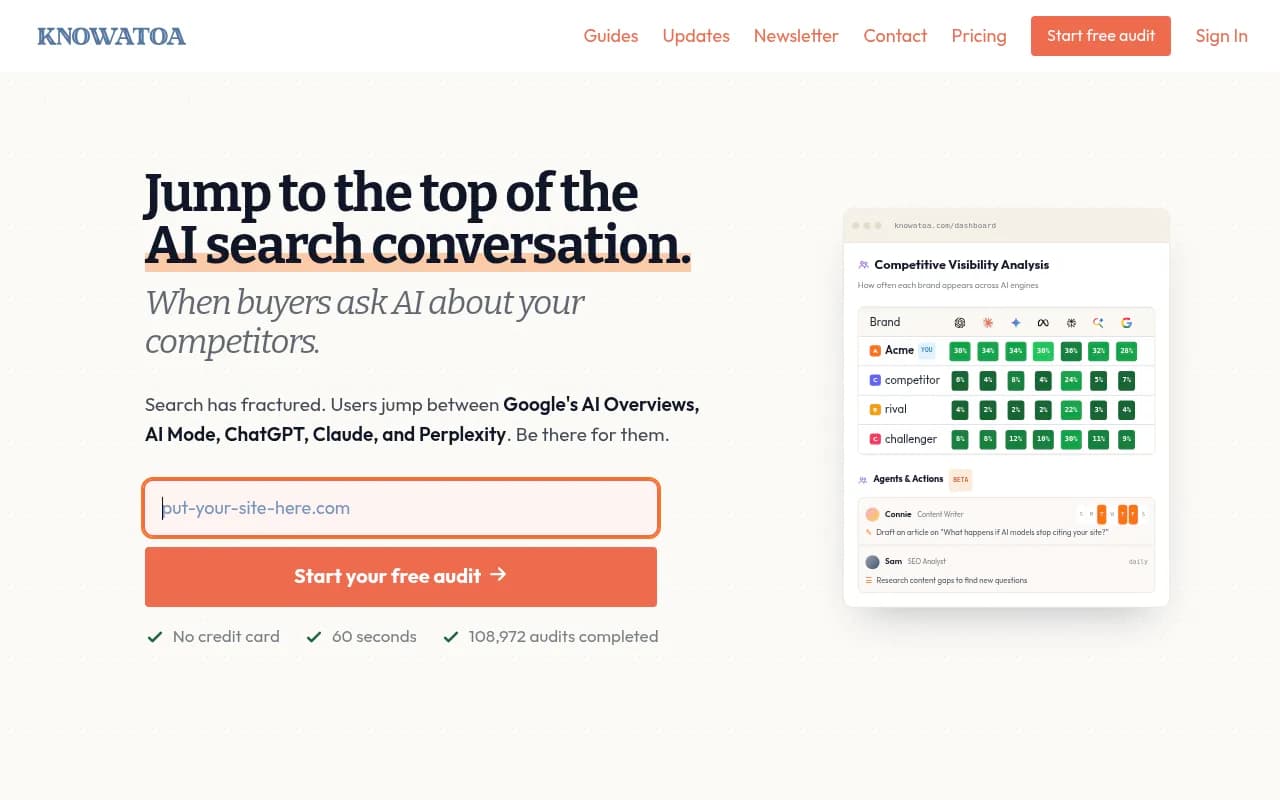
Knowatoa has a dedicated Meta AI brand monitoring page. It says it tracks brand mentions, rankings, competitor share of voice, citation sources, accuracy and the questions that trigger each mention, across Facebook, Instagram, WhatsApp and Messenger contexts. Its pitch about sentiment is sensible: in a private chat, how Meta AI describes your brand matters as much as whether it names you.
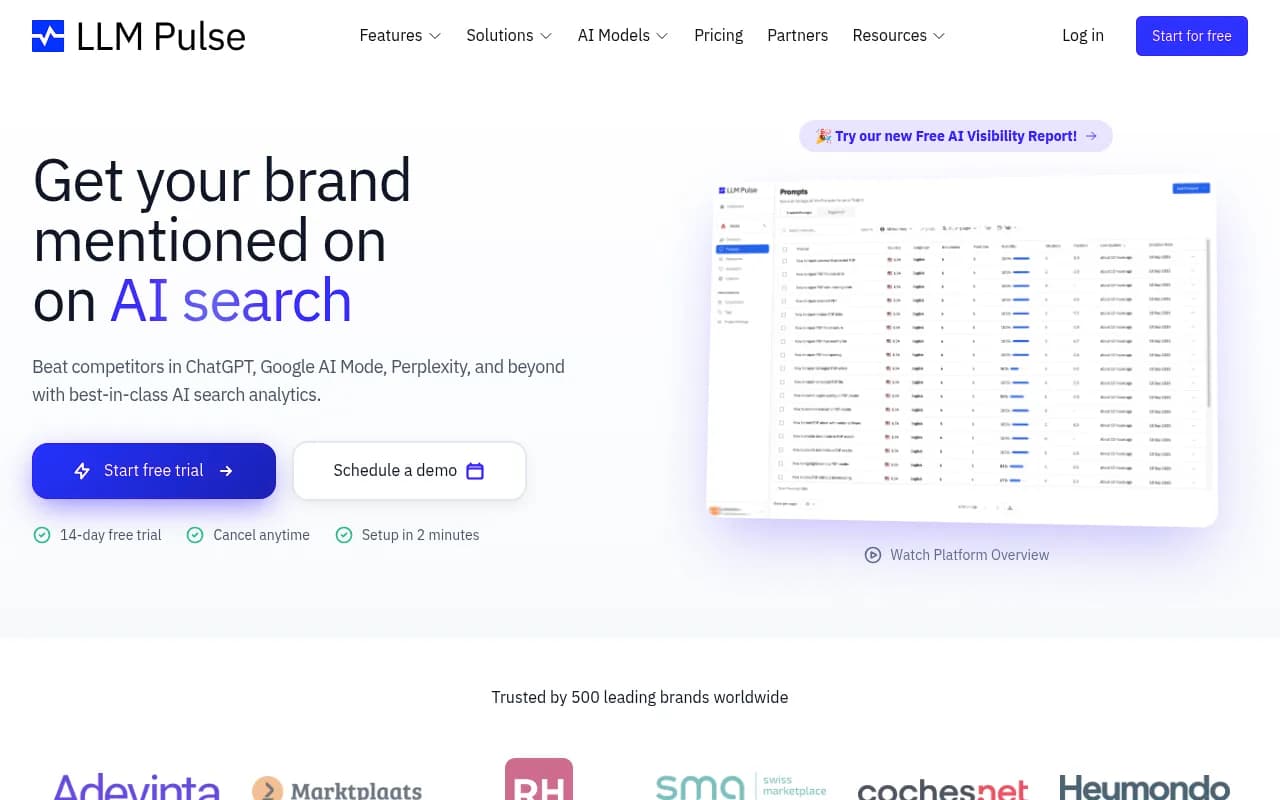
LLM Pulse has a Meta AI tracking page claiming to monitor mentions, sentiment and competitors with weekly trends. I only saw the snippet, so pricing and methodology are unverified.
Things I could not confirm for any vendor: whether they query Meta AI through its real interfaces, how they handle the private-chat nature of WhatsApp, and whether the citations they report match what a real user sees. Ask each vendor three questions before paying:
- Which Meta AI surface do you query (web, app, WhatsApp, Instagram)?
- Is the data from the real user interface or a model API?
- Can I see raw answers, not just a score?
If a vendor cannot answer those, the number on the dashboard is not worth much.
What is not possible right now
Being blunt about the gaps saves you money.
- No first-party Meta AI citation dataset. Promptwatch Data lists ChatGPT, Gemini, Perplexity, Claude and AI Overviews as UI-monitored platforms. There is no report on Meta AI answer sources, so nobody should claim they know exactly which pages Meta AI cites at scale.
- No clean view of private-chat answers. What Meta AI says in someone's WhatsApp thread is not observable by you.
- No official referral analytics. I did not find confirmed documentation of Meta AI sending trackable referral traffic, and I could not confirm which surfaces show links or citations at all.
- No confirmed usage figures. I did not find reliable Meta AI usage numbers in my research, so be skeptical of anyone quoting precise ones.
That last point on referrals is an open question, not a statement that nothing exists. Check your analytics for traffic from Meta properties and see whether any pattern shows up.
A practical tracking workflow
Step 1: Audit crawler access
Pull 30 days of logs. Filter for the four Meta user agents. Note which pages get requested, status codes and volume. Fix anything that is accidentally returning errors or being blocked by a firewall rule.
Step 2: Decide your robots.txt policy
Pick a stance deliberately instead of inheriting one from an old template. If you are a business that benefits from being recommended, allowing the indexer is the logical choice. If you bill per request, budget for sustained crawl load.
Step 3: Build a manual prompt set
Write 15 to 25 questions real customers would ask: "best [category] near me", "[your brand] vs [competitor]", "is [your brand] any good". Run them inside Meta AI on a schedule, ideally monthly, and record:
- Whether you are named.
- Position among recommended brands.
- How you are described.
- Whether any sources are shown.
- Factual errors.
Use a shared spreadsheet. It is not glamorous, but it works and it gives you a baseline to compare against vendor output.
Step 4: Layer in a tool, carefully
If you trial Knowatoa or LLM Pulse, run your manual prompt set side by side for a week and compare. If the tool disagrees wildly with what you see by hand, you have learned something about its method.
Step 5: Watch for sentiment and accuracy
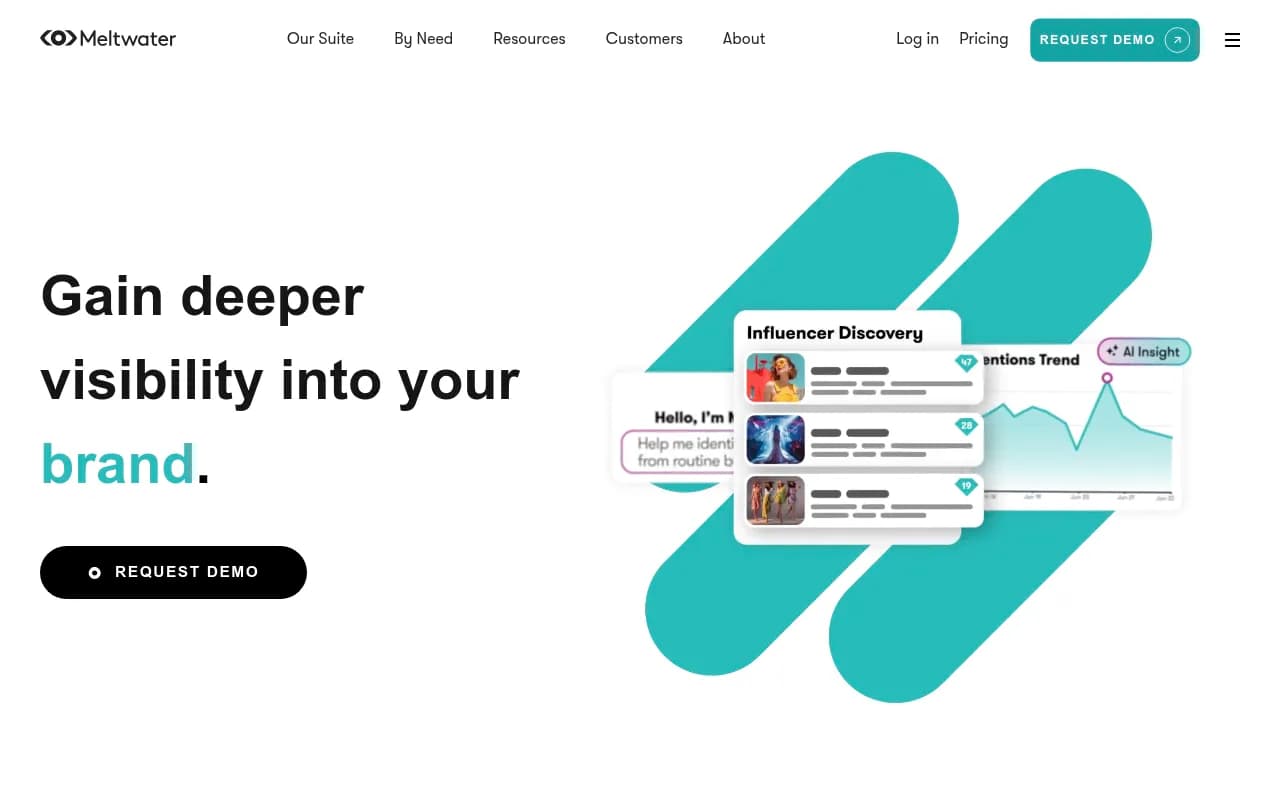
Brand monitoring tools that watch social conversation can catch the downstream effects when Meta AI says something wrong about you.
Do not neglect the engines you can measure
Meta AI is the least measurable of the major assistants. Most of your measurable AI-driven demand today comes from surfaces with real data. Promptwatch Data's report on ChatGPT citation share by content type found product pages were the most cited type at 22.4% of citations from September 28 to October 4, 2026. Its social media citations report found ChatGPT got 0.46% of its citations from social platforms in that same week, while Google AI Overviews got 12.2%. Those are the kinds of signals that tell you where to put content effort.
What I would do: build a solid baseline on ChatGPT, Gemini, Perplexity and AI Overviews with a platform that monitors the real interfaces, and keep Meta AI as a lightweight watch item until the data catches up. A platform like Promptwatch tracks the major engines, plus crawler logs and AI traffic, and its Action Board helps turn gaps into a to-do list. For other options, the directories at bestgeosoftware.com and ai-rank-tools.com list many of the tools in this space.
Meta's own AI tooling is not brand tracking
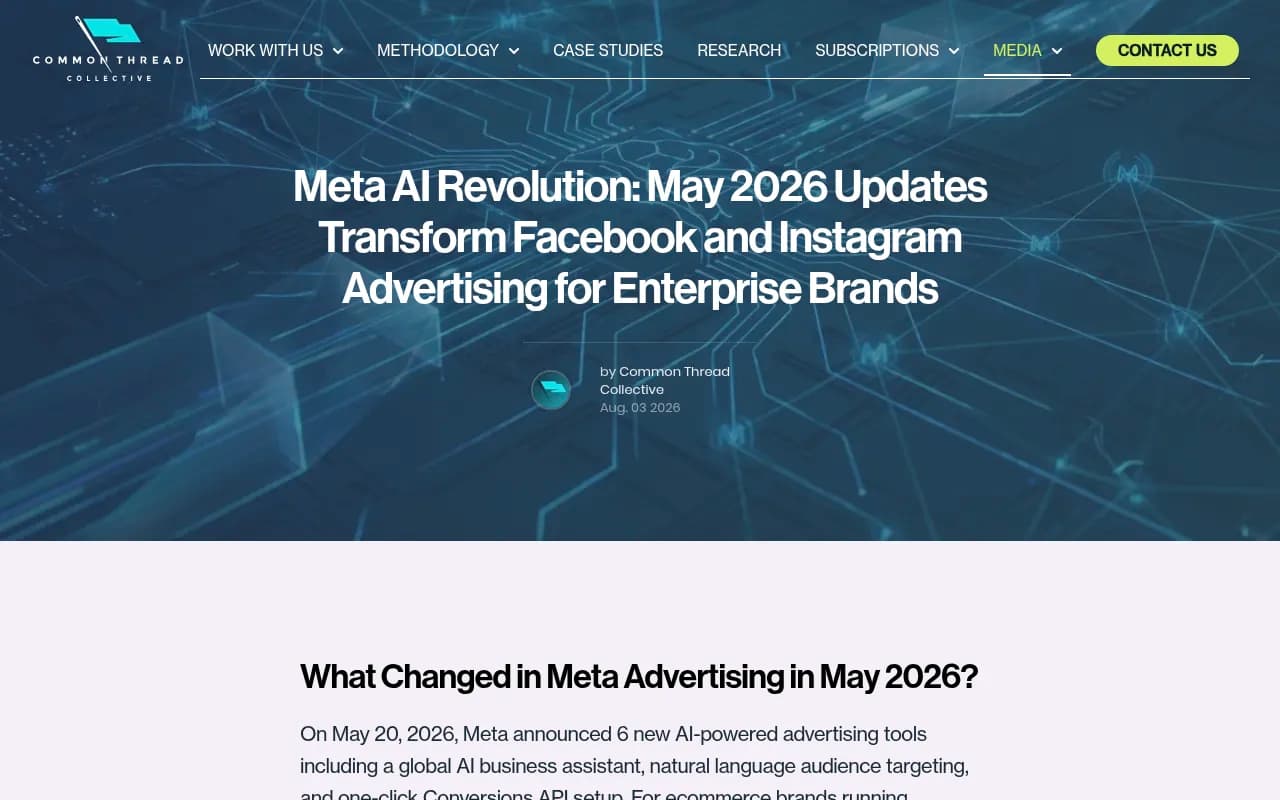
A lot of the Meta AI coverage in 2026 is about advertising, and it is easy to confuse with visibility tracking. On May 20, 2026, Meta announced six new AI advertising tools, including a global AI business assistant for advertisers, natural language audience targeting and one-click Conversions API setup, according to Common Thread Collective's write-up. Meta also published guidance on new AI features for small businesses in August 2026.
These tools help you run ads and automate tasks. They do not tell you what Meta AI says about your brand when a user asks it a question. Different problem, different tooling. Do not let a vendor blur the two.
If you want to automate customer conversations on Meta's messaging apps, that is a separate use case that chatbot tools handle.
What to do this month
| Action | Effort | Why |
|---|---|---|
| Check logs for four Meta user agents | Low | Only hard signal available |
| Review robots.txt for Meta agents | Low | Controls whether you are indexed |
| Run 15-25 manual Meta AI prompts | Medium | Gives a baseline and ground truth |
| Trial one Meta AI tracking vendor | Medium | Test their claims against your baseline |
| Set up full tracking on ChatGPT, Gemini, Perplexity, AI Overviews | Medium | This is where measurable demand is |
The bottom line
You can see whether Meta's crawlers are reading your site, and you can run manual checks of what Meta AI says. You cannot yet get a verified, large-scale citation dataset for Meta AI, and vendor claims in this area need testing. The crawler surge is real in the logs, the reason behind it is an unconfirmed allegation, and the sensible response is cheap: check your logs, decide your robots.txt policy on purpose, and revisit in a quarter.