Key takeaways
- Ecommerce GEO is a product-level problem. A tool that only tells you whether your brand name appeared in an answer will miss the product cards, prices and retailer links that decide a sale.
- ChatGPT attaches shopping features to only a low single-digit share of web-search responses, and mostly on commercial prompts, so you need to track the right prompts rather than everything.
- Product pages are the most cited content type in ChatGPT (22.4% of citations, Sep 28 to Oct 4, 2026), and product plus landing pages together reach about 39%.
- The best setups combine SKU-level tracking, AI crawler visibility, traffic attribution and a way to ship fixes. Pure dashboards leave you with a to-do list you never finish.
- Treat vendor prices you see in third-party listicles as unverified. Check each vendor's own pricing page before you buy.
Why ecommerce needs its own GEO approach
Most GEO advice is written for SaaS and publishers, where the win is being named or cited in an answer. Ecommerce is different. A shopper asks for the best rain jacket under $150, and the engine returns product cards with images, prices, reviews and buy links. Whether your jacket is in that carousel, what price is shown, and which retailer gets the checkout link are the metrics that matter.
The surfaces have multiplied. Profound's 2026 overview traces the timeline: ChatGPT added shopping to search in April 2025, Google brought shopping to AI Mode in May 2025, Microsoft launched Copilot Checkout in January 2026, and Shopify now syncs merchant catalogs to ChatGPT, Copilot, AI Mode and Gemini. Meta's Muse agent, launched in September 2026, even buys things on a shopper's behalf. You are no longer optimizing for one chat window.
How the engines choose products
The two big ones work differently, and that changes what you fix.
Google AI Mode and Gemini draw on Google's Shopping Graph, which Google says holds more than 50 billion product listings with over 2 billion refreshed every hour. Merchants feed it through Merchant Center. For a detailed request, AI Mode runs several searches at once to work out what the shopper needs. So your feed quality, structured data and attributes matter a lot.
ChatGPT works from live web search. Shopping features can only appear when ChatGPT actually searches the web. Promptwatch's ChatGPT shopping usage data shows product cards appear in a low single-digit percentage of web-search responses, and the rate moves in steps. In the window it covers, the rate roughly doubled overnight in late May, then fell back weeks later. That looks like OpenAI tuning when cards show, which is a good reason to measure continuously instead of checking once.
What to look for in an ecommerce GEO tool
After reading through the main roundups, the evaluation criteria that keep coming up are sensible. I would boil them down to these:
- Product-level tracking. Does it follow SKUs, prices, retailers and product cards, or only brand mentions?
- Surface coverage. ChatGPT Shopping and AI Mode at minimum, ideally Copilot, Perplexity, Gemini and Amazon surfaces too.
- Real interface data. Product cards and citations in the actual UI can differ from API output.
- Retailer visibility. Who controls the checkout link on each card, you or a reseller?
- Crawler and traffic data. Can you see whether AI bots reach your product pages and whether AI visits convert?
- Action, not just reporting. Does it help fix product pages, feeds and content?
The first criterion is the dividing line. Several vendors in the research use the same test: does the tool track ChatGPT Shopping and product placement, or stop at brand mentions?
The main contenders compared
The table below mixes what vendors say about their own shopping features with how the tools fit ecommerce work. Features change quickly, so confirm on each vendor's site.
| Tool | Shopping coverage | Strength for ecommerce | Watch out for |
|---|---|---|---|
| Promptwatch | ChatGPT Shopping product visibility, Amazon Alexa product results, AI Ads Radar, all major AI engines | Tracking plus action: crawler logs, AI traffic, Content Agent, Action Board | Shopping features and catalog upload depend on plan, so check pricing |
| Profound | ChatGPT Shopping product cards, brand mentions across engines | SKU-level visibility, product attribute accuracy, merchant checkout link data, agents that draft product page fixes | Enterprise positioning and pricing |
| Peec AI | ChatGPT Shopping | Daily SKU visibility, displayed price, retailer rankings, CSV/Looker/API/MCP export | Monitoring-focused, with limited help producing content |
| Scrunch | ChatGPT and Copilot | Share of shelf, DTC share versus retailers, AXP serving AI crawlers a server-rendered page | Narrower shopping surface list |
| AthenaHQ | ChatGPT, Perplexity, Google AI | Product, category and brand level share of voice, Shopify catalog optimization | Less depth on crawler data |
| Evertune | ChatGPT | Price comparison as AI describes it, affiliate publisher lists | Focused on ChatGPT |
| Goodie AI | ChatGPT Shopping, AI Mode Shopping, Alexa+, Perplexity Shopping | Broad agentic commerce coverage | Higher starting price in one listicle (from $295/mo, unverified) |

Promptwatch
Promptwatch is the option I would look at first if you want the loop closed, not only observed. It tracks how products appear in ChatGPT shopping carousels and Amazon Alexa product results, and you can upload your catalog to follow your own products. It also covers AI Overviews, AI Mode, Gemini, Perplexity and Copilot, so the same account shows the non-shopping answers where shoppers research before they buy.
What separates it from pure trackers is the layer underneath. IP-verified AI crawler logs show whether GPTBot, OAI-SearchBot or ChatGPT-User actually reach your product pages, and what errors they hit. Visitor analytics tie AI referrals to real traffic and conversions. Then the Action Board and Content Agent turn gaps into briefs and published pages. Crisp reported 2x higher conversion rates from AI traffic compared with traditional channels, and TreeHouse (Pararius) grew AI search to about 25% of organic conversions by fixing crawler access and publishing proprietary data. Those are not ecommerce catalogs exactly, but the mechanism applies to any product-led site.
The AI Ads Radar is worth a mention for retailers. It shows which advertisers bid on your prompts, with ad copy and landing pages. Pricing runs from a free Explore tier to Essential at $95/mo, with Business at $579/mo adding state and city tracking, Shopping Insights and Ads Radar. Confirm current plans at promptwatch.com/pricing.
Profound
Profound's Shopping feature is the most detailed on the product-card side. It reports SKU-level visibility, how often your category prompts trigger shopping results, whether the engine gets product attributes right, sentiment in the descriptions, and which merchants control the checkout link on each card. That last one is useful: if a reseller owns the buy button for your own product, you want to know. It is built for larger teams, and third-party listicles disagree on starting prices (figures from about $99/mo appear), so get a quote.
Peec AI

Peec AI gives daily SKU-level visibility and trend for ChatGPT Shopping, the price the engine displays, and ranked gainers and losers. Which retailers AI recommends most in your category is a handy view for marketplace-heavy sellers. Data goes out through CSV, Looker Studio, API and MCP. It is a good monitor, but you will need other tools to produce the fixes.
Scrunch
Scrunch tracks share of shelf, first-position win rate and price ranges for ChatGPT and Copilot. The DTC share metric, how often results link to your site rather than a retailer, is the one ecommerce brands with wholesale partners should watch. Its AXP layer serves AI crawlers a server-rendered version of your pages through your CDN, which helps when your storefront is JavaScript-heavy.
AthenaHQ

AthenaHQ reports recommendations at product, category and brand level, across your site, Amazon and other marketplaces. It adds Shopify catalog optimization and an Action Center. Note that the catalog also lists an unrelated product called AthenaHQ (athenago.com); the GEO platform is athenahq.ai.
Evertune and Goodie AI
Evertune focuses on ChatGPT: which products get recommended, how often your category triggers shopping results, and how your prices compare as AI describes them. Goodie AI scored highest in one roundup (published by an agency that may have its own interests) for tracking ChatGPT Shopping, AI Mode Shopping, Alexa+ and Perplexity Shopping. Treat vendor-written rankings cautiously, since several of these listicles are published by the tools they rank.
Tools that help with the supporting work
Tracking is half the job. Product pages need structured data, clean feeds and comparison content. A few catalog tools are relevant:
- Schema App style structured data platforms help keep Product schema complete.
- Crawler-focused tools such as Botify or Prerender.io can fix rendering issues that keep AI bots from reading product pages.
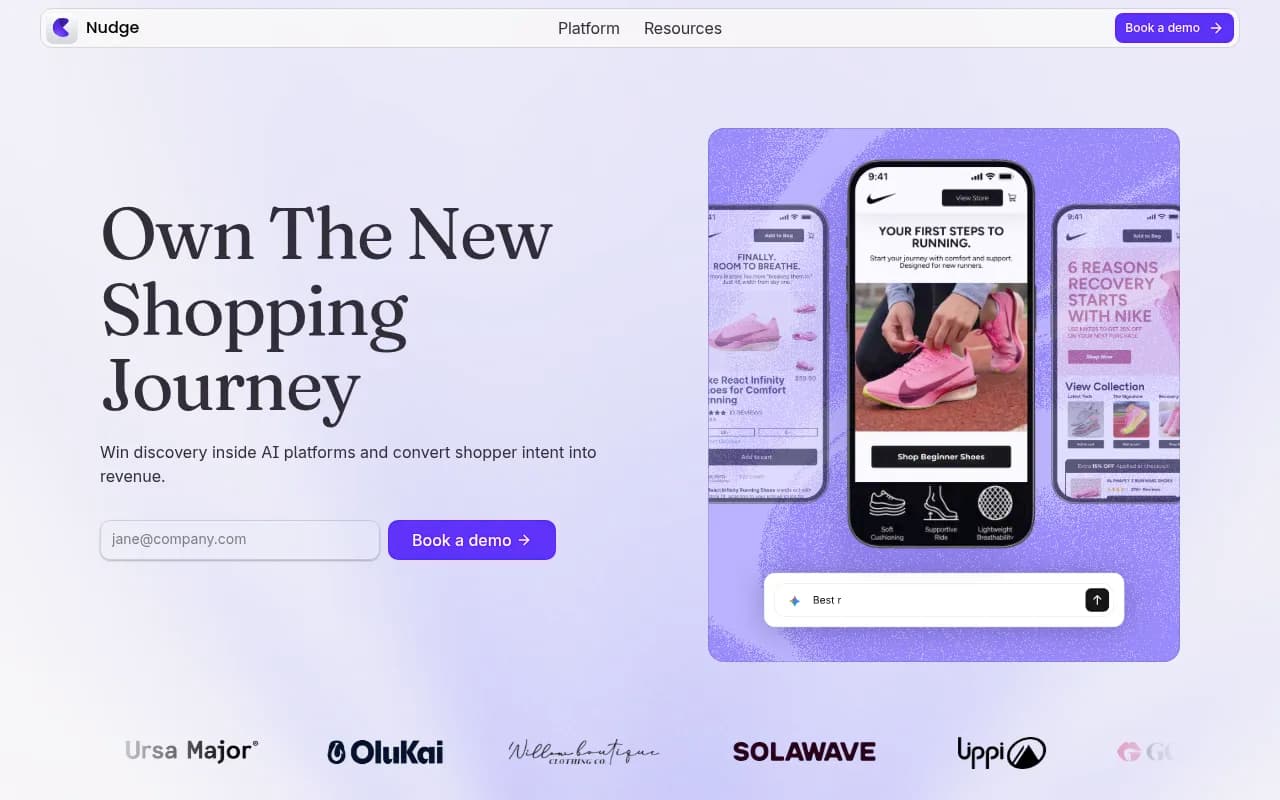
- Nudge is positioned as an agentic commerce platform with AEO tooling.
Semrush can also do some ChatGPT shopping tracking, but one roundup lists it only on Enterprise, so verify before relying on it.
If you want to browse more options, the GEO software directory at bestgeosoftware.com lists many of these side by side.
What the data says about winning product citations
Tracking tells you where you stand. These numbers tell you where to put effort.
From Sep 28 to Oct 4, 2026, Promptwatch Data shows product pages were the most cited type in ChatGPT at 22.4%, landing pages at 16.8%, and listicles at 13.6%. On commercial prompts, which are the ones shoppers use, product pages rise to 26.0% and landing pages to 20.6%. Those four types (product, landing, listicle, comparison) make up almost 70% of commercial citations.
So your own product pages are your best asset. The same report suggests making them easy to compare with clear pricing and specs, getting into best-of roundups, publishing your own comparison pages, collecting reviews on trusted sites, and adding an FAQ.
Two more findings shape strategy:
- Content longevity differs by type. In Promptwatch's content half-life study, landing pages and docs stayed cited longest while news lost half its pages within 36 days. Evergreen category and product pages beat seasonal news-style posts.
- Reddit is not the lever it was. ChatGPT's reddit.com citation share fell from about 4% to 0.5% on August 14, 2026, and ChatGPT drew only 0.46% of its citations from social platforms from Sep 28 to Oct 4, versus 12.2% for Google AI Overviews. If your product seeding strategy leans on social, it matters which engine you target.
Also keep an eye on paid placements. ChatGPT ads data shows ads began on May 27, 2026 at 1.69% of web-search responses and averaged 20.1% over the 90 days to Aug 17, with a past-7-day average of 32.4%. Most ad-bearing responses came from organic prompts (73.3%). That means competitors may already be buying space on your category queries.
A practical setup for an ecommerce team
Here is a workable sequence, whichever tool you pick.
1. Build a commercial prompt set
Start with the prompts buyers actually use: best X for Y, X vs Y, X under a budget, where to buy X. Shopping features concentrate on commercial and transactional prompts, so a generic brand prompt list will undercount them. Include your top 20 to 50 SKUs or categories.
2. Record whether cards appear, and who fills them
For each prompt, log whether product cards show up, which brands and retailers fill them, the displayed price and who owns the buy link. Run prompts across several days. Single runs can land on outlier days, which applies to ads and shopping cards alike.
3. Check the plumbing
Before writing anything, confirm AI crawlers can read your product pages. Look at crawler logs, robots.txt rules, rendering and Product schema. Keep prices and availability accurate and your merchant feed clean, as Promptwatch's shopping report recommends. The free robots.txt generator and AI crawler URL inspector on promptwatch.com help with the basics.
4. Fix pages and fill content gaps
Tighten product pages with specs and comparison tables. Add comparison and FAQ content for the prompts where competitors win. This is where tools with a content agent save time and where pure monitors leave you with a spreadsheet.
5. Measure revenue, not just mentions
Tie AI referrals to conversions. A visibility score that rises while sales stay flat is a vanity metric. Use analytics, Search Console and your AI tool's visitor tracking together.
How to choose
| If you are... | Look at | Why |
|---|---|---|
| A brand that wants tracking plus fixes and traffic attribution | Promptwatch | Crawler logs, visitor analytics, Content Agent, Action Board |
| An enterprise needing deep SKU and checkout-link detail | Profound | Product-card analysis and attribute accuracy |
| A team that mostly wants a daily SKU monitor with exports | Peec AI | Price and trend tracking, API and Looker data |
| A brand selling through many retailers | Scrunch or AthenaHQ | DTC share, marketplace views |
| Heavily invested in ChatGPT only | Evertune | Price comparison and affiliate lists |
My blunt take: if a tool cannot show you product cards for your own SKUs, it is a brand-mention tracker with an ecommerce landing page. Ask for a demo using your real catalog and your real prompts before you commit.
Frequently asked questions
Do I need a separate tool for ChatGPT Shopping and AI Mode?
Not necessarily, but check coverage. Several tools cover ChatGPT well and Google surfaces less well, and roundups disagree on which cover Amazon, Perplexity Shopping or Copilot.
How often do product cards appear?
Rarely across all prompts, in the low single digits for ChatGPT, but much more on commercial and transactional ones. Measure on the prompts that matter to you.
Is Shopify enough?
Shopify syncing your catalog to AI surfaces helps with distribution, but it does not tell you how you appear, what price is shown or who wins the card. You still need tracking.
Can the numbers in this guide change?
Yes. Citation and shopping behavior shift month to month, so attribute figures to their period and recheck. Pricing in particular comes from third-party listicles that may be stale, so verify on vendor sites.
The short version
Pick a tool that tracks products, not just brand names, test it on your own catalog, and make sure it connects to crawler data and revenue. Then spend your effort on product pages, comparison content and a clean feed, because that is what ChatGPT cites most often.