Key takeaways
- Most AI visibility platforms track mention frequency, not tone. Knowing your brand appeared in a ChatGPT response tells you nothing about whether the AI described you positively, negatively, or as a second-best option.
- Sentiment tracking in AI responses is a genuinely hard problem -- AI answers are long-form, contextual, and change with every query. Tools that solve it well are rare.
- A handful of platforms in 2026 have moved beyond raw mention counts to analyze framing, positioning, and sentiment at the response level.
- The most useful tools combine sentiment data with content gap analysis and optimization workflows, so you can actually do something about a negative framing.
- Promptwatch is one of the few platforms that connects sentiment and visibility data to content generation, closing the loop from "AI is framing us poorly" to "here's what to publish to fix it."
Why mention counts aren't enough anymore
There's a version of AI visibility tracking that most teams are still running: set up a dashboard, track how often your brand name appears in ChatGPT or Perplexity responses, watch the number go up or down. Done.
The problem is that a mention isn't always a good thing.
Imagine a buyer asks ChatGPT "What's the best project management tool for a 50-person team?" and the response says: "While Acme is a popular option, most teams at this scale find it too limited and tend to move to more robust alternatives like Tool X or Tool Y." That's a mention. It's also a quiet disaster for Acme's brand.
Traditional brand monitoring tools -- the kind built for social media and news -- handle this with sentiment scoring. They flag whether a mention was positive, negative, or neutral. But AI-generated responses are structurally different from tweets or news articles. They're long-form, synthesized from multiple sources, and the "sentiment" is often embedded in comparative framing rather than explicit language. "Acme is great for small teams" reads as positive until you realize the user asked about enterprise software.
This is the gap that the better AI visibility platforms are starting to close in 2026. Not just "were you mentioned?" but "how were you positioned, and against whom?"
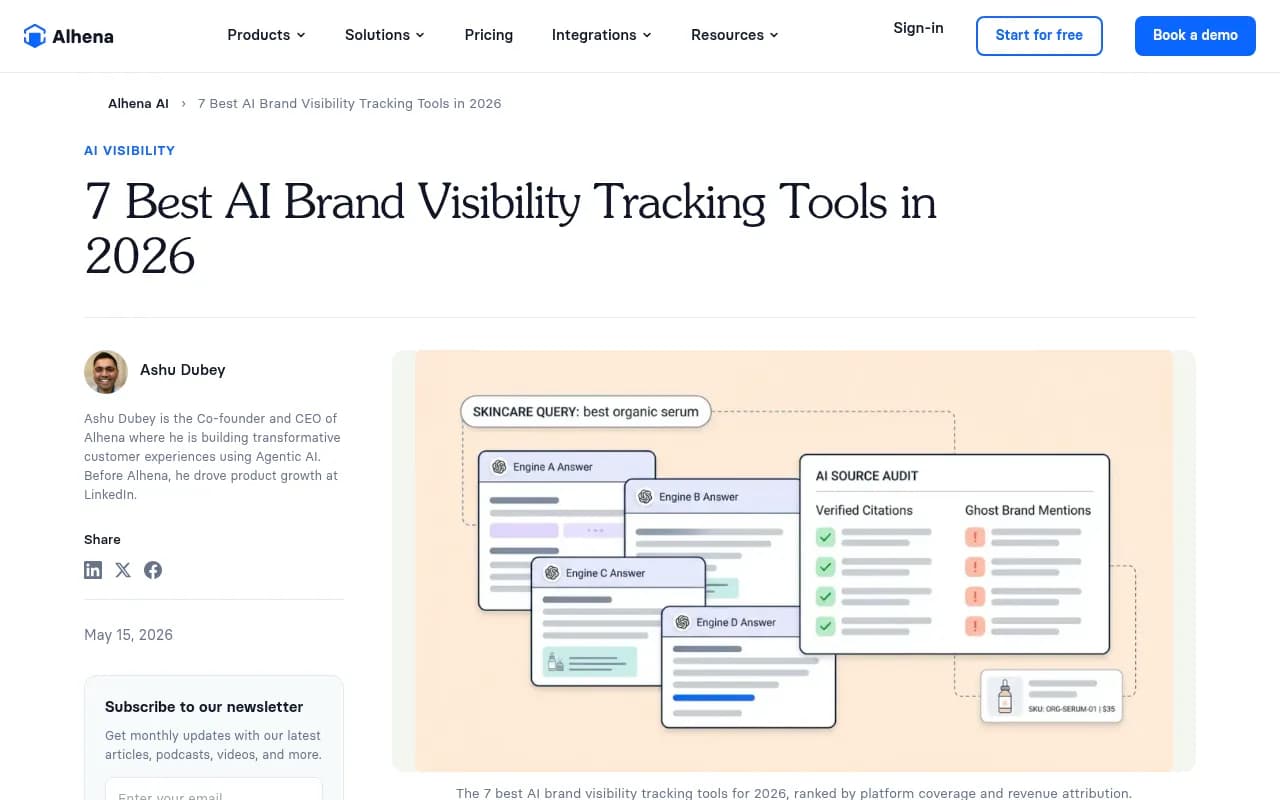
What "sentiment in AI responses" actually means
Before comparing tools, it's worth being precise about what we're measuring. Sentiment in AI-generated responses breaks down into a few distinct dimensions:
Tone: Is the language around your brand positive, neutral, or negative? This is the most basic layer and the one most tools attempt.
Positioning: Where does your brand appear in a ranked list or comparison? First mention vs. fifth mention matters enormously, even if the language is identical.
Framing: What use case or customer profile is your brand associated with? "Best for small teams" vs. "best for enterprise" is a framing difference, not a sentiment difference -- but it's equally important for brand strategy.
Competitive context: When your brand is mentioned alongside competitors, who is framed as the primary recommendation and who is the fallback?
Accuracy: Is the AI saying true things about your brand? Hallucinations and outdated information are a separate problem from sentiment, but they affect brand perception just as much.
The tools that handle all five of these dimensions are genuinely rare. Most stop at tone, and a few do positioning. Framing and competitive context are where the real differentiation lives in 2026.
The platforms that go deepest on sentiment
Promptwatch
Promptwatch approaches sentiment as part of a broader visibility and optimization workflow rather than as a standalone metric. Where it stands out is the connection between sentiment data and action: if AI models are consistently framing your brand in a negative or limiting context, Promptwatch's Answer Gap Analysis shows you exactly which content is missing from your site that would change that framing. Content Agents then generate the articles, comparisons, and briefs designed to shift how AI models position you.
The platform tracks 10 AI models including ChatGPT, Perplexity, Google AI Overviews, Claude, Gemini, Grok, DeepSeek, Copilot, Meta AI, and Mistral -- and it monitors real user-facing responses rather than just API outputs, which matters because the two can differ significantly in how brands are framed.

SE Visible
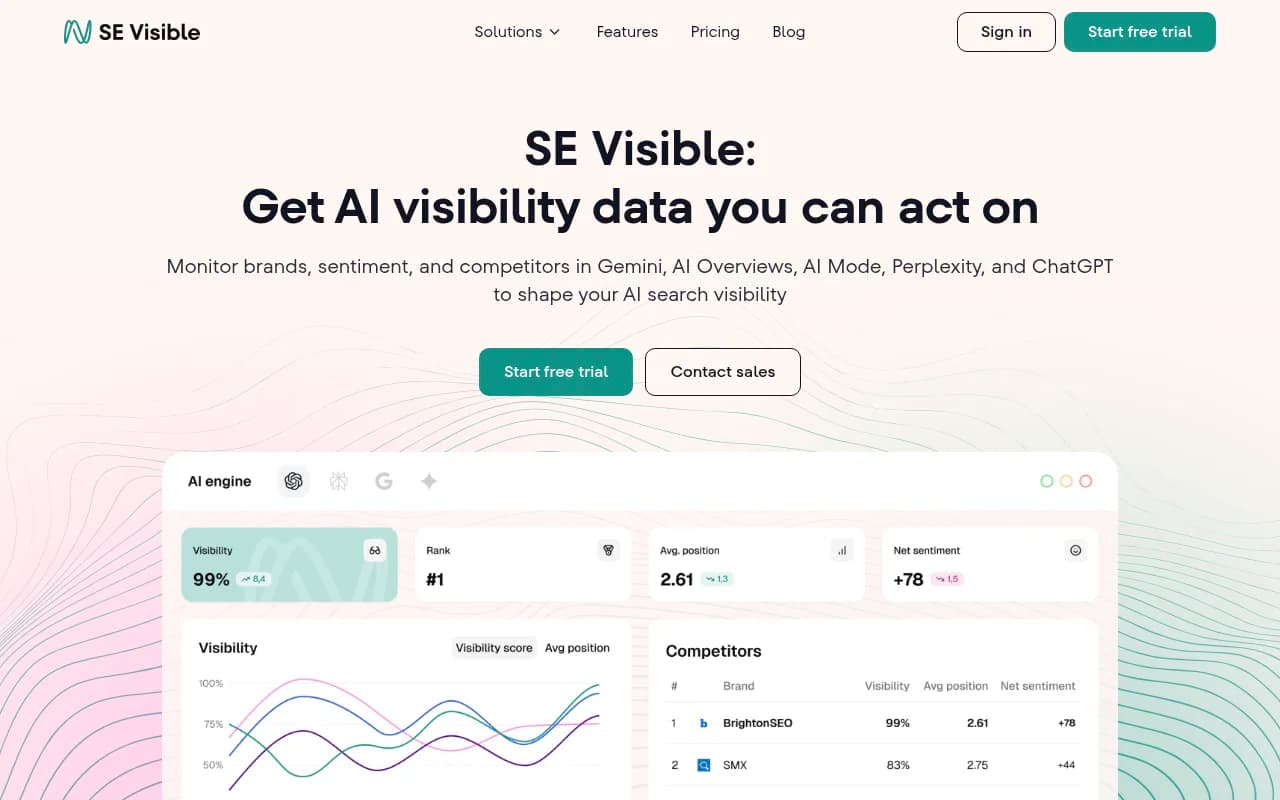
SE Visible, built on SE Ranking's infrastructure, has made sentiment tracking a core feature rather than an afterthought. It tracks brand mentions across AI search engines and scores them by sentiment, giving you a view of how tone shifts across different models and query types. The interface is clean and the data is genuinely useful for brand teams who need to report on AI perception to leadership.
Profound
Profound is positioned at the enterprise end of the market and includes sentiment analysis alongside its broader AI visibility suite. It's particularly strong on competitive positioning data -- you can see not just how your brand is framed, but how that framing compares to specific competitors across the same set of prompts. The price point reflects the enterprise focus.
Evertune
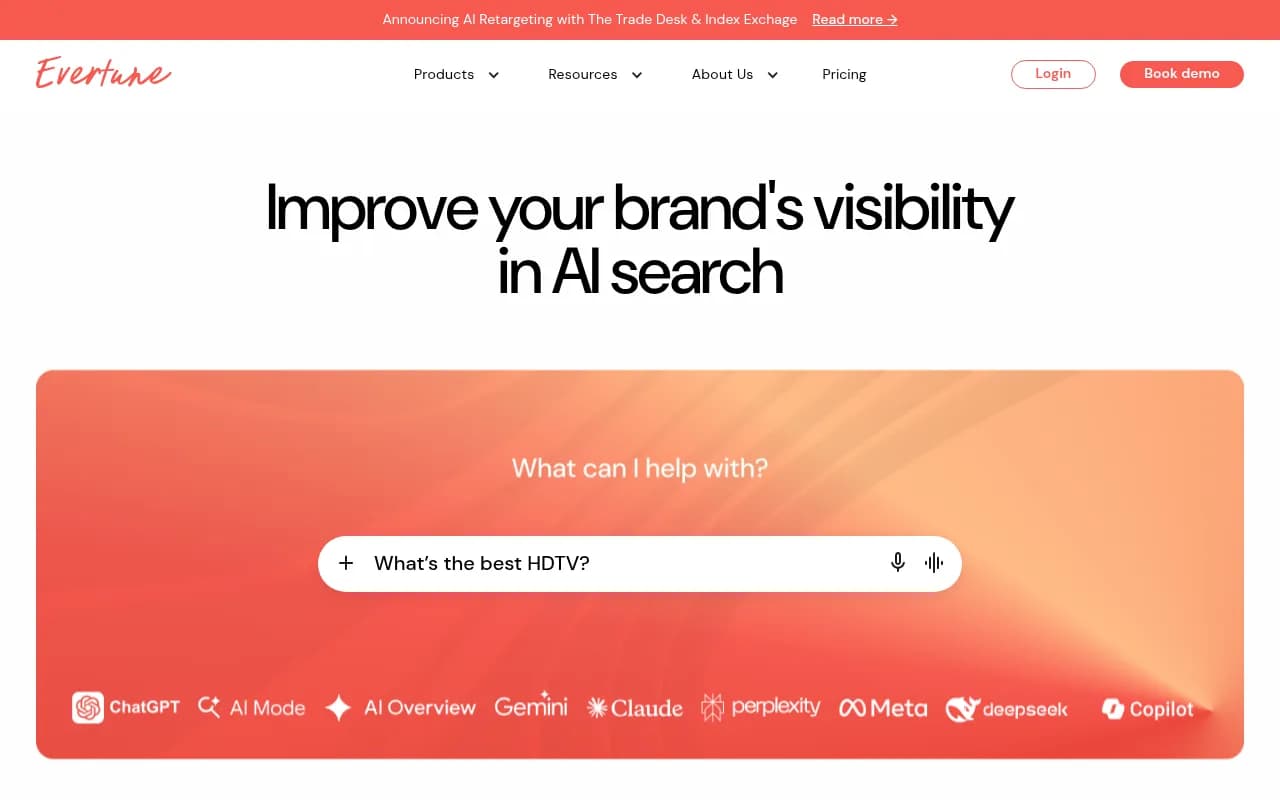
Evertune has built its platform specifically around the question of brand perception in AI responses, not just presence. It tracks sentiment, framing, and competitive positioning, and it's one of the few tools that explicitly addresses the "how is my brand being portrayed?" question in its core product rather than treating it as a secondary feature.
Scrunch AI
Scrunch AI includes sentiment scoring in its monitoring suite and covers a reasonable range of AI models. It's more monitoring-focused than action-oriented, but the sentiment data is solid and the reporting is straightforward for teams that need to share findings across departments.
Brandlight.ai
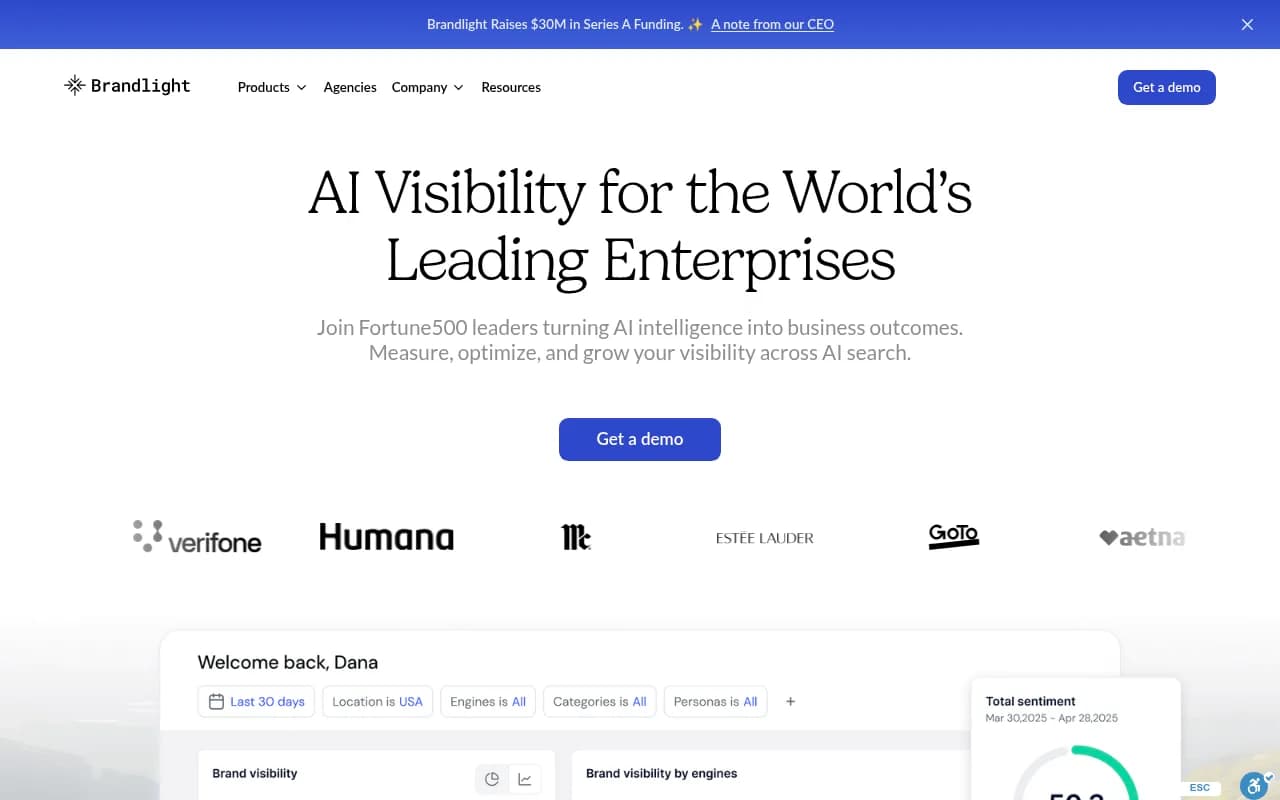
Brandlight.ai focuses specifically on brand perception in AI responses, which makes its sentiment features more developed than tools that treat monitoring as a secondary concern. It tracks tone and framing across multiple LLMs and provides alerts when sentiment shifts in a meaningful direction.
Tools that track mentions but have limited sentiment depth
A large number of platforms in 2026 do excellent work on mention tracking, citation frequency, and share of voice -- but don't go deep on tone or framing. That's not a criticism; it's just a different product focus. If your primary question is "are we being mentioned?" rather than "how are we being described?", these tools are strong options.
Otterly.AI
Otterly.AI is one of the more accessible entry points into AI visibility monitoring. It tracks brand mentions across major LLMs at a price point that works for smaller teams and agencies. Sentiment is present but basic -- you get positive/negative/neutral flags rather than nuanced framing analysis.

Peec AI
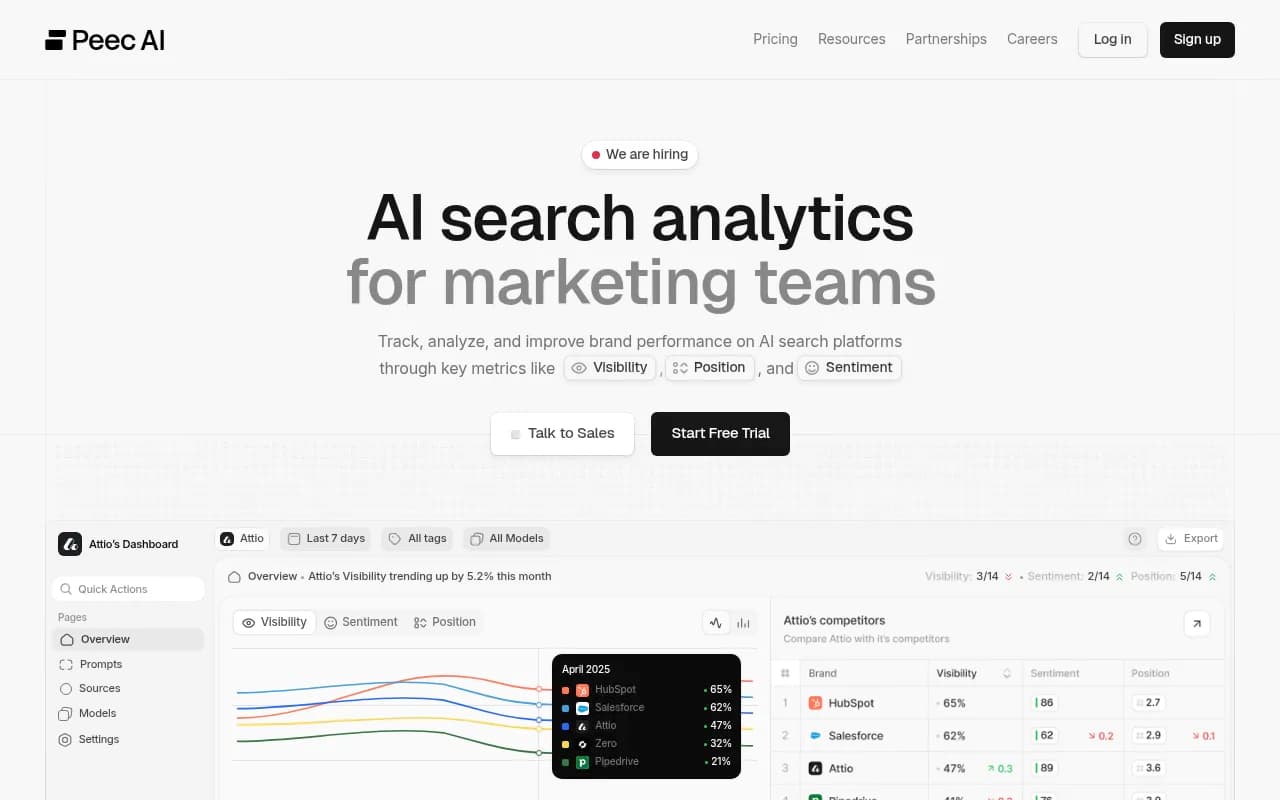
Peec AI provides solid cross-platform analytics for tracking brand mentions across major LLMs. It's often cited as a good fit for mid-market agencies that need clean reporting without a steep learning curve. Sentiment tracking exists but is not the platform's primary strength.
Nightwatch
Nightwatch added AI search monitoring to its existing rank tracking capabilities. The AI visibility features are improving, but sentiment analysis is still relatively surface-level compared to dedicated GEO platforms.
Ahrefs Brand Radar
Ahrefs Brand Radar brings the credibility of the Ahrefs data infrastructure to AI brand monitoring. It's useful for teams already in the Ahrefs ecosystem, but the prompts are fixed rather than customizable, and sentiment analysis is limited. There's also no AI traffic attribution, which makes it harder to connect visibility data to business outcomes.
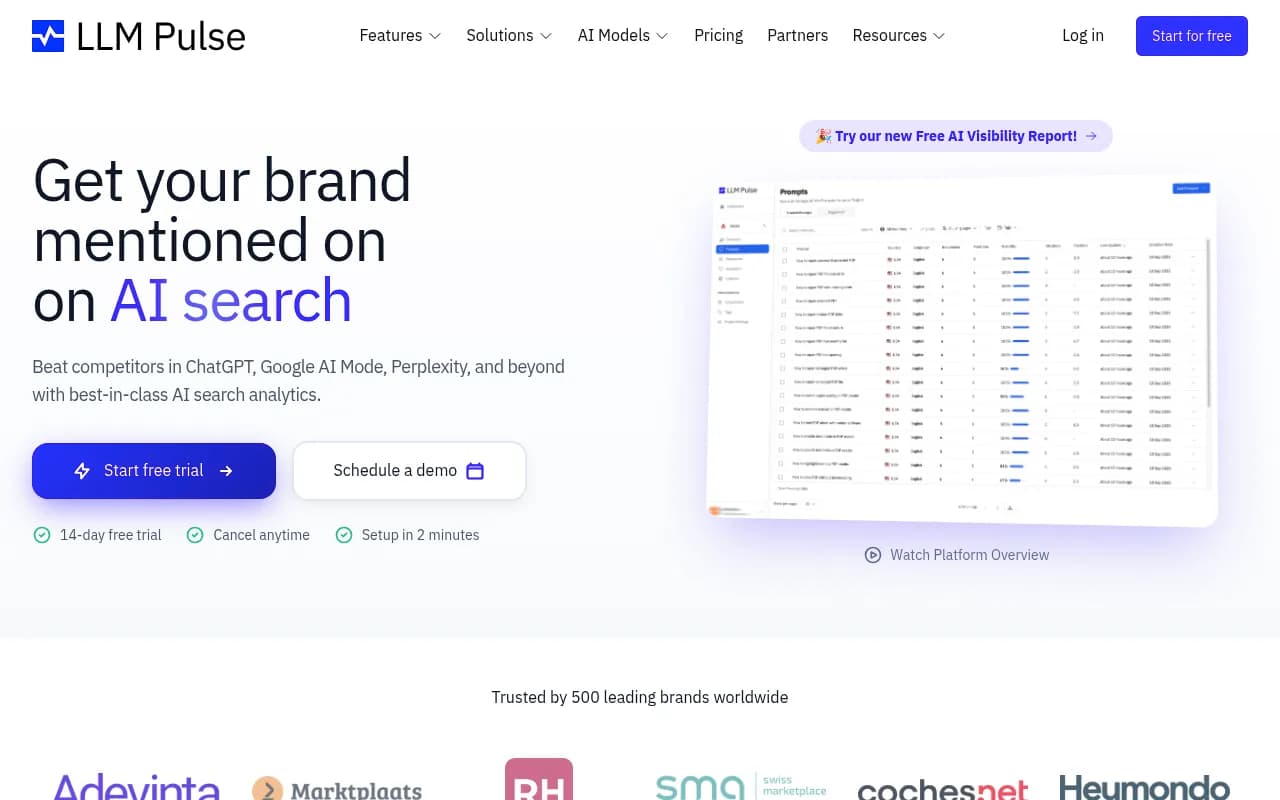
LLM Pulse
LLM Pulse tracks brand visibility across ChatGPT, Perplexity, and other models with a focus on citation and mention frequency. Useful for baseline monitoring, lighter on sentiment depth.
Feature comparison: sentiment depth across platforms
| Platform | Tone scoring | Competitive framing | Positioning analysis | Accuracy/hallucination detection | Content optimization | AI models covered |
|---|---|---|---|---|---|---|
| Promptwatch | Yes | Yes | Yes | Yes (crawler logs) | Yes (Content Agents) | 10 |
| SE Visible | Yes | Partial | Yes | No | No | 5+ |
| Profound | Yes | Yes | Yes | No | Limited | 6+ |
| Evertune | Yes | Yes | Yes | No | No | 5+ |
| Scrunch AI | Yes | Partial | Partial | No | No | 5+ |
| Brandlight.ai | Yes | Partial | Partial | No | No | 4+ |
| Otterly.AI | Basic | No | No | No | No | 5 |
| Peec AI | Basic | No | No | No | No | 5 |
| Nightwatch | Basic | No | No | No | No | 4 |
| Ahrefs Brand Radar | No | No | No | No | No | Limited |
The hallucination problem: a sentiment issue in disguise
One thing most sentiment discussions miss: AI hallucinations are a brand perception problem, not just a technical one. If ChatGPT consistently describes your product as having a feature it doesn't have, or quotes a pricing tier you discontinued two years ago, that's affecting how buyers perceive you -- even if the "sentiment" is technically positive.
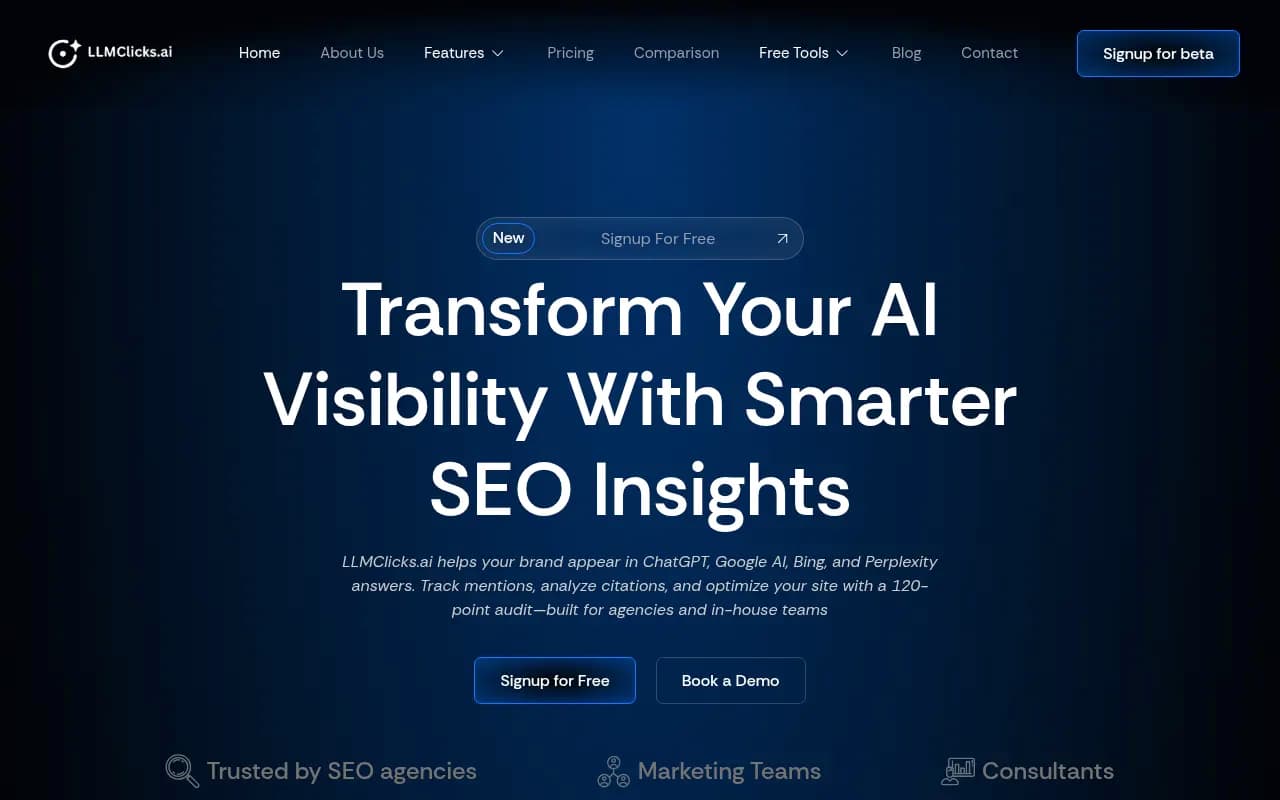
A few platforms are starting to address this. Promptwatch's AI Crawler Logs track which pages AI crawlers are actually reading, which helps you understand whether models are working from current information or stale content. LLMClicks has built hallucination detection into its core feature set.
This is an area where the market will develop quickly over the next 12 months. Right now, most tools don't flag factual inaccuracies in AI responses about your brand -- they just score the tone. That gap matters.
What to look for when evaluating these platforms
If you're evaluating platforms specifically for sentiment and framing analysis, here are the questions worth asking before committing to a trial:
Does sentiment analysis happen at the response level or the mention level? Mention-level scoring (positive/negative per brand name occurrence) misses most of the nuance. Response-level analysis looks at the full context of how your brand was discussed.
Can you track sentiment by prompt type? Your brand might be framed positively in "best tool for X" queries but negatively in "alternatives to Y" queries. Platforms that let you segment sentiment by prompt category are significantly more useful.
Does the tool track AI model differences? Claude and ChatGPT often frame brands differently for the same query. A platform that aggregates across models without distinguishing between them loses important signal.
Is there a path from insight to action? Knowing your sentiment score is declining is useful. Knowing which content gaps are driving that decline and having tools to fill them is much more useful. Most monitoring-only platforms stop at the first step.
How fresh is the data? AI responses change constantly. A weekly refresh cycle means you're often looking at stale sentiment data. Daily or near-real-time is the standard to aim for.
Who needs sentiment tracking vs. who just needs mention tracking
Not every team needs deep sentiment analysis, and it's worth being honest about that before spending time on evaluation.
You probably need sentiment tracking if:
- Your brand operates in a competitive category where AI models routinely compare you to alternatives
- You've had reputation issues in the past and want to monitor how they're reflected in AI responses
- Your sales team reports that prospects are coming in with AI-generated misconceptions about your product
- You're running a GEO program and want to measure whether content changes are improving how AI models frame you
You can probably start with mention tracking if:
- You're new to AI visibility and just want to establish a baseline
- Your primary goal is share of voice rather than brand perception
- You're in a category where AI mentions are rare and you're still working on getting mentioned at all
The honest answer is that most teams should start with a platform that does both reasonably well, then invest in deeper sentiment capabilities once they've established baseline visibility. Starting with pure sentiment analysis before you know your mention rate is putting the cart before the horse.
The action gap: why sentiment data alone isn't enough
Here's the uncomfortable truth about most AI visibility platforms in 2026: they're excellent at showing you problems and much less useful at helping you fix them.
You can see that Perplexity consistently frames your brand as "a good option for beginners" when you're actually targeting enterprise buyers. You can see the sentiment score trending negative. You can see competitors getting better positioning. And then... the dashboard ends.
This is where Promptwatch's approach is genuinely different. The platform's Answer Gap Analysis identifies the specific prompts where competitors are getting better positioning than you, and Content Agents generate the content designed to close those gaps. The AI Crawler Logs show you when AI models have crawled your new content and when citations start appearing. It's a loop rather than a report.
For teams that are serious about moving the needle on AI brand perception -- not just measuring it -- that distinction matters more than any individual feature comparison.
Practical starting point for 2026
If you're building an AI brand sentiment monitoring stack from scratch, here's a reasonable starting point:
Start with a platform that covers at least 5-6 major AI models (ChatGPT, Perplexity, Google AI Overviews, Claude, Gemini, and at least one of Grok/Copilot/DeepSeek). Anything less and you're missing too much of the picture.
Set up prompts that reflect how your actual buyers search, not just your brand name. "Best [category] tool for [use case]" queries reveal framing and positioning in ways that brand name queries don't.
Track sentiment by model and by prompt type from day one. Aggregated sentiment scores are almost meaningless -- the variation between models and query types is where the real insight lives.
Connect visibility data to content strategy. Whether you're using Promptwatch's Content Agents or doing it manually, the goal is to translate "AI models are framing us this way" into "here's what we publish next."
The brands that will win in AI search over the next 18 months aren't the ones with the best monitoring dashboards. They're the ones that have built a feedback loop between what AI models say about them and what they publish in response.