Key takeaways
- AI hallucinations about your brand are a real business problem in 2026 -- wrong pricing, outdated product info, and false comparisons appear in ChatGPT and Perplexity responses daily
- Most AI visibility tools only monitor mentions; very few offer active brand correction or content generation to fix what AI gets wrong
- The platforms that matter most combine hallucination detection, citation tracking, and content optimization in one workflow
- Platforms like Promptwatch go further than monitoring by helping you create the content that corrects AI's gaps and errors
- Choosing the right tool depends on whether you need monitoring only, or a full loop from detection to correction
Why hallucination detection matters now
Here's a scenario that's becoming common: a potential customer asks ChatGPT which project management tool has the best Gantt chart features. ChatGPT confidently names your competitor, then mentions your product -- but says it "lacks timeline views," which hasn't been true since your 2024 product update. The customer moves on. You never knew it happened.
That's an AI hallucination with real commercial consequences. And it's not rare. AI models are trained on data with cutoff dates, they synthesize information from multiple sources, and they sometimes just get things wrong. The problem is that most brands have no visibility into when this happens or how often.
This is why hallucination detection has become a distinct feature category in the AI visibility space. It's not enough to know whether AI mentions you. You need to know what it says, whether that's accurate, and what you can do about it.
What to look for in a platform
Before getting into specific tools, it helps to understand what separates a useful platform from one that just gives you a dashboard full of numbers.
Hallucination detection vs. brand monitoring
These are related but different. Brand monitoring tells you how often you're mentioned and in what context. Hallucination detection specifically flags when AI-generated responses contain factually incorrect information about your brand -- wrong pricing, discontinued features, inaccurate comparisons, or outdated positioning.
Not every platform does both. Some focus purely on mention frequency and sentiment. Others go deeper into accuracy verification.
The correction loop
Detection without correction is only half the job. The platforms worth paying for in 2026 are the ones that help you close the loop: find the inaccuracy, understand why it's happening (usually a content gap on your site), and create the content that feeds AI models the right information.
This is where most monitoring-only tools fall short. They show you the problem but leave you to figure out the fix yourself.
Coverage across models
ChatGPT gets the most attention, but Perplexity, Claude, Gemini, Grok, and Google AI Overviews all generate brand-relevant responses. A platform that only monitors one or two models gives you an incomplete picture. Look for coverage across at least five to six major AI engines.
The platforms worth considering
Promptwatch
Promptwatch takes a different approach from most tools in this space. Rather than stopping at monitoring, it's built around what it calls an "action loop": find gaps, create content, track results.
For hallucination and brand accuracy specifically, the Answer Gap Analysis shows you exactly which prompts competitors are visible for that you're not -- and which questions AI models are answering about your category without citing your site. That's often where inaccuracies creep in: AI fills the void with whatever it can find, which may be outdated or just wrong.
The Content Agents then generate articles, comparisons, and briefs grounded in real prompt data to fill those gaps with accurate information. The AI Crawler Logs show you when models visit your pages, what they read, and when those pages start generating citations -- so you can track whether your corrections are actually working.
It monitors 10 AI models: ChatGPT, Perplexity, Claude, Gemini, Google AI Overviews, Google AI Mode, Grok, DeepSeek, Copilot, and Mistral. Pricing starts at $99/month.

LLMClicks
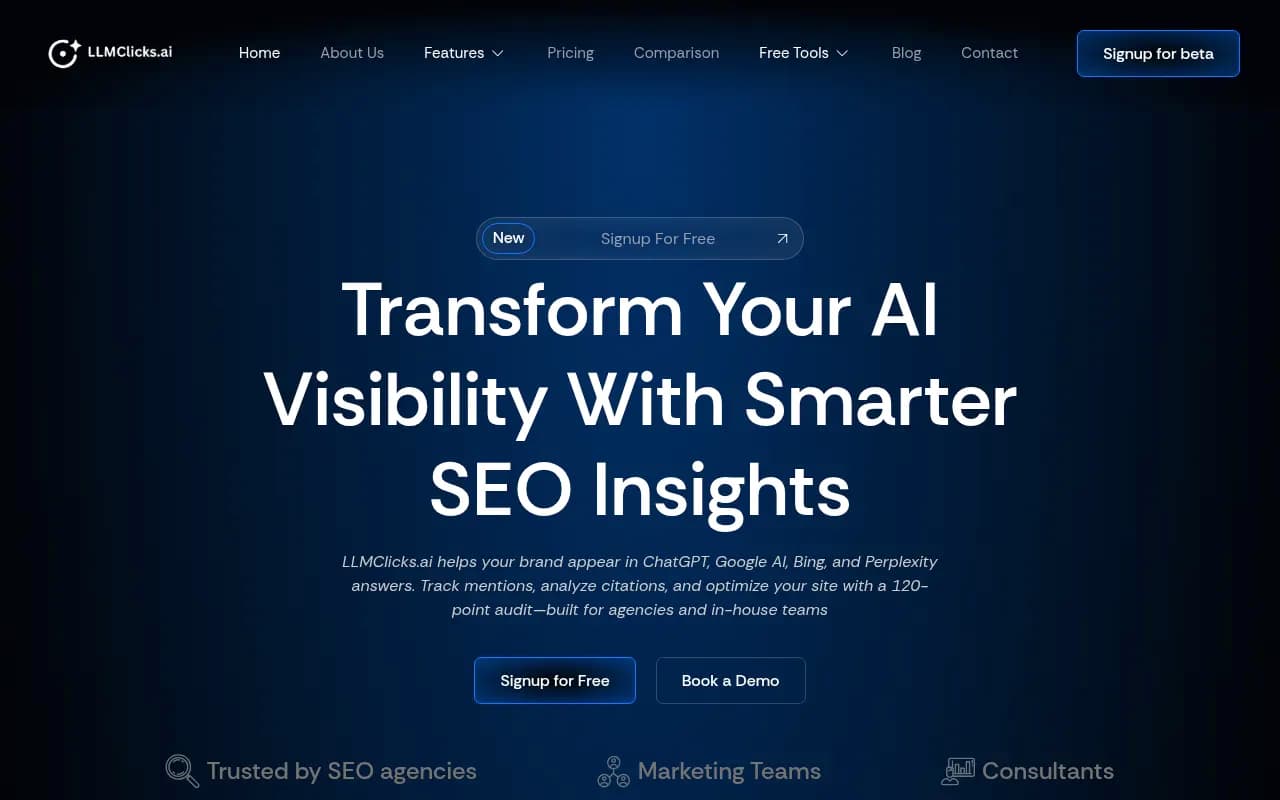
LLMClicks is one of the few tools that explicitly markets hallucination detection as a core feature. It tracks brand visibility across AI search results and flags responses where the information about your brand appears inaccurate or inconsistent with your actual product data.
Scrunch AI
Scrunch focuses heavily on citation intelligence -- tracking which sources AI models pull from when generating responses about your brand or category. This matters for brand correction because if you know which pages AI is citing (and which it's ignoring), you can work on getting the right pages indexed and referenced.
Profound
Profound is one of the more established enterprise-grade platforms in this space. Its Answer Engine Insights feature tracks how AI models respond to prompts in your category, with sentiment analysis and source citation data. It's strong on monitoring depth but less focused on content generation to fix what it finds.
Otterly.AI
Otterly.AI covers prompt research, AI search analytics, and content auditing. It's a solid monitoring tool for marketing teams that want to understand their AI visibility without a heavy enterprise contract. Hallucination detection isn't a named feature, but the accuracy verification in its brand monitoring workflow catches factual inconsistencies.

Athena HQ
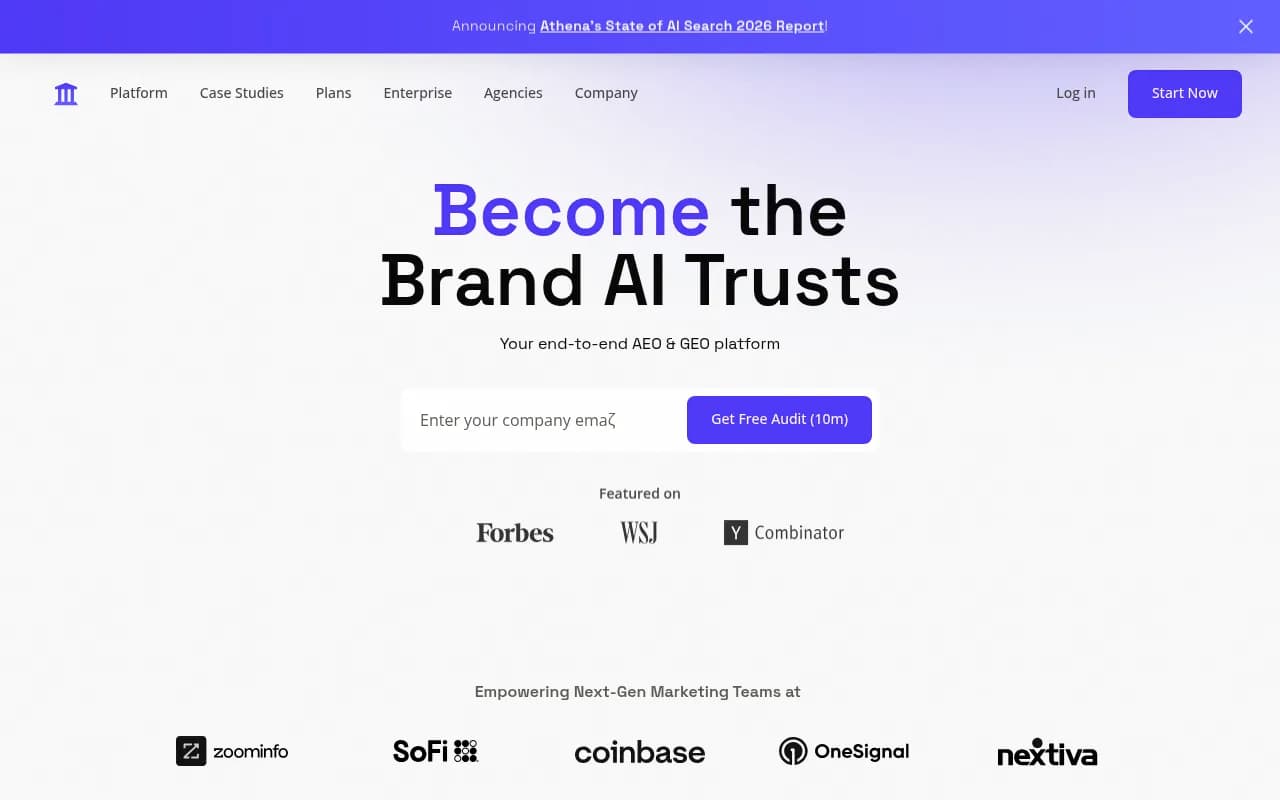
AthenaHQ tracks brand visibility across eight or more AI search engines with competitive benchmarking. It's monitoring-focused, which means it's good at showing you the problem but doesn't have built-in content generation to help you address it.
Writesonic
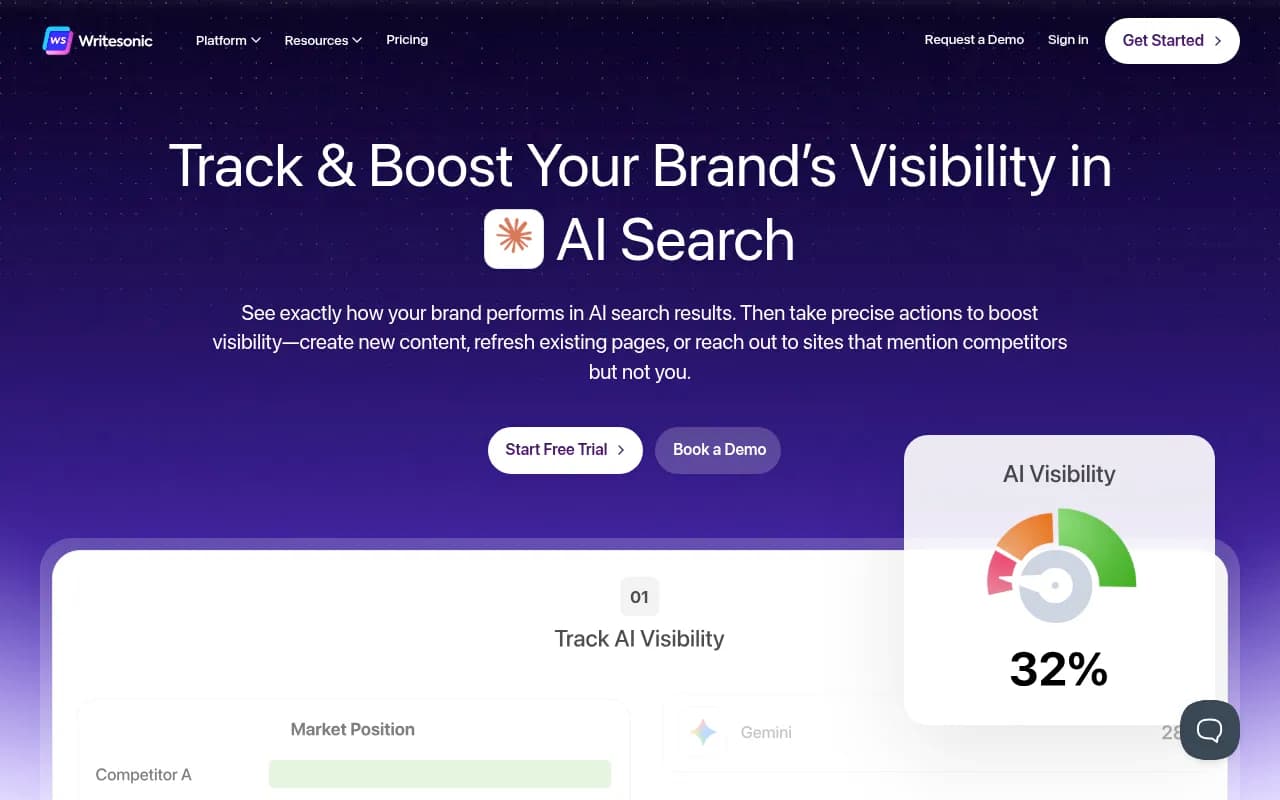
Writesonic has expanded beyond its origins as an AI writing tool to include AI search visibility tracking. It's an interesting option for teams that want content creation and visibility monitoring in one platform, though its tracking depth doesn't match dedicated GEO platforms.
Relixir
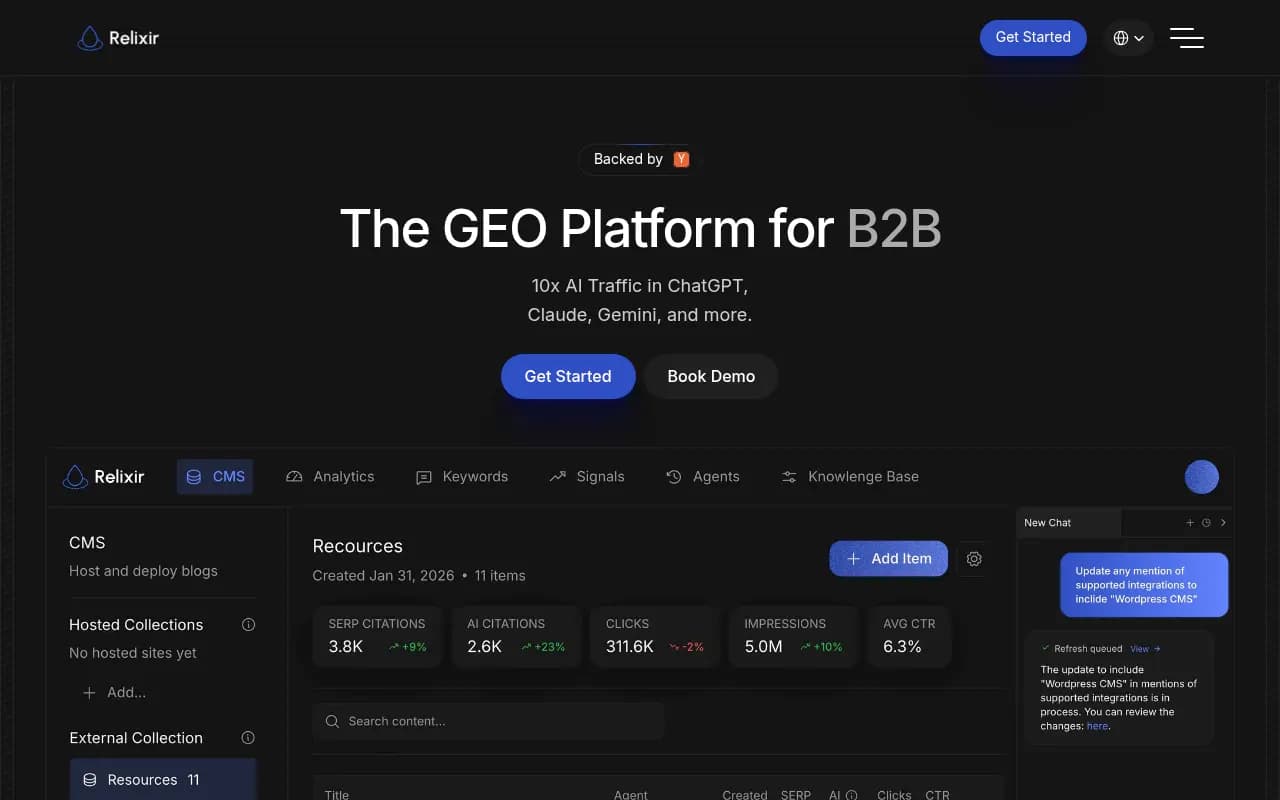
Relixir positions itself as an all-in-one GEO platform with AI content generation and analysis. It's worth evaluating if you want a platform that combines monitoring with content output, similar to the approach Promptwatch takes.
Feature comparison
| Platform | Hallucination detection | Brand correction tools | Content generation | AI models covered | Starting price |
|---|---|---|---|---|---|
| Promptwatch | Yes (gap analysis) | Yes (content agents) | Yes | 10 | $99/mo |
| LLMClicks | Yes (explicit feature) | Limited | No | 5+ | Varies |
| Scrunch AI | Partial (citation accuracy) | No | No | 6+ | Varies |
| Profound | Partial (sentiment + accuracy) | No | No | 6+ | Custom |
| Otterly.AI | Partial | No | No | 5+ | From ~$49/mo |
| AthenaHQ | Monitoring only | No | No | 8+ | Custom |
| Writesonic | Limited | Partial | Yes | 4+ | From $99/mo |
| Relixir | Yes | Partial | Yes | 5+ | Custom |
How brand correction actually works
Understanding the mechanics helps you evaluate whether a platform's approach will actually move the needle.
Step 1: Identify what AI is getting wrong
This requires running structured prompts across multiple AI engines and comparing the responses against your actual product data. Some platforms automate this comparison. Others just show you the raw responses and leave the analysis to you.
The most useful platforms flag specific inaccuracies -- "AI says your pricing starts at $X but your site says $Y" -- rather than just showing you sentiment scores.
Step 2: Trace the source of the error
AI models cite sources. When they get something wrong, it's usually because they're pulling from an outdated page, a competitor's comparison article, or a Reddit thread that contains incorrect information. Citation analysis tools help you find these sources so you can either update your own content or, where possible, address the third-party content.
Tools like Scrunch AI and Promptwatch both surface citation data, which is essential for this step.
Step 3: Create content that gives AI the right answer
This is the correction mechanism. If AI is getting your pricing wrong, publish a clear, structured pricing page that AI crawlers can easily parse. If it's misrepresenting a feature, create content that directly addresses that feature with accurate, up-to-date information.
The challenge is knowing which content to create. Platforms with prompt intelligence (like Promptwatch's volume and difficulty scoring) help you prioritize the prompts where inaccuracies are most common and most commercially damaging.
Step 4: Verify the correction took hold
After publishing corrective content, you need to confirm that AI models are actually crawling and citing it. This is where AI crawler logs become important -- they show you when models visit your pages and when those visits translate into citations. Without this feedback loop, you're publishing content and hoping for the best.
Specific use cases and which tools fit
"AI is recommending my competitor instead of me"
This is a share-of-voice problem, not strictly a hallucination issue. The fix is understanding which prompts your competitor wins and why -- then creating content that makes you the better answer.
Promptwatch's Answer Gap Analysis is built for exactly this. It shows you the specific prompts where competitors appear and you don't, then helps you generate content to close those gaps.
"AI is citing wrong pricing or outdated features"
This is a genuine hallucination problem. You need a platform that flags factual inaccuracies in AI responses and helps you trace them to their source.
LLMClicks and Scrunch AI are worth evaluating here, as is Promptwatch's citation tracking, which shows you which pages AI is pulling from when it generates responses about your brand.
"I need to monitor AI mentions at scale across multiple brands"
Agency teams managing multiple clients need platforms with multi-site support and white-label reporting. Promptwatch's agency and enterprise tiers support this. Search Party is another option built with agency workflows in mind.
Search Party
"I want to understand which AI models are most important for my category"
Different AI engines have different user bases and different citation behaviors. A platform that covers only ChatGPT misses the Perplexity users who tend to be research-heavy and high-intent. Platforms with multi-model coverage and per-model breakdowns help you allocate effort where it matters.
SE Ranking's AI visibility module and Promptwatch both offer per-model breakdowns.
What most platforms still get wrong
A few honest observations after looking at the landscape:
Most platforms are monitoring dashboards. They show you data. They don't help you do anything with it. That's fine if you have an in-house team that can translate visibility data into content strategy and execution -- but most marketing teams don't have that bandwidth.
Hallucination detection is still immature. Very few platforms have built systematic accuracy verification into their workflows. Most rely on sentiment analysis as a proxy, which catches negative mentions but misses factually incorrect positive ones. ("Your tool is great for X" when your tool doesn't actually do X is a hallucination that sentiment analysis would score as positive.)
Citation tracking is underused. The most actionable insight in AI visibility isn't your mention rate -- it's which sources AI is citing when it talks about your category. If you know that, you know where to publish and what to optimize. Platforms that surface this data are more useful than those that don't.
Making the choice
If you're evaluating platforms right now, the honest framework is:
- If you need monitoring only and have a team to act on the data, Profound, Otterly.AI, or AthenaHQ are solid choices
- If you need monitoring plus content generation to fix what you find, Promptwatch is the most complete option in the market
- If hallucination detection specifically is your priority, LLMClicks is worth a close look alongside Promptwatch's citation and gap analysis
- If you're an agency managing multiple brands, look at Promptwatch's agency tier or Search Party
The platforms that will matter most over the next 12 months are the ones that close the loop between detection and correction. Monitoring your AI visibility is table stakes. Fixing it is the actual competitive advantage.