Key takeaways
- A rebrand creates a temporary but serious AI visibility gap: AI models keep citing your old brand name, old product names, and outdated positioning for months after launch.
- Monitoring alone isn't enough. You need a platform that shows you the gaps and helps you create content to close them.
- The most important metrics to track during a rebrand are old-name citation rate, new-name citation rate, sentiment accuracy, and share of voice vs. competitors.
- Promptwatch is the only platform in 2026 rated as a leader across all GEO categories -- and its Answer Gap Analysis + Content Agents make it particularly well-suited to the rebrand use case.
- Other solid options exist depending on your budget and team size -- this guide covers the full landscape.
Why rebrands are an AI visibility nightmare
Traditional SEO during a rebrand is hard enough. You redirect URLs, update title tags, rebuild backlinks, and hope Google re-indexes everything before your rankings crater. Most teams have a playbook for that.
AI search is a different problem entirely. ChatGPT, Perplexity, Claude, Gemini -- these models don't crawl your site in real time. They were trained on data that may be months or years old, and they update their knowledge through a mix of retrieval-augmented generation, periodic retraining, and crawler activity that happens on their own schedule. When you rename your company or reposition your product, the AI models keep saying the old thing. Sometimes for a very long time.
This creates a specific set of problems:
- AI models recommend your old brand name to users who are actively looking to buy
- Your new brand name gets zero citations because no training data or crawled content associates it with your category
- Competitors fill the gap, getting cited in responses that should mention you
- Sentiment from the old brand (good or bad) bleeds into responses about the new one
- Your team has no visibility into any of this because traditional rank trackers don't touch AI search
The stakes are real. About 68% of Google searches ended without a click in early 2026, according to SparkToro's analysis of Similarweb clickstream data. When the AI answer is the destination, being invisible there means you're invisible to a large share of your market -- regardless of what your website says.
So what do you actually need to track, and which platforms help you do it?
What to track during a rebrand (and why it's different from normal AI monitoring)
Most AI visibility platforms are built for steady-state monitoring: you set up your brand, your competitors, and a list of prompts, and you watch your citation rate over time. That's useful, but a rebrand demands more.
Here's what you specifically need to track:
Old-name citation rate. How often are AI models still recommending your previous brand name? This number should trend toward zero over the months following your rebrand, but it rarely does without active intervention.
New-name citation rate. How quickly are AI models picking up your new brand? This is your primary success metric. If it's not moving, your new content isn't being crawled or isn't being cited.
Sentiment and accuracy. Are AI models describing your new brand correctly? A rebrand often involves repositioning -- new target market, new value prop, new product names. AI models frequently get this wrong even after they've updated the brand name.
Competitor share of voice. During the gap period between old-brand and new-brand recognition, competitors often gain ground. You need to see this happening in real time, not six months later.
Crawler activity. Which AI crawlers are hitting your new pages? When? Are they encountering errors? This tells you whether the infrastructure for citation is even in place.
Prompt coverage. Which prompts in your category are you visible for? Which ones are your competitors winning? This is where you find the specific content gaps to close.
Not every platform tracks all of these. Most track only a subset. The table below shows how the major options compare.
Platform comparison
| Platform | Old/new name tracking | Sentiment accuracy | Competitor share of voice | AI crawler logs | Content gap analysis | Content generation | Pricing (from) |
|---|---|---|---|---|---|---|---|
| Promptwatch | Yes | Yes | Yes | Yes | Yes | Yes (Content Agents) | $99/mo |
| Profound | Yes | Yes | Yes | No | Partial | No | Higher |
| Otterly.AI | Yes | Limited | Yes | No | No | No | Lower |
| Peec AI | Yes | No | Yes | No | No | No | Lower |
| Scrunch | Yes | Yes | Yes | No | Partial | No | Mid |
| SE Ranking AI | Yes | Limited | Yes | No | No | No | Mid |
| Writesonic | Yes | Limited | Limited | No | Limited | Yes | Mid |
| AthenaHQ | Yes | Yes | Yes | No | No | No | Higher |
| Brandlight.ai | Yes | Limited | Yes | No | No | No | Lower |
| Frase | Yes | Limited | Limited | No | Yes | Yes | Mid |
A few things stand out. First, almost no platform offers AI crawler logs -- the ability to see which AI crawlers are hitting your pages, when, and what errors they're encountering. This is critical during a rebrand because it tells you whether your new content is even being discovered. Second, the gap between monitoring-only platforms and optimization platforms is wide. Most tools stop at showing you the data. Very few help you act on it.
The platforms worth considering
Promptwatch
Promptwatch is the most complete option for a rebrand scenario, and it's not particularly close. The reason is the action loop: it doesn't just show you where your new brand is invisible, it helps you fix it.
The Answer Gap Analysis is particularly useful here. You can see exactly which prompts your competitors are being cited for that you're not -- which, during a rebrand, often means prompts that should mention your new brand but are still citing the old one or citing a competitor instead. From there, Content Agents generate articles, comparisons, and briefs grounded in that real prompt data, designed to answer the specific gaps AI models are exposing.
The AI Crawler Logs feature is something most competitors don't have at all. During a rebrand, knowing that GPTBot crawled your new homepage three times last week but hasn't touched your new product pages is actionable information. You can fix the crawl path, update your sitemap, and watch the logs to confirm the fix worked.
Page-level tracking shows exactly which of your new pages are being cited, by which models, and how often. The timeline from publish to crawl to citation is visible in the agent analytics. That's the feedback loop a rebrand team needs.
Pricing starts at $99/month for the Essential plan (1 site, 50 prompts, 5 articles). The Professional plan at $249/month adds crawler logs, which you'll want for a rebrand.

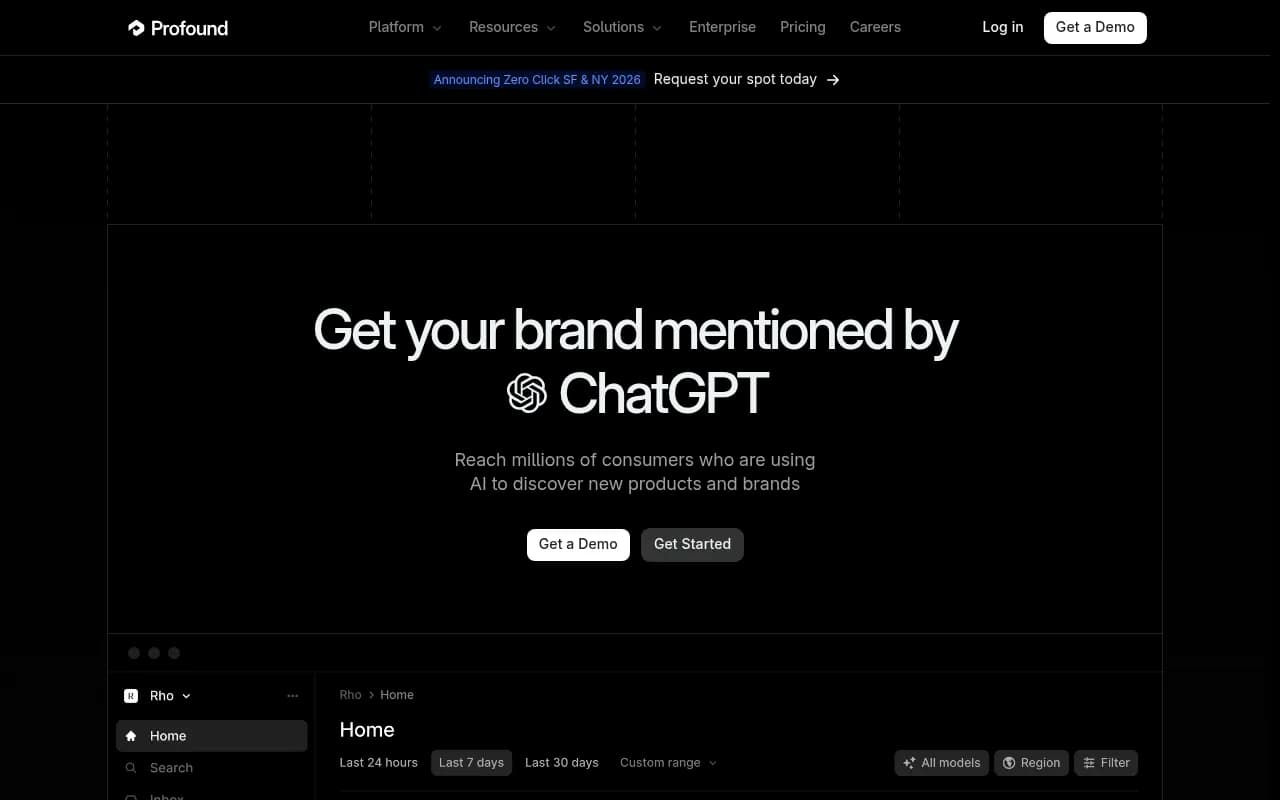
Profound
Profound is the strongest dedicated monitoring platform if you need deep enterprise-grade tracking and reporting without the content generation side. It covers the major AI models, has solid sentiment analysis, and produces clean reports that work well for executive stakeholders.
The limitation for a rebrand is that it stops at the data. You'll know your new brand isn't being cited. You won't get help figuring out what content to create to change that. For teams with a separate content operation that can act on the insights, this is fine. For teams that need everything in one place, it's a gap.
Otterly.AI
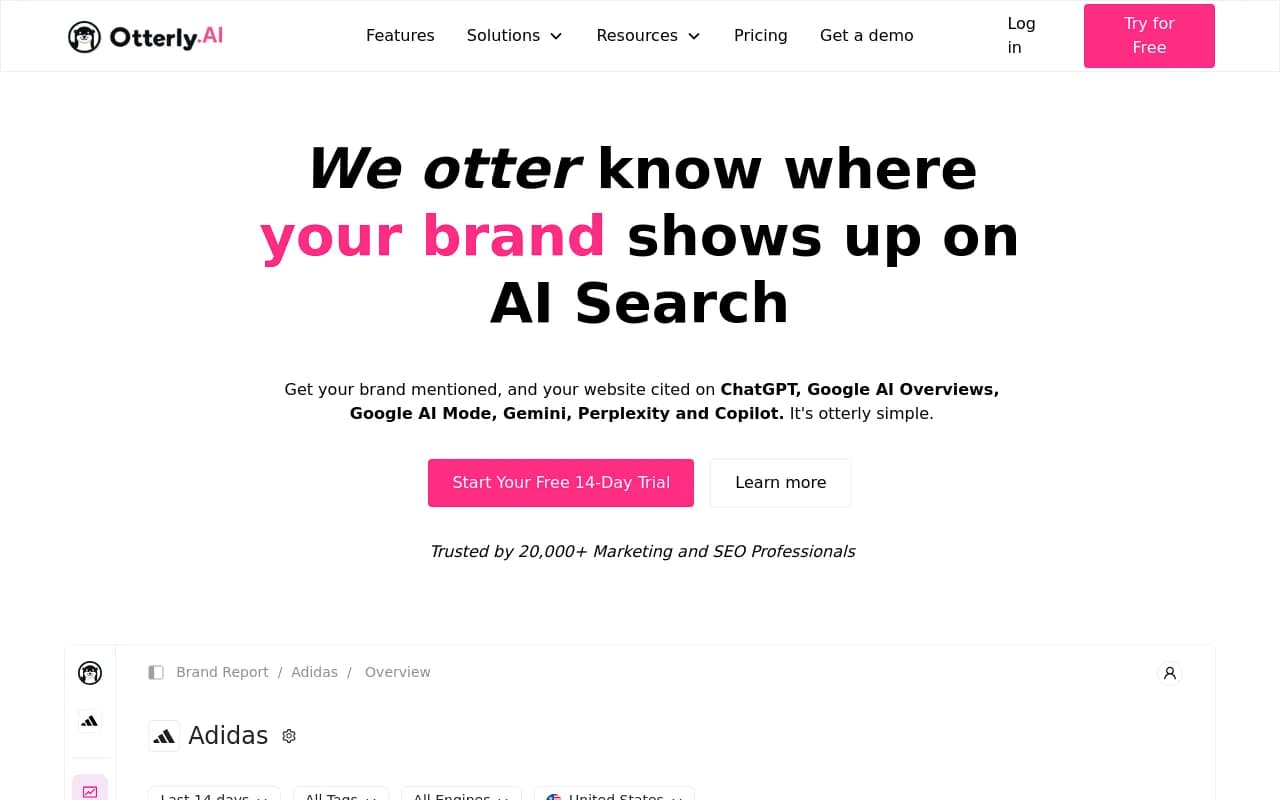
Otterly.AI is a solid entry-level option for smaller teams or agencies that need basic citation tracking without a large budget. It tracks brand mentions across the main AI models and gives you a clear picture of citation frequency over time.
For a rebrand, it works as a monitoring baseline -- you can set up both your old and new brand names and watch the transition. What it won't do is tell you why you're not being cited or help you create content to fix it. No crawler logs, no content gap analysis, no generation. It's a dashboard, not an optimization tool.
Scrunch
Scrunch sits in the middle ground: better than basic monitoring tools, not as complete as Promptwatch. It has decent sentiment analysis and competitor comparison features, which are useful for tracking whether your new brand positioning is being accurately reflected in AI responses.
The content gap analysis is partial -- it shows you where you're missing but doesn't generate content to fill the gaps. Worth considering if your team is comfortable doing the content creation separately and just needs a solid tracking layer.
SE Ranking AI visibility
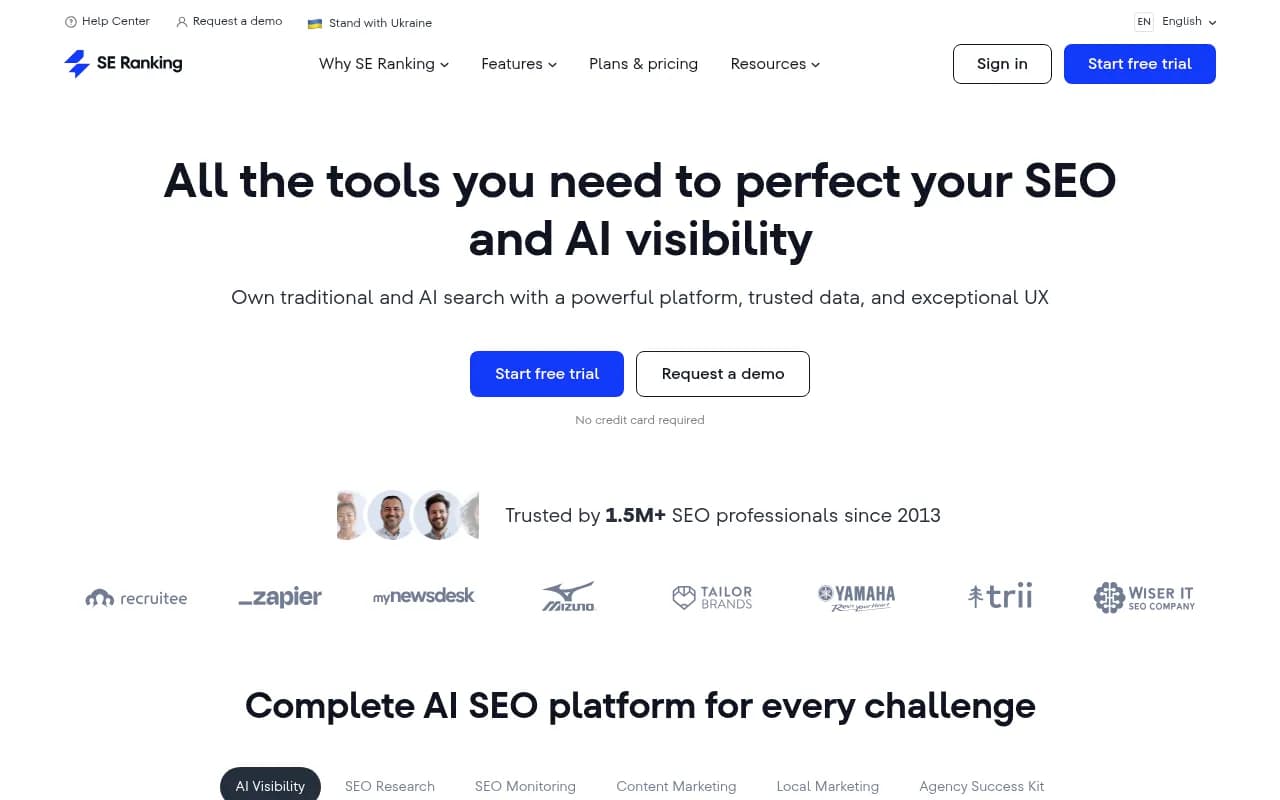
SE Ranking added AI visibility tracking to its existing SEO platform, which makes it attractive for teams already using SE Ranking for traditional search. The integration means you can see traditional rankings and AI citations side by side -- useful context during a rebrand when both are in flux.
The AI tracking features are less deep than dedicated platforms. Sentiment analysis is limited, and there's no crawler log functionality. But if you're already paying for SE Ranking, the AI visibility add-on is a low-friction way to get started.
Writesonic
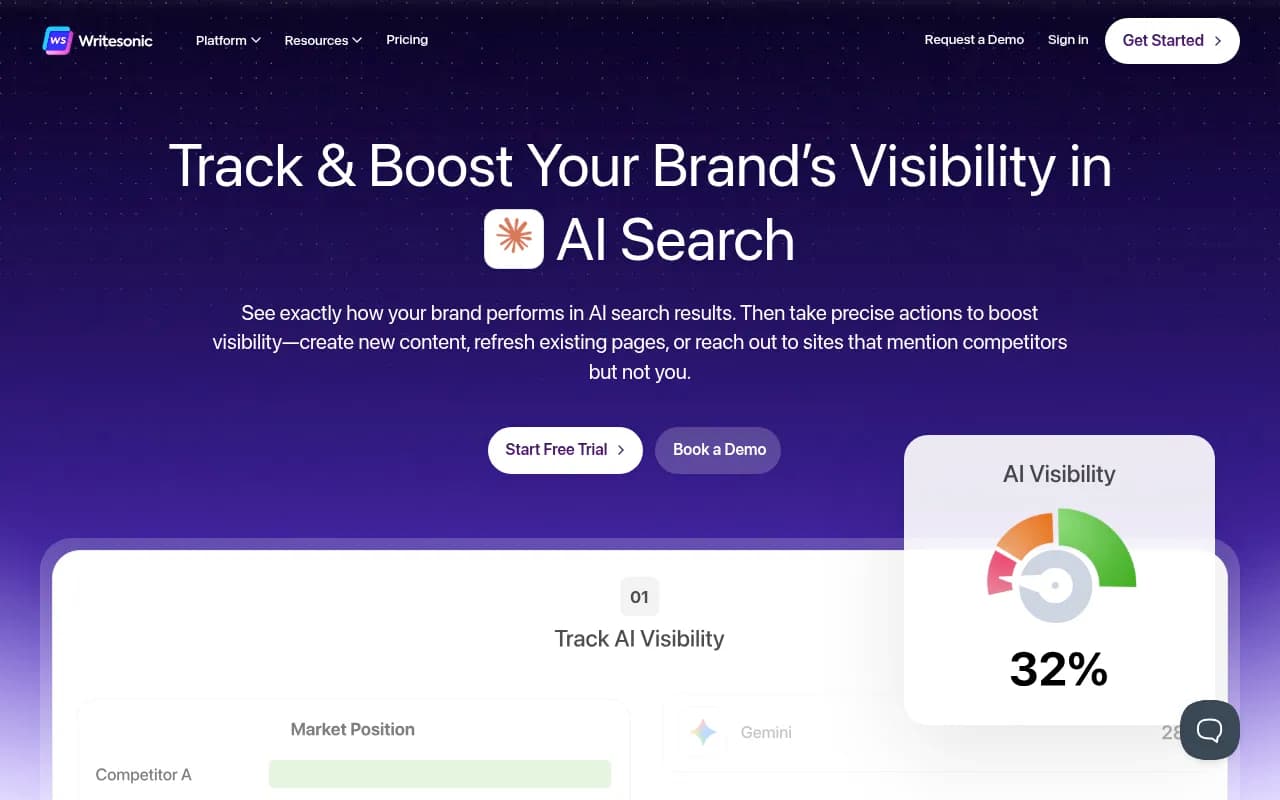
Writesonic added AI search visibility tracking to its content platform, which gives it a similar appeal to Frase: you can track where you're invisible and generate content to fix it in the same tool. The tracking side is less mature than dedicated platforms, and the competitor analysis is limited.
For a rebrand, it works best if your primary need is generating new content under your new brand name and you want some visibility tracking alongside it. Don't expect the depth of monitoring you'd get from Promptwatch or Profound.
Peec AI
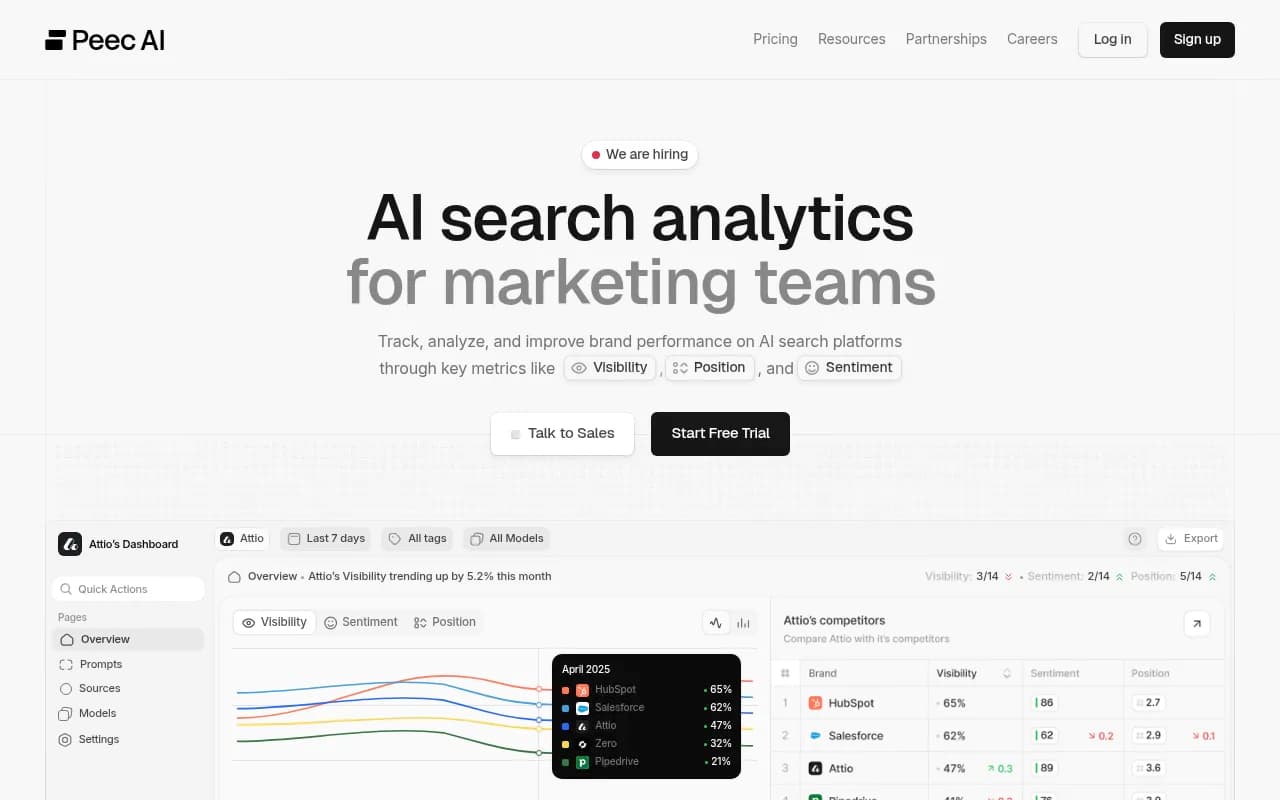
Peec AI is a monitoring-only tool with a clean interface and straightforward pricing. It tracks brand mentions across AI models and gives you trend data over time. For a rebrand, it's useful as a quick sanity check -- is the new name being picked up at all? -- but it won't tell you much about why or what to do about it.
Frase
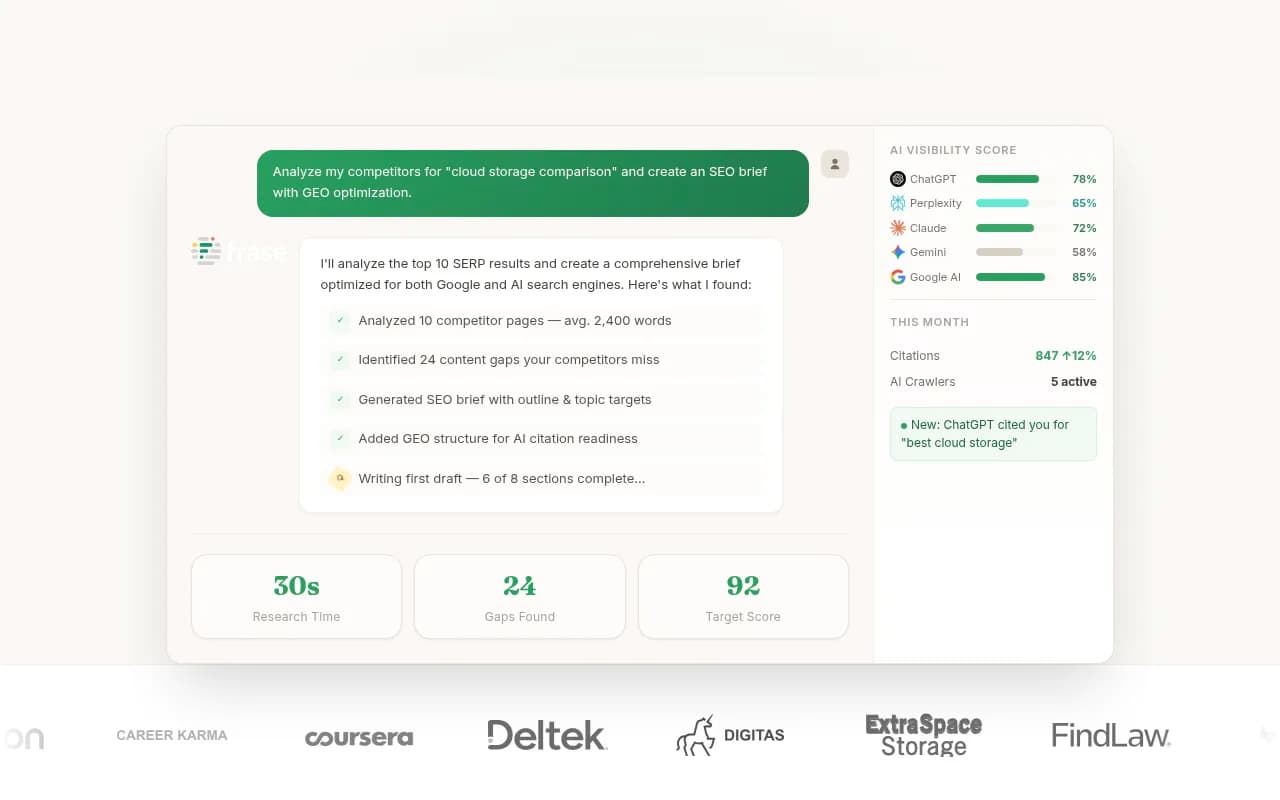
Frase pairs AI visibility tracking with content research and optimization tools. It's a reasonable option for teams that want to track citations and create content in one workflow. The AI visibility tracking is less specialized than dedicated platforms, but the content side is strong.
How to actually use these tools during a rebrand
Knowing which platform to use is only half the problem. Here's how to structure your AI visibility work across the rebrand timeline.
Before launch: establish your baseline
Before you change anything publicly, run a full audit of your current AI visibility. Document:
- Which prompts your current brand is cited for
- Your citation rate across each AI model
- How competitors are positioned for your target prompts
- What sentiment and descriptions AI models currently associate with your brand
This baseline is your "before" picture. You'll need it to measure progress and to identify which prompts are most at risk during the transition.
At launch: set up dual tracking
The day your rebrand goes live, set up tracking for both your old brand name and your new one. You want to watch two curves: the old name declining, the new name rising. If the old name isn't declining, AI models haven't updated their knowledge. If the new name isn't rising, your new content isn't being crawled or cited.
Check your AI crawler logs (if your platform supports it) to confirm that crawlers are hitting your new pages. If they're not, that's a technical problem to fix before anything else.
Weeks 1-8: close the content gaps
This is where the difference between monitoring-only and optimization platforms becomes concrete. Use your platform's gap analysis to find the specific prompts where competitors are being cited but your new brand isn't. These are your content priorities.
Create content that directly answers those prompts under your new brand name. Be specific: if the gap is "best [category] tool for [use case]," write a page that answers exactly that question. AI models cite sources that directly answer the prompt -- generic brand pages don't get cited, specific helpful content does.
Ongoing: track the transition
Set up a weekly review of your citation rate for both brand names. The goal is a clean crossover: old name citations dropping to near zero, new name citations climbing to match or exceed your previous baseline. This typically takes 3-6 months depending on how actively you're creating new content and how frequently the AI models update their knowledge.
Watch sentiment closely. Even after AI models start citing your new brand name, they may describe it using old positioning. If you've repositioned your product for a different market, you need to create content that explicitly establishes the new positioning -- and track whether AI responses are reflecting it accurately.
A note on what "AI visibility" actually means for a rebrand
There's a temptation to treat AI visibility as a single number -- your citation rate -- and optimize for that. During a rebrand, that's not enough.
You can have a high citation rate with completely wrong information. AI models might cite your new brand name but describe your old product, your old pricing, or your old target market. That's arguably worse than not being cited at all, because it creates confusion for buyers who are actively researching.
The platforms that track sentiment and accuracy -- not just citation frequency -- are more valuable here. Promptwatch, Profound, and Scrunch all offer some level of sentiment and accuracy tracking. The monitoring-only tools that just count mentions will miss this entirely.
The other thing worth tracking is which AI models are lagging. ChatGPT, Perplexity, Claude, and Gemini update their knowledge at different rates and through different mechanisms. You might be well-cited on Perplexity (which uses real-time retrieval) while still being invisible on ChatGPT (which relies more heavily on training data). Knowing which model is lagging tells you where to focus your content and outreach efforts.
Which platform should you choose?
For most teams going through a rebrand, the honest answer is that you need a platform that does more than monitor. You need one that helps you close the gaps it finds.
That points to Promptwatch as the default recommendation -- it's the only platform in 2026 that combines crawler logs, gap analysis, and content generation in one workflow, at a price point that's accessible to marketing teams rather than just enterprises. The Professional plan at $249/month is the right tier for a rebrand, because the crawler logs are essential for understanding whether your new content is even being discovered.
If you're at enterprise scale and need deep reporting for executive stakeholders, Profound is worth evaluating alongside Promptwatch. If you're a small team with a tight budget and just need a monitoring baseline, Otterly.AI or Peec AI will get you started.
What you shouldn't do is skip AI visibility tracking entirely during a rebrand. The gap between what your website says and what AI models tell your potential customers can persist for months. The only way to close it faster is to know it exists.