Key takeaways
- AI search engines like ChatGPT, Perplexity, and Google AI Overviews are now a primary discovery channel for professional services buyers -- if you're not cited, you're invisible to a growing share of your market.
- Most AI visibility tools are monitoring dashboards. For professional services firms, you need a platform that also tells you why you're not being cited and helps you fix it.
- The most important metrics for professional services are sentiment accuracy, competitor share-of-voice, and prompt-level citation tracking -- not just raw mention counts.
- Promptwatch is the only platform in 2026 rated as a "Leader" across all GEO categories, combining gap analysis, content generation, and crawler-level tracking in one workflow.
- Budget and team size matter: smaller firms can start with lighter tools, but firms competing for high-value mandates need enterprise-grade depth.
Why professional services firms have a different AI visibility problem
When someone asks ChatGPT "who are the best M&A advisors in the Nordics?" or "which consulting firm specializes in supply chain resilience?", the answer they get shapes their shortlist. They may never visit your website. They may never run a Google search. The AI's response is the research.
That's a fundamentally different dynamic than most industries face. For a consumer brand, being absent from an AI response is a missed sale. For a law firm, a management consultancy, or a financial advisory, it can mean being excluded from a pitch process entirely.
Professional services firms also have a harder version of this problem because the stakes of how you're described are just as high as whether you're mentioned at all. If an AI model describes your firm as "mid-market focused" when you're actively targeting enterprise mandates, that framing can do real damage. Sentiment accuracy and description quality matter in ways they simply don't for, say, a consumer electronics brand.
This means the standard checklist for evaluating AI visibility tools -- model coverage, prompt volume, citation tracking -- needs a few extra items for professional services:
- Can it track how your firm is described, not just whether it's mentioned?
- Does it show competitor positioning within the same AI responses?
- Can it surface the specific content gaps that explain why a competitor gets cited and you don't?
- Does it support multi-region and multi-language tracking (critical for international practices)?
With that framing in mind, here's how the leading platforms stack up.
The core distinction: monitoring vs. optimization
Before comparing specific tools, it's worth being direct about the most important split in this market.
Most AI visibility platforms are monitoring tools. They run prompts, count citations, and show you a dashboard. That's useful, but it's incomplete. Knowing that you're cited 12% of the time for "financial due diligence advisory" tells you there's a problem. It doesn't tell you what to do about it.
A smaller number of platforms have moved into optimization -- they connect the monitoring data to content analysis, gap identification, and in some cases content generation. For professional services firms with lean marketing teams, that second category is where the real value is.
The table below captures how the major platforms in 2026 split across this divide:
| Platform | Monitoring | Gap analysis | Content generation | Crawler logs | Sentiment tracking | Best for |
|---|---|---|---|---|---|---|
| Promptwatch | Yes | Yes | Yes | Yes | Yes | Full-cycle GEO for brands |
| Profound | Yes | Partial | No | No | Yes | Enterprise reporting |
| Otterly.AI | Yes | No | No | No | Limited | Budget monitoring |
| Peec AI | Yes | No | No | No | No | Agency multi-client |
| AthenaHQ | Yes | No | No | No | Yes | Monitoring-focused teams |
| SE Ranking AI | Yes | Partial | No | No | No | Teams on SE Ranking already |
| Writesonic | Yes | Partial | Yes | No | No | Content teams |
| Frase | Yes | Yes | Yes | No | No | Monitor + write in one tool |
| Scrunch | Yes | No | No | No | Yes | Brand sentiment focus |
| Bluefish AI | Yes | Partial | No | No | Yes | Enterprise GEO |
Platform-by-platform breakdown
Promptwatch
Promptwatch is the most complete platform in this comparison. It runs across 10 AI models (ChatGPT, Perplexity, Claude, Gemini, Google AI Overviews, Google AI Mode, Grok, DeepSeek, Copilot, and Mistral), which matters for professional services firms whose clients might use any of them.

What separates it from the monitoring-only tools is the action loop. The Answer Gap Analysis shows you the specific prompts where competitors are being cited and you're not -- not as a vague category, but as the actual question text. From there, Content Agents generate articles, briefs, and comparisons grounded in that prompt data. Then page-level tracking shows whether the new content gets crawled and cited.
For professional services specifically, the AI Crawler Logs feature is genuinely useful. You can see which pages on your site AI crawlers are actually reading, how often they return, and whether there are technical errors blocking them. If your practice area pages aren't being crawled, no amount of content optimization will help -- and most platforms won't surface that problem at all.
Pricing starts at $99/month for the Essential plan (1 site, 50 prompts, 5 articles), with the Professional plan at $249/month adding crawler logs, state/city tracking, and 150 prompts. The Business plan at $579/month supports 5 sites and 350 prompts, which suits multi-practice or multi-region firms.
Profound
Profound is the strongest dedicated monitoring platform for enterprise teams. It tracks 10+ AI engines and has processed 400M+ prompt insights, with strong reporting features that work well for firms that need to present AI visibility data to leadership or clients.
Where it falls short for professional services is the lack of content generation and the absence of crawler-level data. You'll know your citation rate is low; you won't get much help fixing it from within the platform. It's also priced at the higher end, which can be hard to justify if you're not getting optimization capabilities alongside the tracking.
That said, if your primary need is rigorous, defensible reporting -- for a CMO presentation or a client deliverable -- Profound's depth is hard to match.
Otterly.AI
Otterly.AI is a clean, affordable monitoring tool. It tracks brand mentions across the major AI engines and gives you a straightforward dashboard. For a small professional services firm that just wants to know whether it's showing up at all, it's a reasonable starting point.

The ceiling is low, though. No crawler logs, no content gap analysis, no generation capabilities. If you want to move from "we know we have a problem" to "we're fixing it", you'll outgrow Otterly quickly.
Peec AI
Peec AI is popular with agencies managing multiple clients, partly because of its multi-client structure and partly because it's priced accessibly. For a professional services firm managing visibility across several practice areas or geographies, the multi-project setup is useful.

Like Otterly, it stops at monitoring. Citation counts and share-of-voice comparisons are available, but there's no path from the data to action built into the platform.
AthenaHQ
AthenaHQ tracks visibility across 8+ AI search engines and has reasonable sentiment analysis, which is relevant for professional services firms that care about how they're described. The interface is clean and the competitor benchmarking is solid.
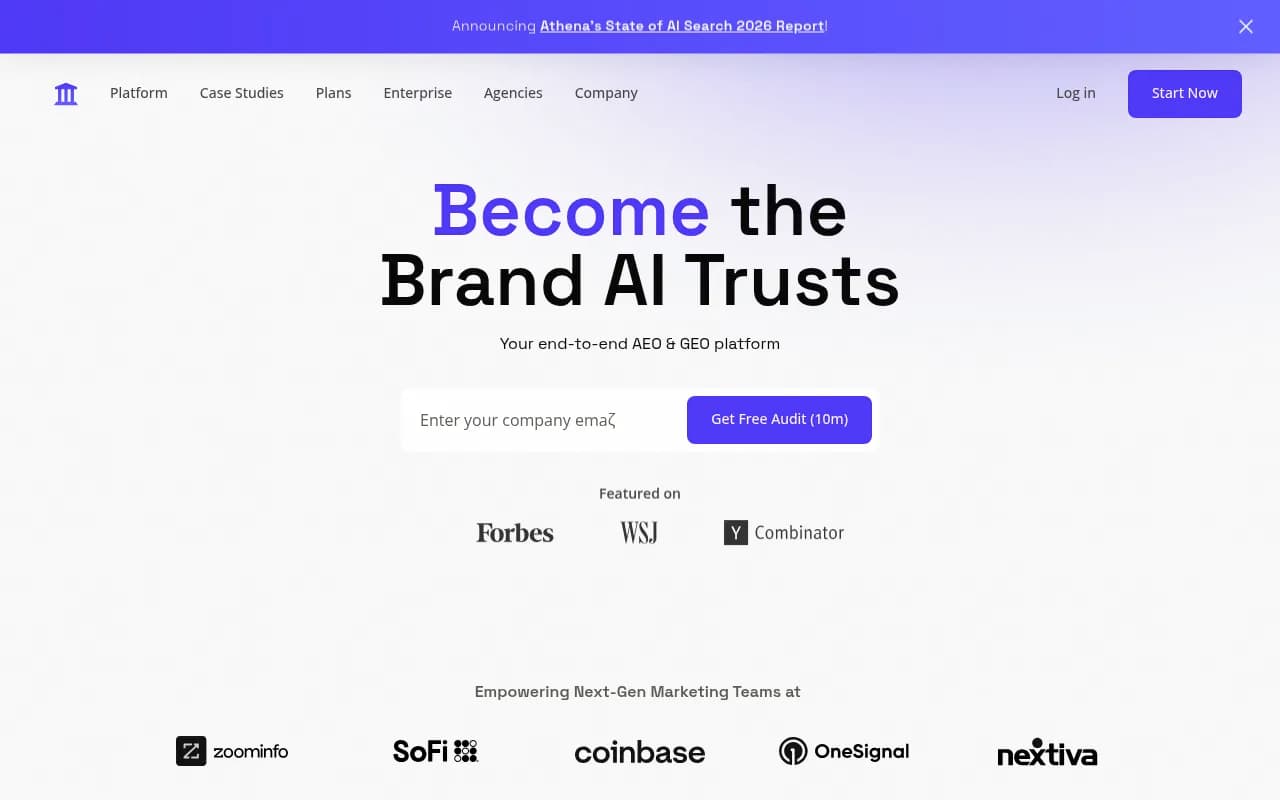
It's monitoring-focused, though. The gap between "here's your data" and "here's what to do" remains the user's problem to solve.
Frase
Frase pairs AI visibility monitoring with content research and writing tools in a single workflow. If your marketing team is small and you need to both track citations and produce the content that might improve them, Frase is worth considering.
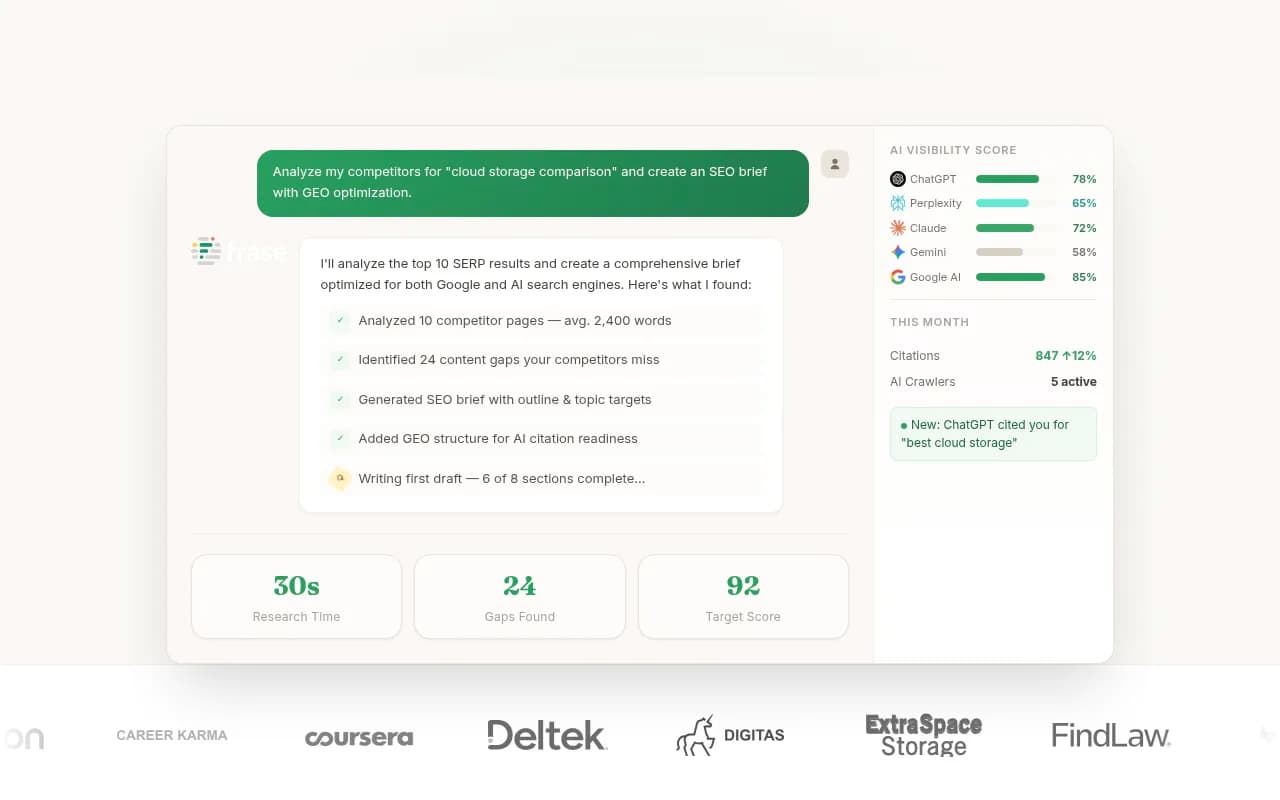
The monitoring side is less deep than Profound or Promptwatch -- fewer models, less granular prompt data -- but the integrated writing workflow is genuinely useful for teams that don't want to manage multiple platforms.
Writesonic
Writesonic has expanded its AI visibility tracking alongside its content generation features. It's a reasonable option for firms that are already using Writesonic for content and want to add citation monitoring without switching platforms.
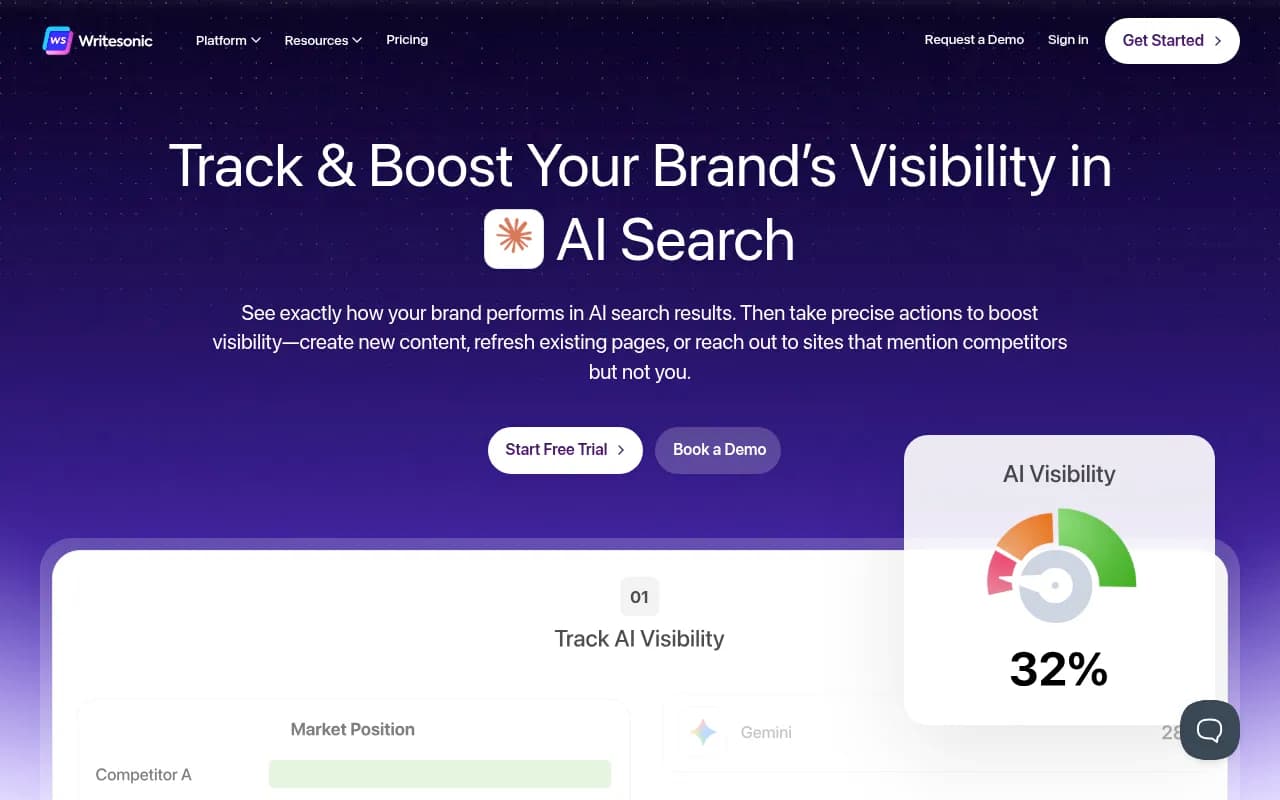
The tracking depth is moderate. It covers the major AI engines but lacks the crawler-level data and prompt intelligence (volume estimates, difficulty scores, query fan-outs) that more specialized platforms offer.
SE Ranking AI visibility
SE Ranking's AI Search Toolkit is a natural fit for firms already using SE Ranking for traditional SEO. It adds AI citation monitoring to an existing SEO workflow, which reduces tool sprawl.
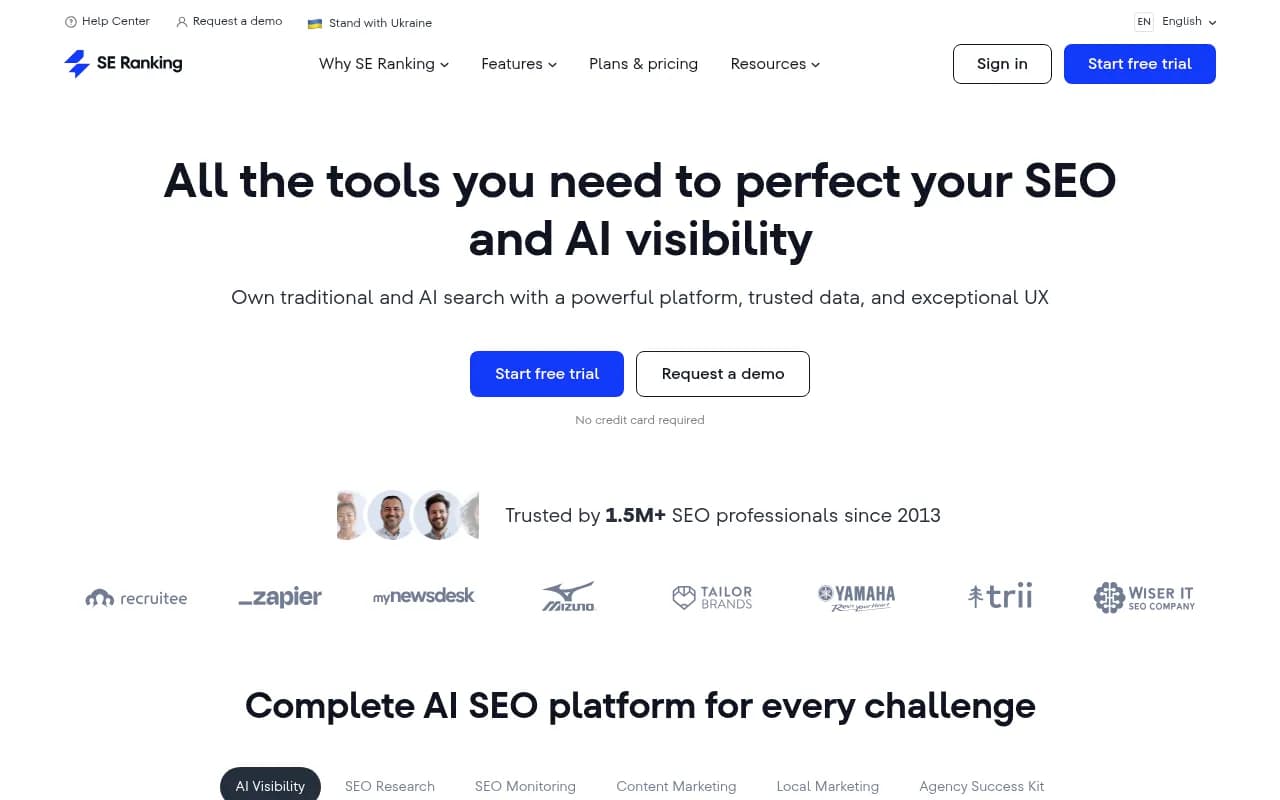
The limitation is that it's an add-on to an SEO platform, not a purpose-built GEO tool. Prompt coverage and optimization features are thinner than dedicated platforms.
Scrunch
Scrunch focuses on brand sentiment and how AI assistants describe your brand. For professional services firms where reputation and description accuracy are critical, the sentiment angle is useful.
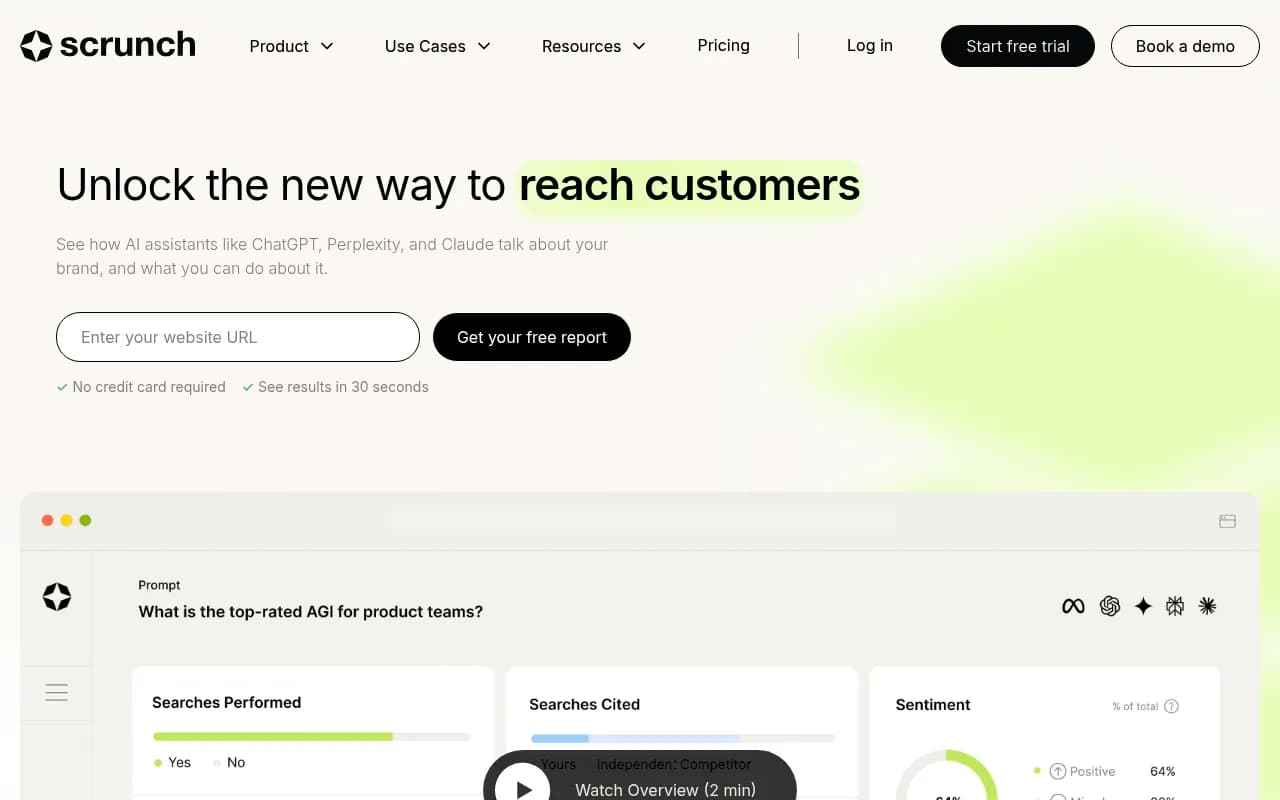
It's not a full optimization platform -- content generation and crawler logs aren't part of the offering -- but if your primary concern is monitoring how you're being described rather than just whether you're mentioned, Scrunch covers that well.
What to actually look for as a professional services firm
Prompt coverage that matches how your buyers search
A law firm's buyers don't search the same way a consumer does. They ask things like "which firms have experience with cross-border insolvency in Southeast Asia?" or "best advisors for Series B fundraising in climate tech." Your AI visibility platform needs to let you track custom prompts that reflect how your actual clients search -- not just generic category prompts.
Platforms that only let you track a fixed set of prompts (Ahrefs Brand Radar, some Semrush configurations) are less useful here. You want full control over the prompt library.
Sentiment and description accuracy
Being mentioned is table stakes. Being described accurately is what matters for professional services. Look for platforms that show you the full AI response text, not just a citation count. You want to see whether the AI is correctly characterizing your firm's specialization, size, geography, and positioning.
Competitor share-of-voice
If a competitor is being cited for "M&A advisory in the healthcare sector" and you're not, that's a specific, actionable problem. Platforms that show competitor heatmaps -- who's winning for each prompt and why -- let you prioritize which gaps to close first.
Multi-region and multi-language support
Many professional services firms operate across multiple markets. AI responses in German, French, or Japanese may differ significantly from English responses. A platform that only monitors English-language AI outputs is giving you an incomplete picture if you have international practices.
The path from data to action
This is the one that most platforms fail on. Knowing your citation rate is 8% is not useful on its own. You need to know which specific content is missing, which pages AI crawlers are and aren't reading, and what you should publish next. The platforms that close this loop -- Promptwatch and Frase being the clearest examples -- save significant time and produce better results than monitoring-only tools.
A practical approach for getting started
If you're a professional services firm evaluating AI visibility for the first time, a reasonable starting sequence is:
-
Run a baseline audit. Pick 20-30 prompts that reflect how your target clients search for firms like yours. Use any platform to run these and see where you currently stand.
-
Identify your top three competitor gaps. Which prompts are your direct competitors being cited for that you're not? These are your highest-priority content opportunities.
-
Audit your crawlability. Check whether AI crawlers are actually reading your key practice area pages. Technical issues here will block any content improvements.
-
Create content against the gaps. This is where platforms with content generation capabilities earn their keep. Generic content won't close AI visibility gaps -- you need content that directly answers the questions AI models are already fielding.
-
Track the results over 60-90 days. AI models don't update instantly. Give new content time to be crawled and incorporated before evaluating whether it's working.
The honest bottom line
The AI visibility market is moving fast and there are now dozens of platforms claiming to solve this problem. For professional services firms, the honest answer is that most of them are monitoring dashboards that will tell you what you already suspect -- that you're underrepresented in AI responses -- without giving you a clear path to fixing it.
The platforms worth serious consideration are the ones that close the loop between tracking and action. Promptwatch does this most completely, with the crawler logs, content gap analysis, and generation capabilities that turn data into results. Profound is the right choice if your primary need is rigorous enterprise reporting. Frase works well for smaller teams that want monitoring and content in one place.
Whatever platform you choose, the underlying work is the same: understand what your buyers are asking AI models, figure out why competitors are being cited instead of you, and create content that directly addresses those gaps. The platform is the instrument; the strategy is still yours to build.