Key takeaways
- AthenaHQ is a solid monitoring platform built by ex-Google and DeepMind engineers, with good brand tracking across major AI models and actionable recommendations in its dashboard.
- Promptwatch goes further: it combines monitoring with content gap analysis, an AI writing agent, crawler logs, and traffic attribution -- so you can find gaps, create content, and close the loop on results.
- If you just need to know where you stand in AI search, AthenaHQ works. If you need to actually improve your position, Promptwatch is the more complete tool.
- Pricing is comparable at entry level, but Promptwatch's feature depth at each tier is meaningfully wider.
- The core question isn't which tool has a better dashboard -- it's whether you want data or outcomes.
Why this comparison matters right now
The GEO tool market in 2026 is crowded and confusing. Dozens of platforms claim to help you "win in AI search," but most of them are doing roughly the same thing: running prompts against ChatGPT or Perplexity, counting how often your brand appears, and showing you a score.
That's useful. But it's not optimization. It's observation.
AthenaHQ and Promptwatch are two of the more serious players in this space, and they represent genuinely different philosophies about what a GEO platform should do. AthenaHQ leans into monitoring and structured recommendations. Promptwatch is built around an action loop: find gaps, create content, track results.
Understanding that difference is the whole point of this comparison.
What AthenaHQ actually does
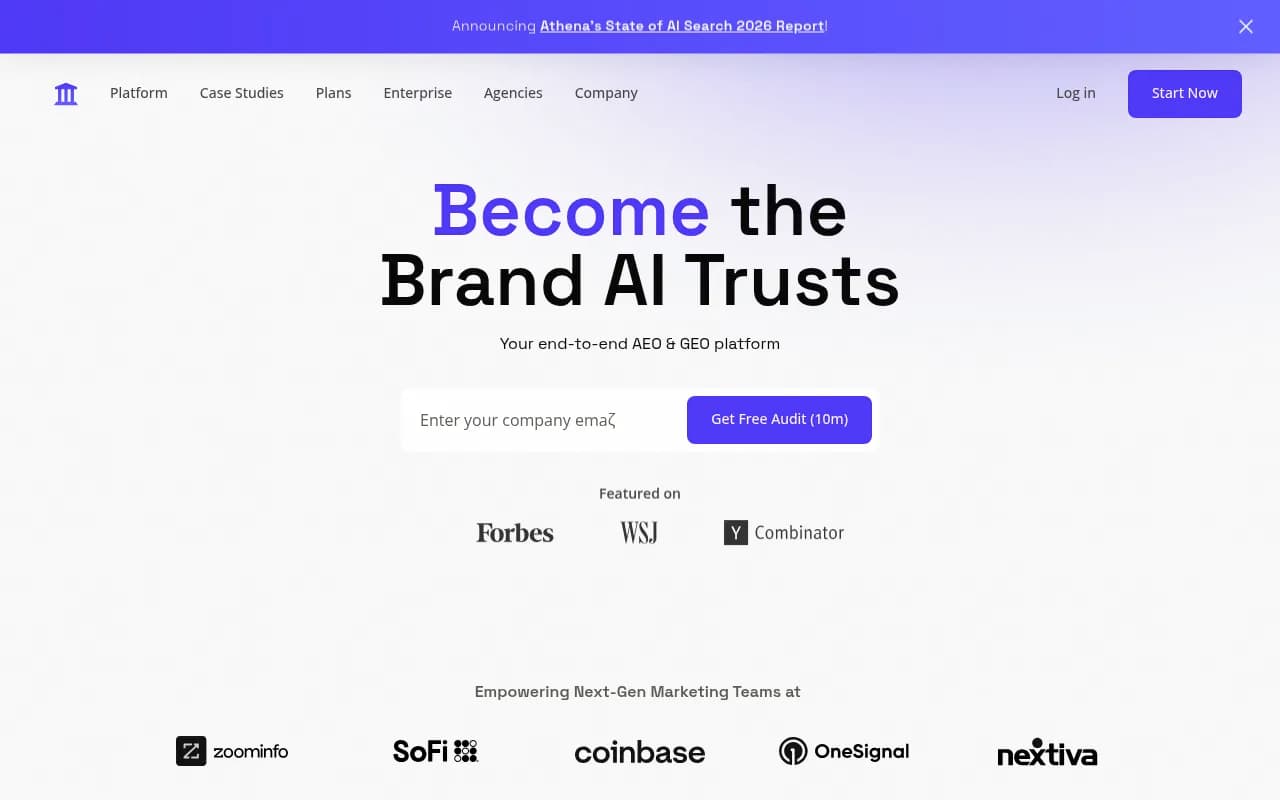
AthenaHQ was founded by engineers with backgrounds at Google Search and DeepMind, which gives it credibility in a space full of hastily assembled dashboards. The platform tracks how your brand appears across AI models including ChatGPT, Perplexity, Claude, and Gemini, and it surfaces what it calls a "360-degree view" of brand discovery.
The core offering is monitoring with a layer of recommendations on top. You can see which queries your brand appears in, where you're underperforming versus competitors, and what the platform suggests you do about it. There's an action center that surfaces AI-generated recommendations, which is more than a pure tracker like Otterly.AI or Peec.ai would give you.
Where AthenaHQ is genuinely strong:
- Clean, structured dashboards that are easy to read
- Recommendations grounded in monitoring data
- Good coverage of major AI models
- Credible founding team with real AI search expertise
Where it runs into limits:
- Recommendations are suggestions, not execution. You still have to go write the content yourself.
- No built-in content generation tied to citation data
- No AI crawler logs showing how models actually crawl your site
- No traffic attribution connecting AI visibility to actual revenue
- Reddit and YouTube tracking (which heavily influence AI recommendations) aren't part of the picture
The honest summary: AthenaHQ tells you what's wrong. It doesn't help you fix it.
What Promptwatch actually does
Promptwatch is built around a different premise. Monitoring is the starting point, not the destination.

The platform tracks visibility across 10 AI models -- ChatGPT, Perplexity, Claude, Gemini, Google AI Overviews, Google AI Mode, Grok, DeepSeek, Copilot, and Mistral -- but that's table stakes. What separates it is what happens after you see the data.
The action loop works like this:
-
Answer Gap Analysis shows you the specific prompts where competitors are getting cited and you're not. Not vague categories -- the actual questions AI models are answering without mentioning your brand, and the content gaps on your site that explain why.
-
AI content generation turns those gaps into publishable articles, listicles, and comparisons. The writing agent is grounded in 880M+ citations analyzed, so it's not producing generic filler -- it's generating content that matches the patterns AI models actually cite.
-
Page-level tracking and traffic attribution close the loop. You can see which pages are being cited, by which models, how often, and (via a code snippet, GSC integration, or server log analysis) how that visibility translates to actual traffic and revenue.
That cycle -- find gaps, create content, track results -- is what makes Promptwatch an optimization platform rather than a monitoring dashboard.
A few other things worth knowing about Promptwatch that AthenaHQ doesn't offer:
- AI Crawler Logs: real-time logs of ChatGPT, Claude, Perplexity, and other crawlers hitting your site. You can see which pages they read, which they skip, and what errors they encounter. This is genuinely rare -- most competitors don't have it at all.
- Reddit and YouTube tracking: surfaces discussions on those platforms that directly influence AI recommendations. This matters because AI models pull heavily from Reddit threads and YouTube transcripts when forming answers.
- ChatGPT Shopping tracking: monitors when your brand appears in product recommendations and shopping carousels.
- Prompt Intelligence: volume estimates and difficulty scores for each prompt, plus query fan-outs showing how one question branches into sub-queries. This helps you prioritize which gaps to close first.
Feature comparison
| Feature | AthenaHQ | Promptwatch |
|---|---|---|
| AI model coverage | ChatGPT, Perplexity, Claude, Gemini | 10 models incl. Grok, DeepSeek, Copilot, Mistral |
| Brand monitoring | Yes | Yes |
| Competitor tracking | Yes | Yes (with heatmaps) |
| Answer Gap Analysis | Limited | Full (specific prompts + content gaps) |
| AI content generation | No | Yes (grounded in citation data) |
| AI Crawler Logs | No | Yes (Professional+) |
| Page-level citation tracking | No | Yes |
| Traffic attribution | No | Yes (snippet, GSC, server logs) |
| Reddit/YouTube tracking | No | Yes |
| ChatGPT Shopping tracking | No | Yes |
| Prompt volume + difficulty | No | Yes |
| Query fan-outs | No | Yes |
| Multi-language/region | Limited | Yes |
| Looker Studio / API | Not confirmed | Yes |
| Free trial | Yes | Yes |
| Starting price | Not publicly listed | $99/mo |
Pricing
Promptwatch publishes its pricing clearly:
- Essential: $99/mo (1 site, 50 prompts, 5 articles/mo)
- Professional: $249/mo (2 sites, 150 prompts, 15 articles/mo, crawler logs, city/state tracking)
- Business: $579/mo (5 sites, 350 prompts, 30 articles/mo)
- Agency/Enterprise: custom pricing
AthenaHQ doesn't publish pricing publicly, which makes direct comparison harder. Based on available information, it's positioned as a premium platform, likely comparable to or above Promptwatch's mid-tier. If you're evaluating AthenaHQ seriously, you'll need to go through a demo or sales conversation to get numbers.
Who should use AthenaHQ
AthenaHQ makes sense if:
- You're primarily in monitoring mode and want a clean, credible dashboard to report AI visibility to stakeholders
- Your team has the capacity to act on recommendations independently -- writers who can take a suggestion and run with it
- You value the founding team's Google/DeepMind background and want a platform built by people who understand how AI search actually works at a technical level
- You're not yet ready to invest in a full optimization workflow
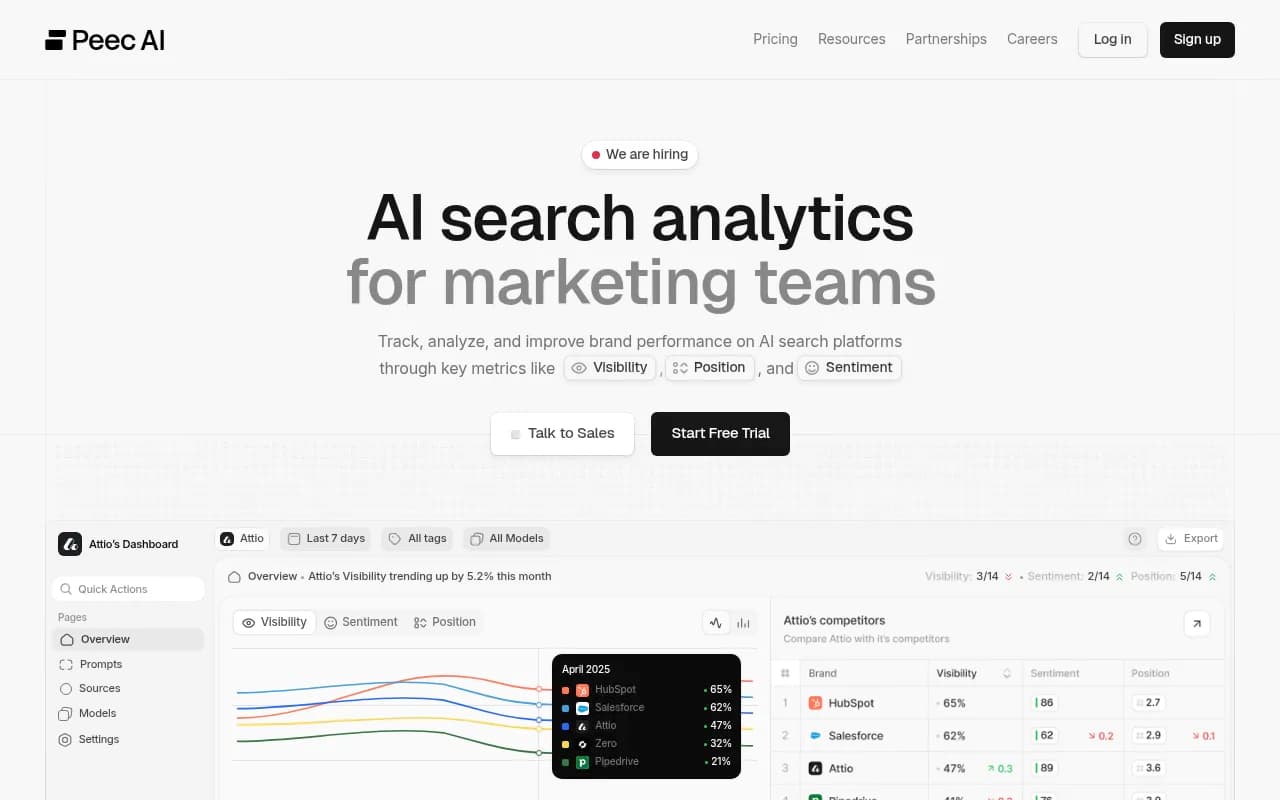
It's a good tool for understanding where you stand. The recommendations layer is a genuine differentiator versus pure trackers like Peec.ai or Otterly.AI.
Who should use Promptwatch
Promptwatch makes more sense if:
- You want to actually improve your AI visibility, not just measure it
- Your team is resource-constrained and needs the content generation to happen inside the platform
- You want to understand how AI crawlers interact with your site (crawler logs are a real operational advantage here)
- You need to connect AI visibility to revenue -- traffic attribution is something almost no competitor offers
- You're running multiple sites or managing clients across different brands
The 6,700+ brands using Promptwatch include companies like Booking.com and Center Parcs, which suggests it scales to enterprise needs while still being accessible at $99/mo for smaller teams.
The monitoring-only trap
Here's the thing that often gets lost in GEO platform comparisons: knowing you're invisible in AI search doesn't make you visible.
A lot of teams buy a monitoring tool, get a dashboard full of red numbers, and then... sit on it. Not because they don't care, but because acting on the data requires a separate workflow -- briefing writers, researching what content to create, publishing, waiting, checking again.
Promptwatch is designed to collapse that workflow. The gap analysis tells you exactly what to write. The writing agent produces a draft. The tracking shows you whether it worked. That's a materially different product than a dashboard with recommendations.
AthenaHQ's recommendations are a step in the right direction. But they're still suggestions that require you to go somewhere else to act on them.
Other tools worth knowing about
If neither AthenaHQ nor Promptwatch is quite the right fit, a few other platforms are worth considering depending on your needs:
For enterprise-scale monitoring with deep analytics, Profound is a strong option -- though it comes at a higher price point and doesn't include content generation.
For agencies managing multiple clients, Search Party has a workflow built around that use case.
Search Party
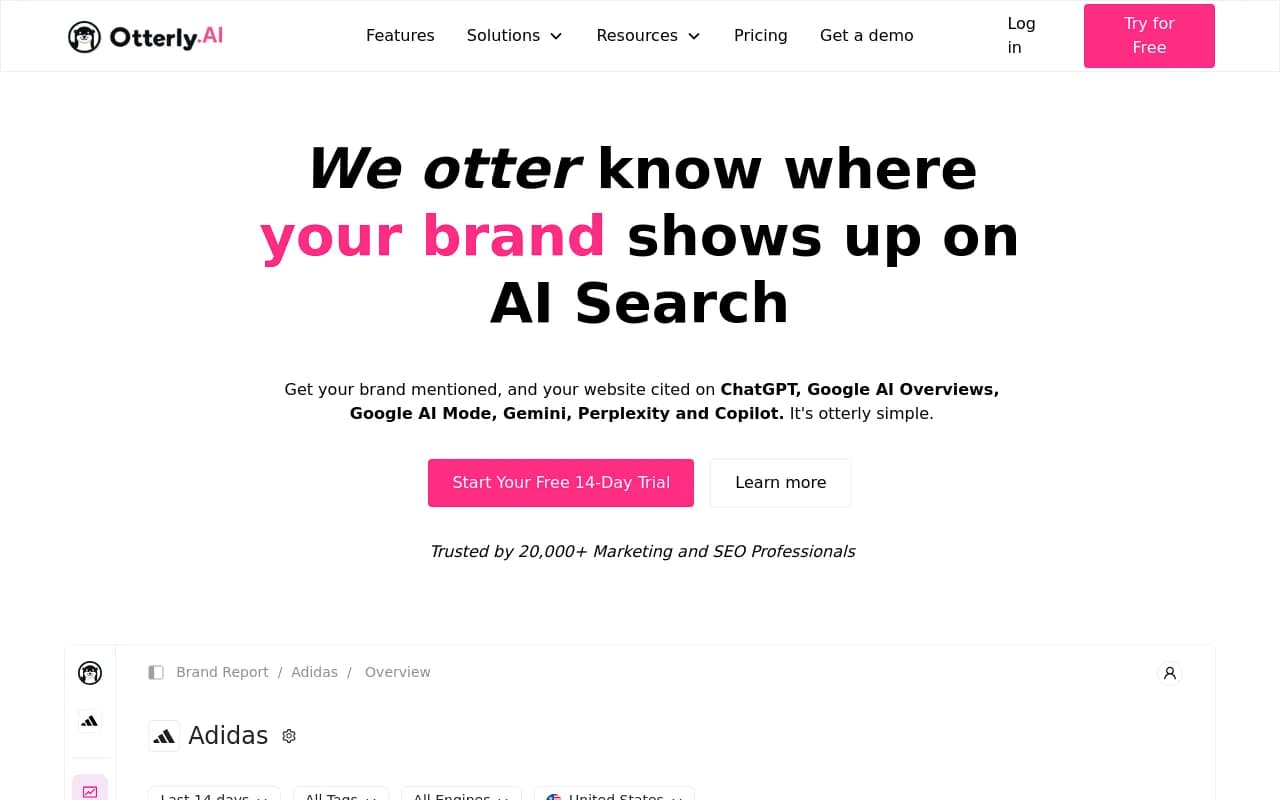
For teams that want monitoring without the complexity, Otterly.AI is a simpler entry point.
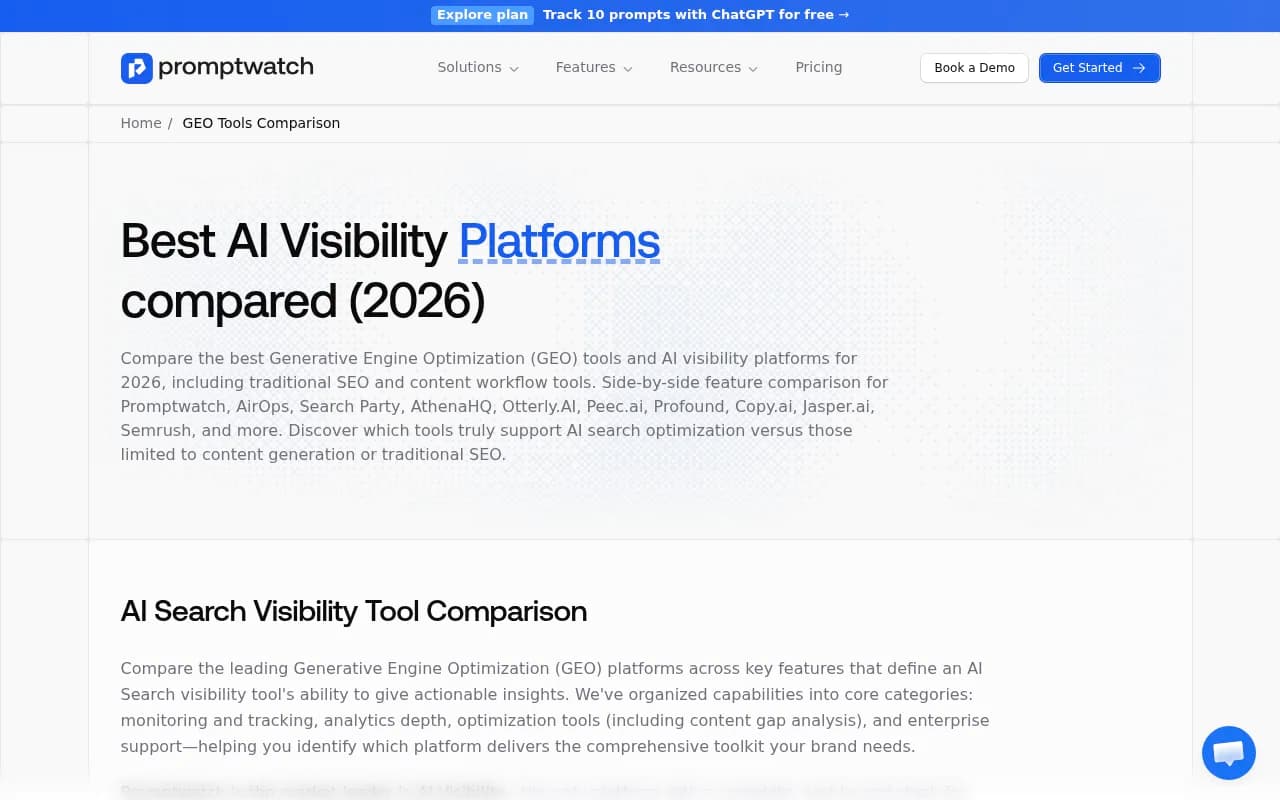
For a broader look at the GEO tool landscape, the Promptwatch comparison page covers 16+ platforms side by side, which is a useful reference before making a decision.
The bottom line
AthenaHQ is a legitimate platform with real technical credibility. If you need to monitor AI visibility and get structured recommendations, it does that well. The founding team knows AI search, and that shows in the product.
But if you're measuring GEO tools by what they actually change -- your citation rate, your traffic from AI search, your content coverage across the prompts that matter -- Promptwatch is the more complete answer. It's the only platform in this space that takes you from "here's where you're invisible" to "here's the content that fixes it" to "here's the revenue it drove."
For most marketing and SEO teams in 2026, that full loop is what they actually need.