Key takeaways
- AirOps is a content operations platform -- it helps teams produce, refresh, and publish AI-optimized content at scale through workflow automation.
- Scrunch AI is a brand monitoring platform -- it tracks where and how often your brand appears across AI answer engines like ChatGPT, Perplexity, and Gemini.
- These tools solve different problems. Buying the wrong one won't fix your actual gap.
- If you need to both monitor AI visibility AND act on what you find, neither tool alone covers the full loop -- and that's worth understanding before you sign a contract.
- Promptwatch is worth considering if you want monitoring, gap analysis, and content generation in one platform.
Most comparisons of these two tools frame it as a competition. It isn't, really. AirOps and Scrunch AI are built for different jobs, and the more useful question isn't "which is better?" -- it's "which problem do I actually have?"
That said, there's real overlap in the space they occupy, and teams evaluating one often end up evaluating both. So let's be precise about what each does, where each falls short, and how to think about the decision.
What AirOps actually is
AirOps is a content operations platform. The core idea: content production is a workflow problem, and AI can automate most of it. You build workflows that pull in data sources, run them through AI models, and push finished content directly to your CMS.
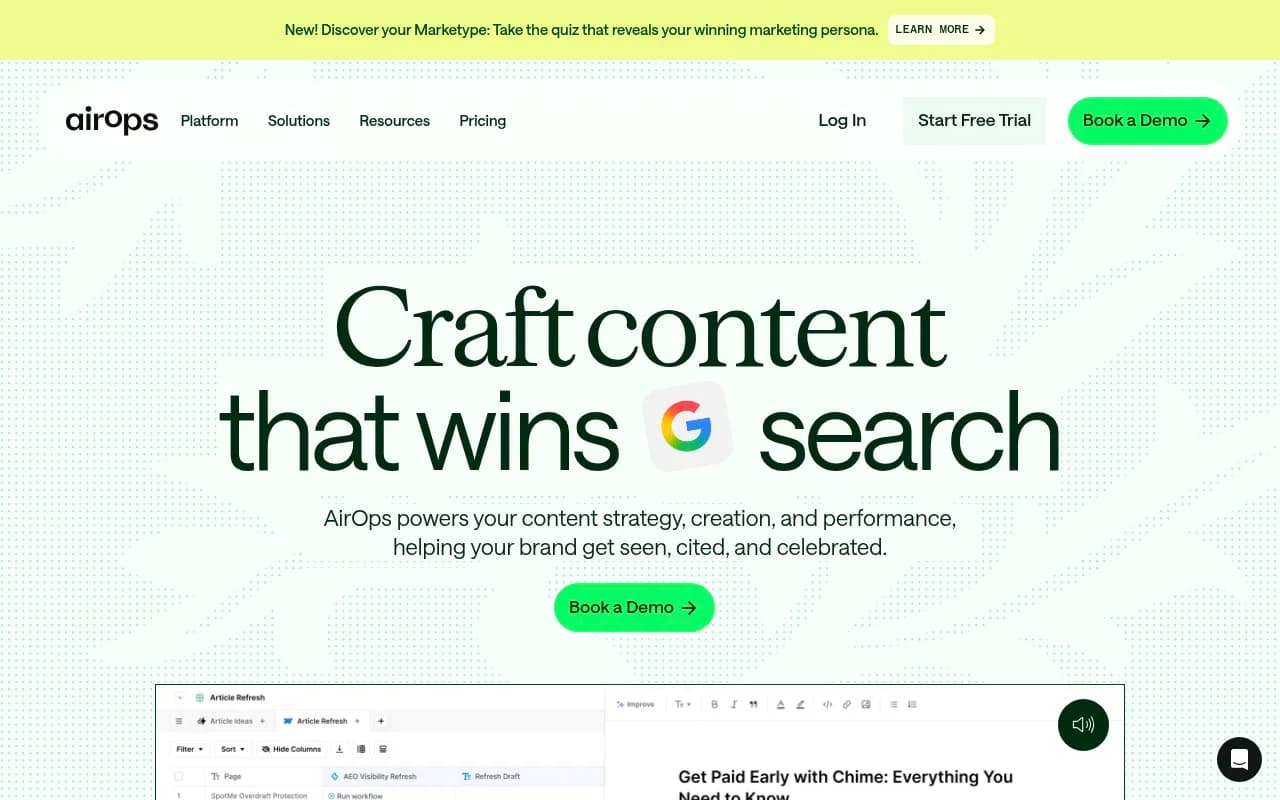
In practice, this means teams use AirOps to:
- Refresh hundreds of existing pages at once instead of one by one
- Generate new content at scale based on keyword or topic inputs
- Maintain brand voice consistency across large content programs
- Connect to 30+ AI models and route different tasks to different models
The results reported by AirOps customers are real. Webflow used it to hit 5x content refresh velocity. Chime went from being cited in 24 to 68 priority AI questions after running content through AirOps workflows. Angi saw up to 79% better conversion rates on longtail pages created with the platform.
What AirOps is not: a visibility monitoring tool. It doesn't tell you which AI engines are citing you, how your share of voice compares to competitors, or which prompts you're invisible for. You can produce content with it, but you're flying somewhat blind on whether that content is actually getting picked up by AI models.
What Scrunch AI actually is
Scrunch AI is a brand monitoring platform built specifically for AI search. It tracks how your brand appears across ChatGPT, Perplexity, Claude, Gemini, Meta AI, and Google AI Overviews -- measuring citation frequency, sentiment, and share of voice against competitors.
The developer-friendly angle is real. Scrunch has a proper API, which matters for teams that want to pipe AI visibility data into their own dashboards or reporting infrastructure. It was founded by former Hearsay Systems team members and has backing connected to Webflow and Meta AI investors.
What Scrunch does well:
- Shows you which prompts your brand appears in (and which it doesn't)
- Tracks competitor visibility across AI engines
- Surfaces sentiment around your brand in AI responses
- Gives you data to reverse-engineer why competitors are being cited
What Scrunch doesn't do: create content. It tells you the gaps exist. Closing them is your problem. If your team doesn't have the bandwidth or infrastructure to act on the data, the insights sit in a dashboard and nothing changes.
Scrunch starts at $300/month, which positions it as a focused analytics tool rather than an all-in-one platform.
The core tension: insight vs. execution
This is the real issue with both tools, and it's worth being direct about.
Scrunch gives you the "where" and "why" of AI visibility. AirOps gives you the "how" of content production. Neither gives you both in a tight loop.
Teams that buy Scrunch often find themselves asking: "Great, I can see the gaps -- now how do I fix them?" Teams that buy AirOps sometimes find themselves asking: "We're producing a lot of content -- is any of it actually getting cited?"
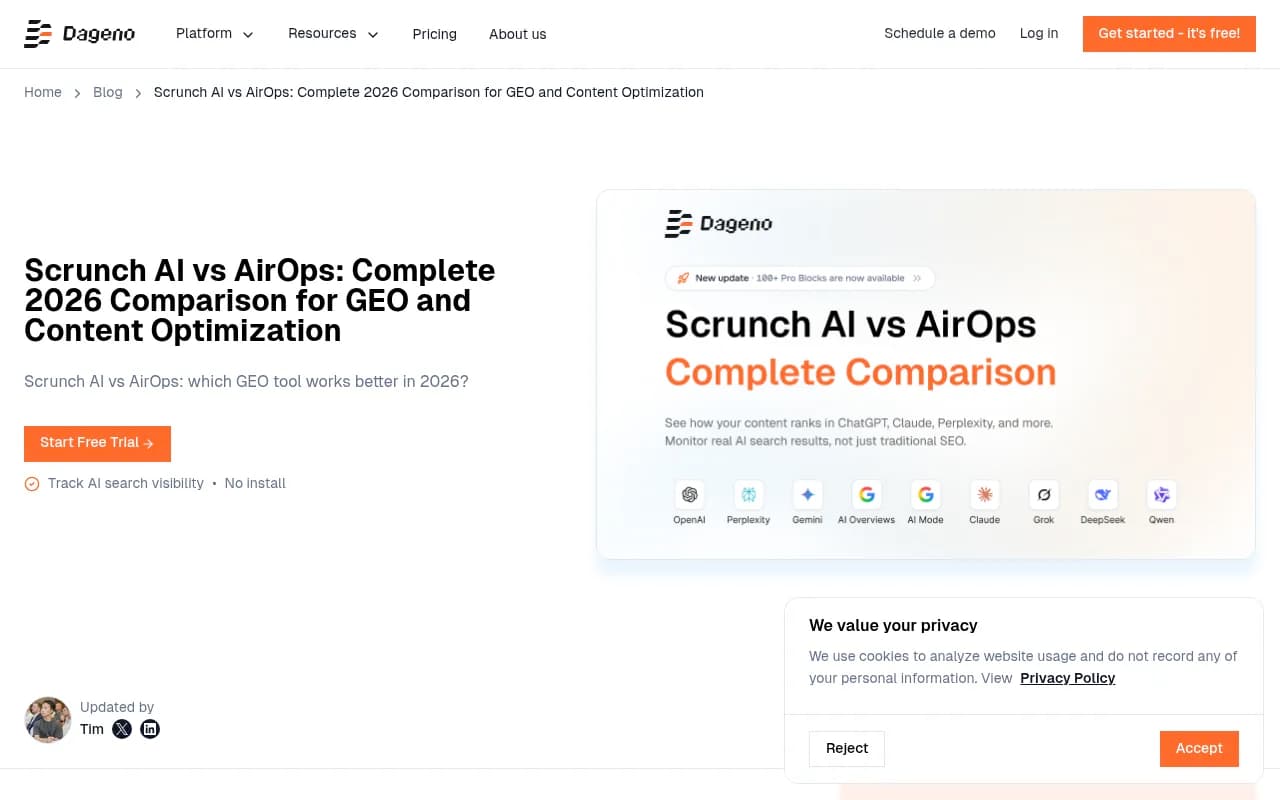
The workaround most teams use is running both tools in parallel -- Scrunch for monitoring, AirOps for execution. That works, but it's expensive and requires someone to manually translate insights from one platform into briefs for the other. You're essentially building the connection layer yourself.
Feature comparison
| Feature | AirOps | Scrunch AI |
|---|---|---|
| AI visibility monitoring | Limited | Yes (6+ engines) |
| Brand citation tracking | No | Yes |
| Competitor share of voice | No | Yes |
| Content generation | Yes (at scale) | No |
| Workflow automation | Yes (30+ AI models) | No |
| CMS publishing integration | Yes | No |
| Content gap analysis | Partial | Partial |
| API access | Yes | Yes (developer-focused) |
| Pricing transparency | Enterprise sales required | From $300/month |
| Best for | Content teams scaling production | Brand/marketing teams monitoring AI presence |
Who should choose AirOps
AirOps makes sense if your primary constraint is content production capacity. Specifically:
You already have a content strategy and know what topics to target. You have a CMS and a publishing workflow that needs to scale. Your team is producing content but can't keep up with the volume needed to compete. You want to refresh existing pages systematically rather than hoping someone gets to them.
AirOps is also a good fit if you're already investing in AI search optimization and just need the execution layer. If you have a separate monitoring tool (or a dedicated analyst who tracks visibility manually), AirOps slots in cleanly as the production engine.
The pricing situation is worth flagging: AirOps requires enterprise sales contact to get started. There's no self-serve tier with transparent pricing, which makes it harder to evaluate without committing to a sales process. That's a real friction point for smaller teams.
Who should choose Scrunch AI
Scrunch makes sense if your primary constraint is visibility intelligence. Specifically:
You don't know how your brand currently appears in AI search results. You suspect competitors are getting cited more often but can't quantify it. You need data to make the case internally for investing in AI search optimization. You have a development team that can work with APIs and wants raw data.
Scrunch is also a reasonable starting point if you're early in your AI search journey and need to understand the landscape before committing to a content strategy. The $300/month entry point is accessible enough to justify as a diagnostic tool.
The limitation to be honest about: Scrunch is a monitoring tool. If you buy it expecting it to improve your AI visibility, you'll be disappointed. It shows you the problem. Solving it requires separate work.
The gap neither tool fills on its own
Both AirOps and Scrunch are good at their specific jobs. The problem is that AI search optimization isn't just monitoring OR content production -- it's a cycle. You monitor to find gaps, you create content to fill them, you monitor again to see if it worked.
Neither tool is built around that cycle end-to-end.
Promptwatch is worth mentioning here because it's built specifically around that loop: find gaps with Answer Gap Analysis, generate content with Content Agents trained on real prompt data, then track whether the new content gets cited. It's one platform instead of two, and the connection between insight and execution is built in rather than something you have to wire together manually.

That said, if your team has a strong content operation already and just needs monitoring, Scrunch does that job well. If you have visibility data and just need production infrastructure, AirOps is genuinely powerful. The question is whether you can afford to run two separate tools and do the translation work between them.
Other tools worth considering
If you're evaluating this space more broadly, a few other platforms are worth knowing about:
For monitoring-focused teams:

Otterly.AI is a lighter-weight monitoring option if Scrunch's pricing feels steep for where you are.
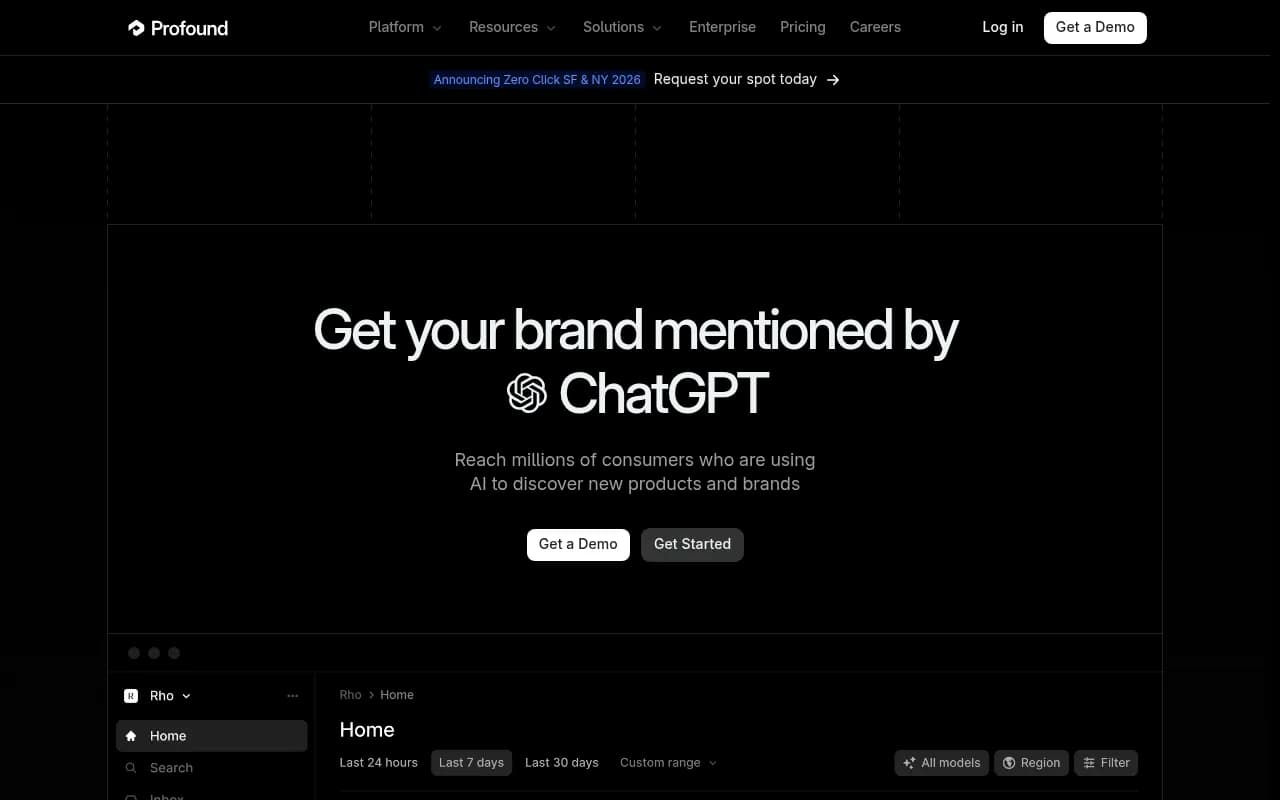
Profound AI is the enterprise-grade monitoring option with strong citation intelligence -- better suited for larger brands with dedicated analytics resources.

AthenaHQ sits in a similar monitoring-focused category with solid multi-engine tracking.
For content-focused teams:
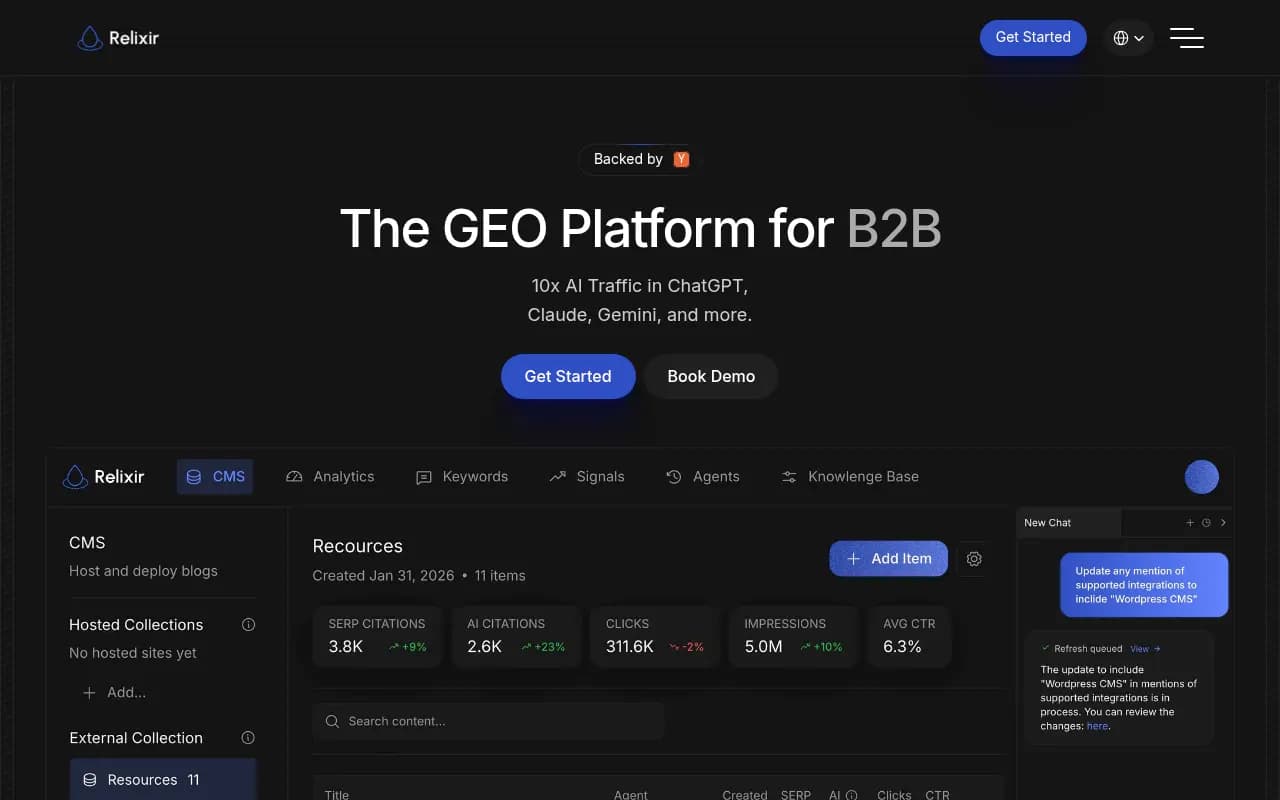
Relixir combines AI content generation with visibility analysis, which puts it closer to the full-loop approach.
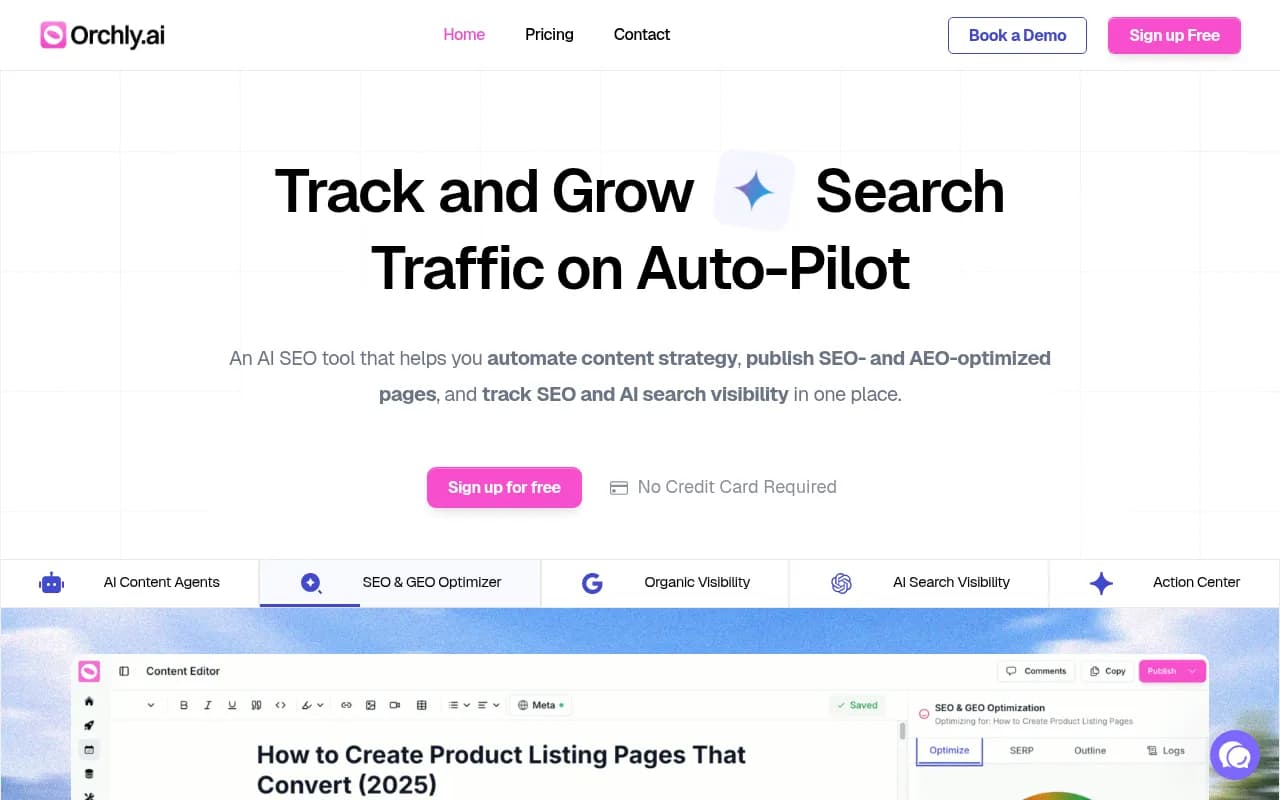
Orchly.ai is an AI content ops platform that writes, optimizes, and tracks -- worth a look if AirOps feels too enterprise-heavy.
For teams that want the full picture:

Sight AI covers both visibility tracking and optimization in one platform, which makes it a reasonable alternative if you want to avoid managing two separate tools.
How to make the decision
Here's a simple way to think about it:
If you can answer "yes" to most of these, AirOps is probably your tool:
- We know what content we need to create
- Our bottleneck is production speed, not strategy
- We have a CMS and publishing workflow ready
- We're okay with enterprise sales and custom pricing
If you can answer "yes" to most of these, Scrunch AI is probably your tool:
- We don't have clear visibility into how AI engines perceive our brand
- We need data before we can build a content strategy
- We have developers who can work with APIs
- We want to benchmark against specific competitors
If you're answering "yes" to questions from both lists, you either need both tools (expensive) or a platform that handles both (more efficient). That's the honest framing.
A note on the broader market
The AI search visibility space is moving fast. What Scrunch and AirOps each do well today may look different in 12 months as both platforms add features. AirOps has been adding visibility tracking capabilities. Scrunch has been adding more actionable recommendations.
But right now, in mid-2026, the gap between them is real. They're not interchangeable. Buying Scrunch won't help you produce content faster. Buying AirOps won't tell you which prompts you're invisible for.
The teams that are winning in AI search aren't just monitoring or just producing -- they're doing both, in a tight feedback loop, with clear attribution from content publish to citation to traffic. That's the standard worth measuring any tool against.