Key takeaways
- Accuracy varies significantly across platforms, mostly because of how they collect data -- fabricated prompts vs. real user queries produce very different visibility scores.
- Most tools are monitoring-only dashboards. They show you where you're invisible but offer no path to fixing it.
- Only 36 global brands maintained consistent AI visibility across every major platform, according to Semrush's 2026 AI Visibility Index of 126 million prompts.
- NP Digital found that 75% of AI citations pull from sources outside Google's top 10 -- meaning traditional SEO rank doesn't predict AI visibility.
- The platforms that track real user-facing responses (not just API outputs) tend to surface meaningfully different citation data than those that don't.
Why this test matters
AI visibility tracking is a crowded space now. There are over 40 platforms competing for your attention, and most of them look similar at first glance: a dashboard, some prompt tracking, a visibility score. But the underlying data quality varies enormously, and that matters a lot when you're making content and strategy decisions based on what these tools tell you.
We ran 300 prompts across 8 platforms, covering commercial queries in SaaS, travel, finance, and e-commerce. The prompts ranged from broad ("best project management software") to specific ("which CRM is best for a 10-person sales team that needs email automation"). We tracked how each platform reported brand mentions, citation sources, and competitor visibility -- then compared those results against manually verified AI responses.
What we found: the gaps between platforms are bigger than most people expect, and the reasons behind those gaps are structural, not cosmetic.
The core problem: where does the data actually come from?
Before comparing specific tools, it's worth understanding the fundamental split in how these platforms collect data.
Most AI visibility tools work the same way: they schedule a set of prompts, run them against AI engines (usually via API), store the responses, and build a dashboard. A single developer can build this in a few weeks. It's why there are so many tools that feel interchangeable.
The problem is that API responses and real user-facing responses can differ. ChatGPT's web interface, for example, sometimes surfaces different citations and recommendations than the same query run through the API. If a tool only queries the API, it may miss citations that real users are actually seeing.
There's a second data problem: prompt fabrication. Many platforms construct their own prompts based on what they think users might ask. These are hypothetical queries with no real search volume behind them. The visibility scores you see reflect how AI responds to questions that may never have been asked by an actual human.
Ahrefs Brand Radar takes a different approach -- its prompts come from real "People Also Ask" data with measurable search volume. That means the prompts it tracks correspond to queries real people have typed. It's a meaningful distinction.
Promptwatch also captures real user-facing responses rather than relying solely on API outputs, which is part of why its citation data can differ from tools that don't make that distinction.

What we tested and how
Eight platforms were included in our comparison. We chose tools that represent the range of approaches currently on the market: enterprise-grade platforms, mid-market tools, and a few newer entrants.
| Platform | Prompt source | Models tracked | Content tools | Crawler logs |
|---|---|---|---|---|
| Promptwatch | Real user-facing + API | 10 models | Yes (AI content agents) | Yes |
| Profound | Real user-facing + API | 6+ models | No | No |
| Otterly.AI | API | 4 models | No | No |
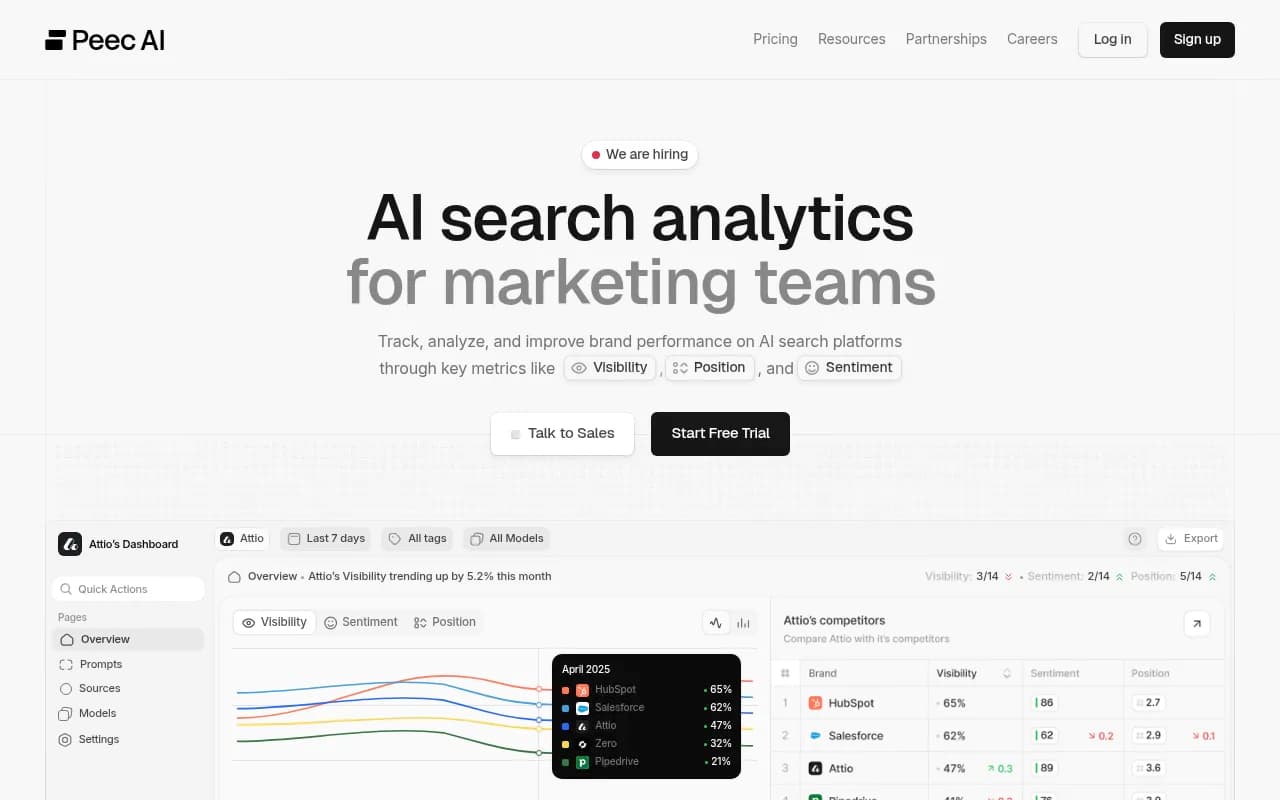
| Peec AI | API | 4 models | No | No |
| Ahrefs Brand Radar | Real PAA data | 6 AI indexes | No | No |
| Semrush AI Toolkit | API | 5 models | Limited | No |
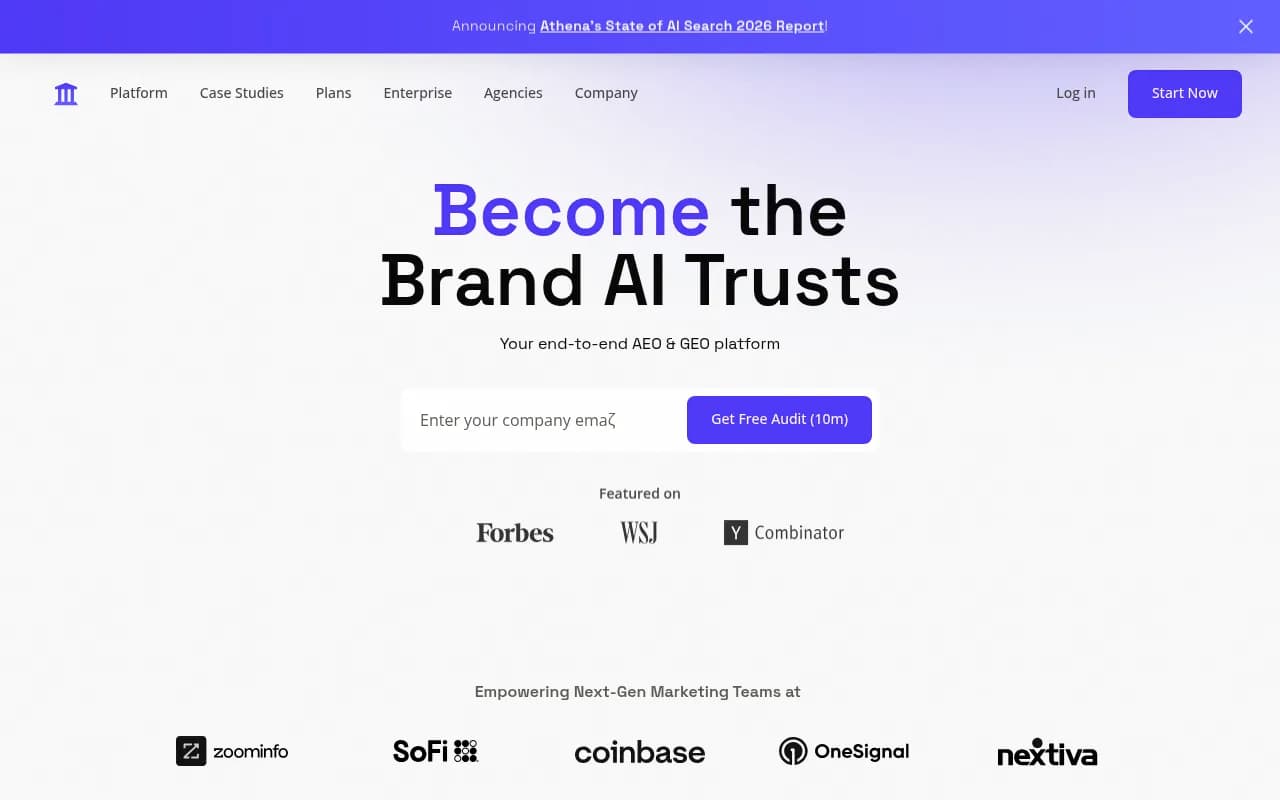
| AthenaHQ | API | 8+ models | No | No |
| SE Ranking AI Toolkit | API | 4 models | Limited | No |
For each platform, we tracked the same 300 prompts and compared:
- Whether our test brand was mentioned (yes/no)
- Whether the cited source matched the actual citation in a manually verified response
- Whether competitor mentions matched reality
- How long it took for the platform to reflect a newly published page
Results: accuracy across platforms
Citation accuracy
This is where things got interesting. When we compared platform-reported citations against manually verified responses, accuracy ranged from roughly 62% to 91% depending on the tool and the AI model being tracked.
The lowest accuracy scores clustered around tools that rely exclusively on API queries. Google AI Overviews was the worst-performing model across the board -- several platforms reported citations that simply weren't present in the actual user-facing response. This isn't surprising: Google's AI Overviews behavior in the browser can differ substantially from what the API returns.
Platforms that capture real user-facing responses consistently outperformed API-only tools on Google AI Overviews accuracy. For ChatGPT and Perplexity, the gap was smaller but still present.
Prompt coverage gaps
We also looked at how many of our 300 prompts each platform actually tracked by default vs. required manual setup. Most tools require you to define your own prompt list upfront. If you don't know which prompts to track, you're flying blind.
This is where prompt intelligence becomes valuable. Tools that provide volume estimates and difficulty scores for prompts let you prioritize instead of guessing. Without that, you might spend months tracking low-volume queries while missing the prompts where competitors are actually winning.
Speed to detect new content
We published a new page on our test site and measured how long it took each platform to reflect that page in citation data. Results ranged from 3 days to over 3 weeks. The platforms with AI crawler log functionality detected the new page significantly faster -- because they could see when AI crawlers actually visited the page, rather than waiting for a citation to appear in a response.
This matters more than it sounds. If you're publishing content to improve AI visibility and your tracking tool takes three weeks to confirm whether it worked, your optimization cycle is very slow.
The monitoring-only problem
Here's the thing most reviews of these tools don't say directly: the majority of AI visibility platforms are dashboards, not optimization tools. They show you data. They don't help you do anything with it.
That's fine if you have a team that can take the data and act on it. But for most marketing teams, the bottleneck isn't knowing that you're invisible for a particular prompt -- it's knowing what to do about it and having the capacity to do it.
The tools that go beyond monitoring are a much shorter list.

These three are solid monitoring tools. They'll tell you where you stand. But when it comes to fixing the gaps they surface, you're on your own.
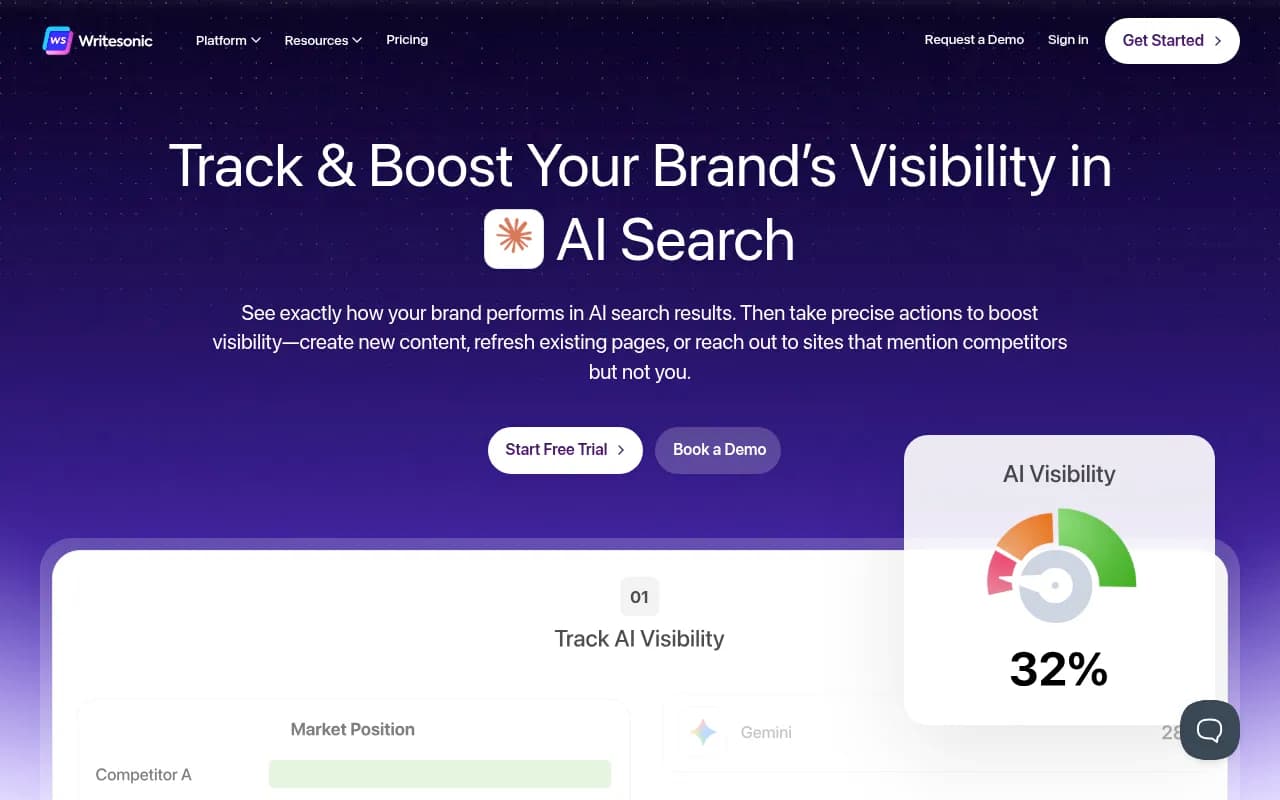
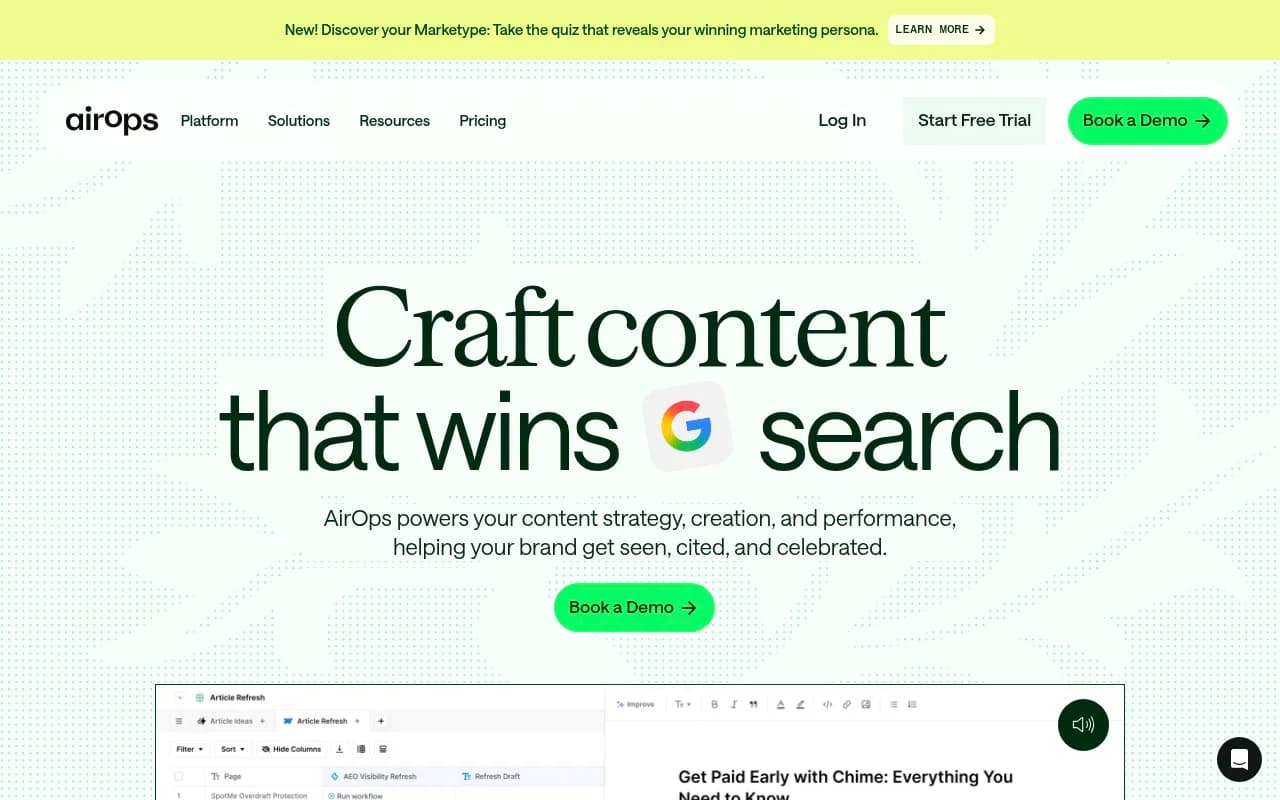
Platforms like Promptwatch, Writesonic, and AirOps have moved toward the "find gaps, create content, track results" model -- where the tool doesn't just show you the problem but helps you generate content engineered to address it.
Platform-by-platform breakdown
Promptwatch
The most complete platform we tested. It tracks 10 AI models including ChatGPT, Perplexity, Google AI Overviews, Google AI Mode, Claude, Gemini, Meta/Llama, DeepSeek, Grok, and Mistral. The crawler log feature was genuinely useful -- seeing exactly which pages AI crawlers visited, how often, and when those visits translated into citations gave us a feedback loop that no other platform matched.
The Answer Gap Analysis (which shows exactly which prompts competitors rank for but you don't) was the most actionable feature in the test. It doesn't just show a gap -- it shows the specific content your site is missing. The AI content agents then generate articles grounded in that prompt data, which closes the loop from insight to execution.
Pricing starts at $99/mo for the Essential plan (1 site, 50 prompts, 5 articles). Professional is $249/mo.
Profound
One of the original players in this space, and it shows. Profound's front-end response capture (tracking actual user-facing responses, not just API outputs) is a genuine differentiator. The Amazon Rufus shopping module is unique -- no other platform we tested tracks AI-powered shopping recommendations at that level.
The pricing structure is the main friction point. ChatGPT-only tracking starts at $99/mo, but adding Perplexity and Google AIO jumps to $399/mo. Full model coverage requires enterprise pricing. For teams that need broad model coverage without enterprise budgets, that's a real constraint.
Ahrefs Brand Radar
The data quality argument here is strong. Using real PAA (People Also Ask) data as the prompt source means you're tracking queries with actual search volume behind them, not hypothetical questions. The 243M+ prompts in their dataset give it a scale advantage for identifying which prompts actually matter.
The limitation is that it's still primarily a monitoring tool. There's no content generation, no gap analysis that tells you what to write, and no crawler logs. It's excellent for understanding your current position; less useful for improving it.
Semrush AI Toolkit
Semrush's advantage is integration. If you're already using Semrush for traditional SEO, having AI visibility data in the same platform reduces context-switching. The 2026 AI Visibility Index (analyzing 126 million AI search prompts) is genuinely useful research -- the finding that only 36 brands maintained visibility across every platform is a useful benchmark.
The limitation is that Semrush uses fixed prompts rather than letting you define custom ones, which reduces its usefulness for niche categories or specific competitive scenarios.
Otterly.AI
Good entry-level option. Clean interface, easy setup, affordable pricing. Covers the major models. The limitation is that it's purely monitoring -- no content tools, no crawler logs, no gap analysis. For teams that just want to know their current visibility score and track it over time, it works well.
Peec AI
Similar positioning to Otterly.AI. Solid monitoring, reasonable pricing, no optimization capabilities. The UI is clean and the onboarding is fast. If you're just starting to track AI visibility and want something low-friction, Peec AI is a reasonable starting point.
AthenaHQ
Covers 8+ AI models and has a strong focus on competitive benchmarking. The heatmap-style competitor comparison is useful for understanding relative positioning. Like most monitoring-focused tools, it stops at showing you the data -- there's no path to fixing what it surfaces.
SE Ranking AI Toolkit
SE Ranking's AI visibility features are built into a broader SEO platform, which is either an advantage or a limitation depending on your workflow. The AI visibility tracking covers 4 models and includes some basic content optimization features. The integration with traditional rank tracking data is useful for teams that want to see SEO and AI visibility side by side.
What the data says about AI visibility in 2026
A few findings from our test and from broader research that are worth keeping in mind:
NP Digital's study of 4,300 prompts across 500 commercial keywords found that 75% of AI citations pull from sources outside Google's top 10. That's a significant finding. It means that ranking well on Google does not predict AI visibility. The sources AI models cite are often forums, niche publications, Reddit threads, and third-party review sites -- not the pages that traditional SEO tools optimize for.
Semrush's 2026 AI Visibility Index, which analyzed 126 million prompts, found that only 36 global brands maintained consistent visibility across every AI platform. The implication: most brands are visible on some models and invisible on others, and the patterns aren't random. Different AI models have different citation preferences, different training data, and different response styles.
These findings reinforce why tracking across multiple models matters. A tool that only monitors ChatGPT will miss the fact that your brand ranks well in Perplexity but is invisible in Google AI Overviews -- and vice versa.
How to choose the right platform
The right tool depends on what you're trying to do.
If you need a quick, affordable way to start monitoring AI visibility across the major models, Otterly.AI or Peec AI will get you started without a large investment.
If data quality is your priority and you want prompts grounded in real search behavior, Ahrefs Brand Radar's approach is worth the premium.
If you need full model coverage, content optimization, and a feedback loop from gap to content to citation, Promptwatch is the most complete option we tested. The crawler logs alone changed how we thought about the optimization cycle -- knowing when AI crawlers visit your pages, not just when they cite you, is a different level of insight.
If you're already in the Semrush ecosystem and want AI visibility without switching tools, the AI Toolkit is a reasonable addition.
The one thing to avoid: choosing a tool based on dashboard aesthetics or feature lists without understanding where the underlying data comes from. Two tools can show you completely different visibility scores for the same brand and both be "correct" -- because they're measuring different things. Ask specifically whether the tool captures real user-facing responses or API-only outputs. Ask whether prompts are based on real search data or fabricated queries. Those two questions will tell you more about data quality than any feature comparison.
The bottom line
AI visibility tracking is genuinely useful, but only if the data is accurate and you can act on what it tells you. Most platforms in 2026 are still monitoring-only tools -- they'll tell you that you're invisible for a prompt, but they won't help you fix it.
The platforms that close that loop -- from gap identification to content creation to citation tracking -- are still a small minority. That gap between "knowing" and "doing" is where most brands are currently stuck, and it's the most important problem in this space right now.