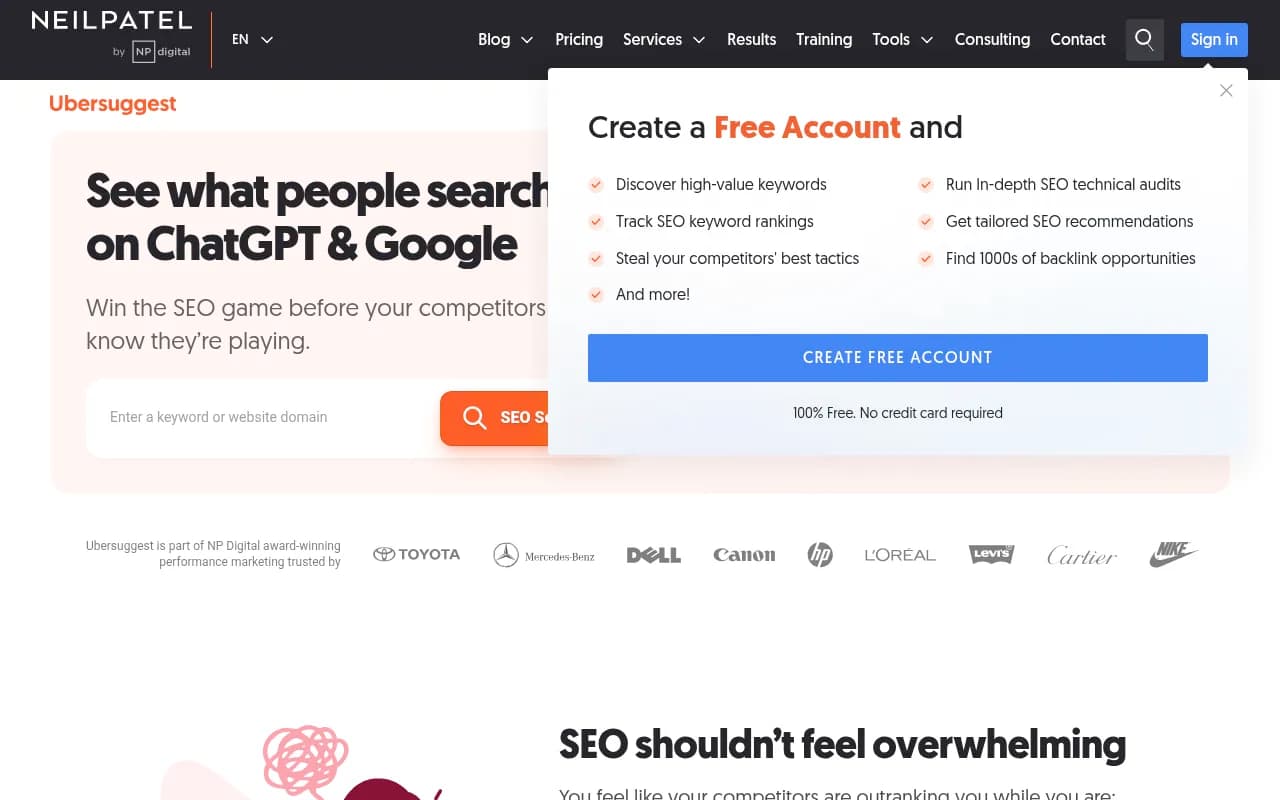
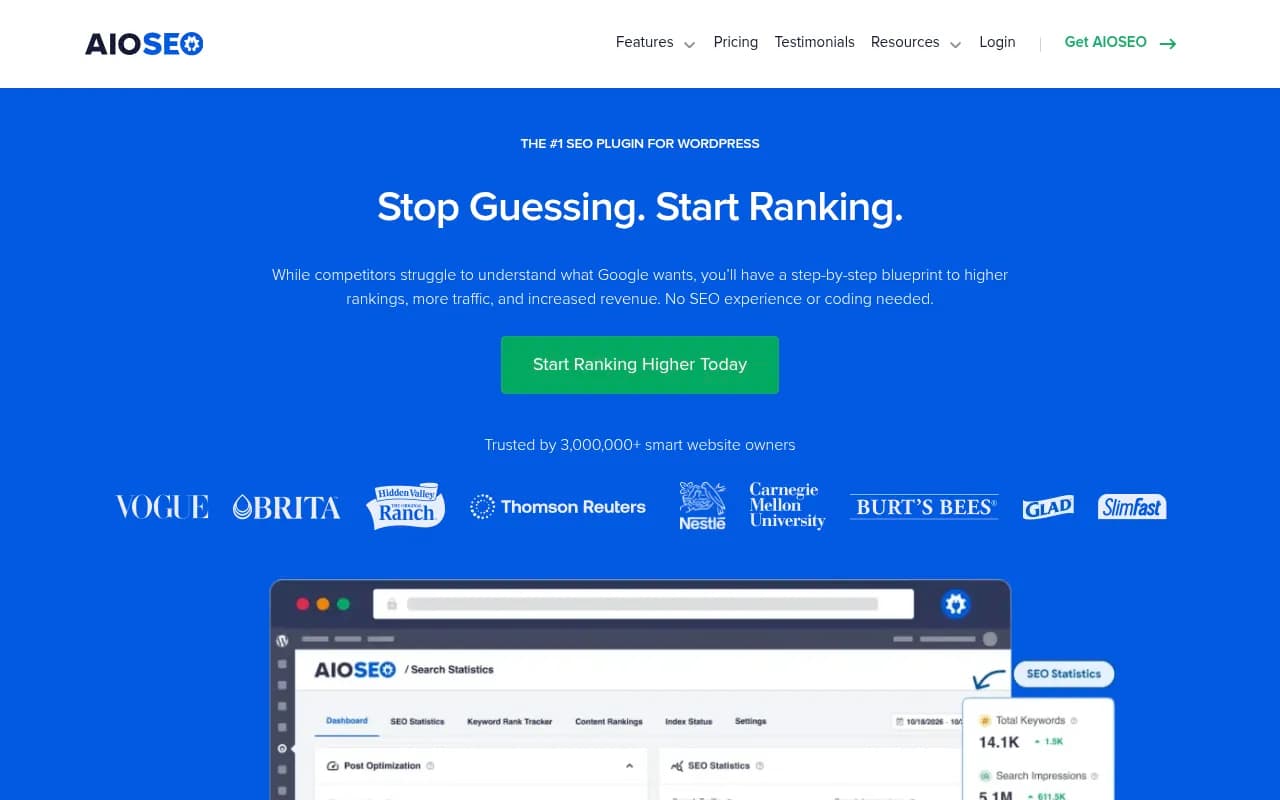
Rankyak Review 2026
Combines AI content generation with SEO automation tools including brand voice management and bulk content production. Targets agencies and content-heavy websites.
Key takeaways
- RankYak automates the full SEO content cycle: keyword discovery, article generation, publishing, and backlink building -- all from a single $99/month plan
- One article published daily per site, with support for WordPress, Shopify, Webflow, Wix, and custom CMS via API/webhooks
- Solid choice for SMBs and small agencies that want consistent content output without hiring writers or SEO staff
- Does not monitor AI search visibility or track brand citations in ChatGPT, Claude, or Perplexity -- for that, tools like Promptwatch are purpose-built for AI search tracking and optimization
- The backlink exchange network is a notable differentiator but carries some risk depending on network quality -- worth scrutinizing before relying on it heavily
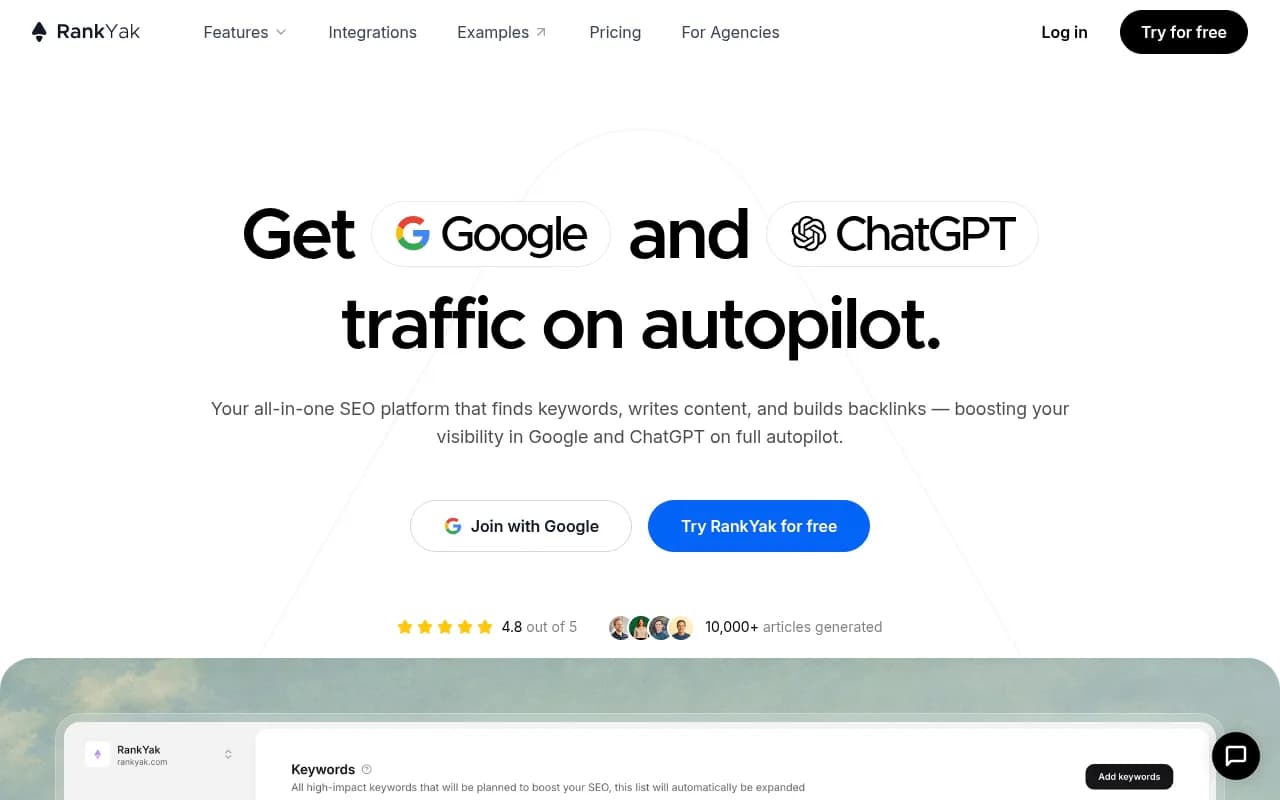
RankYak is a Dutch-built SEO automation platform that tries to collapse an entire content marketing workflow into one subscription. Instead of juggling separate tools for keyword research, content writing, CMS publishing, and link building, RankYak handles all of it automatically. You connect your website, tell it your niche, and it starts generating and publishing one SEO-optimized article per day. That's the core pitch, and it's a genuinely useful one for a specific type of user.
The platform targets small and medium-sized businesses, solo founders, and digital agencies that manage multiple client sites. These are people who understand that consistent content is the engine of organic growth but simply don't have the time or budget to do it manually. RankYak's positioning is essentially: "You know you need SEO. You just can't afford to do it the old way." At $99/month (currently discounted from $247), it's priced to compete with mid-tier content tools rather than full-service SEO agencies.
The product appears to have launched in the last couple of years and has generated over 10,000 articles across its user base. It has a 4.8/5 rating and case studies showing organic traffic increases ranging from 71% to 721% across different verticals -- consulting, SaaS, e-commerce, and personal development blogs. Those numbers are self-reported and verified via Ahrefs screenshots, which is a reasonable level of transparency for a tool at this price point.
Key features
Automated keyword discovery RankYak's keyword research module identifies high-potential keywords based on your website's niche and existing content. It pulls from real-time SERP data rather than relying on static keyword databases, which means it's looking at what's actually ranking now. It also groups keywords into topic clusters automatically, which is a smart structural choice -- topical authority is increasingly important for Google rankings, and building clusters from the start saves a lot of manual planning work.
- Integrates with Google Search Console to pull real performance data into the keyword strategy
- Identifies keywords appearing in AI chat responses (ChatGPT, Gemini, Perplexity) as well as traditional Google search
- No manual research required -- the system continuously finds new ranking opportunities
Daily content plan Rather than dumping a list of keywords on you and expecting you to schedule them yourself, RankYak maintains an automated content calendar. It decides which keyword to target each day based on its own prioritization logic. This is genuinely useful for people who struggle with consistency -- the platform removes the decision fatigue entirely.
- Content roadmap is visible in a calendar view
- Frequency can be adjusted in project settings (daily is the default)
- Articles can be saved as drafts for review before publishing, or set to auto-publish
AI article generation This is the core of the product. Each article is generated from scratch using real-time SERP analysis -- RankYak looks at the top-ranking pages for the target keyword and structures its output to compete with them. The articles include:
- E-E-A-T signals (Experience, Expertise, Authoritativeness, Trustworthiness)
- People Also Ask and People Also Search For sections
- Optimized meta data, heading structure, and keyword density
- Internal and external links added automatically
- AI-generated images and visuals
- Relevant YouTube videos embedded in the article body
- Facts and citations pulled from verified sources (not hallucinated)
- Brand voice adaptation -- the writing style adjusts to match your tone
The multilingual support covers 40+ languages including Arabic, Japanese, Korean, Hindi, and most major European languages. This is a meaningful feature for agencies serving international clients.
Auto-publishing Once an article is ready, RankYak publishes it directly to your CMS. No copy-pasting, no manual uploads. Supported platforms include WordPress, Shopify, Webflow, Wix, and WordPress.com. For custom setups, there's an API, webhooks, RSS feed, Zapier, and Make integration. The breadth of publishing integrations is one of RankYak's stronger practical advantages over simpler AI writing tools that stop at generating a document.
Backlink exchange network This is the most distinctive and also the most debated feature. RankYak automatically connects your site with other sites in its network and exchanges backlinks on autopilot. The pitch is that this builds domain authority without manual outreach. In practice, the quality of a backlink exchange network depends entirely on who else is in it -- if the network is full of low-quality or irrelevant sites, the links could be neutral or even harmful. RankYak describes these as "quality backlinks," but the platform doesn't publish details about network vetting criteria. Worth monitoring via Ahrefs or Google Search Console after enabling this feature.
Multi-site and agency management Each subscription covers one website, but you can manage multiple sites under one account with separate subscriptions. Agencies get volume discounts up to 20% applied automatically, plus a dedicated agency dashboard for switching between client sites. This is a practical setup for small agencies managing 5-20 client sites, though larger agencies may find the per-site subscription model adds up quickly.
Search intent and competitor analysis Before writing, RankYak analyzes the SERP for the target keyword to understand search intent -- informational, navigational, commercial, or transactional. Articles are then structured to match Google's interpretation of that intent. Competitor analysis looks at what the top-ranking pages include (headings, subtopics, content length) and models the output accordingly. This is more sophisticated than basic AI writing tools that just generate text around a keyword.
Who is it for
RankYak fits best with small business owners and solo operators who know they need SEO but can't justify hiring a content writer or SEO specialist. Think: a SaaS founder with a 5-person team who needs to grow organic traffic but has no one to own content marketing. Or an e-commerce store owner who understands that product pages alone won't drive discovery. For these users, RankYak's "set it and forget it" model is genuinely compelling -- connect your site, let it run, check results monthly.
Small digital agencies managing 5-15 client sites are another strong fit. The agency dashboard and volume discounts make it economical, and the auto-publishing removes the operational overhead of content delivery. An agency charging clients $500-1,500/month for SEO retainers can use RankYak to handle the content production layer while focusing human attention on strategy and reporting.
Bloggers and content-heavy websites in competitive niches (personal finance, health, travel, personal development) can also benefit from the daily publishing cadence. Consistent output is one of the most reliable ways to grow organic traffic, and RankYak removes the friction that causes most content calendars to fall apart after a few weeks.
Who should probably look elsewhere: enterprise marketing teams with established brand guidelines and editorial review processes will find the automation too rigid. Businesses in highly regulated industries (legal, medical, financial advice) where every piece of content needs human review and compliance checks before publishing should be cautious about auto-publishing. And anyone whose primary goal is tracking and improving their brand's visibility in AI search engines -- ChatGPT, Claude, Perplexity -- will find RankYak's AI visibility features too shallow for that purpose.
Integrations and ecosystem
RankYak's integration list is practical and covers the most common CMS platforms:
- WordPress (self-hosted and WordPress.com)
- Shopify
- Webflow
- Wix
- Zapier -- connects to hundreds of downstream tools
- Make (formerly Integromat) -- for more complex automation workflows
- Google Search Console -- feeds real performance data into keyword strategy
- RSS feed, API, and webhooks -- for custom CMS setups
The API and webhook support is a meaningful addition for developers who want to build RankYak into a larger workflow. There's no native integration with analytics platforms like Google Analytics 4 or Ahrefs, though you can pull that data in via Zapier or Make. A native Ahrefs or SEMrush integration for keyword difficulty data would strengthen the keyword research module considerably.
There's no mobile app mentioned, and the platform appears to be web-only. No browser extension either.
Pricing and value
RankYak runs a single-plan model with transparent pricing:
- Standard plan: $99/month (currently discounted from $247 -- described as a 60% early adopter discount)
- Includes: one article per day, one website per subscription, automated keyword research, topic clustering, backlink building, AI images, YouTube video embeds, internal/external linking, 40+ language support, all CMS integrations
- Agency pricing: volume discounts up to 20% applied automatically when managing multiple sites; dedicated agency dashboard
There's a free trial available (no credit card details mentioned on the site, but "start your free trial" is the primary CTA). The first article can apparently be generated within 15 minutes of signing up.
At $99/month for daily article publishing, the math is straightforward: that's roughly $3.30 per article. Hiring a freelance writer for SEO-optimized content typically runs $50-300 per article depending on quality and length. Even accounting for the fact that AI content requires some human review, the cost efficiency is significant for high-volume content needs.
Compared to alternatives: Jasper and Copy.ai are more expensive for similar output volume and don't include auto-publishing or backlink building. BlogSEO is a closer competitor at a similar price point. Surfer SEO focuses on optimization rather than generation and costs more. For the combination of features RankYak bundles -- keyword research, writing, publishing, and link building -- $99/month is competitive.
The main pricing risk is the per-site subscription model. An agency managing 20 client sites would pay $1,980/month before agency discounts, which starts to approach the cost of a junior content hire.
Strengths and limitations
What RankYak does well:
- The end-to-end automation is genuinely impressive. Most AI writing tools stop at generating a document -- RankYak publishes it, links it internally, and even tries to build backlinks to it. That's a meaningfully more complete workflow.
- The daily publishing cadence is a real differentiator. Consistency is the hardest part of content marketing for most small businesses, and removing that friction has obvious value.
- Multilingual support across 40+ languages is broader than most competitors at this price point, making it viable for international SEO campaigns.
- The SERP-based article structure (analyzing top-ranking competitors before writing) produces more contextually relevant output than tools that just generate text around a keyword.
- The single flat-rate plan with no feature gating is refreshing -- you get everything at $99/month.
Honest limitations:
- The backlink exchange network is opaque. Automated link exchanges have a mixed history in SEO, and RankYak doesn't publish enough detail about how the network is vetted. Users should monitor their backlink profiles carefully after enabling this feature.
- AI search visibility tracking is surface-level. RankYak mentions that its articles are "designed to improve visibility in AI chats like ChatGPT," but there's no actual monitoring of whether your content is being cited by AI models, no citation tracking, no prompt monitoring, and no competitor visibility comparison in LLMs. For businesses that want to understand and improve their presence in AI search engines specifically, this is a significant gap. Platforms like Promptwatch are built specifically for that use case -- tracking citations across ChatGPT, Claude, Perplexity, Gemini, and others, with content gap analysis and AI traffic attribution that RankYak doesn't offer.
- No human editorial layer. The auto-publish feature is convenient but risky for brands where content quality and accuracy are critical. There's no built-in fact-checking beyond "pulling from verified sources," and AI models do make factual errors.
- Single-site per subscription limits scalability for larger agencies without significant cost increases.
Bottom line
RankYak is a well-executed automation tool for the specific problem of consistent SEO content production. If you're a small business owner, solo founder, or small agency that needs to publish daily SEO content without building a content team, it delivers real value at a fair price. The combination of keyword research, AI writing, auto-publishing, and backlink building in one $99/month package is genuinely hard to match at that price point.
Best use case in one sentence: RankYak is the right tool for a small business or agency that wants to automate the content production side of SEO and doesn't need deep AI search visibility analytics.
Tags:
Frequently asked questions
What is RankYak and what does it do?
How much does RankYak cost?
How many articles does RankYak generate per month?
Does RankYak support multiple websites?
Does RankYak help with visibility in AI search engines like ChatGPT?
What platforms does RankYak integrate with?
Similar and alternative tools to Rankyak