Key takeaways
- AirOps is a capable AI workflow and content automation tool, but it stops at content creation -- it has no visibility into whether AI engines are actually citing what you publish.
- GEO in 2026 requires three connected steps: finding the gaps AI models expose, creating content that fills them, and tracking whether that content gets cited. AirOps only covers the middle step.
- Without citation tracking and crawler log data, you're publishing into a black box -- no feedback loop, no way to prioritize, no way to prove ROI.
- The tools that close this loop (like Promptwatch) combine gap analysis, content generation grounded in real prompt data, and page-level citation tracking in one platform.
- You don't have to abandon AirOps -- but you do need to understand what it can't do, and build around those gaps.
AirOps has built a real following among content and SEO teams. It's good at what it does: turning AI workflows into repeatable content pipelines. You can use it to generate briefs, scale article production, and automate the tedious parts of content ops. For teams that need to ship a lot of content quickly, it's a reasonable choice.
But here's the thing that keeps coming up in GEO conversations in 2026: content creation is not the same as GEO. And treating them as equivalent is exactly how brands end up publishing hundreds of articles that AI engines never cite.
GEO -- Generative Engine Optimization -- is the practice of making your brand visible in AI-generated answers from ChatGPT, Perplexity, Claude, Gemini, and the rest. As of mid-2026, ChatGPT has surpassed 900 million weekly active users, and Google AI Overviews appear in over 25% of all searches. Gartner's prediction that traditional search volume would drop 25% by 2026 is playing out. The traffic is shifting. The question is whether your brand is showing up in the answers.
AirOps helps you create content. It does not help you understand which prompts AI models are answering, which competitors are getting cited instead of you, whether your pages are being crawled by AI agents, or whether any of your published content is actually moving the needle on citations. That's the missing layer.
What AirOps actually does (and does well)
To be fair about this: AirOps is a solid AI workflow automation platform. It lets teams build custom AI pipelines -- think content briefs at scale, automated research workflows, bulk article generation. It connects to your existing tools and can handle high-volume content operations without requiring engineering resources.
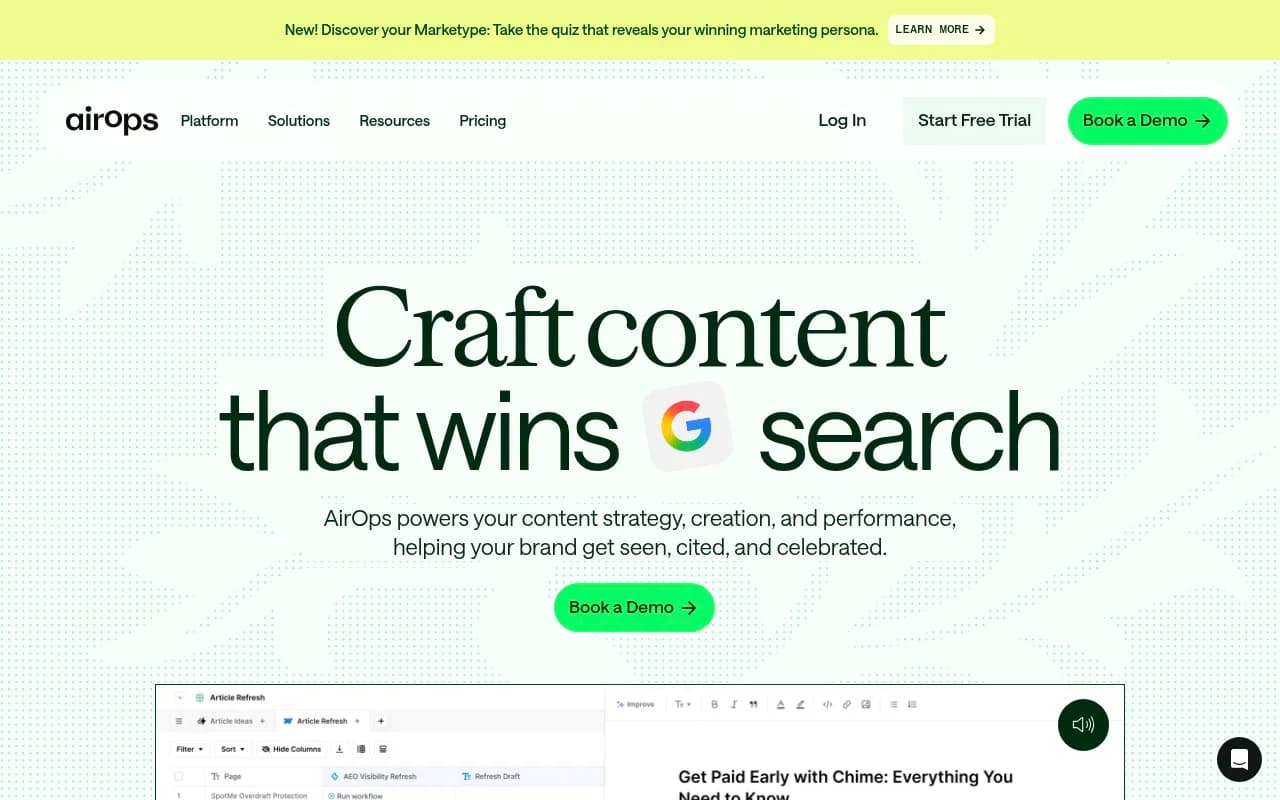
For traditional SEO content scaling, it's genuinely useful. If you need 200 location pages or a library of product comparison articles, AirOps can help you move faster. The workflows are flexible, and teams with clear content strategies can get real leverage from it.
The problem is that GEO isn't just about producing more content. It's about producing the right content -- content that answers the specific questions AI models are already being asked, in a format those models trust enough to cite. And figuring out what "right" means requires data that AirOps simply doesn't have.
The three-step loop that GEO actually requires
Real GEO work in 2026 follows a specific sequence. Skip any step and the whole thing breaks down.
Step 1: Find the gaps
Before you write anything, you need to know which prompts AI models are answering in your category, which competitors are being cited for those prompts, and where your brand is invisible. This is called answer gap analysis -- and it's the foundation of everything else.
Without this step, you're guessing. You might create excellent content about topics that AI models already have good answers for, while completely missing the questions where you could actually win. AirOps has no mechanism for this. It doesn't monitor AI responses, doesn't track competitor citations, and doesn't surface the specific gaps in your current content coverage.
Step 2: Create content that fills the gaps
This is where AirOps plays. Once you know what to write, you can use content automation tools to produce it at scale. The catch is that "knowing what to write" requires the gap analysis from step one -- which AirOps can't provide.
Content created without gap analysis might be well-written and technically sound, but it's not engineered to fill the specific holes AI models are exposing. There's a real difference between content that happens to be on-topic and content that's specifically designed to answer the questions AI engines are already fielding.
Step 3: Track whether it's working
After you publish, you need to know: are AI models crawling these pages? Are they citing them? Which models, for which prompts, how often? Is your visibility score improving? This is where most content tools -- including AirOps -- go completely dark.
Without this feedback loop, you have no way to know if your GEO efforts are working. You can't prioritize which content to update. You can't prove ROI to stakeholders. You're essentially publishing into a void and hoping for the best.
Why the "just create more content" approach is failing
There's a pattern showing up across GEO discussions right now: teams that invested heavily in AI content generation are finding that volume alone doesn't translate to citations. A Reddit thread on r/DigitalMarketing put it plainly: "GEO isn't SEO 2.0 -- it's SEO + content strategy + entity and authority signals." You can't just produce more; you have to produce differently.
Part of the problem is that AI models don't just index content the way search engines do. They evaluate it. They look at whether a page actually answers a specific question, whether the brand has authority in the topic area, whether the content is structured in a way that makes it easy to extract and cite. A page that ranks well in Google might not get cited in ChatGPT at all, and vice versa.
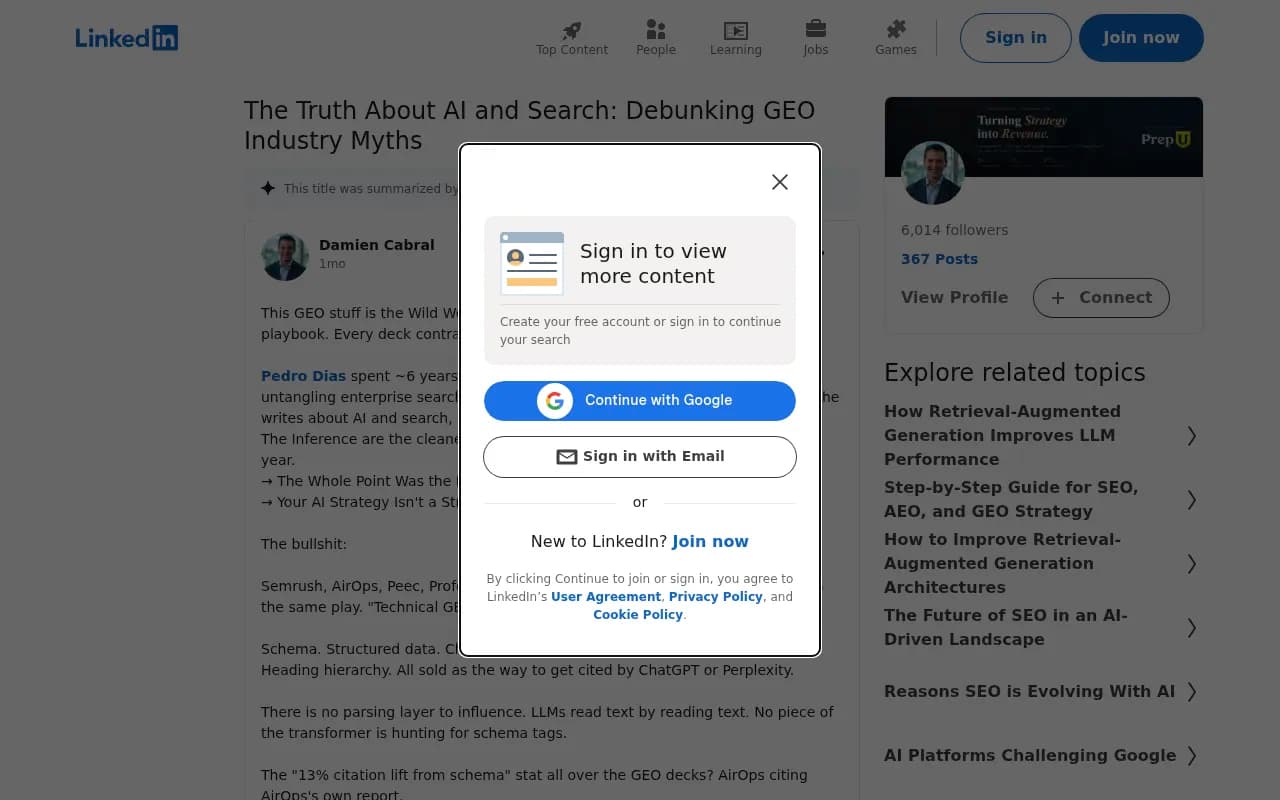
This is worth sitting with. The GEO space has a real data quality problem right now. Statistics get recycled without verification, and teams end up optimizing for metrics that may not reflect how AI models actually behave. The only way to cut through that noise is to track your own citation data directly -- not rely on industry benchmarks of questionable origin.
What the missing layer looks like in practice
The gap between AirOps and a complete GEO stack is essentially three capabilities:
Prompt intelligence. You need to know which prompts are driving AI search behavior in your category, how often they're asked, how competitive they are, and how they fan out into sub-queries. This tells you where to focus.
AI crawler visibility. You need to know when ChatGPT, Claude, Perplexity, and other AI agents are crawling your pages, which pages they're reading, what errors they're hitting, and how long it takes for a crawled page to become a cited page. Without this, you can't diagnose why content isn't getting picked up.
Citation tracking. You need page-level data on which of your pages are being cited, by which models, for which prompts, and how that changes over time. This is the feedback loop that makes optimization possible.
None of these exist in AirOps. They're not edge cases -- they're the core of what GEO actually requires.
Tools that close the loop
A few platforms have been built specifically around this problem. The ones worth knowing about in 2026:
Promptwatch is the most complete option here. It covers all three steps: answer gap analysis that shows exactly which prompts competitors are visible for but you're not, content agents that generate articles grounded in real prompt data and citation patterns, and page-level tracking that shows which pages are being cited by which AI models. It also includes AI crawler logs -- real-time data on when ChatGPT, Claude, and Perplexity are hitting your site. That last piece is genuinely rare; most tools don't have it.

For teams that want monitoring without the full optimization stack, there are lighter options:

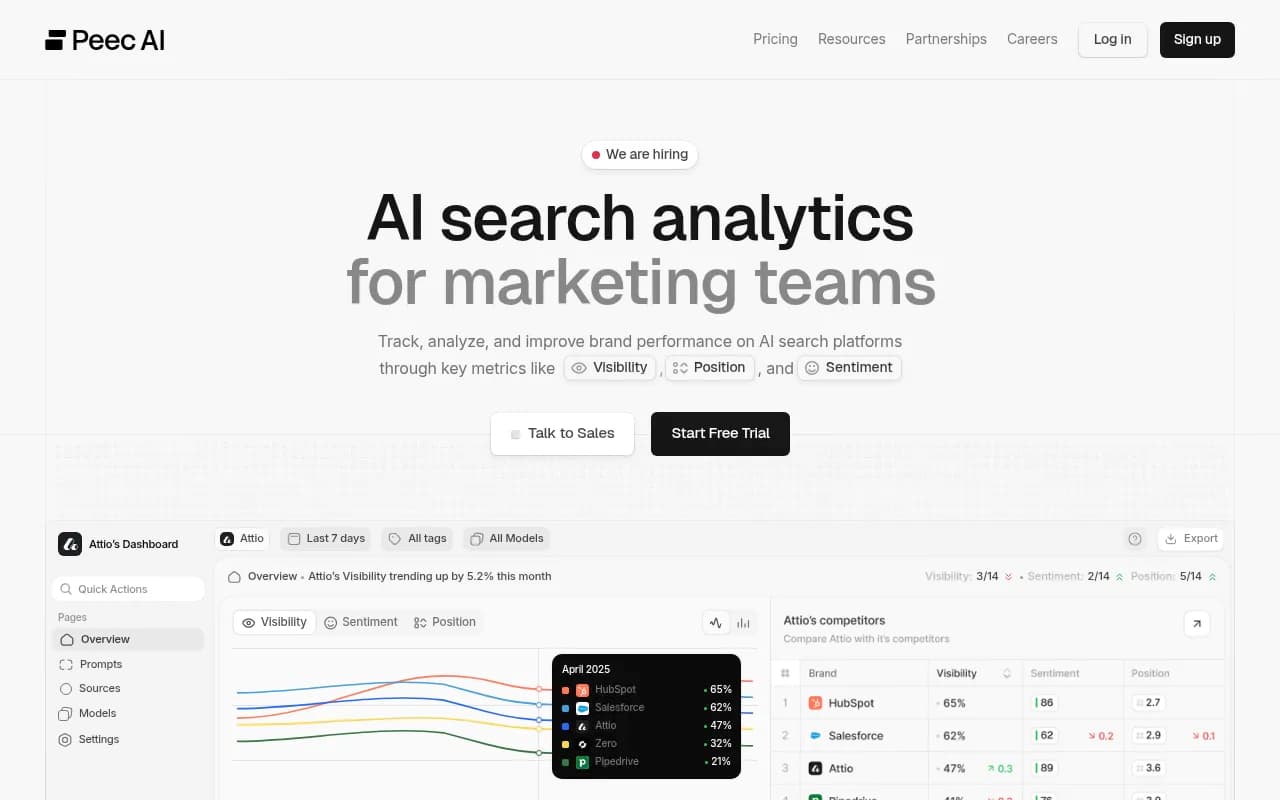

These are useful for getting a read on your current AI visibility, but they stop at monitoring. They'll show you where you're invisible; they won't help you fix it.
For content creation specifically (which is where AirOps plays), there are alternatives worth considering depending on your workflow:
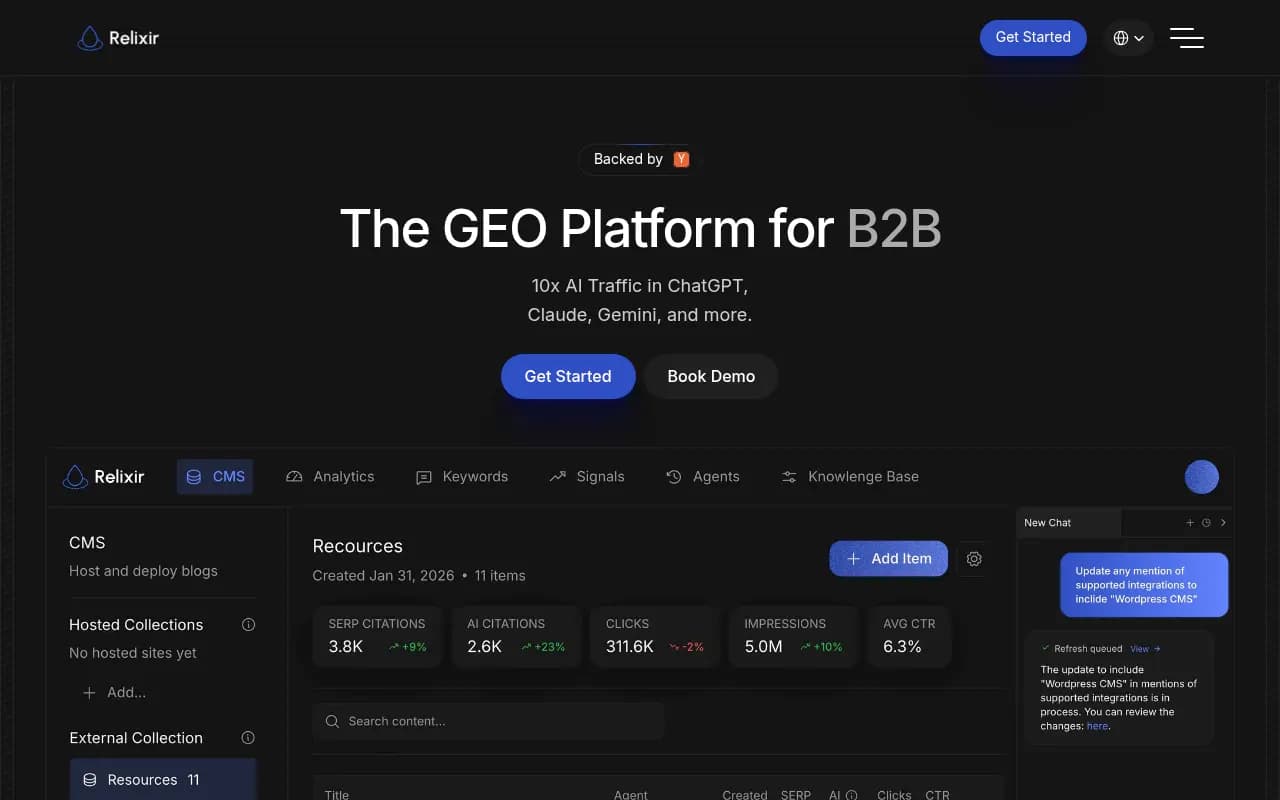

Both of these are more GEO-native than AirOps -- they're built with AI citation goals in mind rather than general content automation.
A realistic comparison of what these tools cover
| Capability | AirOps | Otterly.AI / Peec.ai | Promptwatch |
|---|---|---|---|
| AI content generation | Yes | No | Yes |
| Prompt gap analysis | No | Basic monitoring | Yes (full answer gap) |
| Competitor citation tracking | No | Yes | Yes |
| AI crawler logs | No | No | Yes |
| Page-level citation tracking | No | Limited | Yes |
| Prompt volume / difficulty scoring | No | No | Yes |
| Reddit / YouTube citation tracking | No | No | Yes |
| Traffic attribution from AI | No | No | Yes |
| ChatGPT Shopping tracking | No | No | Yes |
The pattern is clear. AirOps is a content production tool that happens to be used for GEO. Promptwatch and a few others are GEO platforms that include content production. That's a meaningful difference in what you get out of them.
How to think about your current stack
If you're already using AirOps and getting value from it, you don't necessarily need to replace it. But you do need to be honest about what it's not giving you.
Ask yourself: do you know which AI prompts your competitors are being cited for that you're not? Do you know which of your pages are being crawled by AI agents? Do you know whether the content you've published in the last six months has improved your citation rate?
If the answer to any of those is no, you have a gap. And that gap is exactly where GEO either works or doesn't.
The teams getting real results from GEO in 2026 are the ones who've closed the loop -- who can trace a specific piece of content from "identified gap" through "published article" to "AI model citation" to "traffic and revenue." That's not a workflow AirOps supports on its own.
The data quality problem is real
One more thing worth flagging: the GEO space is full of recycled statistics and unverified claims. The "13% citation lift from schema markup" stat that appears in half the GEO decks circulating right now? It traces back to AirOps citing its own report, not independent research. The actual academic GEO paper from Aggarwal et al. is more nuanced and less definitive than the industry talking points suggest.
This matters because teams making GEO investment decisions based on inflated benchmarks are going to be disappointed. The only reliable data is your own -- your actual citation rates, your actual crawler logs, your actual visibility scores over time. That's another reason why monitoring and tracking aren't optional add-ons to a GEO strategy. They're how you know what's real.
What to do next
If you're serious about GEO in 2026, the practical path forward looks like this:
First, audit your current AI visibility. Run your brand and key category prompts through ChatGPT, Perplexity, and Gemini. See who's getting cited. That gives you a baseline.
Second, get proper tracking in place. You need to know your citation rate across AI models before you can improve it. A platform with real prompt data and page-level tracking (not just a dashboard that shows you a score) is worth the investment.
Third, use gap analysis to prioritize content. Don't create content based on what you think AI models want -- use actual data on which prompts competitors are winning that you're not. That's where the opportunity is.
Fourth, create content that's engineered for citation, not just written for humans. That means structured answers to specific questions, clear entity signals, and formats that AI models can extract and cite cleanly.
AirOps can help with the fourth step. But steps one through three require a different kind of tool entirely.
The brands that figure this out early -- that close the loop between gap analysis, content creation, and citation tracking -- are the ones that will own AI search visibility in their categories. The ones that treat GEO as a content volume problem are going to keep publishing into the void.