Key takeaways
- AthenaHQ covers 8+ LLMs, has solid AI Blindspot Detection, and integrates with Shopify and GA4 — genuinely useful for teams getting serious about AI search visibility.
- Its credit system is the most common complaint: 3,600 monthly credits sounds generous until you're running real monitoring programs, at which point costs can double the stated price.
- The best features (Persona Targeting, multi-region tracking, Citation Engine, advanced Content Optimization) are locked behind Enterprise pricing, which requires a custom conversation.
- No free trial at $295/month is a real barrier for teams that want to evaluate before committing.
- Several alternatives now offer content generation, crawler log analysis, and traffic attribution that AthenaHQ doesn't match at self-serve price points.
AthenaHQ has done something genuinely hard: it built a dedicated Answer Engine Optimization platform at a time when most marketing teams were still arguing about whether AI search was real. That deserves credit. The platform covers 8+ LLMs, ships with a feature called AI Blindspot Detection, and has real customers like SoFi, ZoomInfo, and Wix using it in production. Its G2 rating sits at 4.9.
So this isn't a takedown. AthenaHQ is a serious tool. But in 2026, with the GEO/AEO category maturing fast and a dozen alternatives now competing for the same budget, the gaps matter more than they used to. Teams evaluating platforms are asking harder questions, and some of AthenaHQ's answers are uncomfortable.
Here's an honest look at both sides.
What AthenaHQ actually gets right
LLM coverage on all self-serve plans
One thing AthenaHQ doesn't gate behind enterprise pricing is its LLM coverage. You get 8+ AI models on self-serve plans, which is more than several competitors offer at comparable price points. For teams that care about tracking visibility across ChatGPT, Perplexity, Gemini, and others simultaneously, this is a real advantage.
AI Blindspot Detection
This is probably AthenaHQ's most talked-about feature. It surfaces prompts where competitors are appearing in AI responses but you're not — essentially showing you the gaps in your AI visibility before your competitors exploit them further. The concept is sound and the execution is generally well-regarded.
Shopify and GA4 attribution
AthenaHQ connects AI visibility data to actual business outcomes through Shopify and GA4 integrations. This matters because most AI visibility platforms show you impressions and citations without any connection to revenue. Attribution is hard to build and AthenaHQ has done it, which puts it ahead of pure monitoring tools.
Real case studies
The platform has documented case studies showing measurable improvements in AI citation rates. AthenaHQ's own State of AI Search 2026 Report found that brands actively optimizing for AI search reach up to 56.7% of AI answers, compared to a market average of 17.2%. Whether or not those numbers apply to your category, having real evidence beats vendor promises.
The 6 gaps that send teams looking elsewhere
Gap 1: No free trial at $295/month
This is the most immediate friction point. $295/month before you've seen what the platform does for your specific brand, in your specific category, against your specific competitors. Every serious alternative in the market lets you evaluate first. AthenaHQ doesn't.
For a marketing team trying to get budget approved, "we need to spend $295 to find out if this is worth spending $295" is a hard conversation. It's not a dealbreaker for everyone, but it's a genuine barrier that competitors have deliberately removed.
Gap 2: The credit math doesn't add up
3,600 monthly credits sounds reasonable. It isn't, once you do the math.
Running 50 prompts across 5 AI engines daily = 250 credits per day. At that rate, you burn through your monthly allocation in 14 days. The second half of the month, you're either buying add-ons ($100 per 1,250 credits) or you're flying blind.
Real monitoring programs — the kind that track multiple competitors, multiple regions, multiple personas — often end up costing double the stated monthly price. Teams that don't realize this until month two tend to get frustrated fast.
Gap 3: Best features are enterprise-only
Here's the list of AthenaHQ features that require a custom enterprise conversation: Persona Targeting, multi-region tracking, the Citation Engine, BI tool support, and advanced Content Optimization.
These aren't nice-to-haves. Persona Targeting lets you simulate how different customer segments prompt AI models — essential for B2B companies with multiple buyer types. Multi-region tracking is table stakes for any brand operating across markets. The Citation Engine shows you which sources AI models are actually pulling from.
Locking these behind enterprise pricing means the self-serve plans are, in practice, monitoring-lite. You can see that you have a problem; fixing it requires an upgrade.
Gap 4: Monitoring without enough optimization
AthenaHQ shows you where you're invisible. What it doesn't do well at self-serve tiers is help you fix it. There's no built-in content generation, no AI writing agent that produces articles grounded in citation data, no workflow that takes you from "here's the gap" to "here's the content that closes it."
This is the core tension in the AEO category right now. Monitoring tells you the score. Optimization changes it. Platforms that only do the former are increasingly hard to justify as standalone purchases.
Promptwatch is one platform that has built this loop explicitly: it identifies gaps, generates content engineered to get cited by AI models, then tracks whether that content actually moves the needle. The distinction matters if your team is measured on outcomes rather than dashboards.

Gap 5: No AI crawler log visibility
AthenaHQ doesn't show you what AI crawlers are actually doing on your website. Which pages ChatGPT's crawler has visited, how often, which errors it's hitting, whether your content is even being indexed before it gets cited.
This is a meaningful blind spot. You can have perfect content and still not get cited if AI crawlers can't access or parse it properly. Crawler log analysis is one of the more technically differentiated features in the GEO space, and it's absent here.
Gap 6: Limited Reddit and YouTube signal
AI models don't just cite brand websites. They cite Reddit threads, YouTube videos, forum discussions, and third-party sources. Understanding which of those sources are influencing AI recommendations in your category is increasingly important for a complete GEO strategy.
AthenaHQ's coverage here is limited. Teams that want to know why a competitor keeps getting cited — and what off-site content is driving that — will find gaps in the data.
How AthenaHQ compares to the main alternatives
Here's a straight comparison across the dimensions that matter most for teams evaluating in 2026:
| Platform | Free trial | Content generation | Crawler logs | Reddit/YouTube signals | Starting price | LLM coverage |
|---|---|---|---|---|---|---|
| AthenaHQ | No | Enterprise only | No | Limited | $295/mo | 8+ |
| Promptwatch | Yes | Yes (built-in AI agent) | Yes (Professional+) | Yes | $99/mo | 10 |
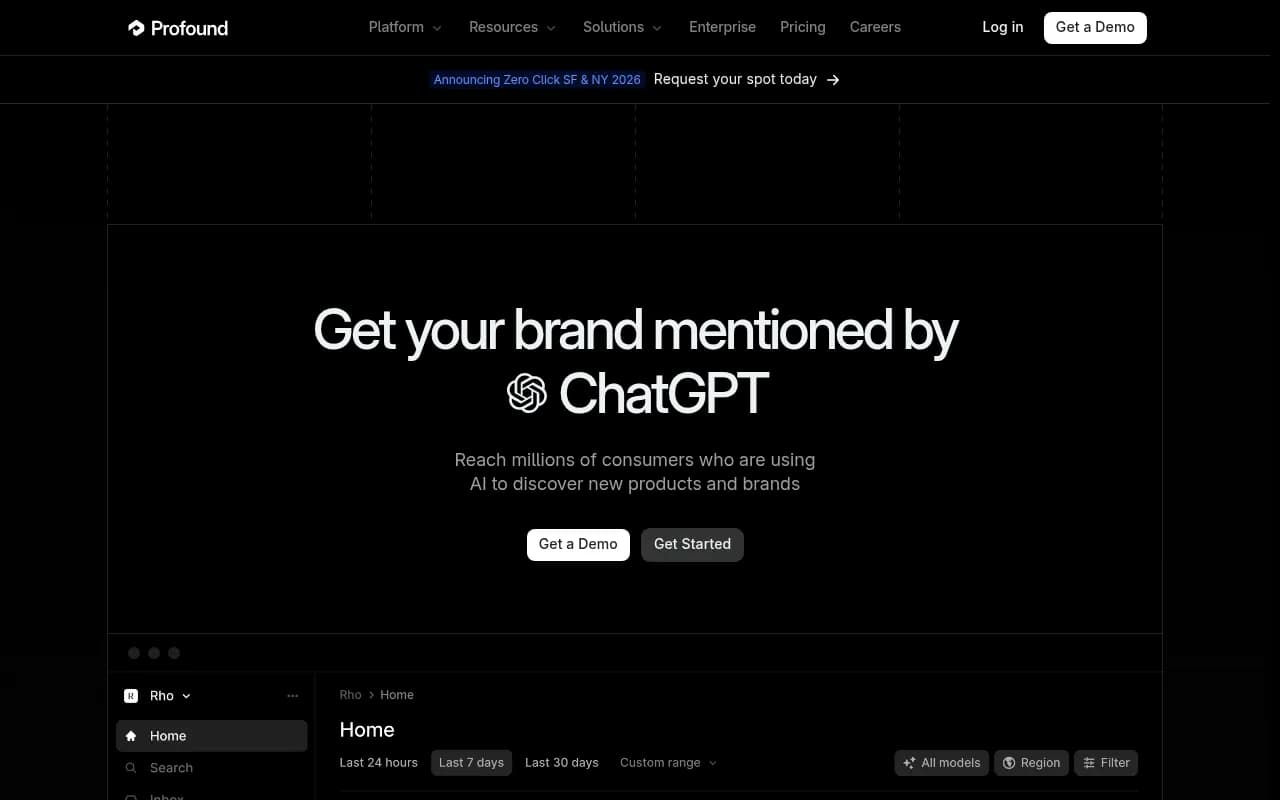
| Profound | Yes | No | No | No | Custom | 8+ |
| Otterly.AI | Yes | No | No | No | ~$99/mo | 5+ |
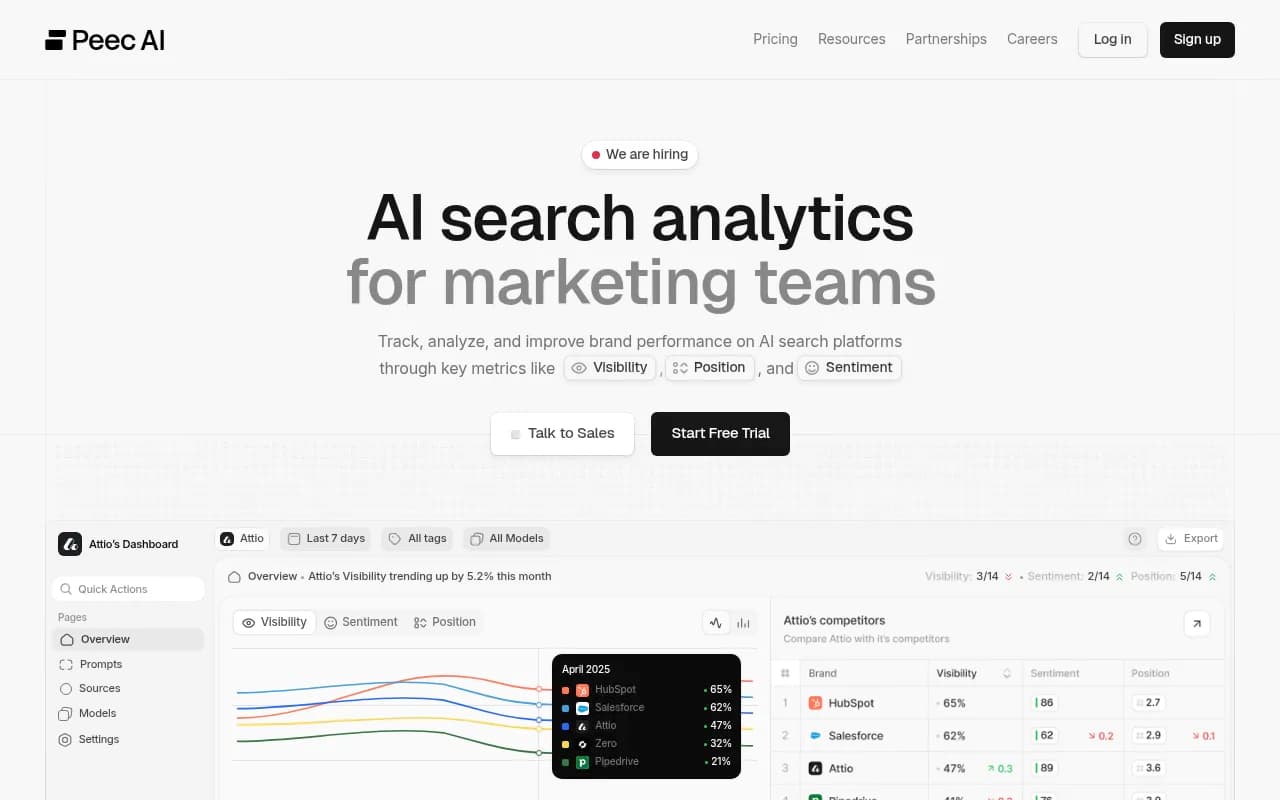
| Peec AI | Yes | No | No | No | ~$79/mo | 6+ |
| Goodie AI | No | Yes | No | No | Enterprise | 8+ |
A few notes on this table. Profound has a strong feature set and enterprise credibility, but users report difficulty translating insights into concrete next steps — similar to AthenaHQ's optimization gap. Otterly.AI and Peec AI are solid for basic monitoring but stop well short of optimization. Goodie AI is enterprise-grade but requires a sales conversation to even get started.

Who should still consider AthenaHQ
Despite the gaps, AthenaHQ makes sense for specific situations:
Teams at companies like SoFi or ZoomInfo — large brands with dedicated marketing ops budgets — where the enterprise plan's full feature set is accessible and the credit math is less of a concern.
Organizations that have already committed to a GA4 or Shopify attribution workflow and want a platform that plugs into it cleanly.
Teams that primarily need LLM coverage breadth at self-serve tiers and don't yet need content generation or crawler visibility.
If none of those describe your situation, the credit constraints and feature gating will likely frustrate you within 60 days.
What to look for in an alternative
The AEO/GEO category has matured enough that "monitoring" is no longer a differentiator. Every serious platform tracks brand mentions across AI models. The questions that separate platforms now are:
Does it help you fix the gaps it finds? Monitoring tells you the score. You need a platform that also helps you create content engineered to get cited, not just observe that you're not being cited.
Can you see what AI crawlers are doing on your site? Citation gaps often have technical causes. If you can't see crawler behavior, you're guessing at the root cause.
Does it connect to revenue? Visibility scores are vanity metrics unless they tie to traffic, leads, or conversions. Look for GSC integration, server log analysis, or direct attribution.
What's the actual cost at real monitoring scale? Run the math on credits or query limits at the volume you'd actually need. The stated price and the real price diverge significantly on some platforms.
Does it cover the sources AI models actually cite? Reddit, YouTube, and third-party domains influence AI recommendations. A platform that only monitors brand mentions on your own domain is missing a large part of the picture.
The bottom line
AthenaHQ built something real. The Blindspot Detection is genuinely useful, the LLM coverage is broad, and the attribution integrations are better than most. For enterprise teams with the budget to access the full feature set, it's a credible choice.
But the credit system is a real problem, the self-serve tiers are monitoring-lite, and the lack of a free trial makes it hard to justify before you've seen results. In a category where several alternatives now offer content generation, crawler logs, and traffic attribution at lower price points — with free trials — those gaps are harder to overlook than they were a year ago.
The teams switching away from AthenaHQ aren't usually unhappy with what it does. They're unhappy with what it doesn't do, and what it costs to find that out.