Key takeaways
- Fan-out cannibalization happens when AI search engines branch a single prompt into sub-queries, and two of your pages both answer the same sub-query -- splitting authority instead of consolidating it.
- Unlike traditional keyword cannibalization, this problem costs you AI citations, not just Google rankings. You can hold positions 3 and 7 in a SERP and still get zero citations in ChatGPT or Perplexity.
- The fix isn't always a redirect. Sometimes it's consolidation, sometimes it's differentiation, and sometimes it's just picking a winner and pointing everything at it.
- Triage matters. Most sites have dozens of overlapping pages. Fix the ones tied to commercial intent first -- the rest can wait.
- Tools like Promptwatch can show you exactly which prompts your competitors are getting cited for that you're not, which is often the fastest way to surface where fan-out cannibalization is hurting you.
What fan-out cannibalization actually is
Most people know keyword cannibalization as "two pages targeting the same keyword." That's true, but it's a simplified version of a problem that's gotten more complicated in 2026.
Here's what's actually happening under the hood.
When a user types a prompt into ChatGPT, Perplexity, or Google's AI Mode, the model doesn't just answer the surface question. It breaks the prompt into sub-queries -- a process called query fan-out. A prompt like "best project management software for remote teams" might fan out into sub-queries like:
- Which project management tools support async workflows?
- What are the pricing differences between Asana, Monday, and ClickUp?
- Which tools have the best mobile apps for remote teams?
Each sub-query gets answered independently, often by pulling citations from different sources. The model then synthesizes everything into one response.
Now here's the problem: if you have two pages on your site that both answer "which tools support async workflows," the AI model sees two competing signals from the same domain. It doesn't cite both. It picks one, or more likely, it picks neither and cites a competitor who has one clean, authoritative answer.
That's fan-out cannibalization. It's not just about Google anymore. It's about whether AI models can confidently pick your page as the definitive answer to a sub-query -- and having two pages muddying the same territory makes that harder.
Why this is different from classic keyword cannibalization
Classic cannibalization was a Google problem. Two pages targeting "best CRM for small business" would split link equity, confuse Google's crawlers about which page to rank, and cause both to underperform. The fix was usually a redirect or a canonical tag.
Fan-out cannibalization is messier for a few reasons.
First, the sub-queries aren't always visible. You can't just run a keyword gap report and see "ah, these two pages both target sub-query X." You have to understand how AI models decompose prompts -- which requires either deep familiarity with how LLMs work or tooling that tracks actual AI responses.
Second, the stakes are different. In traditional SEO, cannibalization might cost you a few ranking positions. In AI search, it can cost you the citation entirely. A competitor with one well-structured page on async project management tools will get cited. You, with two mediocre pages on the same topic, get nothing.
Third, canonical tags don't help here. AI crawlers don't respect canonical signals the same way Google does. If two pages exist and both are crawlable, both are candidates for citation -- and having two candidates on the same sub-query is exactly the problem.
How to find fan-out cannibalization on your site
There's no single tool that surfaces this perfectly, but here's a practical workflow.
Step 1: Map your content to AI sub-queries
Start by listing the main prompts your audience is likely to use in AI search. Then, for each prompt, think about how an AI model would decompose it. What are the 3-5 sub-questions that need answering to fully respond to that prompt?
Now map your existing pages to those sub-queries. You're looking for cases where two or more pages answer the same sub-query.
This is tedious to do manually. Tools like Promptwatch have an Answer Gap Analysis feature that shows you which prompts competitors are getting cited for that you're not -- and that often reveals exactly where your content is fragmented.

Step 2: Run a SERP overlap test
For traditional cannibalization, the SERP overlap test still works. Search Google for the sub-query you're worried about and see if two of your pages appear in the results. If they do, you have a signal problem.
But don't stop there. Also test the sub-query directly in ChatGPT, Perplexity, and Google AI Mode. See who gets cited. If a competitor gets cited and you don't, despite having pages on the topic, that's a strong signal your content is fragmented or unclear.
Step 3: Check Google Search Console for ranking volatility
Pages that bounce between positions 5 and 15 over time, without any obvious external cause, are often cannibalization victims. Pull your GSC data and look for queries where two URLs are both showing impressions. That's the clearest diagnostic signal you have.
Step 4: Audit intent overlap, not just keyword overlap
Two pages can target different keywords but serve the same intent. A page titled "async tools for distributed teams" and a page titled "project management for remote workers" might use completely different keywords but answer the same underlying question. AI models care about intent, not keyword matching.
Read both pages side by side. Ask yourself: if someone wanted to know X, would both pages answer it? If yes, you have an intent overlap problem.
The three types of fan-out cannibalization
Not all overlap is equally damaging. Here's a rough taxonomy.
Type 1: Direct intent duplication
Two pages answer the exact same question for the same audience. This is the worst kind. An AI model has no reason to prefer one over the other, so it often cites neither, or picks whichever has more external citations pointing at it.
Fix: consolidate into one page, redirect the weaker one.
Type 2: Partial overlap with differentiated angles
Two pages cover the same topic but from different angles -- one is a comparison, one is a how-to guide. There's overlap in the sub-queries they answer, but they're not identical.
Fix: sharpen the differentiation. Make it crystal clear what each page answers and what it doesn't. Add explicit scope statements at the top of each page ("This guide covers X. If you're looking for Y, see our comparison here."). This helps AI models understand which page to cite for which sub-query.
Type 3: Temporal duplication
This one catches a lot of content teams off guard. You published "best tools for X in 2024," then "best tools for X in 2025," then "best tools for X in 2026." Three pages, same intent, same sub-queries. AI models see three competing signals from your domain.
Fix: use a single evergreen URL (e.g., /best-tools-for-x/) and update it annually. Redirect the dated URLs to the evergreen one. This is also just better for traditional SEO -- dated URLs accumulate link equity separately, which is wasteful.
The fix: a decision tree
When you find two pages competing for the same sub-query, you have four options. Here's how to choose.
| Situation | Recommended fix |
|---|---|
| One page clearly outperforms the other (traffic, links, citations) | 301 redirect the weaker page to the stronger one |
| Both pages are weak, but the topic matters | Consolidate into one new, better page; redirect both |
| Pages have genuine intent differences but share sub-queries | Sharpen differentiation; add explicit scope statements |
| Temporal duplication (2024/2025/2026 versions) | Evergreen URL + redirect dated versions |
| Both pages are strong and genuinely different | Keep both; add internal links clarifying the relationship |
The most common mistake is doing nothing because both pages seem fine. "Fine" in traditional SEO doesn't mean "fine" in AI search. A competitor with one excellent page will beat you every time if your signal is split.
On 301 redirects
When you redirect, make it a 301 (permanent). Canonical tags are not a reliable substitute here -- they're a hint to Google, not a command, and AI crawlers largely ignore them. A 301 redirect removes the ambiguity entirely.
After redirecting, expect 2-6 weeks before you see ranking and citation changes. Don't panic if things get worse before they get better. That's normal during consolidation.
The AI citation dimension: why this matters more in 2026
Here's the scenario that's becoming increasingly common.
A site holds positions 3 and 8 for a commercial query in Google. Traffic looks fine. But when you check who gets cited in ChatGPT or Perplexity for the same query, it's a competitor -- one that has a single, well-structured page that clearly answers the sub-queries the AI model is decomposing the prompt into.
The site with two pages split the authority signal. The competitor with one page concentrated it.
This is the new cost of cannibalization. It's not just a rankings problem -- it's a citation problem. And as more users get their answers from AI search rather than clicking through Google results, citations matter more than positions.
The research from SEO Engico puts it bluntly: "The old version cost you a ranking position. The new version costs you a seat at the AI answer table." That framing is right. The urgency has changed.
Tools that help you find and fix this
You don't need to do all of this manually. Here are the tools worth knowing about.
For finding where you're missing AI citations (which often reveals cannibalization), Promptwatch's Answer Gap Analysis is the most direct approach -- it shows you the exact prompts where competitors are visible and you're not.
For traditional cannibalization audits, Screaming Frog is still the best crawler for mapping your content structure and finding intent overlaps at scale.
For content optimization -- making sure your consolidated page is actually better than the two it's replacing -- Clearscope and Surfer SEO both do solid work on semantic coverage.

For tracking whether your fixes are working in AI search specifically, a few monitoring tools are worth checking:

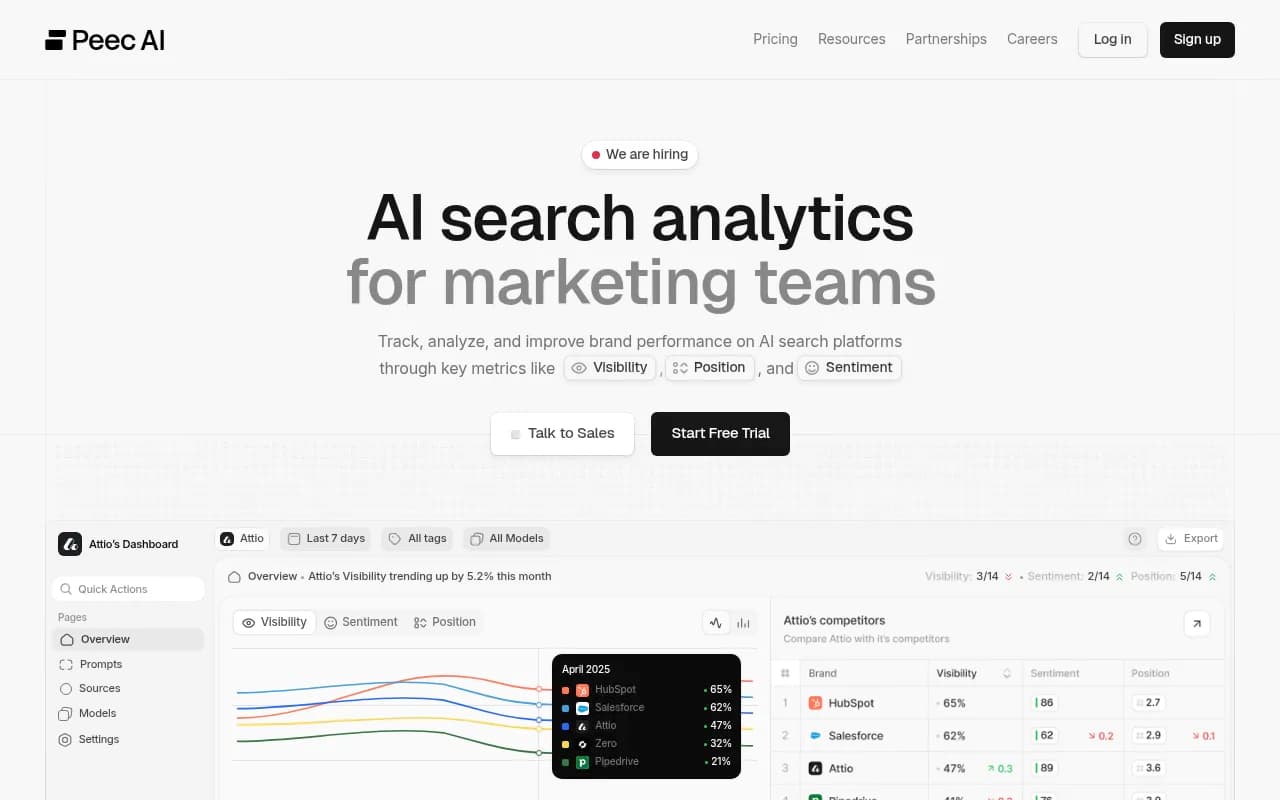
These won't tell you why you're not getting cited, but they'll confirm whether your consolidation work is moving the needle.
Common mistakes to avoid
A few things that seem logical but tend to backfire.
Creating new content before fixing existing overlap. If you have two pages competing for the same sub-query, publishing a third page on the topic makes things worse, not better. Fix the existing overlap first.
Using canonical tags instead of redirects. Canonical tags are fine for duplicate content in some contexts, but for cannibalization, they leave the competing page live and crawlable. AI models will still find it. Redirect instead.
Fixing cannibalization on low-value queries. You could spend weeks cleaning up overlap on queries that drive no revenue and no meaningful traffic. Triage ruthlessly. Start with your highest-value commercial queries and work down from there.
Assuming consolidation always means deletion. Sometimes the right move is to keep both pages but make them genuinely different -- different audiences, different intents, different sub-queries. Forced consolidation of pages that actually serve different purposes can hurt more than it helps.
How to prevent it going forward
The best fix is not creating the problem in the first place. A few practices that help.
Maintain a content map that explicitly assigns each page to a specific intent and set of sub-queries. Before publishing anything new, check whether an existing page already answers the same sub-queries.
Use evergreen URLs for any content that you'll update annually. Don't create new URLs for updated versions of the same guide.
When you're planning content around a topic, think about how an AI model would decompose a prompt about that topic. What are the sub-queries? Which pages on your site answer them? Is there overlap?
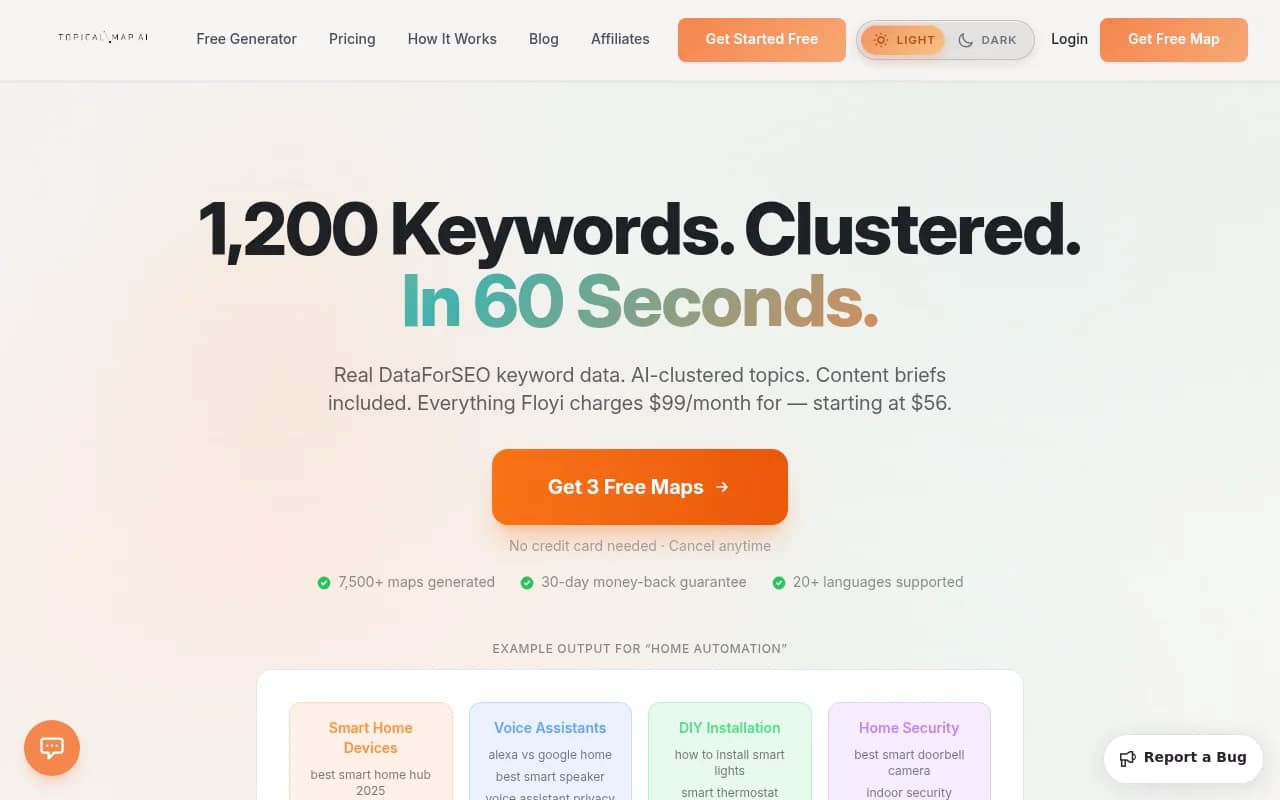
For teams doing this at scale, tools like Topical Map AI can help you build out a structured content architecture that minimizes overlap from the start.
The triage principle
One thing worth repeating: you don't need to fix all of this at once, or ever.
Most sites have dozens of pages with some degree of intent overlap. Fixing all of it is a months-long project with diminishing returns. The pages that matter are the ones tied to queries that drive revenue, leads, or meaningful traffic.
Pull your top 20 commercial queries. Check for fan-out cannibalization on those. Fix what you find. Then move to the next tier.
That's a week of work, not a quarter. And it's where the actual impact is.
The broader principle: AI search has raised the cost of content fragmentation. A clean, authoritative answer on one URL beats two mediocre answers on two URLs every time. That was always true in traditional SEO, but the penalty for getting it wrong is sharper now that AI citations are part of the equation.
Clean up the overlap on your most important queries. Track whether your citations improve. Repeat.