Key takeaways
- Bluefish AI is a serious enterprise platform, not vaporware: $68M raised, Fortune 500 clients including Adidas, American Express, and Ulta Beauty, and a five-pillar product spanning monitoring, GEO, measurement, commerce, and accuracy.
- Pricing is quote-only. There is no pricing page (the URL returns a 404), no trial, and no self-serve signup. Third-party estimates range from "$99/month starter tiers" to "$150K–$500K+ per year," and the fact that review sites contradict each other this badly is itself a data point.
- The AI Accuracy module (launched May 2026) is the most interesting thing Bluefish has shipped, and the research behind it on why AI gets brands wrong is worth reading even if you never buy the tool.
- Independent validation is thin. The "Bluefish" reviews on G2 belong to an unrelated open-source text editor, and the AI marketing platform itself has almost no public review footprint.
- Unless you're a large enterprise with procurement muscle, alternatives with published pricing and self-serve access (Profound, Promptwatch, Otterly.AI, Peec AI, LLM Pulse) will get you to answers faster.
What is Bluefish AI?
Bluefish AI is an enterprise "agentic marketing platform" founded in New York in 2024. The founding team has real exits behind it: CEO Alex Sherman co-founded PromoteIQ (acquired by Microsoft in 2019), Andrei Dunca co-founded LiveRail (acquired by Facebook in 2014), and COO Jing Feng worked at both companies. That pedigree shows up in how the product is built, for better and worse. This is software designed by people who have sold into Fortune 500 procurement before.
The funding says the same thing. Bluefish raised a $43M Series B in April 2026, co-led by Threshold Ventures and NEA, with Amex Ventures, TIAA Ventures, Salesforce Ventures, Bloomberg Beta, and Crane Venture Partners participating. Total funding sits at $68M. Named customers include Adidas, American Express, Hearst, Ulta Beauty, LVMH, and Tishman Speyer, and the company claims roughly 10% of the Fortune 500 plus 100+ enterprise accounts across 15+ verticals.
| At a glance | |
|---|---|
| Founded | 2024, New York City |
| Total funding | $68M ($43M Series B, April 2026) |
| Positioning | Agentic marketing platform for the Fortune 500 |
| AI channels | Roughly ten, including ChatGPT, Google AI Overviews and AI Mode, Claude, Perplexity, Gemini, Copilot, and Amazon Rufus |
| Pricing | Quote-only, no public page |
| Best fit | Large brands treating AI search as a cross-functional channel |
Bluefish AI features: what the platform actually does
The five pillars
As of May 2026 the platform spans five modules. AI Monitoring tracks visibility, positioning, favorability, and how competitors show up. GEO Optimization turns those findings into content and brand-data recommendations. GEO Measurement handles campaign-level attribution. AI Commerce covers shopping surfaces, including Amazon Rufus, which most GEO tools ignore entirely. And AI Accuracy, launched May 5, 2026, monitors whether AI channels represent your brand factually.
The features that stand out
Impact Score and Influence Rank are, in my opinion, the smartest ideas in the product. Most visibility tools report a percentage: you appeared in 34% of prompts. Bluefish asks a better question: did the cited content actually shape the answer? Impact Score measures how closely cited content aligns with the response text, and Influence Rank aggregates that across platforms to show which sources genuinely move answers versus which ones just get cited. That distinction matters when you're deciding where to spend content budget.
Brand Vault is a centralized repository of brand facts, product specs, and messaging guardrails, structured for AI ingestion and shareable with LLM providers. A 30-day independent test called it "overkill" for a 50-person SaaS company. I agree. But for a company where legal, PR, and marketing all need to sign off on what the brand says, a single verified source of truth solves a real problem.
Collections, launched February 2026, groups owned content, earned coverage, and AI visibility data into campaign-level views. Useful for attribution-minded enterprise teams. The Rufus and agentic-commerce coverage is a genuine differentiator if you sell products on Amazon; almost nobody else tracks that surface.
Where the feature set runs thin
The same 30-day test flagged problems worth taking seriously. There's no GA4 or conversion attribution layer, so visibility data doesn't connect to actual traffic or pipeline. API access is reportedly restricted on lower tiers, and no public API documentation, MCP server, or SDKs were found as of mid-2026. Reviewers also question the depth of Claude-side monitoring and coverage of emerging platforms. None of these are fatal for a Fortune 500 buyer. All of them are friction for everyone else.
Bluefish AI pricing: the part nobody can verify
What Bluefish publishes: nothing
Meev checked in July 2026 and found that Bluefish's /pricing URL returns a 404. There's no free tier, no trial, and no self-serve signup; every call to action routes to a demo request. Independent reporting describes a closed pilot program and onboarding measured at four to six weeks. That's a normal enterprise motion, but it means budgeting for Bluefish means budgeting for a procurement cycle.
What third parties claim, and why they disagree
Here's where it gets strange. Multiple review sites publish specific pricing tiers for a product that publishes no prices:
| Source | Claimed pricing | Notes |
|---|---|---|
| Meev (verified July 2026) | No public pricing; independent estimates of $150K–$500K+/year plus $15K–$100K implementation | Actually visited the site; found the 404 and demo-only CTAs. Figures are estimates, not vendor statements |
| tryanalyze.ai (May 2026) | Reported tiers of roughly $99–$799/month; enterprise contracts "5 to 6 figures annually" | Labels its own numbers as reported ranges |
| PikaSEO | Starter $99/month, Standard $249/month | Publishes specific feature breakdowns per tier |
| nicklafferty.com | Growth $299/month, Business $799/month, seats $50/month, crisis add-on $300/month | From a Profound-vs-Bluefish comparison |
These claims cannot all be right. At least three of the four are wrong, and possibly all four. Some may describe a discontinued self-serve experiment, some may be estimates dressed up as fact, and some may be copies of other reviews. The practical lesson: do not budget off a blog post. Get the quote in writing.
The real cost of an enterprise contract
The subscription is only part of the bill. Independent estimates put implementation at $15K–$100K on top of annual fees. Add integration work, training, extra seats, and the internal staff time needed to actually act on the data, and the total cost of ownership is a different number from the one in the contract. If the cost of being misrepresented in AI answers exceeds the platform fee, the math can work. If it doesn't, you're paying enterprise prices for a thinner version of the product.
Data accuracy: the feature, and the irony
Bluefish's AI Accuracy module
AI Accuracy, launched May 5, 2026, is billed as the first brand-verification capability for AI channels. It continuously checks whether AI systems represent your brand factually, traces every mismatch to the exact channel and response, scores severity, and filters by product line, topic, and audience. It connects to Brand Vault, so the "correct" answer your content should produce has an authoritative source. Industry estimates cited in Bluefish's own launch materials put factual errors in 5–20% of AI responses, and a March 2026 Rithum survey of 1,000+ US and UK shoppers found 58% lose trust when AI gives incorrect product info, while only 5% bother to verify on the brand's own site.
Why AI gets brands wrong, according to Bluefish's own data
Bluefish's June 2026 research on traceable AI inaccuracies is the most useful thing the company has published:
| Where the error came from | Share of traceable inaccuracies |
|---|---|
| The cited source itself was wrong (AI repeated bad info found online) | 30% |
| Citations didn't address the claim, so the model filled the gap itself | 32% |
| The answer directly contradicted the AI's own cited sources | 38% |
Two more findings stand out. 64% of inaccuracies involved wrong numbers: prices, rates, counts, dosages. In pharma specifically, 21% were wrong efficacy percentages and 27% were wrong dosage recommendations. And 60% of citations propagating incorrect brand information traced back to third-party blogs and independent media, while brand-owned sites accounted for only about 20%. Your own content being accurate doesn't fully protect you when AI prefers to cite someone else's sloppy page. That 38% figure, where the correct information existed in the model's own sources and it ignored it, is the genuinely unsettling one.
The irony: the data about Bluefish is itself inaccurate
Here's the uncomfortable part for a review titled "data accuracy issues." The information circulating about Bluefish is a mess, and some of it is provably wrong:
The pricing table above documents four review sites publishing four contradictory pricing structures for the same product.
The G2 problem is worse. Search for Bluefish on G2 and you'll find around 51 reviews averaging 4.1/5 stars. Those reviews belong to an unrelated open-source text editor called Bluefish, not to Bluefish AI. Anyone citing that rating as evidence of the AI platform's quality is citing the wrong product. The AI marketing platform itself has no meaningful G2, TrustRadius, or Gartner footprint.
Even the headline research deserves scrutiny. Bluefish's study claiming YouTube overtook Reddit as the top-cited social platform in AI answers (YouTube in 16% of LLM answers over six months versus Reddit's 10%) was covered by Adweek in January 2026 and reportedly contributed to a 9.3% single-day drop in Reddit's stock. It's influential work. But Promptwatch's first-party data tells a more dramatic story on the Reddit side: reddit.com's share of ChatGPT Search citations collapsed from roughly 4% to 0.5% on August 14, 2026, with Google's AI surfaces declining more gradually. Promptwatch's own YouTube research, covering ChatGPT, Perplexity, and AI Overviews in February 2026, measures the same question with different methods and windows. Neither dataset is necessarily wrong. Different panels, different definitions, different months. But the gap between them is a reminder to treat any single vendor's citation statistics as directional, not gospel.
Volatility makes this worse. One platform comparison found cited domains churn 40–60% monthly across AI engines, which means any snapshot ages fast and continuous monitoring is the only honest approach. And the citation pie is small to begin with: ChatGPT cites around five sources per web-search response, Google AI Overviews roughly ten, and Perplexity almost exactly ten, per Promptwatch's data on sources per response. When your brand's fate in an answer depends on a handful of citations, one wrong source carries real weight.
The practical takeaway: before trusting any vendor's benchmark, run your own prompt set through the tool during a pilot and define your own success metrics. Reference calls with existing customers matter more here than anything you'll read online, including this review.
Pros and cons
Pros
- Impact Score and Influence Rank measure whether citations actually shaped the answer, which is smarter than a raw visibility percentage
- Brand Vault solves a real cross-team problem for large organizations
- Amazon Rufus and agentic-commerce coverage that almost no competitor matches
- AI Accuracy module backed by research worth reading regardless of what you buy
- Fortune 500 validation and $68M in funding
Cons
- No public pricing, no trial, no self-serve path, reported 4–6 week onboarding
- No GA4 or conversion attribution, per independent testing
- Restricted API, no public documentation, and export limits below top tiers
- Thin independent review footprint, and the G2 "Bluefish" rating belongs to a different product entirely
- Sized for org structures most companies don't have
Better alternatives to Bluefish AI
If the pricing section made you flinch, here's the good news: this category is crowded, and most of Bluefish's competitors publish their prices. The right pick depends on what you actually need, because "AI visibility tool" covers everything from simple prompt trackers to full optimization platforms.
| Tool | Starting price | Self-serve | Standout capability | Best fit |
|---|---|---|---|---|
| Bluefish AI | Quote-only | No | Influence Rank, Brand Vault, Rufus tracking | Fortune 500 brands |
| Profound | $99/mo | Partial | SOC 2, FactCheck, Conversation Explorer | Enterprise monitoring with compliance needs |
| Promptwatch | Free tier, then $95/mo | Yes | Crawler logs plus agentic content execution | Teams closing the loop from insight to fix |
| Otterly.AI | $29/mo | Yes | GEO audits, Semrush integration | Budget visibility tracking |
| Peec AI | $89/mo | Yes | 115+ languages | International brands |
| LLM Pulse | €49/mo | Yes | Looker Studio, white label, app store tracking | Agencies wanting transparent per-prompt pricing |
Profound
Bluefish's most direct enterprise rival takes the monitoring side seriously: Conversation Explorer for analyzing raw AI answers, SOC 2 certification (one 2026 comparison reported Bluefish's SOC 2 as still pending), and FactCheck, its own answer to Bluefish's AI Accuracy module. Pricing is published: $99/month Starter covers ChatGPT only, $399/month Growth adds three platforms with roughly 100 prompts and 9,000 monthly responses, and enterprise is custom. G2 reviewers have flagged reliability concerns, so test before committing.
Promptwatch
Most tools in this category stop at monitoring. Promptwatch keeps going, which is the core difference. It shows why you're visible or not: crawler logs reveal when ChatGPTBot, ClaudeBot, PerplexityBot, and 400+ other AI crawlers hit your site, what they read, and what errors they hit, a capability most competitors lack entirely. It shows where AI finds your content, including dedicated Reddit and YouTube citation tracking and offsite mentions. It measures real business impact through visitor analytics rather than mention counts. Then its Content Agents plan, write, and publish GEO-optimized fixes straight to Webflow, Framer, or WordPress, and Unified Actions turns everything into a prioritized to-do list. The dataset behind it is large, 4.5 billion citations, clicks, and prompts analyzed, and the customer base of 1,840+ brands and agencies rates it 4.7/5 on G2. It also tracks ChatGPT shopping recommendations and sponsored placements in AI answers, the closest self-serve equivalent to Bluefish's commerce coverage. Pricing is published, from a free tier to $95/month, with a 7-day trial. The honest trade-off: you won't get Custom AI Audiences or Fortune 500-style influence measurement. You get execution without a sales cycle.

Otterly.AI
The budget entry point at $29/month. Otterly answers the simple question most teams start with: does my brand appear, and how often? It adds a GEO audit feature and Semrush integration that Bluefish lacks. If you need "am I visible" tracking rather than deep citation analytics, this is the cheaper and more relevant tool.

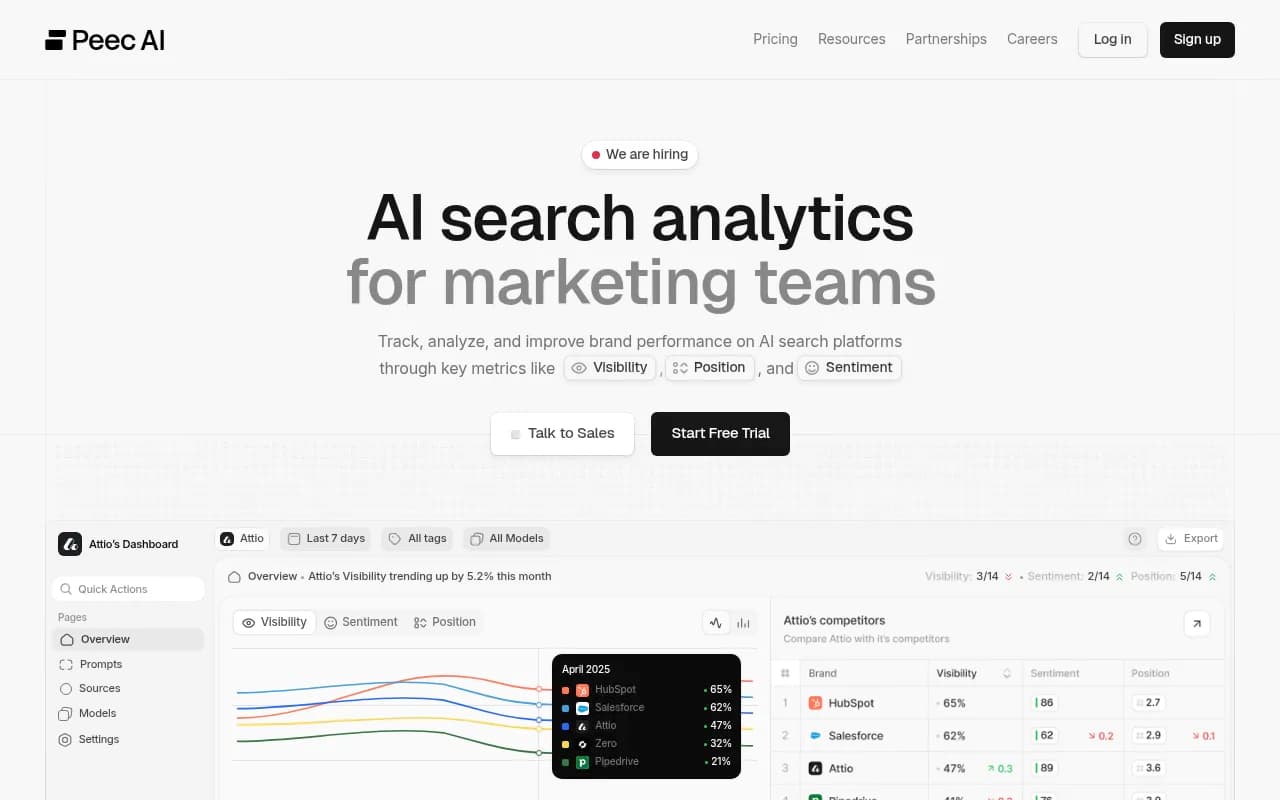
Peec AI
Berlin-based, €29M raised, and tracking in 115+ languages. If your brand risk is mostly in non-English AI discovery, Peec is the stronger pick; Bluefish's multilingual coverage is one of its reported weak spots in competitive deals.
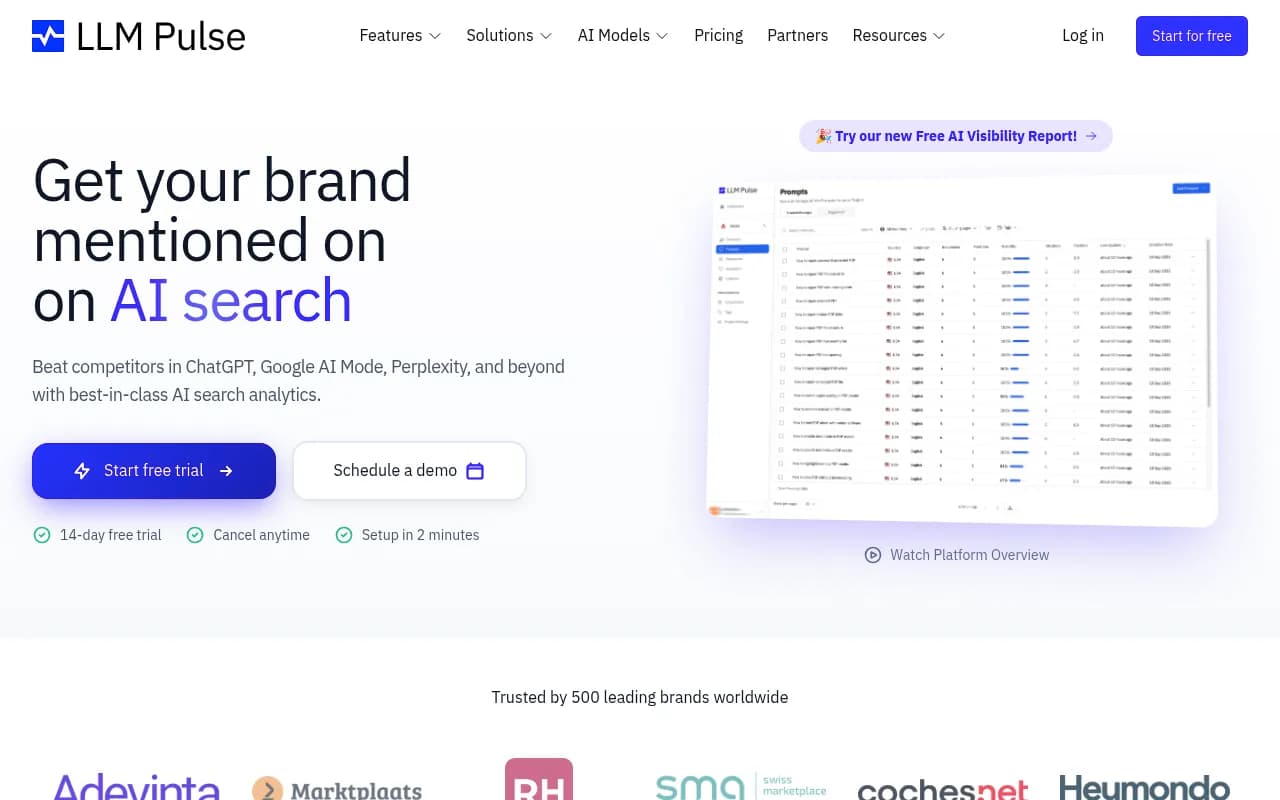
LLM Pulse
Transparent per-prompt pricing from €49/month, self-serve signup, unlimited team members, a Looker Studio connector, white-label options for agencies, and app store tracking that monitors iOS and Google Play visibility in AI answers, which nobody else in this list does. Plans scale from 50 prompts to 2,400. It's the most direct rebuke of quote-only pricing in the category.
Quick hits
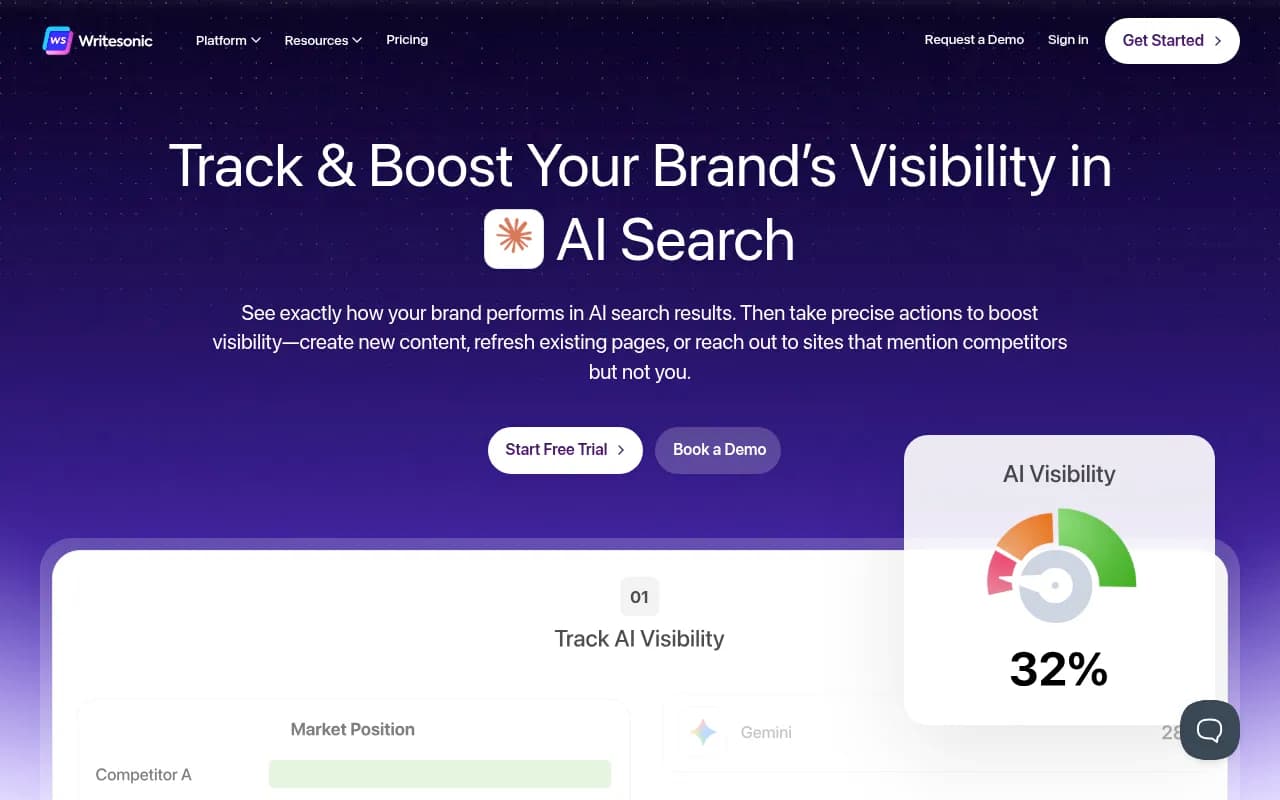
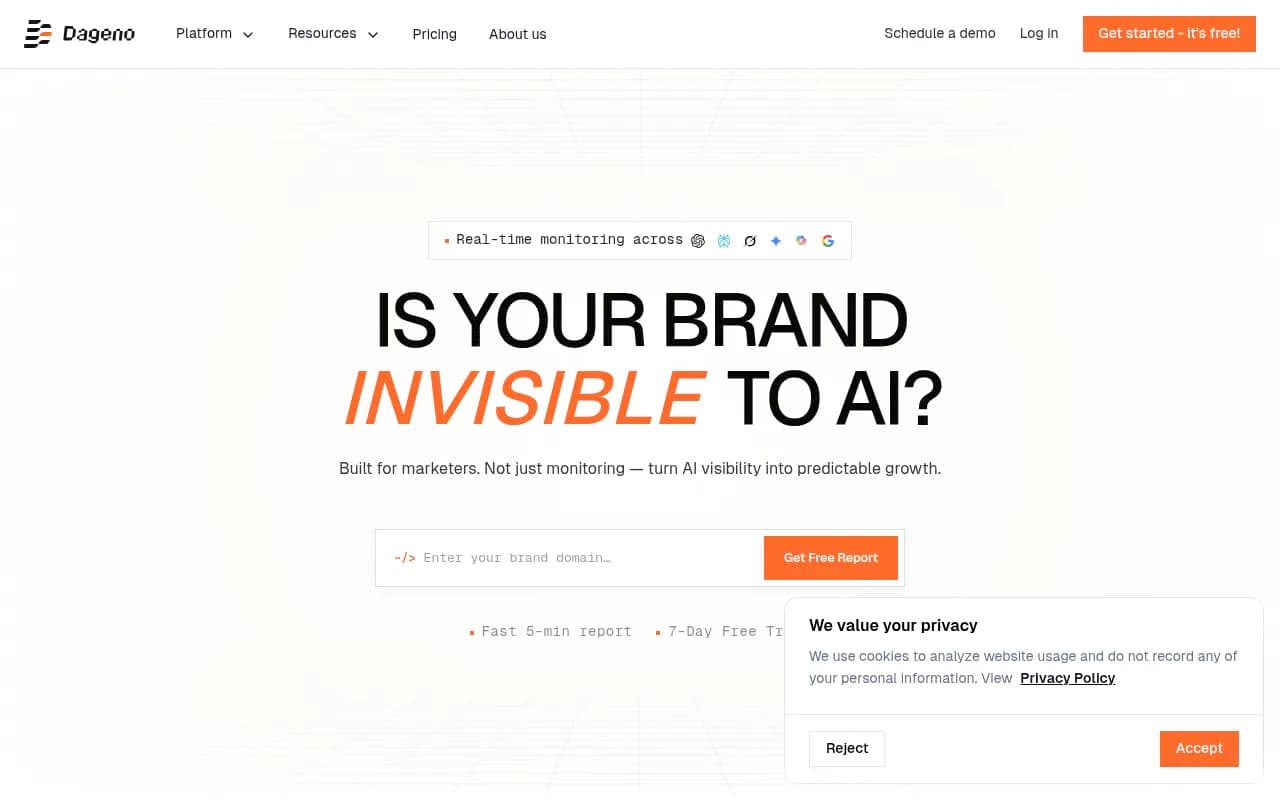
Writesonic positions itself as a Bluefish alternative with published plans from $16/month and content optimization built in. Dageno AI offers a free plan and monitoring across 10+ platforms. For the full category, the GEO software directory at bestgeosoftware.com is a good next stop.
Who should buy Bluefish, and who shouldn't
Buy Bluefish if you're a large consumer or B2B brand with a six-figure budget, cross-functional AI governance needs (legal, PR, and marketing in the same room), Amazon commerce exposure, and a genuine brand-accuracy risk in AI answers. The Influence Rank concept and AI Accuracy module are legitimately differentiated, and the reference customers are real.
Skip it if you're an agency, a mid-market team, or anyone who needs to test a tool this quarter. The sales cycle alone puts you three to six weeks behind before you've seen a dashboard, and the missing attribution layer means you can't connect visibility to revenue without building that yourself.
Questions to ask before you sign anything
- What's the minimum annual commitment and contract term?
- What are implementation and onboarding fees, separate from the subscription?
- How many brands, prompts, and prompt refreshes are included?
- How deep is Claude-side monitoring, and which emerging platforms are covered?
- How many seats and reporting logins are included?
- What's the data retention period, and do you keep export rights after the contract ends?
- Which API access comes with which tier?
- Are optimization actions and content support included, or billed as services?
- What does overage pricing look like?
- What are the pilot's success metrics, and who defines them? (You should.)
FAQ
Does Bluefish AI publish pricing or offer a trial?
No. The pricing page returns a 404, there's no free tier or trial, and every CTA routes to a demo request. All pricing is quote-based through sales.
Is Bluefish AI legit?
Yes. The funding is real ($68M), the customers are real (Adidas, American Express, Ulta Beauty), and the research is genuinely cited. What's missing is independent validation: almost no public review footprint exists for the AI platform itself.
Is the 4.1/5 G2 rating for Bluefish AI?
No. That rating belongs to an unrelated open-source text editor called Bluefish. Citing it as evidence about the AI marketing platform is a mistake several review sites have already made.
What's the best Bluefish alternative for smaller teams?
Otterly.AI at $29/month or LLM Pulse at €49/month for straightforward self-serve tracking. Promptwatch if you want monitoring plus automated content fixes in one platform.
Final verdict
Bluefish AI is a well-funded, well-designed enterprise platform whose biggest problem for most buyers is structural: it's built for an org chart most companies don't have, sold through a process most teams can't afford, and priced at a number nobody outside its sales team can verify. The AI Accuracy research alone makes the demo worth taking if you're a Fortune 500 brand, because the 38% of errors where AI contradicts its own sources should worry any company whose revenue depends on being described correctly. If that's you, book the demo and negotiate hard. If it isn't, don't pretend to be that buyer. Start with a tool you can log into this week, and let your own prompt data, not a vendor's benchmark, tell you what to fix.