Key takeaways
- SearchAtlas focuses on AI-powered SEO automation -- it's strong on traditional SEO workflows with some LLM visibility layered on top.
- Peec AI is a clean, entry-level monitoring dashboard: easy to set up, good for teams that just want to see where they appear in AI answers.
- Promptwatch is the only one of the three built around a full optimization loop -- find gaps, generate content, track results -- rather than just showing you data.
- If you're serious about improving your AI search visibility (not just measuring it), the tool you pick needs to do more than monitor.
The AI search space has split into two camps. On one side: tools that watch what's happening. On the other: tools that help you change it. In 2026, that distinction matters more than almost any feature comparison.
SearchAtlas, Peec AI, and Promptwatch are three of the most-discussed platforms in this space right now, but they're solving quite different problems. Lumping them together as "AI visibility tools" misses the point. One is primarily an SEO automation suite, one is a lightweight monitoring dashboard, and one is a GEO optimization platform built around closing the gap between where you are and where you want to be.
This guide breaks down what each tool actually does, what it's good at, where it falls short, and which type of team should be using it.
What each tool is actually trying to do
Before comparing features, it helps to understand the core job each tool was designed for.
SearchAtlas
SearchAtlas started as an SEO platform and has added LLM visibility tracking as the market shifted. Its core strength is still SEO automation -- keyword research, site auditing, backlink analysis, content briefs -- with AI search monitoring bolted on. If your team is already deep in traditional SEO workflows and wants to add some AI visibility data without switching platforms, that's where SearchAtlas makes sense.
Peec AI
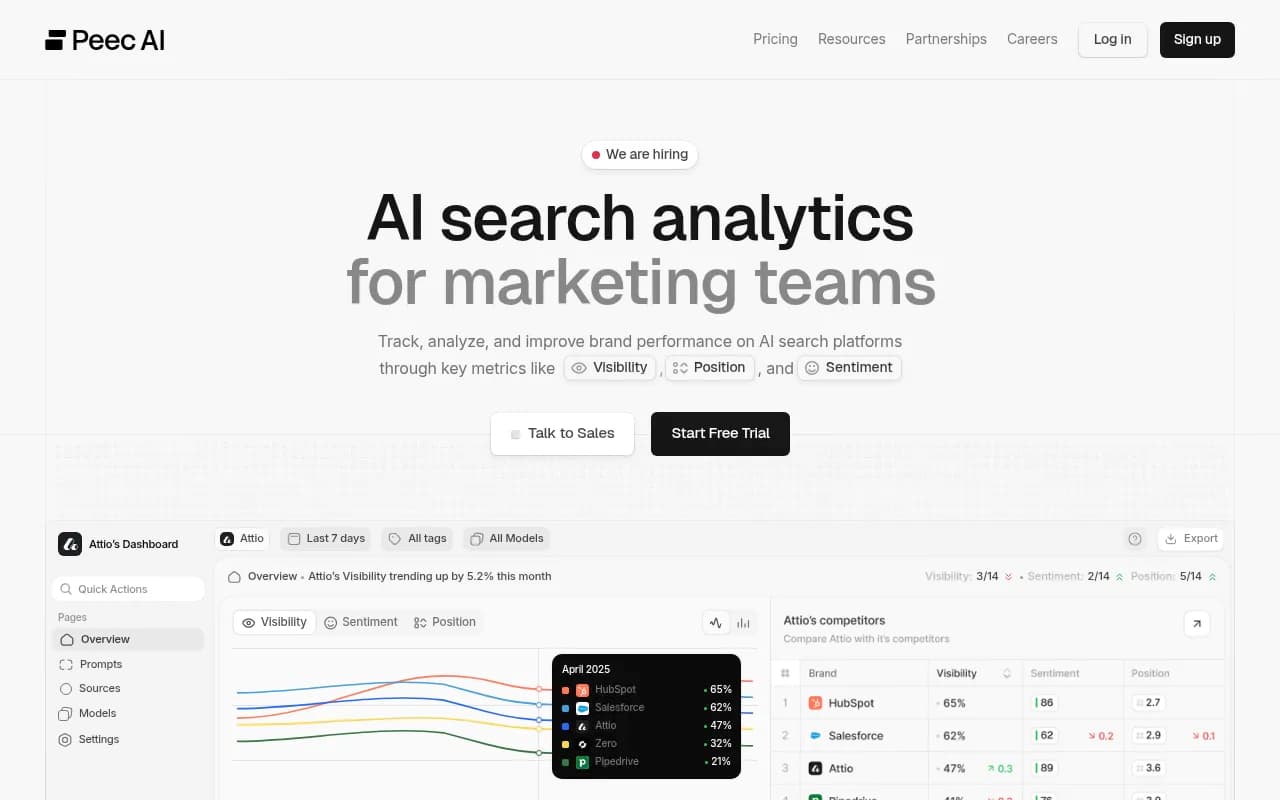
Peec AI is a focused, entry-level AI visibility tracker. You set up your brand, define some prompts, and it shows you how often you appear in AI-generated answers across platforms like ChatGPT, Perplexity, and Gemini. The interface is clean, setup is fast, and it's priced accessibly. What it doesn't do is help you act on what it finds. It's a dashboard, not an optimization engine.
Promptwatch
Promptwatch is built around a different premise: visibility data is only useful if it tells you what to do next. The platform runs a full loop -- identify which prompts your competitors appear for that you don't, generate content designed to get cited by AI models, then track whether your visibility actually improves. It's used by 6,700+ brands and agencies including Booking.com and Center Parcs, and monitors across 10 AI models.

Feature comparison
Here's how the three platforms stack up across the capabilities that matter most for AI search in 2026:
| Feature | SearchAtlas | Peec AI | Promptwatch |
|---|---|---|---|
| AI model coverage | Limited (mainly ChatGPT, Perplexity) | ChatGPT, Gemini, Perplexity, Claude | 10 models incl. Grok, DeepSeek, Mistral, Copilot |
| Prompt tracking | Yes | Yes | Yes, with volume + difficulty scoring |
| Answer gap analysis | No | No | Yes -- shows which prompts competitors win that you don't |
| AI content generation | Basic (SEO-focused) | No | Yes -- engineered for AI citation, not just SEO |
| Citation analysis | Limited | No | Yes -- 880M+ citations analyzed |
| AI crawler logs | No | No | Yes -- real-time logs of AI bots hitting your site |
| Reddit / YouTube tracking | No | No | Yes |
| ChatGPT Shopping tracking | No | No | Yes |
| Traffic attribution | No | No | Yes (GSC, code snippet, server logs) |
| Competitor heatmaps | Basic | Basic | Yes -- by model and prompt |
| Multi-language / multi-region | Limited | Yes | Yes |
| Traditional SEO tools | Strong | No | No |
| Starting price | ~$99/mo | €89/mo | $99/mo |
The table tells a clear story. SearchAtlas wins on traditional SEO depth. Peec AI wins on simplicity. Promptwatch wins on AI-specific depth and the ability to actually do something with the data.
Going deeper on each platform
SearchAtlas: when your SEO team needs one platform
SearchAtlas is genuinely useful if your team runs a lot of traditional SEO operations and wants to add AI visibility monitoring without adding another tool to the stack. The keyword research, site auditing, and backlink tools are solid. The LLM tracking layer gives you a basic read on brand mentions across a handful of AI platforms.
The limitation is that the AI visibility piece feels like an add-on rather than a core product. You won't get prompt volume data, citation-level analysis, or any mechanism to identify what content you're missing. It tells you where you appear, not why you don't appear where you should.
For agencies managing clients with heavy traditional SEO needs who are just starting to think about AI search, SearchAtlas is a reasonable bridge. For teams where GEO is the primary concern, it's not deep enough.
Peec AI: the clean entry point
Peec AI has a real advantage: it's easy. You can be tracking AI visibility within an hour of signing up. The dashboard is readable, the competitor benchmarking is useful at a glance, and the multi-language support is genuinely good for international brands.
The honest limitation is that Peec AI stops at monitoring. There's no citation analysis to tell you why a competitor is appearing. There's no content gap analysis to tell you what to write. There's no traffic attribution to connect AI visibility to actual business outcomes. It answers "are we visible?" but not "what do we do about it?"
For small teams or brands just starting to understand their AI search presence, Peec AI is a reasonable starting point. For teams that want to move from awareness to action, they'll hit the ceiling quickly.
Promptwatch: built for the full loop
The thing that separates Promptwatch from most tools in this space is that it treats monitoring as the beginning of the process, not the end.
The Answer Gap Analysis is the clearest example. Instead of just showing you your visibility score, it shows you the specific prompts where competitors are being cited and you're not -- with the actual content gaps that explain why. That's actionable in a way that a dashboard isn't.
The built-in AI writing agent then generates content (articles, listicles, comparisons) grounded in real citation data. This isn't generic content -- it's built around what AI models actually cite when answering those prompts. The output is designed to get picked up by ChatGPT, Claude, Perplexity, and others.
Then the tracking closes the loop. Page-level attribution shows which specific pages are being cited, by which models, and how often. The GSC integration and server log analysis connect that visibility to actual traffic and revenue.
A few capabilities worth calling out specifically:
- AI crawler logs: real-time visibility into which AI bots are crawling your site, which pages they're reading, and what errors they're hitting. Most competitors don't have this at all.
- Prompt intelligence: volume estimates and difficulty scores for each prompt, plus query fan-outs showing how one prompt branches into sub-queries. This lets you prioritize high-value prompts instead of guessing.
- Reddit and YouTube tracking: surfaces discussions that directly influence AI recommendations -- a channel most other platforms ignore entirely.
- ChatGPT Shopping: monitors when your brand appears in product recommendations and shopping carousels within ChatGPT.
The pricing starts at $99/month for the Essential plan (1 site, 50 prompts, 5 articles), with Professional at $249/month and Business at $579/month. There's a free trial available.
The monitoring-only problem
It's worth being direct about something. A lot of AI visibility tools in 2026 are monitoring dashboards dressed up as optimization platforms. They show you a visibility score, maybe a competitor comparison, and leave you to figure out what to do next.
That's not nothing -- knowing where you stand is useful. But the brands winning in AI search aren't just watching their scores. They're systematically identifying content gaps, publishing content that AI models want to cite, and tracking the results.
Peec AI is honest about being a monitoring tool. SearchAtlas is primarily an SEO automation platform with monitoring layered on. Promptwatch is the one that's actually built the optimization loop.
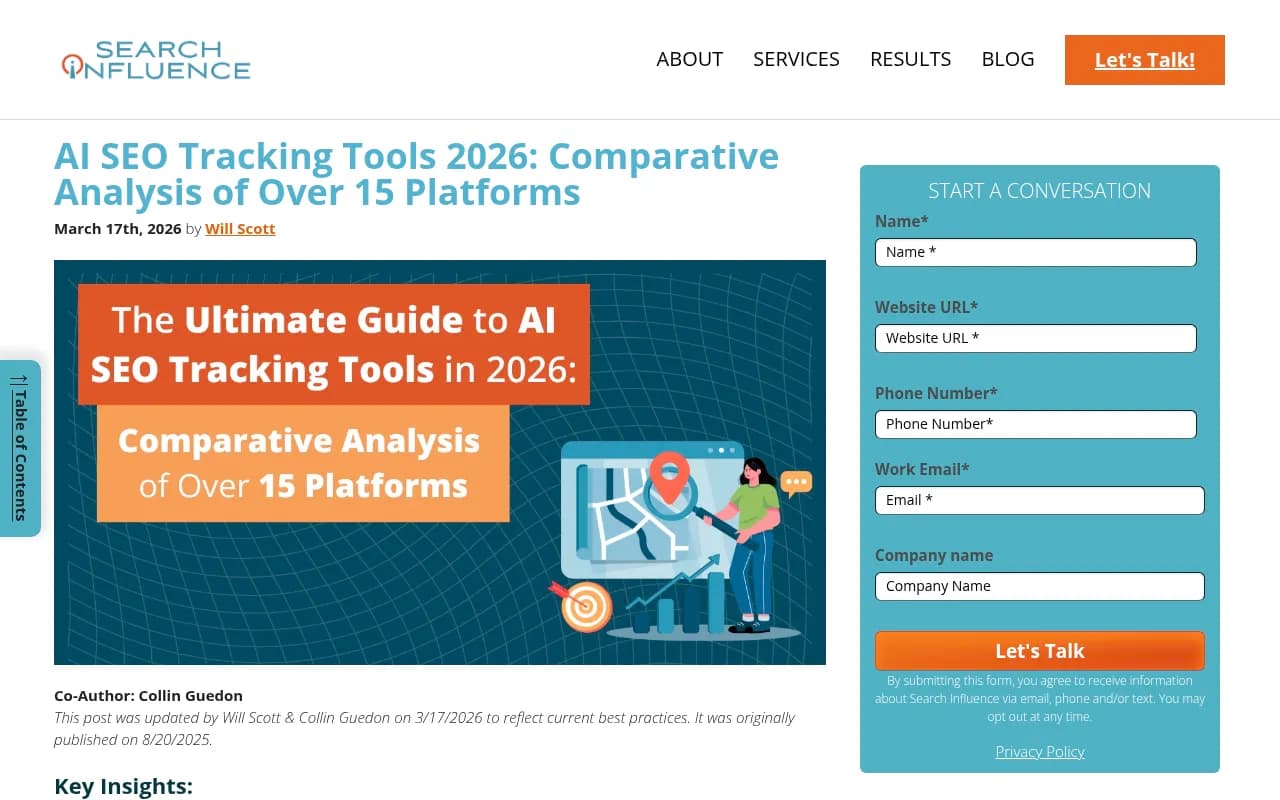
The SearchInfluence 2026 analysis of AI SEO tracking platforms captures this well -- the market has fragmented into tools with very different depths of capability, and the gap between "we track mentions" and "we help you get more mentions" is significant.
Who should use which tool
The honest answer depends on where your team is right now and what problem you're actually trying to solve.
Use SearchAtlas if:
- Your team is primarily focused on traditional SEO with AI visibility as a secondary concern
- You want one platform for keyword research, site auditing, backlinks, and basic AI monitoring
- You're not yet ready to invest in a dedicated GEO platform
Use Peec AI if:
- You're new to AI visibility tracking and want a simple, low-friction starting point
- Your primary need is a clean dashboard showing where you appear vs. competitors
- Budget is tight and you just need baseline monitoring
Use Promptwatch if:
- AI search visibility is a strategic priority, not just a metric to watch
- You want to understand why competitors are appearing where you're not
- You need content that's actually engineered to get cited by AI models
- You want to connect AI visibility to traffic and revenue, not just track a score
- You're managing multiple brands, regions, or languages
A note on the broader market
SearchAtlas, Peec AI, and Promptwatch aren't the only players worth knowing about. The AI visibility space has expanded quickly, and a few other tools are worth a mention depending on your needs.
For enterprise teams with analyst-driven workflows, Profound has strong raw data and API access:
For agencies that want affordable monitoring across multiple clients, Otterly.AI is a lightweight option:

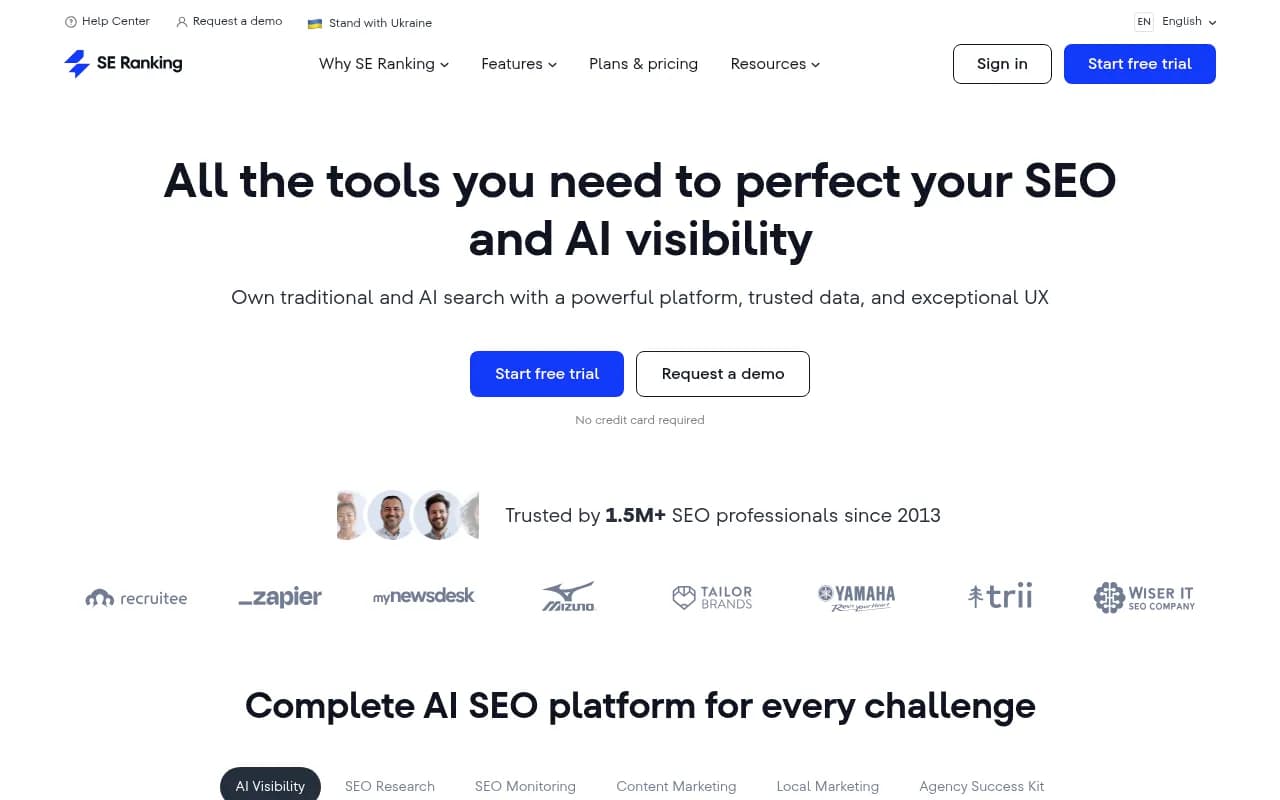
For teams that want traditional SEO data alongside AI visibility in one place, SE Ranking has built out solid AI tracking features:
And for brands that want to go deep on citation analysis specifically, Scrunch AI is worth evaluating:
The bottom line
SearchAtlas, Peec AI, and Promptwatch are all legitimate tools -- they're just solving different problems at different depths.
If AI search visibility is genuinely strategic for your brand in 2026, the question isn't which monitoring dashboard to pick. It's whether your tool can actually help you improve your position, not just measure it. That's the gap most tools in this space still haven't closed.
Promptwatch is the clearest answer to that question right now. The combination of gap analysis, citation-grounded content generation, crawler logs, and traffic attribution is what makes it an optimization platform rather than another tracker. For teams that are serious about winning in AI search -- not just watching it -- that distinction is what matters.