Key takeaways
- All four platforms track brand visibility in AI search engines, but they differ sharply in what they do with that data.
- Peec AI is the cleanest entry point for B2B/SaaS teams that want simple monitoring with polished dashboards, starting at €89/month.
- Profound is the enterprise standard for large brands that need deep LLM coverage and content operations at scale, but pricing reflects that.
- Goodie AI targets enterprise GEO with strong citation analysis, though it sits at the higher end of the market.
- Promptwatch is the only platform in this group that completes the full loop: find gaps, generate content, track results -- making it the strongest choice for teams that need to move from visibility data to actual ranking improvement.
The GEO platform market has gotten crowded fast. In 2024, there were maybe five tools worth considering. By mid-2026, there are dozens, and the marketing language across all of them has converged on the same buzzwords: "AI visibility," "share of voice," "citation tracking." It's genuinely hard to tell them apart from a landing page.
So let's cut through it. This comparison focuses on four platforms that come up repeatedly in real team conversations: Goodie AI, Peec AI, Profound, and Promptwatch. They're not all the same. The differences matter, especially if your team needs to show results -- not just dashboards.
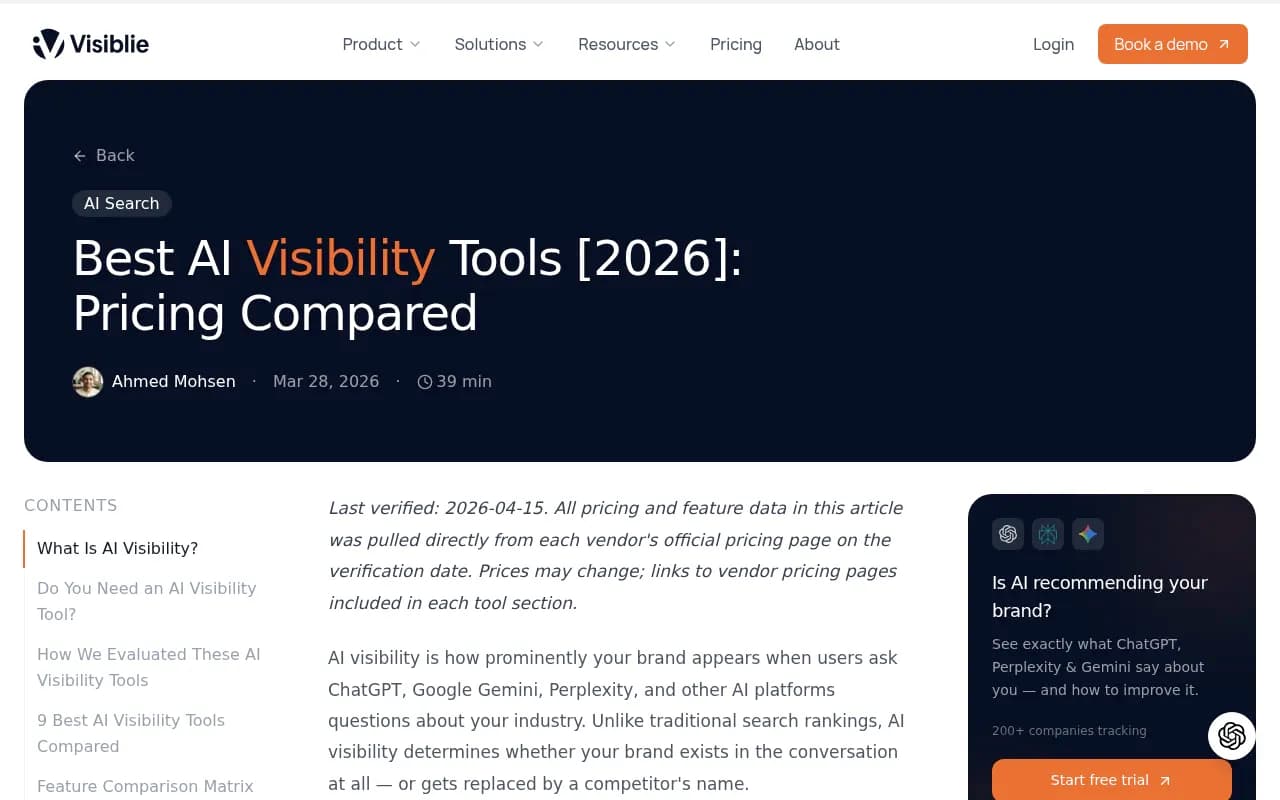
What these platforms actually do (and don't do)
Before the head-to-head, it's worth being clear about what "GEO platform" means in practice. There are two fundamentally different types of tools hiding under this label:
Monitoring tools track how often your brand appears in AI-generated responses. They show you dashboards, share of voice scores, and competitor comparisons. That's useful data. But it stops there.
Optimization platforms go further. They tell you why you're not appearing, what content is missing, help you create that content, and then track whether it worked.
Most platforms in 2026 are monitoring tools dressed up with optimization language. That distinction is the single most important thing to understand before you buy.
The four platforms at a glance
| Platform | Type | Starting price | LLMs monitored | Content generation | Crawler logs | Best for |
|---|---|---|---|---|---|---|
| Goodie AI | Enterprise GEO | Custom / high-end | 8+ | No | No | Large brands, enterprise teams |
| Peec AI | Monitoring | €89/month | 3-5 (add-ons available) | No | No | B2B/SaaS, clean dashboards |
| Profound | Enterprise monitoring + content ops | $99/month (entry) | Up to 10 | Partial | No | Large brands, content teams |
| Promptwatch | Full optimization loop | $99/month | 10+ | Yes (AI writing agent) | Yes | Teams that need to act, not just track |
Goodie AI
Goodie AI positions itself as an enterprise GEO platform with a focus on citation analysis and brand authority in AI search. It's built for larger organizations that want detailed reporting on how AI models perceive and reference their brand.
The platform does citation tracking well. You can see which sources AI models pull from, how your brand compares to competitors across different LLMs, and where your content is being referenced (or not). For enterprise marketing teams that need to present AI visibility data to leadership, Goodie AI produces the kind of polished, structured output that works in boardroom decks.
The gap is on the action side. Goodie AI tells you what's happening but doesn't have built-in tools to help you change it. There's no content generation, no answer gap analysis that surfaces specific missing topics, and no crawler logs to show you how AI bots are actually interacting with your site. You get the diagnosis without the treatment.
Pricing is enterprise-tier and typically requires a sales conversation. For a mid-market team with a defined budget, that's a friction point.
Where it works well: Large brands with dedicated content teams who can take visibility data and act on it independently. If you already have writers, strategists, and a content operation, Goodie AI's reporting layer is genuinely strong.
Where it falls short: Teams that need the platform to help them close the gap, not just identify it.
Peec AI
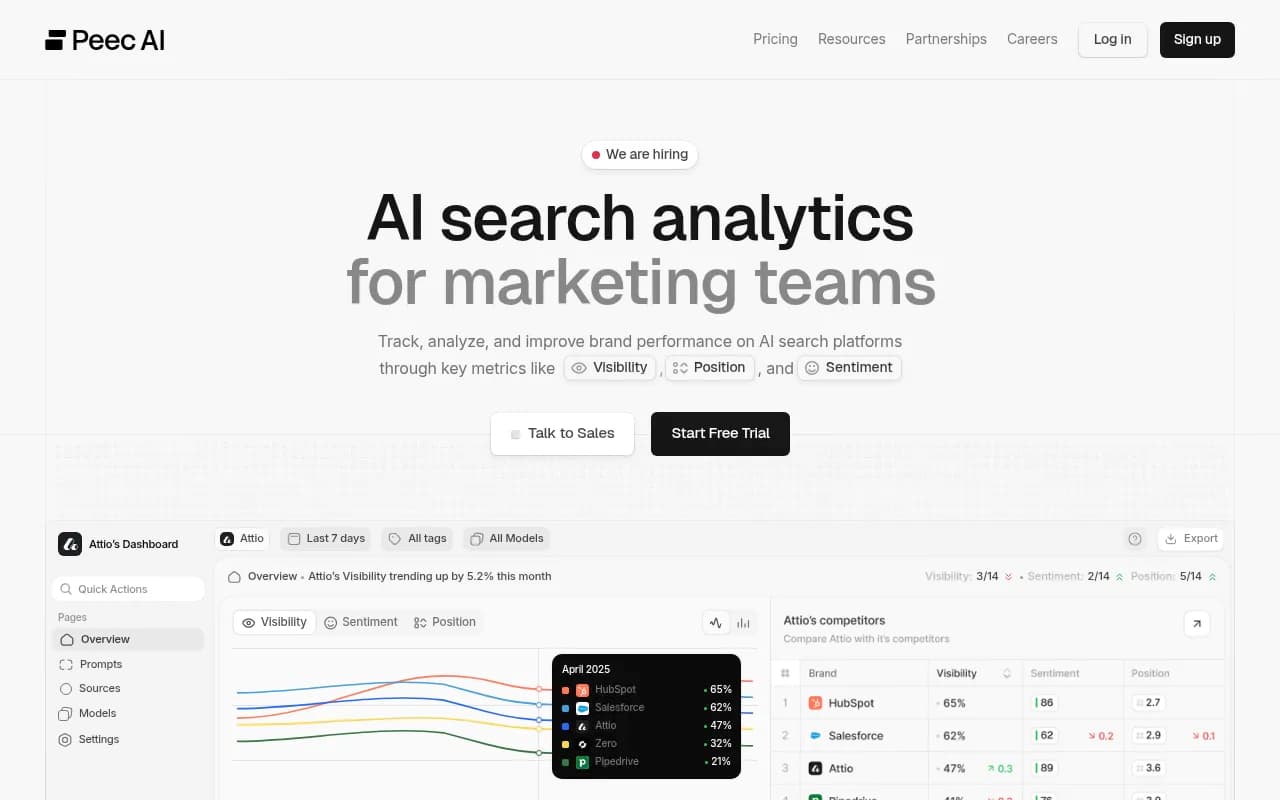
Peec AI is probably the most approachable platform in this comparison. It starts at €89/month, has a clean interface, and does what it promises: shows you how your brand appears in AI search results across ChatGPT, Perplexity, and a handful of other models.
The dashboards are genuinely well-designed. Competitor benchmarking is easy to set up. For a B2B SaaS team that wants to start tracking AI visibility without committing to an enterprise contract, Peec AI is a reasonable starting point.
But "starting point" is the right framing. Peec AI is a monitoring tool. It doesn't generate content, doesn't surface specific content gaps, and doesn't show you which pages AI crawlers are hitting on your site. The platform can tell you your share of voice is 12% while a competitor sits at 34% -- but it won't tell you what to write to close that gap.
The add-on model for additional LLM coverage is also worth noting. The base plan covers three to five engines, and broader coverage requires upgrading. If you're tracking across ten models, the cost climbs.
Where it works well: Teams new to GEO that want clean reporting and competitor benchmarks without a steep learning curve.
Where it falls short: Teams that need to move from data to action. Peec AI stops at the dashboard.
Profound
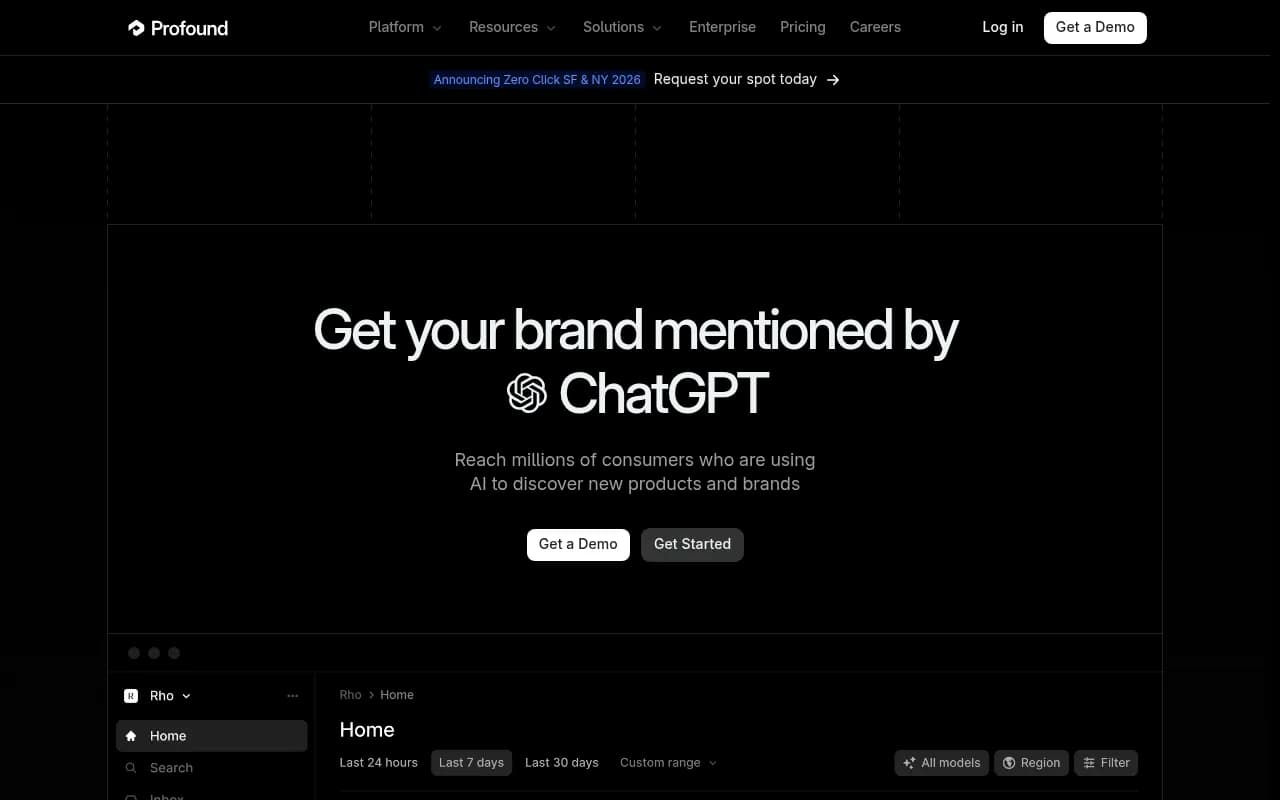
Profound is the enterprise standard in this space. It monitors up to ten LLMs, has strong content operations features for larger teams, and is trusted by brands that need serious scale. The entry-level plan starts at $99/month, but the platform's real capabilities live at higher tiers.
What Profound does better than most is depth. The LLM coverage is wide, the reporting is detailed, and it has some content workflow features that go beyond pure monitoring. For a brand with a large content team and complex tracking needs across multiple markets and languages, Profound is a credible choice.
The limitations are real, though. Profound doesn't have built-in AI content generation -- the kind that's grounded in actual citation data and engineered to get picked up by AI models. It also lacks crawler logs, so you can't see how AI bots are interacting with your pages in real time. And at enterprise pricing, smaller teams often find themselves paying for capabilities they can't fully use.
There's also a gap between what Profound shows you and what it helps you do. Like Goodie AI, it's strong on diagnosis. The treatment is still largely on you.
Where it works well: Large enterprises with dedicated SEO and content teams, complex multi-market needs, and the budget to match.
Where it falls short: Mid-market teams that need the platform to help them act, not just report.
Promptwatch
Promptwatch takes a different approach to this problem. Where the other three platforms are primarily monitoring tools (with varying levels of sophistication), Promptwatch is built around a complete optimization loop: find the gaps, create content that addresses them, track the results.

That distinction is more meaningful than it sounds. Here's what it looks like in practice:
Answer Gap Analysis shows you exactly which prompts your competitors are appearing for that you're not. Not just "your share of voice is low" -- but the specific questions and topics where AI models are recommending competitors instead of you. That's actionable in a way that a share-of-voice dashboard isn't.
AI content generation is built directly into the platform. It's not a generic writing tool -- it generates articles, listicles, and comparisons grounded in 880M+ citations analyzed, actual prompt volumes, and competitor data. The goal is content that AI models will cite, not content that sounds good in a brief.
Crawler logs show you which AI bots (ChatGPT, Claude, Perplexity, and others) are hitting your site, which pages they're reading, and what errors they're encountering. This is a capability most competitors lack entirely, and it matters because you can't optimize what you can't see.
Traffic attribution closes the loop. Via a code snippet, Google Search Console integration, or server log analysis, you can connect AI visibility improvements to actual traffic and revenue. That's the metric leadership actually cares about.
On top of the core loop, Promptwatch monitors 10+ AI models including ChatGPT, Claude, Gemini, Perplexity, Grok, DeepSeek, Copilot, and Google AI Overviews. It tracks Reddit and YouTube discussions that influence AI recommendations (a channel most competitors ignore). It has ChatGPT Shopping tracking for e-commerce brands. And it supports multi-language, multi-region monitoring with customizable personas.
Pricing starts at $99/month for the Essential plan (1 site, 50 prompts, 5 articles), $249/month for Professional (2 sites, 150 prompts, 15 articles, crawler logs), and $579/month for Business (5 sites, 350 prompts, 30 articles). A free trial is available.
Where it works well: Marketing and SEO teams that need to show results, not just data. Agencies managing multiple clients. Any brand that wants to move from "we're invisible in AI search" to "here's the content we published and here's how our visibility improved."
Where it falls short: If you genuinely only need a monitoring dashboard and have a separate content team that can act on raw data, you might not use all of Promptwatch's features. But that's a narrow use case.
Head-to-head on the features that matter
| Feature | Goodie AI | Peec AI | Profound | Promptwatch |
|---|---|---|---|---|
| LLM monitoring | 8+ | 3-5 (add-ons) | Up to 10 | 10+ |
| Answer gap analysis | No | No | Partial | Yes |
| AI content generation | No | No | No | Yes |
| Citation analysis | Strong | Basic | Strong | Strong (880M+ citations) |
| Crawler logs | No | No | No | Yes |
| Reddit/YouTube tracking | No | No | No | Yes |
| ChatGPT Shopping tracking | No | No | No | Yes |
| Traffic attribution | No | No | No | Yes |
| Multi-language/region | Yes | Yes | Yes | Yes |
| Free trial | No | Yes | Yes | Yes |
| Starting price | Custom | €89/month | $99/month | $99/month |
Which platform should you actually use?
The honest answer depends on what your team needs to do with the data.
Choose Peec AI if you're just getting started with GEO, have a small budget, and want clean dashboards to understand your baseline visibility. It's a good first step, not a long-term solution.
Choose Goodie AI or Profound if you're at an enterprise with a large content team that can independently act on visibility data. Both platforms produce strong reporting. Profound has broader LLM coverage; Goodie AI has polished citation analysis. Neither will help you create the content you need to improve.
Choose Promptwatch if your team needs to actually move the needle. The combination of gap analysis, AI content generation grounded in real citation data, crawler logs, and traffic attribution is something none of the other three platforms offer together. It's the difference between a tool that shows you the problem and a tool that helps you solve it.
The GEO market in 2026 is full of platforms that will sell you a dashboard. Fewer will help you rank in AI search. That's the question worth asking before you sign up for anything.
A note on what "monitoring" actually gets you
One thing worth saying plainly: visibility data without action is a cost center. If your team spends $300/month on a GEO monitoring tool and produces a monthly report showing your share of voice, but nothing changes in your content strategy, you've paid for a metric that doesn't move.
The platforms that justify their cost are the ones that create a feedback loop. You see a gap, you create content to address it, you track whether AI models start citing that content, and you connect the improvement to traffic. That's a workflow, not a dashboard.
Promptwatch is the only platform in this comparison built around that workflow end-to-end. The others are useful inputs. But inputs aren't results.
For teams that need to show results -- to leadership, to clients, to themselves -- that distinction is what matters in 2026.