Summary
- Scrunch is strong for monitoring brand mentions in AI assistants, but its $300/mo starting price, 90-day data limits, and lack of content optimization workflows make it expensive for teams that need to act on insights, not just view them
- Promptwatch stands out by connecting AI visibility data directly to action -- showing content gaps, generating optimized articles, and tracking results across 10 AI models including ChatGPT, Claude, Perplexity, and Google AI Overviews

- Budget-friendly monitoring tools like Otterly.AI and Peec AI work for pure tracking, while enterprise platforms like Profound and BrightEdge serve large teams with compliance and multi-brand needs
- The right alternative depends on your workflow: if you need to fix what's broken (not just see it), choose a platform with content gap analysis and optimization tools; if you just need dashboards, a monitoring-only tool will save money
Why teams look for Scrunch alternatives
Scrunch does one thing well: it shows you where your brand appears (or doesn't) when people ask AI assistants like ChatGPT, Claude, or Perplexity for recommendations. You get visibility scores, citation tracking, and competitive benchmarks.
But here's where teams hit friction:
Cost vs. value mismatch: Scrunch starts at $300/mo for the Starter plan. That's steep if you're a small team or agency managing multiple clients. You're paying for enterprise-grade monitoring when you might only need basic tracking.
Data retention limits: The 90-day historical data window means you can't analyze long-term trends or seasonal patterns. If you want to see how your AI visibility evolved over six months, you're out of luck.
Monitoring without action: Scrunch tells you what's happening but doesn't help you fix it. You see that competitors are cited more often, but there's no built-in workflow to identify content gaps, generate optimized articles, or track the impact of your changes.
AXP complexity: Scrunch's AI Experience Platform (AXP) serves a separate, bot-only version of your site to AI crawlers. That's a workaround for sites with technical debt, but it adds complexity and doesn't improve your real content -- the stuff human visitors and Google see.
These gaps explain why teams shop around. Some want cheaper monitoring. Others need tools that connect insights to execution. A few just want better data retention or more flexible reporting.
What to look for in a Scrunch alternative
Before diving into specific tools, here's what matters when evaluating alternatives:
Monitoring coverage: Does it track the AI models your audience actually uses? ChatGPT and Perplexity are table stakes. Google AI Overviews, Claude, Gemini, and Grok matter too. Some tools monitor 3-4 models; others cover 10+.
Action vs. observation: Monitoring-only tools show you data. Action-oriented platforms help you fix problems -- identifying content gaps, suggesting optimizations, or generating new articles that AI models will cite.
Data retention: Can you analyze trends over 6-12 months, or are you stuck with a 90-day window? Long-term data helps you spot seasonal patterns and measure the impact of major content updates.
Pricing structure: Is it per-project, per-user, or flat-rate? Agency teams need unlimited projects or per-client pricing. In-house teams want predictable costs that don't explode as you scale.
Integration with existing workflows: Does it connect to Google Search Console, your CMS, or analytics tools? Unified dashboards save time vs. juggling multiple platforms.
Content optimization features: Can it show you which topics competitors rank for but you don't? Does it help you create content that AI models will cite? Or do you need a separate tool for that?
Top Scrunch alternatives for 2026
Here's the breakdown of platforms worth considering, organized by what they're best at.
Promptwatch: Best for teams that need to act on insights
Promptwatch is the only platform that treats AI visibility as an optimization problem, not just a monitoring task. It shows you where you're invisible, helps you fix it, and tracks the results.
What makes it different: Most tools stop at showing you data. Promptwatch closes the loop. Its Answer Gap Analysis identifies prompts where competitors are cited but you're not, then shows exactly what content your site is missing. The built-in AI writing agent generates articles grounded in 880M+ citations analyzed, prompt volumes, and competitor data. You're not guessing what to write -- you're creating content engineered to get cited.
Core capabilities:
- Monitors 10 AI models: ChatGPT, Perplexity, Claude, Gemini, Google AI Overviews, Meta AI, DeepSeek, Grok, Mistral, Copilot
- AI Crawler Logs show real-time logs of AI bots hitting your site -- which pages they read, errors they encounter, how often they return
- Prompt Intelligence gives volume estimates and difficulty scores for each prompt, plus query fan-outs that show how one prompt branches into sub-queries
- Citation & Source Analysis reveals exactly which pages, Reddit threads, YouTube videos, and domains AI models cite
- Reddit & YouTube Insights surface discussions that directly influence AI recommendations
- ChatGPT Shopping Tracking monitors when your brand appears in product recommendations and shopping carousels
- Multi-language & multi-region support with customizable personas
Pricing: Essential $99/mo (1 site, 50 prompts, 5 articles), Professional $249/mo (2 sites, 150 prompts, 15 articles, crawler logs), Business $579/mo (5 sites, 350 prompts, 30 articles). Free trial available.
Best for: Marketing teams and agencies that want to improve AI visibility, not just track it. If you need to close content gaps and measure the impact, this is the platform.
Profound: Best for enterprise teams with compliance needs
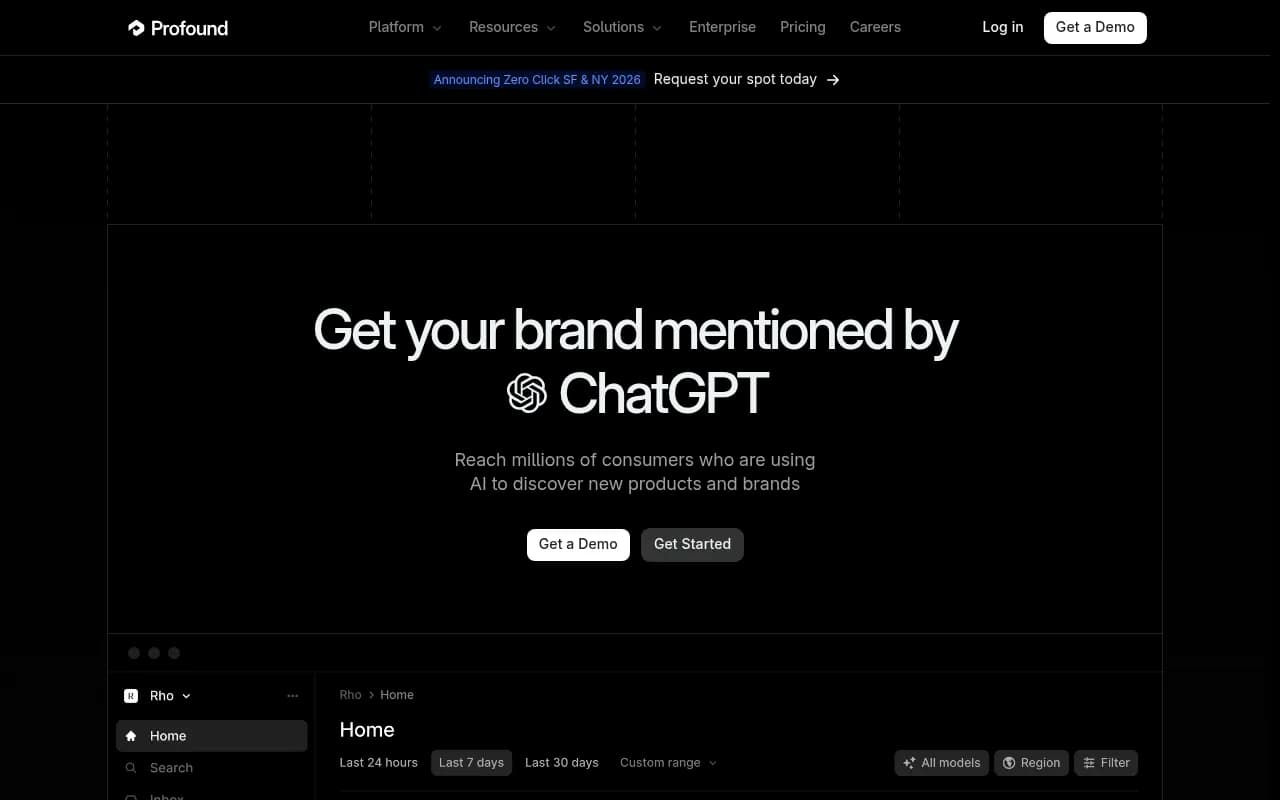
Profound targets large brands that need enterprise-grade monitoring with SOC 2 compliance, multi-brand management, and custom reporting. It's expensive but comprehensive.
What it offers: Multi-model tracking, competitive benchmarking, sentiment analysis, and custom dashboards. Data retention goes beyond 90 days. API access for custom integrations.
Pricing: Custom enterprise pricing. Expect $1,000+/mo for serious deployments.
Best for: Fortune 500 brands, agencies managing 20+ clients, or teams with strict compliance requirements.
Otterly.AI: Best budget option for basic monitoring

Otterly.AI is the cheapest way to track AI citations without enterprise bloat. It monitors ChatGPT, Perplexity, and a few other models. You get visibility scores and basic competitive data.
What's missing: No content gap analysis, no optimization tools, no crawler logs. It's a dashboard, not an optimization platform.
Pricing: Starts around $49/mo for basic plans.
Best for: Small businesses or solo marketers who just need to see where they stand, without acting on the data.
Peec AI: Best for multi-language tracking
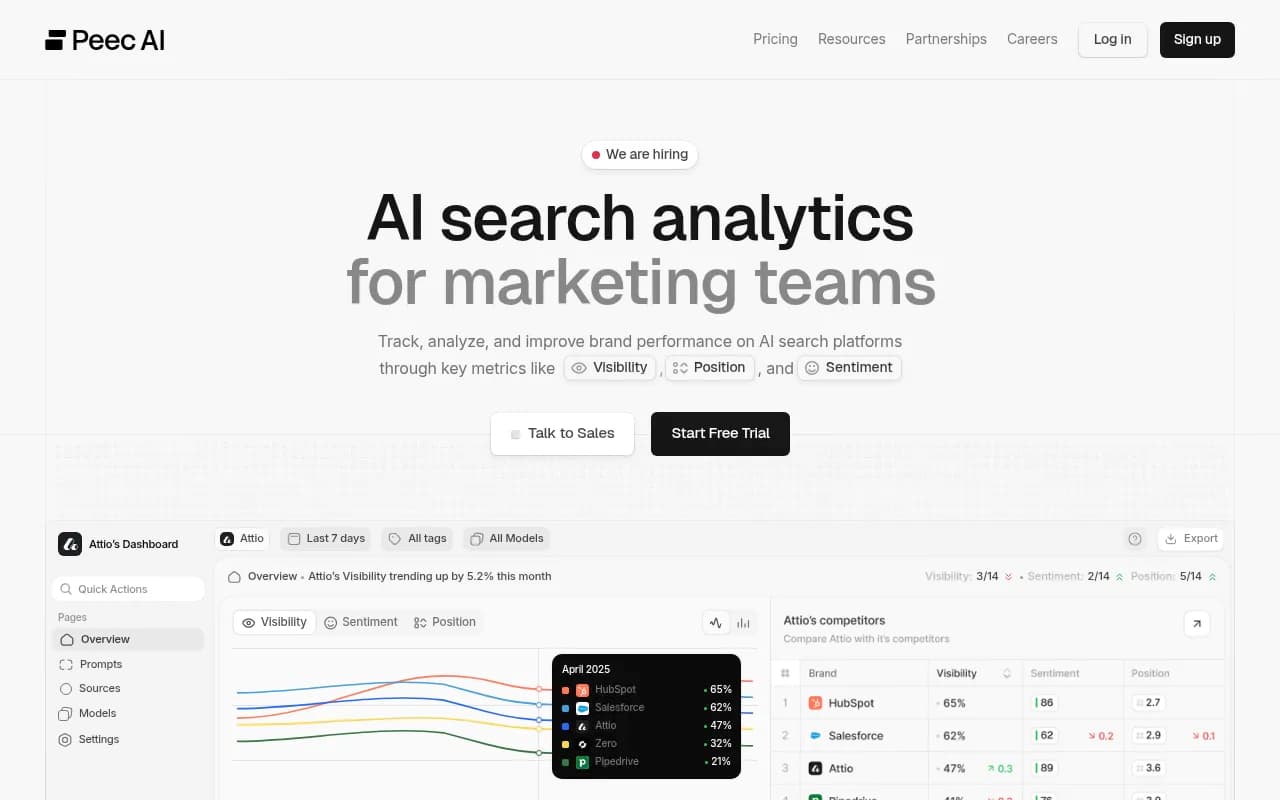
Peec AI focuses on cross-engine visibility with strong multi-language support. If you operate in multiple countries or languages, it handles that better than most competitors.
What it offers: Tracks ChatGPT, Perplexity, Claude, and Google AI Overviews. Multi-language prompt tracking. Competitive benchmarking.
What's missing: No content generation, no crawler logs, limited optimization features.
Pricing: Mid-tier pricing around $200-300/mo depending on scale.
Best for: Global brands or agencies managing clients in multiple markets.
SE Visible: Best for teams already using SE Ranking
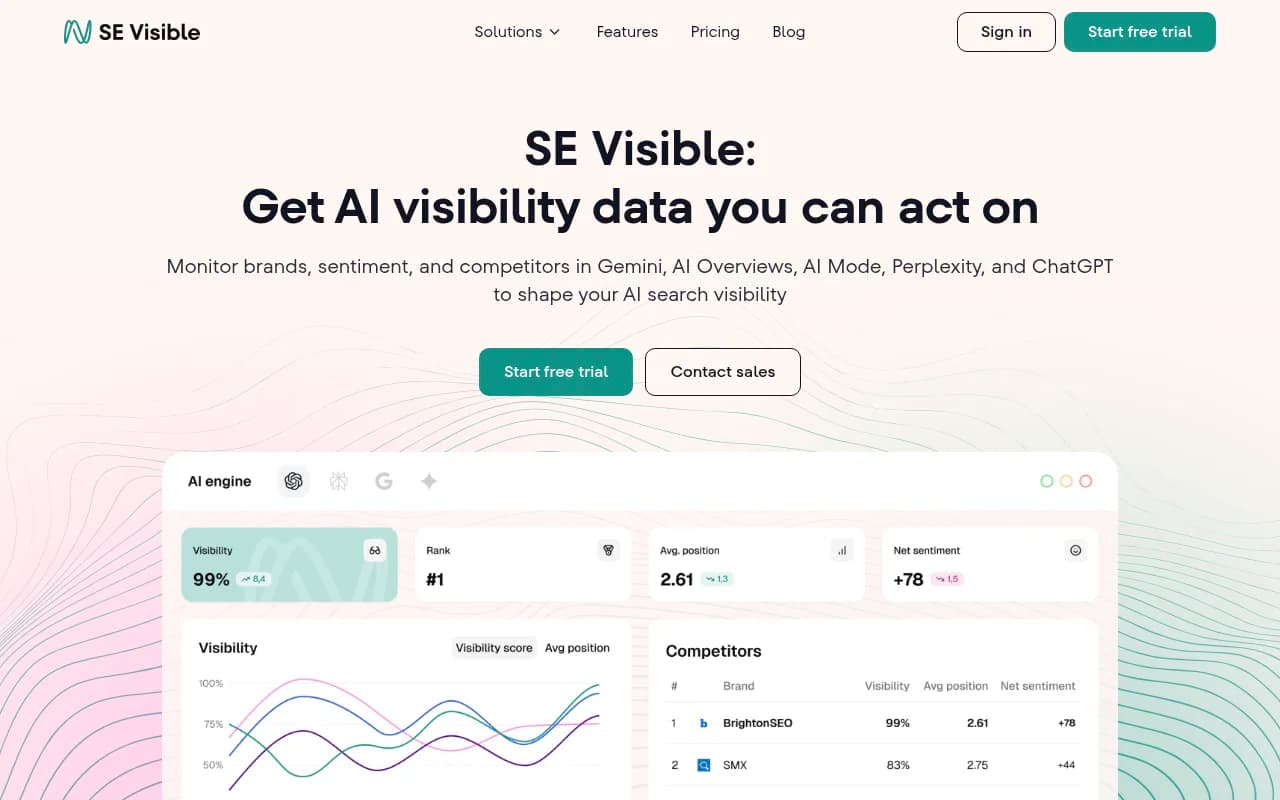
SE Visible is SE Ranking's AI visibility module. If you already use SE Ranking for traditional SEO, this adds AI tracking without switching platforms.
What it offers: AI visibility scores, sentiment tracking, competitive analysis. Integrated with SE Ranking's keyword tracking and site audit tools.
What's missing: No content generation, no crawler logs. It's monitoring plus basic insights.
Pricing: Add-on to SE Ranking subscription. Expect $100-200/mo depending on your plan.
Best for: Teams already invested in SE Ranking who want unified SEO + AI visibility reporting.
LLMrefs: Best for keyword-first AI SEO tracking
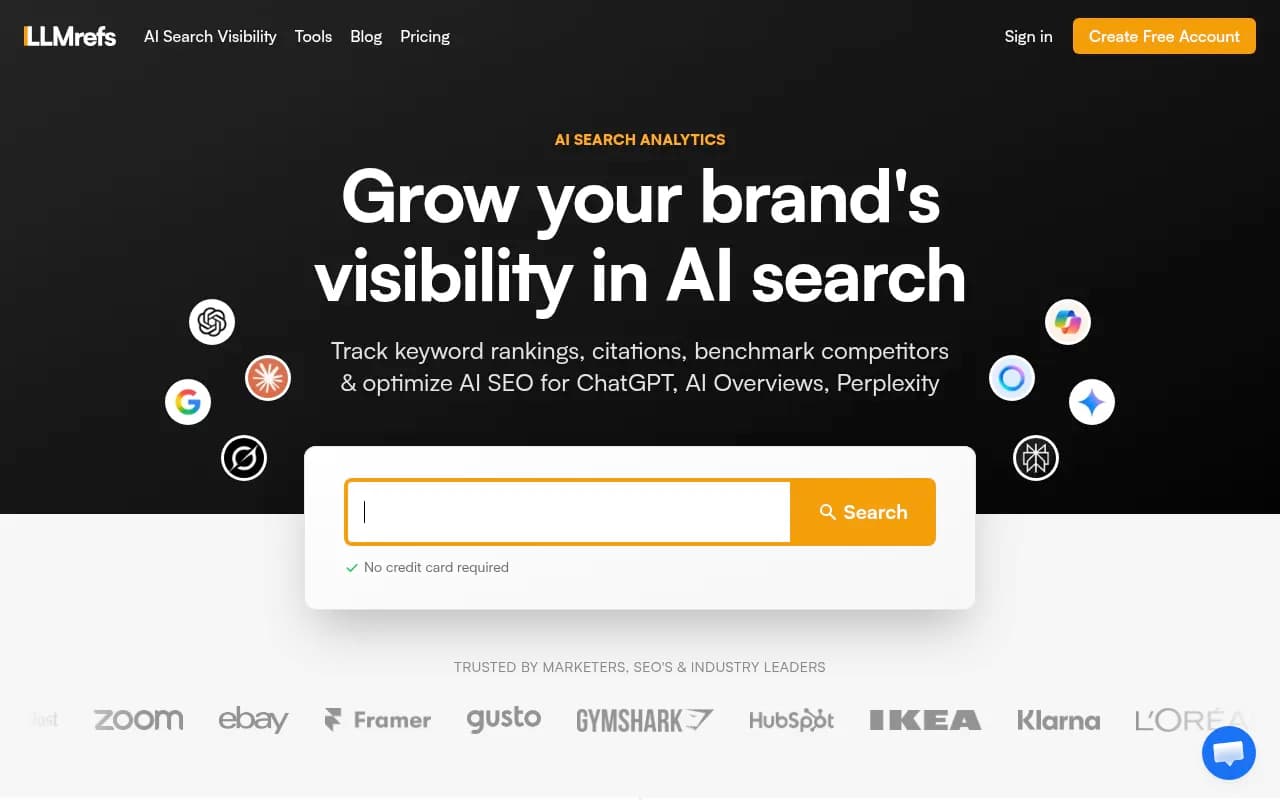
LLMrefs approaches AI visibility from a keyword angle. It shows which keywords trigger AI citations and tracks your rankings across models.
What it offers: Keyword-level tracking, citation analysis, competitive benchmarking.
What's missing: No content optimization, no crawler logs, limited prompt intelligence.
Pricing: Mid-tier pricing around $150-250/mo.
Best for: SEO teams that think in keywords and want to extend that framework to AI search.
BrightEdge: Best for enterprises with existing BrightEdge deployments
BrightEdge added AI visibility tracking to its enterprise SEO platform. If you already use BrightEdge, this extends your investment.
What it offers: AI visibility scores, competitive analysis, integration with BrightEdge's content optimization and reporting tools.
What's missing: No standalone AI content generation, no crawler logs. It's an add-on, not a dedicated AI visibility platform.
Pricing: Enterprise pricing, typically $2,000+/mo for full platform access.
Best for: Large enterprises already using BrightEdge for SEO who want to add AI tracking without switching tools.
Semrush: Best for teams prioritizing traditional SEO with AI visibility as a bonus
Semrush added AI visibility tracking as part of its all-in-one SEO suite. It's not as deep as dedicated AI platforms, but it's convenient if you already use Semrush.
What it offers: AI visibility scores, fixed prompt sets, competitive benchmarking. Integrated with Semrush's keyword research and site audit tools.
What's missing: Fixed prompts (you can't customize), no crawler logs, no content generation, no AI traffic attribution.
Pricing: Part of Semrush subscription. Guru plan starts at $229/mo.
Best for: Teams that prioritize traditional SEO and want basic AI visibility without adding another tool.
GetMint: Best for teams that want monitoring plus basic optimization
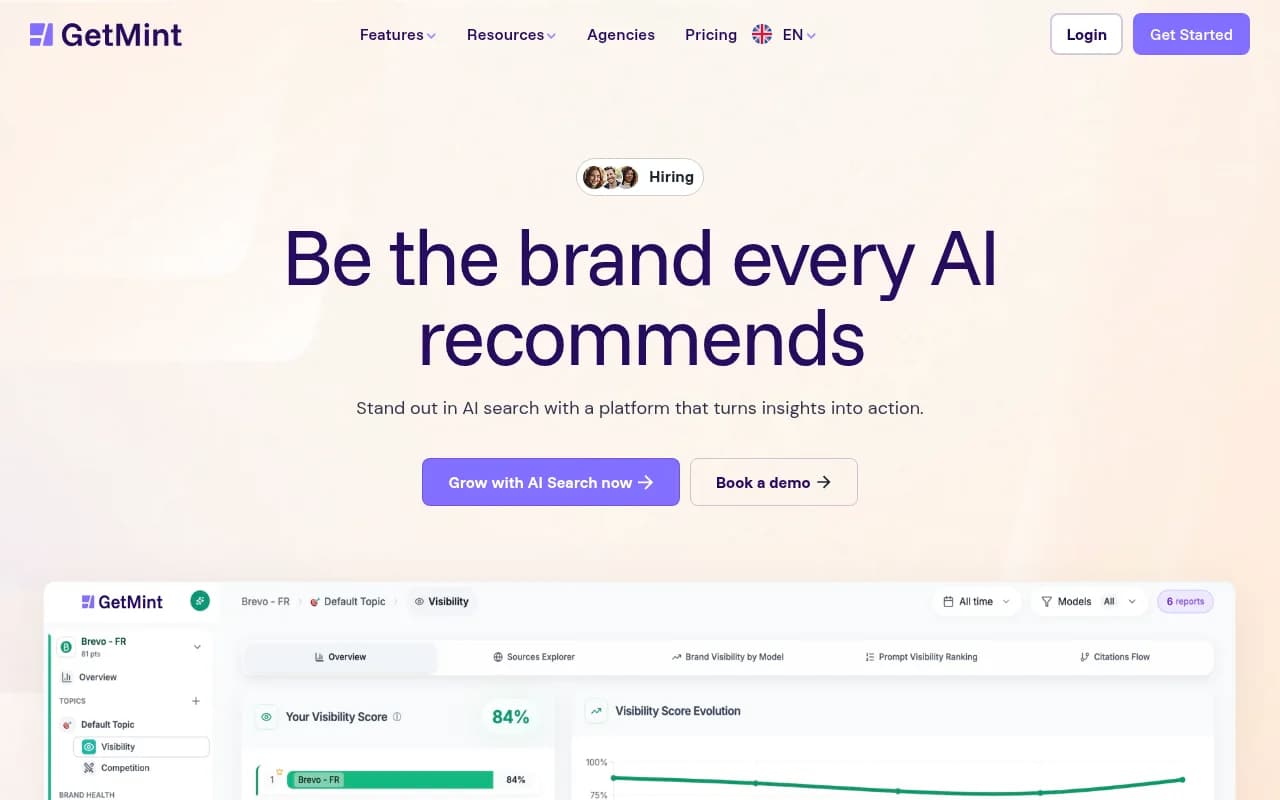
GetMint sits between monitoring-only tools and full optimization platforms. It tracks AI citations and offers basic content recommendations.
What it offers: Multi-model tracking, competitive analysis, content gap identification, basic optimization suggestions.
What's missing: No AI content generation, no crawler logs, limited prompt intelligence.
Pricing: Mid-tier pricing around $200-300/mo.
Best for: Teams that want more than dashboards but don't need full optimization workflows.
Comparison table: Key features across alternatives
| Platform | AI models tracked | Content gap analysis | AI content generation | Crawler logs | Starting price |
|---|---|---|---|---|---|
| Promptwatch | 10 | Yes | Yes | Yes | $99/mo |
| Profound | 8+ | Limited | No | No | Custom ($1,000+) |
| Otterly.AI | 4 | No | No | No | $49/mo |
| Peec AI | 5 | Limited | No | No | $200/mo |
| SE Visible | 5 | No | No | No | $100/mo (add-on) |
| LLMrefs | 6 | No | No | No | $150/mo |
| BrightEdge | 6 | Limited | No | No | $2,000+/mo |
| Semrush | 4 | No | No | No | $229/mo |
| GetMint | 6 | Yes | No | No | $200/mo |
How to choose the right alternative
Start by asking what you need the tool to do:
If you just need dashboards: Otterly.AI or Peec AI will save you money. You'll see where you stand, track competitors, and export reports. That's it.
If you need to fix what's broken: Promptwatch is the only platform that shows content gaps, generates optimized articles, and tracks results. It's built for teams that want to improve AI visibility, not just monitor it.
If you're already using an SEO platform: Check if it has AI visibility tracking. SE Ranking, Semrush, and BrightEdge all added modules. If you're happy with your current tool, adding AI tracking might be cheaper than switching.
If you're an agency managing multiple clients: Look at pricing models. Promptwatch and GetMint offer per-client pricing. Profound and BrightEdge charge enterprise rates that make sense for large deployments but not small agencies.
If you operate globally: Peec AI and Promptwatch both handle multi-language and multi-region tracking well. Most other tools focus on English and US markets.
If you need compliance: Profound and BrightEdge offer SOC 2 compliance and enterprise SLAs. Smaller tools don't.
What most teams get wrong when switching tools
Teams often pick a tool based on price or feature lists, then realize it doesn't fit their workflow. Here's what to avoid:
Choosing monitoring when you need optimization: If your goal is to improve AI visibility, a monitoring-only tool won't help. You'll see the problem but have no way to fix it. That's frustrating and wastes time.
Ignoring data retention: If you can't analyze trends over 6-12 months, you can't measure the impact of major content updates or seasonal patterns. Check retention limits before committing.
Overlooking integration gaps: If the tool doesn't connect to your CMS, analytics, or reporting systems, you'll spend hours exporting and reformatting data. Unified dashboards save time.
Underestimating the value of crawler logs: Knowing which AI bots visit your site, which pages they read, and what errors they encounter is critical for diagnosing indexing issues. Most tools don't offer this.
Assuming all AI models matter equally: ChatGPT and Perplexity drive the most traffic. Google AI Overviews matter for search visibility. Claude and Gemini are growing but less critical for most brands. Pick a tool that covers the models your audience actually uses.
The action loop: Why monitoring alone isn't enough
Here's the fundamental problem with monitoring-only tools: they show you where you're invisible but leave you stuck.
You see that competitors are cited for "best project management software" but you're not. Now what? You need to:
- Identify the content gap: What specific topics, angles, or questions are AI models looking for that your site doesn't answer?
- Create optimized content: Write articles engineered to get cited -- grounded in real citation data, prompt volumes, and competitor analysis.
- Track the results: See your visibility scores improve as AI models start citing your new content.
Most tools stop at step one. Promptwatch is built around closing this loop. Its Answer Gap Analysis shows exactly which prompts competitors are visible for but you're not. The AI writing agent generates articles grounded in 880M+ citations analyzed. Page-level tracking shows which pages are being cited, how often, and by which models. Traffic attribution (code snippet, GSC integration, or server log analysis) connects visibility to actual revenue.
That's the difference between a dashboard and an optimization platform.
Final thoughts
Scrunch is solid for monitoring, but its high cost, limited data retention, and lack of optimization workflows make it a poor fit for teams that need to act on insights.
If you just need dashboards, Otterly.AI or Peec AI will save you money. If you're already using an SEO platform, check if it has AI visibility tracking. If you need enterprise compliance, Profound or BrightEdge are worth the premium.
But if your goal is to improve AI visibility -- not just track it -- Promptwatch is the only platform that connects insights to action. It shows you what's missing, helps you create content that AI models will cite, and tracks the results. That's the loop most teams need but few tools deliver.