Key takeaways
- Most GEO platforms in 2025 focused on monitoring -- only a few offered genuine content generation capabilities tied to real AI visibility data.
- Promptwatch is the only platform in this comparison with a full content generation loop: gap analysis, AI-powered content agents, and page-level tracking to close the feedback cycle.
- Scrunch and Qwairy offer useful monitoring features but lack built-in content generation tools.
- Searchable is a niche player with limited feature depth across the board, including content.
- If content generation for AI search is your priority, the gap between Promptwatch and the others is significant.
Content generation is the part of GEO that most platforms quietly skip. They'll show you a dashboard of brand mentions, a chart of which AI models are citing your competitors, maybe a heatmap. Then they leave you staring at the data wondering what to actually do about it.
That gap -- between "here's what's happening" and "here's how to fix it" -- is what separates monitoring tools from optimization platforms. In 2025, four names came up repeatedly in this conversation: Qwairy, Promptwatch, Scrunch, and Searchable. Each positioned itself as a GEO solution. But when you look specifically at content generation, the differences are stark.
This guide breaks down what each platform actually offered in 2025, where they fell short, and which one is worth your time if content creation is central to your AI visibility strategy.
Why content generation matters for GEO
Before getting into the platforms, it's worth being clear about what "content generation for GEO" actually means -- because it's different from standard AI writing tools.
Generic AI writers like Jasper or Copy.ai generate content based on a topic or brief you give them. That's useful, but it doesn't tell you which topics AI models are actually using to answer user queries, which gaps your site has compared to competitors, or which pages are being cited and why.
GEO-specific content generation means:
- Identifying the exact prompts and questions AI models are answering where your brand is absent
- Understanding what content structure and angle those models prefer when they cite sources
- Generating articles, comparisons, or listicles that are engineered to fill those specific gaps
- Tracking whether the new content actually gets crawled and cited after publication
That's a much higher bar. And in 2025, very few platforms cleared it.
The four platforms at a glance
Qwairy
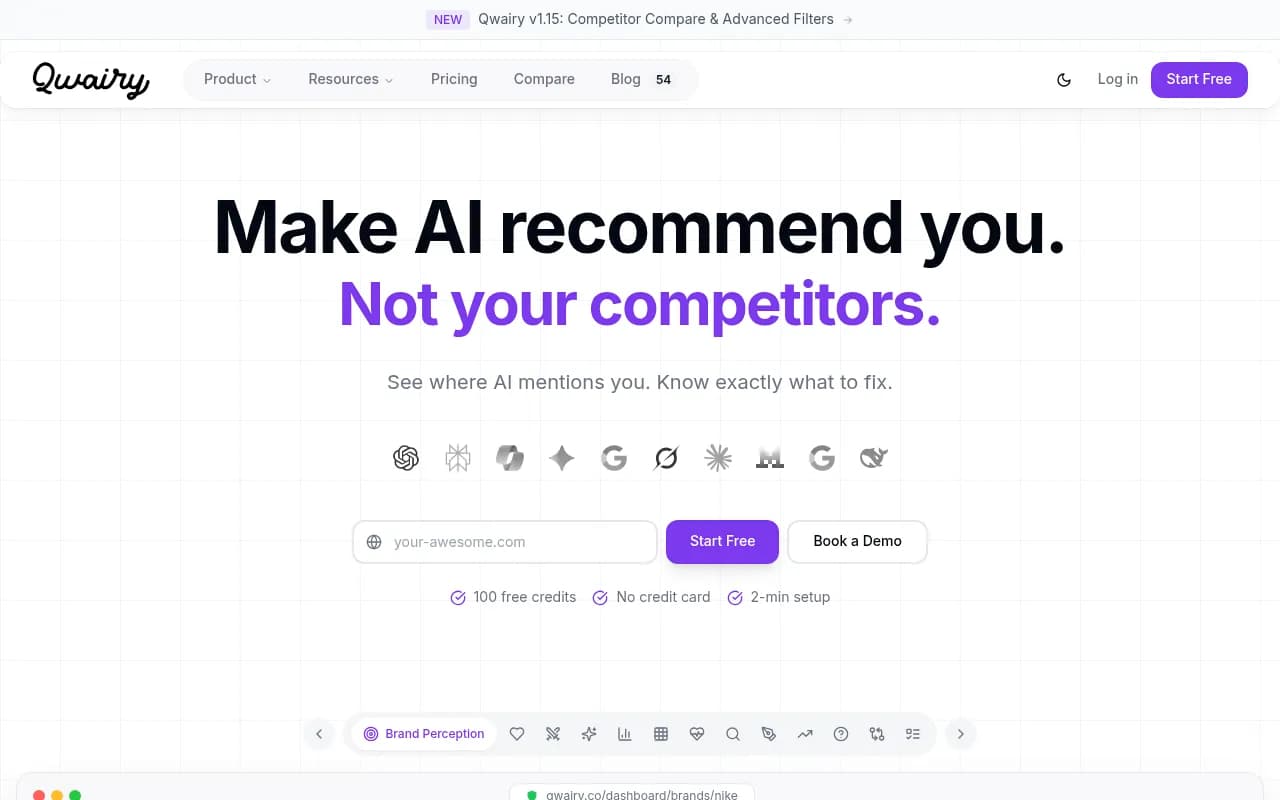
Qwairy is a GEO platform focused on AI search visibility and optimization. It tracks how brands appear across AI engines and provides competitive analysis. The platform is reasonably capable for monitoring -- you can see where you're being cited, where competitors are outperforming you, and get some guidance on gaps.
Where Qwairy falls short is on the action side. There's no native content generation capability. The platform surfaces the data, but the workflow for actually creating content to address those gaps lives entirely outside the tool. You'd need to export insights and bring them into a separate writing workflow, which breaks the loop.
Scrunch
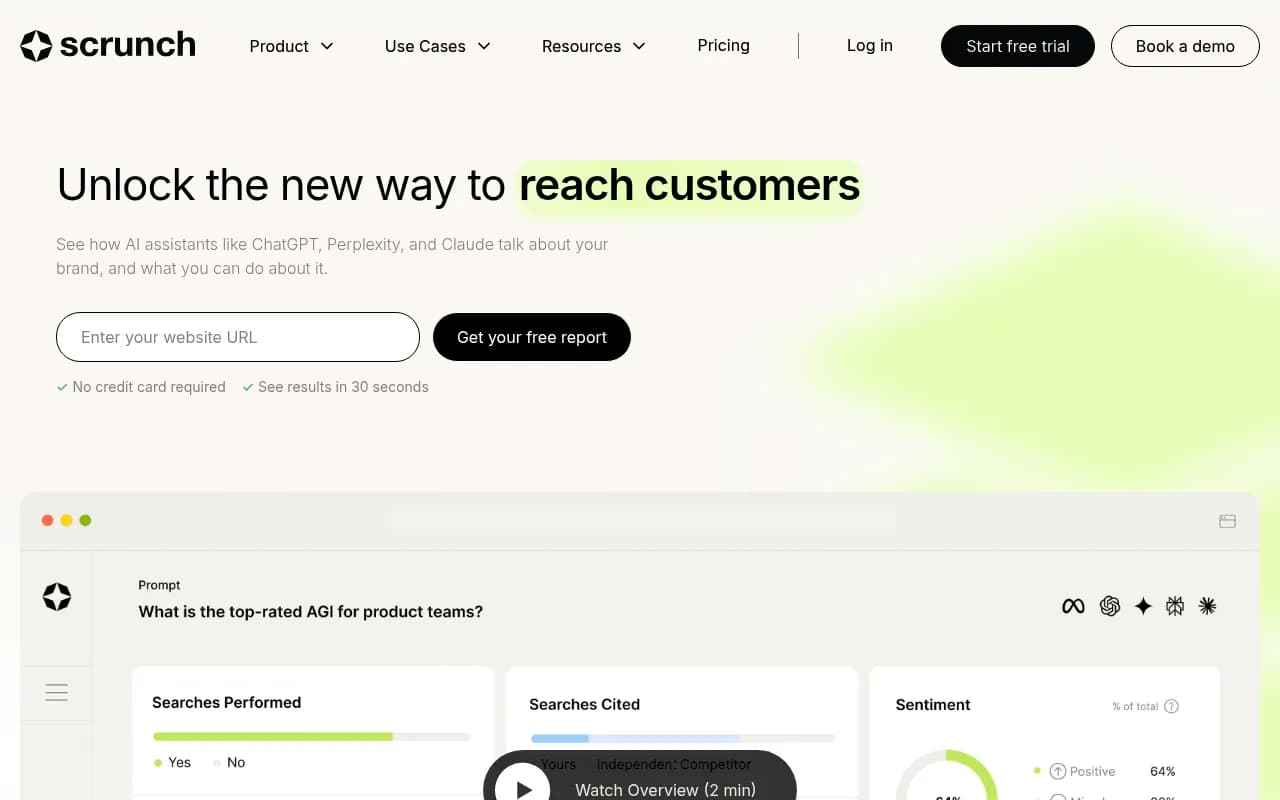
Scrunch (and its related entity Scrunch AI) monitors when AI assistants recommend your brand and flags where competitors are replacing you. It's a solid monitoring tool with a clean interface, and it covers major AI models reasonably well.
But content generation isn't part of the product. Scrunch tells you what's happening in AI responses -- it doesn't help you create the content that would change those responses. For teams that already have a strong content operation and just need visibility data, that might be fine. For teams looking for an end-to-end solution, it's a meaningful gap.
Searchable
Searchable is a smaller player in the GEO space. Based on available information, it offers brand visibility tracking across AI search engines but with limited feature depth compared to the other platforms in this comparison. Content generation isn't a core capability, and the platform's overall feature set is narrower.
It may suit very small teams or brands just getting started with AI visibility monitoring, but it's not a serious contender for content generation.
Promptwatch
Promptwatch is the platform that most directly addresses the content generation problem. It's built around what the team calls an "action loop": find gaps, create content, track results.
The content generation piece specifically works like this: Answer Gap Analysis identifies which prompts competitors rank for in AI responses but your brand doesn't. Content Agents then generate articles, listicles, comparisons, and briefs grounded in that real prompt data -- including citation data, prompt volumes, persona targeting, competitor analysis, and brand guidance. After publishing, page-level tracking shows whether the new content gets crawled and cited, and by which models.
That's a genuinely different approach from the other three platforms. It's not just "here's a gap" -- it's "here's the content to fill it, and here's how to know if it worked."

Feature comparison
| Feature | Qwairy | Promptwatch | Scrunch | Searchable |
|---|---|---|---|---|
| AI model monitoring | Yes | Yes (10 models) | Yes | Yes (limited) |
| Brand mention tracking | Yes | Yes | Yes | Yes |
| Competitor visibility | Yes | Yes | Yes | Limited |
| Answer gap analysis | Partial | Yes (full) | No | No |
| Native content generation | No | Yes (Content Agents) | No | No |
| Content briefs | No | Yes | No | No |
| AI crawler logs | No | Yes | No | No |
| Page-level citation tracking | No | Yes | No | No |
| Prompt volume & difficulty | No | Yes | No | No |
| Reddit & YouTube insights | No | Yes | No | No |
| ChatGPT Shopping tracking | No | Yes | No | No |
| Traffic attribution | No | Yes | No | No |
| Free trial | Yes | Yes | Yes | Unknown |
The table makes the content generation gap obvious. Three of the four platforms stop at monitoring. Promptwatch is the only one that completes the loop.
Digging deeper: what "content generation" actually looked like in 2025
Qwairy's approach
Qwairy's value proposition in 2025 was primarily around visibility intelligence. The platform helped teams understand their AI search presence and identify where they were losing ground to competitors. For teams that wanted data to inform a separate content strategy, it was useful.
But the absence of content generation tools meant that acting on the data required significant manual effort. A team would need to take Qwairy's gap analysis, write a brief, hand it to a writer or a separate AI writing tool, publish the content, and then come back to Qwairy to see if anything changed. That's a lot of context-switching, and it means the insights and the content creation process are never truly connected.
Scrunch's approach
Scrunch was more focused on the "what's happening now" question than the "what should we do about it" question. Its monitoring capabilities were solid -- it tracked AI recommendations, flagged competitor appearances, and provided snapshots of AI responses over time.
In 2025, Scrunch didn't offer content generation, content briefs, or any tooling to help teams create content optimized for AI citations. It's a monitoring dashboard, and a decent one, but that's the ceiling.
Promptwatch's content agents in practice
Promptwatch's Content Agents were the most substantive content generation capability in this comparison. A few things made them different from generic AI writing tools:
The content is grounded in real prompt data. Rather than generating an article about a topic in the abstract, Content Agents pull in data about which prompts are driving AI responses, what citation patterns look like, what competitors are being cited for, and what your brand's existing content covers. The output is engineered to fill specific gaps, not just produce words.
Briefs include context that matters. Generated briefs can incorporate brand guidelines, uploaded knowledge-base files, news context, screenshots, and search results. That's a level of specificity that generic writing tools can't match without significant manual setup.
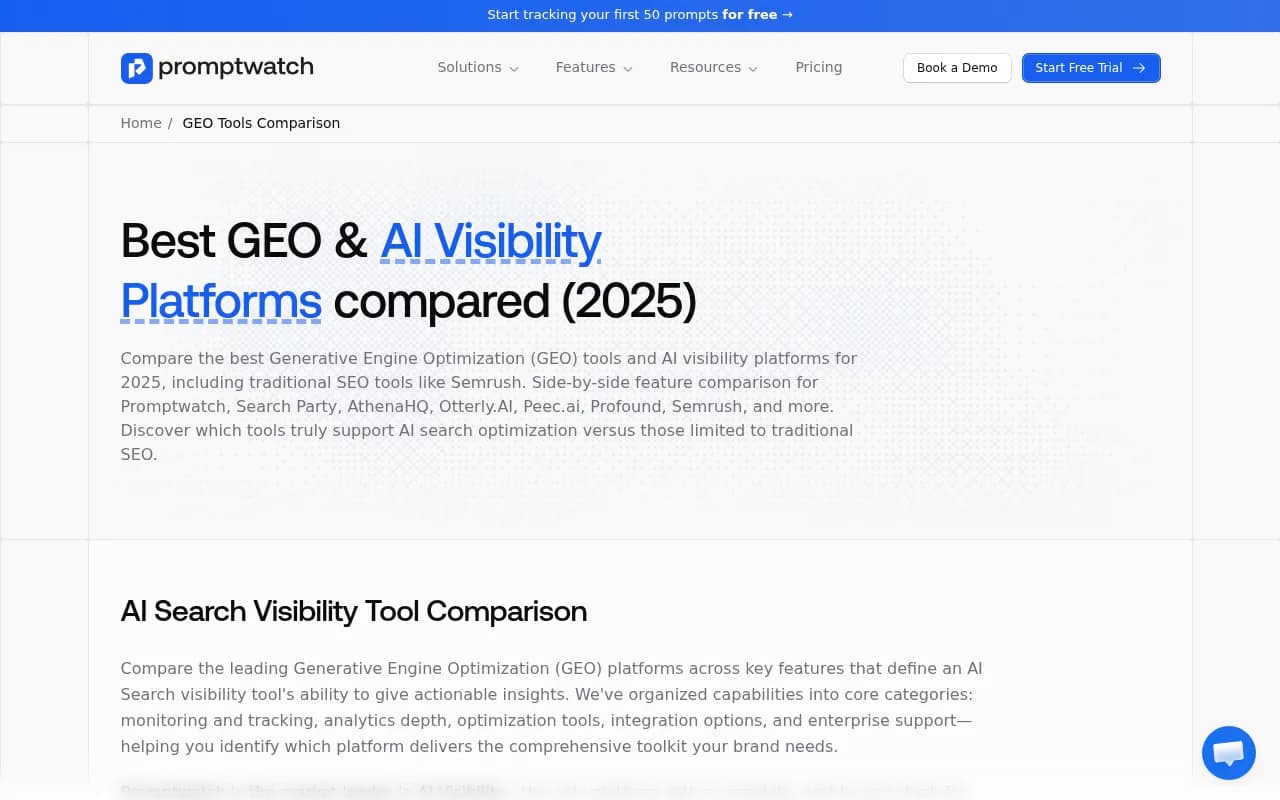
The feedback loop is built in. After content is published, Promptwatch's crawler logs and page-level tracking show when AI models crawl the new pages, when they start citing them, and how visibility scores change. Most teams using other platforms have no way to connect a piece of content to a citation outcome.
Pricing context
Pricing matters when evaluating content generation capabilities, because some platforms charge significantly more for features that may or may not include content tooling.
Promptwatch's pricing starts at $99/month for the Essential plan (1 site, 50 prompts, 5 articles), $249/month for Professional (2 sites, 150 prompts, 15 articles, plus crawler logs), and $579/month for Business (5 sites, 350 prompts, 30 articles). The content generation is included in the plan -- it's not a separate add-on.
Qwairy and Scrunch both offer monitoring-focused plans, but since neither includes content generation, any content work requires additional tools and budget on top of the platform cost. That's worth factoring in when comparing total cost of ownership.
Who should use which platform
This really comes down to what you're trying to accomplish.
If you want monitoring only and already have a strong content team with its own workflow, Qwairy or Scrunch could work. They're reasonable at tracking AI visibility and surfacing competitive data. You'd need to build the content process separately, but if that's already in place, the monitoring data is useful.
If you want an end-to-end GEO workflow where content generation is tied directly to gap analysis and citation tracking, Promptwatch is the only platform in this comparison that delivers that. The content agents aren't a bolt-on feature -- they're built into the same data layer as the monitoring and tracking tools, which means the insights and the content are connected.
Searchable doesn't have a strong case for either use case at this level of competition.
The broader picture
The 2025 GEO market was full of platforms that did monitoring well and content generation poorly (or not at all). That's partly because monitoring is technically easier -- you're querying AI models and recording outputs. Content generation that's actually grounded in AI visibility data is a harder problem. It requires knowing which prompts matter, what citation patterns look like, what competitors are doing, and how to structure content that AI models will actually use as a source.
Most platforms in 2025 solved the first problem and left the second one to their customers. Promptwatch was one of the few that tried to solve both, and based on the feature set, it's the most complete attempt in this comparison.
For teams that are serious about AI search visibility -- not just tracking it, but improving it -- the content generation gap between Promptwatch and the rest of this field is the most important difference to understand.
Alternatives worth knowing
If none of the four platforms above fit your needs exactly, a few others are worth exploring depending on your use case:
- For teams that want AI content generation with SEO grounding, tools like Orchly.ai focus on content ops with AI optimization built in.

- For teams that want monitoring with some content brief capabilities, Profound and AthenaHQ are worth evaluating, though both lean more toward enterprise monitoring than content generation.

- For teams that want to track AI visibility alongside traditional SEO in one platform, Semrush has added AI Overviews tracking, though its content generation tools are separate products rather than an integrated GEO workflow.
The right choice depends on whether you need monitoring, content generation, or both -- and how much you want those two things to be connected in a single workflow.