Key takeaways
- Profound is a capable AI visibility platform, but its enterprise pricing (starting at $499/month) puts it out of reach for most small teams and startups
- Several alternatives offer genuine AI search monitoring -- including multi-LLM tracking, citation analysis, and competitor comparisons -- at a fraction of the cost
- The biggest gap between Profound and most alternatives isn't features, it's whether the tool helps you act on what you find, not just observe it
- For teams that need to go beyond monitoring and actually fix their AI visibility, tools with built-in content optimization are worth the extra investment
- Free trials are available on most platforms listed here, so you can test before committing
Profound raised $58.5M and counts MongoDB, Figma, and Ramp among its customers. That's impressive. It's also a pretty clear signal about who the product is built for.
The Starter plan runs $99/month but limits you to ChatGPT and 50 prompts. The Growth plan is $399/month. Enterprise pricing starts at $499/month. For a lean marketing team or a startup trying to figure out whether AI search even matters for their category, that's a hard sell.
The good news: the AI visibility space has grown fast enough that you have real options now. Not watered-down imitations -- actual platforms with multi-LLM tracking, citation analysis, and in some cases content generation built in. Here's an honest look at six of them.
Why Profound isn't the right fit for every team
Before getting into alternatives, it's worth being specific about what "not the right fit" actually means. There are a few distinct situations:
The budget problem is the most obvious one. If you're a two-person marketing team or an agency managing clients on tight retainers, $399-$499/month for a single tool is a significant line item -- especially when you're still figuring out how much AI search traffic actually converts for your business.
There's also a complexity mismatch. Profound is built for teams with data analysts and dedicated SEO strategists. The dashboards are detailed, the reporting is deep, and that's genuinely valuable if you have the capacity to use it. If you don't, you're paying for features you'll never open.
Finally, some teams have specific needs Profound doesn't cover well -- Reddit monitoring, agency-friendly multi-client pricing, or content generation that's actually grounded in citation data rather than generic AI output.
The 6 best Profound alternatives for small teams
1. Promptwatch
Promptwatch is the most direct competitor to Profound for teams that want serious coverage without enterprise pricing. It monitors 10 AI platforms -- ChatGPT, Claude, Gemini, Perplexity, Grok, Copilot, DeepSeek, Google AI Overviews, Mistral, and Meta AI -- and has processed over 1.1 billion citations, clicks, and prompts.
What separates it from most monitoring tools is the action loop. The Answer Gap Analysis shows you exactly which prompts competitors rank for that you don't. The built-in AI writing agent then generates content -- articles, listicles, comparisons -- grounded in real citation data, not generic SEO filler. You track the results as your visibility scores improve. Most tools stop at step one; Promptwatch is designed around all three.
It also has AI crawler logs (real-time data on which pages ChatGPT, Claude, and Perplexity are actually reading), Reddit and YouTube citation tracking, and ChatGPT Shopping monitoring. Pricing starts at $99/month for the Essential plan (1 site, 50 prompts, 5 articles), with the Professional plan at $249/month.

2. Airefs
Airefs is the most affordable option in this space at $24/month. It's a full-stack AEO platform with Reddit monitoring built in, which is genuinely rare at this price point. There's also an optional done-for-you agency service if your team doesn't have the bandwidth to run the tool yourself.
The trade-off is LLM coverage. Airefs defaults to ChatGPT, with other models available on request rather than as standard. If you're primarily concerned with ChatGPT visibility and want to keep costs low while you validate the channel, it's a reasonable starting point. The 7-day free trial makes it easy to test.
3. Peec AI
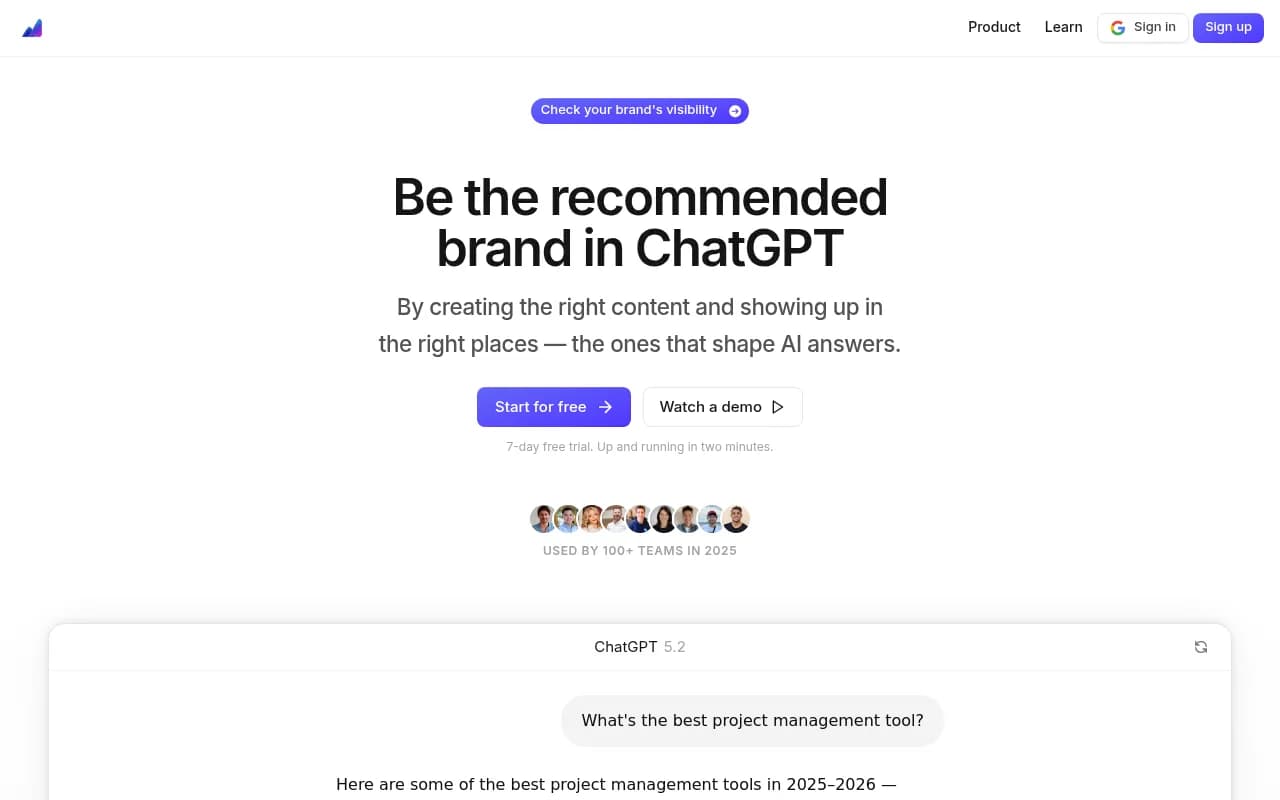
Peec AI sits in an interesting middle ground -- it has $30M+ in funding and enterprise-grade features, but its pricing starts at $85/month, which is accessible for smaller teams. The standout capabilities are UI scraping accuracy (which tends to produce more reliable citation data than API-based approaches) and 115+ language support, making it one of the better options for brands with international audiences.
It covers ChatGPT, Perplexity, and Google AI Overviews on the base plan, with additional models available as add-ons. The 14-day free trial is generous enough to get a real sense of the data quality.

4. Otterly.AI
Otterly.AI is a straightforward monitoring tool -- clean interface, transparent pricing, and no enterprise complexity. It's a good fit for teams that primarily want to track brand mentions and citation frequency across AI platforms without needing deep optimization features.
The honest limitation: it's monitoring-only. You'll see where you stand, but the platform won't help you figure out what to do about it. For teams that have a content team ready to act on insights, that's fine. For teams that need the full loop -- find gaps, create content, track results -- you'll hit a ceiling quickly.

5. SE Ranking (SE Visible)
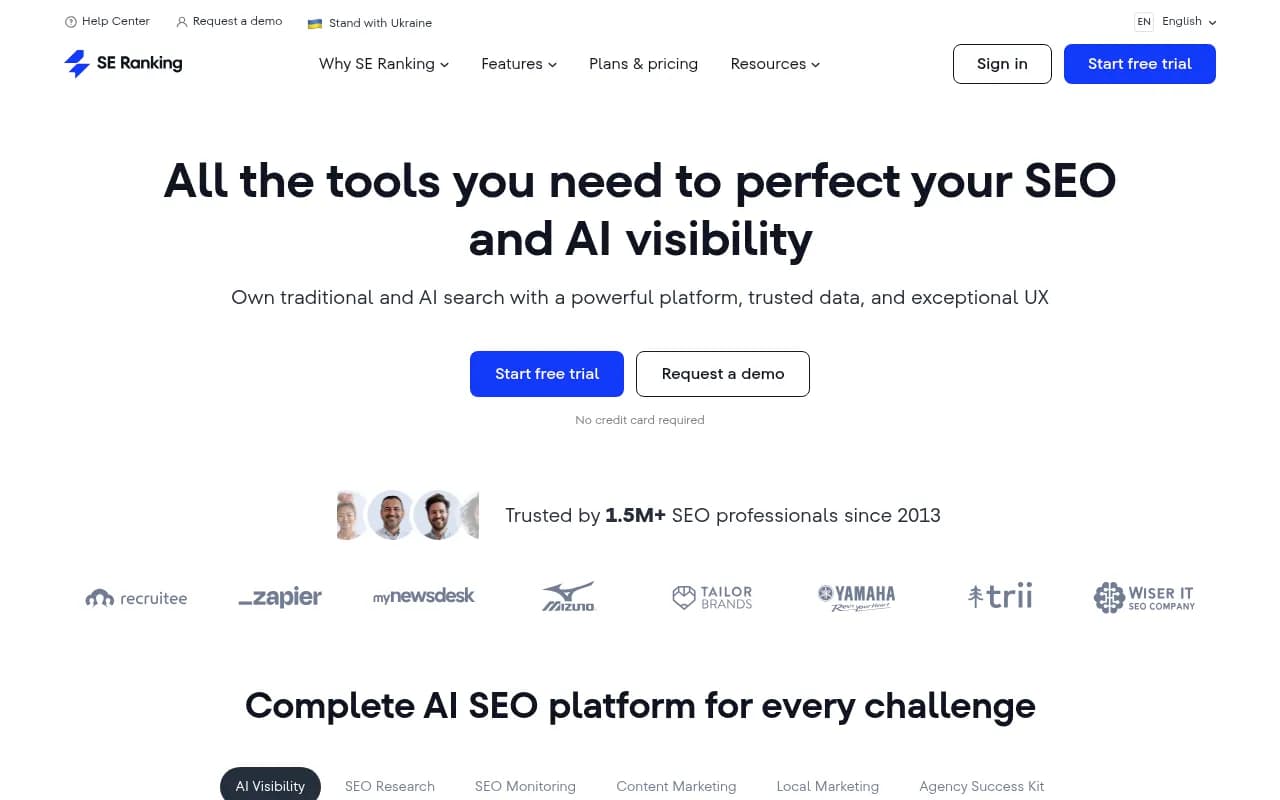
SE Ranking has been a reliable SEO platform for years, and its AI visibility module (SE Visible) extends that into LLM tracking. If your team already uses SE Ranking for traditional SEO, adding AI visibility tracking through the same platform is a natural move -- you get a unified view of your search presence without managing another subscription.
The AI visibility features are solid for monitoring and reporting. It's not as deep as Promptwatch or Profound on the optimization side, but for teams that want a single platform covering both traditional and AI search, it's worth considering.
6. Nightwatch
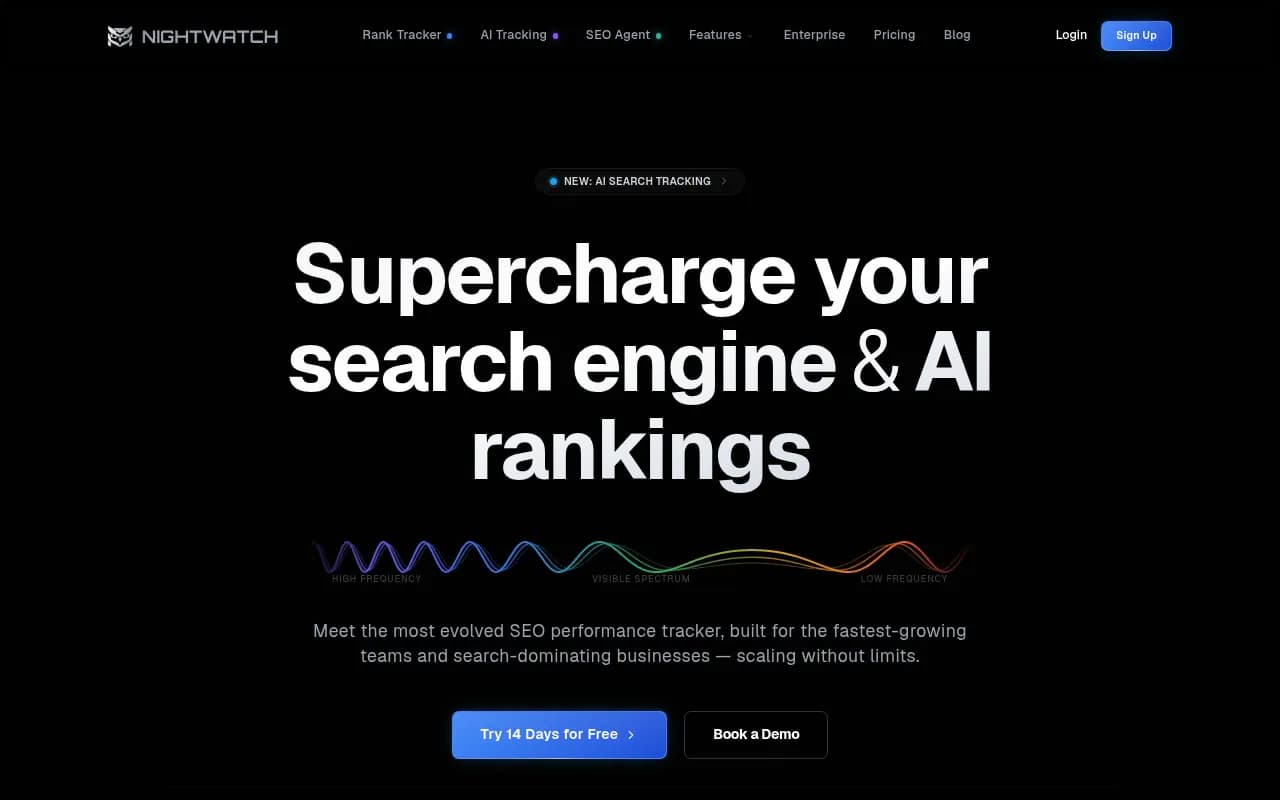
Nightwatch has built a reputation for accurate rank tracking, and its AI search monitoring features bring that same precision to LLM visibility. It's particularly well-suited for agencies managing multiple clients, with clean reporting that's easy to share.
Like Otterly.AI, it leans more toward monitoring than optimization. But the data quality is strong, and the interface is genuinely easier to navigate than most enterprise tools.
How these platforms compare
| Platform | Starting price | AI models covered | Content generation | Reddit tracking | Best for |
|---|---|---|---|---|---|
| Profound | $99/mo (Starter, ChatGPT only) | ChatGPT, Perplexity, others (higher tiers) | No | No | Enterprise teams with data resources |
| Promptwatch | $99/mo | 10 (ChatGPT, Claude, Gemini, Perplexity, Grok, Copilot, DeepSeek, Mistral, Meta AI, AI Overviews) | Yes (built-in AI writing agent) | Yes | Agencies and brands wanting monitoring + optimization |
| Airefs | $24/mo | ChatGPT (others on request) | No | Yes | Startups and SMBs on tight budgets |
| Peec AI | $85/mo | ChatGPT, Perplexity, AI Overviews + add-ons | No | No | Global brands needing multilingual tracking |
| Otterly.AI | ~$49/mo | ChatGPT, Perplexity, others | No | No | Teams that just need basic monitoring |
| SE Ranking | Varies | Multiple (via SE Visible module) | No | No | Teams already using SE Ranking for SEO |
| Nightwatch | Varies | Multiple | No | No | Agencies needing clean client reporting |
What to actually look for when evaluating these tools
LLM coverage matters more than you think
A tool that only tracks ChatGPT is giving you a partial picture. Perplexity is growing fast as a research tool. Google AI Overviews affects a huge volume of informational queries. Claude is increasingly used in professional contexts. If you're only monitoring one or two models, you're likely missing significant portions of your AI search exposure.
Monitoring vs. optimization: know which one you need
Most tools in this space are monitoring dashboards. They show you data. That's useful, but it's only half the job. If you see that a competitor is cited 40% more often than you for a category of prompts, the dashboard won't tell you what to write or how to fix it. Tools that close that loop -- by identifying content gaps and helping you create content that AI models actually want to cite -- are fundamentally more valuable for teams trying to improve their position, not just measure it.
Prompt volume and difficulty scoring
Not all prompts are worth chasing. A tool that shows you prompt volume estimates and difficulty scores lets you prioritize the ones where you have a realistic chance of gaining visibility. Without this, you're essentially guessing which content to create.
Citation source analysis
Knowing that you're not cited is less useful than knowing why. The best tools show you which pages, Reddit threads, and external sources AI models are pulling from when they answer relevant prompts. That tells you where to publish and what to optimize -- concrete direction rather than a general score.
The monitoring-only trap
One pattern worth flagging: a lot of teams buy an AI visibility tool, get excited about the data, and then... don't do anything with it. The dashboard becomes something they check occasionally but don't act on.
This isn't a discipline problem -- it's a tool design problem. Most monitoring-only platforms show you a gap but don't give you a clear path to closing it. You see that a competitor ranks for "best project management software for remote teams" and you don't. Now what? You need to figure out what content to create, brief a writer, get it published, and then wait to see if it moves the needle.
Tools that integrate content gap analysis with content generation -- and then track whether that content actually improves your AI visibility -- compress that cycle significantly. For small teams without dedicated SEO resources, that compression is often the difference between actually improving and just having a dashboard.
Which one should you pick?
If budget is the primary constraint and you're just starting to explore AI visibility, Airefs at $24/month is a reasonable entry point. You'll get real data on ChatGPT citations without a significant financial commitment.
If you want serious multi-LLM coverage and the ability to actually improve your visibility (not just measure it), Promptwatch at $99/month is the most complete option at this price range. The combination of 10-platform monitoring, content gap analysis, and built-in content generation is genuinely hard to find elsewhere without paying Profound-level prices.
If your team already lives in SE Ranking for traditional SEO, adding SE Visible is the path of least resistance -- one less tool to manage, and the data integrates with what you're already tracking.
And if you're an agency with multiple clients and clean reporting is the priority, Nightwatch is worth a look.
The right answer depends on where you are. But the wrong answer is paying $499/month for a platform built for a 20-person marketing team when you have three people and a content budget that needs to stretch.