Key takeaways
- Product pages made up 22.4% of ChatGPT citations from Sep 28 to Oct 4, 2026, and they were the top content type for commercial, informational, and branded prompts alike (Promptwatch Data).
- Product and landing pages together are about 39% of citations. Editorial formats (listicles, how-tos, comparisons, reviews and similar) add up to roughly 43%.
- Page types decay at different speeds. Landing pages and docs stay cited longest, while news loses half its cited pages in 36 days.
- An audit takes four steps: inventory your pages by type, pull your citation data, compare your mix to the benchmark, and fix the biggest gaps.
- Third-party numbers move around. Peec AI data showed listicles halving in August 2026, so treat any single snapshot as a snapshot.
Why audit by page type at all
Most AI visibility reporting answers one question: was my brand mentioned? That is useful, but it doesn't tell you what to build next. Page type does.
If ChatGPT cites product pages far more than how-to guides for the prompts you care about, then a content calendar full of blog posts is pointed at the wrong target. If you have no comparison page and your competitors do, that is a concrete gap, not a vague feeling.
The benchmark to start from is Promptwatch's ChatGPT citation share by content type report, which covers Sep 28 to Oct 4, 2026. Every ChatGPT citation with a classified content type is in the base, and a page cited in several responses counts once per citation.
The benchmark: what ChatGPT cited that week
Here is the all-prompts breakdown from that report.
| Content type | Share of ChatGPT citations |
|---|---|
| Product pages | 22.4% |
| Landing pages | 16.8% |
| Listicles | 13.6% |
| How-to guides | 8.7% |
| Documentation | 7.5% |
| General articles | 6.1% |
| Comparisons | 5.9% |
| News | 5.7% |
| FAQ | 3.3% |
| Reviews | 1.7% |
Two things stand out. First, product and landing pages together come to about 39%. These are pages that describe what a company sells, and ChatGPT leans on them heavily. Second, listicles, how-tos and comparisons together are about 28%, so the roundup-and-guide content many teams invested in over the past two years is a smaller slice than the commercial pages sitting on your own site.
The intent split matters more than the average
The all-prompts number hides how much the mix shifts by prompt type. Promptwatch Data splits it three ways.
| Content type | Commercial prompts | Informational prompts | Branded prompts |
|---|---|---|---|
| Product pages | 26.0% | 19.1% | 23.3% |
| Landing pages | 20.6% | 13.9% | 22.8% |
| Listicles | 15.0% | 13.6% | n/a |
| Comparisons | 7.9% | n/a | n/a |
| How-to guides | n/a | 10.7% | n/a |
| Docs | n/a | 8.5% | n/a |
| Reviews | n/a | n/a | 5.6% |
For commercial prompts like "best CRM for small businesses", product pages, landing pages, listicles and comparisons add up to almost 70% of citations. For branded prompts like "is HubSpot good for startups", product and landing pages are almost half, and reviews are 5.6%, more than three times their share across all prompts. Social posts reach 3.0% there, almost four times their overall share.
Product pages top all three intents. That is the single most useful fact in the report, because it means a weak product page is a problem no matter how a buyer phrases the question.
Step 1: build a page type inventory
Start with a crawl of your own site and tag every URL with one type. Keep the taxonomy close to the one in the benchmark so you can compare like with like: product, landing, listicle, how-to, comparison, docs, FAQ, review, news, general article.
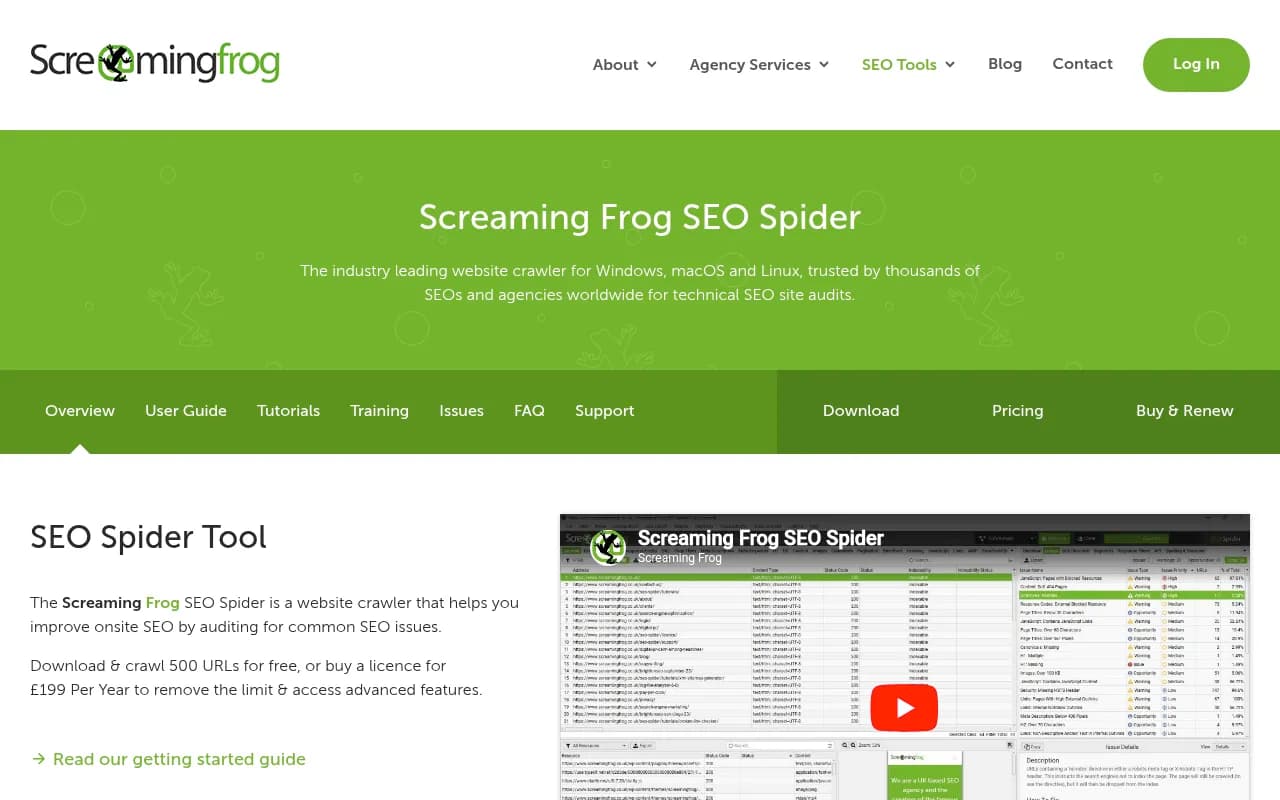
A crawler like Screaming Frog SEO Spider works well for this. Export the URL list, then use URL patterns (/product/, /docs/, /blog/) plus a manual pass on the ambiguous ones.
A few edge cases will trip you up:
- Pricing pages count as landing or product pages in Promptwatch's classification. Don't invent a separate bucket for them.
- A "best X" post on your own blog is a listicle even if it is mostly about your product.
- Category pages on an ecommerce site sit between landing and listicle. Pick one rule and stick to it.
When you finish, you should have a simple table: page type, count of URLs, and share of your total pages.
Step 2: pull your own citation data
Now you need to know which of those URLs ChatGPT actually cites. There are two ways to get there.
The manual route is to write 20 or so prompts a buyer in your category would ask, run them in ChatGPT with search on, and log every cited URL. Intelegencia describes a similar 20-prompt teardown, and it is a fine way to start. It is slow, and ChatGPT only searches the web for some queries (Semrush's February 2026 clickstream sample put it at 34.5%), so expect some prompts to return no citations at all.
The tool route scales better. Promptwatch tracks the real ChatGPT interface across prompts you choose and classifies every citation by content type, so you can see your own mix instead of reconstructing it by hand.

Other trackers in the same space include Peec AI, Otterly.AI and Profound. Most of them report mentions and cited URLs. Check whether the one you pick classifies by page type, because that is what this audit needs.



Whatever you use, log three things per cited URL: the page type, the prompt intent (commercial, informational, branded), and whether the URL is yours, a competitor's, or a third party's.
Step 3: compare your mix to the benchmark
Put your numbers beside the benchmark. You are looking for three kinds of mismatch.
Heavy supply, thin citations
You have 200 blog how-tos and they earn a handful of citations, while the benchmark says how-tos are 8.7% of the total. This is common, and it usually means your supply of that type is out of proportion to its payoff. It doesn't mean delete them. It means stop adding more.
Thin supply, strong benchmark share
You have no comparison pages, and comparisons are 7.9% of commercial citations. Or your product pages are three-line stubs while product pages are the top type for every intent. Gaps here are your best opportunities.
Citations going to third parties
For commercial prompts, check who gets the listicle and review citations. If a roundup site is cited and you aren't in it, that is a different fix from writing your own content: you need to get listed, or earn the review.
A quick scoring grid helps:
| Page type | Your share of pages | Your share of citations | Benchmark share | Action |
|---|---|---|---|---|
| Product | 22.4% | |||
| Landing | 16.8% | |||
| Listicle | 13.6% | |||
| How-to | 8.7% | |||
| Docs | 7.5% | |||
| Comparison | 5.9% | |||
| FAQ | 3.3% | |||
| Review (third party) | 1.7% |
Don't force your mix to match exactly. A B2B SaaS company and a furniture retailer will land in different places. The point is to spot the large gaps.
Step 4: check freshness by type
Citations don't last forever, and different types fade at different rates. Promptwatch's content half-life report tracked every classified page ChatGPT cited on July 6, 2026 for 90 days, through Oct 4.
| Page type | Still cited after 30 days | Still cited after 60 days |
|---|---|---|
| Landing pages | 78% | 69% |
| Docs | 76% | 67% |
| Comparisons | 72% | 63% |
| Listicles | n/a | 60% |
| Product pages | n/a | 55% |
| News | n/a | 41% |
Product pages, reviews and how-tos reach half-life after 74 to 77 days. News is the harshest: almost a quarter of cited news pages are never cited again after day 0, and half are gone after 36 days. Docs do well, with ChatGPT citing 93% of day-0 docs again later, against 77% of news pages.
A caveat from the report itself: landing pages, docs, comparisons and listicles only cross 50% in the final week of the window, which is an artifact of where the window ends. Their real half-life is probably close to or beyond 90 days.
For your audit, this means product pages need a refresh schedule. They decay about as fast as how-tos, so stale specs, old prices and out-of-stock items are a real risk. Put a review date on every product page template and actually use it.
Step 5: fix the gaps in order
Promptwatch's report ends with practical recommendations. Here is how they translate into an audit backlog, in the order I would tackle them.
- Complete your product and landing pages. Specs, prices, positioning and who the product is for should be factual and easy to extract. This is the biggest share of citations, so it comes first.
- Make products easy to compare. Clear pricing tables and consistent spec fields beat clever copy.
- Publish comparison pages for the matchups buyers search, and pursue placement in the roundups ChatGPT already cites for your category.
- Keep docs public and crawlable. If your help center sits behind a login or a JavaScript wall, ChatGPT can't cite it. For software prompts, Promptwatch Data shows documentation and help centers earn the largest share of citations (see the software citation report).
- Add an FAQ page for brand questions. Branded prompts cite FAQ at 4.8%.
- Collect reviews on trusted third-party sites. Reviews matter more for branded prompts than anywhere else.
- Map each new piece of content to an intent before writing it.
Technical access sits underneath all of this. If ChatGPT's crawlers hit errors on your pages, no amount of page type tuning will help. Check robots.txt, rendering and status codes first. Google Search Console is a free place to confirm the pages are indexed at all.
Why you shouldn't trust a single snapshot
The benchmark above covers one week. Other sources show how fast the picture can move.
The State of Brand reported Peec AI data from Aug 6, 2026, the day OpenAI moved Free and Go accounts to GPT-5.6 Luna. In that data, listicles fell from 15.77% to 7.80% of ChatGPT citations, and comparison pages fell from 9.08% to 6.17%. Product pages were 16.39% of retrieved pages. Prompts resolved with a single fan-out query dropped from 94.0% to 43.5%, and average retrieved sources roughly doubled from about 12 to about 24.
Notice the tension. Promptwatch shows listicles at 13.6% in late September and early October, while Peec showed a sharp August drop. Different methods, different windows, different prompt sets. I wouldn't read either as proof that listicles are dead or alive. What both agree on is that the mix shifts after model updates, and that product pages hold up.
Two related Promptwatch Data reports are worth watching alongside this: ChatGPT's changing query fan-outs (the site: operator jumped from about 0.4% to about 17% of fan-out queries on Aug 8, 2026), and the citation drop after GPT-5.3. Re-run your audit after any big model change, not on a fixed annual schedule.
One more point from CXL's summary of Ahrefs data: ChatGPT retrieves more URLs than it cites, with about half of retrieved URLs getting a citation in a 1.4 million prompt study. Title relevance to both the prompt and the related fan-out queries correlated with being cited. So the title tag on your product page is not a throwaway.
A note on sources that disagree with the headline
You will find studies claiming product pages get 24% of AI citations, and others saying 6% to 7%. The Hoth looked at five ecommerce catalogs and found product pages at 7.1% of ChatGPT citations, with guides at 63.1%. That looks like a contradiction, but it isn't. The Hoth's sample was ecommerce stores' own pages, where informational guides naturally dominate the cited set. Promptwatch's base is every classified ChatGPT citation across all prompts. Always check the base before comparing numbers.
For tracking the source mix at the domain level, the AI rank tracking directory at ai-rank-tools.com lists tools that report cited URLs, if you want to compare options.
A repeatable audit routine
Here is the version I would actually put on a calendar.
- Monthly: pull citations by page type and intent, compare against the latest Promptwatch Data benchmark, and note any type that moved more than a few points.
- Quarterly: refresh product pages with stale specs or prices, and re-check docs and landing pages for crawl errors.
- After a model update: re-run your tracked prompts within a week and look for changes in fan-out behavior and the type mix.
- Every new page: assign a type and an intent before it gets written.
The output of each cycle should be a short list of concrete changes, not a report. If the audit doesn't change what your team builds next, it was a spreadsheet exercise.
What to do this week
Pick your ten most important product or landing pages. Read each one as if you were a model trying to answer "what does this cost, what does it do, and who is it for?" If you can't find all three in a few seconds, fix that first. It is the cheapest change on this list, and the page type with the biggest share of citations is the one you already own.